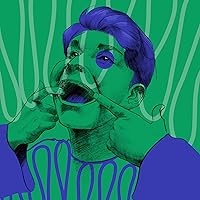
It was on April 15, 1452, that Leonardo was born in the town of Vinci, Republic of Florence, in what is now in Italy, the illegitimate son of a notary and a barmaid. It is from his birthplace that he is known as Leonardo da Vinci. Leonardo seemed to master every subject to which he turned his attention: he was a painter, draftsman, sculptor, architect, and engineer, wrote poetry and stories: the prototype Renaissance man!
His Last Supper (1495-97) and Mona Lisa (La Gioconda, 1503-06) are among the most popular paintings from the Renaissance. He and his rival Michelangelo did great service to the medical arts by accurate paintings of dissections, which were only occasionally allowed by the Church. Yet, his artistry appeared to be an afterthought, as he frequently left his works unfinished, and only about fifteen of his paintings survive. His notebooks reveal that he was centuries ahead of his time in mechanics and physic, fortifications, bridges, weapons, and river diversions to flood the enemy, which aided Italian city-states in their many wars.
Leonardo was an early evolutionist regarding fossils. Through his careful observations he noted that “if the shells had been carried by the muddy deluge they would have been mixed up, and separated from each other amidst the mud, and not in regular steps and layers — as we see them now in our time.” Leonardo reasoned that what is now dry land, where these aquatic fossils were found, must once have been covered by seawater.
He was for a short time accused of homosexuality: there is no evidence Leonardo had any sexual interest in women. As he wrote in his notebooks, “The act of procreation and anything that has any relation to it is so disgusting that human beings would soon die out if there were no pretty faces and sensuous dispositions.”
And what of his religion? It is significant that at the end of his life he felt he had much spiritual negligence to atone for. His first biographer, Giorgio Vasari, wrote in 1550:
"Finally, …feeling himself near to death, [he] asked to have himself diligently informed of the teaching of the Catholic faith, and of the good way and holy Christian religion; and then, with many moans, he confessed and was penitent; and … was pleased to take devoutly the most holy Sacrament, out of his bed. The King, who was wont often and lovingly to visit him, then came into the room; wherefore he, out of reverence … showed withal how much he had offended God and mankind in not having worked at his art as he should have done."
There was much skepticism in Renaissance Italy at the time, and Leonardo was an intellectual genius, not just an artistic genius. While there was great intellectual freedom during the Italian Renaissance, there were limits as long as the Dominicans, the “Hounds of the Lord,” were active. This semblance of a deathbed conversion, by so critical a thinker and so great a genius as Leonardo, who would have nothing to lose by professing piety all his life, can only mean that during his prime years he was a secret freethinker.
Leonardo died quietly on the 2 of May, 1519, a few weeks following his 67th birthday.
La sfârșitul cărții, înainte de index, scrie că această carte nu trebuie citită de la cap la coadă (cel puțin, din prima), ci pasaje care abordează anumite subiecte specifice care îl interesează pe cititor la un moment dat. Mai scrie și că tratatul trebuie citit lent, în momente de reculegere.
Nu am făcut acest lucru, deci nu prea am putut să înțeleg în profunzime toate ideile abordate. Prima parte, ,,Paragone'', a fost cea care mi-a plăcut cel mai mult pentru că am putut să vad personalitatea lui Leonardo în contextul argumentării supremației picturii față de alte arte. Inflamare destul de distractivă :) Restul tratatului este foarte didactic, și mi-ar fi plăcut să fie abordate teme mai filozofice legate de conținutul compoziției din punct de vedere tematic, nu numai detalii despre meșteșug. Am mai iubit și stropii individualității autorului care apăreau atunci când desființa astrologia sau chiromanția. :>