

What do you think?

Popular Culture and Philosophy #38
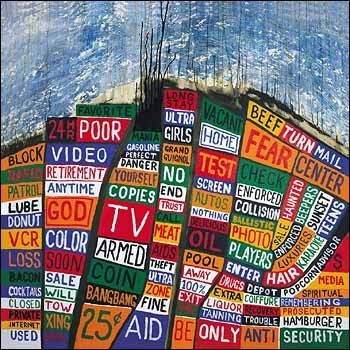
Radiohead and Philosophy: Fitter Happier More Deductive
Since their breakthrough hit "Creep" in 1993, Radiohead has continued to make waves throughout popular and political culture with its views about the Bush presidency (its 2003 album was titled Hail to the Thief ), its anti-corporatism, its pioneering efforts to produce ecologically sound road tours, and, most of all, its decision in 2007 to sell its latest album, In Rainbows, online with a controversial "pay-what-you-want" price. Radiohead and Philosophy offers fresh ways to appreciate the lyrics, music, and conceptual ground of this highly innovative band. The chapters in this book explain how Radiohead’s music connects directly to the philosophical phenomenology of thinkers like Maurice Merleau-Ponty and Martin Heidegger, the existentialism of Albert Camus and Jean Paul Sartre, and the philosophical politics of Karl Marx, Jean Baudrillard, and Noam Chomsky. Fans and critics know that Radiohead is "the only band that matters" on the scene today — Radiohead and Philosophy shows why.
288 pages, Paperback
First published April 1, 2009
Ratings & Reviews
Friends & Following
Create a free account to discover what your friends think of this book!
Community Reviews
Displaying 1 - 20 of 20 reviews
![Profile Image for s.penkevich [hiatus-will return-miss you all].](https://i.gr-assets.com/images/S/compressed.photo.goodreads.com/users/1735525095i/6431467._UX200_CR0,11,200,200_.jpg)
January 8, 2012
On the outskirts of every agony sits some observant fellow who points. - Virginia Woolf
While I usually try and avoid the ‘X and Philosophy’ books, seeing them as a shameless gimmick, I couldn’t pass on the opportunity to read this collection of essays on Radiohead. While admittedly some of the material is ideas the authors forced onto the music, it is a fun experience to view the ideas and themes behind Radiohead through a philosophical lens. The essay ‘Radiohead and the Philosophy of Pop’ (an excerpt of which can be found HERE) is worth reading for anyone with an interest in music as it is an excellent discussion on the societal forces of music and the recording industry. Mark Greif just so happens to use Radiohead as the example with which to illustrate his ideas. Primarily through the existentialists, but occasionally through the minds of Aristotle, Baudrillard, Marx and Chomsky, the reader is treated to philosophical investigations on the anxiety and alienation expressed through York’s lyrics, shown as a reaction to both political and social forces present in the modern day, and implications of living in the digital age. Let’s go down the waterfall…
For those who hate Radiohead and don’t care to read further, I’ll offer you this article trashing them so at least your time wasn’t wasted (like the reviewer). See what a nice guy I am? However, you'll go to hell for what your dirty mind is thinking
The chapter ‘Mutilation of Voice’ dealing with Heidegger, and a total dismissal of John Mayer’s cover of the awesomeKid A (basically arguing that making it pretty and accessible as opposed to unintelligible and chaotic is essentially missing the point of the song and thereby bastardizing it) can be read in its entirety >HERE.
Not everything in the book is an analysis of lyrics and the social implications of their music, although the sections about my favorite album, Hail to the Thief - the album title referring to the 2000 Bush election - are extremely interesting. Music theory is often discussed, highlighting Greenwoods passion of classical composition and his indebtedness to Chopin and the shift towards the more electronic sound (Radiohead followed up their rock album Ok Computer, highly popular and receiving awards and praise such as ‘Best guitar album’, with the anti-rock Kid A which was nearly devoid of guitar). There is a breakdown of their changing time signatures, including a lengthy discussion on the track Pyramid Song and whether it is
A) ’clusters of sixteen eight-notes, 16/8, with the notes arranged in 3/3/4/3/3 groupings’
B) 8/8 with groupings of notes into pair and trio with ‘the first three notes heard as if they belong to a group of three that are followed by a second ground and then two notes that end the sequence and tie the notes together’,
or C) simply felt and played with no definite time signature as York himself has suggested.
Other theory examples include Radiohead’s binary theory of the albums In Rainbows and Ok Computer, and the demonstration of the golden ratio in In Rainbows when the album title is sung in the swirling background right at the that mathematical point of the album during the breakdown ofReckoner. There is an in depth analysis of the music video for House of Cards, examining the ‘self’ as a member of a digital community much like we are here on Goodreads. Also included is York’s attempt at helping the environment, bringing to light the surprisingly large amount of action the group has taken (they even have strict restrictions venues must meet in order to book them that involves recycling, green-friendly lighting and parking discounts to carpoolers). York says he is ‘cashing in all his celebrity points for the environment’, which seems a very honorable use of fame, plus they don’t get all ‘in your face’ and annoying about it during shows or interviews, just do it quietly to the side.
My major complaint comes with the section that deals with Radiohead as a work of postmodernism. The arguments put forth are wonderful and accurate, yet somehow nobody mentions Thomas Pynchon. York has cited Pynchon as a major influence on his lyrics (take Fog for example, with lyrics of hunting alligators in the sewers as an allusion to V.), the bands merchandise website is called W.A.S.T.E. after The Crying of Lot 49, and, as this article asserts, the music makes an ideal paring with the novel Gravity's Rainbow. How did they miss this when talking about postmodernism?
If you are a fan of Radiohead, this is a great little coffee table book for you. I don’t think you will be let down. If you aren’t a fan, well, then no, this is not for you. However, if you like Nickelback, than I have nothing to offer you except advice to reexamine your choices. This site may help: Is Nickelback The Worst Band Ever?
There, there, the truth is hard to take. Okay, all joking aside, this was a decent collection of essays that appropriately addressed philosophical issues instead of squeezing a topic until something marketable finally dropped out like many other 'X and philosophy' gimmicks. For the fans, pick this up and enjoy a bit everyday, ya know, just to take the edge off.
4/5
While I usually try and avoid the ‘X and Philosophy’ books, seeing them as a shameless gimmick, I couldn’t pass on the opportunity to read this collection of essays on Radiohead. While admittedly some of the material is ideas the authors forced onto the music, it is a fun experience to view the ideas and themes behind Radiohead through a philosophical lens. The essay ‘Radiohead and the Philosophy of Pop’ (an excerpt of which can be found HERE) is worth reading for anyone with an interest in music as it is an excellent discussion on the societal forces of music and the recording industry. Mark Greif just so happens to use Radiohead as the example with which to illustrate his ideas. Primarily through the existentialists, but occasionally through the minds of Aristotle, Baudrillard, Marx and Chomsky, the reader is treated to philosophical investigations on the anxiety and alienation expressed through York’s lyrics, shown as a reaction to both political and social forces present in the modern day, and implications of living in the digital age. Let’s go down the waterfall…
For those who hate Radiohead and don’t care to read further, I’ll offer you this article trashing them so at least your time wasn’t wasted (like the reviewer). See what a nice guy I am? However, you'll go to hell for what your dirty mind is thinking
The chapter ‘Mutilation of Voice’ dealing with Heidegger, and a total dismissal of John Mayer’s cover of the awesomeKid A (basically arguing that making it pretty and accessible as opposed to unintelligible and chaotic is essentially missing the point of the song and thereby bastardizing it) can be read in its entirety >HERE.
Not everything in the book is an analysis of lyrics and the social implications of their music, although the sections about my favorite album, Hail to the Thief - the album title referring to the 2000 Bush election - are extremely interesting. Music theory is often discussed, highlighting Greenwoods passion of classical composition and his indebtedness to Chopin and the shift towards the more electronic sound (Radiohead followed up their rock album Ok Computer, highly popular and receiving awards and praise such as ‘Best guitar album’, with the anti-rock Kid A which was nearly devoid of guitar). There is a breakdown of their changing time signatures, including a lengthy discussion on the track Pyramid Song and whether it is
A) ’clusters of sixteen eight-notes, 16/8, with the notes arranged in 3/3/4/3/3 groupings’
B) 8/8 with groupings of notes into pair and trio with ‘the first three notes heard as if they belong to a group of three that are followed by a second ground and then two notes that end the sequence and tie the notes together’,
or C) simply felt and played with no definite time signature as York himself has suggested.
Other theory examples include Radiohead’s binary theory of the albums In Rainbows and Ok Computer, and the demonstration of the golden ratio in In Rainbows when the album title is sung in the swirling background right at the that mathematical point of the album during the breakdown ofReckoner. There is an in depth analysis of the music video for House of Cards, examining the ‘self’ as a member of a digital community much like we are here on Goodreads. Also included is York’s attempt at helping the environment, bringing to light the surprisingly large amount of action the group has taken (they even have strict restrictions venues must meet in order to book them that involves recycling, green-friendly lighting and parking discounts to carpoolers). York says he is ‘cashing in all his celebrity points for the environment’, which seems a very honorable use of fame, plus they don’t get all ‘in your face’ and annoying about it during shows or interviews, just do it quietly to the side.
My major complaint comes with the section that deals with Radiohead as a work of postmodernism. The arguments put forth are wonderful and accurate, yet somehow nobody mentions Thomas Pynchon. York has cited Pynchon as a major influence on his lyrics (take Fog for example, with lyrics of hunting alligators in the sewers as an allusion to V.), the bands merchandise website is called W.A.S.T.E. after The Crying of Lot 49, and, as this article asserts, the music makes an ideal paring with the novel Gravity's Rainbow. How did they miss this when talking about postmodernism?
If you are a fan of Radiohead, this is a great little coffee table book for you. I don’t think you will be let down. If you aren’t a fan, well, then no, this is not for you. However, if you like Nickelback, than I have nothing to offer you except advice to reexamine your choices. This site may help: Is Nickelback The Worst Band Ever?
There, there, the truth is hard to take. Okay, all joking aside, this was a decent collection of essays that appropriately addressed philosophical issues instead of squeezing a topic until something marketable finally dropped out like many other 'X and philosophy' gimmicks. For the fans, pick this up and enjoy a bit everyday, ya know, just to take the edge off.
4/5

December 15, 2009
My favorite essay was the one written by a dude named Bradley Kaye called, "Kid A as a Musing on the Postmodern Condition"... oh yea, that's me. Right. (Pats himself on the back!) Kudos to me.

August 1, 2010
You know the feeling you get when reading a book, and thinking the whole time: "I am definitely going to read that again?" - That's exactly how I felt while reading this.
Let me say that the only reason I purchased this book was that I am a huge fan of Radiohead, and I had a bit of an interest in reading accessible philosophy essays. However, what I got from it is much more; I grew interest in topics I never knew existed or even cared about.
Radiohead and Philosophy was not only about philosophy and some band, it was about politics, economics, technology, society, music, and a lot more. It was about life, and death. It certainly opened up new doors for me, and I learned so much from it already. And as Yorke sings in Last Flowers: "It's too much. Too bright. Too powerful."
I really feel sad that I didn't keep track of the amazing things that kept me up for days, but as Byron Hawk said: "Radiohead and Philosophy is not something you analyze, but something you experience, like sitting back and listening to Radiohead."

April 24, 2011
At least I'm not an android.

February 18, 2013
This book is good for your IQ (no no no no no no no)
Desperation. Isolation. Abandonment. Vulnerability. Failure. Breakdown. Loss. Stagnation. Passivity. Conformity. Non-responsiveness. Being content simply to avoid danger. Loneliness. Nostalgia. Melancholy. Capitalism. Blood-sucking vampires. Catharsis. Hamartia. Akrasia. Carbon dioxide. Welcome Radiohead.
This book could/should have been shorter. Some of the essays were repetitious, and few were insignificant, but before the last essay I was starting to feel like this could be a fitter, happier and more deductive version of Sophie’s World and pass as [2+2=5] an introduction to philosophy. The contributors are mostly interesting and as researchers, professors and philosophers, they are double-cool because they like Radiohead. [How come none of my professors were cool like that? It certainly gives philosophy good reputation when you can connect it with such alternative bands like Radiohead and Pink Floyd.] The book opened up my eyes about Nietzsche and Camus, and I'm sure it will help my reading of books like Thus Spoke Zarathustra and The Plague. In this respect, I feel thankful for the contributors because they managed to make philosophy cooler, happier and more selective.
I did not agree with all interpretations, however, and will choose to ignore the last essay “Sexier more Seductive” because it proclaims that Radiohead’s album In Rainbows (which I've had for over five years now) was principally about sex. I had no idea the album had anything to do with sex, and am now wondering what the hell it was that I thought I was listening to! [We hope your rules and wisdom choke you.] I wish I could un-read that essay, just like I wish I could un-listen to Radiohead’s annoying elevator-music album King of Limbs (not mentioned in the book because it came out in 2009).
The music of Radiohead is not for everybody. Most people I know whom I’ve trusted enough to share the magic of Radiohead with have told me something along the lines of: “This guy sounds like a screeching rat” or “Are you mentally OK?”
I admit that Thom Yorke is somewhat, err, idiosyncratic?

And he often reminds me of the intellectually-stimulating folk who are so interesting they break gender barriers and morph into their paranoid-or-android selves. Tilda Swinton comes to mind too, perhaps because she could pass as Thom Yorke’s twin. (I cannot be the only person who thinks this is likely):

But the book is not about Thom. Neither is it strictly about Radiohead. Rather, this book is about philosophical interpretations through the music of Radiohead. It is about the world we live in, in which, as C. Wright Mills had written, the citizen has become a mere spectator or a forced actor, and that our personal experience is politically useless and our political will a minor illusion… "We feel that distrust has become nearly universal among men of affairs and that the spread of public anxiety is poisoning human relations and drying up the roots of private freedom." The essays within this book offer challenges and solutions as presented by Aristotle, Nietzsche, Heidegger, Camus, Marx, Orwell, Chomsky, and others.


Check this mention about Palestine:


In the mood for song
One of the contributors, Devon Lougheed, says that he can still remember the first time he heard Paranoid Android and the way it changed how he listened to music forever. He suggests that OK Computer serves as a wake-up call “to the desolate, passionless, self-contemptuous characters (we could call them “the luke-warm” of OK Computer, Kid A and Amnesiac.)”
Another contributor says: “Most fans don’t gradually warm up to the band. Instead, the conversion is sudden and drastic.” I experienced this first-hand after hearing OK Computer and felt the sudden, drastic change take over as I listened, over and over again, to Paranoid Android. I technically memorized the words of Wolf at the Door and compiled album after album with songs such as Fake Plastic Trees, [nice dream], Karma Police, Exit Music [for a film] and many more. I even identified with the robotic song that I was glad this book was named after:

And found myself quickly writing this up years ago, (obviously inspired by the pig in the cage):

Today, we escape
“Listening to Radiohead cannot simply be a passive activity; it is also hearing their call,” this book suggests. “Ultimately, their songs make the world a bit more common between them and us – and between us, you, and I, who are listening to the music.”
Sing us a song. Today, we escape. We escape.
Desperation. Isolation. Abandonment. Vulnerability. Failure. Breakdown. Loss. Stagnation. Passivity. Conformity. Non-responsiveness. Being content simply to avoid danger. Loneliness. Nostalgia. Melancholy. Capitalism. Blood-sucking vampires. Catharsis. Hamartia. Akrasia. Carbon dioxide. Welcome Radiohead.

This book could/should have been shorter. Some of the essays were repetitious, and few were insignificant, but before the last essay I was starting to feel like this could be a fitter, happier and more deductive version of Sophie’s World and pass as [2+2=5] an introduction to philosophy. The contributors are mostly interesting and as researchers, professors and philosophers, they are double-cool because they like Radiohead. [How come none of my professors were cool like that? It certainly gives philosophy good reputation when you can connect it with such alternative bands like Radiohead and Pink Floyd.] The book opened up my eyes about Nietzsche and Camus, and I'm sure it will help my reading of books like Thus Spoke Zarathustra and The Plague. In this respect, I feel thankful for the contributors because they managed to make philosophy cooler, happier and more selective.
I did not agree with all interpretations, however, and will choose to ignore the last essay “Sexier more Seductive” because it proclaims that Radiohead’s album In Rainbows (which I've had for over five years now) was principally about sex. I had no idea the album had anything to do with sex, and am now wondering what the hell it was that I thought I was listening to! [We hope your rules and wisdom choke you.] I wish I could un-read that essay, just like I wish I could un-listen to Radiohead’s annoying elevator-music album King of Limbs (not mentioned in the book because it came out in 2009).
The music of Radiohead is not for everybody. Most people I know whom I’ve trusted enough to share the magic of Radiohead with have told me something along the lines of: “This guy sounds like a screeching rat” or “Are you mentally OK?”
I admit that Thom Yorke is somewhat, err, idiosyncratic?

And he often reminds me of the intellectually-stimulating folk who are so interesting they break gender barriers and morph into their paranoid-or-android selves. Tilda Swinton comes to mind too, perhaps because she could pass as Thom Yorke’s twin. (I cannot be the only person who thinks this is likely):

But the book is not about Thom. Neither is it strictly about Radiohead. Rather, this book is about philosophical interpretations through the music of Radiohead. It is about the world we live in, in which, as C. Wright Mills had written, the citizen has become a mere spectator or a forced actor, and that our personal experience is politically useless and our political will a minor illusion… "We feel that distrust has become nearly universal among men of affairs and that the spread of public anxiety is poisoning human relations and drying up the roots of private freedom." The essays within this book offer challenges and solutions as presented by Aristotle, Nietzsche, Heidegger, Camus, Marx, Orwell, Chomsky, and others.


Check this mention about Palestine:


In the mood for song
One of the contributors, Devon Lougheed, says that he can still remember the first time he heard Paranoid Android and the way it changed how he listened to music forever. He suggests that OK Computer serves as a wake-up call “to the desolate, passionless, self-contemptuous characters (we could call them “the luke-warm” of OK Computer, Kid A and Amnesiac.)”
Another contributor says: “Most fans don’t gradually warm up to the band. Instead, the conversion is sudden and drastic.” I experienced this first-hand after hearing OK Computer and felt the sudden, drastic change take over as I listened, over and over again, to Paranoid Android. I technically memorized the words of Wolf at the Door and compiled album after album with songs such as Fake Plastic Trees, [nice dream], Karma Police, Exit Music [for a film] and many more. I even identified with the robotic song that I was glad this book was named after:

And found myself quickly writing this up years ago, (obviously inspired by the pig in the cage):

Today, we escape
“Listening to Radiohead cannot simply be a passive activity; it is also hearing their call,” this book suggests. “Ultimately, their songs make the world a bit more common between them and us – and between us, you, and I, who are listening to the music.”
Sing us a song. Today, we escape. We escape.

February 23, 2011
WoW....Im a big fan of the Popular Culture and Philosophies series....I first came Across Radiohead in late 2000's after an ex girlfriend didcated Creep to me and i dont know Why cause were just 15 year old kids what the hell did we know about LoVe...but im happy she did beacause it open a world of new and exicting music as exicting as Radiohead gets in the sometimes Alienated world...but never the less no band in last 20 years has explore such empty and vast worlds musically like Radiohead has and they done it succefully....beating odds like "pay what You want"...Having Eco friendly concerts...Using technology to distord thoms voice to the point the listener cannot understand....(uuhh amazing REadd the book and youll know why).........One of my favorite books on the subject of my favorite band ........love it read it live it ................now ill dissapear completely

December 13, 2011
I found this by accident, and am intrigued by the entire "popular philosophy" series here (although I'm not sure whether I'll read another).
As with anything comprised of separate pieces by separate authors, it's hit and miss. There are a few articles which are absolutely brilliant and which I wish to revisit; but there are many that aren't particularly well-written, clear or interesting.
At the end of the day it was an interesting thing to read, being such a Radiohead fan; but despite the few good/potentially correct arguments made, the music still needs to speak for itself ;)
As with anything comprised of separate pieces by separate authors, it's hit and miss. There are a few articles which are absolutely brilliant and which I wish to revisit; but there are many that aren't particularly well-written, clear or interesting.
At the end of the day it was an interesting thing to read, being such a Radiohead fan; but despite the few good/potentially correct arguments made, the music still needs to speak for itself ;)

November 8, 2011
Radiohead and Philosophy is a wonderful thought-provoker for nerds who love Radiohead. Some of the essays strayed into that "okay, that's a stretch" territory, which is a common pitfall for this type of writing, but all of the pieces demanded a deeper examination of the material than we usually undertake while rocking out in the car, which is precisely what I was hoping for.

September 5, 2011
Pretty good. I won't lie, I was bored from time to time but all in all it was interesting. It has definitely made me think more about what Radioheads songs are really about, or could be about.

February 18, 2012
This book explores the philosophical interpretations of Radiohead's music.
May 26, 2021
This is as good as you're going to get looking for an academic guide to Radiohead. I wanted something which would really tease out the anti-capitalist, anti-consumerist ideas in their music, but as essays in this book explain, the songs are more complex. I was surprised at the volume of analysis concerning "Hail to the Thief", my least favourite Radiohead album, but I suppose it is the album where the cover literally lists its themes. If I had to criticise, I would say there could have been more analysis of Kid A and OK Computer, but I suppose those two albums were basically overnalysed by this point.

July 15, 2013
A good, accessible read that contextualizes several philosophical ideas in Radiohead's lyrics and music. The articles are short enough that reading them doesn't feel like poring over a textbook and the philosophy itself is explained, for the most part, in an easy-to-understand manner. I did feel a few times that some of the authors had to stretch their interpretation of the lyrics to align more closely with the philosophical idea that was being discussed (which is pretty much unavoidable in any discussion about music since everyone interprets songs differently,) and I was a little disappointed to see that, out of 22 authors in the book, only one woman was included.
Overall, a good read and recommended for any Radiohead fan.
Overall, a good read and recommended for any Radiohead fan.

September 25, 2017
Very interesting and very surprising for this genre of books about hype rock bands. in this case, however, it's right on the spot. yes, it's a bit academic, but I love it. many references and links that will lead you on a road of interesting philosophies worth reading about. It also adds a new dimension to the music of Radiohead and makes their music even more meaningful and enjoyable.


July 25, 2012
Heady stuff. If you're looking for a history of Radiohead or an analysis of their music, this may or may not be what you're looking for. Really liked the essay on Kid A and postmodernism.

December 25, 2013
Interesting essays relating Radiohead's music to philosophy. Some of the arguments were a stretch.

June 29, 2023
Este libro es de las mejores cosas que me han pasado en la vida, Radiohead está en mi top 3 de bandas favoritas (junto a The Smiths y My Chemical Romance) y siempre me ha parecido que es de las bandas con más mensaje social, filosófico y político, que hay en toda la industria de la música.
Ni siquiera puedo hacer una resumen del libro, pero se lo recomendaría a cualquier persona que le guste Radiohead y la filosofía. Sin embargo si tuviera que hacer un top 5 de mejores capítulos del libro sería algo así:
1)Capítulo 11. - Nietzsche, Nihilism, and “Hail to the Thief”
2)Capítulo 20. - “Kid A” as a Musing on the Postmodern Condition (Es un capítulo increíble, tuve que leerlo 2 veces)
3) Capítulo 6. - Why Such Sad Songs?
4) Capítulo 1. - Is Radiohead the Pink Floyd of the Twenty-First Century? (Everything Is Not OK, Computer - Who Are Your Real Friends? fueron las mejores partes del capítulo)
5) Caítulo 14. - Where Power Ends and Violence Begins (La verdad toda la sección de Radiohead’s Existential Politics fue mi favorita, no voy a mentir)
En conclusión es increíble lo mucho que me gusta esta banda, y las ganas que tengo de meterme en la cabeza de Thom Yorke para saber que pasa por su cerebro.
Ni siquiera puedo hacer una resumen del libro, pero se lo recomendaría a cualquier persona que le guste Radiohead y la filosofía. Sin embargo si tuviera que hacer un top 5 de mejores capítulos del libro sería algo así:
1)Capítulo 11. - Nietzsche, Nihilism, and “Hail to the Thief”
2)Capítulo 20. - “Kid A” as a Musing on the Postmodern Condition (Es un capítulo increíble, tuve que leerlo 2 veces)
3) Capítulo 6. - Why Such Sad Songs?
4) Capítulo 1. - Is Radiohead the Pink Floyd of the Twenty-First Century? (Everything Is Not OK, Computer - Who Are Your Real Friends? fueron las mejores partes del capítulo)
5) Caítulo 14. - Where Power Ends and Violence Begins (La verdad toda la sección de Radiohead’s Existential Politics fue mi favorita, no voy a mentir)
En conclusión es increíble lo mucho que me gusta esta banda, y las ganas que tengo de meterme en la cabeza de Thom Yorke para saber que pasa por su cerebro.
March 6, 2024
Bellissimo

August 5, 2023
the essays are really album reviews with philosophical implications on the surface, and somehow redundant, but they're fine, as to delve in a bit of more depth about existentialism, consumerism, etc.
August 15, 2011
These essays are quite engaging, but not every contributor delivers the goods. As far as popular culture philosophy books go, this one is surprisingly thorough and well-researched. References to key philosophers, like Nietzsche and Heidegger and the specific inclusion of a plethora of song lyrics make for a stimulating and credible read.
Displaying 1 - 20 of 20 reviews