Jump to ratings and reviews
Rate this book

The Lost Thoughts of Soldiers

Rate this book
Georgia, 1898: On what may be the last day of his life, Captain Frederick Benteen — the man who saved Custer’s Seventh Cavalry from almost certain death at Little Bighorn — receives a letter from an ambitious boy offering to “restore” his reputation. For over 23 years Benteen has silently watched Custer’s legend grow. His General has been dead for more than 20 years, killed in action, considered a hero, while the public has never forgiven Benteen for surviving. Now, at last, he begins to put down some account of those two horrific days pinned down on a ridge. What follows is an exquisite eulogy for his fellow soldiers, both alive and dead. Funny, moving, rich in character and incident, this acclaimed novel avoids the bloody battle scenes and maudlin romance that characterize much Civil War-based fiction in favor of an unsparing and poetic story that explores what it means to be a soldier — then and now.

160 pages, Hardcover

First published January 1, 2005

1 person is currently reading
110 people want to read

About the author

Delia Falconer

27 books21 followers
Delia Falconer is the author of two novels, The Service of Clouds and The Lost Thoughts of Soldiers and Selected Stories and the memoir Sydney. Her fiction and non-fiction have been widely anthologised, including in the Macquarie PEN Anthology of Australian Literature. She is a senior lecturer in creative writing at the University of Technology, Sydney.

Ratings & Reviews

What do you think?
Rate this book

Friends & Following

Create a free account to discover what your friends think of this book!

Community Reviews

5 stars
14 (15%)
4 stars
32 (34%)
3 stars
28 (30%)
2 stars
13 (13%)
1 star
6 (6%)
Displaying 1 - 23 of 23 reviews
Profile Image for Eric Byrd.
637 reviews1,212 followers
June 10, 2012

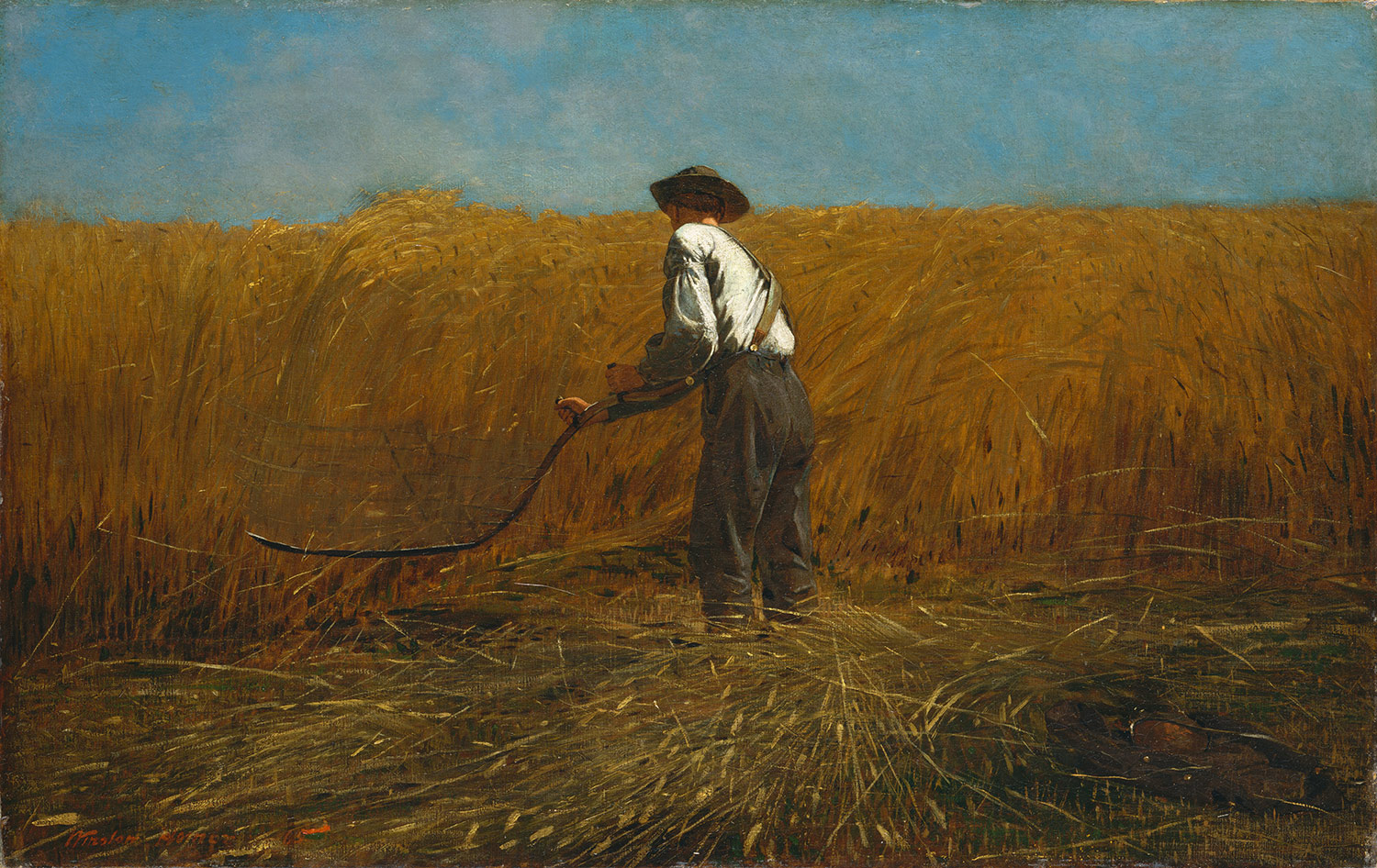
I think I read this novel, or, this novel-like cluster of prose poems — a Deadwood-slangy, Ondaatje-dreamy imagining of the ultimate broodings of Frederick Benteen*, the second-in-command of the Seventh Cavalry who despised Custer and was despised in turn, and who survived Little Bighorn, rallied and saved the remnant of the white force, only to be partially but popularly blamed for letting ol’ Goldilocks die — at just the right time. The “right time” is now that I’ve read enough about America’s Civil and Indian Wars that I wonder less about the battles than about the aftermath, the long shadow, of battles; the coping with, the recounting of; about the memories, the old wounds, the passing of the armies; about Winslow Homer’s The Veteran in a New Field (1865); about Evan S. Connell’s remark that some of the officers of the Seventh had been shot up so bad in the Civil War they needed to be helped into their coats, helped into the saddle each morning; about Joshua Lawrence Chamberlain governing Maine, teaching at Bowdoin, composing his grandiloquent prose — all fifty postwar years of that — atop a mangled pelvis, conducting an exemplary late Victorian public life – riding horseback down flag-draped parade streets – through decades of ineffective surgeries, primitive catheters, impotence, incontinence, chronic urologic agony.

He wants to write the lost thoughts of soldiers. No, not the grand story, he has never known his life that way, but the seams and spaces in between. This is history too, he thinks, the weight of gathered thoughts…

~

It is a myth we prove ourselves in war, he thinks; we test ourselves in silence.


A three-star rating doesn’t keep The Lost Thoughts of Soldiers out of the little pantheon of books I cherish as the mordant and meditative distillate, the funerary essence, of the great wars of consolidation and conquest that made the modern United States between 1861 and 1890. Falconer, like Whitman in Specimen Days and Connell in Son of the Morning Star, favors collage over argument, digression over narrative; these writers don’t force everything to make sense – they let some of the chaos stay chaos, leave many of the mysteries mysteries, tarry sweetly on the frontiers of the knowable. (Whitman concluded his book of Civil War notes with the admission that “the real war will never get into the books” – including his own!) Of course, Falconer takes liberties – puts words in a dead mouth – but I’m cool with historical fiction – fiction whose characters actually existed – if, like The Lost Thoughts of Soldiers, it’s frankly and openly a poet’s diffuse dream over incidents of the record, a lyric consideration of the past voiced with a transparent ventriloquism. And Falconer is very concerned with a dissonance that obsesses me – wars of annihilating nationalistic ferocity, race wars of liberation and subjugation, recounted in the courtly language of sentimental memoirs. And she writes so beautifully:

In a chest upstairs, packed away in tissue and camphor, his old military jacket with his brevet rank that she will lay him out in. It is dark and heavy, a hint of grog and horsehair still about the lining. After a drunk, he would lie on his bed with it on his face, cool as coffin silk, and fill it with his breath. Sour caper juice in his throat, ready for ignition. His own ghost shape in the sleeves and the thick curve of the shoulders. Talking to Star-gazer and others out there somewhere in the blackness.

~

How little they really told each other of their own lives; they did not try, as women do, to make each other less predictable, to rifle in the secret drawers, to find each other out. Instead, each gratefully took over the role assigned, made his language over, offered up his inner longings only as a punchline. We are the fastidious sex, he thinks.

~

Look at our photographs, he thinks, and you can see that we carried the idea of the Indians around inside us, big as another continent, just as they carried our love letters and our pocket watches, not for their meaning but the weight of a future yet to be conceived. The Indians’ thoughts lost to us already, from the time we arrived here. But out on the plains we were, for the time those wars lasted, linked by our grim geography of fire beds and bullets, in a terrible third nation of our own.


_____________


* Connell writes: "In not a single photograph does Benteen look formidable, not even very military. He appears placid, gentle, benevolent, with feminine lips and prematurely white hair. Only after contemplating that orotund face for a while does one begin to perceive something rather less accommodating. Embedded in that fleshy face are the expressionless agate eyes of a killer. One might compare them to the eyes of John Wesley Hardin or Billy the Kid. Now, this sinister absence of expression could be nothing more than a result of myopia, a condition afflicting him after the Oklahoma winter campaign of 1868-69 when he lent his protective goggles to a regimental surgeon. Still, in Civil War photographs he has almost the same look."
Profile Image for Tony.
1,049 reviews1,950 followers
June 19, 2012
It would be hard to shelve this slim volume, neither history nor novel; a re-imaging of Captain Frederick Benteen who survived that quintessential moment of American history known as Little Bighorn, in the words of an Australian woman who, quite candidly, I would like to have some beers with. It is lush and beautiful, crude and scatalogical. It is about soldiering and the evil that men do. And all the other chambers of the human heart.

This is a writing clinic on how to describe a person. Like Libbie Custer, whom the soldiers hated. Custer had given instructions to the men to kill her if it looked like defeat. Some mornings the men would draw lots to see who would have the privilege if it turned out to be the day.

He believed she had no private thoughts, only, like Custer, a kind of extra instinct for standing where the light would catch her best.

Handsome Jack had a litany of names for his shits and farts. The Irishman Keogh would brush a woman's fingertips and guarantee an evening rain, if she wished, knowing after she decided on the poetry she would open her door. Monroe thought cows would follow you if they wanted to ask you a question. And Benteen's wife, who on that first night taught him a very sweet thing.

Falconer has a ready answer to those who would question such topics told so realistically by a female author. Why is it that men only write? After all, if an opinion is on the menu he has never known a woman to refuse it. But there is more than argument, he thinks, in these frail pages.

There is indeed. I kept wandering back as I was reading, feeling the pull of a phrase or vignette. Since I don't know quite were to shelve it, maybe I should just keep it handy.

Profile Image for Anna.
67 reviews37 followers
August 3, 2007
Every word counts in this book - if all "history" was this good, everyone would be reading it. I loved the way Custer's Last Stand, the battle of Little Bighorn, the encounters with Indians, indeed the horror of battle, all stood on the edges of this book.

Benteen is irreperably damaged by his experiences in the 7th Cavalry, and although 20 years have passed, the memories live in his every waking hour. Emotionally petrified, he lives through his experience/recollection of the natural world and the world of men in war - a terrible waiting between guerilla engagements, the gaping emptiness of the plains, the unknown but imagined world of the Sioux.

The way men talk in this book is like chewing jerky. It's so wonderful, and reminded me of Deadwood. David Milch talks about the depth and coarse inventiveness of the language in Deadwood as an accurate representation of the way contemporary language was used to master the chaos, the sheer unpredictability, of the frontier life, and the same applies here, I think.

While this is largely a book of the hermetic world of bonded soldiers, the women in it really live - Libby Custer, hated with a passion by the enlisted men, like Madame Bovary in a log cabin. Also Frabbie, Benteen's wife, who tries to reach him across the chasm of his loneliness and drinking, his status as the man who might have saved Custer - and who has pain of her own, with four children dead in infancy.

A world of details, of extraordinary beauty and sadness. Made me think so much about what is going on in Iraq, and wars everywhere. You can teach a person to be a soldier, but they'll never be able to unlearn the lesson.

Read it now.
Profile Image for Jim.
Author 25 books351 followers
June 27, 2007
Weighing in at a bantam-like 155 pages, Falconer’s haunting prose is every bit as evocative as another novella with a historical subject: Michael Ondaatje’s The Collected Works of Billy the Kid.

For a book so slender, The Lost Thoughts of Soldiers is difficult to pin down. First and foremost, it’s a rumination on history, warfare, and its slippery relationship with the truth. The narrative is fainter than one would expect for a book about the Battle of Little Bighorn, an event overloaded with received wisdom passed down through the ages, some of it accurate, some not. Perhaps the best way to approach the book is through a literal reading of its title.

Captain Frederick Benteen is an old soldier coming to terms with his past. History has not been kind to Benteen and his reputation has been slagged by armchair field generals who suggest the outcome of the Battle would have been different if Benteen had accompanied Custer into the teeth of the slaughter. When a letter arrives from a scholar eager to make his reputation by clearing Benteen’s name, the old soldier starts poking through his personal effects and journals from the Indian campaigns.

As Benteen considers what, if any, his response to the earnest young scholar should be, a host of unforgettable characters emerge from the fog of his memories: the recklessly irreverent Handsome Jack, the soulful and reflective Star-Gazer, the bawdy and slightly crazed cook, and the great man himself, Colonel Custer who emits a weird aura every time he appears on the page—call it the vanity of the doomed.

In Benteen’s recollections, the men are seldom engaged in warfare, but rather the hard licks and picks of 19th century Army life. Falconer knows that a soldier’s existence is 90% boredom and thus the men are always talking about themselves: their experience (or lack thereof) with women, their alcohol preferences, their dreams. Their thoughts are as poetic (I don’t think a soul is a good idea if given infinite space) as they are ribald (You quim quaffer! You gusset-guzzling bloomer-bolter! You old tuft-taster!).

These portraits have a startling intimacy about them and though Benteen would never admit it (nor would Falconer capitulate to a formulation so trite), he clearly loves his men. His recollections constitute a meta manuscript, a lush catalog of lost thoughts that had he foolishly followed Custer into the fray, would never have come to light.

(Excerpted from a review published in November of 2007 at The Elegant Variation. Click the link for an author interview:
[http://marksarvas.blogs.com/elegvar/2...])
Profile Image for Larisa.
249 reviews5 followers
July 15, 2011
I'd give this a 3.5 if I could. If you prefer books with linear narrative and a plot, you should probably skip this one. If you like books with luminous writing that fully captures what a time and place looked, sounded, felt, and smelled like, pick up a copy of "The Lost Thoughts of Soldiers." Falconer gets inside the mind of Frederick Benteen, a soldier who served with Custer during the Battle of Little Bighorn (and for several years earlier) and recreates through his memories what the daily lives of those soldiers were like. It skirts around Custer's final battle; I didn't get the impression that the book's point was to settle any sort of score about what should or should not have happened that day, but rather to capture a time, place, and profession (cavalry) that has been lost. And now I have to fess up and say the only reason I don't give this book 4 stars is the repeated references to feces (I guess guys literally talk shit a lot?) which marred the beauty of the writing for me.
Profile Image for Roger.
535 reviews24 followers
May 30, 2022
What a strange and interesting book. Is it a good book? Taken as a whole I think yes, although it's not without flaws. It's an interesting premise - an interior monologue from Frederick Benteen as he wanders through his house in Georgia one summer's morning, musing on a letter sent to him from a young man in Chicago who wants to write the ultimate history of Custer's Last Stand, and to clear Benteen from the opprobrium that clung to him over his activities on that fateful day.

The book proceeds in a series of vignettes, none really about the battle, but about Benteen and some other (mostly fictional) members of the Seventh Cavalry, about their lives in the countryside, about living from day-to-day, and also about Benteen's wife Frabbie, and his relationship with her.

The book has a dreamlike quality to it, it seems that the reader views everything through a muslin veil. One gets the sense that Benteen is trying to make sense of the world, and how his involvement in that one day has overshadowed the rest of his life where everyone else is concerned. But for Benteen it is all the other moments and feelings that are important, not the hours of terror on that famous battlefield.

Through this work Falconer has much to say about how history is made - how it is made of ordinary men (and women) who happen to be in a certain place at a certain time, but who for the rest of their lives are just ordinary - they fart, they love their pets, they can be cruel, they get drunk and do stupid things, they hate their Commander, they put their trust in him (sometimes).

I found myself drawn in to this narrative - Benteen is such a damaged character, still trying to make sense of what happened so many years after the event, but there is some unfortunate writing that occasionally jolted me out of the book. Some of it was technical (pretty sure Benteen would have used the word cartridges and not shells to describe his ammunition), and some of it, reading as a man, felt like a woman writing about a man - it just didn't sit right - men wouldn't think or do the things Falconer has written. Perhaps that is more a reflection on the reader than the book...

Really though, they are minor quibbles: this is an ambitious and even a brave book on such a topic, a book of vivid images, and a book that makes us question how we view history and man's place in it.

Check out my other reviews at http://aviewoverthebell.blogspot.com.au/
Profile Image for Gavan.
740 reviews21 followers
December 22, 2022
OK, I may be a bit harsh, but I am conflicted about this novella - absolutely brilliant writing let down by a very difficult to follow story. The book contains a lot of short pieces about various characters without any clearly discernible arc beyond an old soldier reliving his past "glories". Perhaps if I knew more about the actual events used as a backdrop (American "Indian" war) it would have made more sense?
Profile Image for Richard.
81 reviews1,156 followers
Read
June 25, 2007
Georgia, 1898: On what may be the last day of his life, Captain Frederick Benteen - the man who saved portions of Custer's Seventh Cavalry from almost certain death at Little Bighorn - receives a letter from an ambitious boy offering to "restore" his reputation. Over the twenty-three long years since that battle, watching Custer's legend grow, Benteen has brooded silently on the past. His General has been dead for more than twenty years, killed in action, considered a hero, while the public has never forgiven Benteen for surviving. Now, at last, he begins to put down some account of those two horrific days pinned down on a ridge. What follows is an exquisite eulogy for his fellow soldiers, both alive and dead, as Benteen refuses to bow to the demands of legend.
As he begins to write, Benteen finds himself haunted by his lost companions: by Star-Gazer, who joined the army to write poems; mysterious Handsome Jack, who plays the banjo and founded the Grand Order of the Grapefruit - together they form a strange double act, a frontier Rosencrantz and Guildenstern; De Rudio, the gentle German bugler; Young Tom, who stands in his brother Custer's shadow; whimsical Pritzker trapped in dreams; and the Choir, a host of often shocking misfits who hover at the edges of the action.
As Benteen mines deeper into the past, he struggles to untangle his own story, his own worth, from the grand narrative of history. Insistently, he finds himself drawn to the fleeting memories of the "nine-tenths nothing" that make up battle - scraps of men's speech, notes from Star-Gazer's enigmatic journal, jokes, lost thoughts, moments of great beauty and casual violence. Gradually the reader realizes that what Benteen is struggling to recapture, to remember, is a different America, before it began to play out its own history as spectacle, over and over again, as anticipated by that consummate performer, Custer.
As poignant and elegaic as the writing is, it is simultaneously a very funny novel, as when Benteen recalls meeting a nun in New York: she tells him how the monks used to piss in the molten stained glass to achieve a certain milky yellow colour. After this anecdote: "That one thought changed the whole of Europe for him."
Told over the space of a single morning, The Lost Thoughts of Soldiers is about death and dying, women and war, growing old, parenthood, friendship and soldierliness. It is about a nation's preoccupation with celebrity, and what, in the end, a life is worth.
2 reviews1 follower
September 27, 2008
Georgia, 1898: Frederick Benteen, a captain in General Custer's Seventh Cavalry during the plains Indian wars, is reviewing his life. His General has been dead for more than twenty years, killed in action, considered a hero, while the public has never forgiven Benteen for surviving. Now, at last, he begins to put down some account of those two horrific days pinned down on a ridge. What follows is an exquisite eulogy for his fellow soldiers, both alive and dead, as Benteen refuses to bow to the demands of legend.

As he begins to write, Benteen finds himself haunted by his lost companions: by Star-Gazer, who joined the army to write poems; mysterious Handsome Jack, who plays the banjo; gentle de Rudio, the bugler; Young Tom, who stands in Custer's shadow; and the Choir, a group of lost souls.

Told over the space of a single morning, The Lost Thoughts of Soldiers is about death and dying, women and war, growing old, parenthood, friendship and soldierliness. It is about a nation's preoccupation with celebrity, and what, in the end, a life is worth.

Profile Image for Danna.
45 reviews27 followers
June 26, 2007
Delia Falconer can write history and men with astonishing authority. This is one book I would recommend everyone drop what they're doing and head to the local bookstore, get home quickly, no dawdling, pour a cold glass of something refreshing, and settle in, preferably on a comfy chair under a shade tree for a few hours with the reward of being held in the shimmer of Falconer's brilliant prose.

A little about the book: Imagine being reviled for surviving one of the Old West's mythic battles, Little Bighorn,only to witness Custer's myth as the fallen hero grow with each year. Imagine what this can do to a true warrior, a man's man, a soldier's soldier, a man such as Frederick Benteen. This book explores the troubled memories Benteen struggles to come to terms with, his regret, the men lost so foolishly, their lost lives and thoughts which only he holds.
Profile Image for Shannon T.L..
Author 6 books57 followers
January 22, 2010
This book had an interesting concept: telling the story of one of the men who fought with Custer and was later blamed for Custer’s defeat. In this book he responds to someone who wants to redeem his name by giving his recollections of his men and the battle.

The concept is good but I hated the execution. I felt like the author was trying to be poetic just to be poetic but didn’t really succeed. There were a few moments where the writing was beautiful but for the most part I felt that it was over the top. The book was also incredibly crass and it seemed as if the author thinks that men are only concerned with bodily functions and sex and instead of writing about that in a way that would be authentic she tries to make those things poetic as well and it just falls flat.

I really did not like this book and wouldn’t recommend it.
16 reviews
January 19, 2011
This is an interesting book that captures random snippets of thoughts and memories of a soldier in Custer's Army.

The book doesn't detail any battles but rather the moments between them, the antics that keep them alive, snide comments, crude comments and behaviours, moments spent with the company of others in the same situation and moments spent with wives.

Some of it appears very random and it can read very disjointedly, but it's fascinating to see the antics the guys were up to on the battlefields back in the 1800's.

An intersting read.
Profile Image for Iva.
797 reviews2 followers
March 23, 2012
I immediately thought of The Things They Carried, though this takes place during the Battle of Big Horn. It is a story of men observing men during battle. The narrator says, near the end of the book, "If you truly wish to understand the battle and my place in it, you must understand stand the dreams and jokes and stories that we bore within us. You must see how, as we shared them, they formed a kind of landscape." It's a one sitting read, uses true life characters, and is beautifully imagined.
Profile Image for Ajj.
107 reviews12 followers
September 1, 2012
I found this book to be a delightful little gem. If you are into the story of Custer and the Little Bighorn this is a must read. I was delighted that I had read "Son of the Morning Star" by Evan S. Connell shortly before reading this book. The two are a great pair as "Lost Thoughts" brings to light through fiction much of what Connell cannot with mute history.

Falconer's prose is the sort that makes me smile and read it again. The small sections can each be chewed on for awhile to heighten the flavor before final consumption.

Profile Image for Michael Kocinski.
81 reviews3 followers
August 22, 2008
This book, this lovely piece of writing, showed me that character depth and expansive subject matter can be handled in a small book--it was just the right length, and when it was over, I wanted more. It created tension. More pages would have ruined the experience for me, so I'm happy it ended when it did. But I still wanted more and more. It's a book that didn't end so much as stop, and I love that unrequited feeling a novel can give me.
Profile Image for KtotheC.
544 reviews4 followers
Read
February 3, 2016
I think it's more of a failing in me than the book that I didn't like it. I felt ungrounded and afloat, with no real plot to grasp. I think that was intentional - an attempt to focus on passing moments and thoughts of soldiers that are often passed over in favour of recounting great battles in history texts. So she has achieved what she set out to do but it wasn't for me.
Profile Image for Kris McCracken.
1,940 reviews61 followers
August 9, 2013
Set a quarter century after the event, this novel imagines Captain Frederick Benteen remembering the destruction of Custer’s Seventh Cavalry at Little Bighorn. A meditative book, this is an exquisite eulogy for the ordinary soldier, alive and dead. Brilliant. A+.
Profile Image for stacy.
120 reviews17 followers
Want to Read
November 11, 2007
getting stellar reports on this brand new book. i hope it's one of those i want to keep under my pillow to induce better dreaming--and more appreciative living. i'll let you know...
29 reviews
March 18, 2011
Prose as poetry. It is so rare to come across such beautiful writing. Her choice of subject; the weaving of fragments; her way of communicating is unique. I take my hat off to her.
Profile Image for Nic.
788 reviews15 followers
July 21, 2011
Well constructed, graceful sentences. At times it felt too factual.
Displaying 1 - 23 of 23 reviews