

What do you think?

The Lady from the Sea
Doktor Wangel ist Arzt in einer Kleinstadt an der Westküste Norwegens. Er lebt zusammen mit seinen zwei Töchtern aus erster Ehe und seiner zweiten Frau namens Ellida. Ellida fühlt sich in der Ehe mit Wangel nicht wohl und lebt immer mehr einer Sehnsucht nach. Sie hatte vor zehn Jahren einen Seemann kennengelernt, mit welchem sie auf offener See eine Art geheime Verlobung einging. Der Seemann musste jedoch kurz darauf fliehen, nachdem er einen Kapitän ermordet hatte. Er versprach Ellida wiederzukommen und bat sie, auf ihn zu warten. Obwohl Ellida dem Seemann in zwei Briefen eindeutig zu verstehen gab, dass sie nichts mehr von ihm wolle, zog dieser fremde Mann sie über die Jahre stetig magisch an. Der Seemann kommt mit einem englischen Dampfer zurück und will Ellida holen. Ellida kann sich nicht entscheiden.
88 pages, Paperback
First published January 1, 1888
About the author
Henrik Ibsen
2,472 books2,180 followersHenrik Johan Ibsen was a major Norwegian playwright largely responsible for the rise of modern realistic drama. He is often referred to as the "father of modern drama." Ibsen is held to be the greatest of Norwegian authors and one of the most important playwrights of all time, celebrated as a national symbol by Norwegians.
His plays were considered scandalous to many of his era, when Victorian values of family life and propriety largely held sway in Europe and any challenge to them was considered immoral and outrageous. Ibsen's work examined the realities that lay behind many facades, possessing a revelatory nature that was disquieting to many contemporaries.
Ibsen largely founded the modern stage by introducing a critical eye and free inquiry into the conditions of life and issues of morality. Victorian-era plays were expected to be moral dramas with noble protagonists pitted against darker forces; every drama was expected to result in a morally appropriate conclusion, meaning that goodness was to bring happiness, and immorality pain. Ibsen challenged this notion and the beliefs of his times and shattered the illusions of his audiences.
His plays were considered scandalous to many of his era, when Victorian values of family life and propriety largely held sway in Europe and any challenge to them was considered immoral and outrageous. Ibsen's work examined the realities that lay behind many facades, possessing a revelatory nature that was disquieting to many contemporaries.
Ibsen largely founded the modern stage by introducing a critical eye and free inquiry into the conditions of life and issues of morality. Victorian-era plays were expected to be moral dramas with noble protagonists pitted against darker forces; every drama was expected to result in a morally appropriate conclusion, meaning that goodness was to bring happiness, and immorality pain. Ibsen challenged this notion and the beliefs of his times and shattered the illusions of his audiences.
Ratings & Reviews
Friends & Following
Create a free account to discover what your friends think of this book!
Community Reviews
Displaying 1 - 30 of 213 reviews

November 22, 2023
Overly soft and ridiculously sweet. Very much unalike Ibsen. Possibly it was written whilst Ibsen was romantically day-dreaming? I acknowledge that I was misled by some of the introductory scenes of the play and so thought that something more dramatic will follow up. But Ibsen decided to make peace with the whole humanity and let the story end with a sort of ''and they lived happily ever after". Surely very much unalike Ibsen. I need to read another play now. To reconnect with the original Ibsen 😁

March 11, 2015
A lost love returns
15 March 2015
Okay, I have mentioned before that reading a play can be somewhat more difficult that watching it performed; one of the reasons being that sometimes it is difficult to differentiate the characters. However, after being forced to put this play down after reading the first act because I had to go to work (and unfortunately I don't work in a job where I can put my feet up on a desk and read a book while video cameras monitor the outside of a warehouse making sure that nobody is trying to break it – I did have a friend who had a job like that, and that is basically what he did all night), I suddenly discovered another problem with plays – they are meant to be read in one sitting. Unfortunately they are not like novels where you can put them down and pick them up later, because it can be a lot easier to lose your place in a play than in a novel (or maybe it is just me).
Anyway, this play is about a woman who grew up in a lighthouse. She then met and fell in love with a sailor but when the sailor left to go out to sea he got into a bit of trouble (he killed his captain) and was forced to abandon ship – thus becoming lost and presumed dead. After a period of mourning the lady, Ellie, goes off and marries a doctor and moves inland. However, years later a stranger rocks up at her front door, introduces himself to her as her highschool sweetheart (for want of a better word) and asks her to elope.
One of the things that strikes me in this book is how the loves of our youth can hold on to us for years. I'm not talking about pining over somebody who is probably not all that good for you and rejecting all other advances because you want that one person, I am talking about a romance that happened years ago, back in our teenage years (or early twenties) and then, for some reason or another (maybe they moved school), the relationship comes to an end. However what Ibsen is exploring here is how these loves can linger on, and how a part of us wishes that our lost lovers will someday return and we can begin from where we finished.
I'm not so much talking about those relationships that ended because we broke up, but rather those ones that ended because of inconvenience – such as the case in this book, namely he went away, a disaster happened, and he was left for dead. In my mind I picture the highschool romance that ended because the parents found a job in another city (or even another suburb) and because of that we parted company as one of us moved away. There was no Facebook, or email, or even mobile phones, back in those days – if somebody moved, they were gone, and gone for good. Maybe, one day, we would meet again, but I think of all the people that I knew from school, and only a handful of us have reconnected over social media (usually Facebook).

The other interesting thing about this play is how Ibsen uses the image of the mermaid. At the beginning of the play somebody is a painting a picture of a mermaid, and at the end of the play Ellie makes a comment about how she, the mermaid, has made her decision. It is interesting how Ibsen uses this imagery as there are a couple of things I have noticed. First of all, as we are aware, the mermaid is tied to the sea, but the other interesting thing is that mermaids aren't necessarily good creatures (unlike our modern legends, thanks to Hans Christian Andersen). Some legends have mermaids luring sailors to their deaths, while others would stir up storms and tempests – in general heralding bad luck. This is not necessarily the case with this play, even though Ellie grew up in a lighthouse, which adds to the mermaid allusion as they are generally built on rocks out at sea, the traditional home of the mermaid. However, instead of being an ill omen, they are a warning to passing sailors, crying out 'beware for here lies danger'.
Anyway, while it would be good to continue on exploring the allusion, I think I will leave it at that because that would end up giving away the ending, and for some reason I really don't want to do that.
15 March 2015
Okay, I have mentioned before that reading a play can be somewhat more difficult that watching it performed; one of the reasons being that sometimes it is difficult to differentiate the characters. However, after being forced to put this play down after reading the first act because I had to go to work (and unfortunately I don't work in a job where I can put my feet up on a desk and read a book while video cameras monitor the outside of a warehouse making sure that nobody is trying to break it – I did have a friend who had a job like that, and that is basically what he did all night), I suddenly discovered another problem with plays – they are meant to be read in one sitting. Unfortunately they are not like novels where you can put them down and pick them up later, because it can be a lot easier to lose your place in a play than in a novel (or maybe it is just me).
Anyway, this play is about a woman who grew up in a lighthouse. She then met and fell in love with a sailor but when the sailor left to go out to sea he got into a bit of trouble (he killed his captain) and was forced to abandon ship – thus becoming lost and presumed dead. After a period of mourning the lady, Ellie, goes off and marries a doctor and moves inland. However, years later a stranger rocks up at her front door, introduces himself to her as her highschool sweetheart (for want of a better word) and asks her to elope.
One of the things that strikes me in this book is how the loves of our youth can hold on to us for years. I'm not talking about pining over somebody who is probably not all that good for you and rejecting all other advances because you want that one person, I am talking about a romance that happened years ago, back in our teenage years (or early twenties) and then, for some reason or another (maybe they moved school), the relationship comes to an end. However what Ibsen is exploring here is how these loves can linger on, and how a part of us wishes that our lost lovers will someday return and we can begin from where we finished.
I'm not so much talking about those relationships that ended because we broke up, but rather those ones that ended because of inconvenience – such as the case in this book, namely he went away, a disaster happened, and he was left for dead. In my mind I picture the highschool romance that ended because the parents found a job in another city (or even another suburb) and because of that we parted company as one of us moved away. There was no Facebook, or email, or even mobile phones, back in those days – if somebody moved, they were gone, and gone for good. Maybe, one day, we would meet again, but I think of all the people that I knew from school, and only a handful of us have reconnected over social media (usually Facebook).
The other interesting thing about this play is how Ibsen uses the image of the mermaid. At the beginning of the play somebody is a painting a picture of a mermaid, and at the end of the play Ellie makes a comment about how she, the mermaid, has made her decision. It is interesting how Ibsen uses this imagery as there are a couple of things I have noticed. First of all, as we are aware, the mermaid is tied to the sea, but the other interesting thing is that mermaids aren't necessarily good creatures (unlike our modern legends, thanks to Hans Christian Andersen). Some legends have mermaids luring sailors to their deaths, while others would stir up storms and tempests – in general heralding bad luck. This is not necessarily the case with this play, even though Ellie grew up in a lighthouse, which adds to the mermaid allusion as they are generally built on rocks out at sea, the traditional home of the mermaid. However, instead of being an ill omen, they are a warning to passing sailors, crying out 'beware for here lies danger'.
Anyway, while it would be good to continue on exploring the allusion, I think I will leave it at that because that would end up giving away the ending, and for some reason I really don't want to do that.

Read
February 13, 2020 مسرحية من خمسة فصول لرائد المسرح الواقعي الحديث "هنريك إبسن" ...
وبالطبع يستحيل عليك التنبؤ بطباع وميول المرأة في أعماله ..لكن يمكنك أن تتيقن من أن ثمة ما يستدعي أن تُحطم المرأة قيودها وتحل الأصفاد التي تُكبلها ، ولن يتحقق ذلك إلا بنيل حريتها...مازلت أذكر دوي صفقة الباب بعدما غادرت سيدة المنزل في مسرحية "بيت الدمية"..
هنا سيدة تنتمي إلى البحر ، غريبة الأطوار ينتابها مشاعر متناقضة من الافتتان والخوف ازاء رجل غريب ، تماماً مثلما يفعل البحر عندما تقف أمامه تتأمل تدافع الأمواج ما بين مد وجزر ، يفتنك صباحاً بينما تتمازج أشعة الشمس بصفحة مياهه ملتمعاً ، يثير مخاوفك عندما ينسدل الليل ستاراً يطويه معتماً ...
تلك المرأة ترفض أن يقدم لها زوجها يد المساعدة بحمايتها فهى ترى أن ليس ثمة شيء خارجي يهددها بل شيء مبهم بداخلها لا يمكن لأحد أن يسبر غوره ، شيء يعجز المرء عن تفسيره ، غير أنها تطالب بنيل حريتها من رباط الزواج لكي تتمتع بإرادة حرة مستقلة تُمكنها من التخلص من الخوف المريع الذي يثقل عليها ...!!!!!
أياً تكن النهاية التي تبدو سعيدة وقد شاءت الأقدار أن تُبقي على زواجها وتتحرر من مخاوفها ورغباتها المجهولة...
لكن ألم يكن الأولى بأن تحتمي بزوجها ؟ لقد كان رجلاً رصيناً ، متزناً وعطوفاً ..
أن تُقدر اخلاصه وحبه لها ، أن لا تغفل عن رغبته في الحفاظ عليها و التضحية بأي شيء في سبيل تعافيها ...
لماذا تؤطر المرأة في دور الضحية إن منحت قلبها فرصة لشريك حياتها طالما كان يستحق ذلك..؟؟!!!!.....
وبالطبع يستحيل عليك التنبؤ بطباع وميول المرأة في أعماله ..لكن يمكنك أن تتيقن من أن ثمة ما يستدعي أن تُحطم المرأة قيودها وتحل الأصفاد التي تُكبلها ، ولن يتحقق ذلك إلا بنيل حريتها...مازلت أذكر دوي صفقة الباب بعدما غادرت سيدة المنزل في مسرحية "بيت الدمية"..
هنا سيدة تنتمي إلى البحر ، غريبة الأطوار ينتابها مشاعر متناقضة من الافتتان والخوف ازاء رجل غريب ، تماماً مثلما يفعل البحر عندما تقف أمامه تتأمل تدافع الأمواج ما بين مد وجزر ، يفتنك صباحاً بينما تتمازج أشعة الشمس بصفحة مياهه ملتمعاً ، يثير مخاوفك عندما ينسدل الليل ستاراً يطويه معتماً ...
تلك المرأة ترفض أن يقدم لها زوجها يد المساعدة بحمايتها فهى ترى أن ليس ثمة شيء خارجي يهددها بل شيء مبهم بداخلها لا يمكن لأحد أن يسبر غوره ، شيء يعجز المرء عن تفسيره ، غير أنها تطالب بنيل حريتها من رباط الزواج لكي تتمتع بإرادة حرة مستقلة تُمكنها من التخلص من الخوف المريع الذي يثقل عليها ...!!!!!
أياً تكن النهاية التي تبدو سعيدة وقد شاءت الأقدار أن تُبقي على زواجها وتتحرر من مخاوفها ورغباتها المجهولة...
لكن ألم يكن الأولى بأن تحتمي بزوجها ؟ لقد كان رجلاً رصيناً ، متزناً وعطوفاً ..
أن تُقدر اخلاصه وحبه لها ، أن لا تغفل عن رغبته في الحفاظ عليها و التضحية بأي شيء في سبيل تعافيها ...
لماذا تؤطر المرأة في دور الضحية إن منحت قلبها فرصة لشريك حياتها طالما كان يستحق ذلك..؟؟!!!!.....

March 30, 2019
“Non ha mai fatto caso che la gente di mare forma ovunque come una razza a parte? Si direbbe che viva la vita stessa del mare. Nei pensieri, nei sentimenti di costoro ci sono le onde, le maree. E non sopportano i trapianti. ”
Sono una donna di mare. Sono abituata a vederlo spesso durante il giorno, è un conforto, una certezza. Non penso di potere immaginare la mia vita lontano da quella distesa di acqua salata che ho sempre negli occhi. Ed è vero. E’ attrazione, ma anche bisogno. E’ un filo in più con la natura. Lo stesso di chi nasce e vive in montagna credo.
Le donne di Ibsen sono forti, anticonvenzionali. Spezzano tutte le barriere del perbenismo, delle regole, della morale. Si confessano mostrando le loro debolezze ed è questa la loro forza. Ellida è debole con il marito ma forte di fronte all’ignoto. E vince la sua battaglia interiore con semplicità.
Un dramma familiare, che tocca temi modernissimi per l’epoca: la solitudine dell’uomo; l’insoddisfazione della donna; il rapporto fra la “nuova” madre e i figli di un precedente matrimonio; l’impossibilità di “possedere”, di conoscere una persona dopo anni di vita comune; le mancanze di un matrimonio. Una lettura intensa, un occhio diverso, che fa riflettere e spinge a conoscere l’ignoto per non doverlo più temere.
Sono una donna di mare. Sono abituata a vederlo spesso durante il giorno, è un conforto, una certezza. Non penso di potere immaginare la mia vita lontano da quella distesa di acqua salata che ho sempre negli occhi. Ed è vero. E’ attrazione, ma anche bisogno. E’ un filo in più con la natura. Lo stesso di chi nasce e vive in montagna credo.
Le donne di Ibsen sono forti, anticonvenzionali. Spezzano tutte le barriere del perbenismo, delle regole, della morale. Si confessano mostrando le loro debolezze ed è questa la loro forza. Ellida è debole con il marito ma forte di fronte all’ignoto. E vince la sua battaglia interiore con semplicità.
Un dramma familiare, che tocca temi modernissimi per l’epoca: la solitudine dell’uomo; l’insoddisfazione della donna; il rapporto fra la “nuova” madre e i figli di un precedente matrimonio; l’impossibilità di “possedere”, di conoscere una persona dopo anni di vita comune; le mancanze di un matrimonio. Una lettura intensa, un occhio diverso, che fa riflettere e spinge a conoscere l’ignoto per non doverlo più temere.

March 13, 2016
I enjoyed this play, something mysterious about it; not a mystery, just a somewhat strange story line that is less about the sea than you might think from the title. Ibsen's characters were beautifully conceived, probably the best thing about the play, and the ending has a bit of a twist.

June 20, 2024
Back 25 years ago I read all of Ibsen's major plays in one week, in preparation to review a production of The Wild Duck at a NY theatre for the Ibsen Journal. Don't think I've reread any of his plays since ... but a GR friend (shout out to Liam O!) recommended a novel {The Stranger from the Sea} that is a prequel to this one that I thought sounded fascinating - hence the reread now.
The play is not 'top tier' Ibsen, and is rarely performed, but is still an interesting mature work. It's something of a companion piece to A Doll's House, in that it concerns primarily a woman's need to feel that she is free to make her own decisions, much like Nora. And of course, the character of Hilde reappears in The Master Builder.
The play is not 'top tier' Ibsen, and is rarely performed, but is still an interesting mature work. It's something of a companion piece to A Doll's House, in that it concerns primarily a woman's need to feel that she is free to make her own decisions, much like Nora. And of course, the character of Hilde reappears in The Master Builder.

August 17, 2018
جامعهی مردسالارانهی نروژِ زمان ایبسن، علیرغم احترام ظاهریاش به زنان (رفتار عروسکوار با آنها)، چنان عرصه را بر زنان تنگ میکند که پایان داستانهای ایبسن، همواره با تنها راه رهایی (یعنی خودکشی، یا فرار از خانهی شوهر) همراه است.
به عبارتی، جامعه هیچگاه در خودش تغییر بوجود نمیآورد و مصلحانش را دشمن مردم و خائن مینامد.
نکتهی طنزآمیز و پارادوکسیکال این است که، مادر و دختر، هر دو، برای بدست آوردن آزادی، از شوهر/پدر دل میکنند و خودشان را «دربست» در اختیار مردی دیگر قرار میدهند، تا «او» دنیای جدید را بهشان نشان دهد. و بنظرم مادامی که راهحلْ از آغوش کسی به پناه دیگری رفتن باشد، آزادی حقیقی ممکن نیست.
در پردهی پنجم، دیالوگ شاهکاری برقرار میشود. بولتته --دختر جوان--، از ترس اینکه همهی عمر نزد پدر و در شهر ساحلی کوچکش باشد، و به بلندپروازیهایش نرسد، و «دلشورهی این درآمد چِرت» را داشته باشد، و در آینده مجبور به ازدواج با مردانی شود که دوستشان ندارد، تن به ازدواجی اجباری میدهد.
اما در پایان این نمایشنامه، ایبسن همهی این قواعد را میشکند. درست وقتی به اللیدا «آزادیِ توأم با مسئولیت» عطا میشود، وقتی دیگر بخاطر ترس از «اینجای معلوم»، مجبور به انتخاب «آنجای مجهول» نیست، رأیش برمیگردد و خواهان ماندن میشود.
(و این به من ایده میدهد تا تمایل مهاجرت را این چنین تفسیر کنم. تا وقتی میخواهیم از این «خرابه» فرار کنیم، به هر مسیری برای رفتن چنگ میزنیم. ولی درست وقتی که توانستیم مطمئن باشیم که راه رفتن همیشه برایمان باز است و الزامی به جبر جغرافیایی نداریم، علیرغم اینکه اینجا هم چیزی که دلبستهمان کند نداریم، میمانیم و شروع میکنیم به «ساختنِ» چیزهایی که دلبستهمان کنند.)
این فرار از زندگی بورژوازی، مفهومی است که در اواخر قرن نوزدهم در ادبیات اروپا پررنگ شد. همانطور که در ریویوی دیشبم بر «مرگ ایوان ایلیچ» اشاره کردم، نویسندهها به پوچی این زندگی پی بردند و کمکم بنیانهای این شیوهی زندگی سست شد. و این میشود که در ابتدای قرن بیستم در مثلا روسیهْ انقلاب سوسیالیستی رخ میدهد.
به عبارتی، جامعه هیچگاه در خودش تغییر بوجود نمیآورد و مصلحانش را دشمن مردم و خائن مینامد.
نکتهی طنزآمیز و پارادوکسیکال این است که، مادر و دختر، هر دو، برای بدست آوردن آزادی، از شوهر/پدر دل میکنند و خودشان را «دربست» در اختیار مردی دیگر قرار میدهند، تا «او» دنیای جدید را بهشان نشان دهد. و بنظرم مادامی که راهحلْ از آغوش کسی به پناه دیگری رفتن باشد، آزادی حقیقی ممکن نیست.
در پردهی پنجم، دیالوگ شاهکاری برقرار میشود. بولتته --دختر جوان--، از ترس اینکه همهی عمر نزد پدر و در شهر ساحلی کوچکش باشد، و به بلندپروازیهایش نرسد، و «دلشورهی این درآمد چِرت» را داشته باشد، و در آینده مجبور به ازدواج با مردانی شود که دوستشان ندارد، تن به ازدواجی اجباری میدهد.
اما در پایان این نمایشنامه، ایبسن همهی این قواعد را میشکند. درست وقتی به اللیدا «آزادیِ توأم با مسئولیت» عطا میشود، وقتی دیگر بخاطر ترس از «اینجای معلوم»، مجبور به انتخاب «آنجای مجهول» نیست، رأیش برمیگردد و خواهان ماندن میشود.
(و این به من ایده میدهد تا تمایل مهاجرت را این چنین تفسیر کنم. تا وقتی میخواهیم از این «خرابه» فرار کنیم، به هر مسیری برای رفتن چنگ میزنیم. ولی درست وقتی که توانستیم مطمئن باشیم که راه رفتن همیشه برایمان باز است و الزامی به جبر جغرافیایی نداریم، علیرغم اینکه اینجا هم چیزی که دلبستهمان کند نداریم، میمانیم و شروع میکنیم به «ساختنِ» چیزهایی که دلبستهمان کنند.)
این فرار از زندگی بورژوازی، مفهومی است که در اواخر قرن نوزدهم در ادبیات اروپا پررنگ شد. همانطور که در ریویوی دیشبم بر «مرگ ایوان ایلیچ» اشاره کردم، نویسندهها به پوچی این زندگی پی بردند و کمکم بنیانهای این شیوهی زندگی سست شد. و این میشود که در ابتدای قرن بیستم در مثلا روسیهْ انقلاب سوسیالیستی رخ میدهد.

March 3, 2016
Another very enjoyable play from Ibsen. I love his work. He has the ability to enfold a moral truth in a compelling story like a beautiful multi-coloured and multi-textured fabric hiding and protecting a precious gem. One can feast on the beauty of the wrapping while anticipating the surprise within.
I listened to a superb dramatic presentation by Librivox volunteers. Less than three hours of listening pleasure. Surely you can spare that much time? It is worth every minute!
I listened to a superb dramatic presentation by Librivox volunteers. Less than three hours of listening pleasure. Surely you can spare that much time? It is worth every minute!

September 15, 2026
ایبسن رو کمترکسی با بانوی دریایی میشناسه ولی اگر از من بپرسید میگم این اثرش اگر از مطرحهاش بهتر نباشه، ضعیفتر هم نیست. در عروسکخانه ایبسن واقعیت جامعهی خودش در قالب مرد و زن رو به نمایش گذاشت و صریح به تقبیح اون پرداخت. در بانوی دریایی هم درگیری همینه ولی اینجا ایبسن قصدش دیگه فقط نمایش دادن و گوشزد کردن نیست؛ در اینجا ایبسن آموزش میده که رفتار درست چیه و چرا اصلاً اعتقاد به درست بودنش داره. از حیث فضا و داستان هم نسخهی چندینوچند برابر بهتری از رسمرس هلم محسوب میشه.
تا به حال ندیده بودم کسی بتونه چنین جبر و اختیار رو به بازی بگیره. مضمونی که ایبسن در بانوی دریایی بهش پرداخته واقعاً جوندار و فکرشده است: وفاداری بر ضد اختیار و توان انتخابه.
درواقع ایبسن این مقوله رو مطرح میکنه که اگر به چیزی وفاداریم، حتی اگر اون وفاداری خودخواسته و خوشاینده، بین اون چیز و چیز دیگهای که بهش تعلق نداریم درواقع انتخابی انجام ندادیم. فقط وقتی آزاد باشیم و به هیچ طرفی وفاداری نشون ندیم، اون وقته که میشه گفت اختیار و انتخاب داریم. اگر بدون علاقه، بدون پیوند، بدون نفع، بدون وابستگی چیزی رو انتخاب کنیم؛ اونوقته که واقعاً «انتخاب» کردیم.
مشکلی هم که با بانوی دریایی دارم همون ماجرای همیشگی تمام نمایشنامههای مدرن ایبسنه. با اینکه بخشی از موج مدرنیسم هستن اما سیر وقایع خیلی حالت رمانتیک داره و انگار دست خدا از اون بالا وقایع شانسی رو تعمدی کنار هم چیده تا ایبسن بتونه مضمونش رو بگه. با توجه به اینکه ایبسن از نخستین و پیشروهای موج مدرنیسم بوده کاملاً طبیعیه که ردی از مکتبها پیشین هم در نوشتارش باشه ولی خب تکرر و تعمدی بودنش باعث میشه تا اون تاثیر هیچوقت دقیقاً به قلب هدف نخوره. 4 نمرهی محشریه ولی خب میتونست 5 باشه.
تا به حال ندیده بودم کسی بتونه چنین جبر و اختیار رو به بازی بگیره. مضمونی که ایبسن در بانوی دریایی بهش پرداخته واقعاً جوندار و فکرشده است: وفاداری بر ضد اختیار و توان انتخابه.
درواقع ایبسن این مقوله رو مطرح میکنه که اگر به چیزی وفاداریم، حتی اگر اون وفاداری خودخواسته و خوشاینده، بین اون چیز و چیز دیگهای که بهش تعلق نداریم درواقع انتخابی انجام ندادیم. فقط وقتی آزاد باشیم و به هیچ طرفی وفاداری نشون ندیم، اون وقته که میشه گفت اختیار و انتخاب داریم. اگر بدون علاقه، بدون پیوند، بدون نفع، بدون وابستگی چیزی رو انتخاب کنیم؛ اونوقته که واقعاً «انتخاب» کردیم.
مشکلی هم که با بانوی دریایی دارم همون ماجرای همیشگی تمام نمایشنامههای مدرن ایبسنه. با اینکه بخشی از موج مدرنیسم هستن اما سیر وقایع خیلی حالت رمانتیک داره و انگار دست خدا از اون بالا وقایع شانسی رو تعمدی کنار هم چیده تا ایبسن بتونه مضمونش رو بگه. با توجه به اینکه ایبسن از نخستین و پیشروهای موج مدرنیسم بوده کاملاً طبیعیه که ردی از مکتبها پیشین هم در نوشتارش باشه ولی خب تکرر و تعمدی بودنش باعث میشه تا اون تاثیر هیچوقت دقیقاً به قلب هدف نخوره. 4 نمرهی محشریه ولی خب میتونست 5 باشه.

November 27, 2013
Dem Irrtum erlegen, "Die Frau vom Meer" gehöre zu den Dramen, die ich noch nicht von Henrik Ibsen gelesen habe, stieß ich bald auf die ersten Unterstreichungen, die ich vor fünfzehn Jahren vorgenommen haben muss. Aber selbst bis zur letzten Seite hin erkannte ich keine Szene und keine Charaktere wieder. Ein Umstand, der gegen dieses Werk spricht? - Nicht unbedingt!
Ellida Wangel, die besagte Frau vom Meer, kann meinem Empfinden nach der Nora aus "Ein Puppenheim" nicht annähernd das Wasser reichen. Ihnen ist immerhin das Hauptthema gleich. Ibsen verleiht auch hierin der Frau des auslaufenden 19. Jahrhunderts eine kritische Stimme, was die damalige Hochzeitspolitik bzw. den gesellschaftlichen Status der Frau betrifft. Ellida sieht sich wie Nora im Ehedilemma gefangen. Sie erkennt, dass sie Wangel den Zuschlag zur Ehe aus Absicherungsgründen gegeben hat. Sie hat sich nicht frei entscheiden dürfen, sondern unter der Last des gesellschaftlichen Druckes, kein Auskommen ohne Ehemann zu haben.
Doch mit der Rückkehr des Fremden, dem sie Jahre zuvor das Eheversprechen gegeben und nicht eingelöst hatte, erkennt sie endlich ihr Problem, das sie die ganzen Jahren ruhelos dahintreiben ließ. Sie muss, nein sie will, sich endlich BEWUSST und FREI entscheiden . . .
Das Thema als solches wurde von Ibsen sensibel vorgetragen und kurzweilig geschildert. Und dennoch versteht Ellida mich nicht so sehr in ihren Bann zu ziehen, wie es Nora vermag.
Ellida Wangel, die besagte Frau vom Meer, kann meinem Empfinden nach der Nora aus "Ein Puppenheim" nicht annähernd das Wasser reichen. Ihnen ist immerhin das Hauptthema gleich. Ibsen verleiht auch hierin der Frau des auslaufenden 19. Jahrhunderts eine kritische Stimme, was die damalige Hochzeitspolitik bzw. den gesellschaftlichen Status der Frau betrifft. Ellida sieht sich wie Nora im Ehedilemma gefangen. Sie erkennt, dass sie Wangel den Zuschlag zur Ehe aus Absicherungsgründen gegeben hat. Sie hat sich nicht frei entscheiden dürfen, sondern unter der Last des gesellschaftlichen Druckes, kein Auskommen ohne Ehemann zu haben.
Doch mit der Rückkehr des Fremden, dem sie Jahre zuvor das Eheversprechen gegeben und nicht eingelöst hatte, erkennt sie endlich ihr Problem, das sie die ganzen Jahren ruhelos dahintreiben ließ. Sie muss, nein sie will, sich endlich BEWUSST und FREI entscheiden . . .
Das Thema als solches wurde von Ibsen sensibel vorgetragen und kurzweilig geschildert. Und dennoch versteht Ellida mich nicht so sehr in ihren Bann zu ziehen, wie es Nora vermag.

August 30, 2011
Regarding Ibsen, Maugham said it best. Although the quote is lost to me now, it goes something like this- So Ibsen spent a really long time writing plays, he was always wracked for plot ideas, until at last would fall back on the same plot he had used time and time before-some people are together, one has a secret, someone from the past comes down from the north, secret is exposed...doom and depression. I do actually adore Ibsen, but I can´t refute Maugham´s shrewd assesment. As an Ibsen fan, this happy go-lucky ending was bewildering as I expected something more like The Wild Duck or The Master Builder.

December 5, 2024
Hay muchos personajes femeninos iconicos escritos por hombres, son testimonio que cualquier ser humano puede entender a otro más allá de sus evidentes diferencias, en este segmento hay un autor que ocupa un lugar especial por la complejidad y exactitud que agrega a muchos de sus personajes femeninos que se acercan peligrosamente a una mujer de carne y hueso en un tiempo donde una mujer aún era esa criatura hermosa, fuente de inspiración y devota de una familia.
Aunque La dama y el mar no es una de sus obras cumbres, tiene una protagonista que entraña esas complejidades que pueden ser albergadas en el corazón y en la mente.
En un pueblo vive un doctor ya maduro con su segunda joven esposa Ellida, y dos hijas adolescentes producto de su primer matrimonio.
Hay una extraña dinámica que ha imperado durante años donde las hijas parecen vivir en un mundo paralelo donde está el padre y el recuerdo de la madre muerta, en otro mundo el Dr vive con Ellida, todo esto en la misma casa.
Un detonante parece arrasar este equilibrio, Ellida siempre ha añorado el pueblo costero donde vivía y sobre todo parece tener una atracción irresistible hacia el mar, como algo que la atrae y la repele al mismo tiempo.
En algún momento salen a la luz detalles sobre las circunstancias en que Ellida se casó con el Dr y que parecen ser un impedimento para que ella pueda sentirse satisfecha con su vida, lo que da pie a una charla sincera entre ellos donde se descubren verdades que el Dr parecía ignorar y que tienen que ver con los hechos que se dan en el presente.
Ibsen es capaz de capturar todos los reflejos que caben dentro del alma de su personaje femenino, parece tener la sensibilidad para entender que las sutilezas forman parte del entramado espíritu femenino, ya que Ellida parece incomodar a todos con su comportamiento o lo irracional que pueden parecer sus decisiones pero Ibsen se da el tiempo de explorar la personalidad y motivos de su personaje para actuar de la manera que lo hace y poco a poco vamos entendiendo que solo es una mujer que quiere saber que se siente tomar una decisión por sí misma sin que sea dictada por algún hombre en su vida, es algo así como la libertad de ser y de sentir, pero también la libertad de negarse, de dejar de amar y de porque no, echar a perder su vida pero a través de la mano propia y no solo ser ese títere al que todos mueven sus hilos y su única función es sonreír y aceptar.
Aunque en su momento Ibsen ha sido tanto alabado como criticado, lo más valioso de su obra es ese peculiar punto de vista donde se acercó tanto a la llama del corazón femenino que muchas veces a de haberse sentido incendiado.
Aunque La dama y el mar no es una de sus obras cumbres, tiene una protagonista que entraña esas complejidades que pueden ser albergadas en el corazón y en la mente.
En un pueblo vive un doctor ya maduro con su segunda joven esposa Ellida, y dos hijas adolescentes producto de su primer matrimonio.
Hay una extraña dinámica que ha imperado durante años donde las hijas parecen vivir en un mundo paralelo donde está el padre y el recuerdo de la madre muerta, en otro mundo el Dr vive con Ellida, todo esto en la misma casa.
Un detonante parece arrasar este equilibrio, Ellida siempre ha añorado el pueblo costero donde vivía y sobre todo parece tener una atracción irresistible hacia el mar, como algo que la atrae y la repele al mismo tiempo.
En algún momento salen a la luz detalles sobre las circunstancias en que Ellida se casó con el Dr y que parecen ser un impedimento para que ella pueda sentirse satisfecha con su vida, lo que da pie a una charla sincera entre ellos donde se descubren verdades que el Dr parecía ignorar y que tienen que ver con los hechos que se dan en el presente.
Ibsen es capaz de capturar todos los reflejos que caben dentro del alma de su personaje femenino, parece tener la sensibilidad para entender que las sutilezas forman parte del entramado espíritu femenino, ya que Ellida parece incomodar a todos con su comportamiento o lo irracional que pueden parecer sus decisiones pero Ibsen se da el tiempo de explorar la personalidad y motivos de su personaje para actuar de la manera que lo hace y poco a poco vamos entendiendo que solo es una mujer que quiere saber que se siente tomar una decisión por sí misma sin que sea dictada por algún hombre en su vida, es algo así como la libertad de ser y de sentir, pero también la libertad de negarse, de dejar de amar y de porque no, echar a perder su vida pero a través de la mano propia y no solo ser ese títere al que todos mueven sus hilos y su única función es sonreír y aceptar.
Aunque en su momento Ibsen ha sido tanto alabado como criticado, lo más valioso de su obra es ese peculiar punto de vista donde se acercó tanto a la llama del corazón femenino que muchas veces a de haberse sentido incendiado.

April 29, 2024
Notwithstanding its inelegant ending, I adore the play’s plot momentum as well as the play’s strange mixture of economic realism and Gothic romanticism, feminism, and existentialism. I also love the sea metaphor and imagery. Ibsen got the role of stepmom right too.

November 14, 2024
3.5
بانو دریا(یی) رو میشه دوست داشت. فاکتورهای نسبتا جذابی مثل پایانبندی متفاوت نسبتا به اغلب آثار ایبسن میتونه شمارو جذب این اثر کنه. اما برای من عنصر wow رو نداشت. نمیدونم تا چه حد مشکل از من و سواد و توجه کمم نسبت به این آثاره.
راجع به این نمایشنامه دوستان تا حد خوبی مطلب نوشتن و قصدی ندارم براش چیز خاشی بنویسم. اما چیزی که میخواستم بگم راجع به ترجمههای مجموعه ایبسن توسط آقای بهزاد قادریه.
من ایشون رو زیاد نمیشناسم و میزان آشناییام باهاشون صرفا بر اساس ترجمه چندین اثریه که از ایبسن با ترجمهشون خوندم. به نظر من مشخصا اقای قادری با شور و شوق و تلاش بسیار آثار ایبسن رو ترجمه میکنه و به نظر، تسلط بسیار بالایی بر زبان مبدا و مقصد داره (گرچه ترجمههای اقای قادری با توجه به نظرهای خودشون نسبت به ترجمه، تا حد زیادی نامتداولتر از ترجمههای روتینه و از کلی اصطلاح و جملهبندیهای متفاوت استفاده کرده تا به قول خودشون "روح اثر حفظ بشه و صیقل بخوره")
اما مشکل شاید مقدمهها، موخرهها و مقالاتی هستش که اقای قادری در ترجمههاش استفاده میکنه. به عنوان مثال برای شما میگم که بدون اغراق، تقریبا 70 درصد حجم همین کتاب بانوی دریا(یی) به موخره اقای قادری تخصیص داده شده. این موضوع اولا قیمت آثار رو افزایش چشمگیری داده. دوما سطح نسبتا خیلی بالای این متون به شدت میتونه برای مخاطبی که تو حوزه ادبیات نمایشی یک فعالیتی نداره، خستهکننده، سختفهم و زیاد از حد باشه.
با این حال این متنهای اغلب تالیفی اقای قادری، حداقل تا بخشهایی که من خوندم و تونستم تا حدی بفهمم، بسیار جذاب و راهگشا و راهنما هستند به دنیای ایبسن و آثارش. به نظرم کاش این متون رو به صورت خلاصهتر یا نمیدونم سادهتر و حجم کمتر توی این آثار میاورد و بخشهای تخصصی تر و طویلتر رو در جای مناسبتری.
حالا مشکل اینه من نمیدونم جای مناسبتر کجاست واقعا. از طرفی من حتی نمیدونم مگه چند درصد کسایی که ایبسن میخونن (اونم همه آثارشو و نه فقط یکی دو اثر مشهور) مخاطبین غیرمتخصص هستند. اصلا واقعا نمیدونم تو دنیای الانمون کیا نمایشنامههای ایبسن رو به چه دلایلی و بت چه سطح سوادی میخونن (گرچه از چند دوست کتابخون و دانشجوی ادبیات نمایشی که پرسوجو میکردم به صورت اتفاقی، اونا هم این متون اقای قادری رو یا اکثرا نصف نیمه خوندن یا نخوندن یا نصفه نیمه فهمیدن و...)
با این وجود شاید این مشکلی که بیان کردم در کل وارد نباشه، نمیدونم...
بانو دریا(یی) رو میشه دوست داشت. فاکتورهای نسبتا جذابی مثل پایانبندی متفاوت نسبتا به اغلب آثار ایبسن میتونه شمارو جذب این اثر کنه. اما برای من عنصر wow رو نداشت. نمیدونم تا چه حد مشکل از من و سواد و توجه کمم نسبت به این آثاره.
راجع به این نمایشنامه دوستان تا حد خوبی مطلب نوشتن و قصدی ندارم براش چیز خاشی بنویسم. اما چیزی که میخواستم بگم راجع به ترجمههای مجموعه ایبسن توسط آقای بهزاد قادریه.
من ایشون رو زیاد نمیشناسم و میزان آشناییام باهاشون صرفا بر اساس ترجمه چندین اثریه که از ایبسن با ترجمهشون خوندم. به نظر من مشخصا اقای قادری با شور و شوق و تلاش بسیار آثار ایبسن رو ترجمه میکنه و به نظر، تسلط بسیار بالایی بر زبان مبدا و مقصد داره (گرچه ترجمههای اقای قادری با توجه به نظرهای خودشون نسبت به ترجمه، تا حد زیادی نامتداولتر از ترجمههای روتینه و از کلی اصطلاح و جملهبندیهای متفاوت استفاده کرده تا به قول خودشون "روح اثر حفظ بشه و صیقل بخوره")
اما مشکل شاید مقدمهها، موخرهها و مقالاتی هستش که اقای قادری در ترجمههاش استفاده میکنه. به عنوان مثال برای شما میگم که بدون اغراق، تقریبا 70 درصد حجم همین کتاب بانوی دریا(یی) به موخره اقای قادری تخصیص داده شده. این موضوع اولا قیمت آثار رو افزایش چشمگیری داده. دوما سطح نسبتا خیلی بالای این متون به شدت میتونه برای مخاطبی که تو حوزه ادبیات نمایشی یک فعالیتی نداره، خستهکننده، سختفهم و زیاد از حد باشه.
با این حال این متنهای اغلب تالیفی اقای قادری، حداقل تا بخشهایی که من خوندم و تونستم تا حدی بفهمم، بسیار جذاب و راهگشا و راهنما هستند به دنیای ایبسن و آثارش. به نظرم کاش این متون رو به صورت خلاصهتر یا نمیدونم سادهتر و حجم کمتر توی این آثار میاورد و بخشهای تخصصی تر و طویلتر رو در جای مناسبتری.
حالا مشکل اینه من نمیدونم جای مناسبتر کجاست واقعا. از طرفی من حتی نمیدونم مگه چند درصد کسایی که ایبسن میخونن (اونم همه آثارشو و نه فقط یکی دو اثر مشهور) مخاطبین غیرمتخصص هستند. اصلا واقعا نمیدونم تو دنیای الانمون کیا نمایشنامههای ایبسن رو به چه دلایلی و بت چه سطح سوادی میخونن (گرچه از چند دوست کتابخون و دانشجوی ادبیات نمایشی که پرسوجو میکردم به صورت اتفاقی، اونا هم این متون اقای قادری رو یا اکثرا نصف نیمه خوندن یا نخوندن یا نصفه نیمه فهمیدن و...)
با این وجود شاید این مشکلی که بیان کردم در کل وارد نباشه، نمیدونم...

January 12, 2021
ich hatte vor jahren mal eine aufführung gesehen - kann aber sagen, dass ich das stück eigentlich doch noch nicht wirklich kannte. vor allem war mir die subtilität der psychologie nicht bewusst, mit der ibsen, in diesem 1888 geschriebenen stück, die figuren charakterisiert und der frage nachgeht, wie man entscheidungen trifft. atmosphärisch dicht, man kann beim lesen die norwegische szenerie der fjorde vor augen sehen, und ellida‘s sehnsucht nach dem „offenen meer“ spüren. ein fantastisches stück, auch zum lesen - würde ich sehr gerne wieder mal auch auf der bühne sehen.

August 5, 2025
دریا میترساند و جذب میکند. الیدا در جستوجو و یکی شدن با ناشناختهی جذاب و هراسانگیز دریا ست. الیدا اما زندانی است و دریای وجودش به برکهای گندیده تبدیل شده. زندانبانان این زنان شورمند شوهرانشان هستند به ظاهر مهربان و خیر خواه که در پوشش من صلاح تو را میخواهم آزادی و شور زندگی زن را میگیرند و او میگندانند.
قطعاتی که الیدا و بولت از آزادی و حق انتخاب زن میگفتند و رویا و عطش بولت برای رهایی از گوشهی دورافتاده و راکد و ورود به دنیا به شدت یادآور جین ایر بود.
نمایشنامه خوب پیش میرفت که در خطوط پایانی آقای ایبسن تصمیم گرفت که استعارههای موجود در نمایشنامهی خود را توضیح دهد! که چگونه دریا استعاره از آزادی ست! و مسئولیت همراه با آزادی میآید و از این شعارها. آقای ایبسن لطفن شما کار خودتان را که نوشتن نمایشنامه است انجام دهید و نقد و تفسیر را به عهدهی خواننده و منتقد بگذارید.
۳.۵
قطعاتی که الیدا و بولت از آزادی و حق انتخاب زن میگفتند و رویا و عطش بولت برای رهایی از گوشهی دورافتاده و راکد و ورود به دنیا به شدت یادآور جین ایر بود.
نمایشنامه خوب پیش میرفت که در خطوط پایانی آقای ایبسن تصمیم گرفت که استعارههای موجود در نمایشنامهی خود را توضیح دهد! که چگونه دریا استعاره از آزادی ست! و مسئولیت همراه با آزادی میآید و از این شعارها. آقای ایبسن لطفن شما کار خودتان را که نوشتن نمایشنامه است انجام دهید و نقد و تفسیر را به عهدهی خواننده و منتقد بگذارید.
۳.۵

August 20, 2023
Ah.
Imagine, a sparsely populated hamlet of an isolated country, always in winter, during the mid-1800’s.
And along comes this writer, Ibsen, prolific.
A realist, an anti-idealist, a keen observer of human nature, and a feminist.
Another remarkable feat.
Imagine, a sparsely populated hamlet of an isolated country, always in winter, during the mid-1800’s.
And along comes this writer, Ibsen, prolific.
A realist, an anti-idealist, a keen observer of human nature, and a feminist.
Another remarkable feat.

October 11, 2024
لعنت بهت ایبسن
بینظیری
بینظیری

March 31, 2015

 http://www.bbc.co.uk/programmes/b00nkx97
BBC Description: A translation of Ibsen's sensuous and erotic play The Lady From The Sea adapted by Frank McGuinness and starring Lia Williams and Hugh Bonneville.
Needing financial security, Ellida Wangel has settled for a life as second wife to a dull, provincial doctor and is stepmother to his two resentful daughters. However, she is still spiritually possessed by the mysterious Stranger, a former sailor-lover, and she is left with a desperate yearning for the sea; the promise and ecstasy of the unknown. When this figure, a blatant representation of unrepressed sexuality, returns to claim her, it forces a crisis in her sterile marriage. This startling arrival stirs her desires and lures her back to the water's edge where she must confront both the past and a desire for the freedom that could destroy her.
McGuinness poses the question is it better to suffocate on dry land or drown in the freedom of the sea? The radio is an ideal medium to explore this notion with a soundscape that depicts in the mind the vast ocean beyond that is waiting to spirit Ellida away. The surprising ending leaves the listener with a warm sense of hope and well-being.
 There I was with my first aid kit, forensic chalk stick, blood spatter chart and both stretcher and ambulance on standby, yet it wasn't needed. What's going on? Did Ibsen go soft on us?
'She looked like something that might have occured to Ibsen in one of his less frivolous moments.'
'Summer Lightening' - P G Wodehouse
Ellida Wangel Lia Williams
Stranger Hugh Bonneville
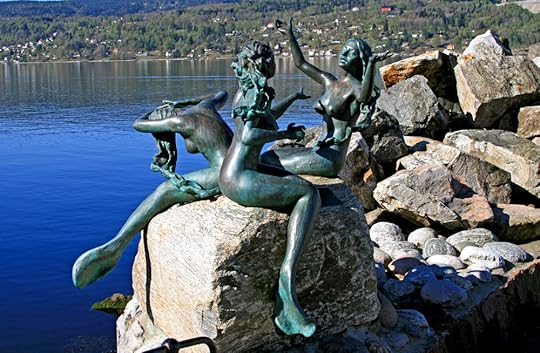 Mermaids in Drøbak, Norway
GR Description: The Lady from the Sea was written in Munich in 1888. The earliest extant draft is dated June 5th 1888, but as usual Ibsen had been thinking about the subject for some time. A number of elements derive from his stay in Molde in the summer of 1885. It is assumed that Ibsen not only used Molde as his model for the little "town by a fjord in the northern part of Norway" where the action takes place; he was also said to have heard two legends there that made an impression on him, and which he used in the play.
3* A Doll's House
4* Hedda Gabler
3* The Wild Duck
4* Peer Gynt
3* The Master Builder
2* Brand
4* John Gabriel Borkman
3* The Vikings of Helgeland
3* The Lady from the Sea

August 17, 2026
خستهم کردی هنریک جان، زیادی خوبی.

January 5, 2009
There's a point near the end of this play that I really like. Ellida has married nice, sensible Dr. Wangel, but her heart still belongs to the sailor she knew all those years ago, who mysteriously disappeared. She can feel his presence through these strange signs. The strangest of them all was the child she had with her husband, who didn't live long. She's telling the story, and at the end she says, almost hysterical, that the child had his eyes. He, you understand, is the sailor, who's never far from her thoughts.
Then, one day, the sailor turns up again. Ellida is very surprised. Would you believe it? She finds she'd misremembered the color of his eyes. It's a bit like the ending of Sweeney Todd, though there's less blood.
Then, one day, the sailor turns up again. Ellida is very surprised. Would you believe it? She finds she'd misremembered the color of his eyes. It's a bit like the ending of Sweeney Todd, though there's less blood.
This entire review has been hidden because of spoilers.
April 25, 2015
”Adio doamnă; de acum încolo, ești doar un naufragiu în viața mea.”
Femeia mării mi-a lăsat o umbră de melancolie în gând; tristețea se ascunde undeva în cuvintele marinarului pierdut în valurile vieții.
Femeia mării mi-a lăsat o umbră de melancolie în gând; tristețea se ascunde undeva în cuvintele marinarului pierdut în valurile vieții.

July 9, 2026
بعد از «خانه عروسک» فکر میکردم ایبسن برای آزادی فقط یک راه میشناسه؛ رفتن. ولی «بانوی دریایی» نظرم رو عوض کرد.
به نظرم این نمایشنامه یه جورایی ادامهی همون سؤاله. اینبار ایبسن میگه آزادی فقط رفتن نیست، اینکه بتونی خودت انتخاب کنی مهمتره. الیدا وقتی موند که برای اولین بار حق انتخاب داشت، نه چون مجبور بود.چیزی که بیشتر از همه دوست داشتم، وانگل بود. آخرش فهمید آدمی که دوستش داری رو نمیشه با نگه داشتن و مالک شدن حفظ کرد. اگه قراره بمونه، باید خودش بخواد.
شاید دلیل اینکه اینقدر با الیدا ارتباط گرفتم اینه که خودم هم هر وقت کنار دریا یا توی دریا هستم، حس خونه بودن دارم. برای همین دلتنگیها و کششش به دریا برام فقط یه نماد نبود، کاملاً قابل لمس بود.
از بین نمایشنامههای ایبسن، این یکی احتمالاً امیدبخشترین پایان رو برام داشت.
به نظرم این نمایشنامه یه جورایی ادامهی همون سؤاله. اینبار ایبسن میگه آزادی فقط رفتن نیست، اینکه بتونی خودت انتخاب کنی مهمتره. الیدا وقتی موند که برای اولین بار حق انتخاب داشت، نه چون مجبور بود.چیزی که بیشتر از همه دوست داشتم، وانگل بود. آخرش فهمید آدمی که دوستش داری رو نمیشه با نگه داشتن و مالک شدن حفظ کرد. اگه قراره بمونه، باید خودش بخواد.
شاید دلیل اینکه اینقدر با الیدا ارتباط گرفتم اینه که خودم هم هر وقت کنار دریا یا توی دریا هستم، حس خونه بودن دارم. برای همین دلتنگیها و کششش به دریا برام فقط یه نماد نبود، کاملاً قابل لمس بود.
از بین نمایشنامههای ایبسن، این یکی احتمالاً امیدبخشترین پایان رو برام داشت.

March 31, 2015
I came to the end of this play and thought it seemed to be based on the premise of If you love someone, set them free. If they come back they're yours; if they don't they never were.
While I didn’t really care for the long ago lover part of the story, I did think that the family dynamics were a little interesting. A stepmother who hasn’t managed to fit into the family in any way, a father who doesn’t see, or want to see, the problems and daughters who still mourn their mother are all brought together in the end. Not an unusual storyline in this day and age but still pretty well done.
While I didn’t really care for the long ago lover part of the story, I did think that the family dynamics were a little interesting. A stepmother who hasn’t managed to fit into the family in any way, a father who doesn’t see, or want to see, the problems and daughters who still mourn their mother are all brought together in the end. Not an unusual storyline in this day and age but still pretty well done.

June 26, 2025
نمایش با تعلیقی نرم شروع میشه؛ انگار قراره اتفاقی مهم بیفته و چیزی از اعماق سر برسه. انتظار یک گره دراماتیک جدی رو میکشه، اما هرچه پیش میره، همهچیز در چارچوب یه خانواده معمولی باقی میمونه. شاید هم منطق روایی همینه: در دل زندگی روزمره، پیچیدگیهای بزرگ در سکوت رخ میدن. اما راستش، من اون درگیریای که از ایبسنی مثل بورکمان یا هدا گابلر انتظار داشتم، اینجا حس نکردم.
الیدا، بانوی دریایی، میخواد «با اختیار خودش» در یک خانواده ریشه بدواند. میل به آزادی، به انتخاب، و نه صرفاً زیستن در امنیت. ولی آنچه میگوید برای من گنگ ماند. مثلاً میگوید «رعشهی آن مرد» هنوز در تنش مانده ، آنقدر که نمیتواند همسر واقعی دکتر ونگل باشد و با پناه بردن به دریا، خودش را از این تنش غسل میدهد.
مرد غریبه؟ مثل یک موجود بدوی، یا انسانی روانپریش و پیش بینی ناپذیره، از دل سایهها میآید، حرف میزند، میرود. او بیشتر یک نیروی سمبلیک است تا شخصیت واقعی.
شخصیتها، در تیپ و جایگاه خود، درست انتخاب شدهاند و منطقی روایت میشوند، اما وقتی این پازل را کنار هم میچینی، تصویر کاملی شکل نمیگیره. چیزی در دل روایت باز میماند، ناقص؛ نه از آن جنس پایانهای باز، بلکه بیشتر شبیه پایانهایی که جرات بستن ندارند.
در مجموع: «بانوی دریایی» برای من نمایشنامهای بود با لحظاتی درخشان، اما پراکنده. بین خیال و واقعیت، بین آزادی و گریز، معلق مانده. مثل خود الیدا.
سه از پنج ؛ برای نمایشی که میخواست از دل یک زندگی ساده، پرسشهایی عمیق دربارهی آزادی و میل مطرح کنه اما در نهایت، بیشتر در امواج ماند تا به ساحل برسه.
الیدا، بانوی دریایی، میخواد «با اختیار خودش» در یک خانواده ریشه بدواند. میل به آزادی، به انتخاب، و نه صرفاً زیستن در امنیت. ولی آنچه میگوید برای من گنگ ماند. مثلاً میگوید «رعشهی آن مرد» هنوز در تنش مانده ، آنقدر که نمیتواند همسر واقعی دکتر ونگل باشد و با پناه بردن به دریا، خودش را از این تنش غسل میدهد.
مرد غریبه؟ مثل یک موجود بدوی، یا انسانی روانپریش و پیش بینی ناپذیره، از دل سایهها میآید، حرف میزند، میرود. او بیشتر یک نیروی سمبلیک است تا شخصیت واقعی.
شخصیتها، در تیپ و جایگاه خود، درست انتخاب شدهاند و منطقی روایت میشوند، اما وقتی این پازل را کنار هم میچینی، تصویر کاملی شکل نمیگیره. چیزی در دل روایت باز میماند، ناقص؛ نه از آن جنس پایانهای باز، بلکه بیشتر شبیه پایانهایی که جرات بستن ندارند.
در مجموع: «بانوی دریایی» برای من نمایشنامهای بود با لحظاتی درخشان، اما پراکنده. بین خیال و واقعیت، بین آزادی و گریز، معلق مانده. مثل خود الیدا.
سه از پنج ؛ برای نمایشی که میخواست از دل یک زندگی ساده، پرسشهایی عمیق دربارهی آزادی و میل مطرح کنه اما در نهایت، بیشتر در امواج ماند تا به ساحل برسه.

March 8, 2025
ESPAÑOL: Esta es la segunda vez que he visto esta obra de Ibsen. Esta vez me ha gustado más que cuando la vi hace muchos años. Un médico que tiene dos hijas se ha casado en segundas nupcias con la dama del mar, una mujer que tiene la misma edad que su hija mayor y cuyo pasado esconde un misterio. Aparte de ellos, el profesor, que años atrás ofreció matrimonio a la protagonista; un joven que convalece de una enfermedad; y un marinero misterioso, cuya aparición esperamos durante casi toda la obra, por lo que cuando aparece es inevitable que resulte algo decepcionante. El final, en el que todos los personajes toman decisiones libres y responsables, es muy apropiado.
ENGLISH: This is the second time I have watched this play by Ibsen. This time I liked it more than when I watched it many years ago. A doctor with two daughters has married again with the lady of the sea, a woman with the same age as his eldest daughter, whose past hides a mystery. Apart from them, there is the professor, who years ago offered marriage to the protagonist; a young man who is recovering from an illness; and a mysterious sailor, whose appearance we wait for during most of the play, so when he does appear it is inevitable that he must be disappointing. The ending, with all the characters making free and responsible decisions, is very appropriate.
ENGLISH: This is the second time I have watched this play by Ibsen. This time I liked it more than when I watched it many years ago. A doctor with two daughters has married again with the lady of the sea, a woman with the same age as his eldest daughter, whose past hides a mystery. Apart from them, there is the professor, who years ago offered marriage to the protagonist; a young man who is recovering from an illness; and a mysterious sailor, whose appearance we wait for during most of the play, so when he does appear it is inevitable that he must be disappointing. The ending, with all the characters making free and responsible decisions, is very appropriate.

February 20, 2022
if you love someone set them free
It has been some time since I read a play. This started off slowly. Gradually it progressed to show the family dynamics and Ellida’s psychological state. Overall enjoyable.
It has been some time since I read a play. This started off slowly. Gradually it progressed to show the family dynamics and Ellida’s psychological state. Overall enjoyable.

November 6, 2009
Available at BBC Radio 3.
A new version of Ibsen's late drama, adapted for radio by Frank McGuinness.
Before her marriage to Dr Wangel, Ellida, his second wife, had promised herself to a sailor who then disappeared. Years later, Ellida's family life is strained. Her relations with her step-daughters is poor; she has no child of her own. She seems unhappy with her life. Then the sailor reappears to make his claim on her promise. Faced with the decision of what to do, she persuades her husband that she must have the chance to make her choice
With Lia Williams as Ellida, and also featuring Hugh Bonneville, Katherine Parkinson, Ellie Kendrick, Tim McMullan, Sam Crane, Geoffrey Whitehead and Christopher Obi.
Directed by Hannah Eidinow.
A new version of Ibsen's late drama, adapted for radio by Frank McGuinness.
Before her marriage to Dr Wangel, Ellida, his second wife, had promised herself to a sailor who then disappeared. Years later, Ellida's family life is strained. Her relations with her step-daughters is poor; she has no child of her own. She seems unhappy with her life. Then the sailor reappears to make his claim on her promise. Faced with the decision of what to do, she persuades her husband that she must have the chance to make her choice
With Lia Williams as Ellida, and also featuring Hugh Bonneville, Katherine Parkinson, Ellie Kendrick, Tim McMullan, Sam Crane, Geoffrey Whitehead and Christopher Obi.
Directed by Hannah Eidinow.

June 26, 2012
Cos'è la libertà? Ibsen: la possibilità di sentire sulla propria pelle il peso delle proprie scelte.
October 25, 2024
Dette var et helt ok Ibsen-Drama, som hverken utmerker seg i den ene eller andre retningen. Jeg liker godt at Ibsen her beveger seg mot det modernistiske landskapet i tematiseringen av det indre sjelelivet, noe som er ganske godt gjort i form av et ærverdig drama. Også ekteskapets psykologiske aspekter kommer tydeligere frem her enn i hans tidligere verker. Symbolikken, typene og oppbyggingen ligner hans andre drama, men jeg savner fler lag i fortellingen (som er en av grunnene til at jeg liker Ibsen så godt!!) spennende og uventet slutt!
Sammenlignet med hans andre verker nådde ikke dette helt opp for meg, me sammenlignet med veldig mye annen litteratur var dette fantastisk.
Alt i alt et midt på treet Ibsen-drama. 3,5⭐️
Sammenlignet med hans andre verker nådde ikke dette helt opp for meg, me sammenlignet med veldig mye annen litteratur var dette fantastisk.
Alt i alt et midt på treet Ibsen-drama. 3,5⭐️
Displaying 1 - 30 of 213 reviews