

What do you think?

Miró
Libro usado en buenas condiciones, por su antiguedad podria contener señales normales de uso
96 pages
First published January 1, 1993
Ratings & Reviews
Friends & Following
Create a free account to discover what your friends think of this book!
Community Reviews
Displaying 1 - 30 of 30 reviews

July 8, 2019
This is a solid short introduction to Miro's art and biography. Major themes and periods are covered, and the reproductions are of good quality, although sometimes too small. (Especially true regarding his earlier, more realistic and detailed work. Like, I wouldn't have even noticed that there were people at the Farm had the author not pointed it out.)
Miro's style was informed by his Catalan heritage as well as his interactions with Surrealists and other artists and thinkers. He read quite a lot, as well, and was interested in poetics.
As for most people who experienced it, the Second World War was a major pivot for him. His subject matter shifted, picking up the foci for which he is know today: stars, birds, women. Mink suggests that this was at least partially escapism. Materials shortages also encouraged a shift to working on paper instead if canvas, and experimenting with readily available colorants. This period included the series of small works titled Constellations, which was smuggled to the US in a diplomatic pouch and exhibited in New York in 1945.

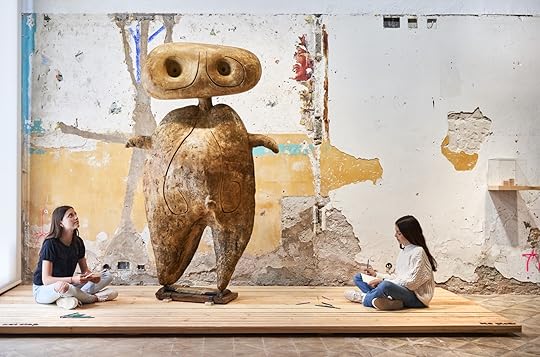
In addition to paintings, Miro produced ceramics, book illustrations, stage designs, collages, ad fabric art.
Miro's style was informed by his Catalan heritage as well as his interactions with Surrealists and other artists and thinkers. He read quite a lot, as well, and was interested in poetics.
As for most people who experienced it, the Second World War was a major pivot for him. His subject matter shifted, picking up the foci for which he is know today: stars, birds, women. Mink suggests that this was at least partially escapism. Materials shortages also encouraged a shift to working on paper instead if canvas, and experimenting with readily available colorants. This period included the series of small works titled Constellations, which was smuggled to the US in a diplomatic pouch and exhibited in New York in 1945.
In addition to paintings, Miro produced ceramics, book illustrations, stage designs, collages, ad fabric art.

August 10, 2024
A great biography about the life and art of Joan Miró.
He’s a very versatile artist, he made paintings, sculptures, ceramics, and murals.
I’ve always loved Miró’s art, and I was happy to find some of the paintings I already knew in this book, and to discover new ones as well.
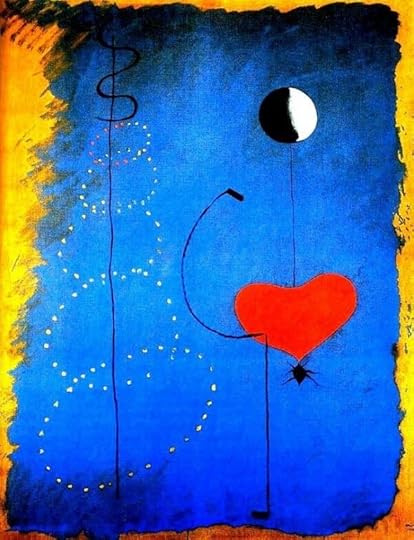
When I stand in front of a canvas, I never know what I’m going to do – and nobody is more surprised than I at what comes out.
He’s a very versatile artist, he made paintings, sculptures, ceramics, and murals.
I’ve always loved Miró’s art, and I was happy to find some of the paintings I already knew in this book, and to discover new ones as well.
July 1, 2010
Taschen's "Basic Art" is a series of short, full-colour introductions to various artists that all weigh in at only 96 pages. These are an excellent way to discover painters you don't know about yet, and I've enjoyed working my way through the series. This volume on Joan Miro features a text by Janis Mink.
Mink charts Miro's stylistic evolution in a clear fashion, often mentioning relationships with other artists and writers of the day that influenced his work. The break from realism to fanciful representation is elucidated, and Mink really inspires a passion for deciphering Miro's language of symbols. Nonetheless, I felt that Mink's text had two weakness. The first is that it often makes reference to paintings that, perhaps for reasons of copyright, could not be reproduced within the book. Entries in the "Basic Art" series are usually entirely self-contained, but Mink would force the reader to seek out another introduction to Miro to understand her writing. The second weakness is that Mink does not say anything about Miro's relationship with the Spanish state in the postwar era, something that would surely interest many readers who know of Miro as "the Catalan national painter".
Nonetheless, these are essentially minor quibbles. If you want a quick introduction to Joan Miro, this is a good bet.
Mink charts Miro's stylistic evolution in a clear fashion, often mentioning relationships with other artists and writers of the day that influenced his work. The break from realism to fanciful representation is elucidated, and Mink really inspires a passion for deciphering Miro's language of symbols. Nonetheless, I felt that Mink's text had two weakness. The first is that it often makes reference to paintings that, perhaps for reasons of copyright, could not be reproduced within the book. Entries in the "Basic Art" series are usually entirely self-contained, but Mink would force the reader to seek out another introduction to Miro to understand her writing. The second weakness is that Mink does not say anything about Miro's relationship with the Spanish state in the postwar era, something that would surely interest many readers who know of Miro as "the Catalan national painter".
Nonetheless, these are essentially minor quibbles. If you want a quick introduction to Joan Miro, this is a good bet.

Read
September 8, 2021▫️JOAN MIRÓ: A Poet Among the Surrealists, 1893-1983 by Janis Mink, @taschen Basic Art Series
#ReadtheWorld21📍Spain / Catalonia
"How did I think up my drawings and my ideas for paintings? Well I'd come home to my Paris studio in the Rue Blomet at night, I'd go to bed and sometimes hadnt had supper. I saw things, and I jotted them down in a notebook. I saw shapes on the ceiling."
I've sung the praises of the Taschen Basic Art Series before, and I'm back with it to share one of my faves: Catalonian surrealist Joan Miró. The book includes a surprisingly detailed biography and a catalog of many of his paintings. Influenced by the schools and forms around him, but with a special touch.
One of my favorite things about Miró are his bold color choices. I came across his work when I was a teenager and particularly loved the look of his piece "The Gold of the Azure" from 1967. In fact, I had a college notebook with the art on the cover because I loved it so much! Unfortunately the folder is long gone, but a good Miró memory!
Great tidbit I picked up from this reading: one of Miró's most well known pieces "The Farm" from 1921. Several galleries rejected it, but it caught the eye of a young Ernest Hemingway who was living in Europe at the time. He saved up, bought it, and brought it home, and it was later donated to the National Gallery of Art in Washington, DC by his wife, where I've seen it, but was unaware of its provençe!
#ReadtheWorld21📍Spain / Catalonia
"How did I think up my drawings and my ideas for paintings? Well I'd come home to my Paris studio in the Rue Blomet at night, I'd go to bed and sometimes hadnt had supper. I saw things, and I jotted them down in a notebook. I saw shapes on the ceiling."
I've sung the praises of the Taschen Basic Art Series before, and I'm back with it to share one of my faves: Catalonian surrealist Joan Miró. The book includes a surprisingly detailed biography and a catalog of many of his paintings. Influenced by the schools and forms around him, but with a special touch.
One of my favorite things about Miró are his bold color choices. I came across his work when I was a teenager and particularly loved the look of his piece "The Gold of the Azure" from 1967. In fact, I had a college notebook with the art on the cover because I loved it so much! Unfortunately the folder is long gone, but a good Miró memory!
Great tidbit I picked up from this reading: one of Miró's most well known pieces "The Farm" from 1921. Several galleries rejected it, but it caught the eye of a young Ernest Hemingway who was living in Europe at the time. He saved up, bought it, and brought it home, and it was later donated to the National Gallery of Art in Washington, DC by his wife, where I've seen it, but was unaware of its provençe!

December 10, 2016
This is one of my personal best book of 2016: a colorful art book, one that also is a symbol: the Taschen biography / artography of Miro. It's a wonderful book. I bought it after visiting the Miro exhibition in Frankfurt in April. And learned that there is a Miro museum with Miro's atelier in Mallorca. So I took the book with me, to read it under the Spanish sun... and visit Miro there, on the island that was his home for years.

July 9, 2013
Really interesting to read about the evolving of Joan Miro's art and how the turmoil of the time he lived in affected his work.
Always striving to learn and do more with his art he certainly achieved a huge output over his lifetime of 90-odd years.
Always striving to learn and do more with his art he certainly achieved a huge output over his lifetime of 90-odd years.

December 17, 2024
This short, profusely illustrated overview of Miro's life and art traces his development and prolific and diverse output over the 90 years of his life. Although he repeated certain themes and motifs throughout his life, Miro never stopped exploring and trying new things, creating in a large range of media--drawing, painting, sculpture, collage, ceramics, prints.
He traveled widely, and lived in Paris at various times, but he always returned to the land of his Catalan family and childhood, using them both as an anchor and a reference point for his work.
He traveled widely, and lived in Paris at various times, but he always returned to the land of his Catalan family and childhood, using them both as an anchor and a reference point for his work.

May 19, 2013
Devo dire che conoscevo poco di Miró, non mi entusiasmava molto perché lo vedevo un po' di transizione, un po' scarno. Questo libro mi è stato regalato, e ne sono veramente grata. Rimangio tutto quello che ho mai detto su Miró, opere stupende, e non conoscendole mi sono anche resa conto di quanto queste edizioni siano ricche dal punto di vista anche dell'informazione, non solo per la scelta e la cura delle immagini.

October 8, 2023
Seguire il percorso artistico di Mirò è molto interessante.
Ha vissuto in modo attivo le avanguardie di inizio Novecento ed è stato prolifico fino all’età senile, quindi gli anni 80 del secolo scorso.
Personalmente mi sono piaciuti molto i suoi dipinti espressionisti dell’esordio, e quelli dell’età matura. Nel mezzo c’è tutto un percorso di ricerca fatto di simboli, astrazioni e significati talmente personali e distintivi che non vale la pena emulare.
Ecco a mio avviso Mirò è uno di quei pittori che non ha senso imitare, è lui punto e basta. Se ha una lezione da impartire è la fermezza e la tenacia nonostante le condizioni avverse a trovare una propria voce, uno stile identitario a partire dalle proprie radici.
Ha vissuto in modo attivo le avanguardie di inizio Novecento ed è stato prolifico fino all’età senile, quindi gli anni 80 del secolo scorso.
Personalmente mi sono piaciuti molto i suoi dipinti espressionisti dell’esordio, e quelli dell’età matura. Nel mezzo c’è tutto un percorso di ricerca fatto di simboli, astrazioni e significati talmente personali e distintivi che non vale la pena emulare.
Ecco a mio avviso Mirò è uno di quei pittori che non ha senso imitare, è lui punto e basta. Se ha una lezione da impartire è la fermezza e la tenacia nonostante le condizioni avverse a trovare una propria voce, uno stile identitario a partire dalle proprie radici.

Want to Read
October 17, 2008i almost bought a miro lithograph once . . . from the broder suite, series IV . . .

July 11, 2019
If it is conceived as an introduction, it serves very well.
Art, thoughts and even the biographical notes serve to discover this great and not always understood artist of 20th century.
Art, thoughts and even the biographical notes serve to discover this great and not always understood artist of 20th century.
January 27, 2026
«I grandi crescono ed evolvono a ogni età».
Questa frase, scritta dallo stesso Miró, descrive in modo efficace non solo l’artista, ma anche il percorso creativo che emerge con chiarezza da questo libro. Dalle pagine affiora una personalità profondamente eclettica, capace di rinnovarsi costantemente e di mettere in discussione se stessa, ed è proprio questo aspetto che mi ha maggiormente affascinata.
La sua arte può certamente piacere o meno, ma lo spirito critico, la libertà espressiva e l’originalità che hanno contraddistinto Miró sono elementi che difficilmente lasciano indifferenti. Il volume ripercorre le principali tappe della sua vita, dall’infanzia fino alla morte, offrendo una ricostruzione necessariamente sintetica — si tratta pur sempre di 91 pagine tra testo e immagini — ma nel complesso chiara e soddisfacente.
È evidente che un libro di questo tipo non possa esaurire la complessità di un artista come Miró né spiegare in modo definitivo la profondità delle sue opere. Tuttavia, riesce pienamente nel suo intento divulgativo: al termine della lettura ci si sente più consapevoli del suo percorso artistico e umano, con nuovi strumenti per osservare e interpretare il suo lavoro. Ed è proprio questo, in fondo, l’obiettivo principale della collana a cui il volume appartiene.
Questa frase, scritta dallo stesso Miró, descrive in modo efficace non solo l’artista, ma anche il percorso creativo che emerge con chiarezza da questo libro. Dalle pagine affiora una personalità profondamente eclettica, capace di rinnovarsi costantemente e di mettere in discussione se stessa, ed è proprio questo aspetto che mi ha maggiormente affascinata.
La sua arte può certamente piacere o meno, ma lo spirito critico, la libertà espressiva e l’originalità che hanno contraddistinto Miró sono elementi che difficilmente lasciano indifferenti. Il volume ripercorre le principali tappe della sua vita, dall’infanzia fino alla morte, offrendo una ricostruzione necessariamente sintetica — si tratta pur sempre di 91 pagine tra testo e immagini — ma nel complesso chiara e soddisfacente.
È evidente che un libro di questo tipo non possa esaurire la complessità di un artista come Miró né spiegare in modo definitivo la profondità delle sue opere. Tuttavia, riesce pienamente nel suo intento divulgativo: al termine della lettura ci si sente più consapevoli del suo percorso artistico e umano, con nuovi strumenti per osservare e interpretare il suo lavoro. Ed è proprio questo, in fondo, l’obiettivo principale della collana a cui il volume appartiene.

April 15, 2025
I enjoy the Taschen series about artists and artistic movements in the same way I enjoy a visit to a museum exhibit. But, there's more information in the books than in most museum exhibits, the exception being a museum devoted to one artist. Since, age, infirmity and geography limit my ability to travel to museums, I've found a way to get the creations to come to me. Some memorable books about art and artists (especially Ninth Street Women, Woven and Graphic Art of Anni Albers and Everything She Touched: The Life of Ruth Asawa) have fed my spirit in recent years. This book is no exception.
This basic art series, which weighs in at less than 100 pages per topic, is generous with high-resolution illustrations on glossy paper, a timeline and notes for readers who want even more information. I bought this at the Smithsonian during or after Miro's 1980 show at the Hirshhorn Museum. It cost me $8.99 then. Taschen sells the books for $20 these days, but they're worth it, and might be less than a ticket to an exhibition.
Second time to read this.
This basic art series, which weighs in at less than 100 pages per topic, is generous with high-resolution illustrations on glossy paper, a timeline and notes for readers who want even more information. I bought this at the Smithsonian during or after Miro's 1980 show at the Hirshhorn Museum. It cost me $8.99 then. Taschen sells the books for $20 these days, but they're worth it, and might be less than a ticket to an exhibition.
Second time to read this.

October 29, 2025
Kai XX a. pradžioje menininkai bandė atsigauti po karo sukrėtimų, Joan Miró pasiūlė naują – sapnišką ir drąsią – kūrybos kalbą. Išskirtinių meno albumų leidykla „Taschen“ pristato Janis Mink studiją „Miró“ – leidinį, atskleidžiantį menininką ne tik kaip siurrealistą, bet ir kaip novatorių, kūrusį savitą vaizduotės pasaulį anapus realybės.
Knyga kviečia skaitytoją pasinerti į Miró visatą – stebėti dailininko paveikslus, kur spalvos ir formos virsta gyva vaizduotės kalba. Mink atskleidžia, kaip menininkas perėjo nuo kataloniško realizmo prie pasąmonės simbolių, jungdamas automatizmą, primityvizmą ir tą kosminį lengvumą, primenantį vaikystės piešinius.
Tai leidinys tiems, kurie mene ieško ne tik reginio, bet ir nori suprasti, kaip gimsta modernizmo vizija ir kodėl Miró vaizduotė išlieka tokia aktuali mūsų laikmečiui.
Knyga kviečia skaitytoją pasinerti į Miró visatą – stebėti dailininko paveikslus, kur spalvos ir formos virsta gyva vaizduotės kalba. Mink atskleidžia, kaip menininkas perėjo nuo kataloniško realizmo prie pasąmonės simbolių, jungdamas automatizmą, primityvizmą ir tą kosminį lengvumą, primenantį vaikystės piešinius.
Tai leidinys tiems, kurie mene ieško ne tik reginio, bet ir nori suprasti, kaip gimsta modernizmo vizija ir kodėl Miró vaizduotė išlieka tokia aktuali mūsų laikmečiui.

March 27, 2026
Stručná kniha o životě a díle Joana Miró. Sáhla jsem po ní proto, že jsem se chtěla dozvědět víc o tom, jak Miró pracoval s kompozicí a taky o symbolice, kterou v obrazech používal. Mám pocit, že jsem někde četla, že měl takové slovníky, co která barva a tvar v jeho díle představují.
Toho se mi částečně dostalo, aspoň u mladších obrazů, třeba text o obraze Statek z počátku 20. let přesně popisoval, co kam Miró umístil a proč, na stránkách byla i skica k obrazu a dále pak autor vysvětluje, jak se původní objekty objevují znovu v následujících obrazech.
Jinak je ale kniha především o životě malíře samotného a vlastně se tolik nevěnuje pozdějším, ikonickým, dílům. Popisuje sice vznik série Konstelací a jejich vliv například na umělce v New Yorku, ale na vysvětlení a kompozici děl prostor v textu nezůstal. Budu muset pátrat jinde.
Toho se mi částečně dostalo, aspoň u mladších obrazů, třeba text o obraze Statek z počátku 20. let přesně popisoval, co kam Miró umístil a proč, na stránkách byla i skica k obrazu a dále pak autor vysvětluje, jak se původní objekty objevují znovu v následujících obrazech.
Jinak je ale kniha především o životě malíře samotného a vlastně se tolik nevěnuje pozdějším, ikonickým, dílům. Popisuje sice vznik série Konstelací a jejich vliv například na umělce v New Yorku, ale na vysvětlení a kompozici děl prostor v textu nezůstal. Budu muset pátrat jinde.

November 2, 2018
Leitura leve, interessante e informativa. Nada de muito profundo ou revelador sobre o artista ou seu método é discutido, contumaz não deixa de ser um boa obra introdutória sobre a vida de Miró.
O ponto alto é qualidade das reproduções das obras do pintor, obviamente não se comparam a experiencia da peça real, mesmo assim não decepcionam em fecundar a terra da mente de artista/leitor avido com ideias e confabulações interessantes.
O ponto alto é qualidade das reproduções das obras do pintor, obviamente não se comparam a experiencia da peça real, mesmo assim não decepcionam em fecundar a terra da mente de artista/leitor avido com ideias e confabulações interessantes.

October 22, 2022
"Stillness makes me think of great spaces in which movements take place that do not stop at any given moment, movements with no end."
-Joan Miró
Joan Miro: 1893-1983 ** Read in Barcelona, Spain (Oct 2022) ** Bought in a used bookshop in Barrio Poble Sec, Barcelona **
-Joan Miró
Joan Miro: 1893-1983 ** Read in Barcelona, Spain (Oct 2022) ** Bought in a used bookshop in Barrio Poble Sec, Barcelona **

March 28, 2019
Nice collection of text and images. Would have been better if they'd had pics of some of the works they found most significant, e.g., The Birth of the World. You might want to supplement this work with MoMA's little Miro book.

August 30, 2024
I was lukewarm on Miro until I went to the Fundació Joan Miró. Seeing the size and scale of his work really helped create meaning for me. This is a great book, showing much of his expansive career (including his underappreciated sculptures).

March 1, 2018
Une rétrospective intéressante avec quelques analyses de ses œuvres.
July 24, 2018
Un acercamiento sencillo a la figura de este pintor español. Recomendable como primer contacto a la obra de Miró

September 17, 2020
virei mais fa desse homi, quero morar em freguesia kkkk

September 13, 2024
Tired to study will lead to disaster. European are improved a lot by algebra. Just calculated.

October 6, 2022
4,25
Joan Miró nació en Barcelona en 1893. Fue un artista que dedicó su vida a la pintura y, más tarde, a la cerámica, a la escultura y al grabado. Su arte pasó por muchas etapas hasta encontrar su propio estilo, el arte abstracto, pasando por el fauvismo, el expresionismo, el realismo, el cubismo y el surrealismo; nunca conforme y siempre buscando la forma que le permitiera expresarse mejor. Además, intentaba continuamente “trascender la pintura, superar la experiencia meramente visual para conducir su arte en una dirección conceptual”, motivo por el cual también experimentó con medios y materiales diversos.
Una vez más, me ha encantado acercarme a la vida y obra de un artista de la mano de la Editorial Taschen y, en este caso, de Joan Miró. No solo se hace un repaso biográfico de su vida acompañándolo de su contexto histórico, sino que también muestra muchas de sus obras y, en algunos casos, las analiza, aspecto que me resulta sumamente interesante. Además, me ha sorprendido mucho el camino recorrido por Miró, como fue buscando a lo largo de los años el medio que le permitiera plasmar todo aquello que rondaba por su cabeza y su perseverancia hasta hacerse un hueco en el panorama artístico internacional, aún y todas las dificultades por las que pasó.
Si tuviera que ponerle una pega, es que en algunos casos se hace referencia a obras suyas que no se incluyen en el libro.
✨"Trabajo duramente; me muevo en un arte de conceptos que toma la realidad solo como punto de partida, no como meta final."✨
Joan Miró nació en Barcelona en 1893. Fue un artista que dedicó su vida a la pintura y, más tarde, a la cerámica, a la escultura y al grabado. Su arte pasó por muchas etapas hasta encontrar su propio estilo, el arte abstracto, pasando por el fauvismo, el expresionismo, el realismo, el cubismo y el surrealismo; nunca conforme y siempre buscando la forma que le permitiera expresarse mejor. Además, intentaba continuamente “trascender la pintura, superar la experiencia meramente visual para conducir su arte en una dirección conceptual”, motivo por el cual también experimentó con medios y materiales diversos.
Una vez más, me ha encantado acercarme a la vida y obra de un artista de la mano de la Editorial Taschen y, en este caso, de Joan Miró. No solo se hace un repaso biográfico de su vida acompañándolo de su contexto histórico, sino que también muestra muchas de sus obras y, en algunos casos, las analiza, aspecto que me resulta sumamente interesante. Además, me ha sorprendido mucho el camino recorrido por Miró, como fue buscando a lo largo de los años el medio que le permitiera plasmar todo aquello que rondaba por su cabeza y su perseverancia hasta hacerse un hueco en el panorama artístico internacional, aún y todas las dificultades por las que pasó.
Si tuviera que ponerle una pega, es que en algunos casos se hace referencia a obras suyas que no se incluyen en el libro.
✨"Trabajo duramente; me muevo en un arte de conceptos que toma la realidad solo como punto de partida, no como meta final."✨

June 28, 2025
I haven’t taken any art history classes, and it didn’t matter! We’re shown the evolution of Miró’s art from The Corn Doctor (1901) through Personages, Birds, Star (1978). I could usually see what the author was talking about, and I felt ok if I wasn’t completely sure because it was all interesting.
An artist friend, pointing to part of a mural Miró had nearly finished: “That is a fish, isn’t it?”
Miró, somewhat irritably: “For me, it’s a woman.”
Bonus: I didn’t learn any terrible things about Miró the person, so I can keep enjoying his art guilt-free.
An artist friend, pointing to part of a mural Miró had nearly finished: “That is a fish, isn’t it?”
Miró, somewhat irritably: “For me, it’s a woman.”
Bonus: I didn’t learn any terrible things about Miró the person, so I can keep enjoying his art guilt-free.

Read
January 29, 2009That bloop is thinking about me.
Read
March 20, 2021This book is a great way to get a glimpse of Miro's works

April 15, 2021
Anche se l’arte contemporanea non è la mia preferita, devo ammettere che questa lettura mi ha fatto rivalutare l’opera di Mirò. Decisamente consigliato.

April 28, 2024
4 1/4 stars

September 11, 2017
A lot of good-quality colour pictures, with an interesting overview of Miró's life.
Displaying 1 - 30 of 30 reviews