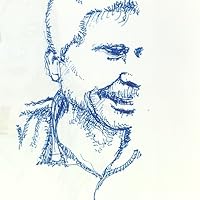
Beloved by millions of readers in Southeast Asia, Kampung Boy is a humorous, fictionalized graphic memoir about a Muslim boy growing up in Malaysia.
With masterful economy worthy of Charles Schultz, Lat recounts the life of Mat, a Muslim boy growing up in rural Malaysia in the 1950s: his adventures and mischief-making, fishing trips, religious study, and work on his family's rubber plantation. Meanwhile , the traditional way of life in his village (or kampung ) is steadily disappearing, with tin mines and factory jobs gradually replacing family farms and rubber small-holders. When Mat himself leaves for boarding school, he can only hope that his familiar kampung will still be there when he returns.
Kampung Boy is hilarious and affectionate, with brilliant, super-expressive artwork that opens a window into a world that has now nearly vanished.
This much awarded and regarded graphic novel is an autobiographical account of Lat’s experiences as a young child growing up in rural Perak in the 1950s. He paints a realistic account of various episodes from the young child’s life including his adventures in the jungles and tin mines, his circumcision, his family members and the school life. However I found it quite dull and boring, the drawings quite amateurish and ending abrupt. The novel is at best a peep into Malay life and its culture.
Lat takes us back to when he was a boy growing up in rural Perak (Malaysia) in the 1950s. Think of a cross between Huck Finn and Leave it to Beaver and spend an afternoon remembering all the things you did as a child - when you felt safe and knew that your family and friends were just around the corner to help you.
Honestly, if you call yourself a Malaysian then you better read this. You are not a true patriot if you haven't read this. And if you're not a Malaysian, if you read this, you will a have a rather nice glimpse into Malaysia's past where time seemed to stand still and kids being kids just play all day, inventing things to do, blending in with the nature rather than just stare at the computer..oh dear. Personally, being from a younger generation we need to be reminded of such things so that we will be more grateful for the comforts we have today.
I loved this story from the first page. It kept me engaged through the use of various amounts of words on each page, the graphics, the cultural knowledge imparted, the way Lat made me instantly connect with the boy, Mat. The smiles of the people were a little alarming and I wish there had been just a teensy bit more about learning the Koran, but maybe more of that comes with the next book, which I will undoubtedly read.
Coming of age story by Lat, which first appeared in 1979, translated into English. Lat is famous and well read in Asia, not well known here in the west, but I thought I would check this out. I know little about Malaysia, so thought I would read for that, too. Lat began publishing some of this story when he was only 13, and it/he just grew in popularity. At least this volume (the first of promised many) appears to be done by someone young. It appears sketchy, unsophisticated. Kampung means Village, so this story, about Mat, not Lat shares information about rural Malaysian life that is of course now mostly disappearing, so it's sort of historical fiction, and, I'm told, a kind of blend of fiction and memoir.
It's not really a comic. It's more like an illustrated story with lots of words, the illustrations as cartoons, heading up to the time Mat leaves the village for school. I thought it was okay, not great as art, and as story, pretty good in part because of the cultural background.
This is an entertaining and eminently enlightening tale about a young boy growing up on a rubber plantation in rural Malaysia in the 1950s. I really enjoyed reading the illustrated story and I feel like the drawings conveyed just as much of the tale as the words do.
Overall, it's a humorous book, but much more than that, it offers a window to catch a glimpse of life in a part of the world I have never seen before (probably never will). It also shows the universal concepts of familial affection, the ability for young children to get up to no good, and the food coma a student feels in the afternoon classes following lunch.
I'm not sure if our local library carries any more of the books in this series, but I will certainly keep looking for them.
interesting quotes:
"Well...that was also the day I discovered how angry Mum could get. I was so afraid of what Mum would do to me that I was running like a barking deer! She lost me near Pak Alang's house when the man, who knew me by sight, showed sympathy for me... But of course I got the thrashing later anyway." (pp. 22-23)
"One thing I discovered about an afternoon class was you tend to get sleepy..." (p. 48)
"At the end of each month we'd pay the teacher for his service. Tuan Syed accepted any form of payment. Some of us would give him $1, some gave 50 cents, others gave him a plate of rice or sugar. Or we could be like these three brothers here (the children of Meor Yusoff), who gave teacher firewood they picked on their way to class. Even that was all right." (p. 50)
Rating my own opinion... I don't get much out of this style of artwork. But I did love learning about a boy growing up in a kampung in rural Malaysia near a tin mine.
My library shelved it as YA but I have no idea why. The most intense bit was the circumcision - at age 10! Call it Juvenilie, or call it 'all ages.' It took me 26 minutes to read (including trying to make out details in pictures).
What a charming book! From his birth to his journey to boarding school, this kampung (village) boy enjoys his life. Nothing special happens in this graphic depiction of life in a Malaysian village in the 1960s, but the normal boy pursuits (fishing, hanging out with friends, getting in trouble with mom), are portrayed with great affection and humor. The village, however, is changing with the times, and as the boy leaves for boarding school, he and the reader are left wondering if there will be a village for him to return to.
Lat, the author, is noted as one of the most popular cartoonists in Southeast Asia, and it's easy to see why. His simple line drawings are wonderfully expressive and his backgrounds brim with the everyday details of life that make the kampung come alive. Students in fourth grade and above will enjoy Kampung Boy and will eagerly await the U.S. publication of the next in the series.
(4 stars) This is the second comic book in my collection by this renowned cartoonist. Beforehand, I’m already a fan of the animation series; Kampung Boy. But I think this book and the television version is a little bit different. Or is it from another book?
By the way, Mat Som got me really hooked up with Datuk Lat’s drawing, characters, humour and also beautiful messages in his work. And,Kampung Boy is not any less wonderful. Not at all. :) And yes, now I understand why this book became one of the references for foreigner to learn about Malaysian life.
Our multiracial country has a wide variety of custom and tradition but somehow I feel we all can relate to this book. At least I can and I came from the other side of Malaysia (Borneo), not in Lembah Kinta and I certainly never been to rubber plantation before or even growing up in the same era as Mat.
That’s how beautiful this book is and no wonder it feels so dear to the heart of every Malaysian. ;)
Muy entrañable, como suelen serlo los recuentos de niñez (al menos si los adultos no te jodieran demasiado la vida), y con el componente añadido de mostrar una cultura tan poco conocida en occidente como la malaya.
Lat adalah salah satu komikus favorit saya. Gaya gambarnya yang sederhana sekilas seperti buatan anak-anak membuatnya memiliki karakter yg khas. komik kampung boy ini merupakan 'slice of life story' yang menggambarkan kehidupan sehari-hari si komikus semasa kecil di kampungnya.
Petualangan mencari ikan di sungai, menjaga durian di kebun, sunatan, sampai tingkah nakalnya menjadi pendulang timah liar diceritakan dengan jenaka dalam gambar-gambar yang sederhana tetapi memukau.
Membaca kampung boy membawa saya kembali ke masa kecil di kampung juga. kesederhanaan polah tingkah tokoh Lat kecil membuat komik ini cocok untuk semua umur. Tak ada plot yang menegangkan (hanya sedikit keriuhan ketika lat kecil dihajar bapaknya karena menjadi pendulang timah liar) maupun cerita yang genggap gempita tetapi kita tetap bisa menikmati alur cerita yg sederhana ini.
lat sungguh mumpuni dalam merangkai gambar dan kata yang sederhana menjadi cerita yang meluluhkan hati pembaca segala usia.
The Kampung Boy tells the story of a young boy, Lat, and his childhood in a kampung (village). A graphic novel, it illustrates the boy's life in pictures and words. Aside from being the protagonist, Lat is also the narrator. The story opens with his birth in a kampung in Perak, Malaysia, and the traditional rituals surrounding the event: the recitation of blessings, the singing of religious songs, and the observance of ceremonies. As Mat grows older, he explores the house, gradually shifting the story's focus to the comic activities of his family outside their abode. The book is full of experiences the Kampung boy goes through such as reading the Quran and learning to fit in with his new friends and even his new little brother. The company will offer a large sum of money for the family's properties if they discover tin on it. Other villagers are hoping for similar deals with the company. They plan to buy houses in Ipoh if their hopes are realised. The day for Lat to depart the village has arrived and he is excited, but as he is about to depart, sadness washes over him. He acknowledges the emotions as his love of the village and hopes that the place where he was born will remain unchanged when he returns.
Overall, I loved this book cause I was ale to relate to it because I am Malaysian. My grandma is from Perak and she lived in the Kampung all her life. I was able to understand phrases and jokes that other readers may not understand. This book is very famous in Malaysia because of its detailed illustrations andThe book made Lat an international figure and a highly regarded cartoonist in Malaysia. It won several awards when released as Kampung Boy in the United States as well. I loved the simple but interesting plot, and the illustrations were in black and white. He was able to create drawings that weren't in color interesting full of shapes. You were able to grow up with the Kampung Boy and experience things like living in the village.
Lat takes us on a journey of his childhood growing up in the Kitna Valley in Perak in the 1950’s. Lat is master storyteller as he takes us down the wandering path of his memories showing us the ceremonies that were still practiced--such as asking the local teacher to take on students, the feeling of swimming in a river as the cool water washes over you, and the warmth and somewhat craziness of family--like the dad that takes off his shirt to scratch his back on the pole when he gets home from work, caring for siblings, and the discussions of future. But the modern world is gradually approaching with tin dredges and trains and automobiles. And Lat is about to head off to school in another town away from his family.
This book is done in a sketchbook style, with written descriptions of the events and illustrations accompanying them. The deceptively simple illustrations are compelling and catch that slice of life that seem to be missing in many modern comics. He doesn’t hesitate to illustrate what life was really like growing up for him, even if it means depicting his own backside as he and his friends strip down to take a swim in the river. Most importantly even though Lat illustrates how things are different in his world, there is much that is similar to our own way of life. The time spent with family and friends, the time spent at school..the more things seem to be different the more there is that is the same.
I highly recommend this book and it's sequel (Town Boy) to anyone and everyone, but particularly to the younger generation. Not just as a chance to illustrate the differences between cultures, but a chance to illustrate the similarities between them.
Lat. (2006). Kampung boy. New York: First Second. Fiction. In this book, which was first published in Malaysia in 1979, Lat shares the story of his childhood in his small village, or kampung, during the 1950s. From his birth and adventures as a young boy, to his education in the village, making friends, and his eventual leaving of the kampung for boarding school, Lat sweetly, and authentically brings his kampung to life. There is an authentic portrayal of his rites of passage, such as his hair shaving ceremony soon after birth, to his Muslim upbringing as he begins lessons in the Koran at age six. Authenticity is furthered as Lat states that he is able to see a rubber plantation from his window, and often hears the roaring sound of a tin dredge. At the end of the story, when he must leave for school, readers are left with the feeling that there are more books to come that reveal what happens next to this loveable young man. Lessons: This is a good book for students exploring other cultures. It is also a nice read for seniors, who are leaving home for the first time, to demonstrate that the anxious feelings they may have are universal.
Kampung boy is a novel about a baby who is born in the Kampung village of Malaysia. The book begins by the birth of the baby and begins explaining the celebrations and rituals that they do. It explains how they dress the baby and how they take care of him. Then since the family is Muslim they explain the traditions they have. Not only does the book have a sense on religion but education and daily life as well. As soon as the little boy grew up his father put him in a religion school, there he met other boys and became friends. Him and his friends would go fishing and do adventurous things like swimming in the river.
This book is very entertaining even if you're not a comic person you should go for it. It wasn't a hard book but it was surely fun to read. Because the comic is in Malaysia and is based on a Muslim family I felt that I could somewhat relate to it since I live in an Islamic country, and I have been to Malaysia myself and have many Malaysian friends. In conclusion is comic exceeded my expectations and everyone can learn something from this book, weather its something about Malaysia, Islam, or family, since the little boy lives in the love of his family.
Buku ni menceritakan kisah hidup Mat di kampung sewaktu dia kecil pada zaman 50-an. Kenangan a bila balik kampung raya kat Negeri Sembilan mesti baca komik ni. Kisah dia yg sweet, kelakar dan semestinya authentic pasti menarik hati sesiapa yg membacanya. A akui bahawa karya Lat ni memang special, cara dia melukis membawa personaliti kepada karakter-karakter dalam buku ni, dan Lat berjaya menggambarkan kehidupan seorang kampung boy dengan tulus dan realistik dah memang dari pengalaman dia sendiri..hehe. Tambahan pula, karya ni memang merupakan komik klasik yg dibaca oleh hampir semua org di Malaysia at least masa time smartphone dan tablet ni xwujud lagi dan kanak-kanak semua boleh tahan lasak ;)
So make sure to pick up a copy of this, even if you have read it before. I'm sure it'd put a smile on your face like it did for me all these years
If nothing else (and I actually have got a lot out of this challenge) 50books_poc has got me reading graphic novels and comics. Kampung Boy is completely charming. I wish it wasn’t pretty much the only piece of Lat’s work so far published in Australia (although apparently they’re planning to release some more in the future). It’s a beautifully rendered graphic novel of (essentially) Lat’s childhood in a village – a kampung – in Malaysia. His and his family’s religious observance is matter-of-fact, and his childhood mischief is endearing. (Like that of most children.)
The book takes Lat to what seems to be an “end of childhood” moment: his departure from the Kampung to go to a boarding school in Town. (Town Boy is the next volume, and I’m really looking forward to finding it.)
Lat is one of the best-known cartoonists/serial artists in Malaysia, which is why I think it’s unfortunate that he’s only just getting published in Australia. Kampung Boy is, above all, exuberant and endearing; and well worth the read.
[This was written originally for an 'article' I submitted to rookiemag.com, but it was not used.] Growing up in Singapore, everyone knew about Mat, the kampung boy. The word ‘kampung’ in Malaysian means village. Kampung Boy is not really an extraordinary story by any means; it’s really just a memoir of Mat and his life in a rural village in Malaysia in the 50s. How he goes fishing, gets in trouble with his mum, helping his dad run errands and going to Sunday school. Meanwhile the traditional way of life of the village is gradually disappearing with farm holders and rubber plantations being replaced with tin mines and factory jobs. Eventually Mat leaves for boarding school, and when he does he has the same worry that all of us do when we leave home: Will you still be here when I come back? It’s an interesting view on a world that is almost all but gone and even more interesting if you’ve never been to South-East Asia.
The story of a boy growing up in a Southeast Asian village.
Chronicles the rituals and adventures of small town life, including baby's first shaving, circumcision, etc. Felt like an autobiography, so I'm curious about the author's history. Also didn't stand up to me as a graphic novel - the words did most of the telling, with illustrations and a few references to the pictures. A couple of details are only communicated through the pictures (a young crush), but they are not crucial to the story.
Interesting as a slice of a very different life than my own, but I missed detailed depictions of facial expressions and fleshed out characterization too much to continue reading the series.
Loved this for the details of village life in Malaysia the 1950s--things you can't get elsewhere, you can get in this graphic novel. Pictures of how a kitchen is set up, or a hammock rigged up so that Lat can rock his baby sister--or, later, a picture of him pulling his little brother along on a palm leaf frond. His dad shows him a weaver bird nest and says that weaver birds put fireflies in them to light up the insides. I checked this out online, and it's a widespread belief--people say this in India, too--but I guess it's something ornithologist have never actually seen, not for real. But anyway, little stories like that, I love. I liked everything about this book.
Very cute. An interesting escape for half an hour. I know nothing about graphic novels, and not much more about Malaysia. This shows how his mother set up her kitchen, and what it felt like to ride on a bicycle with his dad into town. Lots of scenes at the river. Lots of people laughing, all teeth. The perspective of a little boy was a fun introduction to a completely different world. I'd read more in the series.
Malaysia. The first in a series by a Malaysian cartoonist. It covers his life from his birth to his departure for boarding school in Ipoh. His life is filled with fishing and swimming with the Meor boys, learning the Koran in school and family functions such as weddings and his own circumcision at age 10. He senses his agricultural village on the verge of change, as tin mines and factory jobs slowly take over.
guys, lets get back to our malay root. This book has everything. it tells from the author perspective on living as a kampung boy, and the culture with our old tradition, it makes you wanna live in that era. For me, I always wanna feel like living in the 60s. it really does captivate that time and i love it.
LOVED it! Semi-autobiographical story about a young Muslim boy growing up in rural Malaysia. The drawings are really energetic and detailed cartoons, and the story is simple in the best possible way. Loved loved loved it.
Really sweet, and very informative, graphic novel about growing up in a small village in 1950s Malaysia. I hope there's a sequel as I really want to know what happens next. I love my online book group for putting titles like this on my reading shelf.
Life in a Malay village (kampung) as a young boy was exciting. As Mat grows older, though, his best chance at an education is to leave the village and go to school in Ipoh, away from his family.