Jump to ratings and reviews
Rate this book

W H Auden: Selected Poems

Rate this book
For many years there existed a general feeling that the selection made by Auden himself in 1968 was far from satisfactory. It was too short to provide a full introduction to such a large body of work; perhaps it was too weighted in favour of the later poetry; at the time it was made some famous poems, or portions of poems were still under an embargo imposed by Auden himself which remained in force until his death. This edition contains an introduction which is an examination of the nature of Auden's genius and of his position and stature in 20th-century literature.

Audio Cassette

First published January 1, 1972

205 people are currently reading
9644 people want to read

About the author

W.H. Auden

617 books1,061 followers
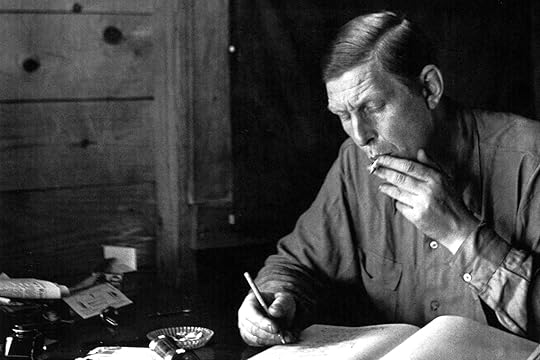
Poems, published in such collections as Look, Stranger! (1936) and The Shield of Achilles (1955), established importance of British-American writer and critic Wystan Hugh Auden in 20th-century literature.

In and near Birmingham, he developed in a professional middle-class family. He attended English independent schools and studied at Christ church, Oxford. From 1927, Auden and Christopher Isherwood maintained a lasting but intermittent sexual friendship despite briefer but more intense relations with other men. Auden passed a few months in Berlin in 1928 and 1929.

He then spent five years from 1930 to 1935, teaching in English schools and then traveled to Iceland and China for books about his journeys. People noted stylistic and technical achievement, engagement with politics, morals, love, and religion, and variety in tone, form and content. He came to wide attention at the age of 23 years in 1930 with his first book, Poems ; The Orators followed in 1932.

Three plays in collaboration with Christopher Isherwood in 1935 to 1938 built his reputation in a left-wing politics.

People best know this Anglo for love such as "Funeral Blues," for political and social themes, such as "September 1, 1939," for culture and psychology, such as The Age of Anxiety , and for religion, such as For the Time Being and "Horae Canonicae." In 1939, partly to escape a liberal reputation, Auden moved to the United States. Auden and Christopher Isherwood maintained a lasting but intermittent sexual friendship to 1939. In 1939, Auden fell in lust with Chester Kallman and regarded their relation as a marriage.

From 1941, Auden taught in universities. This relationship ended in 1941, when Chester Kallman refused to accept the faithful relation that Auden demanded, but the two maintained their friendship.

Auden taught in universities through 1945. His work, including the long For the Time Being and The Sea and the Mirror , in the 1940s focused on religious themes. He attained citizenship in 1946.

The title of his long The Age of Anxiety , a popular phrase, described the modern era; it won him the Pulitzer Prize in 1947. From 1947, he wintered in New York and summered in Ischia. From 1947, Auden and Chester Kallman lived in the same house or apartment in a non-sexual relation and often collaborated on opera libretti, such as The Rake's Progress for music of Igor Stravinsky until death of Auden.

Occasional visiting professorships followed in the 1950s. From 1956, he served as professor at Oxford. He wintered in New York and summered in Ischia through 1957. From 1958, he wintered usually in New York and summered in Kirchstetten, Austria.

He served as professor at Oxford to 1961; his popular lectures with students and faculty served as the basis of his prose The Dyer's Hand in 1962.

Auden, a prolific prose essayist, reviewed political, psychological and religious subjects, and worked at various times on documentary films, plays, and other forms of performance. Throughout his controversial and influential career, views on his work ranged from sharply dismissive, treating him as a lesser follower of William Butler Yeats and T.S. Eliot, to strongly affirmative, as claim of Joseph Brodsky of his "greatest mind of the twentieth century."

He wintered in Oxford in 1972/1973 and summered in Kirchstetten, Austria, until the end of his life.

After his death, films, broadcasts, and popular media enabled people to know and ton note much more widely "Funeral Blues," "Musée des Beaux Arts," "Refugee Blues," "The Unknown Citizen," and "September 1, 1939," t

Ratings & Reviews

What do you think?
Rate this book

Friends & Following

Create a free account to discover what your friends think of this book!

Community Reviews

5 stars
3,294 (44%)
4 stars
2,658 (35%)
3 stars
1,167 (15%)
2 stars
234 (3%)
1 star
83 (1%)
Displaying 1 - 30 of 198 reviews
Profile Image for Flo.
649 reviews2,245 followers
January 26, 2018
I would love to say that I chose this book because I saw it in some library and thanks to my keen eye and awesome brain, I decided to read it because I had this weird hunch that it was going to be amazing. Unfortunately, the reason why I chose it is far less poetic. I think a lot of us got to know this poet because of that movie. From the first time I watched it, I couldn't get a particular poem out of my head. It was recited by a man at his partner's funeral. Such a beautiful and intense poem. Those verses were filled with love and sorrow, vivid images and an overwhelming sense of hopelessness. I loved it. I knew I had to read more about the guy that was able to write such thing. Years and years passed by, and here I am. I found this collection and it was a delightful read.

Auden has a very personal style. He wrote about many issues such as love, loss, politics, religion. I'm no expert so I won't analyze forms and structures, but I did love the content. A lovely, evocative, wonderful content. I love when writers can take any ordinary situation and describe it like it's the most miraculous thing in the world and with every beautiful word that their language has to offer.

If I have to choose between heartbreaking, bittersweet, intense poetry and this... hmm. What to do? What to do... Tough call. (Yes, I'm still mad about that one.)

There are many poems that I loved: "Will you turn a deaf ear"; "The unknown citizen"; "In memory of Sigmund Freud"; "Law, say the gardeners, is the sun"; "The more loving one", "O what is that sound which so thrills the ear", "As I walked out one evening":
"…But all the clocks in the city
Began to whirr and chime:
'O let not Time deceive you,
You cannot conquer Time..."

True.

Anyway, I should end this review (I really need to find another word to describe these "things") with the most important part of the anecdote I previously shared. The poem I was referring to is "Funeral Blues" (you knew!). Its origins I refuse to believe. It's a beautiful thing to read and that's it.
Enjoy. Or weep.
Or both.
“Stop all the clocks, cut off the telephone,
Prevent the dog from barking with a juicy bone,
Silence the pianos and with muffled drum
Bring out the coffin, let the mourners come.

Let aeroplanes circle moaning overhead
Scribbling on the sky the message He Is Dead,
Put crêpe bows round the white necks of the public
    doves, 
Let the traffic policemen wear black cotton gloves.

He was my North, my South, my East and West,
My working week and my Sunday rest,
My noon, my midnight, my talk, my song;
I thought that love would last for ever: I was wrong.

The stars are not wanted now: put out every one;
Pack up the moon and dismantle the sun;
Pour away the ocean and sweep up the wood.
For nothing now can ever come to any good.”


Feb 23, 14
* Also on my blog.
Profile Image for Alok Mishra.
Author 9 books1,249 followers
July 17, 2019
Auden was the best with his whims and average with his thoughts (at times). When he wrote randomly, he produced some of the best poetry. His art of poetry works differently; his craft is crafty and his rhythm is disturbed. Auden's collection of poems is something that any poetry lover would cherish for long. He is the best within his circle of poets. He ranks (for me) with the best evers on occasions very rare...
Profile Image for AC.
2,211 reviews
i-get-the-picture
May 6, 2013
This is something really new for me. I only began reading literature again, after a multi-decades long hiatus, 2 yrs ago. Poetry in particular has always been inaccessible to me – I mean, I read a lot of Greek and Latin poetry, of course – but somehow that’s different – but I’ve *never* been able to read poetry in my own language, and have never understand any modern poetry at all. So that I’ve now come to the point of reading Auden is a mark of the progress I’ve made – difficult as it’s been.

When I decided to start reading poetry last year, I decided on Auden, and bought a nice copy of the Collected Works – and started staring at it. Where TF was I supposed to begin? Reading 700 pages of poetry, what! So the book sat there…. unopened.

Then I ran across a couplet by Pound that Gilbert Sorrentino used in Imaginative Qualities and was knocked over by it and said: “I’m gonna do this!” But this time, decided to start small. I’ve ordered a copy of a group of the Cantos, rather than trying to read the whole of it (which is absurd), and “selected poems” of Auden and Paterson (William Carlos Williams) – thinking these would be more manageable… and give me a more plausible point of entry.

This is the volume that arrived first, and so I’ll start with this.


This is a collection made by Edward Mendelson, who was Auden’s Literary Executor. So he’s a serious Auden guy. And he did something unusual – he put together a collection of Auden’s poems that include the *original*, unrevised version of the early poems – poems that Auden revised extensively or, in some cases, suppressed. So this is different than the reading of a collection that Auden himself constructed. Mendelson does not think that the later versions are inferior – they may often be deeper and more complex. But they do not give the poems in the historical context or in the manner that Auden actually produced them. And having that is valuable in its own right. (Mendelson thus suggests reading this edition first, and then the later revised versions second.)

There is also a short introduction on Auden’s poetry and its relation to Modernism that is… simply put, brilliant. Or at least, it’s the first thing that I’ve ever read on poetry that made sense, that was deep, devoid of all jargon… it was like a door opening up… So I’ve started on what is really, for me, a new journey….
Profile Image for Jonfaith.
2,145 reviews1,745 followers
July 12, 2021
till I accomplish my corpse at last.

Hot damn, I love Auden. Going to continue this capacious jaunt for a spell. This was a splendid cross-section and I thoroughly enjoyed it all. The Bucolics were likely my favorite. The biographical asides were also of interest as was the semi-successful approach to Mozart's Magic Flute.
Profile Image for Kevin Lopez (on sabbatical).
94 reviews26 followers
July 8, 2021
The wizardly Wystan Hugh (W.H.) Auden was a true master of his craft—of that mystical, mysterious magic called poetry; of infusing incorporeal, disembodied words with real weight, force, and rapturous lyricality. His poems embody the sublime and the elegiac; the absurdity, the fragility, and the (occasional) nobility of life, love, and faith, and are possessed of a unique and melancholic humor. Together, these attributes lend a deep pathos and a profound emotional connectivity to his ever-lyrical and lucent verse.
Profile Image for Mark.
1,177 reviews168 followers
July 30, 2007
He is in my pantheon. A brilliant poet who nevertheless is accessible and understandable. And to have written one poem in your life as good as "In Memory of W.B. Yeats" would be enough to ensure access to heaven. It ends with this wonderful appeal to all poets:

Follow, poet, follow right
To the bottom of the night,
With your unconstraining voice
Still persuade us to rejoice;

With the farming of a verse
Make a vineyard of the curse,
Sing of human unsuccess
In a rapture of distress;

In the deserts of the heart
Let the healing fountain start,
In the prison of his days
Teach the free man how to praise.
Profile Image for David M.
477 reviews376 followers
April 19, 2016
I trust few will dispute Auden's genius, what friend Cody might call his prodigious bulge of greatness. A bit like Eliot and a bit like Yeats, not much like Rilke or Stevens. Unafraid of occasional verse or opinion poems. I am perhaps a bit too incorrigibly romantic-modernist in my taste to follow him everywhere - a poem like 'On the Circuit,' for example is hardly my cup of tea. Nonetheless there's plenty here with which I do feel a deep sympathy, and doubtless more will continue to open up in time.

*
Auden's early love poems are quite beautiful - the sense of foreboding and tenderness all mixed together. The narrator like a somewhat less pathetic but equally doomed J. Alfred Prufrock

'Lay your sleeping head, my love,
Human on my faithless arm

(I'm a bit of a sucker when it comes to the human; to use it as an adverb there is what really gets me)


*
'For Europe is absent. This is an island and therefore
Unreal. And the steadfast affections of its dead may be bought
By those whose dream accuse them of being
Spitefully alive

(while I am of course for too cheap to try and purchase the affections of the dead, my dreams do sometimes accuse me of being spitefully alive, so I can halfway relate)

*
'...mad Ireland hurt you into poetry
Now Ireland has her madness and her weather still
For poetry makes nothing happen; it survives
In the valley of its saying where executives
Would never want to tamper; it flows south
From ranches of isolation and the busy griefs,
Raw towns that we believe and die in; it survives,
A way of happening, a mouth.
*
'Don Juan, so terrified of death he hears
Each moment recommending it,
And knows no argument to counter theirs;
Trapped in their vile affections, he must find
Angels to keep him chaste; a helpless, blind
Unhappy spook, he haunts the urinals,
Existing solely by their miracles.

*
I'm not in love with all of Auden's op-ed poems, but The Shield of Achilles is truly remarkable; has it ever been set to music? one of the most moving anti-war statements I know

'The thin-lipped armorer
Hephaestos, hobbled away;
Thetis of the shining breasts
Cried out in dismay
At what the god had wrought
To please her son, the strong
Iron-hearted man-slaying Achilles
Who would not live long.
Profile Image for Laura.
466 reviews42 followers
February 5, 2023
It feels strange to mark a volume of poetry as "finished" since I believe poetry, more than any other written text, must always be revisited. This volume of selected poems was compiled and edited by Edward Mendelson, a brilliant Auden scholar and the literary executor of Auden's Estate.

Auden's poetry is personal, deeply human, conflicted, stunningly brilliant, and breathtakingly beautiful. He is one of the few poets of his generation whose work rarely requires any kind of cipher. The meanings are all there in the text for the reader to discover and unravel. Nevertheless, biographical works can provide additional insight into Auden's evolving theories and philosophies and help elucidate the trickier bits. I enjoyed identifying echoes of other poets' voices, refracted by Auden's own artistic admiration (Eliot, Yeats). Although it seems that he has lately become overlooked or forgotten, Auden is undoubtedly worth reading and remembering.
Profile Image for Jerome K.
61 reviews1 follower
August 14, 2007
I have a much older edition of Auden's Selected Poems, when his Funeral Blues poem was still part of Two Songs for Hedli Anderson. I love Auden. More and more over the years actually. He's not as quotable as Frost. Or as monumental as Yeats and TS Elliot. He's more like a longtime friend who's not always steady on his feet, occassionally overreaching, a bit heartbroken, a bit bitter, a bit sweet, a whole lot of queen (LOL). If I could meet any poet from the past, I'd choose Auden.
Profile Image for Sonali V.
198 reviews85 followers
June 21, 2023
Superlative. Complex. To be enjoyed and returned to again and again. Like the poems of all great poets. Tagore, Jibanananda, Ted Hughes, Eliot, Neruda mostly, for me.
Profile Image for Madeline.
837 reviews47.9k followers
May 8, 2010
Lovely stuff. One of my favorites is a poem he wrote for Sigmund Freud after his death - it's long, so here's a bit of it:

"In Memory of Sigmund Freud

When there are so many we shall have to mourn,
when grief has been made so public, and exposed
to the critique of a whole epoch
the frailty of our conscience and anguish,

of whom shall we speak? For every day they die
among us, those who were doing us some good,
who knew it was never enough but
hoped to improve a little by living.

...

but he would have us remember most of all
to be enthusiastic over the night,
not only for the sense of wonder
it alone has to offer, but also

because it needs our love. With large sad eyes
its delectable creatures look up and beg
us dumbly to ask them to follow:
they are exiles who long for the future

that lives in our power, they too would rejoice
if allowed to serve enlightenment like him,
even to bear our cry of 'Judas',
as he did and all must bear who serve it."

Read for: Modern Poetry
Profile Image for Patrick Gibson.
818 reviews79 followers
July 31, 2011
I have had a hard bound copy of this volume for many years. I contains fragments and restorations of many unknown or unpublished poems. There are moments here where your hear soars.

The life of man is never quite completed;
The daring and the chatter will go on:
But, as an artist feels his power gone,
These walk the earth and know themselves defeated.

Some could not bear nor break the young and mourn for
The wounded myths that once made nations good,
Some lost a world they never understood,
Some saw too clearly all that man was born for.

Loss is their shadow-wife, Anxiety
Receives them like a grand hotel; but where
They may regret they must; their life, to hear

The call of the forbidden cities, see
The stranger watch them with a happy stare,
And Freedom hostile in each home and tree.

Profile Image for Kendrick.
112 reviews7 followers
January 25, 2021
I can appreciate Auden's writing, but I find the flow of his poems in general to not work for me
Profile Image for عماد العتيلي.
Author 16 books652 followers
February 1, 2019
‎‫‏description‬‬‬‬‬

“O what is that sound which so thrills the ears
Down in the valley drumming, drumming?
Only the scarlet soldiers, dear
The soldiers coming!”

‎‫‏description‬‬‬‬‬

What an amazing selection of Auden’s poetry. I loved so many poems and some of them even moved me to tears.
I’m thankful for having this opportunity to know W.H. Auden. He proved to me that he is such a delicate soul with which I have so much in common.

I recommend reading this collection.

Profile Image for Steven Godin.
2,782 reviews3,373 followers
April 29, 2023

Make this night loveable,
Moon, and with eye single
Looking down from up there,
Bless me, one especial
And frineds everywhere.

With a cloudless brightness
Surround our absences;
Innocent by out sleeps,
Watched by great still spaces,
White hills, glittering deeps.

Parted by circumstance,
Grant each your indulgence
That we may meet in dreams
For talk, for dalliance,
By warm hearths, by cool streams.

Shine lest tonight any,
In the dark suddenly,
Wake alone in bed
To hear his own fury
Wishing his love were dead.
Profile Image for Abby.
1,641 reviews173 followers
September 21, 2014
The best of one of the best. Long, thoughtful. It's been a while since I've had to read such heady poems. Auden likes to write poems for people too, which is quite nice. I felt like I had to turn on a different part of my brain to read his work. It was a healthy exercise.
Profile Image for Julia Yepifanova.
295 reviews24 followers
June 10, 2024
Поховальний Блюз

Годинники не йдіть, замовкніть телефони,
Солодкими кістками гавкіт заглушіть,
Закрийте фортеп'яни, в барабанний шепіт
Несіть труну, най плакальники йдуть.

Нехай аероплани у горі застогнуть,
Прошкрябають у небі звістку "Він Помер".
Пінгвіни офіційні убрані в краватки,
І чорні рукавички вдягнуть патрулі.

Мені він був за Північ, Південь, Захід, Схід,
За будні сірі, за ясні свята,
Він був мій день, мій вечір, всі мої слова і всі пісні
Назавжди, так гадала я, але дарма.

Навіщо зорі, кожну відірвіть,
Спакуйте місяць, демонтуйте сонце,
Спустіть моря і виметіть ліси,
Від нині ні про що мені не йдеться.
(Переклала я)


· Funeral Blues by W.H. Auden
Funeral Blues
Stop all the clocks, cut off the telephone,
Prevent the dog from barking with a juicy bone,
Silence the pianos and with muffled drum
Bring out the coffin, let the mourners come.

Let aeroplanes circle moaning overhead
Scribbling on the sky the message 'He is Dead'.
Put crepe bows round the white necks of the public doves,
Let the traffic policemen wear black cotton gloves.

He was my North, my South, my East and West,
My working week and my Sunday rest,
My noon, my midnight, my talk, my song;
I thought that love would last forever: I was wrong.

The stars are not wanted now; put out every one,
Pack up the moon and dismantle the sun,
Pour away the ocean and sweep up the wood;
For nothing now can ever come to any good.
Profile Image for munira.
56 reviews22 followers
Read
December 14, 2024
Make this night loveable,
Moon, and with eye single
Looking down from up there,
Bless me, One especial
And friends everywhere.
With a cloudless brightness
Surround our absences;
Innocent be our sleeps,
Watched by great still spaces,
White hills, glittering deeps.
Parted by circumstance,
Grant each your indulgence
That we may meet in dreams
For talk, for dalliance,
By warm hearths, by cool streams.

Shine lest tonight any,
In the dark suddenly,
Wake alone in a bed
To hear his own fury
Wishing his love where dead.
Profile Image for Bella.
6 reviews
September 18, 2024
I don't read poetry as often as I'd like, but I enjoy it. However, I finished this one in two days of reading. W. H. Auden's way with words is astonishing. His writing captured the atmosphere of the 1920-1940s perfectly. I really enjoyed it.
Profile Image for Katrin Kirilova.
104 reviews45 followers
January 18, 2025
Auden is THE POET. If I had to choose one poet to read for all eternity, I would undoubtedly pick him. All of existence is woven into the fabric of his words. My soul is now changed forever. As one of Terrence Malick’s characters says in Song to Song: “I now have the right heart in me.”
Profile Image for Jared.
387 reviews1 follower
Read
June 28, 2020
Auden's poems hold onto you and don't let go.
Profile Image for adam.
49 reviews11 followers
July 23, 2022
“𝒯𝒽𝑒 𝓉𝑜𝓌𝑒𝓇 𝒸𝓇𝒶𝒸𝓀𝑒𝒹 𝒶𝓃𝒹 𝒻𝑒𝓁𝓁 𝒻𝓇𝑜𝓂 𝓉𝒽𝑒 𝓆𝓊𝒾𝑒𝓉 𝓌𝒾𝓃𝓉𝑒𝓇 𝓈𝓀𝓎. 𝒰𝓃𝒹𝑒𝓇 𝓉𝒽𝑒 𝓂𝒾𝒹𝓃𝒾𝑔𝒽𝓉 𝓈𝓉𝑜𝓃𝑒, 𝐿𝑜𝓋𝑒 𝓌𝒶𝓈 𝒷𝓊𝓇𝒾𝑒𝒹 𝒷𝓎 𝓉𝒽𝒾𝑒𝓋𝑒𝓈.”
Profile Image for Rob Gifford.
116 reviews
Read
October 5, 2025
there’s some real beauty here…but he does tend to blabber on a bit, doesn’t he? I do appreciate that he has a whole ode to taking a dump
89 reviews3 followers
October 1, 2018
Premettendo che Auden, per ricchezza tecnica, metrica, formale è quasi inavvicinabile da un traduttore e che Fatica è bravo, e molto, ha dalla sua uno splendido italiano e una salda esperienza, le traduzioni mi hanno quasi sempre deluso e addirittura infastidito. La resa in metrica della metrica è sempre rischiosa sia perché la stessa forma in due tradizioni letterarie diverse ha assunto significati differenti (un ottonario inglese non può essere tradotto con un ottonario in italiano, dove ha tutt'altro carattere), sia perché i compromessi lessicali nella scelta della resa sono troppo grandi: preferisco sempre una maggiore aderenza semantica a un' - tra l'altro impossibile - aderenza metrica. Secondo, ben più grave difetto (perché tanto la poesia la si legge in lingua, diciamocelo) è la mancanza pressoché totale di un apparato di note. È molto adelphiano fare gli snob in questo modo, ma allora tanto valeva non inserire neanche le poche presenti, pressoché irrilevanti. Ma la mancanza di un aiuto al lettore italiano, che non conosce Shakespeare a memoria, nell'individuare le citazioni e i rimandi che costituiscono “Il mare e lo specchio” o di un rapido accenno alla circostanza fondamentale da cui scaturì “Out on the lawn I lie in bed”, per fare due esempi, è deleteria ai fini del puro godimento estetico e intellettuale di un corpus poetico che è uno dei grandi miracoli della letteratura del Novecento. Quindi non punteggio pieno all'edizione, che per fortuna c'è ma che se vuol essere Meridiana deve anche proporre strumenti adeguati, specie per opere che sono allo stesso tempo immediate e così complesse.
Di Auden, invece, non si può dir nulla. Solo, una bella sorpresa i testi degli ultimi 15 anni, di solito negletti, l'ennesima prova che la sua voce non si spense o arrochì affatto dopo la guerra, come spesso si dice, anzi era assolutamente contemporanea a se stessa e a tante cose che stavano nascendo o sarebbero sorte di lì a poco. Un maestro e un abilissimo artigiano e forse il più sbalorditivo technician di sempre.
Profile Image for Dan Douglas.
88 reviews10 followers
April 13, 2020
We once had a company-wide email survey which asked 'What is your favorite genre of book?' The categories were 1) Mystery, 2) Romance, 3) Science Fiction, 4) Non-fiction, 5) Poetry, 6) Horror, 7) Realistic Fiction, and 8) Fantasy. A few thousand responded. Not even 15 picked Poetry.

That wasn't that surprising but it was a little surprising. I thought about why people don't read poetry. We listen to song lyrics constantly. Poetry isn't that different.

I think it's because poetry's pure form isn't the physical book. Poetry started as live readings, live tellings, live story-telling. Poetry can be read at short bursts from a book but there's nothing like hearing a poet do a well done reading. Most people don't have that opportunity.

It was a fluke that one day I stumbled on a video of Auden reading As I Walked Out One Evening. Something in the nooks and crannies of his stodgy ethereal British intonation did something for me. He had a real feeling about what he was reading and it was incredibly sad. Many months later I was perusing a Half Price Books and came across a cheap version of this Selected Poems. I've probably read all the poems in this book five or six times.

Enjoying poetry requires a pure capacity to enjoy words without context. Words without plot or sometimes even sequences of action. Words for words sake. Most people don't like words that much. They don't like words unless the words do something other than just be themselves. They need a grand idea, or a murder, or a love story. And the words are just the messengers.

Over the years Auden has become pure enjoyment to me. This book is always on my bedside table and two or three of every ten nights I will pick it up and read and be just as enraptured as the first time I read him. I can't quite explain it but even if I could I wouldn't really want to.
Profile Image for hireth.
46 reviews
April 28, 2016
No sé cómo reseñar un libro de poesía. No tengo la menor idea. No sé cuándo un poeta es bueno, cuándo la calidad es superior, no sé nada, sólo puedo juzgarles por lo que me han transmitido. Para mí una persona que es capaz de escribir poesía es un Dios, me parece algo maravilloso, digno de otro mundo y disfruto más que nada leyéndola.
En Auden he encontrado a un autor diferente a los que he leído por el momento. He disfrutado con sus referencias a la mitología griega, con esas pequeñas pullas, esos toques de humor, la crítica en general y las páginas dedicadas a The Tempest, de William Shakespeare. He llenado el libro de notitas, líneas subrayadas y poemas enteros que pienso volver a releer una y mil veces.
Pronto volveré a él, estoy segura.
Profile Image for Zoe.
1,299 reviews30 followers
August 30, 2010
Like many modern poets, Auden's works are undervalued. While he can write about any subject and make it memorable, it is his poems about grief and loss that always seem the strongest. A favorite to pick up and re-read at times.
Displaying 1 - 30 of 198 reviews

Can't find what you're looking for?

Get help and learn more about the design.