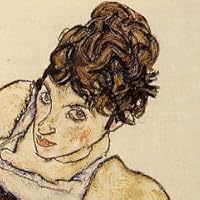
The theme of this extraordinary book is the evolution of the modern conception of family life and the modern image; of the nature of children. Aries traces the evolution of the concept of childhood from the end of the Middle Ages, when the child was regarded as a small adult, to the present child-centered society, by means of diaries, paintings, games, and school curricula.
Ironically, he finds that individualism, far from triumphing in our time, has been held in check by the family, and that the increasing power of the tightly-knit family circle has flourished at the expense of the rich-textured communal society of earlier times. Translated from the French by Robert Baldick.
Philippe Ariès (21 July 1914 – 8 February 1984) was a French medievalist and historian of the family and childhood, in the style of Georges Duby. He wrote many books on the common daily life. His most prominent works regarded the change in the western attitudes towards death.
Ariès regarded himself as an "anarchist of the right". He was initially close to the Action française but later distanced himself from it, as he viewed it as too authoritarian, hence his self-description as an "anarchist". Ariès also contributed to La Nation française, a royalist review. However, he also co-operated with many left-wing French historians, especially with Michel Foucault, who wrote his obituary.
During his life, his work was often better known in the English-speaking world than it was in France itself. He is known above all for his book L’Enfant et la Vie Familiale sous l’Ancien Régime (1960), which was translated into English as Centuries of Childhood (1962). This book is pre-eminent in the history of childhood, as it was essentially the first book on the subject (although some antiquarian texts were earlier). Even today, Ariès remains the standard reference to the topic. Ariès is most famous for his statement that "in medieval society, the idea of childhood did not exist". Its central thesis is that attitudes towards children were progressive and evolved over time with economic change and social advancement, until childhood, as a concept and an accepted part of family life, from the 17th century. It was thought that children were too weak to be counted and that they could disappear at any time. However, children were considered as adults as soon as they could live alone.
The book has had mixed fortunes. His contribution was profoundly significant both in that it recognised childhood as a social construction rather than as a biological given and in that it founded the history of childhood as a serious field of study. At the same time, his account of childhood has by now been widely criticised.
Ariès is likewise remembered for his invention of another field of study: the history of attitudes to death and dying. Ariès saw death, like childhood, as a social construction. His seminal work in this ambit is L'Homme devant la mort (1977), his last major book, published in the same year when his status as a historian was finally recognised by his induction into the École des hautes études en sciences sociales (EHESS), as a directeur d'études.
This is a really cool book that puts forth the pretty audacious idea that in medieval society, "the idea of childhood did not exist." Ariès argues that throughout the medieval period, children were essentially treated like mini-adults. As soon as they were physically capable, they joined adult society and played the same games, wore the same clothes, and were frequently shipped off to learn manners and etiquette from another family by age seven. In the most startling passage of the book, Aries demonstrates that the concept of childhood innocence and purity did not particularly exist before the 17th century. The crazy sexual exploits of the two-year-old Louis XIII at court are kind of mind-boggling.
Ariès suggests instead that the concept of childhood that we know today did not take shape until the 17th century. By then, 'childhood' became a status of life separated from adulthood, and one that was viewed as requiring careful protection and molding. This shift was spurred predominantly by reforms in education, which encompassed a growing number of children and increasingly distinguished them by their ages (leading to the grades/classes/forms that we know today). It also, Ariès notes, leads to a much more hierarchical sense of structure and harsh sense of discipline, paralleling the absolutist developments occurring in contemporary government. Finally, Ariès notes that this new conception of childhood led to a new emphasis on the family unit, which was increasingly separated and isolated from the more communally-minded medieval households.
It's a really fascinating study but it does have some problems, predominantly due to the way Aries uses his sources. His evidence for childhood in the middle ages, for example, depends heavily on artistic portrayals of children (or, more accurately, their absence). This is a bit of problem because art in the medieval period was very different from art today: it's goals were not to express emotion or to portray things important to the artist. The absence of children does not indicate an absence of 'childhood' or a disregard for its importance. And when children do start appearing in paintings, it's just as likely occurring because of a shift in artistic attitudes as it is a shift in ideas about children. The same could be said about the shift in written accounts of children. Basically, the problem is that Ariès is looking at his subject in a bit of a vacuum and he doesn't sufficiently consider that these changes are occurring because of political, religious, artistic or economic developments as much as changing mental attitudes. A whole lot of things changed between the tenth century and the nineteenth, and Ariès doesn't consider them enough to make his argument entirely convincing. Also, atypical examples (see the case of Louis XIII mentioned above) are sometimes used as being representative of all of society. It's still definitely worth a read, though, and some of his smaller arguments stand up pretty well. The idea of a communally-minded medieval era and a private-oriented modern one is especially interesting.
Fascinating! Thorough. A lot of theory, the development of the idea of "family," the evolution of the idea of "children."
Quotes I liked:
"In the African bush, age is still quite an obscure notion, something which is not so important that one cannot forget it."
-When Francois 1 ordered all parish priests to record births and deaths in their towns, the people were hostile to the idea and did not cooperate until the 1800's. They didn't think their government had any business even knowing how many members of each family there was!
"One could leave childhood only by leaving a state of dependence." E.g. you are a boy until you are making your own living and supporting yourself, then you are a man. You can be a man at 14 or 34, it really depends on you.
-The evolution of the word child: It used to refer simply to a subordinate, like how people would call their servants "boy." Though also it should be noted that most servants were children as this was the entry level position in any career.
"The men of the tenth and eleventh centuries did not dwell on the image of childhood ... childhood was a period of transition which passed quickly and was just as quickly forgotten."
"Young and old played the same games ... games and amusements extended far beyond the furtive moments we allow them [today]: They formed one of the principal means employed by a society to draw its collective bonds closer, to feel united. There was scarcely a difference between the children's dance and that of the adults."
Then "A powerful and educated minority of rigid moralists condemned nearly all of them [games & amusements] out of hand and roundly denounced all of them as immoral, allowing scarcely any exceptions. The moral indifference of the majority and the intolerance of a prudish elite existed side by side for a long time."
"The church, enamored of order and discipline, were also eager to tame what was still a wild population, to civilize what was still a primitive way of life.... Magistrates, police officers and jurists, all enamored of order and good administration, discipline and authority, gave their support to the schoolmasters and churchmen."
"The statues of the colleges were drawn up in such a way as to limit the opportunities for recreation as much as the risks of delinquency." [Note that all recreation was delinquency, and kids started college around 14 at this time.]
[As the 1700's moved to the 1800's, instead of condemning all games (which had turned out to be impossible), the powers that be decided instead to control them--hence the creation of organized sports.] "At the close of the eighteenth century, games found another justification, this time patriotic: They prepared man for war. This was the time when training a soldier became what as virtually a scientific technique, the time to which saw the birth of modern nationalism."
"Sorel makes a distinction between parlor games, games of exercise and games of chance. The last two, he observes, are common to every sort of person, being played by valets as by masters ... as easy for the vulgar and the ignorant as for the clever and the learned. Parlor games on the other hand are games of wit and conversation. In principle they can appeal only to persons of quality, bred on civility and gallantry, quick at repartee and speeches, and full of knowledge and judgement, and cannot be played by others."
"If there is anything which is too ugly and shameful for words, it is the sight of a nobleman being defeated by a peasant, especially in wrestling."
-When games became something that adults allowed children to do but wouldn't partake in themselves, they found that: "In order to retain the favor of children, a toy must have some connection with the world of adults." Children wanted to do what the adults were doing, they didn't want to live in the separate world being created just for children, and the process of kicking them out of the adult world took centuries.
-All games were just fads, evolving and changing over time.
-Children had lived life with the adults, nothing was hidden from them, including sex. "The idea did not yet exist that references to sexual matters, even when virtually devoid of dubious meetings, could soil childish innocence, either in fact of in the opinion people had of it: nobody thought this innocence really existed."
-But then the church had to make children "innocent," so that if they died they did not go to hell.
-And moreover, "M. de Grenaille continues: 'It must not be imagined that when one speaks of childhood one is always speaking of something weak; on the contrary, I am going to show here that a condition which certain people consider contemptible is positively illustrious.' It was, in fact, at this time that people did talk of the weakness and imbecility of childhood. Hitherto they had tended to ignore childhood, as a transitional period soon finished and with no importance."
-But it turned out that children were more willing to die for God, therefore, the church concluded, there was something divinely pure about children. Man must be born pure and then corrupted by society. The idea formed then: perhaps if children were removed from society, educated, and controlled, perhaps they would stay pure all their lives! Thus began the movement to force children to be innocent, something they never really were and something they did not wish to be.
-The church decreed that children should never be left alone for a second, so that they would never do or think impure things. But, as Jaqueline Pascal wrote: "This constant supervision should be exercised gently and with a certain trustfulness calculated to make them think that one loves them, and that it is only to enjoy their company that one is with them. This makes them love this supervision rather than fear it."
-Whole families slept together until the 1700's when a massive propaganda campaign was launched to eradicate this age-old "indecent" habit. How else could you hide sex from children?
"In medieval society the idea of childhood did not exist; this is not to suggest that children were neglected, forsaken or despised."
"In order to correct the behavior of children, people must first of all understand it, and the texts of the late sixteenth century and the seventeenth century are full of comments on child psychology. The authors show a great solicitude for children, who are seen as witnesses to baptismal innocence, comparable to the angels, and close to Christ who loved them."
-"In a lot of history, children were seen as charming toys, those who first demanded that children be treated better... saw them as fragile creatures of God who needed to be both safeguarded and reformed." i.e. educated and controlled.
-Medieval schools were invented by the church. "The exercise of the priesthood still called for a minimum of knowledge: knowledge which one might call literary (the liturgical texts of the divine office) and knowledge which one might call scientific (such as the computation of Easter) or artistic (such as plain-song)." School was invented by the church as a place to train future clergy. "It is the cathedral school which is the original cell of our entire scholastic system in the West."
-It wasn't long before the wealthy sent their children to these schools so that they might know what the future bishops would know. Then various things were added to the curriculum, like grammar and philosophy. But school remained a good that was supplied by the free market. "Every master arranged his programme according to his preferences."
-School at this time was age-blind. "Their contemporaries paid little attention to their age, and considered it perfectly natural too for an adult who was anxious to learn to join a class of children, for it was the subject being taught that mattered."
-In Paris these schools were concentrated in one street, but the schools were independent of one another.
"The floor was strewn with straw, and the pupils sat on the floor…. Then the master waited for the pupils to come to him, as a shop keeper waits for customers…. Most of the pupils lived where they could, in private lodgings, several to a room. And here too, old and young were mingled together…. How could they be expected to notice the mixing of the ages when they were so indifferent to the very fact of age?"
-In the 1450’s the old-type schools were replaced by “colleges." Masters were no longer allowed to teach where they liked, freedom of the pupil was no longer tolerated. Masters were now moral instructors who supervised, rather than people selling knowledge. Their job was to supervise every moment of their pupils lives, to provide their pupils with a “way of life." Age mixing didn’t really work for this since older people will not allow such force and intrusion but also for the simple reason that school was an idea that was developing, the idea of graduated knowledge and learning different things at different ages was developing. Colleges began as places for poor students to live while they studied and a place to get moral guidance. They turned into boarding schools. "From then on it was no longer just a question of providing poor students with the means of living in a university town: it was also proposed to impose on them a way of life which would shield them against secular temptations, and they were submitted to a community life inspired by monastic practices and governed by perpetual statues.”
-Schools taught theology, logic and grammar.
-The separation of the ages existed only in the colleges. In the society of the same period, a boy aged between thirteen and fifteen was already a full-grown man and shared in the life of his elders without causing any surprise.
-The separation of the ages began as three groups: children under 10, children from 10-15 or 18 and adults from 15 to 18 or older.
-In the 15th and 16th centuries wealthy families started sending their kids to schools, previously only future clerics went to school.
-"The new regulations… in 1501, were no longer content with fixing the general conditions of the college’s life. They went into the details of everyday life and carefully laid down a daily routine…. It introduced a new concern for time, and enmeshed the pupil in a network of obligations which covered the whole day and reduced his initiative…. The change took place from regulations laying down the basic principles of a code of behavior and a way of life to regulations dictating the manner in which every party of the day was to be occupied, from a collegiate administration to an authoritarian system, from a community of masters and pupils to the strict government of pupils by masters…. But the evolution corresponded to the general movement of society, which was carrying it towards the political forms of absolutism that were taking shape in the fifteenth century, in the time of Louis XI, Commines and Machiavelli…. If this teaching order was particularly concerned to develop the spirit of obedience and gave the age-old principles of discipline a new character of semi-military efficiency…. The rule governing their colleges marks the culmination of the evolution towards an authoritarian system and the segregation of the young—though the segregation was not so complete as it would be in the nineteenth century…."
"The final establishment of a code of disciple completed an evolution which led from the medieval school, a mere classroom, to the modern college, a complex institution, designed not only for the tuition, but also for the supervision and care of youth. This evolution of the educational institution is bound up with the parallel evolution of the concepts of age and childhood."
"For a long time the curriculum and order of classes would vary from college to college. Then the colleges got together and standardized the curriculum."
-1539 text by Saint-Jérôme de Liégr: "Originally, ‘each master tried to attract pupils, teaching not what was best but what gave the more pleasure, and consulting not so much the students’ minds as their tastes.’ These masters ‘read from authors above the age of their pupils, even when these readings could prove harmful to morals and judgment.’ An authority accordingly had to be imposed on these excessively independent masters."
-The concept of the family was unknown in the Middle Ages. It originated in the fifteenth and sixteenth centuries and reached its full expression in the seventeenth century.
"The peaceful organs of the old Frank state were still strong enough to allow a freeman to live an independent life and to prefer, if he so wished, the company of his friends and neighbors to that of his relatives."
"In the tenth century, husband and wife had managed their own property, buying and selling separately without the other being able to interfere."
-The home becomes the social cell, the basis of the state. The wife's position starts to deteriorate in the 14th century, by the 16th century she is the property of her husband, as are the children. The man is the king of his household.
-Under the ancient regime holidays were giant, collective festivals. They became quiet family celebrations that concentrated around the children. Family feasts became children's feasts.
-The church played a big role in idealizing and encouraging the value of family.
-It's hard for us to understand what an apprenticeship in medieval times was like because life was so different: The apprentice lived with his master, there was no work day and then home life, work was life, and if the apprentice wasn't with him all the time, he would miss something. So the apprentice was similar to a servant, a private secretary, and a friend.
****"Transmission from one generation to the next was ensured by the everyday participation of children in adult life... They learned the art of living from everyday contact. In these circumstances, the child soon escaped his own family."
"The most serious shortcoming of the college is the segregation of children, which separates them from their natural social environment... The world is a great book which teaches us something every moment, and conversations are living studies which are not a whit inferior to those of books."
-In the early 1700's people became obsessed with self-improvement. "Ambition was considered a virtue. Nobody, it was felt, should be content with his lot; he should constantly think of bettering it. This eagerness to rise in the world was not seen as an appetite for pleasure and comfort but as an ideal calling for strict discipline and unflinching determination, an heroic ideal in which one can recognize the spirit of the Renaissance."
"When the Renaissance was in full boom, it was no longer in good taste to aspire too obviously to fortune or prestige. The new ideal was the search for a happy mean, a distinguished mediocrity."
-Little distinction was made between social and professional friends. Homes that housed 30 people had the parents, kids, servants, brothers, local bachelors, protoges. People lived in a big general purpose room like they did in Japan. You set up beds at one time of the day and a dinner table at another time of the day. Servants weren't lowly people. Everyone mingled together. Servants were similar to the slaves of the vikings--you commit yourself to a master, he tells you what to do and bears all the responsibility for your survival, and in turn you serve him. Servants loved their masters. They were friends.
This book was instantly recognized as a landmark in historical writing when it first appeared in 1960. By demonstrating that our current concept of what a child is dates from the 15th Century, Aries showed how arbitrary are the notions that we hold about ourselves. The classifications of people as being teenagers, retirees, middle-aged, pre-schoolers, etc. all emerged at certain point in history and will likely disappear at another.
The second important aspect of Aries is book is that he made extensive use of paintings to build his case about the emergence of a new concept of childhood during the renaissance. Historians in most situations use texts as their sources: other books, diaries, letters, etc. However, at historians from the very early days have also paid lip-service to the notion that buildings, statues, art, coins, archeological finds, movies and pictures are also legitimate sources for the historian. However, seldom has an historian used paintings as successfully as did Aries.
Aries has had a great influence on many historians that have followed him. Simon Schama for example in an Embarrassment of Riches which is about the Dutch Cultural Ethos in the 17th Century acknowledges Aries as a great model. The influence of Aries can also be seen in the works of Michel Foucault who has written a number of excellent books on topics such as madness and penal institutions in which he shows that human society makes decisions about methods of controlling its members based on arbitrary theories of human nature that emerge at a specific in time before ultimately disappearing at a later date.
This book can be read with great profit for its analysis of how the modern idea developed. At the same time it is a great demonstration of how historians can use non-textual sources and how historians should also be aware that the concepts that they make about humans and society are typically highly arbitrary. L'enfant et la vie familiale sous l'Ancien Régime is a true masterpiece of historical writing.
Aries examines the evolution of conceptions of children and family life. Using a variety of sources, including art and diaries, he argues that children were not seen as different in nature from adults until well after the Middle Ages, and that as the separation of children from adults increased the nuclear family replaced the small community as the essential social unit.
While other social historians have since argued with some of Aries assertions, this study was seminal in bringing the subjects of childhood and family relations into the study of history.
This is THE CLASSIC work in the history of childhood. He's basically the founding father of this field. Despite its subtitle, the biggest chunk of the book is about the birth of modern school with a focus on the conceptualization of age. Many fascinating anecdotes that anyone can enjoy, and good structure of writing for those who have to skim the book.
Really really great study of the evolution childhood in Western Europe. It works as a good companion to other stuff I’ve read about childhood/the family in the Middle Ages since the scope of this book is around the end of the Middle Ages to the 19th century. This kind of social history is one of my favorite things to study.
Ariès is one of the best to ever do it and I need to read more from him BUT it is kind of funny that every few chapters he has to remind you that he’s a Frenchman writing in the 50s by throwing some random jab at Arabs/Muslims.
I was very excited to read this, but unfortunately the concept behind the book is much better than the presentation. I found the writing style to be aimless and unclear. Each chapter begins with several pages of unorganized minutiae, surprisingly drawn from a very limited number of sources (is one man's journal really sufficient evidence to support every point you make in the book?), and ends--jarringly--with the conclusions to be derived from that smattering of seemingly random data. Which is to say that instead of nicely integrating his evidence into his theoretical framework, he rather doles them out in uneven lumps. The end result is a book that is often tedious and sometimes unconvincing. Also, some of the conclusions aren't as elucidated as I would have liked; he charts certain chronological progressions without really determining or even speculating how or why they changed over time. The book is a great foundational work and it has some fascinating anecdotes, but it's not without its flaws.
Sobre com es va anar formant el concepte de la infantesa entre el segle quinze i el divuit. Fins el segle disset, la vida era del tot pública. No hi havia espai per la família fins que no va començar a existir la vida privada.
Abans, els nens formaven part del món dels adults. Fins que un nou interès en l'educació va separar l'esfera dels infants de la dels adults. Això va comportar que la família deixés de ser una institució merament dedicada a la procreació i la transmissió d'un cognom i unes propietats, i assumís una funció moral. I entre els membres d'una família es va començar a crear una relació molt més íntima, poc a poc posant els nens en el lloc més cèntric.
"it reinforced private life at the expense of neighbourly relationships, friendships, and traditional contacts. The history of modern manners can be reduced in part to this long effort to break away from others, to escape from a society whose pressure had become unbearabel."
With all its flaws, notably regarding his interpretation of art, his lack of sample size in statistics, and even a propensity to change his thesis along the way (is this childhood or family and class?), I think the book provides a valuable read in regards to understanding a subject matter that wasn't often pondered. Was childhood a social construct or not? His argument is yes. If you agree or disagree, it's good to read his book as a starting point.
I read this book as an undergraduate history major (a long, long time ago), but the central argument, that in the middle ages "children" did not exist, remains with me and remains convincing.
Ariès' work remains interesting and provocative some sixty years after its publication. Part of its timelessness may be credited to its status as the first work on the history of childhood, but perhaps the principal reason it endures is its lively use of sources. The insights Ariès gleans from diaries, paintings, and other sources develop his points. Simultaneously, these sources help readers jump into the cacophony of the past alongside the author to try and sort out how people really thought about family, childhood, class, school, and society. The same sources read by Ariès in one way are now read in many different ways by his critics, and the reader is given all necessary information to disagree at any given moment with how Ariès is interpreting the evidence. The diaries and letters of people as diverse as Louis XIII, Thomas Platter, St. Jean Baptiste de la Salle, and Madame de Sévigné brought his points (and the concepts of family, school, and childhood as seen through Medieval and Early Modern eyes) vividly home.
It's invigorating to feel the historian's excitement at the time Ariès wrote, the recognition in the historical discipline that there are social constructs and that these constructs are themselves capable of change which can be subjected to historical analysis. Ariès' book participates in the revitalization of the cultural, social, and intellectual history subfields that was going on in the 1960s.
The core argument of the book--childhood as an idea/feeling did not exist in the Middle Ages--has been thoroughly disproven by critics. Ariès unfortunately does not pay sufficient attention to non-cultural historical context, laying the responsibility for all of the changes he analyzes at the feet of culture. The disregard for other fields of history makes Ariès' arguments weaker than they could be. But at the same time, somewhat paradoxically, it is Ariès' paramount focus on cultural history that engages and excites. And despite his cultural monocausality, other arguments in the book remain relevant and difficult for critics to challenge. Another of Ariès' other main arguments is that the middle classes instigated the shift from the heavily social communities of the Medieval world to the much more private world of modern families. It used to be (as Ariès points out through a mountain of cultural evidence) that people of all ages and classes intermingled and played the same games or celebrated the same holidays together, communally. It is disturbing to think that the rise of privacy and the modern conception of the family in Western Europe could also so sharply delineate the lines between lower, middle, and upper classes.
If the topic piques your interest, there seems to me no better place to start on the subject than with Centuries of Childhood. In the course of writing this review, I also discovered Medieval Children by Nicholas Orme, which was written with the express purpose of disproving Ariès' central claim. It may be an excellent book to read in companion with this one. For now, though, I need a break from Western European history . . .
'In medieval society the idea of childhood did not exist'.... I don't know about all that, Phil!!
Wrote a whole essay on this back in undergrad medieval history but I was not a fan of his analysis here. There's a pretty distinct lack of class and gender as material considerations in his arguments. Also, using depictions of baby Jesus as proof of children viewed as adults doesn't quite make sense given the medieval art and literature that depicted his childhood in relation to the Infancy Gospel of Thomas. I could rant about this for days.
That said, it does provide some interesting reflection on how childhood has changed and what life might have been like for kids back then. I think he did medieval people a bit of a disservice in dismissing other evidence that was just as useful (medieval biographies instead of Enlightenment era writings, poetry, material culture of toys, I could go on). He clearly did his big one with Hour of Our Death.
From the title to the writing style, this book doesn't fail to disappoint. First, it should be titled "Centuries of French Childhood" to be clear; it's not about childhood in Africa, N. America, even Europe. It's all about French childhood. More specifically, the part I read was all about French boys' childhood. I was expecting a more global perspective.
Second, it's BORing. Dry as a piece of bread left out in the summer sun for several days. A string of facts, one after another, with no engaging personal story examples. I still want to learn about this topic, but I'll look for a book written by a better writer.
Lo stile di Aries è sempre complesso e convoluto. Alcuni capitoli sono illuminanti, specialmente in alcuni brani. Però poi si lancia in ripetizioni inconcludenti che minano la godibilità del testo. Ciononostante, é chiaro che si tratti di un lavoro della massima levatura, focalizzato sulla figura dei figli più che su quella dei padri, e sempre all'altezza delle aspettative di uno dei massimi storici sociali del xx secolo.
The book offers a highly readable and accessible exploration of how the concept of childhood and the structure of the family evolved over time. What stands out most is Aries use of written sources(letters and documents), and visual sources to reconstruct everyday experiences of children and families. It just confirms this book is a valuable and stimulating base/classic to anyone interested in the history of private life.
Curious in-depth examination of childhood depicted in art and writing from the middle ages through early modern focused on France and England, a necessary but ultimately bizarre citation for any claim of change in family or schooling over shorter recent periods in its cataloging of moralistic and class-driven changes in views on protecting innocence and justifying corporal punishment etc.
skimmed a decent portion of this but it was useful getting some context for childhood in the middle ages and early modern period. although his central thesis--that childhood as a concept didn't really exist in the middle ages--has been disproven by other scholars who study childhood in these periods, i suppose it was good to read what's considered the originary text for childhood studies itself.
Para nós a ideia de “ criança “ é tão prosaica, corriqueira, que parece que sempre foi assim. Ledo engano. Aries nos mostra nessa obra riquíssima que noções sobre infância, infantil, criança são fatos sociais da modernidade.
"Tem-se a impressão, portanto, de que, a cada época corresponderiam uma idade privilegiada e uma periodização particular da vida humana: a 'juventude' é a idade privilegiada do século XVII, a 'infância', do século XIX, e a 'adolescência', do século XX."