

What do you think?
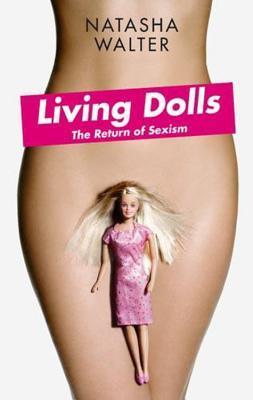
Living Dolls: The Return of Sexism
Empowerment, liberation, choice. Once the watchwords of feminism, these terms have now been co-opted by a society that sells women an airbrushed, highly sexualised and increasingly narrow vision of femininity. While the opportunities available to women may have expanded, the ambitions of many young girls are in reality limited by a culture that sees women's sexual allure as their only passport to success. At the same time we are encouraged to believe that the inequality we observe all around us is born of innate biological differences rather than social factors. Drawing on a wealth of research and personal interviews, Natasha Walter, author of the groundbreaking THE NEW FEMINISM and one of Britain's most incisive cultural commentators, gives us a straight-talking, passionate and important book that makes us look afresh at women and girls, at sexism and femininity, today.
273 pages, Paperback
First published June 1, 2008
About the author
Natasha Walter
8 books68 followers British feminist writer and human rights activist. She is the author of Living Dolls: The Return of Sexism (2010, Virago) and The New Feminism (1998, Virago), and is the director of Women for Refugee Women.
Her father was Nicolas Walter, an anarchist and secular humanist writer; her grandfather was William Grey Walter, a neuroscientist. After attending North London Collegiate School, she read English at St John's College, Cambridge, graduating with a double First, and then won a Frank Knox Fellowship to Harvard.Her first job was at Vogue magazine, she then became Deputy Literary Editor of The Independent and then a columnist for The Guardian. She went on to write for many publications and to appear regularly on BBC2's Newsnight Review and Radio 4's Front Row. In 1999 she was a judge on the Booker Prize.
Walter is the founder and director of the charity Women for Refugee Women which campaigns for the rights of women who seek asylum. In 2008 Women for Refugee Women produced the play Motherland which Natasha Walter wrote based on the experiences of women and children in immigration detention. It was directed by Juliet Stevenson and performed at the Young Vic in 2008 by Juliet Stevenson, Harriet Walter and others. Women for Refugee Women subsequently worked in partnership with other organisations to campaign for the end to the detention of children for immigration purposes in the UK, a policy which the government announced it would end in 2010.
She is the author of The New Feminism, which was an influential feminist book published by Virago in 1998. Her book Living Dolls, also published by Virago, looks at the resurgence of sexism in contemporary culture. Natasha Walter says, "I once believed that we only had to put in place the conditions for equality for the remnants of old-fashioned sexism in our culture to wither away. I am ready to admit that I was wrong."
Natasha Walter lives in London with her partner and their two children.
/source:Wikipedia/
Her father was Nicolas Walter, an anarchist and secular humanist writer; her grandfather was William Grey Walter, a neuroscientist. After attending North London Collegiate School, she read English at St John's College, Cambridge, graduating with a double First, and then won a Frank Knox Fellowship to Harvard.Her first job was at Vogue magazine, she then became Deputy Literary Editor of The Independent and then a columnist for The Guardian. She went on to write for many publications and to appear regularly on BBC2's Newsnight Review and Radio 4's Front Row. In 1999 she was a judge on the Booker Prize.
Walter is the founder and director of the charity Women for Refugee Women which campaigns for the rights of women who seek asylum. In 2008 Women for Refugee Women produced the play Motherland which Natasha Walter wrote based on the experiences of women and children in immigration detention. It was directed by Juliet Stevenson and performed at the Young Vic in 2008 by Juliet Stevenson, Harriet Walter and others. Women for Refugee Women subsequently worked in partnership with other organisations to campaign for the end to the detention of children for immigration purposes in the UK, a policy which the government announced it would end in 2010.
She is the author of The New Feminism, which was an influential feminist book published by Virago in 1998. Her book Living Dolls, also published by Virago, looks at the resurgence of sexism in contemporary culture. Natasha Walter says, "I once believed that we only had to put in place the conditions for equality for the remnants of old-fashioned sexism in our culture to wither away. I am ready to admit that I was wrong."
Natasha Walter lives in London with her partner and their two children.
/source:Wikipedia/
Ratings & Reviews
Friends & Following
Create a free account to discover what your friends think of this book!
Community Reviews
Displaying 1 - 30 of 250 reviews

August 28, 2013
I have been watching this hypersexual culture getting fiercer and stronger, and co-opting the language of choice and liberation.” - Natasha Walter, Living Dolls
After the Miley Cyrus and Robin Thicke VMA performance some time ago I read a comment by a friend that asked the question: “Why is it that the man is always fully clothed while the woman is always half-naked?” Great question and an example of the double standards that are so rife in our society. This book does a terrific job in addressing sexism in society; feminism was supposed to empower women but unfortunately a lot of women have a false sense of empowerment. Women still feel the need to conform to the image that society has prescribed for them, an image which is more and more defined by the sex industry.
The book challenges how we think, especially about the sex industry becoming so mainstream. Walter dissects arguments and shows us how problematic the sex industry is. Very problematic, even for women not involved in it : “The highly sexualized culture around us is tolerated and even celebrated because it rests on the illusion of equality.”
Walter's tone is not judgmental at all. Her candid interviews with various women working in the sex industry, as well as the very disturbing opinions several British teenagers have shared with her about sexuality help cement her argument that there is really a problem here. Women are not empowered at all, violence, rape and the pressure to be perfect are things women still have to deal with.Women still experience sexual bullying, even women in positions of power and women don't have income equality with men.
The book also addresses myths about women such as the opinion held by many that women aren't good at math. Is it biologically determined or is it a result of socialization?
My feelings after reading this book: disgust at the fact that we have let this hypersexualized culture become so prevalent, yet relative optimism due to the fact that there is a lot of dialogue and more awareness these days.
This is a must-read for everyone.
After the Miley Cyrus and Robin Thicke VMA performance some time ago I read a comment by a friend that asked the question: “Why is it that the man is always fully clothed while the woman is always half-naked?” Great question and an example of the double standards that are so rife in our society. This book does a terrific job in addressing sexism in society; feminism was supposed to empower women but unfortunately a lot of women have a false sense of empowerment. Women still feel the need to conform to the image that society has prescribed for them, an image which is more and more defined by the sex industry.
The book challenges how we think, especially about the sex industry becoming so mainstream. Walter dissects arguments and shows us how problematic the sex industry is. Very problematic, even for women not involved in it : “The highly sexualized culture around us is tolerated and even celebrated because it rests on the illusion of equality.”
Walter's tone is not judgmental at all. Her candid interviews with various women working in the sex industry, as well as the very disturbing opinions several British teenagers have shared with her about sexuality help cement her argument that there is really a problem here. Women are not empowered at all, violence, rape and the pressure to be perfect are things women still have to deal with.Women still experience sexual bullying, even women in positions of power and women don't have income equality with men.
The book also addresses myths about women such as the opinion held by many that women aren't good at math. Is it biologically determined or is it a result of socialization?
My feelings after reading this book: disgust at the fact that we have let this hypersexualized culture become so prevalent, yet relative optimism due to the fact that there is a lot of dialogue and more awareness these days.
This is a must-read for everyone.

February 19, 2015
I was looking forward to reading this book very much. Especially after reading all the amazing comments and reviews I've read, I thought this would be an enjoyable read. But I am sad to say that it was exactly the opposite.
There are a lot of points made in this book that are certainly true. And to have these points underlined by statistics and studies was very useful. Still there was a lot about this book I can't agree on:
First of all, there is very much slut-shaming. I totally see how the picture of women's bodies that is portrayed in society nowadays has its origin on pornography. And that can be very problematic. But talking bad about women who prefer to wear "sexy" clothes (or however you might call it), talking bad about women who are working in sex industry, in lap-dancing bars or who want to become the next Katie Price is the opposite of what we need. In fact, it is the opposite of what feminism means. Yes, it is problematic if we have a stereotypical view on gender, if we think it's in our brains or in our hormones that girls prefer pink and boys prefer blue. It is indeed problematic if we teach girls that their only value is their body and that their body has to look a certain way to be of a value. It is, however, even more problematic to criticize how society threats women and how society sees a women's body just to criticize other women's bodies as well. And that is exactly what Natasha Walter does.
She makes the point that women workin in sex industry or in any job that focusses on their body, they basically never choose to do this on their own, that they are directly forced by other individuals or their diseases (such as drug addiction) or indirectly forced by society to do so. She explicitly mentions a few times, that these women have no other choice but to do, that women in general have no other choice but to adapt these standards and that's just absolutely wrong. You always have a choice. And even though sex industry and pronography CAN be extremly problematic, there is no reason to stereotype everyone who works in this industry. Because that is - again - the opposite of what feminism is supposed to be. Feminism is supposed to support women's rights, to support their individual decisions and lifestyles without any blame, to support that not your gender determines who you are, but your character and personality do. That however is a point that Natasha Walter completely misses.
Furthermore quoting the Sun when criticising sexism and other magazines who work along those lines is completely stupid. I couldn't even read through some parts of this book and had to skip some parts because I couldn't focus on the content. I was too upset with what Natasha Walter had written - and proclaimed to be feminism.
And although she mentions at the beginning of her book, that she is only focussing on "British, heterosexual experience", I feel that she completely leaves out how wrong gender is seen in society and how there is more to gender than "female" and "male". At least mentioning that in the beginning would have been necessary. (Also British means more than white and she isn't talking about any cultural differences as well - don't tell me there's "one British culture" - there isn't.)
Natasha Walter paints a bad image for feminism. She also sees the world a lot darker than it actually is. Of course there are still many things that need to be done about this issue and I'm sure everything that has to do with this won't even be solved in my lifetime (and I'm quite young). Still she seems to think that feminism is something people don't talk about anymore because they think the subject is done. But especially regaring the last few years, I can say that feminism is so much of a topic right now and there are many strong female role models that I can look up to represented in the media. Sure, you have to look for them and you have to be made aware of the topic. But feminism isn't a thing of the past. I really hope Natasha Walter's feminism is though. Because I haven't come across a book about this topic that is so much about slut-shaming and staying in stereotypes than hers is.
There are a lot of points made in this book that are certainly true. And to have these points underlined by statistics and studies was very useful. Still there was a lot about this book I can't agree on:
First of all, there is very much slut-shaming. I totally see how the picture of women's bodies that is portrayed in society nowadays has its origin on pornography. And that can be very problematic. But talking bad about women who prefer to wear "sexy" clothes (or however you might call it), talking bad about women who are working in sex industry, in lap-dancing bars or who want to become the next Katie Price is the opposite of what we need. In fact, it is the opposite of what feminism means. Yes, it is problematic if we have a stereotypical view on gender, if we think it's in our brains or in our hormones that girls prefer pink and boys prefer blue. It is indeed problematic if we teach girls that their only value is their body and that their body has to look a certain way to be of a value. It is, however, even more problematic to criticize how society threats women and how society sees a women's body just to criticize other women's bodies as well. And that is exactly what Natasha Walter does.
She makes the point that women workin in sex industry or in any job that focusses on their body, they basically never choose to do this on their own, that they are directly forced by other individuals or their diseases (such as drug addiction) or indirectly forced by society to do so. She explicitly mentions a few times, that these women have no other choice but to do, that women in general have no other choice but to adapt these standards and that's just absolutely wrong. You always have a choice. And even though sex industry and pronography CAN be extremly problematic, there is no reason to stereotype everyone who works in this industry. Because that is - again - the opposite of what feminism is supposed to be. Feminism is supposed to support women's rights, to support their individual decisions and lifestyles without any blame, to support that not your gender determines who you are, but your character and personality do. That however is a point that Natasha Walter completely misses.
Furthermore quoting the Sun when criticising sexism and other magazines who work along those lines is completely stupid. I couldn't even read through some parts of this book and had to skip some parts because I couldn't focus on the content. I was too upset with what Natasha Walter had written - and proclaimed to be feminism.
And although she mentions at the beginning of her book, that she is only focussing on "British, heterosexual experience", I feel that she completely leaves out how wrong gender is seen in society and how there is more to gender than "female" and "male". At least mentioning that in the beginning would have been necessary. (Also British means more than white and she isn't talking about any cultural differences as well - don't tell me there's "one British culture" - there isn't.)
Natasha Walter paints a bad image for feminism. She also sees the world a lot darker than it actually is. Of course there are still many things that need to be done about this issue and I'm sure everything that has to do with this won't even be solved in my lifetime (and I'm quite young). Still she seems to think that feminism is something people don't talk about anymore because they think the subject is done. But especially regaring the last few years, I can say that feminism is so much of a topic right now and there are many strong female role models that I can look up to represented in the media. Sure, you have to look for them and you have to be made aware of the topic. But feminism isn't a thing of the past. I really hope Natasha Walter's feminism is though. Because I haven't come across a book about this topic that is so much about slut-shaming and staying in stereotypes than hers is.

July 6, 2013
'Living Dolls' is clearly written, well-argued, and very depressing. Its thesis could perhaps be summed up as 'capitalism is ruining feminism'. (Interestingly, Walter herself does not specifically criticise capitalism as a system, or even the current UK manifestation thereof.) Traditional gender roles, those feminism had hoped to rid women of, are now being sold back to us with advertising slogans of liberation and empowerment. Turning oneself into a sex object for male pleasure, for instance, is described in terms of power and success, largely as a ploy to sell products. Likewise, gender differences in children are played up as genetic inevitability in order to sell increasingly fancy toys (and newspapers). Because this is always accompanied by the mantra of 'choice', in a market context that is, the problems it causes have often been brushed aside as inconsequential. However when women continue to earn less, experience discrimination, and suffer disproportionately from rape and violence, such tendencies merit consideration. Choice becomes meaningless within a constrained context of stereotyping, pervasive marketing, and peer pressure, all telling women they must behave in a certain way.
I can't help thinking that the current reluctance to consider gender differences as socially constructed is bound up with the rise of economics in the social sciences. I know I bring this up a lot, but the rhetoric of choice, assumed to be neutral and freely made with coercion, sounds exactly like neo-liberal economic ideology. Moreover, the timing noted by Walter fits; the rise of free markets began at the end of the 1970s and has continued since. She notes that this is the point when willingness to explain gender differences in terms of social construction declined, and biological determinism began its rise.
This creeping and dangerous influence of biological inevitability arguments is especially well explored in this book. Walter describes how the media systemically reports only scientific studies that reinforce traditional gender stereotypes, overlooking the complex, contradictory, and evolving nature of results in this area. The tone of the book is grounded in practise and appears journalistic rather than theoretical. This definitely makes it highly accessible, although I'm a social science nerd so crave a bit more theory.
The area that I would critique slightly is the discussion of sexual behaviour. Walter suggests that it is damaging for women to consistently divorce sex from emotion, although to her credit she is careful to avoid using slut-shaming language. What I felt could have improved this part was a wider critique of compulsory sexuality. Girls and women should feel that they can have as much sex, with or without emotional investment, as they wish to. Crucially, there should not be a stigma attached to not wanting sex, or wanting very little. Current culture keenly emphasises that young women as basically sex objects and that everyone ought to be having lots of sex. Like all the other issues explored in the book, this is bound up with consumerism, advertising, and the manufacture of anxieties as a means of selling things. Another area not really covered in the book is the artificial social construction of the gender binary itself; this is inferred towards the end but not explicitly stated. Of course, this isn't the main theme of the book and one cannot include everything. (I'm going to read Butler's 'Gender Trouble' soon, that'll cover it.)
Overall, I found this book to be a well-articulated indictment of how traditional gender roles have come back to haunt feminists. It made me sad for little girls growing up in a sea of pink toys, assumed to be more interested in shopping than science and maths. Biological determinism is extremely dangerous, I just hope its appropriation by multinational corporations can be overcome by the self-evident diversity of actual human beings, of whatever gender.
I can't help thinking that the current reluctance to consider gender differences as socially constructed is bound up with the rise of economics in the social sciences. I know I bring this up a lot, but the rhetoric of choice, assumed to be neutral and freely made with coercion, sounds exactly like neo-liberal economic ideology. Moreover, the timing noted by Walter fits; the rise of free markets began at the end of the 1970s and has continued since. She notes that this is the point when willingness to explain gender differences in terms of social construction declined, and biological determinism began its rise.
This creeping and dangerous influence of biological inevitability arguments is especially well explored in this book. Walter describes how the media systemically reports only scientific studies that reinforce traditional gender stereotypes, overlooking the complex, contradictory, and evolving nature of results in this area. The tone of the book is grounded in practise and appears journalistic rather than theoretical. This definitely makes it highly accessible, although I'm a social science nerd so crave a bit more theory.
The area that I would critique slightly is the discussion of sexual behaviour. Walter suggests that it is damaging for women to consistently divorce sex from emotion, although to her credit she is careful to avoid using slut-shaming language. What I felt could have improved this part was a wider critique of compulsory sexuality. Girls and women should feel that they can have as much sex, with or without emotional investment, as they wish to. Crucially, there should not be a stigma attached to not wanting sex, or wanting very little. Current culture keenly emphasises that young women as basically sex objects and that everyone ought to be having lots of sex. Like all the other issues explored in the book, this is bound up with consumerism, advertising, and the manufacture of anxieties as a means of selling things. Another area not really covered in the book is the artificial social construction of the gender binary itself; this is inferred towards the end but not explicitly stated. Of course, this isn't the main theme of the book and one cannot include everything. (I'm going to read Butler's 'Gender Trouble' soon, that'll cover it.)
Overall, I found this book to be a well-articulated indictment of how traditional gender roles have come back to haunt feminists. It made me sad for little girls growing up in a sea of pink toys, assumed to be more interested in shopping than science and maths. Biological determinism is extremely dangerous, I just hope its appropriation by multinational corporations can be overcome by the self-evident diversity of actual human beings, of whatever gender.

July 24, 2011
One of the depressing things about living in a smug post-feminist age is just how sexist the world around us is, and how blatant that has become with little or no observable resistance. Walter was, in her earlier form, part of that problem with her late 1990s work arguing that things were pretty good for women, and a bunch of the fundamentals had come right. And now she admits just how wrong that analysis was.
The first half of this book doesn't tell us all that much that the half-aware observer of the modern world shouldn't be able to see down the high street: the myth of the ldeal woman as porn 'star' (or glamour model as the Brits say), all justified by 'choice'. That is, the Walter is exposing the argument we hear so often that sexism and misogynistic industries are OK if women 'choose' to work in them or pink dolls are OK if girls choose them (even if that is all they 'choose') – this is, of course, all part of neo-liberalism's fetishisation of 'choice', in the same way as education policy is not about having the best school, but having the choice of schools. Not of course that for many women work in those 'industries' is much of a choice. More disturbing is the way Walter reminds us that these doll-like women (glamour models or WAGS) become the celebrity world's image of ideal woman-hood. However, even the most casual observer should be able to see this.
More useful is Walter's relentless attack in the second half of the book on biological determinism – the pseudo- and selective science of biological differences between men and women including taste, social relations, caring, leadership, brain size, maths abilities, and so many other things that are held to be the product genetic development and psychological evolution (apparently, according to some psychologists, men prefer blue because in prehistoric times we hunted under wide open skies – a published piece in a peer reviewed journal.....). This section is great, all the more so because Walter adopts a naive observer voice meaning that she does not attack the determinist's science (for the most part) but she simply points out equally or more rigorous studies that they seem to ignore.
So, the first half is good but didn't tell me much I didn't know, the second half is great, and a must read (alongside Ben Goldacre's Bad Science column in the Guardian) – I've not read the book yet.
Lucid, accessible, and a pretty good piece of work at the scathing end of liberal feminism, but it is more than a little depressing to see the old arguments and issues coming back to haunt us. My major gripe is that the use of 'return' in the sub-title implies that at some stage sexism went away.
The first half of this book doesn't tell us all that much that the half-aware observer of the modern world shouldn't be able to see down the high street: the myth of the ldeal woman as porn 'star' (or glamour model as the Brits say), all justified by 'choice'. That is, the Walter is exposing the argument we hear so often that sexism and misogynistic industries are OK if women 'choose' to work in them or pink dolls are OK if girls choose them (even if that is all they 'choose') – this is, of course, all part of neo-liberalism's fetishisation of 'choice', in the same way as education policy is not about having the best school, but having the choice of schools. Not of course that for many women work in those 'industries' is much of a choice. More disturbing is the way Walter reminds us that these doll-like women (glamour models or WAGS) become the celebrity world's image of ideal woman-hood. However, even the most casual observer should be able to see this.
More useful is Walter's relentless attack in the second half of the book on biological determinism – the pseudo- and selective science of biological differences between men and women including taste, social relations, caring, leadership, brain size, maths abilities, and so many other things that are held to be the product genetic development and psychological evolution (apparently, according to some psychologists, men prefer blue because in prehistoric times we hunted under wide open skies – a published piece in a peer reviewed journal.....). This section is great, all the more so because Walter adopts a naive observer voice meaning that she does not attack the determinist's science (for the most part) but she simply points out equally or more rigorous studies that they seem to ignore.
So, the first half is good but didn't tell me much I didn't know, the second half is great, and a must read (alongside Ben Goldacre's Bad Science column in the Guardian) – I've not read the book yet.
Lucid, accessible, and a pretty good piece of work at the scathing end of liberal feminism, but it is more than a little depressing to see the old arguments and issues coming back to haunt us. My major gripe is that the use of 'return' in the sub-title implies that at some stage sexism went away.

September 24, 2023
I'm in the middle with this book. While I thought there was some interesting information in there, I found some of it to be highly repetitive, like chunks from the first half were edited slightly, then were sandwiched randomly into the latter half. Much of the information (despite the book being dated) I was aware of, so there wasn't a lot of eyebrow raising stuff in here.
This book is split into two sections. The first is about how women are portrayed in society, and the second discusses the biology of women and men, and impacts this may have on day-to-day aspects of life. I feel the two sections didn't gel well together, and really, it was an abrupt change.
The discussion of how women are airbrushed and are sexualised from a young age is always a matter that rears it's ugly head everywhere one turns. I've challenged companies over this many times, including two famous bra retailers that only used very skinny models in their catalogues, and without any blemishes or stretch marks visible. I also discovered that real customers pictures of them modelling this brand were hidden away in changing rooms. Would you like to know the kind of reply I received in regards to this? They asked me to come model for them. These companies should know better, and I have always preferred to see what I'm going to be purchasing on a real woman, not one that has been modified by an app.
The dangerous impact of young teens worrying about how their labia looks, comparing themselves to other women, and wanting to access surgery to make them look 'normal' is especially concerning, and more so that surgeons are so willing to operate on these women.
The impact that pornography has on society and the pathetic misrepresentation that it gives about women is something that has always been a major issue, and even now, I don't know why it isn't just banned. What I don't understand is women that choose to partake in that, and then become upset when there is a negative word said against them. I'm pretty sure these people know what they are getting themselves into from the start, bearing in mind how scarily accessible it is.
I think this book has some points, but the repetitiveness was grating, which made my experience a little tiresome.
This book is split into two sections. The first is about how women are portrayed in society, and the second discusses the biology of women and men, and impacts this may have on day-to-day aspects of life. I feel the two sections didn't gel well together, and really, it was an abrupt change.
The discussion of how women are airbrushed and are sexualised from a young age is always a matter that rears it's ugly head everywhere one turns. I've challenged companies over this many times, including two famous bra retailers that only used very skinny models in their catalogues, and without any blemishes or stretch marks visible. I also discovered that real customers pictures of them modelling this brand were hidden away in changing rooms. Would you like to know the kind of reply I received in regards to this? They asked me to come model for them. These companies should know better, and I have always preferred to see what I'm going to be purchasing on a real woman, not one that has been modified by an app.
The dangerous impact of young teens worrying about how their labia looks, comparing themselves to other women, and wanting to access surgery to make them look 'normal' is especially concerning, and more so that surgeons are so willing to operate on these women.
The impact that pornography has on society and the pathetic misrepresentation that it gives about women is something that has always been a major issue, and even now, I don't know why it isn't just banned. What I don't understand is women that choose to partake in that, and then become upset when there is a negative word said against them. I'm pretty sure these people know what they are getting themselves into from the start, bearing in mind how scarily accessible it is.
I think this book has some points, but the repetitiveness was grating, which made my experience a little tiresome.

September 26, 2018
DNF. There is so much slut-shaming in this book; it solely looks at white heterosexual British women's experiences; woefully out of date.
No thank you.
No thank you.

August 12, 2011
I wish I had read this book when my daughter was younger. So many women think that the the battle for equality has been won and this books shows that is far from the case and we are actually moving backwards.
The first section looks at modern British society and the prevelance of Disney pink, Bratz dolls, glamour modelling and lapdancing. It did not tell me anything I did not know but seeing everything put together created a scary picture. Walter also makes the point that middle class educated women can play with the glamour modelling, lap dancing and the over feminization of women and walk away leaving women with fewer chances an even more limited and sexist world to navigate.
The second half seeks to debunk boilogical determinism and it does a good job. I knew much of the literature already but did not realise how small many of the experiments were which people like Pinker and Baron-Cohen base their work on.
Finally there is advice on practical things that women can do. The most readable and practical feminist piece I have read in a long time - a must read.
The first section looks at modern British society and the prevelance of Disney pink, Bratz dolls, glamour modelling and lapdancing. It did not tell me anything I did not know but seeing everything put together created a scary picture. Walter also makes the point that middle class educated women can play with the glamour modelling, lap dancing and the over feminization of women and walk away leaving women with fewer chances an even more limited and sexist world to navigate.
The second half seeks to debunk boilogical determinism and it does a good job. I knew much of the literature already but did not realise how small many of the experiments were which people like Pinker and Baron-Cohen base their work on.
Finally there is advice on practical things that women can do. The most readable and practical feminist piece I have read in a long time - a must read.

August 24, 2023
The book is from 2008, so some aspects of it are outdated, but many are still relevant. Fifteen years ago, biological determinism was a thing and the media threw themselves with glee at any studies claiming innate differences between men and women, regardless of the quality of the science. Of course, it’s not nature or nurture - it’s both! These days the pendulum has turned rather in the other direction, so that it’s unpolitically correct to claim nature as the cause of even such a basic thing as gender.
Despite this, the boxes of what is considered masculine and feminine are narrower than ever, and the frontiers of pink and blue firmly drawn. I wonder whether the enormous rise of gender dysphoria is a direct consequence? If you’re a girl and don’t like the ultra feminine ideals forced on you by the media, along with social norms and mores, maybe it’s easier to think that you’re actually the opposite sex? I know this is stepping into a pot of woke rage of course, but I do think this should be calmly and reasonably debated.
If you go for the myth of perfection and so called sexual empowerment by making yourself an object to please the male gaze, you are going to miss out on other opportunities in life.
Despite this, the boxes of what is considered masculine and feminine are narrower than ever, and the frontiers of pink and blue firmly drawn. I wonder whether the enormous rise of gender dysphoria is a direct consequence? If you’re a girl and don’t like the ultra feminine ideals forced on you by the media, along with social norms and mores, maybe it’s easier to think that you’re actually the opposite sex? I know this is stepping into a pot of woke rage of course, but I do think this should be calmly and reasonably debated.
If you go for the myth of perfection and so called sexual empowerment by making yourself an object to please the male gaze, you are going to miss out on other opportunities in life.

January 3, 2013
2023 EDIT: Part of my 2023 clear-up, of books I no longer like, or am no longer interested in, or remember well as standing out, or find as special anymore, or I otherwise will not miss.
Final Score: 3.5/5
Original Review:
I've finally decided that the time is right to tell a personal story, one that is linked to this non-fiction book in a way - explaining one of the reasons why I'm a feminist.
Under a decade ago, in a scriptwriting lecture at university, one of my tutors, an awesome lady who inspired and encouraged us, taught us about the lives of famous women and how one could write films about them. It was a autobiographical assignment. One of the women we looked at is Erin Brockovich, and the DVD film starring Julia Roberts, which the tutor lent me, became one of my favourite films. We also looked at interviews of the real Erin on Youtube.
Now, on that day, I was the only girl in the lecture. When "discussing" Erin Brockovich, literally all the boys around me could think to say about her is that she is "mouthy", that she talks too much. They were not listening to anything she had to say, or paying attention to her outstanding achievements. They didn't care about her bravery, her smarts, or her gigantic triumph against adversity and impossible odds: She was a woman who expressed herself and made herself heard, so she was subject to scorn. She had a voice, she mattered; and the boys hated that.
The other woman we looked at was Margaret Thatcher, and oh boy, you can imagine how the levels of suffocating testosterone around me reached critical peak. Keep in mind that while I call my fellow male students "boys", many of them were older than me; in their mid-to-late twenties at least. Yet they behaved as immaturely as ten-year-olds-to-adolescents who had just discovered the art of masturbation and sneaking pictures of unsuspecting naked girls around on their phones. The men in that lecture again literally could not think of a single nice or positive thing to say about former British Prime Minister Margaret Thatcher. She was totally unsympathetic - impossible to make a hero and focus of in a film. To them 'The Iron Lady' was an anomaly, a bad fluke. How they insulted her like internet trolls in the flesh, you'd think she was worse than Hitler.
As men, they felt entitled to express themselves - express whatever they are feeling at that exact moment, with no thought to who they might be hurting - however they want, wherever they want, no matter the situation. Women on the other hand? They should just shut up all the time. No matter that the person teaching them was a woman, or that there was a girl seated right beside them, learning with them. Or not learning, with them disrupting and disrespecting the lesson.
So there I was, learning about these amazing women, and admiring how even Hollywood couldn't ignore their impact on our culture and society; but because of fragile male egos, rather than being inspired, I felt uncomfortable the entire lecture. I was too painfully shy to speak out, for I knew then that I would either be ignored or shut down verbally, made fun of, called a killjoy for not participating in misogyny; in the desecration of my gender.
During a break, when the men left the room, I felt I had to speak to my tutor about my feelings, hoping she would understand. After all, she saw and heard everything the guys said, with me silent and figuratively shrinking in the middle of it all. I told her about why this had to be put up with, and the tutor, who I remember fondly and admire greatly to this day, said something along the lines of this:
"(paraphrasing) Men have always been uncomfortable about strong women, so they insult her and get angry at her as a defense mechanism. They don't really know any other way of expressing their feelings. It's just the way things are, you will have to get used to it."
Translation: Boys will be boys.
And even then, as young as I was, I thought this was unacceptable. Men hate women, and women just have to deal with that? Deal with male violence, male entitlement, sexual harassment, sexual assault, rape, common death by a male partner's hand, and a whole list of other issues and reasons that misogyny has destroyed humanity as a species? Why? Who decided that this was normal? That men's certain behaviour is not worth getting upset and worried about, even when they are absolutely worth getting upset and worried about?
The patriarchy makes men static, irrational, overreacting, overemotional, and paranoid, and this system has twisted human society so we are told that it is the women who are like this, and so are deserving of scorn and violence. And judging from my experience with full-on misogyny in that lecture room that day, the patriarchy makes men and boys no better than wild animals, un-evolved cavemen fearful of reality. And it's "just how they are", so women have to smile, put up with their bullshit: as they have done since the dawn of civilization.
The fact that "boys will be boys" was said to me back at university - where collage campuses the world over are horrifyingly, disgracefully notorious for their lad culture fraternities and their rape problems not being dealt with (to the point of a near epidemic, considering what isn't reported), not just in the US - really says it all. I'd only wanted to learn - to write about real, brilliant, complex, human women in our modern history who made a difference, and the toxic boys' club mentality kept me from feeling safe and secure in my environment. Making me feel unwelcome, that my accomplishments will mean nothing, if insecure men in need of an easy target would have it otherwise. No wonder I've always been so quiet, afraid to voice my views most of the time.
Because I'm aware of the blatant gender disparity and double standards in our world - learned from experience as well as the news and online - I am a feminist.
'Living Dolls: The Return of Sexism' by Natasha Walter was one of the first non-fiction feminist texts I'd read. It is fairly straightforward, simple and a little dated nowadays for a nuanced feminist, but it is worth reading for any new and young aspiring feminists. It's mostly about the author's hatred of pink, girls' cooking and baby-caring toys, Barbie, and Disney Princess-type things. It is similar to Peggy Orenstein's 'Cinderella Ate My Daughter' in that it explores western gender segregation encouraged from a very young age, and how super-skinny, super-white fashion dolls are not good role models for little girls' confidence and self-esteem. Neither are big-breasted, skimpy, doll-like, constantly sexually-objectified, uncomfortable-looking models, nor vapid, personality-less reality TV stars.
"Women talk three times as much as men," my arse. As if men would allow women that much freedom to express themselves. Interruption and mansplaining, hello. And men are not emotionless or more "practical-minded" from birth. "Power" is not synonymous with "man". Sexist stereotyping has nothing to do with science and biology, it is harmful and threatening. Pornography, especially in the online world, is dissected in the book as well.
Sexual liberation- that is safe and consensual - for women, forever!
Here's a quote not worth forgetting: "Instead of desperately longing for the right to be seen as human beings, today's girls are playing with the old-fashioned notion of being seen as sex objects. This is not terrifying news. In fact, to me, this is the ultimate feminist ideal." This was published in The Guardian once.
'Living Dolls' was published in 2010. Fuck is it depressing how far we still have to go to achieve equality in 2018. In a lot of ways things have been going backwards in the last few years. Terrifying.
Never undermine women's experiences.
Guys - not all, but some of you, like in fraternity cultures - not everything is about you. And especially during a class where there are women trying to learn, just shut the fuck up, please. Check your privilege. Check you are not sprouting toxic, medieval bullshit.
LISTEN. Listen with women as well as to them. Progressive change benefits everyone.
I have a voice now, and I am not afraid to use it. I will not lose it. I can't afford to.
Final Score: 4/5
Final Score: 3.5/5
Original Review:
I've finally decided that the time is right to tell a personal story, one that is linked to this non-fiction book in a way - explaining one of the reasons why I'm a feminist.
Under a decade ago, in a scriptwriting lecture at university, one of my tutors, an awesome lady who inspired and encouraged us, taught us about the lives of famous women and how one could write films about them. It was a autobiographical assignment. One of the women we looked at is Erin Brockovich, and the DVD film starring Julia Roberts, which the tutor lent me, became one of my favourite films. We also looked at interviews of the real Erin on Youtube.
Now, on that day, I was the only girl in the lecture. When "discussing" Erin Brockovich, literally all the boys around me could think to say about her is that she is "mouthy", that she talks too much. They were not listening to anything she had to say, or paying attention to her outstanding achievements. They didn't care about her bravery, her smarts, or her gigantic triumph against adversity and impossible odds: She was a woman who expressed herself and made herself heard, so she was subject to scorn. She had a voice, she mattered; and the boys hated that.
The other woman we looked at was Margaret Thatcher, and oh boy, you can imagine how the levels of suffocating testosterone around me reached critical peak. Keep in mind that while I call my fellow male students "boys", many of them were older than me; in their mid-to-late twenties at least. Yet they behaved as immaturely as ten-year-olds-to-adolescents who had just discovered the art of masturbation and sneaking pictures of unsuspecting naked girls around on their phones. The men in that lecture again literally could not think of a single nice or positive thing to say about former British Prime Minister Margaret Thatcher. She was totally unsympathetic - impossible to make a hero and focus of in a film. To them 'The Iron Lady' was an anomaly, a bad fluke. How they insulted her like internet trolls in the flesh, you'd think she was worse than Hitler.
As men, they felt entitled to express themselves - express whatever they are feeling at that exact moment, with no thought to who they might be hurting - however they want, wherever they want, no matter the situation. Women on the other hand? They should just shut up all the time. No matter that the person teaching them was a woman, or that there was a girl seated right beside them, learning with them. Or not learning, with them disrupting and disrespecting the lesson.
So there I was, learning about these amazing women, and admiring how even Hollywood couldn't ignore their impact on our culture and society; but because of fragile male egos, rather than being inspired, I felt uncomfortable the entire lecture. I was too painfully shy to speak out, for I knew then that I would either be ignored or shut down verbally, made fun of, called a killjoy for not participating in misogyny; in the desecration of my gender.
During a break, when the men left the room, I felt I had to speak to my tutor about my feelings, hoping she would understand. After all, she saw and heard everything the guys said, with me silent and figuratively shrinking in the middle of it all. I told her about why this had to be put up with, and the tutor, who I remember fondly and admire greatly to this day, said something along the lines of this:
"(paraphrasing) Men have always been uncomfortable about strong women, so they insult her and get angry at her as a defense mechanism. They don't really know any other way of expressing their feelings. It's just the way things are, you will have to get used to it."
Translation: Boys will be boys.
And even then, as young as I was, I thought this was unacceptable. Men hate women, and women just have to deal with that? Deal with male violence, male entitlement, sexual harassment, sexual assault, rape, common death by a male partner's hand, and a whole list of other issues and reasons that misogyny has destroyed humanity as a species? Why? Who decided that this was normal? That men's certain behaviour is not worth getting upset and worried about, even when they are absolutely worth getting upset and worried about?
The patriarchy makes men static, irrational, overreacting, overemotional, and paranoid, and this system has twisted human society so we are told that it is the women who are like this, and so are deserving of scorn and violence. And judging from my experience with full-on misogyny in that lecture room that day, the patriarchy makes men and boys no better than wild animals, un-evolved cavemen fearful of reality. And it's "just how they are", so women have to smile, put up with their bullshit: as they have done since the dawn of civilization.
The fact that "boys will be boys" was said to me back at university - where collage campuses the world over are horrifyingly, disgracefully notorious for their lad culture fraternities and their rape problems not being dealt with (to the point of a near epidemic, considering what isn't reported), not just in the US - really says it all. I'd only wanted to learn - to write about real, brilliant, complex, human women in our modern history who made a difference, and the toxic boys' club mentality kept me from feeling safe and secure in my environment. Making me feel unwelcome, that my accomplishments will mean nothing, if insecure men in need of an easy target would have it otherwise. No wonder I've always been so quiet, afraid to voice my views most of the time.
Because I'm aware of the blatant gender disparity and double standards in our world - learned from experience as well as the news and online - I am a feminist.
'Living Dolls: The Return of Sexism' by Natasha Walter was one of the first non-fiction feminist texts I'd read. It is fairly straightforward, simple and a little dated nowadays for a nuanced feminist, but it is worth reading for any new and young aspiring feminists. It's mostly about the author's hatred of pink, girls' cooking and baby-caring toys, Barbie, and Disney Princess-type things. It is similar to Peggy Orenstein's 'Cinderella Ate My Daughter' in that it explores western gender segregation encouraged from a very young age, and how super-skinny, super-white fashion dolls are not good role models for little girls' confidence and self-esteem. Neither are big-breasted, skimpy, doll-like, constantly sexually-objectified, uncomfortable-looking models, nor vapid, personality-less reality TV stars.
"Women talk three times as much as men," my arse. As if men would allow women that much freedom to express themselves. Interruption and mansplaining, hello. And men are not emotionless or more "practical-minded" from birth. "Power" is not synonymous with "man". Sexist stereotyping has nothing to do with science and biology, it is harmful and threatening. Pornography, especially in the online world, is dissected in the book as well.
Sexual liberation- that is safe and consensual - for women, forever!
Here's a quote not worth forgetting: "Instead of desperately longing for the right to be seen as human beings, today's girls are playing with the old-fashioned notion of being seen as sex objects. This is not terrifying news. In fact, to me, this is the ultimate feminist ideal." This was published in The Guardian once.
'Living Dolls' was published in 2010. Fuck is it depressing how far we still have to go to achieve equality in 2018. In a lot of ways things have been going backwards in the last few years. Terrifying.
Never undermine women's experiences.
Guys - not all, but some of you, like in fraternity cultures - not everything is about you. And especially during a class where there are women trying to learn, just shut the fuck up, please. Check your privilege. Check you are not sprouting toxic, medieval bullshit.
LISTEN. Listen with women as well as to them. Progressive change benefits everyone.
I have a voice now, and I am not afraid to use it. I will not lose it. I can't afford to.
Final Score: 4/5

January 5, 2012
I have been reading this book for 6 months - as it pertained to my research, and then read properly for interests sake. The book is divided into two sections - the first which examines hypersexualised culture and the objectification of women - specifically by Lads Mags, and the second which explores the categorisation and stereopying of the two primary genders - called the new determinism.
The First section blew me away it its balanced interrogation of hypersexualised culture, where Walter managed to walk the VERY fine line of presenting the culture as is without coming out preaching for either side - though it does seem that she is not in favour of the lads mags culture in particular, or celebrities such as Jordan who make their cash being page 6 girls. Some argue (and I agree), that walking this fine line means that she doesnt go far enough with her analysis, so it unfortunately falls flat at times.
The second section explores the categoristaion of gender - through colour co-ordination and such, and while amazing, finds itself falling into the trap of becoming bogged in the reporting of studies and numbers. Even for academic feminism it becomes quite dense, though the chapters that rely heavy on the statistics and research findings of various cognitive studies world wide are worth paying attention to as they do lay the foundation for the last two chapters - which are incredible. Walters explores the sexism towards female politicians, and other high profile women, and towards men as nurturers - as well as the cultural behaviours that foster these negative and harmful (and often wrong!) beliefs.
Great book! I probably wouldnt recommend it for the light reader though, as the second section gets quite bogged down in academia. =)
The First section blew me away it its balanced interrogation of hypersexualised culture, where Walter managed to walk the VERY fine line of presenting the culture as is without coming out preaching for either side - though it does seem that she is not in favour of the lads mags culture in particular, or celebrities such as Jordan who make their cash being page 6 girls. Some argue (and I agree), that walking this fine line means that she doesnt go far enough with her analysis, so it unfortunately falls flat at times.
The second section explores the categoristaion of gender - through colour co-ordination and such, and while amazing, finds itself falling into the trap of becoming bogged in the reporting of studies and numbers. Even for academic feminism it becomes quite dense, though the chapters that rely heavy on the statistics and research findings of various cognitive studies world wide are worth paying attention to as they do lay the foundation for the last two chapters - which are incredible. Walters explores the sexism towards female politicians, and other high profile women, and towards men as nurturers - as well as the cultural behaviours that foster these negative and harmful (and often wrong!) beliefs.
Great book! I probably wouldnt recommend it for the light reader though, as the second section gets quite bogged down in academia. =)

January 24, 2013
As a book, there are so many issues and flaws with the premise and analysis that it would take a book length thesis to deconstruct and properly reflect them all here. However I will attempt to encapsulate the key problems for me as a sociologist and critical reader. This is based from my notes
There seems to be a duality which contradicts itself within the entire scope of the analysis. One is in the moral and angstful representation of girls liberated agency in showcasing/exploring their sexuality and the other applauding the second wave feminist movement for liberating woman from the confined standardized sexual roles within monogamy. It is selective liberation which is favored and based on the author's biased social construct of sexuality. There is a self assumed axiomatic truth which assumes that a woman is an object if they do anything pleasing sexually to men. What are the conditions of such objectification? Surely within the analysis and case studies it is apparent that men are increasingly disposable within the sexual realm and treated with disdain if they attempt to solidify a promiscuous relationship into a stabilized monogamous relationship. This dimension is never discussed however as discussing the disposability of men in this way seems to expand the narrowed thesis of objectification which is presupposed only from the position of a single gender. Men are not objects within the current system of sexual liberation apparently as its never discussed. It's merely assumed that woman have the raw deal and second wave feminism has absolutely nothing to do with it. Why are woman dehumanized apparently within consensual roles that use body capital? The objectification thesis used here is very narrow and relies on a one dimensional understanding of how it works. Check this video out to get a much greater understanding of what constitutes objectification: http://youtu.be/fkUhW41Qpjg (Also check out the analysis of "Creepy Guys" which is basically an objectification of men predicated on specific features or intentions of a man without true contextual relevance: http://www.youtube.com/watch?v=xaxKR4... )
The first couple of chapters regurgitate numerous ideas and provably wrong axiomatic taken for granted truths. The discussion early on with politics is proselytizing to new labor and deeply frustrating. It ignores the fact that woman tend to vote more than men do (54% in the 1992 election with Bill Clinton for example) and that power is not possessed but enacted as the work of Foucault has shown us. The clear mobilization of voting power for woman shows that they have more of a say politically who is going to become the president for example. In the last election, woman overwhelmingly supported Obama with 55% of the woman vote and only 41% of the vote supporting Romney (http://www.guardian.co.uk/world/2012/...). There is also information about housework and this analysis does not tell readers that men overwhelmingly spend more time outside the home than woman do and this explains the statistic showing that woman still on average do more housework. It ignores all the statistical evidence which is stunning showing that girls beat boys in every single category and subject matter in education now, with very slight variations in physics and mathematics (http://www.youtube.com/watch?v=cqOTj9...). This is reflected in the book as "Girls do as well as boys at every level of education", which is an understatement.
There is discussion of the wage gap but nothing of the death gap which shows that 93% of all work related deaths in the united states are men for example (a longitudinal study from 1980-1997) and that last year the stats showed that over 4,000 men died from injury and that woman died only 300 times in work. This shows that men still overwhelmingly do more dangerous work than woman do, this is a factor in unequal pay scales. Others include profession choices (organizational inequalities) part time vs full time work and that woman have a ridiculous benefit in maternity leave which means that men have more chances at expanding their career options, when many of them would rather be at home with their children. This is reflected in the book in Tony Blair taking time off to help with his children and how this is a changing attitude to the maternity leave issue, which is so singular and nonsensical to equate to a generalized public situation that its deceptive.
The Neuroscience squashing again shows that feminism is largely anti science and only accept claims when the analysis is consistent with the dualistic conceptualization of sexuality as subjugate and oppressed. The author simplifies the suggestions by assuming that cultural/construction critiques are not inherent within the evolutionary research. It would have been critical for survival to have solidified gender roles in the past. What the author does is use an anachronistic present gaze of feminism and apply it to a different social order and construction which was a different reality with different concerns. Warren Farell calls this a Stage One functional relationship and it was basically vital for the survival of humanity. Its interesting that many writers will attack science for discussing gender roles as absurd as it doesn't analyze social construction but then willingly accept the same thesis when it narrowly and very skeptically equates violence to a male phenomenon which is innate and predisposed. They pick and choose their analysis to suit their ideological basket.
Within her analysis, there is no overt polemical critique of the choice mantra and she uses glamor modelling as reflective of a normalized female occupation as though it were emblematic of woman in the labor market, which is such an absurd sketch that its offensive. Why is it derivative of a lack of equality when it is hedonism which is the calculation. The author considers a utilitarianism ideal about a reflexive society as something which equals inequality between men and women. Ironically she wont apply the same social constructivist tool box to critically access pole dancing and lap-dancing clubs. Her analysis is striking in its complete and utter lack of knowledge. (For a good understanding from a sociologist who did ethnographic work on the subject see here: http://books.google.co.uk/books/about...) Therefore her understanding of this objectification and justification is situated on a selective social construction argumentation and relies on her own moral outrage to form the bulk of the argument itself. The author uses the lapdancing clubs not as an example of a societal and moral occupational inequality in the sense that much of our thinking about them has remained antiquated within a Victorian social retreatism rhetoric but as an example of male dominance in rendering and consuming something which is accepted as choice and as part of a lifestyle by the very performers in question. The opinions of those performing do not matter at all and do not have the correct consciousness and awareness of the male dominated society they are fodder for.
She over states the normalization of prostitution and assumes that it can be a desirable profession within the mainstream media. Her moral critique of course would not give any rights, any protection, any benefits or any status at all to these workers and consider woman who have chosen to take part in prostitution as less than human and not even to be considered as a legitimate person that ought to be considered so under the law. For Walter it is perfectly acceptable for these girls to remain on the periphery by her absurd assertion that its totally normal now and ingrained within the collective imagination. Where in the collective imagination besides her selective quotations from best selling books written by prostitutes? Are woman in these professions protected under the law? Walter uses a moral critique to consistently discuss these issues and yet has no problem with the occupation remaining as seedy and distant as it currently remains. It's violence against woman to make sure that they have no rights under the state as workers, and yet for feminists like Water, its violence against woman because they are having sex with fucking men. Why is it her contention that if we gave rights to woman in this field it would be legitimating violence when the current situation run by gangs and crime syndicates can do just that without any state interference. What Walter doesn't realize is that the data she discussed can be rectified through simple legalization procedures.
The book is full of very selective citations which Walter does not analyze critically. It mentions a Blue Peter presenter who instantiated and reflected standard cultural stereotypes of femininity due to a single act of dancing in a bikini. This is presented as a standard practice but it is not. The CBBC for example has a very diverse selection of presenters including a woman with one arm: http://en.wikipedia.org/wiki/Cerrie_B.... This is not discussed however as it would give balance to the assumption that the mainstream media unconsciously reifies and treats woman like commodities. It analyzes video game narratives in the style of feminist frequency, which is way more complex than presented as shown in this video: ( http://www.youtube.com/watch?v=8qCJ9c...)
The book laments that the only ideals woman have in society now are through objectifying their own bodies as commodities for men but who socializes girls to learn and ingrain the sexist attitudes discussed?. It is stated in studies for example that woman spend more time with children (due to unfair laws and regulations preventing men from doing so) and are overwhelmingly responsible for instantiating specific gender roles in the household for their children. This shows that parents are partially responsible for the propagation of the so called hyper-sexual culture which is lamented by the author as part of a distunciated sexual culture feasting on children through marketing and clever branding. This is a factor but not the entire picture and a reader unaware of the larger scope would conclude wrongly that girls are learning their roles through the media. There is no discussion that boys learn roles very early on too, mainly to be disposable and to protect woman, to engage in servility and be tough and masculine. Being tough means that boys learn to desensitize and disassociate with the world. It means that boys are forced into a specific criteria which is largely being undermined now as sexism. Despite being socialized into a hyper-sexual culture by parents all to willing to ingratiate and inculcate appropriate behavior, Walter seems to lament abstinence education and that due to its hijacking by the right wing political machine, it is now impossible and prudish to state that people should wait to have sex and not engage in the promiscuity of the sexualized culture through agency or not. The solution for this is clearly to stop teenagers experimenting and realizing their own bodies because the author is utterly convinced that girls are discriminated against, despite her stats also showing that men are overwhelmingly treated less than objects in the bedroom now due to the very proliferation of liberty that she seems to hate.
There is discussion about girls feeling uneasy about their labias and shows showing surgical operations that are unnecessary taking place as reason to be concerned about the prevailing trend of plastic surgery. The book predictably is so quiet on the issue of male circumcision that there is not a citation, this is despite the fact that the male foreskin has more nerve endings than the clitoris. 20,000 erotogenic nerve endings to be precise which is 85% of all sexual nerve endings in the male body. We have a culture which without consent cuts off this part of the male penis and its normalized as a daily practice which is justified through hygiene narratives, despite the fact it removes sensation from the male body, it desensitizes him sexually. It doesn't matter however because the main concern is a selective amount of cases where woman have had surgery to rectify a specific part of their labia. Woman genital mutilation is considered so abhorrent by most civilized people that mentioning it as distasteful is almost truism now, but yet the double standard persists and we are to lament for the girls and stay very quiet for the boys.
Furthermore Laurie Penny is discussed in the book and her analysis is uncritically examined. Here is a video of Penny discussing what she calls "Bourgeois Feminists" (http://www.youtube.com/watch?v=o2wsGS...). She within the context of the presentation discusses how woman who thought it was good exercise to participate in reclaim the night marches were clearly not committed enough to the cause. There is no epiphenomena to be found in crushing the patriarchy and anyone who finds ulterior benefits are shafted and laughed at. This shows the radicalism of many grassroots movements seeking to re-balance the divide.
With regards again to pornography, Walter insists that the media proliferates and contributes to the normalization of pornography and clearly her evidence is staggering in backing up this common sense assertion by citing a guardian article in the weekly column 'work' discussing pornography. She is all to willing to make hyperbolistic conclusions based on the material in the article. Since it is stated that a particular starlet makes 64 thousand pounds a year, this is used as evidence that pornography is heralded as a desirable profession for woman for young intelligent woman and that its presented as something that ought to be aspired to. After this conjecture and overstatement, it is the normalization of radical matriarchal feminism within this context which is staggering. Andrea Dworkin and Catharine Mackinnon are lauded as taking stances against the rape of woman within the coercive and brutalizing industry thatis legitimated by the unenlightened maxim: "pornography is the theory, rape is the practice". This normalization of radical feminism is an attempt at picking and choosing theory predicated on a specific agenda regardless of the overt reasoning and justification behind the cited sources. All sexual acts were considered rape and coercion within the mindset of Dworkin and her work has been ruthlessly critiqued elsewhere but because her position is one of an institutionalized gender feminism, the analysis goes unchallenged.
This is just a part of the overwhelming amount of problems present within this book, which seeks to present a singular version of the objectification thesis with selective citations and poor critical analysis. I hope that this doesn't give the impression that I am against numerous points and issues raised in the book but rather I am against the presentation and selective argumentative dichotomy in which the ideas are presented. Sexism and gender roles are everywhere in both men and woman, this book presents a false semblance of the whole picture by looking at a single half. This would show that there is indeed a dichotomy in the ways in which we think about men and woman in the increasingly misandric culture we live in, which is human doings vs human beings: only woman have the innate value as a being, well before their duties or 'doings'. Men are doings before their humanity is ever taken into consideration. This argumentation would be a true objectification and sexism subverting the standard notion of male power. It is however a narrative never discussed because it would undermine the entire point of the book greatly and may even allow for sensible policy considerations or removal of government in other instances where gender discrimination is rife. The reason this book is not contentious or polemical in anyway is because it merely regurgitates well known points and ideas. If we were to present a book which was truly contrarian, it would present a more nuanced consideration of these issues without the overt ideological subscription filtering each citation and idea.
For more rebuttal and deconstruction of the premises articulated in this book, check out this video which discusses related issues: http://www.youtube.com/watch?v=d-N9da...

March 8, 2018
The regression in the form of biological determinism is combined with the trivialization of sexism
Please note that I put the original German text at the end of this review. Just if you might be interested.
Like other areas of positive social transformation, feminism flourished in the 1970s and 1980s, leading to unprejudiced and same play in child rearing and a departure from clichés, role models, and stereotypes. Unfortunately, retrospectively, it is necessary to speak of a sobering to depressing balance sheet since then.
Not only has the repression and reification of the female sex in a more subtle and better-to-market form been creeping into people's consciousness. Much more, the industrious opinion makers promote a tolerance development for things that would have been unthinkable in the past. To give a respectable garb to the sexualization of childhood and youth for conditioning to alleged gender-specific behavioral patterns, it is sold as a free and individual decision. Thus, the new form of equal rights from the color pink, the salon ability of pole dance and the glorification of superficial film stars should exist.
Unfavorable only, that the so generously offered permission to permanent artifice and a superficial princess world is, although the dream of narcissistic opportunists, the prison of individual and critical young women and girls. When promiscuity in thinking and action shaped by juvenile delusions are elevated to an ideal, the marketers of clothing, dandies and preparatory toys are particularly pleased.
Because freely assumed over the heads of the persons involved, it uses the lifelong and not to win hunt on perfected superficiality and meaningless inner life above all trade, economy and eternal growth. Where would you go with a majority of shopping moguls? Unthinkable in a post-growth economy with sustainable, responsible business practices.
So also soft pornography through advertising, music, film, and television can be seen as tolerable and a sign of modern thinking. Because, and that is quite clever, who snubbed it, is automatically considered prim and anti-entertainer defeatist from antediluvian times and compared and associated with conservative thinkers who are against emancipation.
With real, hard pornography, which can not yet be portrayed as trivial, the problem lies in the pure silence of the fact that, with the spread of the Internet and smartphones, each child is confronted with things that sometimes ago even adults hadn´t access to. It remains to be seen how the relationship image of this generation will be defined, which is characterized by videos full of most profound female contempt and violent, dehumanizing performances without feeling.
Ironically, the neo-conservative, fundamentalist groupings, on the other hand, glorifying neo-liberalism, were among the harshest critics of the increasingly rampant and rapid decay of morals. It is entirely in line with their schizophrenic view of the world to promote an economic order that causes such excrescences, enhances them and deliberately idealizes them, while they worry about the resulting consequences. Of the many studies on the specific characteristics of men and women, those that lend themselves to unilateral and unscientific conclusions, are widely publicized in the media. Of studies which define the vast majority of gender differences as insignificant affirmative is hardly spoken.
For a girl from toddler to a young woman, the group dynamics have made it difficult to lock socially inaccessible to the trends. When it is suggested that cheap and easy-going morals are a guarantee of success and prestige, it requires considerable willpower and the somewhat rare happiness of a right circle of friends to resist the temptation of cheap splendor. Quite apart from the impact on the relationships and later mother roles and role models of these young people.
If the goal and unquestionable ideal of a social system is to force, after the phenomenal successes of earlier women's movements and equality initiatives, the regression into an anachronistic blue-and-pink painting, rather than to use the enormous potential of half the population through education and the creation of desirable models, there are doubts about the concept of Western industrial nations and their false morality.
Der Rückschritt in Form des biologischen Determinismus vereinigt sich mit der Bagatellisierung von Sexismus
Wie andere Bereiche der positiven Gesellschaftstransformation kam auch der Feminismus in den 70er und 80er Jahren zu einer Hochblüte, die sogar zu vorurteilsfreien und gleichberechtigten Spielkonzepten in der Kindererziehung und einem Abrücken von Klischees, Rollenbildern und Stereotypen führte. Leider muss rückblickend betrachtet von einer seitdem ernüchternden bis deprimierenden Bilanz gesprochen werden.
Nicht nur, dass sich die Unterdrückung und Verdinglichung des weiblichen Geschlechts in subtilerer und besser zu vermarktender Form in das Bewusstsein der Menschen geschlichen hat. Viel mehr fördern die emsigen Meinungsmacher eine Toleranzentwicklung für Dinge, die früher undenkbar gewesen wäre. Denn um der Sexualisierung von Kindheit und Jugend zur Konditionierung auf angebliche geschlechtsspezifische Verhaltensmuster ein ehrbares Gewand zu geben, wird es als freie und individuelle Entscheidung verkauft. Also soll die neue Form der Gleichberechtigung aus der Farbe Pink, der Salonfähigkeit von Stangentanz und der Verherrlichung oberflächlicher Filmsternchen bestehen.
Ungünstig nur, dass die so generös offerierte Berechtigung zu permanenten Modewahn, Schminkfetisch und oberflächlicher Prinzessinenwelt zwar der Traum der narzisstischen Opportunistinnen, dafür aber das Gefängnis von individuellen und kritischen jungen Frauen und Mädchen wird. Wenn Promiskuität und von Jugendwahn geprägtes Denken und Handeln zum Ideal erhoben wird, freuen sich vor allem die Vermarkter von Kleidung, Tand und darauf vorbereitendem Spielzeug.
Denn frei über die Köpfe der involvierten Personen hinweg angenommen, nutzt die lebenslängliche und nicht zu gewinnende Hatz auf perfektionierte Oberflächlichkeit und sinnentleertem Innenleben vor allem Handel, Wirtschaft und ewigem Wachstum. Wo käme man mit einer Majorität der Einkaufsasketen hin? Gar in eine Postwachstumsökonomie samt nachhaltiger, verantwortungsbewusster Wirtschaftsweisen. Nicht auszudenken.
Also darf ruhig auch Softpornografie durch Werbung, Musik, Film und Fernsehen zusehends als tolerierbar und Zeichen eines modernen Denkens gewertet werden. Denn, und das ist durchaus gewitzt, wer sich darüber brüskiert, gilt automatisch als prüder und unterhaltungsfeindlicher Miesmacher aus vorsintflutlichen Zeiten.
Bei echter, harter Pornografie, die noch nicht ganz so verharmlosend dargestellt werden kann, liegt das Problem im schlichten Totschweigen der Tatsache, dass durch die Verbreitung des Internets und Smartphones jedes Kind mit Dingen konfrontiert wird, zu denen früher teils nicht einmal Erwachsene Zugriff hatten. Wie sich das Beziehungsbild dieser Generation definieren wird, das durch Videos voll tiefster Frauenverachtung und gewalttätigen, entmenschlichenden Darbietungen ohne Gefühl geprägt wird, bleibt abzuwarten.
Ironischerweise gehörten die neokonservativen, fundamentalistischen Gruppierungen, die auf der anderen Seite Neoliberalismus verherrlichen, zu den schärfsten Kritikern des immer zügelloseren und schnelleren Verfalls der Sitten. Es entspricht ganz ihrem schizophrenen Weltbild, eine Wirtschaftsordnung zu fördern, die derartige Auswüchse verursacht, steigert und bewusst idealisiert, während sie sich über die daraus resultierenden Konsequenzen echauffieren.
Es werden von den vielen Studien zu den spezifischen Eigenarten von Männern und Frauen vornehmlich diejenigen, die einseitige und unwissenschaftliche Schlussfolgerungen zulassen, in den Medien groß herausgebracht. Von der überwiegenden Mehrheit der, Geschlechtsunterschiede als unwesentlich bestätigenden, Untersuchungen wird dagegen kaum gesprochen.
Für ein Mädchen vom Kleinkind bis zur jungen Frau ist es der Gruppendynamik sei Dank mittlerweile schwer geworden, sich sozial ungeächtet den Trends zu verschließen. Wenn suggeriert wird, dass durch billiges zur Schau stellen und leichtlebige Moral Erfolg und Ansehen garantiert sind, bedarf es beträchtlicher Willensstärke und dem eher raren Glück eines guten Freundeskreises, um der Versuchung des billigen Glanzes zu widerstehen.
Ganz abgesehen von den Auswirkungen auf die Beziehungen und späteren Mutterrollen und Vorbildfunktionen dieser jungen Menschen.
Wenn das Ziel und unhinterfragbare Ideal eines Gesellschaftssystems darin besteht, nach den phänomenalen Erfolgen der früheren Frauenbewegungen und Gleichberechtigungsinitiativen, den Rückschritt in eine schon anachronistisch gewähnte Blau-Pinkmalerei zu forcieren, anstatt das enorme Potential der Hälfte der Bevölkerung durch Bildung und die Schaffung erstrebenswerter Vorbilder vollends nutzbar zu machen, können Zweifel an der Dünkelhaftigkeit der westlichen Industrienationen und ihrer verlogenen Moral aufkommen.
Please note that I put the original German text at the end of this review. Just if you might be interested.
Like other areas of positive social transformation, feminism flourished in the 1970s and 1980s, leading to unprejudiced and same play in child rearing and a departure from clichés, role models, and stereotypes. Unfortunately, retrospectively, it is necessary to speak of a sobering to depressing balance sheet since then.
Not only has the repression and reification of the female sex in a more subtle and better-to-market form been creeping into people's consciousness. Much more, the industrious opinion makers promote a tolerance development for things that would have been unthinkable in the past. To give a respectable garb to the sexualization of childhood and youth for conditioning to alleged gender-specific behavioral patterns, it is sold as a free and individual decision. Thus, the new form of equal rights from the color pink, the salon ability of pole dance and the glorification of superficial film stars should exist.
Unfavorable only, that the so generously offered permission to permanent artifice and a superficial princess world is, although the dream of narcissistic opportunists, the prison of individual and critical young women and girls. When promiscuity in thinking and action shaped by juvenile delusions are elevated to an ideal, the marketers of clothing, dandies and preparatory toys are particularly pleased.
Because freely assumed over the heads of the persons involved, it uses the lifelong and not to win hunt on perfected superficiality and meaningless inner life above all trade, economy and eternal growth. Where would you go with a majority of shopping moguls? Unthinkable in a post-growth economy with sustainable, responsible business practices.
So also soft pornography through advertising, music, film, and television can be seen as tolerable and a sign of modern thinking. Because, and that is quite clever, who snubbed it, is automatically considered prim and anti-entertainer defeatist from antediluvian times and compared and associated with conservative thinkers who are against emancipation.
With real, hard pornography, which can not yet be portrayed as trivial, the problem lies in the pure silence of the fact that, with the spread of the Internet and smartphones, each child is confronted with things that sometimes ago even adults hadn´t access to. It remains to be seen how the relationship image of this generation will be defined, which is characterized by videos full of most profound female contempt and violent, dehumanizing performances without feeling.
Ironically, the neo-conservative, fundamentalist groupings, on the other hand, glorifying neo-liberalism, were among the harshest critics of the increasingly rampant and rapid decay of morals. It is entirely in line with their schizophrenic view of the world to promote an economic order that causes such excrescences, enhances them and deliberately idealizes them, while they worry about the resulting consequences. Of the many studies on the specific characteristics of men and women, those that lend themselves to unilateral and unscientific conclusions, are widely publicized in the media. Of studies which define the vast majority of gender differences as insignificant affirmative is hardly spoken.
For a girl from toddler to a young woman, the group dynamics have made it difficult to lock socially inaccessible to the trends. When it is suggested that cheap and easy-going morals are a guarantee of success and prestige, it requires considerable willpower and the somewhat rare happiness of a right circle of friends to resist the temptation of cheap splendor. Quite apart from the impact on the relationships and later mother roles and role models of these young people.
If the goal and unquestionable ideal of a social system is to force, after the phenomenal successes of earlier women's movements and equality initiatives, the regression into an anachronistic blue-and-pink painting, rather than to use the enormous potential of half the population through education and the creation of desirable models, there are doubts about the concept of Western industrial nations and their false morality.
Der Rückschritt in Form des biologischen Determinismus vereinigt sich mit der Bagatellisierung von Sexismus
Wie andere Bereiche der positiven Gesellschaftstransformation kam auch der Feminismus in den 70er und 80er Jahren zu einer Hochblüte, die sogar zu vorurteilsfreien und gleichberechtigten Spielkonzepten in der Kindererziehung und einem Abrücken von Klischees, Rollenbildern und Stereotypen führte. Leider muss rückblickend betrachtet von einer seitdem ernüchternden bis deprimierenden Bilanz gesprochen werden.
Nicht nur, dass sich die Unterdrückung und Verdinglichung des weiblichen Geschlechts in subtilerer und besser zu vermarktender Form in das Bewusstsein der Menschen geschlichen hat. Viel mehr fördern die emsigen Meinungsmacher eine Toleranzentwicklung für Dinge, die früher undenkbar gewesen wäre. Denn um der Sexualisierung von Kindheit und Jugend zur Konditionierung auf angebliche geschlechtsspezifische Verhaltensmuster ein ehrbares Gewand zu geben, wird es als freie und individuelle Entscheidung verkauft. Also soll die neue Form der Gleichberechtigung aus der Farbe Pink, der Salonfähigkeit von Stangentanz und der Verherrlichung oberflächlicher Filmsternchen bestehen.
Ungünstig nur, dass die so generös offerierte Berechtigung zu permanenten Modewahn, Schminkfetisch und oberflächlicher Prinzessinenwelt zwar der Traum der narzisstischen Opportunistinnen, dafür aber das Gefängnis von individuellen und kritischen jungen Frauen und Mädchen wird. Wenn Promiskuität und von Jugendwahn geprägtes Denken und Handeln zum Ideal erhoben wird, freuen sich vor allem die Vermarkter von Kleidung, Tand und darauf vorbereitendem Spielzeug.
Denn frei über die Köpfe der involvierten Personen hinweg angenommen, nutzt die lebenslängliche und nicht zu gewinnende Hatz auf perfektionierte Oberflächlichkeit und sinnentleertem Innenleben vor allem Handel, Wirtschaft und ewigem Wachstum. Wo käme man mit einer Majorität der Einkaufsasketen hin? Gar in eine Postwachstumsökonomie samt nachhaltiger, verantwortungsbewusster Wirtschaftsweisen. Nicht auszudenken.
Also darf ruhig auch Softpornografie durch Werbung, Musik, Film und Fernsehen zusehends als tolerierbar und Zeichen eines modernen Denkens gewertet werden. Denn, und das ist durchaus gewitzt, wer sich darüber brüskiert, gilt automatisch als prüder und unterhaltungsfeindlicher Miesmacher aus vorsintflutlichen Zeiten.
Bei echter, harter Pornografie, die noch nicht ganz so verharmlosend dargestellt werden kann, liegt das Problem im schlichten Totschweigen der Tatsache, dass durch die Verbreitung des Internets und Smartphones jedes Kind mit Dingen konfrontiert wird, zu denen früher teils nicht einmal Erwachsene Zugriff hatten. Wie sich das Beziehungsbild dieser Generation definieren wird, das durch Videos voll tiefster Frauenverachtung und gewalttätigen, entmenschlichenden Darbietungen ohne Gefühl geprägt wird, bleibt abzuwarten.
Ironischerweise gehörten die neokonservativen, fundamentalistischen Gruppierungen, die auf der anderen Seite Neoliberalismus verherrlichen, zu den schärfsten Kritikern des immer zügelloseren und schnelleren Verfalls der Sitten. Es entspricht ganz ihrem schizophrenen Weltbild, eine Wirtschaftsordnung zu fördern, die derartige Auswüchse verursacht, steigert und bewusst idealisiert, während sie sich über die daraus resultierenden Konsequenzen echauffieren.
Es werden von den vielen Studien zu den spezifischen Eigenarten von Männern und Frauen vornehmlich diejenigen, die einseitige und unwissenschaftliche Schlussfolgerungen zulassen, in den Medien groß herausgebracht. Von der überwiegenden Mehrheit der, Geschlechtsunterschiede als unwesentlich bestätigenden, Untersuchungen wird dagegen kaum gesprochen.
Für ein Mädchen vom Kleinkind bis zur jungen Frau ist es der Gruppendynamik sei Dank mittlerweile schwer geworden, sich sozial ungeächtet den Trends zu verschließen. Wenn suggeriert wird, dass durch billiges zur Schau stellen und leichtlebige Moral Erfolg und Ansehen garantiert sind, bedarf es beträchtlicher Willensstärke und dem eher raren Glück eines guten Freundeskreises, um der Versuchung des billigen Glanzes zu widerstehen.
Ganz abgesehen von den Auswirkungen auf die Beziehungen und späteren Mutterrollen und Vorbildfunktionen dieser jungen Menschen.
Wenn das Ziel und unhinterfragbare Ideal eines Gesellschaftssystems darin besteht, nach den phänomenalen Erfolgen der früheren Frauenbewegungen und Gleichberechtigungsinitiativen, den Rückschritt in eine schon anachronistisch gewähnte Blau-Pinkmalerei zu forcieren, anstatt das enorme Potential der Hälfte der Bevölkerung durch Bildung und die Schaffung erstrebenswerter Vorbilder vollends nutzbar zu machen, können Zweifel an der Dünkelhaftigkeit der westlichen Industrienationen und ihrer verlogenen Moral aufkommen.

February 5, 2017
Allein aus dem Grund, dass ich in den einen oder anderen Sachverhalten eine ansatzweise ähnliche Meinung wie die Autorin teile, gebe ich mit zugedrückten Augen zwei Sterne.
Mich störte nicht im geringsten ihre Motivation über die lebendigen Püppchen und der allgegenwärtigen Zurschaustellung von sexuellen Attributen ein Buch zu verfassen - nur stellt sich mir nach dem Auslesen die wichtige Frage, an wem die Worte überhaupt gerichtet sind. Wenn sie die angesprochenen Frauen wachrütteln und auf einen anderen Wege bringen will, erreicht sie diese hiermit ganz bestimmt nicht. - Ja, für wen wurde das Buch letztlich geschrieben? Für mich, die sich das Buch als einen auf fundierten soziologisch-empirischen Erkenntnissen beruhenden Fachbericht vorstellte, war es offenbar auch nicht gedacht.
Ihre Darstellung dieses aktuellen gesellschaftlichen Phänomens in Großbritannien und anderen europäischen Ländern ist durchweg eindimensional argumentiert, unsachlich und häufig im zynischen Grundtenor. Der Aufbau blieb für mich bis zum Schluss unklar. Außer im achten Kapitel beruhten sich ihre Ausführungen auf offenbar nicht standardisierte und nicht repräsentative Befragungen oder gar nur Zufallsunterhaltungen, die sie mit diversen Frauen durchführte. Oft schrieb sie sich währenddessen in Wut und sprang zwischen Schilderungen von privaten Erlebnissen zurück zu wissenschaftlichen Ergebnissen oder diversen geistigen Ergüssen aus den Printmedien.
Nie war auch nur andeutungsweise ein roter Faden in Sicht - geschweige denn wahrhaft konstruktive Anregungen, um ein Umdenken in so manchen weiblichen Köpfen anzuschieben. Somit bleibe ich bei meiner Frage: Welcher Zielgruppe wurde dieses Buch gewidmet?
Mich störte nicht im geringsten ihre Motivation über die lebendigen Püppchen und der allgegenwärtigen Zurschaustellung von sexuellen Attributen ein Buch zu verfassen - nur stellt sich mir nach dem Auslesen die wichtige Frage, an wem die Worte überhaupt gerichtet sind. Wenn sie die angesprochenen Frauen wachrütteln und auf einen anderen Wege bringen will, erreicht sie diese hiermit ganz bestimmt nicht. - Ja, für wen wurde das Buch letztlich geschrieben? Für mich, die sich das Buch als einen auf fundierten soziologisch-empirischen Erkenntnissen beruhenden Fachbericht vorstellte, war es offenbar auch nicht gedacht.
Ihre Darstellung dieses aktuellen gesellschaftlichen Phänomens in Großbritannien und anderen europäischen Ländern ist durchweg eindimensional argumentiert, unsachlich und häufig im zynischen Grundtenor. Der Aufbau blieb für mich bis zum Schluss unklar. Außer im achten Kapitel beruhten sich ihre Ausführungen auf offenbar nicht standardisierte und nicht repräsentative Befragungen oder gar nur Zufallsunterhaltungen, die sie mit diversen Frauen durchführte. Oft schrieb sie sich währenddessen in Wut und sprang zwischen Schilderungen von privaten Erlebnissen zurück zu wissenschaftlichen Ergebnissen oder diversen geistigen Ergüssen aus den Printmedien.
Nie war auch nur andeutungsweise ein roter Faden in Sicht - geschweige denn wahrhaft konstruktive Anregungen, um ein Umdenken in so manchen weiblichen Köpfen anzuschieben. Somit bleibe ich bei meiner Frage: Welcher Zielgruppe wurde dieses Buch gewidmet?

August 29, 2021
Unfortunately as goodreads doesn’t do . stars I shall just clarify this is closer to 3.8/3.9 stars. Admittedly it is VERY 2008 feminist-y, but then again it was published then. I enjoyed it, however the chapters do tend to drag a tad but that’s only because they’re filled with such lengthy pieces of well documented accounts from individuals and research studies. I did enjoy Living dolls overall, but I am thankful I picked this up from a charity shop for just £2.50.

March 30, 2022
I think this book needs another 7-year update, because it didn't age well.
We should be careful in criticizing other people's feminism, to avoid building ourselves a crab basket where women keep tearing each other down while we all just want to get out. I respect Natasha Walter and what she's done for feminism and women, such as founding the charity Women for Refugee Women. That being said, I could not help but cringe, frown, and get frustrated at the slut-shaming tone throughout the first half of this book.
The author describes three ideas:
1) Sexism is not dead, and we still need feminism. (throughout the book)
2) One of the biggest ways in which women are held back and restricted, is by the notion that they should all be sexy. (first half)
3) Narratives supporting traditional role patterns are backed-up by flawed 'scientific' ideas, installing a new kind of determinism and fatalism. (second half)
I already knew about and agreed with point 1 and 3, and while Walters does a good job at describing these issues, I prefer Cordelia Fine's more thorough take on this.
It was point 2 I was most interested in, because I also see especially in the media that female singers and actors are much more attractive than their male counterparts. I don't know what to feel about this, how to think about this, and what the impact is on other women (so those who don't want to appear on a television screen).
I was therefore hoping Walters would give a structural overview of this problem and its implications, helping me structure my thoughts on the matter. Instead, she delivers:
- A picture of a culture I do not recognize at all. I am a privileged feminist just like Walter: white, university educated, cis, hetero, able. I live in Western Europe just like her. However, if what she wrote about 'our' current culture is true, all my female friends would 'want' to be working in a strip club (not true: we want to be professors, writers, engineers and are vocal about this) and would stain their kind souls with casual sex (also not true: sure we've explored our sexuality, but most of my peers seem to be just as open to commitment and intimacy). According to Walters, the only way for a woman to be successful in our society is by 'going along' with the narrative of the Sex Doll, but I don't see this so strongly around me at all. This made it difficult for me to take her arguments seriously, especially because she also delivers:
- Pretty explicit slut-shaming. Red flags went up in the (new) introduction already, when she condescendingly described Bratz dolls as 'slutty'. The author's lowest point was when she described three 17-ish year old 'mean girls' (her words) who discussed their casual sex lives and how they enjoyed sleeping with men without wanting to commit to them. Walter's tone was so incredibly preachy when she wondered why oh why these young women are not using sex for intimacy and emotional connection instead. It doesn't seem very feminist to me to question women's desire for casual sex, and not men's. Of course, both men and women should have the freedom and safety to use sex for whatever they want as long as the other party/ies consent(s), but this also means that if men are able to fuck around without being judged or questioned, so should women.
I wonder how Natasha Walter feels about her statements anno 2022. I certainly know I feel uncomfortable with them to say the least...
We should be careful in criticizing other people's feminism, to avoid building ourselves a crab basket where women keep tearing each other down while we all just want to get out. I respect Natasha Walter and what she's done for feminism and women, such as founding the charity Women for Refugee Women. That being said, I could not help but cringe, frown, and get frustrated at the slut-shaming tone throughout the first half of this book.
The author describes three ideas:
1) Sexism is not dead, and we still need feminism. (throughout the book)
2) One of the biggest ways in which women are held back and restricted, is by the notion that they should all be sexy. (first half)
3) Narratives supporting traditional role patterns are backed-up by flawed 'scientific' ideas, installing a new kind of determinism and fatalism. (second half)
I already knew about and agreed with point 1 and 3, and while Walters does a good job at describing these issues, I prefer Cordelia Fine's more thorough take on this.
It was point 2 I was most interested in, because I also see especially in the media that female singers and actors are much more attractive than their male counterparts. I don't know what to feel about this, how to think about this, and what the impact is on other women (so those who don't want to appear on a television screen).
I was therefore hoping Walters would give a structural overview of this problem and its implications, helping me structure my thoughts on the matter. Instead, she delivers:
- A picture of a culture I do not recognize at all. I am a privileged feminist just like Walter: white, university educated, cis, hetero, able. I live in Western Europe just like her. However, if what she wrote about 'our' current culture is true, all my female friends would 'want' to be working in a strip club (not true: we want to be professors, writers, engineers and are vocal about this) and would stain their kind souls with casual sex (also not true: sure we've explored our sexuality, but most of my peers seem to be just as open to commitment and intimacy). According to Walters, the only way for a woman to be successful in our society is by 'going along' with the narrative of the Sex Doll, but I don't see this so strongly around me at all. This made it difficult for me to take her arguments seriously, especially because she also delivers:
- Pretty explicit slut-shaming. Red flags went up in the (new) introduction already, when she condescendingly described Bratz dolls as 'slutty'. The author's lowest point was when she described three 17-ish year old 'mean girls' (her words) who discussed their casual sex lives and how they enjoyed sleeping with men without wanting to commit to them. Walter's tone was so incredibly preachy when she wondered why oh why these young women are not using sex for intimacy and emotional connection instead. It doesn't seem very feminist to me to question women's desire for casual sex, and not men's. Of course, both men and women should have the freedom and safety to use sex for whatever they want as long as the other party/ies consent(s), but this also means that if men are able to fuck around without being judged or questioned, so should women.
I wonder how Natasha Walter feels about her statements anno 2022. I certainly know I feel uncomfortable with them to say the least...
May 10, 2011
This is a pretty good book for introducing someone contemporary UK feminism and exploring some of the sexist issues that are effecting women today. However, if you are already a reader of feminist works you might find the book a tad on the shallow side. I don't mean that the topics or the book itself was shallow, but rather it doesn't have the in-depth analysis or radicalism that more advanced feminist readers may prefer.
Walters admits in the first section of the book that she isn't going to deal with issues of intersectionality. This is fair and I appreciate Walters being upfront about it but i feel that the book would have benefited from at least a little look at how the issue of pornification interacts with race, class and sexuality. The second half of the book focused on problems of stereotyping and biological determinism. Walters does an excellent job of debunking pseudo-scientific myths but once again, the space isn't really there for her to talk at length. It often feels a bit rushed. I felt that a book such as Delusions of Gender by Cordelia Fine approached these topics better simply by having a whole book to talk about them and give them the attention and space they deserved.
I don't mean to be entirely negative though. This is a damned good introduction to certain feminist issues and I would be very pleased to recommend it to teenagers or younger women. Often younger women can feel quite angry about the sexism and misogyny that surrounds them in popular culture but haven't been given access to the ideas of feminism in order to be able to articulate them. I think this is perfectly pitched for that audience and I would hope that it would encourage women to explore feminism further.
Walters admits in the first section of the book that she isn't going to deal with issues of intersectionality. This is fair and I appreciate Walters being upfront about it but i feel that the book would have benefited from at least a little look at how the issue of pornification interacts with race, class and sexuality. The second half of the book focused on problems of stereotyping and biological determinism. Walters does an excellent job of debunking pseudo-scientific myths but once again, the space isn't really there for her to talk at length. It often feels a bit rushed. I felt that a book such as Delusions of Gender by Cordelia Fine approached these topics better simply by having a whole book to talk about them and give them the attention and space they deserved.
I don't mean to be entirely negative though. This is a damned good introduction to certain feminist issues and I would be very pleased to recommend it to teenagers or younger women. Often younger women can feel quite angry about the sexism and misogyny that surrounds them in popular culture but haven't been given access to the ideas of feminism in order to be able to articulate them. I think this is perfectly pitched for that audience and I would hope that it would encourage women to explore feminism further.

August 31, 2010
In the same vein as Ariel Levy’s Female Chauvinist Pigs, Natasha Walter questions why, if sexism is dead, have lap dance clubs and glamour modelling experienced such a resurgence in the last ten years? The resulting testament, Living Dolls is a solid, persuasive piece of journalism, although less revelatory than Pigs.
Dolls is full of depressing anecdotes and sad truths about the current state of feminism. It’s not an easy read, though it is compelling. Personally, it made me want to photocopy the chapter on myths of biological determinism and staple it to the face of the next journalist who writes a “men and women are just different – science proves it!” story.
Dolls is full of depressing anecdotes and sad truths about the current state of feminism. It’s not an easy read, though it is compelling. Personally, it made me want to photocopy the chapter on myths of biological determinism and staple it to the face of the next journalist who writes a “men and women are just different – science proves it!” story.

December 27, 2013
This book is about challenging perceptions, addressing gender differences and earmarking ways in which feminism can continue to grow in modern British society. The book is split into two chapters - the first, which looks back at stereotypical women's roles, such as homemaking, alongside so-called empowering career decisions, such as the act of selling one's body for money, whether this be through pole dancing or prostitution. I found the first half of the book easier to digest, mainly because we were not exploring new territory, merely reciting past struggles and issues which have plagued feminism since the early twentieth century.
The book begins by looking at appearances, and society's obsession with youth, exaggerated sex appeal and the such like. The author explores this area well, clearly with a lot of research, and draws close attention to how media influences young women. The author has met with women of all ages, and some young girls, with the aim of discovering how society and the media makes them feel - with great emphasis placed upon the appearance of the individual. If you do not have a tiny waist, long straight hair and blemish free skin, then you are not worth knowing, is the general consensus.
Common sense says all women know these issues, even subconsciously, however the author manages to inform and educate the reader on these issues from a different angle. I had never consciously thought about how Bratz dolls influenced a female child's perspective on appearance.
Although a great deal of the book comes back to the way women look - and how they are judged in society because of this - I found the areas focusing on career development, and women in the workplace, to be the most interesting. Pay gaps and sexual bullying are touched upon, rightly so. I am glad the author did not neglect to mention these issues.
Overall, a very interesting book for both genders. A must read for those reading woman's studies, and anyone interested in learning more about feminism, femininity and those "scary" creatures - feminists.
The book begins by looking at appearances, and society's obsession with youth, exaggerated sex appeal and the such like. The author explores this area well, clearly with a lot of research, and draws close attention to how media influences young women. The author has met with women of all ages, and some young girls, with the aim of discovering how society and the media makes them feel - with great emphasis placed upon the appearance of the individual. If you do not have a tiny waist, long straight hair and blemish free skin, then you are not worth knowing, is the general consensus.
Common sense says all women know these issues, even subconsciously, however the author manages to inform and educate the reader on these issues from a different angle. I had never consciously thought about how Bratz dolls influenced a female child's perspective on appearance.
Although a great deal of the book comes back to the way women look - and how they are judged in society because of this - I found the areas focusing on career development, and women in the workplace, to be the most interesting. Pay gaps and sexual bullying are touched upon, rightly so. I am glad the author did not neglect to mention these issues.
Overall, a very interesting book for both genders. A must read for those reading woman's studies, and anyone interested in learning more about feminism, femininity and those "scary" creatures - feminists.

September 17, 2011
I respect the fact that Natasha Walter admits early on in the book that she made a mistake in the
late 90s when she said women had just about achieved equality and that choice was an enabling factor in this. At the time I was not quite as optimistic as Natasha but certainly more optimistic than I am now. I don't have any children but I do have lots of nieces and after reading this book I am more worried for them than ever. The statements from teenagers and young women in this book are saddening and illuminating, showing a world where young women are expected to look and behave in a particular way in order to "fit in." This book shows how the media reinforces theses stereo types and as ever it is the young, less advantaged and vulnerable who suffer most.
The second half of the book exposes the myths and bad science that perpetuates the men are from Mars and women from Venus view of gender and the sexes.
I would have liked to have seen some time devoted to what young men thought of the situation but can understand why Walter chose not to include this.
late 90s when she said women had just about achieved equality and that choice was an enabling factor in this. At the time I was not quite as optimistic as Natasha but certainly more optimistic than I am now. I don't have any children but I do have lots of nieces and after reading this book I am more worried for them than ever. The statements from teenagers and young women in this book are saddening and illuminating, showing a world where young women are expected to look and behave in a particular way in order to "fit in." This book shows how the media reinforces theses stereo types and as ever it is the young, less advantaged and vulnerable who suffer most.
The second half of the book exposes the myths and bad science that perpetuates the men are from Mars and women from Venus view of gender and the sexes.
I would have liked to have seen some time devoted to what young men thought of the situation but can understand why Walter chose not to include this.

April 24, 2013
As soon as a book about feminism uses a slur like "slutty" I know it's probably a crappy feminist book.

February 1, 2025
This book was written 15 years ago and it already outdated. The glamour modelling, Zoo/Nuts magazine culture has faded away, but it's given rise to something far more sinister, Only Fans. Bonnie Blue recently shagged over 1000 men in a day, please tell me what is empowering about that?
Sexism does feel like it's on the rise again. As mentioned above, Only Fans. The 'Red Pill Bros' talking absolute nonsense on podcasts. Abortion rights being removed. Women in Afghanistan not even being allowed to be seen out of a window, and that's just the tip of the iceberg for them! And my favourite, because it's so fucking ridiculous, is that now every time a bloke declares "I'm a lady", we are expected to clap like a seal, celebrate him being so stunning and brave, while he takes our awards, jobs and shortlists.
I found the first half of the book very interesting, even if it did contain a quote from Laurie "Little girls should look away if a bloke who thinks he's a woman has his dick out" Penny (Insert Vomit emoji here).
I did find myself glazing over at the second part, just because there is a lot of information about studies. However I got the gist of it, there has never been a study to prove men and woman think differently. All the ones cited by the media, are from pretty piss poor experiments.
I do think we have made some headway with regards to sexism, however it does feel like we take 1 step forward and 2 steps back. My current fear if is do with the low birth rates around the world. I always wonder how low they will let them get before women are forced to give birth. Hold on tight to your rights girlies!
I know I said at the start, this book was already outdated, but I think it's still important to read books like this.
Sexism does feel like it's on the rise again. As mentioned above, Only Fans. The 'Red Pill Bros' talking absolute nonsense on podcasts. Abortion rights being removed. Women in Afghanistan not even being allowed to be seen out of a window, and that's just the tip of the iceberg for them! And my favourite, because it's so fucking ridiculous, is that now every time a bloke declares "I'm a lady", we are expected to clap like a seal, celebrate him being so stunning and brave, while he takes our awards, jobs and shortlists.
I found the first half of the book very interesting, even if it did contain a quote from Laurie "Little girls should look away if a bloke who thinks he's a woman has his dick out" Penny (Insert Vomit emoji here).
I did find myself glazing over at the second part, just because there is a lot of information about studies. However I got the gist of it, there has never been a study to prove men and woman think differently. All the ones cited by the media, are from pretty piss poor experiments.
I do think we have made some headway with regards to sexism, however it does feel like we take 1 step forward and 2 steps back. My current fear if is do with the low birth rates around the world. I always wonder how low they will let them get before women are forced to give birth. Hold on tight to your rights girlies!
I know I said at the start, this book was already outdated, but I think it's still important to read books like this.

September 22, 2017
De los mejores libros que he leído. Este libro toca temas desde el sexismo hasta los estereotipos por los que estamos controlados, tanto hombres como mujeres. Si tienen la oportunidad de leerlo háganlo, no se van a arrepentir.
Yo lo compré porque quería averiguar un poco más sobre esta tercera ola del feminismo, y este libro me ha ayudado muchísimo. Me gusta que la autora no da sólo su punto de vista, ella investiga y da muchos puntos de vista de un solo tema, y explica el por qué ella no apoya cierto punto. Es muy interesante lo que las personas que entrevistan tienen que decir también. Tenemos desde mujeres que apoyan, de forma inconsciente, el nuevo sexismo que se esta dando en el mundo, hasta hombres feministas que se preocupan por la forma en la que uno cría a sus hijos.
No tengo palabras para explicar todo lo que sentí al leer este libro.
Yo lo compré porque quería averiguar un poco más sobre esta tercera ola del feminismo, y este libro me ha ayudado muchísimo. Me gusta que la autora no da sólo su punto de vista, ella investiga y da muchos puntos de vista de un solo tema, y explica el por qué ella no apoya cierto punto. Es muy interesante lo que las personas que entrevistan tienen que decir también. Tenemos desde mujeres que apoyan, de forma inconsciente, el nuevo sexismo que se esta dando en el mundo, hasta hombres feministas que se preocupan por la forma en la que uno cría a sus hijos.
No tengo palabras para explicar todo lo que sentí al leer este libro.

December 1, 2019
Falls dies eine soziologische Publikation hätte sein sollen, hat es das Ziel meiner Meinung nach verfehlt, vor allem im ersten Teil. Der erste Teil ist stark von persönlichen Ansichten oder Erfahrungen anderer Frauen geprägt, der zweite Teil jedoch, ist um Welten besser, denn sie bezieht sich hier stark auf wissenschaftlich belegte Fakten (Studien etc.) und zeigt, dass stereotype Männlichkeit & Weiblichkeit eben nicht biologisch determiniert ist und wir nicht alles glauben sollen, was wir in populärwissenschaftlichen Büchern & Zeitschriften allgemein lesen, sondern immer Studien etc. selbst nachschlagen sollten!
In gewissen Punkten hat es meinen Horizont geöffnet, jedoch finde ich, dass dieses Buch stark eingeschränkt ist auf den westlichen/white feminism und additionale Gründe für Diskriminierung wie Nationalität, Hautfarbe, körperliche Beeinträchtigungen etc. gar nicht berücksichtigt werden, was unfassbar wichtig ist, denn es stellt nochmals eine ganz andere und schwer überwindbare Hürde dar.
Alles in allem, ist es ein gut geeignetes Buch für Laien, da es populärwissenschaftlich ist meiner Ansicht nach aber wie gesagt, es ist ziemlich einseitig.
In gewissen Punkten hat es meinen Horizont geöffnet, jedoch finde ich, dass dieses Buch stark eingeschränkt ist auf den westlichen/white feminism und additionale Gründe für Diskriminierung wie Nationalität, Hautfarbe, körperliche Beeinträchtigungen etc. gar nicht berücksichtigt werden, was unfassbar wichtig ist, denn es stellt nochmals eine ganz andere und schwer überwindbare Hürde dar.
Alles in allem, ist es ein gut geeignetes Buch für Laien, da es populärwissenschaftlich ist meiner Ansicht nach aber wie gesagt, es ist ziemlich einseitig.

July 17, 2011
This is one of the most thought provoking and compelling books I have read in a long time, it made me realize new things about myself and how our current culture has affected me.
(This is an earlier draft of a review which will appear in Bust Magazine's fall issue):
Living Dolls: The Return of Sexism by Natasha Walter
Virago Press
In her first book, The New Feminism, British writer Natasha Walter posited that women had accomplished near equality on the personal front and that now women needed to focus on achieving equality politically and professionally. "I am ready to admit that I was wrong," she writes, now looking towards the personal, arguing that our culture’s hypersexuality has lead to the sexualization and objectification of both girls and women.
In terms of her analysis as well, Walter looks towards the personal, relying on personal interviews as well as empirical data to back up her beliefs. Walter interviews high school age girls, former strippers and prostitutes, and young women vying to be glamour models to create personal examples of the damaging effects of our culture. Walter also turns her criticism towards the false appropriation of feminist rhetoric and values, suggesting that they are being used to convince both women young girls that empowerment means completely disconnecting emotion from sex and viewing sex work as a means of empowering women. Walter provides quotes from personal interviews to back up her contention, quoting a prostitute who said she entered the line of work because she had been convinced it would be “empowering”, as well as several high school and college-age girls who proudly list off their number of conquests, writing off emotions as if they were disempowering. Walter writes that while women were once kept from finding sexual fulfillment they are now in “a cage in which repression of emotions takes the place of repression of physical needs.” In the book’s second section, Walter uses scientific research to successfully dismantle supposedly innate gender differences in behavior proving them to be the result of social influence and expectation. Living Dolls is a riveting work that accurately reflects the many pitfalls women face today as they attempt to construct empowered identities, its compelling and convincing analysis makes this is an essential read for any feminist.
(This is an earlier draft of a review which will appear in Bust Magazine's fall issue):
Living Dolls: The Return of Sexism by Natasha Walter
Virago Press
In her first book, The New Feminism, British writer Natasha Walter posited that women had accomplished near equality on the personal front and that now women needed to focus on achieving equality politically and professionally. "I am ready to admit that I was wrong," she writes, now looking towards the personal, arguing that our culture’s hypersexuality has lead to the sexualization and objectification of both girls and women.
In terms of her analysis as well, Walter looks towards the personal, relying on personal interviews as well as empirical data to back up her beliefs. Walter interviews high school age girls, former strippers and prostitutes, and young women vying to be glamour models to create personal examples of the damaging effects of our culture. Walter also turns her criticism towards the false appropriation of feminist rhetoric and values, suggesting that they are being used to convince both women young girls that empowerment means completely disconnecting emotion from sex and viewing sex work as a means of empowering women. Walter provides quotes from personal interviews to back up her contention, quoting a prostitute who said she entered the line of work because she had been convinced it would be “empowering”, as well as several high school and college-age girls who proudly list off their number of conquests, writing off emotions as if they were disempowering. Walter writes that while women were once kept from finding sexual fulfillment they are now in “a cage in which repression of emotions takes the place of repression of physical needs.” In the book’s second section, Walter uses scientific research to successfully dismantle supposedly innate gender differences in behavior proving them to be the result of social influence and expectation. Living Dolls is a riveting work that accurately reflects the many pitfalls women face today as they attempt to construct empowered identities, its compelling and convincing analysis makes this is an essential read for any feminist.

June 8, 2016
This is a depressing read. Depressing when first published (2010) and depressing six years later here in 2016. What has happened to the ideals of equality that feminism argued for? It seems to have been replaced with an ideal of womanhood as modelled on the dolls they play with. "Paris Hilton to Victoria Beckham, take the plastic look so far that they seem to have been created by Mattel"
"this image of female sexuality has become more than ever defined by the terms of the sex industry."
Look around you. Walter's analysis will have the scales fall from your eyes. You will recognise that "This highly sexualised culture is often positively celebrated as a sign of women's liberation and empowerment" How difficult is it? "Empowerment needs to be attempts by women to gain political and economic equality". Quite, and I don't see how this can be achieved by a view that glamour modelling and the like respects and celebrates women and free choice.
"For the last few years, I have been watching this hypersexual culture getting fiercer and stronger and co-opting the language of choice and liberation."
"By co-opting the language of choice and empowerment, this culture creates smoke and mirrors that prevent many people from seeing just how limiting such so-called choices are".
Where is this all going?
"this image of female sexuality has become more than ever defined by the terms of the sex industry."
Look around you. Walter's analysis will have the scales fall from your eyes. You will recognise that "This highly sexualised culture is often positively celebrated as a sign of women's liberation and empowerment" How difficult is it? "Empowerment needs to be attempts by women to gain political and economic equality". Quite, and I don't see how this can be achieved by a view that glamour modelling and the like respects and celebrates women and free choice.
"For the last few years, I have been watching this hypersexual culture getting fiercer and stronger and co-opting the language of choice and liberation."
"By co-opting the language of choice and empowerment, this culture creates smoke and mirrors that prevent many people from seeing just how limiting such so-called choices are".
Where is this all going?

December 14, 2014
Living Dolls could easily be split apart into 2 different books. While I was captivated by the second half of the book the first half was so hard to read, I had to force myself to go on. As a 17 year old I don't feel like the hypersexual culture that Walter described is in any way as prevalent as she thinks. In a way, it's worse, women are expected to have sex and at the same time be virgins, the smart not hot and hot not smart dichotomy still exists. Walter noticed a small part of culture that she didn't morally agree with and thought that it was spreading everywhere but it isn't. The world is not as sexist or biased towards hyper-sexualisation to any extent described by the book.
However, I still maintain that the second half of the book was the interesting part and better half of the novel. Unfortunately, Walter only seems to reference a book called "Brain Sex" to support the social part and mainly focuses on Baron-Cohen's research on the biological explanation. Therefore, Walter, once again fails to look at the holistic picture of psychological research.
If I was to recommend anything from this book it would be the second part of the book but I would never go to a store and buy a book to only read half of it so I wouldn't recommend buying any of it.
However, I still maintain that the second half of the book was the interesting part and better half of the novel. Unfortunately, Walter only seems to reference a book called "Brain Sex" to support the social part and mainly focuses on Baron-Cohen's research on the biological explanation. Therefore, Walter, once again fails to look at the holistic picture of psychological research.
If I was to recommend anything from this book it would be the second part of the book but I would never go to a store and buy a book to only read half of it so I wouldn't recommend buying any of it.

August 20, 2013
During the past years I started to have mixed feelings about the exposure of female bodies. I wanted to see if my uneasiness was shared by other people and to my relief I found that the return of sexism is being noticed and is currently under study. Since there is plenty of literature on the subject, it was not easy to choose a book, but if you like me did not follow the developments of the feminist movement, I guess this one is a good start.
The book is divided in two parts: the first explores the new sexism and some of the new female "figures" who should promote sexual freedom, but are actually little more that objects of exploitation (babes, pole-dancers, prostitutes, etc..)
The second part is about the new determinism and explores genetical and social stereotypes and changes in culture. This second part is slightly weaker than the first, which is more journalistic in approach.
However, it is interesting and instructive reading and I would definitely recommend
The book is divided in two parts: the first explores the new sexism and some of the new female "figures" who should promote sexual freedom, but are actually little more that objects of exploitation (babes, pole-dancers, prostitutes, etc..)
The second part is about the new determinism and explores genetical and social stereotypes and changes in culture. This second part is slightly weaker than the first, which is more journalistic in approach.
However, it is interesting and instructive reading and I would definitely recommend

March 18, 2012
Really interesting read, particularly the later chapters on the focus of biological determinism to show gender differences in the media. Although this is a really well researched and informative book I did find it a little hard to get through. For a really good, slightly lighter, book on a similar subject I would recommend Ariel Levy's 'Female Chauvinist Pigs'.

December 2, 2018
A deep dive into how socially constructed viewpoints of gender shape us from birth. This book reveals the patriarchy that remains in society despite arguments that women are equal now, there is an assumption that women make free choices. However, 'if we look more clearly at the current situation, we can see how shaky this illusion of equality really is'.

September 7, 2013
Too many slut-shaming undertones. It also got really repetitive and seemed to drag on and on.
Displaying 1 - 30 of 250 reviews