Jump to ratings and reviews
Rate this book

La Ferme Du Crime

Rate this book
Toute une famille fut assassinée en 1920 dans un hameau en Bavière. L'affaire n'a jamais été résolue. Andrea Maria Schenkel, à la manière de Truman Capote dans De sang froid, combinant plusieurs témoignages, reprend cette sinistre histoire pour la placer dans les années 1950. Vaches qui s'agitent à l'étable, vent qui balaie les flocons, coins sombres derrière les granges, brouillard pesant... Tous les ingrédients de l'inquiétude sont là, dans une région catholique très dévote, sur fond d'Allemagne imprégnée de désastre. La ferme de Tannöd représente un gros capital, convoité par beaucoup. Un soir, c'est le massacre. Plusieurs personnes pouvaient avoir envie de tuer ou des proches de se venger. Hanté par les voix des témoins - instituteur, curé, voisin... - le lecteur referme le livre avec un coupable quasi certain, mais le malaise perdure, parce que là-haut, à Tannöd, les rancoeurs sont vives, les relations entre les individus basées sur la haine et le désir.

155 pages, Paperback

First published January 1, 2006

55 people are currently reading
1870 people want to read

About the author

Andrea Maria Schenkel

18 books50 followers

Ratings & Reviews

What do you think?
Rate this book

Friends & Following

Create a free account to discover what your friends think of this book!

Community Reviews

5 stars
378 (10%)
4 stars
1,124 (30%)
3 stars
1,433 (38%)
2 stars
607 (16%)
1 star
203 (5%)
Displaying 1 - 30 of 422 reviews
Profile Image for Jeffrey Keeten.
Author 5 books252k followers
January 6, 2018
”The demon’s here in every one of us, and every one of us can let our demons out at any time.”

 photo Murders_zpskuz109xx.jpg

We’ve all felt that flash of anger that balls up our fists, raises our pulse rate, and makes something slithery coil up in our guts. We suddenly feel warm as our muscles expand and our brain, for just the tick of a second, quits thinking beyond the moment. We are prepared to hurt someone.

Then for most of us, reason kicks in, and maybe in a few seconds we can even laugh about the Spaghetti Western music that for a few bars was playing in our heads, narrowing our eyes, and curling our lips.

I can remember a situation where I had warned my boss about getting us involved, in my opinion, but an informed opinion, in a difficult project. Later when the project, as anticipated by me, went sideways, he knew what I was thinking as I was stoically taking the ass chewing along with everyone else. He pointed a finger at me and said, “It’s your fault we are in this mess because you hadn’t been convincing enough.”

Now that is a kick in the shorts, right?

Maybe it was the finger pointing, which is one of those things that just instantly raises my hackles, but it was certainly also the unfairness of the situation. I couldn’t even enjoy being right. I was still wrong. I felt that flash of anger, and for a moment I had this startling clear vision of myself grabbing him by the ears and banging his face off his desk. It was so real that I actually, for a second, thought I had done it.

It was as if I’d hallucinated violence.

I’m telling this story because I’ve met my inner demon and, fortunately, slapped his slobbering hairy face and put him back in the cage.

Andrea Maria Schenkel leads us through the atrocious murders of a family in Bavaria. The original murder happened in the 1920s, but for plot reasons Schenkel decided to move the murder to the 1950s. So it is a book based on a real murder but is actually written as fiction. There have been comparisons made to In Cold Blood which, as usual, is just a bunch of hyperbole. The only similarity that I saw to the Truman Capote book was the fact that both books were based on the murder of an entire family. The style that Schenkel uses is completely different. She switches points of view as people explain, in what I can only think are monotone voices, what they knew about the crime or the family, which in most cases was hardly anything at all.

We do have a brief foray, as well, into the mind of the killer.

My gumshoe mind enjoyed the tantalizing clue of a maid who quit just before the brutal murders. Was she lucky or did she know that something was about to happen? Was the new maid just incredibly unlucky or did she bring this violence with her? Old Man Danner was an unrepentant asshole who browbeat his wife into submission and chased the maids around the kitchen table and around the barnyard. One young woman even hanged herself out of shame. Was there a brother or father so incensed by the treatment of his sister/daughter that he exacted revenge on the whole family? There is also the matter of the incestuous relationship the old man had with his daughter. When she found herself pregnant for a second time, she began a relationship with a neighbor, well, just long enough to put his name on the birth certificate. And where was her first husband? Did he return with vengeance in his heart?

The suspects are all thin. There isn’t that person you can just say fits the profile of someone capable of perpetrating such horrendous murders. The best suspects are actually dead. The wife should have taken a pick ax to the old man and her daughter years ago. The daughter could have easily had enough and wanted revenge on a mother who didn’t stop the father and a father who couldn’t just be a loving, normal father.

I understand direct conflict. Someone steps on your blue suede shoes, and you pop them in the kisser. Maybe you come home, and some guy is putting the flag pole to your wife in your bed while letting your dog watch. You might shoot the guy and your wife if you happen to have a gun handy, but you don’t shoot the dog!! You might chastise the dog for being a somewhat willing accomplish, but you don’t shoot him.

Killing people beyond the person or persons that you actually have a conflict with is a different kind of killer. There is a another level of psychosis involved.

Whoever killed this family killed the maid, whom he probably didn’t know, the wife, the old man, the daughter, and both small children. He killed them brutally with a pick ax, which, by the way, I’ve used a pick ax before, and you need to be somewhat coordinated to use one effectively. Also, using one indoors to kill several people would have taken some controlled skill. He was strong, and he was really, really angry. The demon had a stranglehold on any sense of morality he may have possessed. To get to this level of murderous rage, it has to be a murder of passion, of temporary insanity.

The killer is never found. Some of the locals are convinced that it had to be some psycho stranger passing through the neighborhood, intent on robbery. Danner liked to brag about the fact that he didn’t trust banks and kept all his money and valuables close to hand. There wasn’t much to like about Danner. Those who are more astute or more paranoid realize that the killer was most likely someone from the community. Someone they worked with or a next door neighbor or someone who might even sit in the same pew with them at church. Schenkel does give us a killer. There is no twist, no surprise, just an ending with her interpretation of what may have happened.

I thought the style of this hybrid novel was interesting and was compelled to read it for that reason. I was also somewhat swayed by the fact that it solds millions of copies in Europe. I thought the concept was good, but the writing needed a bit more hot sauce and a couple of shots of Jägermeister.

If you wish to see more of my most recent book and movie reviews, visit http://www.jeffreykeeten.com
I also have a Facebook blogger page at:https://www.facebook.com/JeffreyKeeten
Profile Image for Delee.
243 reviews1,326 followers
August 12, 2015
With so many horrible and brutal murders to keep track of that have happened in North America- The Gruber family/Hinterkaifeck Murders- was never on my radar. So when Ivonne suggested THE MURDER FARM as our monthly group read, I was unaware it was based on a true story.

A lot of people compare it to In Cold Blood, but other than the murder of an entire family taking place in a rural setting- I don't see a lot of common ground here. These murders remain unsolved- probably the act of one man- and the lives of these people, before they were so brutally murdered, were pretty horrific to begin with. Dark and depressing enough to have been a story of its own- before they were all hacked to death on a cold winter's night.

 photo 58fe8c9e-73c9-4d2c-90e8-3629cc0dba6f_zpsp44gbuus.jpg

No one has seen the Danners for a couple of days- not that that is a bad thing for some. Old Danner- the patriarch of the family- isn't well liked, and some of the goings on with the rest of the family- make people quite uncomfortable. For the most part, the residents of the tiny Bavarian village- would like to ignore the fact that the Danner family even exists- until the day they go to check on them...and every one of them is dead.

 photo a8443810-01c3-4a9c-a936-f4f0f01958ef_zpsm9qqogjt.jpg

Murdered with a pickaxe- Old Danner, his wife, their grown daughter, her two children, and the brand new maid who only arrived that very day. One by one half the family was led out to the barn and killed- the other half murdered in their beds. From the looks of things they had all been dead a few days- the murderer staying close by. But who and why? There were so many people who disliked the family...so many suspects.

 photo 64ea6359-f87c-44f0-8923-705c7944762b_zpsuifncbkq.jpg

THE MURDER FARM is told through a series of interviews, hymns, and character POV -some living...some from the murdered family- before their gruesome end. All the information gathered together by a narrator wanting to figure out what really happened to The Danner family- when most in the village would just like to forget.

 photo d51a504d-2f77-4ffd-8d9f-222ccfaaafed_zpsrzpnmzof.jpg

Andrea Maria Schenkel changes the name from Gruber to Danner, and the time period from the 1920s to the 1950s...and offers one possible ending to an unsolved case- keeping the rest of the tale pretty true to life. A quick read- that will keep you guessing until the very end. Great choice Ivonne!!
Profile Image for karen.
4,012 reviews172k followers
April 24, 2020
this is a very slim crime novel based on an unsolved murder case that took place in bavaria in 1922. schenkel sets this book in the 50s which allows her to use the aftermath of WWII to further darken the mood, but other than that, the basic facts are the same: one night, in a rural locale, six people were killed: a farmer, his wife, their grown daughter, her two children, and a maid on her first night in their employ. all were killed with a pickaxe, and their bodies were found scattered about the barn and farmhouse when neighbors concerned that they had not seen them in church or in school eventually went to check on them.

the story is structured as a series of interviews conducted by a former resident of the village who returns to try to solve the crime. these testimonials are offset by om-narr pov chapters of events leading up the the murders and fragments of hymns or prayers, which become more chilling used in this context.

we are told by our investigating narrator that

The people I met there were very willing to tell me about the crime. To talk to a stranger who was nonetheless familiar with the place. Someone who wouldn't stay, would listen, and then go away again.

for all that, some of the residents are not at all willing to get into the specifics, some do not have much useful information, and some are just there to gossip. and there is a lot to gossip about the danner family. old danner, the patriarch, was not a likable man. rumors of wife-beating and incest swirl around him, and his avarice is well-known. his loveless marriage to an older woman got him his farm and his daughter, and his habit of harassing his household help and of hiring drifters for farm labor and bragging to them about the money he has hidden around his farm is well-known. no one mourns his death, but the children are another matter. the crime shocks the community and speculation and rumors run wild, all to the ears of our unnamed narrator.

the documentary style lends to book to In Cold Blood comparisons, but this is a much starker treatment with no conclusions for the police, the villagers or the narrator, and only the reader is allowed to know the truth of what happened, in the final chapter.

it's a fast read, and the structure is smart and unusual enough to prolong interest, but it ultimately didn't "wow" me enough to leave a lasting impression, and at the resolution i was just like, "oh, okay, that's what happened? good to know." but it wasn't a major earth-shaker or anything. definitely worth the read, but it's not going to haunt you forever or anything.

come to my blog!
December 4, 2015
This short novel, at 168 pages, contains almost every trigger I have.

Several years ago, when doing some housework, I was listening to CMT and a song called “Alyssa Lies” came on. I stood there in the centre of the room, duster in hand and sobbed as I listened to it beginning to end. To this day just hearing the opening bars to that song sends a chill down my spine and makes my blood run cold.

The greatest ally to abuse that exists is silence. The Murder Farm is jam packed with silence, unaccountability and ostrich-style head burying; told through testimonial style chapters interwoven with narrative, this story pleads truths and frankness but delivers a chilling amount of standoffishness. The text itself is sparse and vague, however, within that efficient use lies an eerie darkness more compelling because of its simplicity.

I tell you there is no God in this world, only Hell. And Hell is here on earth in our heads, in our hearts.

I cannot speak to the story that this is based on, I am not a true crime reader, however if this novel is even half true, it paints the story of a crime so horrendous that my mind seeks to reject it.


Initially I really didn��t care for the prayer passages seemingly tossed into the story at random intervals, but as the story moved on and truths started to rise to the surface I began to grow cold reading them. Of course I knew there wouldn’t be a happy ending but I had rather hoped for a glimmer of some goodness. Alas there is NO goodness in this novel, only horror, evil and complacency.

Category: A Book Based on a True Story


Profile Image for Lynda.
220 reviews164 followers
March 13, 2014
The Murder Farm is a fictionalised account of a true story: the unsolved murder in 1922 of the entire Gruber family (farmer, wife, daughter, two children and a maid) on a remote Bavarian farm called Hinterkaifeck. As such, it’s drawn comparisons with Truman Capote’s famous work In Cold Blood, which explored the murder of the American Clutter family in 1959.


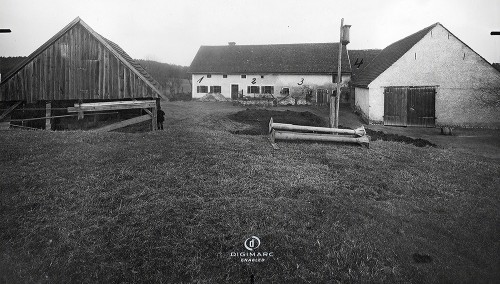
Hinterkaifeck farm

The novel opens with a short passage by the nameless narrator, who had previously spent some time in the village and feels compelled to return following the news of the murder.
"My village had become the home of 'the murder farm' and I couldn't get the story out of my mind. With mixed feelings, I went back. The people I met there were very willing to tell me about the crime. To talk to a stranger who was nonetheless familiar with the place. Someone who wouldn't stay, would listen, and then go away again."
The novel narrates the story of a multiple murder of the Danner family at an isolated Bavarian farm called Tannöd in the 1950s. The points-of-view of the victims, the witnesses and the perpetrator are intertwined in 39 short passages. Through these largely separate testimonies, the reader gradually builds a complete picture of the events that lead a rural family, headed by a tyrannical, abusive father, to all be brutally murdered.
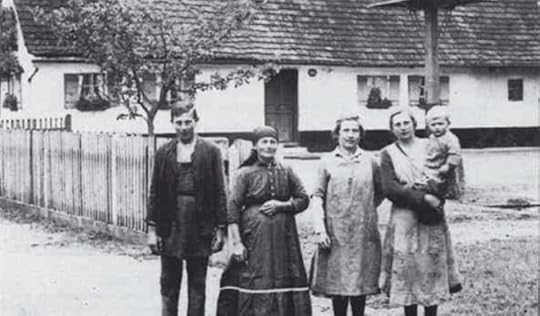
Schenkel doesn't stray far from the facts of the Gruber case or the circumstances of her victims, except in her decision to set the story in the 1950s, and to change the names of the characters and reveal the killer's identity. The author's decision to move the action to just after the Second World War may be a comment on uncovering Germany's atrocities after the war. This small town turns a blind eye to the incestuous relationship between old Danner and his daughter and ends up paying a high price; their trust and security.

The Murder Farm is an excellent example of the crime genre’s ability to explore a range of weighty themes, in spare, documentary tone, that is simply compelling. The author also allows the reader to enter the minds of five of the six victims in the hours and minutes before their deaths. It is a remarkable, sparse, and chilling novel in both atmosphere and the telling.

On publication in Germany, The Murder Farm won first place in the German Crime Prize (2006) as well as the Friedrich-Glauser Prize (2007), and the Swedish Crime Prize (2008). It was released as a film in 2009.

Well worth a read!

The True Crime

Hinterkaifeck, a small farmstead situated approximately 70 km north of Munich, was the scene of one of the most puzzling crimes in German history. On the evening of March 31, 1922, the six inhabitants of the farm were killed with a pickaxe in a grisly and unnerving crime. The murder is still unsolved.

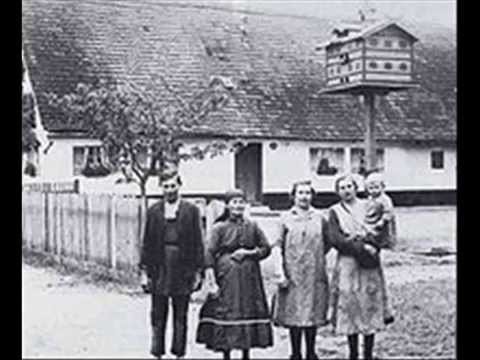
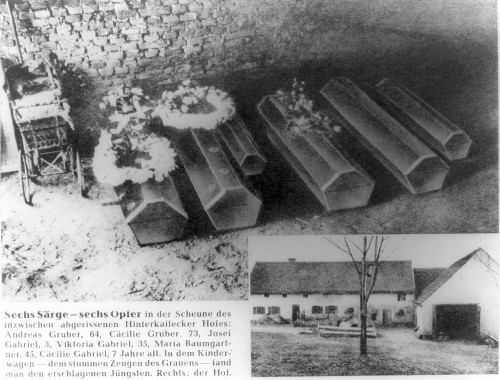
The six victims were the farmer Andreas Gruber (63) and his wife Cäzilia (72); their widowed daughter Viktoria Gabriel (35) and her two children, Cäzilia (7) and Josef (2); and the maid Maria Baumgartner (44). Andreas was known throughout town to have physically abused his wife and to have had an incestuous relationship with his daughter. For this reason, many people chose not to associate with the Grubers. Rumors had been spreading in the village that Andreas was the actual father of two-year-old Josef.


The coffins of the family

Maria Baumgartner arrived at the Hinterkaifeck farm early in the afternoon of March 31st. Her first day into her new job would be the last day she’d be alive.

Not having heard from any of the Grubers in days, the locals began to grow suspicious. The young Cazilia had not showed for class that Monday and wasn’t in class Tuesday, April 4th. They soon learnt from the postman that mail for the Grubers had been piling up since Saturday, four days earlier, and no one had come in to pick it up. The neighbors mounted a search party and traversed through the dark woods and arrived at HinterKaifeck to find the place eerily still. After calling out their names and not getting any responses, they proceeded to inspect the farm.

The first place they checked was the barn that sat a few yards away from the house. In there, they were horrified to find the bodies of Andreas, his wife, his daughter Viktoria, and his granddaughter Cazilia, laying in a large pool of coagulated blood. All appeared to have been lured into the barn and killed one by one.

They went on to inspect the house, where they found Josef and the new maid, also laying in a pool of blood. News of the killings reached the Munich police department within hours.

There was rampant speculation that a neighbour, Lorenz Schlittenbauer, may have committed the murders. He'd had an affair with Viktoria and thought that he was the father of Joseph, only to learn later that Andreas was the father. Schlittenbauer was a suspect for months, however, that trail soon ran cold.

The HinterKaifeck Murders have remained unsolved throughout the years. The farm itself was destroyed a year following the crime.
Profile Image for Ivonne Rovira.
2,534 reviews251 followers
August 15, 2015
Here’s fair warning: Do not start The Murder Farm when you’ve got a lot to do. This riveting novel sucks you in so swiftly and implacably that you won’t get your tasks done.

Author Andrea Maria Schenkel based The Murder Farm on the true story of an unsolved murder from 1922 in which an entire family was axed to death at the farm in a remote part of Bavaria. Should that add to the frisson of reading Schenkel’s novel? I have enjoyed non-fiction books that purport to reveal the “truth” after all these years about cold cases, be they notorious crimes like that of Lizzie Borden or more obscure ones. But the attraction of The Murder Farm really rests on Schenkel’s artistry. That Schenkel’s talent shines through even in translation is a testament to translator Anthea Bell.

Schenkel rechristens the victims from the Grubers to the Danners, changes the village’s name changed from Hinterkaifeck to Tannöd, moves the action from 1922 to the 1950s, but, by all accounts, leaves the rest of the facts unchanged. Killed were the abusive, tyrannical family patriarch, his beleaguered wife, his pretty daughter, her young children, and a newly hired maid on her very first day of employment. As in Lauren Oliver’s Rooms (which I’ve recently read) or William Faulkner’s The Sound and the Fury, the action is told alternately by an unnamed narrator, the victims, witnesses, unsympathetic neighbors, and, finally, the killer. Gradually, detail by small detail, the grisly truth about the bloody murders comes crashing down on the reader.

Atmospheric and chilling, The Murder Farm deserves every award it has won; I couldn’t put it down, as cliché as that sounds. I only hope my fellow Buddy Read sisters enjoy it as much as I did.
Profile Image for Rob.
511 reviews168 followers
October 19, 2018
This is the re-telling of an actual mass murder in 1922 in Germany. The murders are, to this day, unsolved. But with some literary licence the author gives us a likely killer and changes the time frame from 1922 to 1950. Apart from that the story is true account of the goings on at Hinterkaifeck, the farm in question.

The story is told in the form of interviews given by various members of the local community.
It’s the harrowing story of a domineering father, his wife, who turns a blind eye to everything awful thing going on around her and a daughter who bore two children to her own father.

As lacking of any sympathy as this family is the death that was dished up to them was heinous in the extreme.

As each person gives their version of events that lead to this tragedy a story unfold of an unscrupulous thief, a love besotted widower and a family living on the edge.

It makes not for light reading but it is, at its best, a powerful story well written.

Highly recommended.
Profile Image for Left Coast Justin.
612 reviews199 followers
May 27, 2025
Review in English here:

Das Projekt: Normaleweise besuche ich Deutschland etwa zweimal im Jahr; naturlich geht das nicht in Covidzeit. Als Alternativ habe ich entscheidet, ein Buch das im jedem die sechszehn deutsche Bundeslaender stattfindet zu lesen. Damit hoffe ich mein deutsche zu ueban als auch meine Reiselust zu saettigen.

Meine Liste bis jetzt:

Fakt ist: 1922 wurden auf einem kleinen Bauernhof nordwestlich von München fünf Familienmitglieder und ihre Dienstmaedchen ermoerdert und in der Scheune unter Stroh beerdigt. Der Mörder ist dann drei Tagen im Hof geblieben, fütterte die Kuehe, kümmerte sich um die Hähnchenen, bevor er oder sie verschwand. Der Fall wurde nie gelöst.

description

Tannöd war eine fiktive Version dieser Ereignisse und ein perfektes Buch, um dieses Projekt zu beginnen. Es war kurz, nicht zu kompliziert für einen Ausländer zu lesen und voller lokaler Atmosphäre.
Der Autor zieht langsam den Vorhang für gottesfürchtige Priester, schwarze Stürme, verdächtige Bauern, unnatürliche sexuelle Praktiken und Leichen zurück. Die Methode des Storytelling ist sehr effektiv; ich werde aber sie hier nicht beschreiben, weil ein Teil des Genuss an diesem Buch ist, die Struktur heirauszufinden.

Schenkel hat sehf viel Erfolg mit diese Story geschaffen. Von Anfang an gibt es unangenehme Hinweise, dass etwas Schlimmes passieren wird. Sie zieht die Spannung über mehrere Kapitel hinweg und schreibt überzeugend aus verschiedenen 'points of view'. Sie hält die Spannung während des ganz Buches hoch und das Ende war klar, glaubwürdig und effectiv. Dies war eine wirklich beeindruckende erste Novel.

Dies war Schenkels erster Roman und in Deutschland ziemlich berühmt. Aber in den USA kennt niemand diese Arbeit, und ich bin sehr froh, sie gefunden zu haben, und hoffe, andere Menschen im englischsprachigen Raum davon zu überzeugen, einen Blick darauf zu werfen.

Bitte entschuldige mein 'Anglodeutsch.'
Profile Image for Diane S ☔.
4,901 reviews14.6k followers
June 4, 2014
A chilling, foreboding and dark book, as dark as the isolated farm house in Germany where unspeakable things happened. Although the time period was changed in the interest of the story, this is actually based on a true crime, that was never solved. Several people of the town, plus those who were in someway involved with those murdered give their opinions on what was happening on the farm even before the murders. In short chapters we hear from the people themselves, before they were victims and things were far from all right even before the murders. Was interesting to read everyone take on things and how fear so easily spreads throughout the small village.

A short but compelling read.
Profile Image for daniela weber.
456 reviews105 followers
April 3, 2022
I flew through this tiny German book in
hours and I'd say it's an one-day-reading,
if it weren't so darkly thought provoking,
polyphonic, heartbreaking, terrifying, 
visceral, in such beautiful prose. ♡
Profile Image for Bettie.
9,977 reviews5 followers
May 8, 2015


Description: Andrea Maria Schenkel (Bunker; Ice Cold) has taken the real history of a brutal, remote murder and twisted it into something even more unnerving for this, her first novel (originally titled Tannod and now being published for the first time in the U.S.).

Based on an unsolved Bavarian crime committed in 1922, The Murder Farm is set in the wake of World War II, told by an unnamed narrator. It includes excerpts from interviews with friends and colleagues of the murder victims, and diatribes from various villagers who felt that the family had it coming. At first, it's unclear precisely what has transpired, or if anyone actually is dead--the interviewees make grave, vague reference to "the day before it happened" and so on, leaving the reader in suspense. But as the interviews continue and it's revealed that the entire Danner family was killed, everyone from the eight-year-old friend of the little dead girl to the elderly village gossip agrees that there was something wrong with the peculiar Danners. As the narrator delves into the family's history and how their remote "murder farm" got its nickname, he--or she--reveals the villagers' isolation, ignorance and superstitions.

The novel's short length belies its cleverness. The Murder Farm is not precisely a mystery; it's more an introspective look at a small town and the dark secrets that it hides. Comparisons to Truman Capote's In Cold Blood are obvious, and this compelling novel will likely appeal to fans of literary fiction and true crime as well as lovers of more typical mysteries.


Opening: He enters the place early in the morning, before day-break. He heats the big stove in the kitchen with the wood he has brought in from outside, fills the steamer with potatoes and water, puts the steamer full of potatoes on the stove-plate.
Profile Image for Sue.
1,438 reviews650 followers
June 27, 2014
The Murder Farm is a different approach to a murder mystery. Set in Germany 10 years after World War II, it is comprised of interviews of town residents, prayers, the thoughts of victims in their last days, possible thoughts of a murderer. There is a bleakness that takes over immediately, a sense of place and setting and portent that lasts and lasts even when the snow and rain stop. I found myself reading and reading, compelled to finish. This will be too spare for some readers but not for those who read Nordic crime. But it is more like a diary than a novel, a diary of everyone who lived in Tannöd.

Recommended as a quick crime read.


This book was provided by the publisher through NetGalley for the purpose of review.
Profile Image for Lisa.
1,473 reviews20 followers
June 2, 2015
A whole family is murdered on a secluded farm but who did it and why?

This book is made up of witness statements from the villagers, farmers, family and friends that build perfectly to reveal the whole picture and it's terrible conclusion.

A quick read but very satisfying.
Profile Image for Alan (on December semi-hiatus) Teder.
2,707 reviews250 followers
February 24, 2021
Fictional Version of a True Unsolved
Review of the Quercus hardcover edition (2014) translated from the German language original Tannöd (2006)

The Hinterkaifeck Murders are a true unsolved cold case from 1922 at a farm nearby to Munich, Germany. Schenkel takes the known facts of the case and transposes them into a post-World War II time and changes names in order to fictionalize the circumstances.

The book proceeds as if the anonymous writer was interviewing various neighbours, witnesses and public figures in the area. There are interludes where we read the inner thoughts of certain characters which are not revealed to the fictional writer, but the reader will be able to deduce who they are eventually. There is a well done twist that comes along with that.

Although the basic facts of the case were a fait accompli that was given to her, Schenkel does use an inventive style here to get that material across and to develop a solution based on those facts (not that it would have been the same solution back in 1922).

Schenkel won the Deutscher Krimi Preis (German Crime Prize) for this book and for her following book Kalteis (Ice Cold) (2007).

As best as I can remember, I added The Murder Farm to my TBR list back in 2014 based on this New York Times article Best Selling German Crime Novel Breaks Into American Market. One of my reading targets for 2021 is to make a serious dent in my TBR.

Trivia and Link
The original German Tannöd was adapted into a feature film version Tannöd (2009) dir. Bettina Oberli. The film was also retitled The Murder Farm for its later English language subtitled release.

The original German title "Tannöd", which is the name of the fictional farm, does not translate into English. But Google Translate says that it is a Swedish word that means Toothache.
Profile Image for Natalie Richards.
458 reviews214 followers
May 29, 2021
Very enjoyable read of a fictionalised account of a family slaughtered in the 1920s which went unsolved. I would read this author again.
Profile Image for Jeanette.
4,088 reviews835 followers
September 24, 2014
This is a chilling book that I read in a single sitting. So grabbed, I could not put it down. I even forgot the Bears game was on and missed the first half.

It's stark and direct as a forensic report read. There's no extra information, it's all pertinent. We hear an entire series of over 10 characters (family, servant, neighbors) tell what they saw, what they did, who they spoke with and when. The hearsay they've heard, in the Bavarian town or while at the Dunner farm or near to it. It's been ten years since WWII. The chaos that occurred with the fall of the Nazis is fading to a desire for normalcy and hard work.

The preface before each chapter of a prayer from liturgy imploring Jesus and God's saints and minions to have mercy on us set up immense tension, IMHO. Wrath of the devil showing absolutely eminent! That precise counterpoint underlines the evil present in every chapter in the ultimate and complete following of victim after victim helplessness. Slaughter of the Innocents; chilling, chilling novel- revealing a monster human capability can come in plain farm clothing before and after mundane chores. Very realistic tragedy, a horror that doesn't need vampire teeth or werewolf fangs to terrify.

I'll read another of hers in a minute. It is also extremely Germanic in its word order and a fast, easy read. Almost a 5 star, 4.5 for me.

Profile Image for Richelle.
215 reviews5 followers
June 3, 2015
I enjoyed this book quite a bit.. I did find some
parts a little hard to follow.. it was translated from German, Which could be why. It takes place after the 2nd world war in Germany in the 1950's. A whole family was murdered in their farmhouse. the book is laid out very uniquely of statements to the police, prayers, and the story. who did it? and why?
I did not expect the ending at all!!
Nice quick read, very intriguing and compelling! I'm giving it a 3 only because some parts I found hard to follow.. and other times I had to go back and re read parts so I could understand what was meant. A lot of characters are thrown at you quickly which also making things a little complicated to follow!
over all I enjoyed it !
Something I probably would not have read had it not been part of a group read!!! Great pick Ivonne!!
Profile Image for Randee.
1,084 reviews37 followers
June 2, 2015
This was chosen as our monthly read by a member (Iridescent Ivonne, does that work, Stepheny...lol?) of my book club. I took it home from the library, sat down and read it cover to cover in about an hour and a half. Not only is it suspenseful and interesting, I don't think I have ever read a book with this type of format. A lean 166 pages, no chapter is over 5-6 pages. Told from several different viewpoints of the villagers in the German town the murders take place, I have to applaud the author for a clever concept. Even though short, it is not skimpy in revelation. I definitely had the feel for the time, place and characters.
Profile Image for A. Hadessa.
495 reviews12 followers
August 9, 2025
Das war genial, spannend und die erzahlweise erfrischend neu für mich.

Hab das Ende zwar kommen sehen, aber es war eines der möglichen Enden.
Profile Image for Txe Polon.
515 reviews44 followers
January 5, 2018
Esta gran novela inspirada en un crimen real viene a ser como A sangre fría escrita por Svetlana Aleksievich; o sea, es la pera. Los entresijos de la trama se revelan a través de diferentes testimonios, unos más directos que otros, en un magistral juego de voces, no solo desde el punto de la narración, sino también del estilo, ya que cada personaje tiene su voz propia y su forma concreta de hablar. Además, el libro te absorbe por completo y no puedes dejar de leerlo hasta el final.
Profile Image for _och_man_.
361 reviews41 followers
August 27, 2021
Kilkanaście kryminałów mam już za sobą, ale dopiero przy tym tytule mogę pochwalić się bezbłędnym wydedukowaniem finału - co nie powinno działać na korzyść książki.
Postaci i poszczególne wątki potraktowane mocno po łebkach, narracyjne efekciarstwo (jakby w nadziei na uratowanie tym sposobem całości).
Godzinę lektury lepiej przeznaczyć na popołudniową drzemkę.
Profile Image for Hannah.
79 reviews2 followers
January 1, 2024
*bumbed my rating up, because I do keep thinking about it after all*

3.5⭐️

We had to read this book for my German class, therefore I was biased going into this book. Nevertheless, (knowing the case of Hinterkaifeck, the true crime story behind the book) I do believe Schenkel managed to communicate the story well. She used the true hints and wove them into her fictional story, creating a thrilling story that keeps you on the edge of your seat. It’s thrilling and scary.

I was very mad and disappointed by the characters and particular points of the story. But after reading it and thinking about it, I think that’s what Schenkel was trying to reach. Considering the true story, it’s just what happened (or is said to have happened) and she managed the border between truth and fiction very well.

Looking back, I liked her way of changing the narrative perspective.

All in all I would say this is a good book, but I do have to say that I think it wouldn’t be as interesting and fascinating if I didn’t know the true story behind it and wasn’t that interested in true crime. But since I am, I did enjoy it.
Profile Image for Kandice.
376 reviews
June 8, 2015
Gripping! If I didn't have a little person who drains my energy and refuses to nap, on occasion, I would have finished this in one sitting. In fact, many ladies in my book club DID read it in one sitting.

I loved how the chapters were laid out; an interview with different people from the village reflecting on interactions with the family who lived on the Murder Farm.

Apparently, it is loosely based on a family murdered in 1922. Hhmm, must google...
Profile Image for Laura.
882 reviews320 followers
August 23, 2014
This is more of a 4.5 star read for me. I loved how the author used the different members of the community to tell the story through an interview style writing. I found it to be very unique. I liked the twist at the end. This is an easy, one sitting read that was intriguing to me. I'm shocked it's rated such a low star. I enjoyed it.
Profile Image for Horror Sickness .
883 reviews363 followers
March 16, 2025
A short crime novel based on an unsolved murder case in Bavaria back in 1922. It is a fictionalised story so things might have been altered from the original true crime story.

The story is set in Germany 10 years after World War II and it is told by an unnamed narrator.

I did enjoy the way the story was told because it was an interesting mix of interviews conducted by a former resident of the village who returns to try and solve the crime. There are also prayers between chapters and in general the testimonials and different POVs help to make the story more chilling.

However I could not really get into it and I am not sure if it was the writing. This is a translation from the original German so I might try the German edition at some point to see if there is a big difference.

It felt more like a diary than a novel and that is not a bad thing but perhaps all that jumping back and forth people’s POV is what made it hard for me to be really immersed in the story.

Profile Image for Sergiotas.
207 reviews9 followers
February 15, 2021
Novela corta, lo mejor de ella sin duda, basada en un crimen sucedido en Alemania hace casi un siglo. La historia se va narrando por boca de los habitantes del pueblo, que van contando lo que saben a la narradora, de tal manera que la trama va avanzando a modo de relevos, y así vamos conociendo lo sucedido por las pequeñas aportaciones de cada habitante. Resulta curiosa y no está mal, se deja leer.
Profile Image for Chris.
571 reviews202 followers
June 2, 2014
I'm always on the look-out for German crime novels translated into English and was thrilled to find The Murder Farm on Edelweiss.

This is Schenkel's first novel. It was a best-seller in Germany, selling over 300,000 copies, and was also made into a movie directed by Bettina Oberli.

Murder Farm is based on a real-life 1922 murder of a family on their farm in Bavaria, Germany. Schenkel moves the crime to the post-WWII time period, which creates more tension for contemporary readers.

This is one of those novels that is a choppy mosaic of scenes rather than a smooth, consistent narrative, so its not your typical mystery novel and may not appeal to those who want to lose themselves in a story.

You get bits and pieces of the various characters' personalities--from their own thoughts to what other characters think of them coupled with bits of local history and rumor. Prejudices, egos, delusions, and social taboos mess with the reader's ability to get a clear sense of not only who the characters are, but who the murderer might be.

I tend to prefer a straightforward narrative story when it comes to crime novels, but I enjoyed the way Schenkel and her translator (Anthea Bell) create vivid atmospheres and a strong sense of personality with so few words. I'll keep my eye out for more of Schenkel's books coming out in English.

Of course you can't help but think of Truman Capote's In Cold Blood when reading this novel.
Profile Image for Rob Kitchin.
Author 55 books107 followers
May 7, 2013
The intrigue of The Murder Farm is created through the whodunit storyline and its telling. Taking a relatively novel approach, Schenkel tells the story through the voices of a number of people connected to the farm - the classmate of one of the children, the sister and former employer of the maid, local farmers, the shopkeeper, the local priest, and so on. Each has a distinct voice, with the text being a transcript of their account given to the faceless narrator. In tandem is the account in a distant third voice, including the incantation of prayers. The technique works well, and each voice is well crafted, the translator Anthea Bell doing a good job of translation. The story itself, however, is quite short and linear. Each person only speaks once and, as a result, the tale seemed a little underdeveloped, with little in the way of suspense. At no point is there a sense of what the narrator thinks happened and how this aligns or diverges from the third person account of what actually occurred. Overall, a story more noted for its telling and prose, than the tale itself.
Displaying 1 - 30 of 422 reviews

Can't find what you're looking for?

Get help and learn more about the design.