Книга содержит впервые переведенный на русский язык полный курс лекций о романе Сервантеса, прочитанный В.Набоковым в Гарвардском университете в 1951-1952 годах.
Замечательное свойство литературоведческих работ Набокова - в сочетании его писательского дара с вдумчивостью благодарного читателя. Суровый и нежный, невыносимо пристрастный, но никогда не скучный, Набоков по-новому осмысливает шедевр Сервантеса - он шутит и грустит, сопровождая своих студентов, а ныне и читателей, в странный, хотя и кажущийся таким знакомым мир `Дон Кихота`.
Текст дополняют подробные комментарии профессора Фредсона Бауэрса, американского библиографа, собравшего и отредактировавшего этот том лекций по набоковским рукописям.
Vladimir Nabokov (Russian: Владимир Набоков) was a writer defined by a life of forced movement and extraordinary linguistic transformation. Born into a wealthy, liberal aristocratic family in St. Petersburg, Russia, he grew up trilingual, speaking Russian, English, and French in a household that nurtured his intellectual curiosities, including a lifelong passion for butterflies. This seemingly idyllic, privileged existence was abruptly shattered by the Bolshevik Revolution, which forced the family into permanent exile in 1919. This early, profound experience of displacement and the loss of a homeland became a central, enduring theme in his subsequent work, fueling his exploration of memory, nostalgia, and the irretrievable past. The first phase of his literary life began in Europe, primarily in Berlin, where he established himself as a leading voice among the Russian émigré community under the pseudonym "Vladimir Sirin". During this prolific period, he penned nine novels in his native tongue, showcasing a precocious talent for intricate plotting and character study. Works like The Defense explored obsession through the extended metaphor of chess, while Invitation to a Beheading served as a potent, surreal critique of totalitarian absurdity. In 1925, he married Véra Slonim, an intellectual force in her own right, who would become his indispensable partner, editor, translator, and lifelong anchor. The escalating shadow of Nazism necessitated another, urgent relocation in 1940, this time to the United States. It was here that Nabokov undertook an extraordinary linguistic metamorphosis, making the challenging yet resolute shift from Russian to English as his primary language of expression. He became a U.S. citizen in 1945, solidifying his new life in North America. To support his family, he took on academic positions, first founding the Russian department at Wellesley College, and later serving as a highly regarded professor of Russian and European literature at Cornell University from 1948 to 1959. During this academic tenure, he also dedicated significant time to his other great passion: lepidoptery. He worked as an unpaid curator of butterflies at Harvard University's Museum of Comparative Zoology. His scientific work was far from amateurish; he developed novel taxonomic methods and a groundbreaking, highly debated theory on the migration patterns and phylogeny of the Polyommatus blue butterflies, a hypothesis that modern DNA analysis confirmed decades later. Nabokov achieved widespread international fame and financial independence with the publication of Lolita in 1955, a novel that was initially met with controversy and censorship battles due to its provocative subject matter concerning a middle-aged literature professor and his obsession with a twelve-year-old girl. The novel's critical and commercial success finally allowed him to leave teaching and academia behind. In 1959, he and Véra moved permanently to the quiet luxury of the Montreux Palace Hotel in Switzerland, where he focused solely on writing, translating his earlier Russian works into meticulous English, and studying local butterflies. His later English novels, such as Pale Fire (1962), a complex, postmodern narrative structured around a 999-line poem and its delusional commentator, cemented his reputation as a master stylist and a technical genius. His literary style is characterized by intricate wordplay, a profound use of allusion, structural complexity, and an insistence on the artist's total, almost tyrannical, control over their created world. Nabokov often expressed disdain for what he termed "topical trash" and the simplistic interpretations of Freudian psychoanalysis, preferring instead to focus on the power of individual consciousness, the mechanics of memory, and the intricate, often deceptive, interplay between art and perceived "reality". His unique body of work, straddling multiple cultures and languages, continues to
A work of breathtaking arrogance and misunderstanding, made even less tolerable by Guy Davenport’s mindless and sycophantic forward. Nabokov is less interested in carefully examining Cervantes’s novel than in using his text as a means of generating charming (cough, cough, awkwardly belletristic) critiques of Don Quixote. I found myself cringing at every turn, as I watched Nabokov gleefully failing to understand Cervantes chapter after chapter, belittling the Spaniard with a smugness so extravagant and persistent I felt physically sick. Nabokov laboriously copied out lengthy chapter-by-chapter summaries, summaries which the editor included in this volume’s appendix. This only makes Nabokov’s blindness of the book’s merits all the more embarrassing. At the end of the day, I forgive Nabokov for these lecture notes, as he did not intend to have them published. They were posthumously published by somebody else. It’s not, also, as if Nabokov’s notes are wholly deprived of critical insight, but the tone is so insufferable and the insights so minimal (he appears interested only in showing off his capacity to devise “dazzling” phrases) that I think these notes are among the most embarrassing things he ever wrote. Nabokov thought he was writing some Harvard lecture notes that would demolish Don Quixote’s allegedly ill-earned reputation for students and colleagues alike; instead, he only succeeded in demonstrating how blinded a man could be by his immense literary vanity.
Some days ago, I asked a professor of mine what he thought of Nabokov’s book. He said Nabokov was just jealous. As he would’ve had to have understood Cervantes to be jealous of him, I disagree. Nabokov’s notes show few signs of genuine comprehension. It’s surprising, as his other lecture series are quite strong.
Me parece que Nabokov leyó al Quijote desde el prejuicio, lo cual tampoco es tan terrible como se le quiere achacar. Decía Gadamer que el prejuicio era indispensable para poder entender, con distancia histórica, de manera correcta un texto. Nabokov, desde luego, es un escritor que pone el estilo por encima de todas las cosas; seguramente su dios es Flaubert, el dios del estilo. Esta gente, como Nabokov y Flaubert, cuentan historias que son cotidianas y en realidad no muy maravillosas, pero con un estilo tan exquisito que envuelve. Por el otro lado, hay novelistas de aventuras en donde estaría, por ejemplo, Don Quijote y El conde de Montecristo: el "qué" es más importante que el "cómo". La historia de Don Quijote es la que nos envuelve, la que nos mantiene al filo de la página. Muchas veces, ahora que lo estoy leyendo, me digo: ¡basta, no leeré más por hoy! Y me paro del sillón y me voy a tomar agua y luego vuelvo y digo, bueno, un capítulo más, esto no puede quedar así. Es un texto que te atrapa por la trama, te quedas para saber qué pasará. En cambio cuando lees el libro de un estilista, dices Basta, no leeré más por hoy y no lees y te vas a ver la TV o a hacerle el amor a tu mujer. Entiendo que el Quijote no le guste a Navokov, lo que no entiendo es su falta de valor pedagógico. Cuando eres profesor, te pagan por mostrar las obras en su totalidad, con su brillo y su oscuridad, quedando un poco al margen tu opinión personal. Tal vez me llevé un terrible chasco por eso. Sin embargo, le veo muchas virtudes al libro. Aclara poco de la obra, pero lo poco que aclara se agradece. Finalmente es como un chiste: un ruso dicta una clase en inglés sobre un autor español.
Hace poco leí Pálido Fuego y tal vez le podría decir Ey Nabo, ¿una novela como esa es posible sin la metaliteratura de inagura Cervantes? Comentar desde el coraje de saber que eres deudor de algo que criticas te hace quedar mal parado, más o menos como Virginia Woolf opinando sobre el Ulises de James Joyce.
Según una leyenda literaria, cuyo asidero en la realidad desconozco, Nabokov se vio obligado a dar unas clases de pregrado sobre Don Quijote a estudiantes de la Universidad de Harvard y Cornell. Los apuntes de estas clases conforman, en gran medida, la publicación reseñada.
El interés del libro radica en la curiosidad que uno siente por saber qué opina del Quijote un autor como Nabokov, que pareciera, como autor, compartir ciertas afinidades con Cervantes, entre las que destacan un sentido satírico y un amor por los juegos de palabra. Al final, uno se siente profundamente insatisfecho, pues se encuentra con un profesor más bien seco al que no parece atraerle mucho la novela que expone; domina la sensación de un escrito realizado por obligación más que por gusto, y ocasionalmente parece estar más interesado en criticar por criticar, o criticar para épater la bourgeoisie --¿sus estudiantes?
La mejor parte del libro es cuando deja de lado su rol de profesor de literatura y propone su propia versión del final del Quijote, cediendo por un momento, al impulso de jugar con el Quijote que ha tocado a tantos autores y novelistas, desde que Alonso Fernández Avellaneda escribió la falsa segunda parte de El Quijote en 1615 hasta nuestros días, pasando por Grahame Green ("Monsignor Quixote"), Jorge Luis Borges ("Pierre Menard, el autor del Quijote"), Iván Goncharov ("Oblomov") y muchas de las destacadas figuras literarias que colaboraron en la dispareja antología "La Cervantiada".
La sensación de aridez intelectual aparece en varias observaciones sobre Nabokov como profesor. En Wikipedia se dice que Nabokov consideraba que "...readers should not merely empathise with characters but that a 'higher' aesthetic enjoyment should be attained, partly by paying great attention to details of style and structure. He detested what he saw as 'general ideas' in novels, and so when teaching Ulysses, for example, he would insist students keep an eye on where the characters were in Dublin (with the aid of a map) rather than teaching the complex Irish history that many critics see as being essential to an understanding of the novel.". En un ensayo titulado "Nabokov, or Nostalgia", Danilo Kiš escribió que la concepción del según Nabokov es "magnífica, compleja y estéril". Según la misma entrada de Wikipedia sobre Nabobov, el poeta ruso Yevgeny Yevtushenko llegó a decir que, en la prosa de Nabokov, escuchaba "el traqueteo de instrumentos quirúrgicos".
En resumen, si está interesado en crítica literaria sobre el ingenioso hidalgo, hay trabajos muchos más interesantes y agudos. Si le interesa la reacción de Nabokov al Quijote, échele un vistazo a estas clases, pero hágase un favor, ármese de tolerancia y sáltese el resumen de los capítulos de la obra.
This was a big disappointment. I don't know what I was expecting, but it wasn't a sourpuss Nabokov being extremely arrogant and edgy in trying to belittle a battleship of a classic. Which needless to say is exactly what this was. In this collection of lecture papers slapped together by the editor, we find a guy who really doesn't like Don Quixote finding himself in the position of having to teach it at Harvard, and desperately looking around for ways to present it, grabbing at straws ("pegs," he calls them, from which to hang his narrative theory) that will give him a way to meet the university's requirements and at the same time show that he is a clever, witty, biting, penetrating, modern-minded critic. You can tell he revels in what he likes to think of as "tearing the book apart." Maybe because the critic who sees everything as a cliche has itself become a cliche, but I just don't find Nabokov as informative or amusing as he seems to want to be found. His little jibes at Americans, movie-goers, etc., just sound like the pretentious crap you'd hear from modern-day university freshmen. Not recommended for fans of Don Quixote, but maybe for people that are looking for a reason not to read it, this is what's called for.
This book was amazing. Nabokov was forced to lecture on Don Quixote in order to teach for a semester at Harvard, but he went into it with a total disdain for the book. So what did he do? He went through it with the finest-toothed comb you could possibly imagine, took copious and meticulous notes, and came out of it with a much greater respect and admiration for Cervantes' work.
I wasn't the hugest fan of DQ when I finished it, either, so I figured I'd take up some scholarly works to see if I could get a better respect. Needless to say, this was absolutely perfect to do that. Obviously, you wouldn't want to read this if you haven't read DQ itself, but I really enjoyed this book.
A good accompaniment to Don Quixote, marred only by Nabokov's less-than-complete love for the novel. It is six lectures he gave at Harvard that ranges from more conventional discussion to more novel presentations, like a scorecard that goes through the 40 "battles" in the book, classifies them into different types, and calls each one a win or a loss. Turns out the final score was 20-20.
Nabokov might be right that the novel would have been even better if Don Quixote's final combat was with the false Don Quixote from the false Part Two that wasn't written by Cervantes. Oh well.
Es un curso sumamente fantástico para todo tipo de lector; para los que quieran conocer El Quijote como para los que ya lo han leído. La seriedad, entusiasmo y talento pedagógico de Nabokov lo hacen único. Su método tan poco convencional difumina completamente todas las sombras que puedan ocultar la realidad sobre el libro de Cervantes. Dejando en evidencia lo verdaderamente rescatable como lo es y será siempre su personaje principal: don Quijote de la Mancha.
Vladimir Nabokov realiza un estupendo análisis del Quijote (El Ingenioso hidalgo Don Quijote de la Mancha de1605 y la Segunda parte del ingenioso caballero Don Quijote de la Mancha de 1615 del español Miguel de Cervantes Saavedra).
Este libro reúne las notas que preparó Nabokov que le sirvieron para dictar clases sobre el Quijote en la Universidad de Harvard donde ejerció como profesor visitante en el semestre de primavera del año académico 1951 - 1952.
Según la opinión de Harry Levin, profesor principal del segundo semestre dedicado a la Novela, el Quijote era el punto de partida lógico para hablar de evolución de la novela. Nabokov estaba de acuerdo con él y empezó a preparar sus lecciones.
Nabokov estructuró sus lecciones en cinco capítulos: 1) Dos retratos: Don Quijote y Sancho Panza; 2) Cuestiones de estructura; 3) Engaño y crueldad; 4) El tema del cronista, Dulcinea y la muerte; 5) Victorias y Derrotas.
He aquì algunas citas del autor:
Sobre 1) Dos retratos: Don Quijote y Sancho Panza:
Dice Nabokov: «Estoy pensando sobre todo en la primera parte de la obra, pues en la segunda se observan algunos cambios extraños en el carácter de don Quijote: Junto a lapsos de lucidez conoce lapsos de miedo. Asì que subrayarìamos de nuevo el dato de su coraje aboluto olvidàndonos, por asì decirlo, de cierta escena de la segunda parte donde tiembla de miedo porque su cuarto se llena de gatos. Pero en conjunto es, entre los caballeros andantes, el màs valiente y el màs enamorado de cuantos hubo en el mundo. No tiene malicia; es confiado como un niño. Hasta el punto de que su puerilidad destaca a veces quizà màs de lo que prentendìa destacarla su creador. Cuando un cierto giro de la novela, en el capìtulo 25 de la primera parte, se le ocurre hacer "locuras" como penitencia -"locuras" premeditadas a sumar sobre su locura normal, digamos"-, demuestra una imaginaciòn de escolar bastante limitada en materia de barrabasadas»,
Sobre Sancho Panza, dice Nabokov: «el sutil e inspirado crìtico español Salvador de Madariaga ve en Sancho una especie de transposición de don Quijote en otra clave. Es cierto que ya al final de la obra los dos parecen intercambiarse sueños y destinos, pues es Sancho el que vuelve a su aldea en èxtasis de aventuras, con la cabeza llena de esplendores, y es don Quijote el que le dice secamente: "Dèjate desas sandeces". De modo que podrìamos decir que Sancho, vigoroso y viril por temperamento, presto a la ira y atemperado por la experiencia, rehuye los combates desiguales e inùtiles no porque sea un pusilànime, sino porque es un guerrero màs cauto que don Quijote».
Sobre 2) Cuestiones de estructura:
Dice Nabokov: «Pero antes unas consideraciones generales. Se ha dicho del Quijote que es la mejor novela de todos los tiempos. Eso es una tonterìa, por supuesto. La realidad es que no es ni siquiera una de las mejores del mundo, pero su protagonista, cuya personalidad es una invención genial de Cervantes, se cierne de tal modo sobre el horizonte de la literatura, coloso flaco sobre un jamelgo enteco, que el libro vive y vivirá gracias a la auténtica vitalidad que Cervantes ha insuflado en el personaje central de una historia muy deshilvanada y chapucera, que solo se tiene en pie porque la maravillosa intuición artìstica de su creador hace entrar en acción a don Quijote en los momentos oportunos del relato.»
Sobre 3) Engaño y crueldad:
Dice Nabokov: «Las dos partes del Quijote componen una auténtica enciclopedia de la crueldad. Desde ese punto de vista, es uno de los libros más amargos y bárbaros de todos los tiempos. Y su crueldad es artìsitica.»
Sobre: 4) El tema del cronista, Dulcinea y la muerte:
Dice Nabokov: «Como ustedes recordarán, antes enumeré diez puntos o aspectos en relación con la estructura del libro que nos ocupa. Algunos, como el uso que hace Cervantes de citas de romances y de dichos populares, o sus juegos de palabras, solo fue posible mencionarlos de pasada porque no podemos palpar el texto original a través de los estratos superpuestos de una traducción, por buena que sea. Nos detuvimos un par de minutos en otros puntos, como el arte excelente de los diálogos de la obra y el convecionalismo pseudopoético de sus descripciones de la naturaleza. Señalé el hecho de que, en la evolución de la literatura, la personalidad del entorno sensual ha ido muy a la zaga de la personalidad del habla humana.»
«Ahora va a ocurrir una cosa muy curiosa. Mientras Cervantes anda inventando encantadores que supuestamente han escrito su libro, y mientras dentro del libro don Quijote anda peleándose con encantadores salidos de los libros de caballerías, Cervantes -el autor real- se da de manos a boca con un encantador en el nivela de la llamada "vida real". Y va a servirse de esa circunstancia como instrumento particular para divertir al lector»
Sobre: 5) Victorias y Derrotas:
Dice Nabokov: «de los cuarenta episodiso en los que don Quijote hace de caballero andante, que esos episodios revelan ciertos elementos de estructura artística admirables, un cierto equilibrio y una cierta unidad; impresiones que no serían posibles si todos sus encuentros hubieran acabado en derrota para él. En sus cuarenta encuentros, don Quijote tiene que habérselas con muy diversos seres y artilurgios.»
Nabokov destaca por su sensibilidad artística y su gran imaginación creativa, en ese sentido, en este capítulo presenta a las batallas de don Quijote como un largo juego de tenis (!), con sus victorias y derrotas sumando puntos para ganar o perder sets. ¿Podrà don Quijote ganar el partido a sus enemigos?
Asimismo el libro contiene narración y comentario que realizó Nabokov del Quijote (ambas partes, la de 1605 y 1615, que sirve como un recordatorio de todas las aventuras). Además se añaden dos apéndices sobre pasajes de Novelas de caballerías (se tratan de Le Morte d'Arthur de sir Thomas Malory y Amadís de Gaula de Vasco Lobeira) que Nabokov tenía a la mano para complementar sus lecciones.
Finalmente el libro contiene imágenes de los manuscritos de Nabokov y una sección de notas explicativas.
Recomendable para quien disfrute de conocer más sobre Don Quijote.
I'm still slightly obsessed since finishing the Burton Raffel translation of Don Quixote over five months ago. It is just one of those things that I can't stop thinking about. Nabokov systematically tears down everything you ever thought you knew or read about DQ and builds it back anew. A great companion to those who can't get enough of the Don and Sancho.
My favorite quote:
"We should, therefore, imagine Don Quixote and his squire as two little silhouettes ambling in the distance against an ample flaming sunset, and their two huge black shadows, one of them especially elongated, stretching across the open country of centuries and reaching us here."
Creo que mis expectativas eran muy altas. Estamos ante las notas de Vladimir Nabokov al dar su curso sobre el Quijote. Hay varios puntos a considerar. 1. Considero que hay que leerlo después de haber leído el quijote o ya avanzado el libro. 2. De la segunda mitad en adelante encontramos un resumen por capítulo. 3. Nos enfrentamos a comentarios referentes a la traducción del Quijote en inglés y de cómo afecta la lectura. Interesante para nosotros traductores. Tal vez no tanto para el lector más enfocado a la historia. 4. No creo que sea un gran libro de soporte para leer El Quijote. Con tener una edición anotada basta. 5. Se mencionan fragmentos o mapas que no se incluyen en el libro.
Some years ago when I betook myself to read Don Quixote, I came away from it disappointed. Book I seemed to be most of what was promised, but by the end of Book 2 I was unhappy with the constant beatings of the protagonist and the general level of cruel behavior. I never did a review of Don Quixote, thinking I was missing something everyone else understood. With my take on the Don, it was a huge relief to read that in the opinion of a great thinker, multi-lingual author of important novels, and lecturer, Don Quixote is needlessly cruel, violent and not the best in great literature. Vladimir Nabokov’s Lectures on Don Quixote let me know I was on to something.
For example I think that Don Quixote is the literary progenitor of terrorism. The essence of terrorism is that the world is only an image, designed to seduce and that random violence in the name of purification, of the self or the world is to do holy work. The Don is self-deluded. He believes that what he sees is the work of an evil enchanter and can be made better by the use of the sword and lance. The injured are deserving of their injuries and the injuries suffered are cleansing.
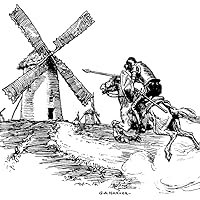
Re-consider the famous Tilting at Windmills. The world as an image produced by evil enchanters. The windmills are evil not because they are evil but because someone wanting to create a more perfect world needs to see them as evil enchantments. And so seeing, it targeted. And somehow this madman’s attack is romantic? Try something I have never heard anyone suggest: View the attack from the POV of the windmill owners. That family must pay for any damages and suffer the loss of whatever wheat is not ground to flour and so the trail of damages accumulates long after this famous ‘comic turn’. Once the incident is over, and the windmill is back in service-or is it forever stigmatized as possessed or a symbol of evil?
Where this the only case of innocence people more or less randomly assaulted the windmills would be just that, an incident. Instead the books contain nearly continuous acts of that random violence in the name of abstract ideas and not to produce a definition of madness; but as is a justification of violence to make the world a more perfect place.
Vast parts of book 2 of the Don Adventures might be slap stick to some but to me it is people bleeding and broken. Too often in the name of elaborate, designed to be harmful jokes, run on a man who we are supposed to believe is at minimum innocent and at most sincerely believing in hisown goodness. Slap stick ends somewhere between lost teeth, bleeding faces and being blasted and burned. Legitimate slap stick does not leave the victim bed ridden for weeks.
Lest someone accuse me or Nabokov of binary thinking. There are more choices than terrible and great. The Don has pride of place as one of if not the first modern novel. I suspect that it was not the first but the first to survive the market place of time and this is a mark of greatness. Nabokov admires much that is admirable in Cervantes’s novel, but VN’s job was to provide six lectures, at Harvard U no less, of critical analysis, he would have been derelict had he not pointed to both the best and the less than.
For example Nabokov reminds us that much of the violence and romanticism was in keeping with the named songs of the great Knights errant. From this light some fraction of the violence was part of the satire. Up to the reader is how much was in service of satire and how much was just violence. At the lower end of Nabokov’s analysis are the occasions when the story line conflicts with itself: Sancho’s’ mule is stolen from him and returns absent explanation. People finish dinner, then an adventure and sit down to dinner. Some of these situations hardly matter except as a reminder that editing was not the profession it would become before being gutted by the profit motive.
I have read other literary lectures by Nabokov. I do not get exactly why he was fixated with the geography of the fiction writer or why he chooses to criticize Cervantes for being bad at geography. It is hard to believe that even a contemporary Spanish reader picked up on the errors in the fictionalized Spain of the Woeful Knights wanderings.
There is much to learn or to add to your understanding of the great early Novel, Don Quixote by reading Vladimir Nabokov’s Lectures on Don Quixote. However even this should be read critically. It is not Nabokov at his best but just as the original has its limitations, so too does parts of these lectures.
Included in the published edition are extensive notes by Nabokov intended as outside reading for his students. Reading these will help to prove that VN does respect his subject and acknowledges its greatness. He also is honest enough to state when a passage or chapter is filling.
Don Quijote Dersleri, Nabokov'un 1951-1952 akademik yılının bahar döneminde konuk olarak geldiği Harvard Üniversitesi'nde Don Quijote üzerine verdiği altı dersten derlenmiş bir çalışma. Nabokov, bir yandan Don Quijote'yi yücelten yazılar yazmış eleştirmenlere cevap verirken öte yandan da modern Don Quijote imajını yıkıyor ve Don Quijote algımızı alt üst ediyor. Edebiyatın hırçın çocuğu Nabokov, romanın yazıldığı dönemin İspanya'sı hakkında tarihi ve sosyal arka plan bilgilerini verdikten sonra romanı didik didik ediyor. Don Quijote ile Sancho Panza'nın başından geçen talihsiz olayları tatlı ve komik olmaktan ziyade "aptalca, gaddarca ve insanlıkdışı" bulduğunu vurgulayan yazar, romana bambaşka bir açıdan bakarak romanı "şimdiye kadar yazılmış en acımasız roman" olarak niteliyor. Romanın acımasız olduğu konusunda Nabokov'a katılıyorum lakin romanın aslında bir rejim, din, şövalyelik, şövalye romansları ve aristokrasi eleştirisi/hicvi olmadığını ileri süren Nabokov'un bu görüşüne katılmıyorum. Romana farklı bir açıdan bakmak için güzel bir referans kitap bu, meraklılarına tavsiye ederim. Elimde Nabokov'un Edebiyat Dersleri adlı kitabı da mevcut. Bu kitapta işlenen romanları her ay bir roman olmak üzere (2018 Ocak ayından itibaren) okuduktan sonra üzerine de cila niyetine Nabokov'un kitabını okumayı planlıyorum. Katılmak isteyenleri bekleriz.
I have some issues with Nabokov's quite superficial definition of cruelty in Don Quixote. I also think he conveniently skip, ignore, dismisses as nonsense, and houses over parts of Don Quixote that either don't fit with his world view or that seem irrelevant to him. As a result, he minimises the book's importance in the history of storytelling and ignores certain vital aspects of the book, like the relationship Between Don Quixote and Sacha Panza, and the relationship between them and the world they live and adventure in. The overall tone is quite arrogant, but at times it is justifyingly so. That said, this is one of the most in depth, thorough and mostly comprehensive reading of Don Quixote I have come across. The research work and preparations alone are really impressive and inspiring. The discussion about enchantment is excellent, as is the detailing of the different convoluted narrators and narration devices. Including fun speculations about the 'False Quixote'. While I may dispute some of it, his account of Quixote's victories vs defeat. As is his summery of each chapter. As a fan of Don Quixote, and someone with a deep interest in it, this was worth a read and it was a good one.
Este libro lleva reposando en mi estante de "Leyendo" más tiempo del que debería por la tremenda pereza que me daba volver a cabrearme al recordarlo. Podría limitarme a decir que es una puta mierda de curso, pero, a diferencia de Nabokov, yo no juego a ser categórico sin explicaciones ni fundamentos.
Básicamente, Nabokov quiere ir de profesor guay y edgy, desmarcándose de la academia, y, si hubiese podido, habría hecho un TikTok de "Unpopular opinions". Querido Nabokov: llevar la contraria al resto porque sí no es una personalidad ni una opinión; en este caso, es una muestra de desconocimiento.
A lo largo de todo el libro, Nabokov juzga la novela de Cervantes desde un contexto completamente actual, como si se hubiese escrito en el siglo XX. Decide fijarse únicamente en los puntos que él considera negativos (de acuerdo con los criterios de la escritura actual) y obviar todas las genialidades de la obra. Aquellas que son innegables las atribuye a la casualidad o a la "intuición artística de Cervantes", como si el autor hubiese escrito el Quijote en una tarde y no existiese una concepción consciente de la obra y sus innovaciones.
Nabokov ignora toda la investigación académica sobre las influencias de Cervantes y sus estudios de poética. Ni siquiera menciona el perspectivismo, el contexto literario y social de la época, la verosimilitud o el propio género de la novela de caballerías. Es como si yo dijera, sin tener ni puta idea, que Da Vinci hizo el Hombre de Vitruvio "a ojo" y no mencionara sus estudios anatómicos sobre el cuerpo humano.
Es completamente incapaz de apreciar las innovaciones del Quijote porque carece de los conocimientos necesarios para reconocerlas. Ni siquiera menciona rasgos fundamentales de la novela moderna que nacieron con el Quijote porque los considera triviales. A lo largo de todo el libro solo se resalta la incapacidad de Nabokov para desprenderse de la visión contemporánea al estudiar una obra antigua, llegando hasta el punto de no diferenciar la voz de Cervantes de la voz de sus personajes (recordemos cuál es el libro más famoso de Nabokov...).
Por último, tiene la soberbia de colocarse en una supuesta superioridad moral por encima de Cervantes y de los lectores del libro. Habla de la crueldad presente en el humor del Quijote y de la pena que le inspira el protagonista. Primero, la suposición de que don Quijote te da pena por tu gran sensibilidad, y no por cómo está presentado el personaje, ya me parece bastante atrevida. Segundo, esta postura solo pone de manifiesto lo poco que conoce Nabokov la imagen del antihéroe español. Personajes como el Lazarillo, don Quijote, Belén y Emilio de Aquí no hay quien viva o Paquita Salas forman parte de un mismo arquetipo de víctima social. Sí, sus desgracias nos hacen reír, pero el lector o espectador se identifica con ellos, no con quien se burla de ellos.
En definitiva, no lo leáis. Hay una enorme cantidad de libros y análisis muchísimo más valiosos que este. Lo que más rabia me da es que este libro sea un curso universitario impartido por Nabokov. Por un lado, porque no sé qué hacía esta persona dando una clase para la que no estaba cualificada; por otro, me da pena pensar en todos aquellos alumnos que salieron de ese aula creyendo que habían asistido a un curso avanzado sobre el germen de la novela moderna sin llegar a percibir ni una ínfima parte de lo que realmente supone estudiar el Quijote.
P. D.: Otra posibilidad que he barajado es que Nabokov fuera Avellaneda disfrazado, pero me parece poco probable.
"Curso Sobre El Quijote" de Vladimir Nabokov Reúne las Clases que el Autor Dictó Sobre la Obra de Cervantes en Universidades Como Harvard y Cornell, Ofreciendo una Aproximación que Despierta Curiosidad Desde el Inicio: Cómo lee "Don Quijote" un Escritor tan Refinado y Obsesionado con el Estilo Como Nabokov. Sin Embargo, el Resultado Suele Generar una Sensación Ambigua, ya que más que una Celebración del Clásico, el Libro Presenta una Lectura Distante, por Momentos Fría, en la que el Entusiasmo por la Obra Parece Escaso y Donde Predomina una Mirada Crítica que no Siempre Logra Profundizar en la Riqueza del Texto Cervantino.
A lo Largo de Estas Lecciones, Nabokov Analiza Episodios, Estructura y Personajes, Pero lo Hace Desde una Concepción muy Particular de la Literatura, Centrada en el Detalle Formal y en el Estilo por Encima de las Ideas Generales o el Contexto. Esta Postura, Coherente con su Visión Estética, lo Lleva a Desestimar Aspectos Fundamentales que Muchos Consideran Esenciales Para Entender "Don Quijote", Como su Dimensión Histórica, Simbólica o Incluso su Carácter Fundacional Dentro de la Novela Moderna. Así, su Enfoque Puede Resultar Interesante Como Ejercicio de Lectura Técnica, Pero También Limitado o Incluso Injusto Frente a una Obra tan Compleja.
Uno de los Momentos más Atractivos del Libro Aparece Cuando Nabokov Abandona Parcialmente su Rol de Profesor y se Permite Jugar con la Obra, Imaginando Variaciones o Reflexionando Desde un Lugar más Creativo. Allí se Percibe al Escritor Brillante que Dialoga con la Tradición Literaria, Conectándose con Otros Autores que También Reinterpretaron a Cervantes. No Obstante, esa Chispa Aparece de Forma Intermitente, y en General Domina una Sensación de Aridez, Como si el Curso Hubiera Sido más una Obligación Académica que una Verdadera Pasión.
En Conjunto, el Libro Resulta Valioso más Como Documento Sobre la Forma de Leer de Nabokov que Como una Guía Sólida Para Comprender "Don Quijote". Puede Interesar a Quienes Quieran Explorar Miradas Críticas Poco Convencionales o Conocer la Faceta Docente del Autor, Pero Probablemente Deje Insatisfechos a Quienes Busquen un Análisis más Equilibrado o Profundo de la Obra de Cervantes.
“[Quixote] has ridden for three hundred and fifty years through the jungles and tundras of human thought… we don’t laugh at him any longer. His blazon is pity, his banner is beauty. He stands for everything that is gentle, forlorn, pure, unselfish, and gallant.” P. 119
El Quijote es de mis novelas favoritas. Y no concuerdo con esos comentarios que dicen que a Nobokov le falta objetividad, que le tenía envidia a Cervantes, que no lo entendió, etc.
Hay que tener mucha objetividad para identificar los deslices de una novela como el Quijote y librarse de la pasión que la novela puede causar a quien lo lea, incluido Nabokov. En muchas partes enaltece lo bellamente que están escritos ciertos capítulos y pasajes y nos recuerda que Cervantes más que escritor era un artista y que eso fue lo que salvó una novela que realmente carece de estructura narrativa. Nabokov lo entendió muy bien no solo a Cervantes, sino al mismo Alonso Quijano.
Si existe algún tipo de crítica negativa es hacia la sociedad de la época, que vio en el Quijote una obra humorística y humanista. Las torturas físicas y psicológicas hacia el Quijote y Sancho son realmente desalmadas, pero era parte del humor de una época y cultura y eso sí le critico a Nabokov el no poner a la obra en su contexto histórico de la época. Pero sí, efectivamente hay mucho daño en esta novela hacia sus protagonistas.
Tal vez la crítica mas fuerte hacia esa sociedad es la hipocresía religiosa. Es decir, vez como torturan a una persona durante meses y con acciones que recuerdan a las que tuvo que sufrir un cierto personaje religioso. Nabokov se pregunta, porque te da risa lo que le pasa al Quijote y Sancho pero te das de latigazos por lo que le pasó al otro personaje. El dolor es diferente si eres humano o dios?
Me gustaron los cursos de Nabokov, me dió otra mirada del Quijote, sobre todo en la técnica que usaba Cervantes para entrelazar historias y tener tantos metarelatos y hasta 5 dimensiones distintas de narradores (como muñecas rusas).
Fue placentero leer el resumen de los dos tomos a través de los ojos de Nabokov. Me hubiera gustado, eso sí, un poco más de teoría literarira y paralelismos con otras obras. Las pocas veces que lo hizo aprendí mucho.
No interest in reading a mocking criticism of Don Quijote. From the foreword, the mood of the work is set clear: Nabovok hates Cervantes, thinks him a pretentious prick and wants to tear the book apart. Following up those statements, I could literally hear him sigh as he tried to make sense of Cervante's geography of Spain (who the fucks care anyway) and portrait a really unfair comparison with fellow contemporary William Shakespeare.
I think Nabokov is a superb storyteller and literary critic, however, his patent dislike and excessive snobbery forced me to look for a comprehensive study of Don Quijote elsewhere. Which is a pitty. The book is devised in a clever way, much of the commentary is actually on point and constructive, but there's the underlying feeling throughout the whole book of, on the one hand, a hatred for everything and everyone Cervantes created and the way he played out situations and characters. On the other hand, I think it's impossible to miss the respect he has for the novel and its legacy. That tension comes out every other paragraph and interrupts the reading experience. It's like dealing with a grumpy and immature child and I just can't be bothered.
"No nos engañemos. Cervantes no es un topógrafo. El bamboleante telón de fondo del Quijote es de ficción, y de una ficción, además, bastante deficiente. Con esas ventas absurdas llenas de personajes trasnochados de los libros de cuentos italianos, y esos montes absurdos infestados de poetastros dolientes de amor y disfrazados de pastores de la Arcadia, el cuadro que Cervantes pinta del país viene a ser tan representativo y típico de la España del XVII como Santa Claus es representativo y típico del Polo Norte en el siglo XX. No solo eso, sino que Cervantes parece tener un conocimiento de España tan escaso como el que tenía Gogol de la Rusia central."
A ver, sabemos que la teoría de la literatura viejuna es siempre mala, pero pasar de la página 50 aquí se hace especialmente difícil. La crítica y análisis del Quijote está muy desubicada, como se ve en la cita, en cerca de la mitad de sus párrafos. Le exige ajustarse al relismo y moralismo de la literatura anglo del XIX, y evidentemente no cabe. Un vasito de agua *GULP*.
Somewhat restrained. Less entertaining than the Lectures on Russian and English literature. Many of the best bits so far are in the notes, omitted material, and interlined comments. His summaries, especially when he feels Cervantes is being tedious, are wry, as here for Part 2, Chapter 60: "The bandits capture two captains of Spanish infantry and some pilgrims on their way to Rome. Also some women. Usual stuff."(203)
Really through it I'm sort of laying the table for the book to come. Ready now to meet the gentle Don, the half-mad curate, that brutal ducal pair, and Sancho Panza, who "is the grandpa of all tycoons,"(140) with the appropriate cutlery.
antes de leer: Widely available through ILL. To read before, alongside, or after Cervantes?
Nabokov has to be in my top five list of 20th Century authors in terms of originality and language, so I thought his lectures might explain why Don Quixote remains one of the must-read books of all time beyond the academic fact he has been proclaimed the inventor of the novel. No such luck. I found myself nodding off in the middle of each lecture –just as I did during most college lectures. The most interesting part was how he maintains humor has evolved over the centuries and how in those long ago much crueler times people used to find laughs in people getting hit over the head with a board. And fart jokes. Today, not so much. The insight: Vlad never saw a Three Stooges movie and died before YouTube. The chapter-by-chapter summary is a lot better than Spark Notes.
The majority of this book is just a summary of the novel. I don’t think Nabokov adds much in his lectures, except to point out some minor details and highlight the cruelty played for laughs throughout. I would recommend reading this only if you don’t plan on reading Cervantes or want a refresher. The chapter-by-chapter quotation-heavy recapitulations that make up most of this book do a good job of jogging the memory or giving you a sense of the major beats if you aren’t engaging with the roughly thousand pages of the original.
This the worse piece of literary criticism I have ever read. It is 80% summary and 19% complaining about how bad the book, and 1% of the time he says what a genius Cervantes is.
Don Quijote Dersleri Vladimir Nabokov'un 1951-52 öğretim yılının bahar döneminde Harvard Üniversitesinde konuk öğretim üyesi olarak verdiği dersin kitaplaşmış hali. Rus Edebiyatı Dersleri ve Edebiyat Dersleri kadar keyifle okuduğumu söyleyemem. Çok fazla tekrar var ve yazar ele aldığı metni okuyup durmuş. Bir üniversite dersi için kabul edilebilir ama kitaplaşınca okuması boğucu oluyor.
Kitaptan bana kalan önemli ve ilginç bulduğum noktalara gelirsek;
- Donkişotça kelimesinin zaman içinde anlamının değişmiş olması ve bunun kitapta tartışılması (kafası karışık, kendisini kandıran ya da gerçekle çakışarak yaşayan yerine hayalperestliği ile hayranlık uyandıran).
- Don Kişot kitabında büyünün abesliğinden bahsedilmesine karşın metnin alay ettiği şey haline gelerek okurları tıpkı şövalye romanları gibi büyülemesi.
"Yaratıcısının ellerinden bir soytarı olarak çıkan bir karakter, tarihin seyri içerisinde bir azize dönüştü."
- Cervantes (1547-1616) ve Shakespeare'in (1564- 1616) aynı dönemde yaşamış olmaları.
"Cervantes ve Shakespeare'in eşit olduğu tek konu bıraktıkları etki ve yarattıkları manevi coşkudur."
- Nabokov'un kitabın teknik tarafı ile ilgili eleştirileri ve övgülerini okumak ufuk açıcıydı. (Don Kişot'un karmaşık yapısı, kopuk ve gelişigüzel ilerleyen yapısı, doğa tasvirlerindeki yapmacık şairanelik karşısında diyaloglardaki ustalık, karakterlere ya geçmiş olayların hatırlatılması ya da önceki bölümlerden karakterlerin tekrar ortaya çıkması, sahnelerin ana akıntı içinde devam etmesi, şövalyelik kitaplarına yapılan atıflar, hikayede galibiyet ve mağlubiyet dengesinin gözetilmesi.)
"Don Quijote ve Sancho'nun sürükleyici sohbetleri ve Don Quijote'nin serüvenlerinin ana gövdesini oluşturan muazzam yanılgılar dışında romanın derme çatma olaylar, elden düşme entrikalar, sıradan dizeler, bayat eklemeler, olmadık kılık değiştirmeler ve inanması güç tesadüflerle dolu bir hurda yığını olduğu da daha hararetli bir şekilde dile getirilmiştir; gene de Cervantes'in dehası, sahip olduğu sanatçılık sezgisi ile bu ayrıksı unsurları bir araya getirmeyi becermiş, onları delirmiş bir asilzadeyle ağzı bozuk silahtarını anlatan romanının ihtiyaç duyduğu itici kuvveti ve bütünlüğü kazandırmak için kullanmıştır."
- Don Kişot'un bugün sıkça kullanılan metinlerarasılık, üstkurmaca, sembolizm, çok katmanlı anlatım, hiciv gibi anlatım türlerinin modern anlamda ilk örneklerinden olması.
- Yıllarca birbirinin zıddı gibi gördüğümüz Don Kişot ve Sancho'nun aslında aynı kumaştan dokunan kardeşler, Sancho Panza'nın bir anlamda Don Kişot'un yontulmamış hali olduğunu düşünen görüşler.
"Yüzeysel bir gelenek, olağanüstü bir psikolojik kumaşı sıradan bir nağmeye dönüştürdü. Don Quijote, vakur şövalye ve idealist; Sancho, gerçekçi ve namert köylü. Geleneğin fark etmediği, ilk başta tezat üzerine kurulmuş görünen bu tasarımın yerini karmaşık ve narin bir özdeşliğe bıraktığıdır ki, bunun geliştirilme biçimi bu deha ürünü kitabın en ince başarılarından bir tanesidir. Sancho, bir dereceye kadar Don Quijote'nin başka bir perdeye aktarılmış halidir. Böyle özdeşlik örnekleri hemen tüm sanat şaheserlerinde görülür. Laertes ile Fortinbras'ın Hamlet'e, Gloucester'ın Kral Lear'a benzediği gibi, Sancho da Don Quijote'ye benzer; bu hem ana tiplemeyi ortaya çıkarır, hem de ana tasarımı zenginleştirir. İki adam da zengin bir akıl yürütme becerisine sahiptir: Don Quijote entelektüel, Sancho bir ampiriktir; bir noktada ikisinin de aklını ve hayatını çivisinden çıkaran bir hezeyana kapılmışlardır. Don Quijote için bu hezeyan Dulcinea'nın simgeleştirdiği bir görkem çekirdeği etrafında toplanırken, Sancho içinse bir adanın simgeleştirdiği maddi bir hırsa dönüşür."
- Nabokov'un metni gerçek romantiklerin öncüsü kabul etmesi. Aynı zamanda kitabın insancıl ve mizahi bir eser görülmesine itiraz edip acı ve vahşet dolu oluşuna dikkat çekmesi.
"İlginç bir vakayla karşı karşıyayız: kendisine hayat veren kitapla giderek ilişkisi kaybolan; baba yurdunu terk eden, onu yaratan adamın masasını terk eden ve İspanya'yı gezdikten sonra tüm uzayı gezmeye koyulan bir edebi kahraman. Neticede Don Quijote, bugün Cervantes'in rahminde olduğu günden çok daha azametlidir. İnsan düşüncesinin vahşi ormanları ve tundralarında üç yüz elli yıl boyunca at sürmüş, bu süre içinde zindelik ve itibar kazanmıştır. Bugün ona gülmeyiz artık. Taşıdığı arma merhamet, sancağı güzelliktir. Uysal, sahipsiz, hilesiz, özverili ve yürekli olan her şeyi temsil eder. Gülünç taklit, erdemli bir örneğe dönüşmüştür."