Yersinia pestis. Peste bubónica. Peste negra. São três nomes que significam o mesmo e que apontam para um outro: Alexandre Yersin (1863-1943), discípulo de Pasteur, admirador de Livingstone e de Conrad, cientista brilhante que descobriu em Hong Kong o bacilo que recebeu o seu nome, salvando milhares de vidas. É sobre ele, a sua vida e a imensa época em que viveu que se debruça este «romance sem ficção» de Patrick Deville: uma vida que, ao contrário do previsível, fugiu o mais possível aos laboratórios, levada por uma ambição de conhecimento que foi do microscópico à vontade de engolir o universo - entender o interior do corpo mas também as marés, os motores das máquinas e as raízes das plantas, a reprodução das galinhas e distância das estrelas.
«Eis o que é este livro extraordinário: o puzzle de uma vida e de uma época. Os seus temas são grandes e é grande o seu protagonista e são grandes os cenários em que decorre, mesmo quando se revelam microscópicos. Mas era preciso que surgisse um romancista como Patrick Deville, explorador e viajante, para contar esta história como ela merecia ser contada.»
Patrick Deville (born 14 December 1957) is a French writer and studied comparative literature and philosophy at the University of Nantes. During the 1980s, Patrick Deville lived in the Middle East, Nigeria and Algeria. In the 1990s, he regularly visited Cuba and Uruguay.
In 2011, Lire magazine editors selected Kampuchea as the best French novel of the year. His novel Plague and Cholera (life of the bacteriologist Alexandre Yersin) was one of the most prominent of the literary season (2012), and was a finalist in almost all French book awards. He received the Fnac and the Prix Femina prize for the novel.
His books have now been translated into a dozen languages.
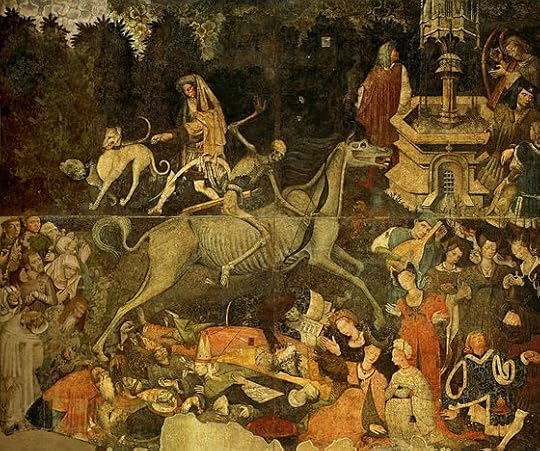
”Il trionfo della morte” di autore sconosciuto, 1446 circa, Palazzo Abatellis di Palermo.
Il fantasma del futuro, l’uomo col taccuino di pelle di talpa che segue Alexandre Yersin come un’ombra: è così che Deville, il biografo, l’autore della biografia, si definisce. Cosa che succede non di rado: perché la sua presenza c’è e si sente. Perché per scrivere questa biografia, e romanzo, non si è soltanto documentato, non ha soltanto letto tutto quanto scritto su e da Alexandre Yersin, diari, taccuini e corrispondenza inclusi ovviamente: ma ha ripercorso gli stessi itinerari, ha girato e viaggiato il mondo sulle orme di Yersin, come un’ombra, e quindi come un fantasma, come un detective armato del suo taccuino in pelle di talpa, si è seduto e ha sostato dove lo aveva fatto Yersin, ha cercato con lo sguardo le cose che Yersin ha visto, e con le orecchie quelle che aveva sentito, e i profumi, i colori…
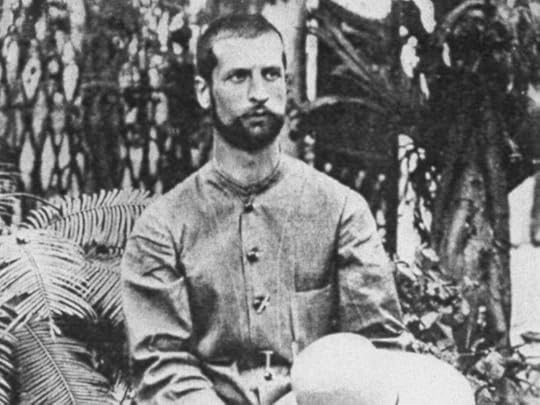
Alexandre Yersin, nato il 22 settembre 1863 a Aubonne in Svizzera, morto il 28 febbraio 1943 a Nha Trang in Vietnam.
Avanzando alla scoperta dell’ignoto, lo studioso assomiglia al viaggiatore che raggiunge cime sempre più elevate, da dove la sua vista da esploratore intravede distese infinite e nuove.
Alexandre Yersin non fu solo un grande scienziato, un grande innovatore, un grande aiuto per l’umanità trovando il vaccino contro la morte nera (la peste), fu anche un grande viaggiatore, muovendo giovanissimo dalla sua Svizzera natale a Marburgo, a Berlino, poi a Parigi, e in Bretagna e Normandia per vedere il mare… E poi, in giro per il mondo, in tutti i cinque continenti, privilegiando l’estremo oriente, l’Indocina, il Vietnam in particolare, dove visse la maggior parte della sua vita, morì, e rimane sepolto (sulla lapide, nome cognome, anno di nascita e di morte, nient’altro).
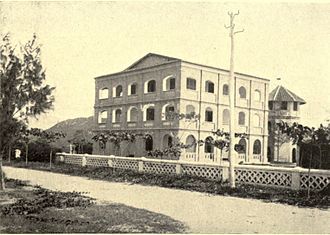
La casa di Yersin a Nha Trang.
Personalità eclettica, il soggetto di questa biografia, si occupò di agricoltura, allevamento, botanica, meccanica, meteorologia, astrologia, navigazione, esplorazioni geografiche, medicina oltre che di microbiologia e ricerca medica (lebbra, tifo, malaria, tubercolosi, colera, difterite, tetano, peste). Visse una vita piena e ricca, una vita fatta di settimane con più giorni e giorni con più ore, perché altrimenti non si spiega la quantità, e qualità, delle sue realizzazioni. In mezzo ci fu anche: una lotta corpo a corpo con un gigante selvaggio che gli decapitò il pollice della mano sinistra con un colpo di machete e lo trapassò al petto con una lancia; una storia di mazzette e furto di cadaveri, con l’aiuto di un prete di origine italiana, per avere la possibilità di studiare il morbo a dovere; viaggi, tanti viaggi, ovunque (Egitto, Vietnam, Cina, India, Cile, Brasile, Australia, Algeria, Tunisia, Tananarive, Rhodesia, Canada, Turchia, Marocco, Guyana, Pakistan, Indonesia, Madagascar, Zanzibar, Comore, Cambogia, Laos, Malesia, Thainlandia, Birmania…), fino al punto di lavorare come medico di bordo sui battelli pur di essere in giro per il mondo, essendo un dio del microscopio e del laboratorio di ricerca e analisi; il soprannome annamita ‘zio Nam’, cioè zio Cinque, perché cinque erano i galloni sulla divisa da medico di bordo; l’aver trascurato di depositare il brevetto della Kola-Cannelle, antesignana della Coca Cola
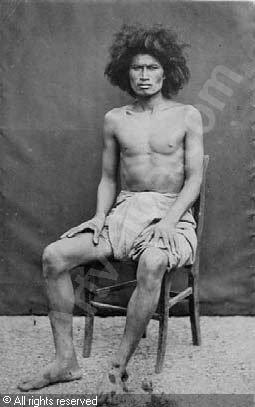
Foto di Alexandre Yersin intitolata ‘Moi sauvage’, 1892-1894.
Si entra nel XX secolo, e nessuno sa ancora che sarà il peggiore, quello delle barbarie infinite dopo quello dei sogni di un progresso infinito. È la Belle Epoque. Siamo ancora nel pieno dell’ottimismo per le scienze e le tecniche e per lo sradicamento delle malattie, per le vaccinazioni preventive e curative.
La ciliegina su quest’ottima torta è il parallelo e l’intreccio con la vita di due personaggi così vicini così lontani: Rimbaud e Céline, quest’ultimo laureato in medicina, medico praticante prima che la scrittura lo sequestrasse, membro dell’istituto Pasteur, proprio come Yersin, e la piccola banda degli apostoli laici.
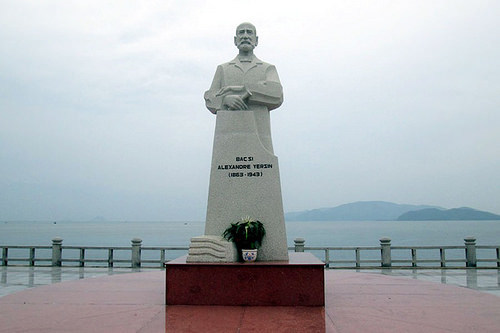
Monumento di Yersin nel giardino pubblico a lui intitolato nel 2012 a Nha Trang, nel luogo del villaggio di pescatori dove Yersin abitò.
Todo microbiólogo sabe que el bacilo que produce la enfermedad conocida como Peste bubónica, es la Yersinia pestis. Igual no todos saben que este nombre se le puso en honor de su descubridor, Alexander Yersin, menos aún sabrán que no sólo descubrió el bacilo sino que desarrolló una vacuna que permitió curar y prevenir esta terrible enfermedad que, todavía a finales del siglo XIX y principios del XX causaba terribles plagas y mortandades y casi nadie conoce al personaje que se encuentra detrás de este nombre.
Deville nos desgrana con gran maestría y una hermosa prosa la vida de Alexander Yersin. Nacido suizo, pero nacionalizado francés. Fue uno de los primeros discípulos de Pasteur y asistió a su éxito, a la creación del Instituto y a su diseminación por el mundo. Pero rápidamente se cansó de la bacteriología, pese al inmenso mundo de descubrimientos que se abría ante esta nueva ciencia.
Estudió medicina, se enroló como médico en la marina, visitó a la Indochina francesa y se enamoró de Vietnam, conocido entonces como Annam, se convirtió en explorador, geógrafo, volvió a la bacteriología, se interesó por la mecánica, los automóviles, la agricultura, la silvicultura, la ganadería, aclimató el árbol del caucho y el de la quina a Vietnam y se hizo rico, se hizo con una inmensa propiedad en un rincón paradisiaco de Vietnam donde vivió durante 40 años, asistiendo a dos guerras mundiales desde la distancia.
Todo le interesaba y en casi todo tenía éxito. Un loco, un genio renacentista, un misógino, un misántropo, un extravagante que hizo durante su vida lo que le dio la real gana y que murió solo, en su paraíso, rodeado de su ganado, de sus cultivos, de vietnamitas y de un puñado de europeos en los que se apoyaba para sacar adelante sus proyectos y que, a la postre, se convirtieron en sus biógrafos.
Deville también nos hace un recorrido por una época de descubrimientos científicos, casi todos ellos conseguidos por hombres formados en esa maravillosa fuente de conocimiento que fue el Instituto Pasteur. También asistimos a la creación del imperio colonial francés en África e Indochina, a la evolución política e intelectual en Europa desde la Conferencia de Berlín en 1884-1885, donde las potencias europeas de repartieron el mundo, hasta la Segunda Guerra Mundial.
Un recorrido denso, pero delicioso.
Si algún día vais de viaje a Nha Trang, maravillosa ciudad turística al norte de Saigón o a Da Lat, en el interior y veis el nombre de Alexander Yersin, acordaos que este fue el paraíso que él creo en la antigua Indochina francesa.
Không có gì lạ khi thấy hàng trăm người cho cuốn sách này chỉ 1 sao trên Goodreads. Họ nhận xét thậm tệ về sự diễn đạt chậm chạp và lạm dụng câu từ của Deville. Tôi hẵng cũng sẽ vậy nếu tôi thật sự là một sinh viên ngành Y được về vi trùng học.
Nhưng không
Một cách nghệ thuật mà nói, lối hành văn của Deville thật sự sáng tạo. Nếu xem qua bản tiếng Anh Plague and Cholera của nhà xuất bản Mass Market thì quả thật vị dịch giả Mỹ đã không có tâm như vị dịch giả Việt Nam. Nó quá sự xuất sắc. Bạn biết vì sao không? Vì cách hành văn bay bổng của nước Pháp, thứ ngôn ngữ có cùng gốc gác của tiếng Việt. Đã khiến mọi thứ hay ho hẳn lên khi lược dịch từ nguyên bản tiếng Pháp sang tiếng Việt, hẳn là có gì đó đã thay đổi hoàn toàn suy nghĩ của tiếng Anh. Nó thật sự hay ho với phong văn ẩn dụ và đầy châm biếm của Paris: Bản tiếng Việt đã bày tỏ hết được cảm xúc của Deville.
Làm sao để viết về môt chàng trai mà không nói gì về người cha?
Xuyên suốt tác phẩm, tác giả Patrick Deville mô tả Yersin của chúng ta như một người cô độc, một người độc đáo, thích sự tĩnh lặng, đã ra đi để trở thành thủy thủ và một nhà thám hiểm. Yersin có cùng điểm chung với những đứa con mồ côi cha: "Cô đơn, ra đi, đi đầu để khai đường cho cả nhóm và làm tốt hơn những người cha vắng mặt. Đi xa hơn trong khoa học và địa lý so với những người cha không biết mặt". Có lẽ đúng như thế, có lẽ mồ côi cha là nguyên nhân chính biến họ trở thành những kẻ liều lĩnh, phiêu lưu, ham chinh phục. Khi một chàng trai không phải ngước mặt nhìn xem thái độ cho phép của người cha thì lớn lên chàng trai ấy hoặc sẽ không làm nên chuyện gì, hoặc là làm nên chuyện với một mức độ không có giới hạn ràng buộc. Chàng trai ấy lớn lên giữa đám phụ nữ. Từ đó "hình thành thói căm ghét phụ nữ tiềm ẩn và chiều hướng tình dục không xác định", giấc mơ được ngao du năm châu bốn bể.
Tuy vậy, ông rất yêu mẹ mình. Sống tha hương, dù ở Pháp, Việt Nam hay Trung Quốc, hầu như tuần lễ nào ông cũng viết thư cho mẹ. Tính đến khi mẹ ông mất, năm 1905, ông đã gởi ngót 1.000 bức thư, cho bà biết sức khỏe và công việc hằng ngày của mình. Khi mẹ mất rồi, Yersin tiếp tục gởi thư cho người chị ruột, bà Emilie. Trong thư nhiều khi đầy vẻ hài hước, như khi ông ở Hồng Kông viết cho mẹ:
“Con còn nhiều điều nữa muốn thưa với mẹ, nhưng có hai xác chết đang chờ con. Họ muốn ra nghĩa địa cho sớm. Tạm biệt mẹ thân yêu. Mẹ rửa tay sau khi đọc thư này kẻo bị lây dịch hạch, mẹ nhé.”
Không có gì sinh ra từ hư vô, đã sinh ra thì sẽ phải chết đi để hành tinh này trở về trạng thái cân bằng. Yersin là môn đệ của Pasteur, người đã lặn lội trèo lên núi tuyết để thu thập không khí có chứa những vi khuẩn để chứng minh khả năng hiểu biết con người vẫn còn là hạn hẹp trước tự nhiên. Nhưng sau khi đã ở hàng nhất phẩm trong giới bác học, cái ông Yersin dở hơi lại rời Paris để trở thành thủy thủ rồi nhà thám hiểm, dành những năm cuối đời của mình trong cô độc ở một xứ sở nào đó ở Nha Trang, tránh cuộc đời của mình khỏi ồn ào ở những thành phố lớn. Đời ông là một nỗ lực tìm kiếm hạnh phúc, cố tạo ra một tổng hòa cân bằng đẹp đẽ mà định mệnh đã bắt ông phải trở thành - một đứa trẻ mồ côi cha lên đường ngao du năm châu bốn bể để học hỏi và thám hiểm. Thế rồi kết thúc cuộc đời trải dài 2 thế kỷ và 2 trận thế chiến của mình ở một xứ xa lắc, để lại cho đời những câu chuyện kỳ lạ để bắt người đời sau phải đi tìm khắp thể giới rồi chắp nối lại thành một bức chân dung lớn mang tên Yersin - người đã chiến thắng dịch hạch, người đã chiến thắng thảm họa do Thượng đế mang xuống để lặp lại thế quân bình cho thế giới.
Và Việt Nam
Trái ngược với những thành tựu, cống hiến của ông với y học cùng sự gắn bó kỳ lạ với đất nước Việt Nam xa xôi, “Ông Năm” như cách người Việt gọi, một học trò xuất sắc của Pasteur, lại chọn cho mình cuộc đời trầm lặng. Ông quay lại Nha Trang và ở tại đây vào những năm cuối đời mình, về Nha Trang, Yersin sống gần gũi với dân làng. Vị bác sĩ lấy tiền khám bệnh của những kẻ máu mặt, giàu có nhưng hoàn toàn miễn phí với người nghèo, còn thường xuyên cho trẻ con kẹo hoặc tiền lẻ để mua quà. Trong thư gửi mẹ, Yersin tâm sự:
"Mẹ hỏi con có thích ngành y không. Có và không. Con rất vui được chữa bệnh cho những ai đến nhờ, nhưng không muốn biến y học thành một nghề, nghĩa là con không bao giờ có thể đòi một bệnh nhân trả tiền vì đã điều trị cho họ. Con coi y học là thiên chức, là nhiệm vụ. Đòi chi phí từ bệnh nhân chẳng khác nào nói với họ rằng: tiền hay mạng sống".
Không chỉ vậy, Yersin trân trọng những đóng góp của các phụ tá người bản địa. Ông quý mến, quan tâm đến đời sống của họ, nhẫn nại tử tế và không bao giờ to tiếng thị oai. Trong mắt họ, một "ông Năm" tốt bụng, quý trẻ con và chữa bệnh miễn phí cho cái Xóm Cồn nghèo khổ đó. Quả thật, hiếm người Pháp nào được xứ Đông Dương yêu mến nhiều đến thế.
Trải qua gần nửa thế kỷ gắn bó với mảnh đất hình chữ S, bác sĩ Alexandre Yersin đã để lại dấu ấn sâu đậm khó có thể miêu tả hết. Ngoài y học, ông còn góp công lớn vào phát triển nông nghiệp, chăn nuôi, thám hiểm, khí tượng. Tên ông được lấy đặt cho con đường ở Hà Nội, Sài Gòn, Nha Trang. Quần thể mộ Yersin ở Suối Dầu cùng thư viện Yersin ở Viện Pasteur Nha Trang được xếp hạng di tích lịch sử văn hóa cấp quốc gia, được xem là trường hợp duy nhất người nước ngoài duy nhất được cấp bằng chứng nhận di tích lịch sử cấp Quốc gia. Làng Tân Xương ở Suối Dầu thờ cúng ông như một thành hoàng, một vị Bồ Tát. Yersin đã đến đây bằng tấm lòng chân thành và sẽ còn lưu mãi trong ký ức Việt Nam.
Cảm ơn, ông Năm!
"Hãy đến đây với tôi, ông sẽ biết nơi này thú vị như thế nào" Ông viết về Nha Trang trong lá thư gửi cộng sự Emile Roux đầu thế kỷ 20.
Là dân Khánh Hòa, tôi hay tìm hiểu về lịch sử địa phương mình. Yersin là một người đặc biệt. Người trẻ như tôi không sinh vào thời của ông. Nhưng những câu chuyện về ông Tây này vẫn khảm sâu trong tâm trí của người dân vùng vịnh Cam Ranh. Bản thân chưa bao giờ quên chuyện "lô cốt ông Năm". Ông được xem như một vị thánh tại Nha Trang, một người Pháp bác ái tại Đà Lạt. Với tôi, ông đơn giản là một người tốt - không hơn, không kém. Giữa điểm khởi đầu và kết thúc, giữa sự sống và cái chết, ông đã sống tự do một cuộc đời bình thản và thẳng tắp của một kỵ sĩ trên lưng ngựa.
Review của một người con Khánh Hòa Khổng Mạnh Cường - 4/27/2018 (P.S: Tôi từng đi qua căn nhà gỗ ấy nhưng lúc đó không có ai để mở cửa. Nó được chỉ dẫn trên biển dẫn ngoài quốc lộ là "Viện Pasteur Suối Dầu")
Missed. This is not the image that I had of Yersin when I studied medicine. Here, it is a kind of autist, a Forest Gump's clone. It is true that the style does not do anything. It introduces a kind of distance which reinforces the strangeness of Yersin I think that he deserved better than that.
Para aquellos que conozcan la vida de Yersin igual esta biografía novelada por su estilo austero y desapasionado quizás no les diga nada, a mi, que nada sabia de el y me gustan este tipo de libros me ha encantado conocerle, aunque si reconozco que otro autor le habría dado quizás un tono mas épico a sus muchas y extraordinarias andanzas.
Me gusta la ciencia, la historia y las biografías, así que este libro, como me escribió Justo, era para mí.
No había oído hablar de la figura de Yersin, una persona que resumiría en una palabra y con mayúsculas, CURIOSA por todo.
Me costó un poquito entrar en el estilo árido del narrador, con grandes idas y venidas en el tiempo y el nombre de un sinfín de científicos, muchos de los cuales desconocía. Pero una vez entré en esta obra... fue una lectura de leer y seguir leyendo.
Deville rescata la vida del médico pasteuriano Alexandre Yersin, quien no sólo descubrió el bacilo de la peste sino que fue además explorador y aventurero en la región de Indochina.
Vivió una vida increíble, de leyenda en un mundo dominado por el colonialismo y con dos guerras mundiales sacudiendo el planeta.
El autor nos narra las peripecias de este hombre con breves pinceladas que van para adelante y atrás en el tiempo. El problema es la proliferación de nombres y lugares que por desconocimiento me abrumaron.
Hay que conocer mucho de historia francesa, de París y del grupo de médicos en torno a Pasteur para poder disfrutar éste libro. La escritura la encontré similar a la de otro francés, Echenoz.
Un style inattendu, empreint de poésie, pour cette fascinante biographie d'un scientifique (Alexandre Yersin) qui fut le découvreur du bacille de la peste (Yersinia Pestis) et que la postérité a aujourd'hui oublié. Cette évocation des premiers pasteuriens et de ce qu'ils ont apporté à la santé des hommes (et aussi des animaux d'élevage, ce qu'on oublie trop souvent) est d'un grand intérêt à l'heure où les opposants (souvent dogmatiques) à la vaccination ont tribune ouverte dans les médias. Au côté de la grande figure de Louis Pasteur, déjà légendaire de son vivant, on croisera d'autres passionnants personnages qui ont marqué cette période qui s'étend de la troisième république aux années 30... Lyotey, Conrad, Calmette, Doumer, Serpollet, Céline en sont quelques uns. L'évocation de la vie de Joseph Meister, le petit alsacien sauvé de la rage en 1885 par Pasteur est également émouvante. L'autre intérêt du livre réside dans le fait que Yersin aura vécu la plus grande partie de sa vie en Indochine, à la grande époque de l'empire colonial et l'on reste émerveillé devant cette vie si riche de rencontres, d'aventures, de libertés, de voyages, d'initiatives, de créations, cette vie épique et poétique si éloignée de notre métro-boulot-dodo contemporain, de la réalité numérique, du low-cost et du Massentourismus...
Εξαιρετική αυθόρμητη αγορά απο την φετινή καλοκαιρινή έκθεση. Άλλο βέβαια περίμενα αλλά τελικά σε καλό μου βγήκε!
Ειναι η ιστορία του Γερσεν, μαθητή και συνεργάτη του Παστέρ. Μέσα απο ένα αδιάκοπο πήγαινε-έλα στο χρόνο ξεδιπλώνεται η ιστορία του νεαρού επιστήμονα με τα πολλαπλά ταλέντα. Απο την μελέτη του για τα ιατρικά φαινόμενα μέχρι και την εγκατάσταση του στην άπω Ανατολή και την αγροτική του ζωή εκεί.
Batteriologo, esploratore, agronomo, medico di bordo, entomologo, architetto…
Sono essenzialmente due i motivi che mi hanno indotto alla lettura di questo libro, ben poco diffuso in Italia e reperito in una biblioteca: il primo riguarda la curiosità per la più importante delle molteplici attività cui Alexandre Yersin si dedicò e che gli diede maggior fama, attività che nel mio piccolo (anzi piccolissimo, considerata la statura scientifica dell’individuo…) ha a che fare con i trascorsi professionali del sottoscritto.
Il secondo motivo è che quest’opera di Patrick Deville, di fatto una biografia, ha ottenuto nel 2012 svariati premi francesi di narrativa fra cui il Prix Fémina, mancando per poco il Goncourt di cui è stata finalista: mi incuriosiva in particolare come questo fattore (il successo letterario) potesse legarsi al precedente (la biografia di uno scienziato).
Il risultato è contraddittorio; sul piano dell’interesse scientifico si tratta della biografia di un uomo assolutamente eccezionale per la varietà dei campi di studio e la grandezza dei risultati conseguiti nella maggior parte di essi: una sorta di reincarnazione di Leonardo quattro secoli dopo, se non fosse per l’evidente insofferenza di Yersin per tutto quanto profumi di artistico.
Patrick Deville cerca invero di sopperire a tale presunta lacuna, affiancando in ogni modo cenni biografici di svariati artisti contemporanei, da Rimbaud a Celine a Pierre Loti, ma le vicinanze di costoro con Yersin risultano alquanto flebili e occasionali e alla materia del libro bastano e avanzano la quantità di luoghi avventurosamente attraversati e la mole di scoperte scientifiche perseguite e realizzate.
Per inciso non può non risaltare la dedizione disinteressata e la razionale genialità di Yersin e dei suoi “colleghi” citati (Pasteur, Koch, Calmette e altri) nell’inventare e affinare le armi che avrebbero permesso di salvare migliaia di contemporanei e milioni di esseri umani futuri, soprattutto osservandola da questi nostri anni di neobarbarie, in cui viene addirittura rimesso in discussione il valore di vaccini e sieri!
Nell’ambito letterario invece risulta poco comprensibile come l’asciutta biografia di Deville abbia conseguito, almeno in patria, tanti riconoscimenti nell’ambito della narrativa: il fascino di alcune pagine deriva quasi esclusivamente dai fatti, dalla passione e, per certi aspetti, dalla follia di un inquieto e instancabile raccoglitore e geniale elaboratore di dati scientifici, in continuo movimento fra Parigi e Berlino, Saigon e Phnom Penh, dal Madagascar a Hong Kong.
Il biografo di suo ha aggiunto ben poco, direi: certamente un’opera di interesse divulgativo che restituisce a Yersin il suo posto nella storia della Scienza moderna ma non certo un racconto degno di competere sul piano letterario con Houellebecq, Philippe Claudel o Jonathan Littell (tanto per restare nell’ambito del Prix Fémina di questi anni…)
Patrick Deville nos cuenta, en este libro, la historia de Alexandre Emile John Yersin (22 de Septiembre de 1863 – 1 de marzo de 1943), suizo que ha pasado a la historia como el descubridor de los bacilos responsables de la peste bubónica, rebautizada en su honor como Yersinia pestis. Aprovechando la coyuntura, Deville aprovecha para explicarnos el interesante contexto histórico de Yersin y también para destacarnos todos los eminentes franceses que poblaron el siglo XX (tiene especial obsesión con Rimbaud), focalizando en los científicos que formaron parte del Instituto Pasteur, como el propio Yersin, y en sus polémicas con los alemanes del Instituto Koch. Deville adopta el papel de fantasma del futuro para recorrer los lugares de Yersin, como si lo acompañara en sus vivencias in situ y en la actualidad al mismo tiempo. Los continuos ires y venires pasado-presente son lo único que lastra en cierta manera el libro, por otra parte muy interesante. Interesante porque Yersin es un personaje peculiar que intenta a lo largo de toda su vida rehuir los cánones oficiales, las intrigas de la política y los honores que podría haber recolectado como eminente científico y se dedica a hacer lo que verdaderamente le apetece y le viene en gana. Primero se embarca como médico en barcos que le llevan lejos de la institucionalidad pasteuriana de París y acaba llevando una vida cercana al eremitismo en Vietnam durante gran parte de su vida. Y digo cercana porque se aísla sólo de lo que quiere, ya que en Vietnam lleva una vida comunitaria en muchos aspectos y se preocupa por sus congéneres al mismo tiempo que por sus investigaciones de todo tipo (la dispersión en persona, oiga). Libro interesante, que recorre, junto al personaje, una etapa histórica que se mueve entre las guerras y los avances técnico-médico-científicos, una etapa sin duda interesante y que el autor recorre con minuciosidad y abundante documentación.
The subject matter of Patrick Deville’s prize-winning book Plague and Cholera is so very interesting and his journey through life so fascinating that it almost doesn’t matter if this is a “good” novel or not. Many don’t think it is, and I can see why. Apart from having an omniscient narrator who occasionally inserts himself into the narrative, the book is little more than a fictionalised biography, and very little fictionalised at that. The style is flat and unemotional, and we get few insights into how the characters who populate the pages are feeling, but nevertheless I found it an absorbing account of a little known scientist who seems to have been almost forgotten by posterity. Swiss-born Alexandre Yersin was a scientist, an expert on tuberculosis, discoverer of the vaccine for bubonic plague, a civil engineer, botanist and general polymath. He was one of the “Pasteur” crowd. He knew everyone not only in scientific circles but also in literary and artistic ones. By following him on his life’s adventures, the reader gets a panoramic view of the history of France and French colonialism from Yersin’s birth to the outbreak of World War II. We first meet him as he boards the last Air France plane to leave Paris before the Nazis invade. He’s on his way to the community he’s established in Nha Trang, Vietnam. It’s the end of an era. Yersin’s life in the turbulent 20th century is brilliantly conveyed as is the excitement and rivalry of scientific research. I very much enjoyed the book and have given it 4*; even though purely as a novel it puzzles me somewhat, seeming to be neither fish nor fowl, neither a work of creative imagination nor a straightforward biography. However, I learnt a lot about someone I’d never heard of before, and for that alone I can forgive much.
Rõõm ja nauding! Seda nii särtsakast tekstist, mis on järelikult siis hästi tõlgitud, ent ka loost endast. Põhimõtteliselt võiks ju ilukirjanduslik lugu arstist ja maadeavastajast Alexandre Yersinist kõlada enam kui igavalt (naist ei võtnud, vägijooke ei pruukinud, tohutult töökas ja eraklik), aga võta näpust, igavusest on asi kaugel. Seiklused, õnnelikud juhused, intriigid ja konkurents, sinna otsa veel humoorikas ja analüüsiv "vaim tulevikust" ehk autor Deville ise. Yersini eluloo najal saaks ühtlasi pool ajalugu ära jutustada (ja natuke ongi Deville seda teinud).
"Ta aimab õigesti , et Dunlopi nimi leiab endale inimkonna mälus kindlama koha kui katkubakteri avastaja oma. Sest katk kaob, rehv aga levib kõikjale. Ometi ei aima ta ehk seda, et ühe sajandiga külvavad rehvidega sõiduriistad, alguses jalgrattad, siis autod, mootorrattad ja veoautod ning seejärel lennukid sama palju vägivaldset surma kui suur must õudus."
Le point positif du livre : la vie de Yersin se révèle vraiment intéressante et Patrick Deville se montre capable de faire ressentir au lecteur sa passion pour le personnage. Les points faibles : l'écriture et le style. On trouve des phrases vraiment mal construites à travers lesquelles l'auteur recherchait certainement un effet de style mais qui sont, à mon avis, ratées. Exemples : Mais enfin son Alexandre, le petit chanteur des psaumes à l'église évangélique libre, et maintenant photographier des négresses à poil. Les doctes savants en blouse blanche avec leur loupe cherchent quoi dans la boule de mimosa? Au bout d'un moment, il faut avouer que ce type d'écriture agace...
Je ne connaissais pas Alexandre Yersin avant d'ouvrir ce livre, et comme il l'est écrit plusieurs fois, il est tellement dommage d'oublier de telles personnalités! C'est l'histoire d'une vie passionnante, d'un homme vraiment hors du commun et de l'émergence de la science et de la modernité. Même si on est pas toujours d'accord (et qu'on sait maintenant quel prix la technologie va aussi nous coûter), on admire l'homme qui donne tout pour découvrir, apprendre et sauver des vies.
Cependant, malgré que je comprenne la démarche de l'auteur, je ne l'apprécie pas vraiment. Le style d'écriture rend l'histoire peu attrayante et j'aurais voulu rêver, apprendre plus de détails sur les aventures de l'homme, plutôt que de lire une liste un peu monotone de tout ce qu'il a entrepris. Aussi, la présence de l'auteur dans l'histoire me semble superflue. Les constants changements temporels sont parfois ennuyeux et trop de noms sont cités.
Je comprends tout à fait que ce style est censé être en accord avec la personnalité du protagoniste et j'ai parfois apprécié, étant moi-même une scientifique. Mais j'aime un roman qui soit écrit comme tel, et me raconte une histoire dans laquelle je peux me fondre et oublier le monde qui m'entoure.
Một cuốn Non fiction nhưng lại đc viết như một tiểu thuyết, "bóng ma của tương lai" đã chứng tỏ những hiểu biết và khối tư liệu đồ sộ mà mình có đc về Yersin, nhà khoa học, dân tộc học, y học, vi trùng học.... Và còn rất nhiều "học" nữa mà người đọc sẽ phải trầm trồ cho đến khi khép trang cuối lại.
Một con người vĩ đại nhưng lại chọn cách thu mình để tận hưởng một lối đi riêng, và tâm hồn ưa khám phá của Yersin sẽ còn là bài học lớn vang vọng mãi cho bản thân tôi.
Ja, doch, sie ist nicht uninteressant, die Geschichte von Alexandre Yersin, geboren 1863 in Morges, Arzt, Forscher, Entdecker, Einzelgänger, und in dem Buch, das weder Biografie noch Roman sein will, steckt auch unglaublich viel Information, da geht es um Louis Pasteur, um das koloniale Indochina, um die Bekämpfung von Pest und Cholera, um sonst noch so einiges und immer wieder, irgendwie, auch darum, wie sich anhand von Quellen rekonstruierte Historie erzählen lässt, was an sich ja auch nicht uninteressant ist, aber so richtig begeistern konnte mich Patrick Deville nicht. Zu viel und zu wenig zugleich. – Was ich mir merken will, ist die Erklärung für das Wort „posh“, ein Akronym für „port out, starboard home“: Backbord hin, steuerbord zurück, so sollen die britischen Habitués ihre Kabinen reserviert haben, um sowohl bei der Hin- wie auch der Rückfahrt Blick auf die wechselnde Küstenlandschaft zu haben und nicht nur auf langweiliges Wasser.
Goodreads did not find the English version of this book, but I assure you it exists. I read it as a paperback only on an outward bound flight to the USA and finished it only on the return home, hence the long reading period. This is a lovely book that tells of the life of Alexandre Yersin, the discoverer of the cause of plague although he did not connect it with fleas. The bacillus is named after him as yersina pestis. But if you expect a straight forward biography, it is not. It is purely a novel, starting in 1940, with flashbacks and flash forwards, sometimes our hero young and starting out, yet old and at the end of his life in some of the most beautiful prose I have ever read. His life of Yersin tells of a man who constantly asks questions, he grows plants in Indochina, makes a fortune in rubber only to invest it in his research and medical facilities there while studying quinine, he is interested in everything. He becomes famous but never wins a Nobel prize. One caveat: The title is Plague and Cholera but there is little mention of cholera in this novel nor in Wikipedia. So the title is misleading. No matter. J. A. Underwood is listed as translator. An intelligent job of a brilliantly written life of a great man.
I've been trying to get through this book for the past two months, and it hasn't made it easy. It is very slow moving, unnecessarily wordy, and very difficult to engage with. People who are more fond of complex and philosophical 'literary fiction' than I am might enjoy this, but it's not my genre and I found it all a bit too hard. By all means, give it a go if you feel like reading something a bit challenging and thought-provoking, though!
Alexander Yersin: a fascinating individual - a scientist, a biologist, an explorer, a climatologist ...and anything else which crossed his brain or path. Quite hard to believe that he has already existed (I checked in my Vietnam guide- indeed he spent most of his life in Na Trang). Could not say I really enjoyed the book...but getting to know Yersin was worth the slightly tedious reading.
Giờ mới biết như Phát xít và Đồng minh, Đức và Pháp, viện Koch đối đầu với viện Pasteur, lao và dại, dịch hạch và thổ tả. Một cuốn sách chậm rãi và lịch lãm, nhưng lại không bao giờ thiếu chất hài, ngay cả ở những đoạn nghiêm trang nhất.
Tanto per risollevare l'umore durante la quarantena da Covid-19... Però interessante lettura e niente affatto cupa. E' la biografia, scritta come un romanzo, di un uomo che ha vissuto come in un romanzo. Un uomo che ha vissuto in lungo (per l'epoca) e in largo, dal Secondo Impero alla Seconda Guerra Mondiale, dall'Europa (Francia, Svizzera, Germania) all'estremo Oriente (quella che allora si chiamava Indocina). Confesso la mia immensa ignoranza: di Yersin non avevo mai sentito parlare. Eppure è lo studioso, allievo di Pasteur, che scoprì il bacillo della peste (poi chiamato in suo onore "Yersinia pestis") e contribui alla messa a punto di un vaccino per questa piaga che alla fine dell'800 ancora mieteva numerose vittime in giro per il mondo. Ma il romanzo non ce lo fa conoscere solo come medico e microbiologo, ma come una personalità incredibilmente poliedrica e avventurosa. Yersin fu anche esploratore, entomologo, zoologo, botanico, agronomo, ingegnere, meccanico, fotografo, astronomo, meteorologo, matematico...e sto dimenticando almeno una decina di altri suoi interessi, che Deville ci racconta. Un umanista solitario, un eremita interessato al benessere delle creature che lo circondano, refrattario alla fama, che sceglie di passare gran parte del suo tempo nel piccolo mondo che costruisce a Nha Trang (nell'odierno Vietnam, dove ancora è ricordato come una sorta di santo benefattore). La prosa non è semplicissima e ci ho messo un po' ad ingranare la lettura. Non si tratta della classica biografia, ma di un romanzo biografico, infarcito di citazioni e arricchito da un particolare umorismo. Piacevole ed interessante lettura.
Je suppose qu’il va sans dire que la vie d’Alexandre Yersin était hyper intéressante : il était médecin/bactériologiste qui a découvert le bacille de la peste, Yersinia pestis, avec la bande de pasteuriens à la fin du XXe siècle. Deville nous donne un aperçu du travail de l’institut Pasteur à Paris et des explorations de Yersin en Indochine. Cependant, le problème avec le roman pour moi, c’est le style (trop fragmenté) et l’écriture. Quand même, c’était une biographie très complète, et j’ai bien apprécié l’accent mis sur cet figure qui a vraiment repoussé les limites de notre compréhension de la peste.
Not especially moving. But for the curious, this life of Yersin is very interesting. The extraordinary journey of a bright mind: a man of infinite curiosity but lacking the usual passions: sex, glory, politics... Yersin is not interested in all that.
He's looking for happinness like everyone... but he finds it. Really? I don't think it is possible to tell...
The book is well documented, organized and written. It is a biography so make sure you're interested in the story of this kind of man before you start it.
J'ai été déçue - et pas parce que c'était le prix Goncourt, mais plutôt parce qu'un jour, il y a déjà quelques années, je me suis également promenée sur les terrasses de Dalat, et j'ai regardé la mer à Nha Trang. De plus en plus, nous trouvons sur les tables de nos librairies des livres - fictions, ou récits romancés - consacrés à des scientifiques. La science est l'un des thèmes les plus fictionnels qu'il soit. Yersin aurait peut-être mérité une forme de littérature plus dense que celle-ci. Je vois bien la référence à Camus, mais je ne vois pas au-delà.
Un periodo de la historia apasionante; un personaje fascinante; una vida del todo increible...y un libro soberanamente aburrido. No puedo con el estilo literario de Deville. sus "frase corta, punto y seguido, frase corta...y así ad infinitum" se me han hexho intragables. Además, la frialdad con que está escrita esta ¿novela?, que la hace ser más parecida a una mastodóntica entrada de enciclopedia que a cualquier otra cosa, impide que sintamos, ya no empatia, sino algún mínimo interés por los personajes que por ella pululan