"Skilfully unravels the myths surrounding Anne Boleyn's downfall, and presents the most compelling account of her final months to date. A triumph."—Dr Owen Emmerson, Historian and Assistant Curator, Hever Castle There are few women in English history more controversial than Queen Anne Boleyn. She was the second wife of Henry VIII, mother of Elizabeth I and the first English queen to be publicly executed. Reinvented by each new generation, Anne is buried beneath centuries of homewrecker, seductress, opportunist, witch, romantic victim, Protestant martyr, feminist. In this engaging account of the triumphant and harrowing final year of Queen Anne Boleyn's life, author Natalie Grueninger reveals a very human portrait of a brilliant, passionate and complex woman. This telling period bore witness to one of the longest and most politically significant progresses of Henry VIII's reign, improved relations between the royal couple, and Anne's longed-for pregnancy. But the tide turned in late January 1536 when Anne received news that her husband had been thrown from his horse in his tiltyard at Greenwich. Just days later, as the body of Anne's predecessor, Katherine of Aragon, was being prepared for burial, Anne miscarried her son. The promise of a new beginning dashed, the months that followed were a rollercoaster of anguish and hope, marked by betrayal, brutality and rumour. What began with so much promise, ended in silent dignity, amid a whirlwind of scandal, on a scaffold at the Tower of London. "A must-read for fans and students of Tudor history." —Sandra Vasoli, author of Anne Boleyn's Letter From the Tower; A New Assessment "Genuinely ground-breaking." —Gareth Russell, Historian and author of The Ship of Dreams and Young and Damned and Fair
Natalie Grueninger is a Tudor history specialist, author and podcaster, who lives in Australia with her husband and two children. In 2009 she created On the Tudor Trail, a website dedicated to teaching and promoting Tudor history. Natalie is fascinated by all aspects of life in Tudor England and has spent 15 years researching the period. She’s also passionate about amplifying women’s voices and building supportive and uplifting online communities.
Her first non-fiction book, co-authored with Sarah Morris, ‘In the Footsteps of Anne Boleyn’, was published by Amberley Publishing in the UK in September 2013. Book number two in the series, ‘In the Footsteps of the Six Wives of Henry VIII’, was released in the UK in March 2016. In 2017, Natalie collaborated with illustrator Kathryn Holeman to create ‘Colouring History: The Tudors’, a unique and beautifully illustrated colouring book for grown-ups that features images and scenes inspired by the ever-fascinating Tudor dynasty. The second book in the series, ‘Colouring History: Tudor Queens and Consorts’, was released in May 2018. Natalie’s first solo book, ‘Discovering Tudor London’ was published in the UK by The History Press in August 2017. Her latest book, ‘The Final Year of Anne Boleyn’, was published by Pen and Sword Books in November 2022.
Natalie is the host of ‘Talking Tudors’, a podcast for lovers of Tudor history, and the founder of the Women’s History Circle, dedicated to promoting the work of women creatives with a passion for history.
I have loved the Tudors for more than a decade. And I will never tire of learning more about them. If I ever had any notion that I had learnt everything there was to learn, Grueninger proved me sorely wrong.
💚 What I Loved 💚
Research: This was so meticulously researched, I was completely in awe. So many sources, so much attention. Grueninger is very adept at making the sources sing and collaborate, it became an absolute pleasure to follow her mind and her logic.
Sources: Not only does Grueninger draw from many and varied sources, she also includes her source criticism in her work. As an historian, that's something I truly love and admire. I like being able to follow an author's mind, her reasoning and her train of thought. That way I can determine for myself whether I agree with her conclusions or not. When an historian doesn't add source criticism, I only have their conclusions to go by. But I quite like being a participant in the chase, so to speak.
Thorough: This was an absolutely thorough look at Anne Boleyn's last year. No stone is left unturned and no detail is deemed too small. It was fascinating and almost made me feel like I was almost living it myself.
Humanising: Too often we have a tendency to look at history backwards, so to speak. We know how Anne's story ends. And it's not pretty. Often, the way we tell her story is coloured by the knowledge of her ending. We look for clues, for signs of the impending end. Grueninger is less focused on this and devotes more time to giving Anne her voice and humanity back. By going over every last detail of her final year, she comes alive before us. We're there with her. And we see her as a human being.
ARC provided by the publisher through NetGalley in exchange for an honest review
This account of Anne Boleyn's last year alive prior to her execution in 1536 is heavily researched. It culls together the vortex of various influences that culminated in Anne's downfall. It distills things down to a final point- that Anne was ultimately was gotten rid of because King Henry VIII had gotten tired of her and wanted her gone. He quickly moved on to his next conquest, Jane Seymour, who he married less than two weeks after Queen Anne's execution. Perhaps if Anne did not miscarry her last pregnancy (a male) history would have been different.
The author inserts historical quotes to support her findings throughout the narrative, which I found unpleasant and difficult to digest. The style of writing during the Tudor era can be hard to interpret and so these sections were a dirge for me and lent to some skimming. However, I greatly respect the authenticity this documentation lends to the book. Grueninger also strives to dispel many accepted Tudor stories as myths based on her intense research. As an example, one of these myths was that the male fetus Anne miscarried was utterly mishapen/malformed, lending credence that she was perhaps a witch.
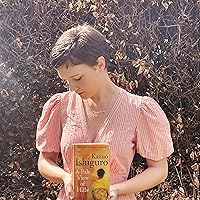
The book concludes with end notes such as the actual list of Anne Boleyn's charges, photos of Tudor royal residences, gardens and churches, and an extensive bibliography. This may sound a bit frivolous, but I think the book's cover is exquisite. All in all, this is an impressive addition to any Tudor historian's library.
Thank you to the publisher Pen & Sword for "Granting my Wish" and providing an advance reader copy via NetGalley.
Genuinely ground-breaking, provocative yet sensitive, exquisitely well-researched and fair - both to Anne's friends and enemies - Natalie Grueninger's book shows us the complexities, and the secrets, that wove together during Anne Boleyn's final twelve months as queen. This is an exciting and important book of Tudor history.
Lovely tribute to Anne Boleyn's spirit.Well researched, informative and written this puts to bed some of the many mysteries surrounding Anne that have plagued us for centuries.Highly recommend.
There are many books on Anne Boleyn, all of which I want to read, but I was really intrigued by this one focusing purely on the last year of Anne’s life and the events leading to her death.
Anne has long been the subject of debates, theories, and myths, so I was really pleased to see Natalie’s approach in covering these points.
Natalie approaches her work with meticulous detail, using primary sources to support her points whilst also avoiding becoming fact heavy. This makes for enjoyable and very interesting reading.
I found this account to be an absolute pleasure to read. Natalie does not just focus on the dreadful events leading to Anne’s death, but also times of happiness, including going on progress with Henry, where they stayed and what those accommodation looked (in some cases, may have looked) like at the time. Even the smallest details, such as distance travelled and which rooms the royal couple may have stayed in, are included.
That’s not all! Whilst Anne and Henry are away enjoying themselves, the politics of the court do not stop. Natalie ensures the goings on at court are not omitted, includingambassador correspondence. It is always fascinating to get a glimpse of the thoughts of Chapuys!
Myths and rumours about Anne are addressed using sources and reasoning why some sources may be biased or perhaps incorrect, or could be interpreted in different ways.
If you’re looking for something that doesn’t focus on the usual content about Anne (no offence intended here, I absolutely do want to read everything) and instead offers a unique insight specifically about her final months then I really recommend this.
The Final Year of Anne Boleyn offers a very thoroughly researched, meticulously referenced, and balanced account of those final months. It can be hard not to show unconscious bias when writing, especially where the Tudors are concerned, but Natalie manages to write an excellent account without any influence of readers’ opinions about those involved.
To generate an interest in History from nearly 500 years ago, an interest that would keep library shelves laden with books of the movers and shakers of 5 centuries previous to the day of reading - that is no small feat. Natalie Grueninger has done it. I've opened the book, started it, and stayed in to the end. It helped that I've read 3 other books about Anne this year. . .but this one felt more about the real Anne, herself. Who was this woman who fired the imaginations and passions of the people in her time, who has kept her place filled with her presence to the degree that even one, such as I would know her name, her place and the changes she effected on the world? This author answers that big question better than any so far, to my thinking.
It was a dangerous time to be a woman, a daughter of a wealthy family with a long line of nobles, dangerous to be beautiful, feisty and possessed of ambitious ideas. Anne rocked it, and paid the price - yet despite the sad turn her journey took, her last acts of sacrifice were for those she loved who remained. Her restraint and dignity worn so successfully to the very moment her head was parted from her body passed that hope on to her Elizabeth, who honored her mother in the best ways she could, on the quiet, but carrying forward the torch her mother lit for her way ahead.
*A sincere thank you to Natalie Grueninger, Pen & Sword, and NetGalley for an ARC to read and independently review.* #TheFinalYearofAnneBoleyn #NetGalley
I would love to thank the author for granting me a wish (on NetGalley) and letting me read this tale as I am an avid fan of all Tudor history books, non and fiction, alike. And, this focus on Boleyn's last year included much information I had never read before or read together in one telling and I found it to be one of the greatest detailed accounts I read on one of Henry's specific wive's. Well researched and written I can't wait to see what comes from this author next, on the edge of my seat to find out what rich telling the author will bring.
Anyone who wants to learn more about Tudor history, especially Henry the 8th, is going to want to include this in their reads as Anne Boleyn is forever bound to the man like no other woman, in his history and life, was. In my opinion, Anne was the beginning of this King's madness, whether you want to say when it was when the King met Anne Boleyn, the years they spent together unmarried (which we more than) the years they spent married or when Henry decided to be done with his wife, his Queen, England's Queen, and beheaded her. The sad thing is, this was no singular occurrence for the King and thus, Anne was where the madness begins and this book is a must read for all Tudor historians, professional and non (as I fall into the latter).
Grueninger, in her research and choice of, to put into this book, brought out a side of Anne that many writers hide. We see Anne with a normalcy that is lacking in many other telling of the woman, a side that is simpler than a Queen that should be beheaded. (add more)
I received this book from NetGalley in exchange for an honest review.
Anne Boleyn is one of my favourite historical figures and I've read many books about her, but Natalie Grueninger's The Final Year of Anne Boleyn really stood out to me. It was an excellent study of this remarkable woman's final year and of the events which led to her dramatic fall.
The book was both extremely well researched and accessible to read. The writing was always focused on the subject, and the events were recounted in a very clear, objective way. The second half was especially gripping: even if I knew what was going to happen, I couldn't put the book down.
I also appreciated how respectful the author was towards Anne, and how she really tried to bring her back to life and to give her justice. She managed to paint a very human and sympathetic portrayal of this formidable woman. Lastly, I also really liked the appendix which contains the list of Anne's charges, and how Grueninger disreputed them by pointing out that in most of these dates Anne was pregnant or in another place altogether.
The Final Year of Anne Boleyn by Natalie Grueninger is a worthy addition to the vast number of books already written about Anne Boleyn. Over the course of 21 chapters, Grueninger presents an almost moment by moment biography of the last 4 seasons, if you will, of Anne's life.
My thoughts: 1. While Grueninger makes clear in the book's introduction that her goal is to present an objective, nuanced portrait of Anne's last year, I don't feel that was truly accomplished. I learned during my years in college as a history major that a set of events can be presented and interpreted in a myriad number of ways. That is because every writer of history delivers events via their own viewpoint. Remaining objective and impartial would be accomplished only if one was listing a straightforward timeline of dates, names, times and locations. 2. Having to read full letters, written as is (meaning in Tudor-style English) is a bit annoying. While they can provide some pertinent insight, for me, they trigger my inner proofreader. I find myself correcting punctuation and spelling when I read them. 3. I found a good chunk of the information included in the book to be unnecessary. It didn't seem to have any true relevance to Anne herself, or even some of the people in her immediate circle. 4. Grueninger makes an observation I found to be quite ironic. Upon the death of Katherine of Aragon, Anne was initially euphoric because she was now the only queen. But then she realizes, as Grueninger points out, that now there was nothing to prevent Henry VIII from chucking her aside for another wife the way he did to Katherine for her. In a weird way, Katherine's death is really what sealed Anne's fate.
As stated, this book is a worthy addition to the vast library of Anne Boleyn books. It's also perfect for die-hard Tudor history buffs. One just has to have patience to slog through the dry bits.
A well-researched bio with a scope limited to Anne Boleyn's last year, May 1535-May 1536. Unfortunately only the last 6 months of that year had much to discuss, so the first half of the book spends a lot of time on Cromwell and Chapuys exchanging ineffectual letters about the status of Katherine of Aragon and her daughter Mary. Natalie Grueninger keeps Henry and Anne at a distance throughout; the book is often sourced from the accounts of persons who were rarely at court with them until the very end of Anne's life. In my experience, Anne's downfall is best examined in the context of her rise, which is hard to do with a timeframe as narrow as this one.
I thought this was a well researched and well written book on Anne Boleyn's final year. Natalie Grueninger did a good job of giving the reader the overall political picture at home and abroad, immersing the reader in the Tudor world. I got a better understanding of how Anne tried to influence things, especially the changes she worked to create in England regarding the poor and the Church, then I did from other books I've read on Anne Boleyn that try to give you the big picture. Contrasting the beginning, when things were still good between Anne and Henry, and the end of the year and how fast things changed was both fascinating and terrifying. Grueninger makes an excellent argument for her theory that Henry knew Anne had not committed the crimes she was charged with, but simply wanted her out of the way, and why he felt he had to do it in such a fashion.
I definitely recommend this book to anyone interested in Anne Boleyn and Tudor history!
I received an ARC of this book from netGalley in exchange for an honest review
This is a factual account of the year leading up to Ann’s execution. Very well researched, there are lots of contemporary source references including fascinating excerpts from letters. I’ve listened to Natalie’s podcast for ages and loved it but this book was even better. It’s very frightening how quickly things can change at the whim of those in power. And how quickly people fell from grace is astounding
Thank you, NetGalley, for granting me a free copy of this ebook in exchange for an honest review.
I appear to be in the minority regarding my impression of The Final Year of Anne Boleyn. The first half of this book is very dry and scatter-brained; it's less a biography than an assortment of direct quotes. There are plenty of details about finances and personal possessions, but little insight into the famous figures at hand, namely Anne herself, Henry VIII, Cromwell, and Chapuys. This is probably a good resource for someone looking for details to enhance a historical fiction novel about Anne Boleyn, but it won't give you a great understanding of this era in history unless you came in already knowing the story well.
The spin presented by this book is also pretty gross. Natalie Grueninger dispels some popular myths, like Thomas Boleyn and Jane Parker's alleged complicity in Anne's fall from grace, and she provides compelling evidence for Anne's devotion to religious reform. Her repeated efforts to excuse Anne's severe abuse of her stepdaughter, however, is simply absurd. Anne making more that one attempt to befriend Mary (on the condition that Mary agree to disinherit herself and shame her mother) does not absolve her repeated promises to murder her stepdaughter; on the contrary, they show that Anne's actions were purely selfish and insincere. Grueninger does not dispute that Anne wore bright yellow to celebrate Katherine of Aragon's death, or that she tried to convince Henry to have both Katherine and Mary executed--instead, this is excused by Henry's own abusive behavior toward his ex-wife and daughter, which continued without Anne's help. This is the problem with the modern efforts to girlbossify Anne Boleyn: it's hard to make a feminist hero out of someone whose rise to power was built on the deliberate destruction of other women. Anne Boleyn is a tragic figure because of the cruel fate she was handed by her monstrous husband. That makes Anne a sympathetic person--it doesn't make her a good one.
The Final Year of Anne Boleyn is one of those books you can’t help but sit back and admire. The ground-breaking depth of research required for this book simply begs admiration from the reader and admiration is unquestionable. Yes, I know I’ve probably used admiration far too much in one sentence but it’s very hard not to, the level of depth in this book is staggering, as a researcher and archivist I really am in awe of the work Natalie Grueninger has put in to bringing us this historical offering.
It's been a while since I read anything as comprehensive as this, I read History when I was younger, and I have to confess it took me a while to get my head around the book and ask my brain to move away from reading non fiction thrillers and concentrate. This isn’t a quick read, it took me some time to get through it but that has no bearing on the quality of what we have before us. We all know how the story ends and it’s not pretty – Henry has become tired his Queen and Anne is executed but that’s not what this book is about, it follows Anne – meticulously I may add – through her final year alive and describes in great detail her trials and tribulations.
If there was one thing I couldn’t quite get my head around were the passages of Tudor language dotted throughout the book. You can get a gist of what someone in saying but that was probably the hardest thing for me to concentrate on and understand.
Although I was aware of how important a role Greenwich Palace played in Anne’s life – the birth of Elizabeth in September 1533, her presentation as Queen five months prior to that historic event and her arrest in 1536, I’d never been aware of the descriptive “taking her chamber” and “churched” as I discovered in chapter 4 when describing the period before and after giving birth! That’s what I love about educational books, you’ll always learn something and you’ll always find something to make you want to read more. Who knew Anne loved her sports, games and gambling? I didn’t! I also wasn’t aware that Henry also paid off her gambling debts! It really is incredible what you learn from this educational masterpiece.
The Final Year of Anne Boleyn is a well-researched and insightful view of the last days of Queen Anne Boleyn's life famously cut short when she failed to produce a male heir for King Henry VIII.
While Henry does feature in this book, its focus is Anne - what she did, who she trusted and what she cared about. Sadly, many of Anne's letters no longer survive so there are some events we can only view through secondary sources. Nevertheless, Natalie Grueninger brings Anne to life and invokes the sights, sounds and perils of Tudor life in an accessible writing style.
The final section of the book takes us through the events of the swift and brutal downfall of Queen Anne. I found the speed with which Henry VIII and Thomas Cromwell dispatched of Anne terrifying. It is testament to Grueninger's writing that she was able to give this well-documented period of history an edge-of-your-seat feel.
I will forever find the death of Anne Boleyn a stain on English history. That this bright, kind, witty woman was killed at the whim of a capricious king is so unjust. Still, we can take comfort in the fact that Anne's daughter, the future Queen Elizabeth I, would reign over a golden age in England and would keep her mother's spark within her throughout her life.
My thanks to Netgalley for an early digital copy for review.
I expected to have my mind changed by the end of this book, but for every argument the author made I had a counter argument.
When it comes to whether Henry was tricked into getting rid of Anne or not this felt more like an opinion piece than a history book.
I feel like I understand both sides of the debate very well at this point and honestly I think I’m more disappointed by the fact I felt like I didn’t have to work very hard here. I was really hoping for a challenge and to be intellectually pushed to my limits, but no.
I’m gonna take a break from the fall of Anne Boleyn for a while. I may read Hunting the falcon soon by John Guy and Julie Fox when I return to this side of the argument, as I feel they have more substance to their arguments.
I received an unedited copy of this book through NetGalley and to tell you how excited I was when I got that email would be difficult. About a year ago I discovered Grueninger's podcast and immediately became hooked. So, when I heard that she had written a book about Anne Boleyn I had to get my hands on a copy.
As the title indicates, this book outlines the last year of Anne Boleyn's life. Due to Anne's tragic downfall and Henry VIII's attempt to erase her from history, it is surprising that a whole book could be written about a single year in Anne's life. My favourite thing about this book is that Grueninger brought Anne's personality into the historical record. For example, I learned that Anne did not like monkies and was more partial to dogs, that she was more likely to read things in French but did not know Latin, and had lavish taste in fabrics which she usually wanted in expressive colours. None of that information is necessarily pertinent to Anne's downfall, but because so little survives about Anne, knowing anything about the woman behind the myth is fascinating.
I also enjoyed how Grueninger's writing and research really highlights the relationships between Anne and the various men in her life including: Cromwell, Henry, and Chapuys. The relationship with the latter is more unidirectional, focusing more on what the Spanish Ambassador heard and thought about Anne, but was still a great insight into how Anne played a role in European and court politics. Grueninger makes it clear that certain things have been lost to history but given the evidence that survives there has been misplaced emphasis on certain parts of Anne's story. For example, how close she and Cromwell may have been throughout her rise to power and during her time as Queen. I enjoyed how Grueninger would present evidence and then provides an interpretation of that evidence supported by other sources.
Grueninger does an excellent job of weaving together contemporary sources and Anne's own words to show how Anne's life took such a drastic turn. This book is a fantastic read for any Tudor and history lover.
This is one of the best book I read about Anne Boleyn as it's well researched and well written. A detailed analysis of the last year that explains how politics played a role in her downfall. Highly recommended. Many thanks to the publisher for this arc, all opinions are mine
The world of someone close to a king, especially someone close to King Henry VIII, was full of hazards and great triumphs. All the glist and glamor of the Tudor court could not save them from the rage of the King. This could apply to anyone who fell during the reign of this infamous King, but none more so than his second wife and queen, Anne Boleyn. Much has been written about Anne Boleyn and her dramatic fall from grace, specifically the final month of her life, but what was she doing in her last year alive? Natalie Grueninger hopes to answer this question in her latest book, "The Final Year of Anne Boleyn."
I want to thank Pen and Sword Books and NetGalley for sending me a copy of this book. I am always learning new facts about influential Tudors, like Anne Boleyn, so when I heard about this book, I knew it would be on my to-be-read pile.
We begin our journey to Anne's ultimate demise with the court's changes in 1535. There is still tons of support for Henry's first wife, Katherine of Aragon, and her daughter Mary, even with the new Act of Respecting the Oath to the Succession, which proclaimed Princess Elizabeth as King Henry VIII's heir, not Mary. Anne interacts with ambassadors from foreign lands, like Charles de Solier from France and Eustace Chapuys, the imperial ambassador.
My favorite part of this book is how much care Grueinger took in telling the story of Anne Boleyn's final progress with Henry VIII. I have never read an account of this progress in the details Grueinger provided, including where she stayed and who served her at different royal houses. We also see how she dealt with the divide between Catholics and Protestants and how she relaxed in her downtime.
Grueninger examines Anne's fall from grace and how it took place, starting with Henry's dramatic fall from his horse and Anne's tragic miscarriage of a son that would have secured her place on the throne. Here, we see the death of Katherine of Aragon and the rise of Jane Seymour. Emotions are running high, and rumors are flying all over Europe, so Grueninger takes the time to bust a few of these myths. Finally, we look at the show trials and the executions that sealed the fate of Anne Boleyn and the men associated with her.
Natalie Grueninger's passion for telling the true story of Anne Boleyn is evident on every page of this book with the amount of research she poured into this subject. This book presents Anne Boleyn in a new sympathetic light, which any Tudor fan would appreciate. If you want a beautiful nonfiction book that examines the tragic fall of Anne Boleyn, I highly recommend you read "The Final Year of Anne Boleyn" by Natalie Grueninger.
Comprehensive and empathetic, I really enjoyed Grueninger's discussions on the 1535 progress and the rapid deterioration of the relationship between Henry and Anne.
An amazingly detailed study of Anne Boleyn - her last year and the forces that brought her down. Almost too much detail! I enjoyed the sympathetic look at her personality and what life must have been like for her. Recommended for all Anne enthusiasts. I listened to this book, and it was a long but enjoyable experience.
This is more a biography of Anne Boleyn with a new framework rather than a specific look at her last year. It is a great look and re-look at a lot of details in her life, but I would have also liked a tighter set up of the calendar and timeline and more focus just on 1535/1536.
Grueninger does an excellent job of recapping Anne Boleyn's final year. I have read a lot of books and watched a lot of documentaries about Anne Boleyn, and so it would be easy to become bored with a rehash of the same events. But I love the voice she brings to this tragic tale, and she also debunks many of the popular myths about Boleyn's life and downfall along the way, without seeming to lecture or veering into a lengthy aside. The people who played a part in Boleyn's final year, including Anne herself, are presented in such a way that you really feel their personalities and humanity, despite being separated from them by centuries. I highly recommend this book to anyone who is familiar with Anne Boleyn's story or who is just beginning to learn about this fascinating woman. Thank you NetGalley and Pen and Sword History for sending this book for review consideration. All opinions are my own.
The Final Year of Anne Boleyn by Natalie Grueninger is a detailed and vivid portrait of a famous Queen. This nonfiction book explores the life of Anne Boleyn, Henry VIII’s second wife and first English queen to be publicly executed. The truth about Anne Boleyn is often shadowed by myth, gossip and legend and this book looks to portray a more realistic image of a person, mother and wife. In this search for truth Anne’s story loses none of its thrill or awe. The author highlights Anne as a passionate, complex and fascinating woman in a time where perception and pressure weighed heavily on her to produce a male heir. A fresh and exciting exploration of the final twelve months of Anne Boleyn’s lifetime. A book for fans of Tudor history and biography 4 Stars ✨
Thanks to NetGalley and the publisher for a review copy of this book in exchange for honest feedback.
For Tudor enthusiasts, and history lovers, it would be near impossible to not know the name Anne Boleyn. The many documentaries, tv dramas, historical fiction novels, and non-fiction books about Anne are a testament to the fact that she continues to fascinate us 500 years on. She is known for being the second wife of King Henry VIII. The woman he changed the religion of England for. They courted for seven years before marrying in 1533. But, just a few short years later, Anne was executed on trumped up charges of adultery and treason. Many readers may have read about what happened in the days and months leading up to the execution. But, what about the year or so that led up to that fateful day on the 19th of May, 1536. Natalie Grueninger’s latest book, The Final Year of Anne Boleyn, explores exactly that.
From the moment this book was announced, I was immediately excited by it. Not just because I am interested in Anne Boleyn and the Tudor era. But also, because I am an avid listener of Grueninger’s podcast Talking Tudors, and have thoroughly enjoyed her previous books (In the Footsteps of Anne Boleyn, In the Footsteps of the Six Wives of Henry VIII and Discovering Tudor London).
This book is divided into five parts, one part for each season in the lead up to May 1536. We start our journey in Spring of 1535. Grueninger takes readers on an in-depth journey through the sources to piece together exactly what occurred over the next year. The Final Year of Anne Boleyn is beautifully written, and Grueninger’s passion and dedication for the subject shines through each page.
The Final Year of Anne Boleyn reveals just how much was going on in England, and in international diplomacy at the time. It also demonstrates the delicate nature of life in the Tudor court. I found it absolutely fascinating and thoroughly enjoyed reading it. The Final Year of Anne Boleyn by Natalie Grueninger is a must for any Tudor library.
Anne Boleyn is a fascinating character from history. I sometimes forget that she actually lived and breathed. This book is a great reminder of the woman behind the legend and the last year of her life. I discovered a new appreciation for the struggles she had in a position that cost her her own life. I finished the last page and instantly thought about other biographies I could find that were about Mary, Elizabeth and others. The sign of a great book pushes you to read more, learn more and seek out answers. That is a great description of this book.
I received an arc via Netgalley in exchange for a honest review.
Out of 3 girls I was the only one who completed this book only because of how much the book actually cost me 🫤totally boring the only thing I liked was the cover