How should we read the Old Testament? For many nonbelievers, it is pure nonsense, a work of bronze-age mythology that encourages tribalistic bloodshed. For many Christians, it is a literal account of the world, a work of divine dictation recalling what transpired long ago. And for many theologians, it is a historical puzzle, a collection of works best understood through the intentions of its human authors.
In this groundbreaking book—the first of two volumes—Bishop Robert Barron offers a new way of understanding the Old Testament rooted in the writings of the Church Fathers. Journeying steadily through the Pentateuch, the historical writings, and the biblical novellas, The Great Story of Israel offers an invigorating theological and spiritual interpretation of these ancient texts, one that draws together the particular concerns of their human authors and the unique purpose of the Holy Spirit.
The parts and the whole, the Old and the New, and doctrine and exegesis all come together in this dramatic story of election, freedom, and holiness—a story read in the light of Christ, the glory of his people Israel.
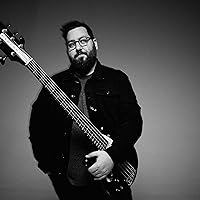
Bishop Robert Emmet Barron is an acclaimed author, speaker, and theologian. He is the former Francis Cardinal George Professor of Faith and Culture at Mundelein Seminary near Chicago and also is the founder of Word On Fire (www.WordOnFire.org).
Bishop Barron is the creator and host of CATHOLICISM, a groundbreaking ten-part documentary series and study program about the Catholic faith. He is a passionate student of art, architecture, music and history, which he calls upon throughout his global travels in the making of the documentary.
Word On Fire programs are broadcast regularly on WGN America, Relevant Radio, CatholicTV, EWTN, the popular Word on Fire YouTube Channel, and the Word on Fire website, which offers daily blogs, articles, commentaries, and over ten years of weekly sermon podcasts. In 2010, Father Barron was the first priest to have a national show on a secular television network since the 1950s.
Fr. Barron received his Masters Degree in Philosophy from the Catholic University of America in Washington DC in 1982 and his doctorate in Sacred Theology from the Institut Catholique in 1992. He was ordained to the priesthood in 1986 and has been a professor of systematic theology at the nation's largest Catholic seminary, the University of St. Mary of the Lake/Mundelein Seminary since 1992. He was visiting professor at the University of Notre Dame in 2002 and at the Pontifical University of St. Thomas Aquinas in 2007. He was also twice scholar in residence at the Pontifical North American College at the Vatican.
In addition, Fr. Barron lectures extensively in the United States and abroad. Cardinal Francis George calls Fr. Barron “one of the Church’s best messengers.
Fr. Barron was baptized at Queen of All Saints Basilica in Chicago and grew up at St. John of the Cross parish in Western Springs, Illinois. WordOnFire.org - Fr. Barron's website launched in 1999 and currently draws over 1 million visitors a year from every continent. Fr. Barron posts weekly video clips, commentaries and radio sermons and offers an audio archive of over 500 homilies. Podcasts of his sermons are widely used by tens of thousands of visitors each month. TV - EWTN (The Eternal Word Television Network) and CatholicTV broadcasts Fr. Barron's DVDs to a worldwide audience of over 150 million people.
Radio - Since 1999, Fr. Barron's weekly Word on Fire program has been broadcast in Chicago (WGN) and throughout the country (Relevant Radio - 950 AM Chicago) to 28 million listeners in 17 states. Fr. Barron also is a regular commentator on the "Busted Halo Show" on the Sirius satellite radio network based in New York.
DVDs - Fr. Barron's DVDs are used as powerful faith formation tools in universities, schools, churches and homes around the country. The series includes Seven Deadly Sins, Seven Lively Virtues; Faith Clips; Conversion: Following the Call of Christ; and Untold Blessing: Three Paths to Holiness.
YouTube - With over 180 online video commentaries by Fr. Barron, over 1 million viewers worldwide have made him the most popular of any evangelist on YouTube. These frequent, high-quality productions include brief and lively theological reviews of contemporary culture, including movies such as No Country for Old Men, Apocalypto, and The Departed, a three-part critical review of Christopher Hitchen's book God is Not Great, The Discovery Channel's The Jesus Tomb, the HBO series "The Sopranos", "Rome" and more.
Missions - MISSION CHICAGO features evangelization lectures by Fr. Barron at the behest of Cardinal George. These special missions and presentations throughout the Archdiocese are centered in downtown Chicago and attract business, civic, and cultural leaders. Books - His numerous books and essays serve as critical educational and inspirational tools for seminarians, priests, parishioners and young people worldwide. His published works are also central to the numerous retreats, workshop and talks that h
This was a tough fucking read. A wholly worthwhile volume on looking at the Old Testament, both in finding how to see its own binding threads, but also in reading it with an eye turned towards the New Testament. Bishop Barron has 2 speeds with the written word: the first is the easy, breezy (yet RICH) essays in books like Vibrant Paradoxes or Seeds of the Word and the second are these dense, dense explorations of the highest hermeneutical thoughts. This is definitely the latter. Just glad to have made it through. Can’t wait for the second volume.
Bishop Robert Barron provides an excellent narrative theology of the Old Testament. As a Catholic bishop and scholar, Barron includes the deuterocanonical narratives like Tobit and Judith in his account of Israel's story, which will either pique the interest of some Protestant readers or scare them. Regardless of one's views on the Old Testament canon, this book is a must read for anyone seeking to better understand the narrative story of the Old Testament.
Barron employs the four senses of Scripture hermeneutical framework throughout the book and demonstrates a mastery of it from start to finish. He includes the perfect amount of citations from church fathers, medieval theologians, and modern scholars to support his claims and interpretations without his voice being lost in the process, which is something very few well read authors achieve in their writing.
Readers of this work will not only enjoy a clear commentary on the Old Testament's narrative books but also be prepared to read the New Testament with excitement and anticipation, as Jesus is presented as the fulfillment of Israel’s great story. For these reasons, and because of my personal biases in favor of Robert Barron as one of my heroes of the faith, I highly recommend this book.
The purpose of this book is to summarize the first half of the Old Testament and provide historical and theological insight based in Christian tradition and theology without turning into a seminary student’s textbook. It does exactly that.
This book is one step above pop theology (like Pitre, Sri, etc) but one step below church fathers. It has a bit of meat to it, but is still fairly accessible to non-experts.
One of the Best Old Testament Commentaries I have Read
Bishop Barron is a wonderful theologian. This is a must needed commentary on the Old Testament. Instead of a line by line commentary, Bishop Barron looks at the overarching themes of each book, and unites them to the other books of the Bible, both Old Testament and New Testament.
In a theological overview of the historical books of the Hebrew Bible, Bishop Robert Barron discusses the role in salvation history played by humanity in general and of the Israelites in particular. The texts under consideration are fairly straightforward, recounting the history of the Jewish nation. Barron acknowledges a lot of modern scholarship that has made understanding these writings more clear while avoiding the pitfalls that modern scholarship also opens up. The writing styles used are often more poetic or allegorical, even in these historical texts. People did not think of writing a long list of facts, dates, and names; they told a story with a definite purpose in mind. Teasing out the proper meaning can be challenging but not impossible. Barron also looks at the texts through the lens of Christianity, since these texts are the anticipation of the moment of reconciliation between humanity and God that happens in the life, death, and resurrection of Jesus Christ.
One of Barron's main theses is that the Jewish people are chosen by God but not just for themselves to be saved. They are to be an example to the rest of mankind, a people set apart to show the right relationship between human beings and God. This example is seen with their struggles in Egypt during Exodus and Babylon during the Babylonian exile. The Jews are a model of right faith attached to the true God, the One who is greater than all other gods because He's in a completely different category. As Creator of all things, no subordinate thing is even remotely close to God in power, majesty, and care for humans. The Jews were a shining example of this in the ancient world.
They were not, however, a perfect example. Often they would draw back or turn away from the God of Abraham, Isaac, and Jacob. The consequences were dire. Even after the long string of miracles that led the Chosen People out of Egypt, soon enough in the desert between Pharaoh's land and the Promised Land they would complain about their current circumstances or switch to a golden calf to credit their salvation. Once established as a kingdom in the Promised Land, they often switched devotion to the local gods, often the deities that came with marrying local pagan women rather than Israelites. Punishment would soon follow, but so would prophets whose main job was not to foretell the future, but to get the Israelites back on track. The final cultural conflict before Christ was the Greco-Roman world coming in and taking over the Promised Land, chronicled in the two books of the Maccabees.
Barron has a good way of explaining theological and philosophical concepts clearly without relying on a lot of technical language or very abstract ideas. He can bring those concepts down to concrete examples that help the reader understand. The book moves along swiftly, not dwelling on every last detail, covering the few thousand years in three hundred pages. Using Christianity as a guiding principle helps to narrow down the focus and put the writings in their larger salvific context. The book makes a great overview, either introducing new readers or providing insights to more seasoned readers of the Old Testament.
A wonderful book exploring more spiritual and symbolic readings of the Pentateuch and historical books of the Old Testament to draw wisdom and theological insights applicable to many or all. It was Very refreshing compared to modern demystifying historical-critical analysis. That said this is a very generous 4-star ratings, because for anyone who has listened to any significant amount of Bishop Barron much of this content will be very familiar. If it’s a very famous passage from the Old Testament, Barron’s analysis is likely to be familiar. For the less well known passages sometimes certain church fathers’ interpretations like Origen become a slight “crutch”…or he’s simply that compelling. Or Barron has some pretty worthwhile insights and takes for the lesser/least known stories. Off the top of my head: I highly enjoyed his reflection on Jacob wrestling with the angel, I raised eyebrows at his ultimate take on Elijah’s over-zealotry at slewing the 450 priests of Baal, and his thoughts on the short narratives such as Tobit and Judith and Esther were charming or excellent. But here’s my big issue with the book. This book becomes the source of all Bishop Barron’s commentary in the Old Testament Word on Fire Volumes. From a publisher’s perspective, this is a savage double-dip: have the source of the commentary down all in one place & even coherently strung together, and for those who won’t purchase the WOF Bible: here’s the Barron commentary you’re looking for. But as someone who will read/was congruently reading parts together, this became a slightly lackluster read, knowing I’ll read it all again in the WOF Bible. For me, it would have been nicer to read these commentaries in the WOF Bibles fresh for the first time.
What a read. From the Old Testament, what message is of greater importance than that of “right praise”? When the Israelites showed right praise they were rewarded, and when they did not they were trampled by their enemies. How ironic that the very same society that opposed the Jews for so long would become the vessel at which Christianity would disperse itself throughout the world.
A theme that Baron echoes again and again is that the Israelites were chosen not for themselves, but for the sake of the world. To be a light of the nations. The mighty walls of Jerusalem were needed to ensure that the Israelites remained a distinct and priestly people, yet those same walls could never have been the final end of their duty, as a nation called to be the light couldn’t have been enclosed forever.
Exodus 3:14 remains key to Israels understanding of God: “Ehyeh Asher Ehyeh”. This verse shows Gods rejection of Moses’ attempt to categorize Him. God is incomparable to creation, yet is THE common factor. He grounds us in our being and He works non-competitively vis a vis his creation.
More 3 1/2 stars. This is a good and concise tour through parts of the Old Testament with some interesting theological commentary by Bishop Barron.
However, I’m not sure that the decision to split the book was to its benefit, the prophetic and wisdom literature is to be covered in an as yet forthcoming volume. The means in effect that the exile is hardly touched upon, indeed the chapter on 2 Kings ends with the fall of the Northern Kingdom and then in the next chapter the Southern Kingdom is already returning with the books of Ezra/Nehemiah. Perhaps the split will become clearer on the release on the second volume, but this work feels in a way unfinished.
I appreciated the theological depth here but if I were to recommend to someone a one volume tour through the Bible I almost certainly point to Jeff Cavin’s ‘Walking with God’ over this.
The strength of this book is in the hermeneutical practice of forward reading first while also reading backwards in light of Christ, which truly gives light to Israel’s great story As Barron states in the book many times, “ancient Israel is called to be set apart from the world for the sake of the world.” They are called into union with God for benefit of the world. This great purpose has found its proper goal in Israel’s Messiah Jesus of Nazareth, whose extends Union with God to Israel and the nations.
Excellent summation of the story of Israel. Having visited the great modern nation of Israel, this telling really captures the essence of the story of ancient Israel for the modern mind. I view the ancient story more as a love story, so this isn't a perfect retelling for me. However, this telling it is quite good and steeped in excellent scholarship!
Even though I’m not Catholic, I really appreciated Bishop Barton’s analysis of the Bible. He expertly weaves together the theological, historical, and philosophical meanings and undertones of the Bible. He also draws innumerable comparisons between the OT and Jesus, including some that I’ve never thought of before. I will definitely be consistently referencing this book going forwards.
Robert Barron is a great theologian and I like his essay style of writing. As a Christian there are parts of the bible that are tough for me to comprehend but his way of explaining helped me to see things in a different light.
The book basically goes through the Old Testament and explains the sections from a theological point of view.
Explicación sencilla, coherente, estructurada y hermosa de los libros históricos de la Biblia. La preocupación principal del autor parece ser la de desentrañar los temas ("themes") o tesis primarias de cada uno de los libros, además de descubrir los hilos conductores, cuando existen, entre ellos, y siempre dentro de cada uno.
well written narrative summaries, highlights themes, adds his two cents while peppering in Church Fathers or Aquinas or an encyclical. I read the book of the Bible, then I would go read his chapter on that book, I found his insight most helpful when reading through 1&2 Kings. overall well done and accessible to laity or a good entry point for an undergrad course.
This was an excellent book to get the "big picture" of the story of Israel and its underpinning themes that one can miss at first reading. Bishop Barron provides a retelling of our story while citing patristic, medieval, and modern sources.
Appreciate how Bishop Barron identifies key themes per chapter in the Old Testament and finds connections to other parts of Scripture. That said, this can get pretty dense at times and took awhile to get through. Amazed at how much content this guy is able to generate!
I'm not Catholic, but I really enjoy Robert Barron's insights on these Old Testament books. I appreciate his focus always on Christ and how the message of the OT constantly points to Jesus.
One of the best books Bishop Barron has written. I loved his way to integrating the history and theology of our faith in the text. It’s definitely one of my favorites!
Solid overview of many of the OT books, with insightful, thought provoking ideas and ways of interpreting, making sense of, the more controversial passages.
Very informative. I agree with the other reviews that Robert Barron does switch between writing easily to writing densely. I’m excited to read more books by him, his knowledge is very apparent!
This is an excellent primer on the Old Testament. Bishop Barron provides helpful analogies and context for some of the more difficult and confusing books and narratives.
The sections on Tobit, Judith, and Esther are superb. The sections on the Pentateuch and 1 and 2 Samuel aren't quite as strong, but Bishop Barron still offers some solid commentary on these books.
Barron reviews major events from the Old Testament and examines them through a Christological lens. This is a good example of typology, and a helpful review of the Old Testament narrative.