Jump to ratings and reviews
Rate this book

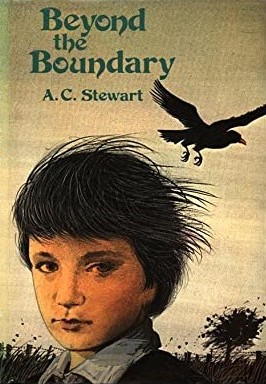
Beyond the Boundary

Rate this book
Is Donul Forbes a girl or a boy? A human child or a changeling left by the Little People on the stormy night of her birth?

In the remote part of Galloway where Donul grows up, the village gossip about the mysteries and tragedies that surround her: the mother who abandoned her baby without even seeing it; the child brought up by hired strangers, whose only bond of human affection is with the shepherds on her father's estate; the little girl who takes a dead man's name, wears boys' clothes, and becomes the fiercest fighter in the village school to "prove" her masculinity.

Donul keeps to her own isolated hills and glens, but life persists in breaking in upon her, forcing her to come to terms with the contradictions in herself and in the world outside.

Beyond the Boundary is not a story of easy solutions and obvious answers, but a gripping and uncannily perceptive novel of a young person's struggle for emotional survival.

159 pages, Hardcover

First published January 1, 1976

15 people want to read

About the author

Agnes Charlotte Stewart

10 books3 followers
AKA A.C. Stewart

Ratings & Reviews

What do you think?
Rate this book

Friends & Following

Create a free account to discover what your friends think of this book!

Community Reviews

5 stars
0 (0%)
4 stars
2 (50%)
3 stars
1 (25%)
2 stars
1 (25%)
1 star
0 (0%)
Displaying 1 - 2 of 2 reviews
Profile Image for Capn.
1,339 reviews
December 1, 2022
I've already partially reviewed this book here ( https://www.goodreads.com/topic/show/... ) in the Forgotten Vintage Children's Lit. We Want Republished group. It's public, and if you're looking at this book, you're the sort of person we'd like to hear from. Please consider dropping by. :)

Beyond the Boundary is a bittersweet and atypical coming-of-age story set in Galloway, Scotland. I feel it's quite 'on trend' for the present moment, despite being written in 1976: Donul (born 'Alexandra') eschews her feminine identity altogether and works hard to become a boy (this following rejection and consequential abandonment by an unloving mother when she was born a girl; being raised primarily by a spiteful, gossiping old b*tch of a housekeeper, who constantly judges and labels and derides her (and everyone else - a toxic female for sure); and only really feeling accepted by an elderly shepherd and his bachelor son who tend to Donul's absent Canadian father's lands).

Thanks to the toxic femininity surrounding her, she also grows up believing herself to be a 'changeling', and, tragically, like all children, takes to heart all of the judgments passed on her by other adults. The poor child is even incapable of tears, she is so broken and unloved, and believes this to be further proof of her fairy-folk origins (as well as the coincidental(?) effects of an unfortunate schoolyard incident). Three-quarters of the way through this book, and we are still not 100% sure if Donul is, in some way, in possession of supernatural powers or enchantment, or if it's simply a result of the worldview of a totally neglected and abused child left to fend for herself psychologically.

Either way, Donul's personality and development (such as it is) is captivating. With a 'manifest destiny' angle, we see Donul becoming the dark, weird, heartless Changeling child identity she's been assigned by malicious (or at least, very psychologically flawed) locals. I especially like the negative portrayal of the female characters in this book, written by a female author. Without spoiling anything, female characters who are only referred to once (i.e. the mothers of others, or the shunned resident midwife/witch) are shown to have positive characteristics and are generally encouraging, loving, supportive, etc. But not those women in Donul's life.
She was called Alexandra after her maternal grandmother, who had just died and so had no further use for the name herself.
This is a good example of the sprinkling of wry humour throughout the story. It's not generously strewn about, but it lightens the tension every so often.

Donul's father is absent - when the story opens, she is but six years old, and he is sent off to war (I presume WWII, because he is stationed in Burma). He is a Canadian, and had married a local lass when his father's timber firm set up a Scottish branch. They had a fair-haired son, and lived happily ever after - that is, until the day the son fell off a cliff to his death while wandering the estate. His mother, in labour with the child soon to be known as Donul, blamed the unborn baby for the death of her son. She refuses to even look at the child properly. She sees a wisp of dark hair, is disgusted by it's dark colour, and then is taken away to hospital, leaving the baby behind (she had been forced to give birth at home due to an unnaturally (supernaturally?) strong storm, and to accept help from the local witch midwife and healer). When it's clear that the mother has done a runner and has no intention of returning home, the midwife advocates for finding a wet nurse. Housekeeper Mrs. McFadyen says she'll 'dae no such thing!' and a bottle is found for the bairn. We hear that the midwife and her daughter, both suspected of being witches or in league with the uncanny, were the only ones who had ever shown love for the child and who would have been capable of loving her going forward. They are ostracized further by the community over time, and come to a sad and lonely end. We do not see these wise and kind women again.
Clasping her knees, staring at the buckles on Mrs. McFadyen's best shoes, Donul decided she hated all womenkind - the mother who had deserted her, the old woman and her daughter who had dealings with the Little People at her birth, the gossiping Mrs. McFadyen and her friends, the bored university students with their quick, impatient ways. She put out of her head any thought of ever being that hateful thing, a woman: she was a boy, her name was Donul, like the old man who had controlled his dog so wonderfully on the hill and worked so quietly and gently amongst the sheep. She set about buttressing this picture of herself in every way she could, and with the thoroughness typical of everything she did, she would not answer unless addressed as Donul. She found a drawer full of her brother's clothes and would wear nothing but shorts, shirts and pullover. One day her father would be proud of his son, her mother sorry she had refused to acknowledge her dark-haired boy.

Donul's father, having lost his ten year old son and his wife on the same day, is distraught. When he isn't at war (from the time Donul is 6 to approximately 10), he's back in Ontario (from age 10 to nearly 16). He too is cold and distant and unaccustomed to small children, having been unable to show affection even to his beloved son until he was about ten years old, just before his accidental death. So Donul, effectively, has no father, either, though he hasn't abandoned her entirely. Their relationship further degrades over the course of this story.

With that setting in mind, we follow the rather tragic story of the unloved, misunderstood and almost-wholly rejected Donul. Her only advocate is Duncan, son of her chosen namesake, the late shepherd Donald. And Duncan, the hermit-like shepherd, is also emotionally unavailable (though kind-hearted). The crux of the story, in my mind, really is the complicated but vital relationship between Donul and Duncan - the things left unsaid, the actions not taken. Duncan is ill-equipped to act as an ersatz-father figure, but as a shepherd used to caring for living creatures, does what he is able to. Donul grows up a wild thing as a result.

As the book's description shows, Donul cannot maintain a static existence. As a pre-pubescent girl, she can play at being a boy. But there's a biological limit on her ability to pass as a male, and time waits for no man.. or woman. Equally, there are other considerations - her father's wishes for her to achieve a higher education and perhaps attend university; suspensions from school; illness.

This book is amazing for anyone interested in the psychological welfare of children, or those studying childhood development in general. I was so impressed with (and moved by) the author's ability to understand the consequences of the adult's actions upon an utterly defenseless psyche. Donul's ideas, opinions, personal beliefs, fears and hatreds are result from a cogent line of reasoning and are, upsettingly, very real.

I can't spoil the ending, but I can say this: we see Donul from age 6 to age 16, growing and changing in that time but not benefitting from guidance, wisdom, or, most crucially of all, love. The person she grows into is a result of the spartan emotional and social environment she exists in. It's fascinating and depressing all at once.

I will certainly be looking into reading another book by this author. Dark Dove is available on OpenLibrary, as was this title (at time of writing, this book is also available in hardcopy from the delightful The Children's Bookshop UK (Hay-on-Wye). I might still pick up that copy, I'm not sure. Swipe it if you're interested, though).

If you are also interested in out-of-print vintage juvenile reads, please join our (public) group, Forgotten Vintage Children's Lit We Want Republished!: https://www.goodreads.com/group/show/... ). It would be great to see some wonderful but obscure titles resurrected digitally or in hard-copy. Here is a place to advocate for your favourites, and to find new favourites to look forward to or to seek out secondhand.
Profile Image for Charlotte.
1,435 reviews39 followers
Read
July 3, 2023
I'm not rating it, because I really did not enjoy it at all, but that is more personal taste than literary judgement....It seems to be a book for kids, telling about Donal, a lonely girl, identifying as a boy, growing up on an isolated Scottish sheep farm, but it is better suited for adults. Donal is tremendously damaged psychologically, and there's a sort of gothic misery to the whole story.....
Displaying 1 - 2 of 2 reviews

Can't find what you're looking for?

Get help and learn more about the design.