

What do you think?

Potwory północnoamerykańskich jezior
Zbiór nominowany do nagród World Fantasy Award, British Fantasy Award i Bram Stoker Award.
Serial telewizyjny na jego podstawie, z udziałem Kaitlyn Dever, Kelly Marie Tran, Jonathana Tuckera, Taylor Schilling i innych, jest dostępny na platformie Hulu.
Nagrodzony Shirley Jackson Award zbiór opowieści gotyckich i niesamowitych Ballingruda bada najmroczniejsze i najbardziej samotne zakamarki współczesnego amerykańskiego życia. Opowieści Ballingruda to historie miłosne. Jak również o potworach. Czasami te potwory to wampiry albo wilkołaki. Czasami noszą twarze rodziców, kochanków, braci, byłych żon – albo twarze, które widzimy w lustrach. Ludzie w tych opowieściach – byli więźniowie, samotni rodzice, robotnicy bez pracy, dzieciaki zafascynowane ekstremizmem – są osamotnieni, a miłość i pragnienie bliskości popychają ich do desperackich czynów. Czasami upadają, czasami zyskują odkupienie. Zawsze są jednak wyraźnie, cudownie, przerażająco ludzcy, nawet w swoich najbardziej potwornych czynach.
Serial telewizyjny na jego podstawie, z udziałem Kaitlyn Dever, Kelly Marie Tran, Jonathana Tuckera, Taylor Schilling i innych, jest dostępny na platformie Hulu.
Nagrodzony Shirley Jackson Award zbiór opowieści gotyckich i niesamowitych Ballingruda bada najmroczniejsze i najbardziej samotne zakamarki współczesnego amerykańskiego życia. Opowieści Ballingruda to historie miłosne. Jak również o potworach. Czasami te potwory to wampiry albo wilkołaki. Czasami noszą twarze rodziców, kochanków, braci, byłych żon – albo twarze, które widzimy w lustrach. Ludzie w tych opowieściach – byli więźniowie, samotni rodzice, robotnicy bez pracy, dzieciaki zafascynowane ekstremizmem – są osamotnieni, a miłość i pragnienie bliskości popychają ich do desperackich czynów. Czasami upadają, czasami zyskują odkupienie. Zawsze są jednak wyraźnie, cudownie, przerażająco ludzcy, nawet w swoich najbardziej potwornych czynach.
192 pages, Hardcover
First published June 21, 2013
About the author
Nathan Ballingrud
74 books1,473 followersI'm the author of North American Lake Monsters: stories, coming from Small Beer Press in July 2013. I'm currently at work on my first novel and several more short stories. I live with my daughter in Asheville, NC.
Ratings & Reviews
Friends & Following
Create a free account to discover what your friends think of this book!
Community Reviews
Displaying 1 - 30 of 1,168 reviews

August 17, 2013
A bleak and uncompromising examination of 21st century masculinity through lenses of dark fantasy, noir, and horror. Ballingrud is an important figure in North American letters. He deserves a much wider readership.

November 14, 2016
This short story collection is very good if you go in with properly set expectations. At least for me, that is. But I didn't know what to expect, either, so I kinda winged it until I got the main feels down.
Such as?
Atmosphere. This book does atmosphere all kinds of wonderful. :) I've got the redneck feel. I've got the desolation of New Orleans. I've got the howling wind, the drenched autumn air, the nameless feel of dread in the American South. It's fantastic. I feel the pressure.
Nuance. All of the characters have a rather similar vibe to them upon the surface, but that's where it ends. The depth of the differences between all of the men and all of the women and even the monsters had a wealth of things going on below the surface. Kinda like all these personalities are little lakes and what we're finding inside them are the monsters... whether real and supernatural or just the normal kinda of human monster.
Don't expect actual lake monsters. Or not many, anyway.
And don't expect more than general or fairly deep disquietude. There's a few parts that are gross-out cool, but the terror is all within the human heart or the atmosphere. Everything else takes a back seat to our getting into the hearts and minds of people and things that have gone bad or have convinced our MC's to take a dive off the deep end.
It's very human. The stories are extremely human. And dark.
That being said, I really enjoyed them. Nuance is everything. Go in without any expectations or some limited ones like this, and I'm certain that everyone will find something to love in it. :)
Such as?
Atmosphere. This book does atmosphere all kinds of wonderful. :) I've got the redneck feel. I've got the desolation of New Orleans. I've got the howling wind, the drenched autumn air, the nameless feel of dread in the American South. It's fantastic. I feel the pressure.
Nuance. All of the characters have a rather similar vibe to them upon the surface, but that's where it ends. The depth of the differences between all of the men and all of the women and even the monsters had a wealth of things going on below the surface. Kinda like all these personalities are little lakes and what we're finding inside them are the monsters... whether real and supernatural or just the normal kinda of human monster.
Don't expect actual lake monsters. Or not many, anyway.
And don't expect more than general or fairly deep disquietude. There's a few parts that are gross-out cool, but the terror is all within the human heart or the atmosphere. Everything else takes a back seat to our getting into the hearts and minds of people and things that have gone bad or have convinced our MC's to take a dive off the deep end.
It's very human. The stories are extremely human. And dark.
That being said, I really enjoyed them. Nuance is everything. Go in without any expectations or some limited ones like this, and I'm certain that everyone will find something to love in it. :)

August 9, 2014
4.5 stars! A most excellent collection!
I joined in the group read of this collection with the Literary Horror group over at Goodreads. I have always enjoyed reading a book with other people. Sometimes it enlightens me to aspects of the story I may have missed. Other times, it helps me to the view the story in a different light altogether.
In any case, this collection was superb. I was initially drawn to it due to Laird Barron's rave review. I won't go through each story separately, but these are the ones that I especially loved:
You Go Where it Takes You: A story about starting over again. I especially liked this quote which is in regards to a little girl named Gwen:
"She's like a thousand different people right now, all waiting to be, and every time she makes a choice, one of those people goes away forever. Until finally you run out of choices and you are whoever you are. She's afraid of what she'll lose by coming out to see me. Of who she'll never get to be."
Sunbleached: (My favorite tale in this collection.) A reminder that a Faustian deal never works out.
The Good Husband: A seriously sick and imaginative story that made me feel as if I were witnessing the events first hand.
This debut collection from Mr. Ballingrud won the Shirley Jackson Award and for good reason. Even the couple of tales that I did not enjoy as much were well written and imaginative. My only beef with it was that perhaps it's too dark of a collection, and for that I subtracted half a star.
I highly recommend this collection to fans of seriously dark fiction, like that of Thomas Ligotti or Laird Barron. I look forward to tracking down more of this author's work.
I joined in the group read of this collection with the Literary Horror group over at Goodreads. I have always enjoyed reading a book with other people. Sometimes it enlightens me to aspects of the story I may have missed. Other times, it helps me to the view the story in a different light altogether.
In any case, this collection was superb. I was initially drawn to it due to Laird Barron's rave review. I won't go through each story separately, but these are the ones that I especially loved:
You Go Where it Takes You: A story about starting over again. I especially liked this quote which is in regards to a little girl named Gwen:
"She's like a thousand different people right now, all waiting to be, and every time she makes a choice, one of those people goes away forever. Until finally you run out of choices and you are whoever you are. She's afraid of what she'll lose by coming out to see me. Of who she'll never get to be."
Sunbleached: (My favorite tale in this collection.) A reminder that a Faustian deal never works out.
The Good Husband: A seriously sick and imaginative story that made me feel as if I were witnessing the events first hand.
This debut collection from Mr. Ballingrud won the Shirley Jackson Award and for good reason. Even the couple of tales that I did not enjoy as much were well written and imaginative. My only beef with it was that perhaps it's too dark of a collection, and for that I subtracted half a star.
I highly recommend this collection to fans of seriously dark fiction, like that of Thomas Ligotti or Laird Barron. I look forward to tracking down more of this author's work.
March 20, 2022
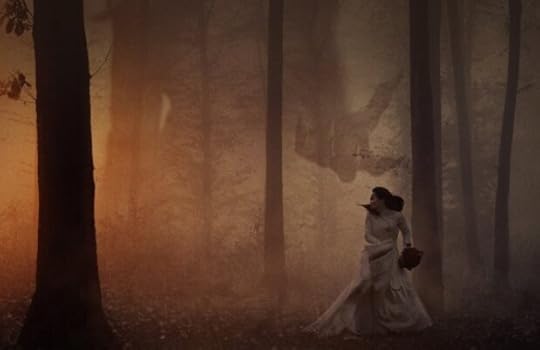
"“A ghost is something that fills a hole inside you, where you lost something. It’s a memory. Sometimes it can be painful, and sometimes it can be scary . Sometimes it’s hard to tell where the ghost ends and real life begins."
⭐⭐⭐⭐3/4
Initial Thoughts
North American Lake Monsters is not an encyclopedia for identifying various types of beasties, but actually an award winning collection of horror short stories by Nathan Ballingrud. One of the most exciting emerging talents in the genre, I was blown away by his other collection Wounds: Six Stories from the Border of Hell. Needless to say it didn't take me long to get fired into his other major publication, which inspired the series "Monsterland" on Hulu.
I've always loved good dark fantasy and horror and that's exactly what this author is serving up with some exquisite prose blended in. But would it live up to the very high standards set in Wounds?
The Stories
There's a lot on offer throughout this collection in terms of subject and themes. There's romance, tragedy, despair, hope and of course monsters both supernatural and the human variety.
Ballingrud gives us a variety of working-class people that are placed in a variety of strange and often horrifying situations that severely alter their perceptions of reality. Tearing at the very fabric of their bleak and stagnant lives. Some rise above the mire while other sink and drown but its always fascinating to stand back to see what is left for each character at the end.
What follows is a quick overview of each story. Nothing spoilery. Just a little taste of what's in store for you lucky blighters...
You Go Where it Takes You
It's a solid start to the collection with this one. A waitress and single mother is watching her life fracture and fall to pieces when a friendly but dangerous looking customer offers to take her out.b
"She’s like a thousand different people right now, all waiting to be, and every time she makes a choice, one of those people goes away forever. Until finally you run out of choices and you are whoever you are."
When she takes him up on the offer it's soon revealed he is holding a dark and shocking secret that may spell danger for her and her young daughter...or something else. Certainly not my favourite but a memorable story nonetheless that sets the tone for what's to come.
Wild Acre
One of the stars of the show. A werewolf tale with a twist. In this one the reader has limited exposure to the savage beast as the bulk of the story deals with the aftermath and post traumatic stress of the attack. Our main character is racked with guilt after the fateful night and we see the emotional turmoil and psychological damage that wreaks havoc on his personal life.
"He knew he had to say something, he had to try to explain himself here, or someday she would leave. Maybe someday soon . But the fear was too tight; it wouldn’t let him speak. It would barely let him breathe."
It's a very fresh take as we see the protagonist become the monster in this one as he struggles to keep his head above water and spirals into a dark way of thinking that leads towards violence.
S.S.
Although not one of the best, I really enjoyed this one. Particularly for the character work and relationships that developed.
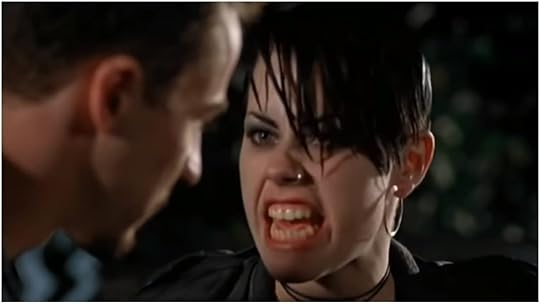
It's a pretty disturbing story with strong vibes of American History X, that tackles racism in the form of white supremacism. A young man gets involved with the wrong group when he begins to fall for a female gang member. It's a manipulative relationship as she uses his affection to draw him in with a bunch of ultra-violent neo-nazis. Ballingrud adds a real human element, as he does with all his characters, that makes for an uncomfortable read. The horror in this one is truly the depressing existence due to the day to day tragedy that those involved endure, although there is a rare element of hope.
Crevasse
Definitely one of my favourites. Lovecraftian style horror in the Arctic circle that has vibes of "The Thing". When a group of explorers experience trouble on their expedition things go from bad to worse. While overcoming a serious injury to one of their party one of the characters discovers that maybe there is more under the ice than they believe.
"He was transported by fear and adrenaline and by something else, by some other emotion he had not felt in many years or perhaps ever in his life, some heart-filling glorious exaltation that threatened to snuff him out like a dying cinder."
The Monsters of Heaven
This one was one was one of my least favourite but still a pretty good story. There's not a bad one amongst them. Surreal and very imaginative premise, the story follows Brian, who has lost his son, and is going through a marital breakdown. Meanwhile, there's a bunch of strange creatures that resemble angels falling from the sky. When Brian encounters one in a dark alley our story takes an unexpected turn.
Sunbleached
Another fantastic story, this one a vampire tale that brings something a little bit different to the table. Readers will recognise the theme of disaffected tempted by the mysterious power that these creatures of the night can offer. But there is something sinister and dark in play in this one, not in anyway the romantic nonsense you see in Twilight, and I loved the way this one played out. Be careful who you make your deals with and all that.
North American Lake Monster
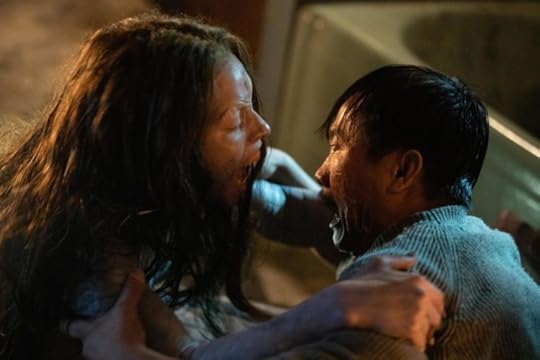
The title story gave me an insight into the life of a troubled ex-con, released from prison, attempting to reintegrate with his family. The man spends the first view days on vacation at a cabin, but events are from idyllic as he struggles to adapt to family life. The supernatural element comes when his teenage daughter discovers a weird looking monster on the shore of the local lake. But this story, like the others, is about more than horror as the focus is on the interpersonal relationships with excellent characterisation. Thoroughly enjoyed.
"No chainsaw was evident, but he did find an axe leaning against the wall behind a rusting lawnmowers. He reached gingerly through a shroud of webs, wary of spiders, and grasped the handle. He pulled it out, trailing dust and ghostly banners."
The Way Station
Probably my least favourite of the bunch. The writing as always is top notch but I didn't find the story that engaging. It doesn’t really follow a particular horror theme and is very surreal and somewhat dreamlike. A homeless man, haunted by the past, is on a mission to find his long lost daughter.
The Good Husband
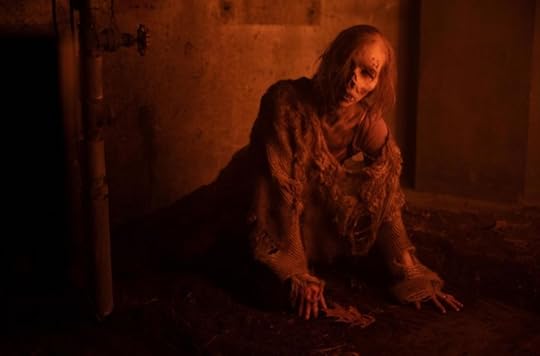
There's a lot of strong stories in this one. But if I had to pick one then the Good Husband is the one. Talk about saving the best till last. This one is equal parts creepy, disturbing and disgusting. When a man's wife, who is struggling with depression, attempts to commit suicide he stands back and does…nothing. Quite a story hey? But this only the beginning as there is a rapid descent into darkness that I don't want to give you any clues about. It would spoil the surprise.
The Writing
As I talked about in my review of Wounds, Ballingrud is a cut above most other authors in the genre when it comes to literary talent. His writing is impeccable with gorgeous and sublime description, painting some vivid images, that pulls you in. He has a real talent for slowly building suspense before ramping up the tension toward the finish.
Each of the stories is infused with some heavy emotional content and the author has a real talent for making the reader feel. The focus is not on the horror but fully on the characters and locations where it's all going down. A technique mastered by my man, the magnificent Stephen King. By doing this, when the horror actually hits it’s all the more effective as the level of investment has been built up with the reader.
The Characters
I don't usually focus on the characters in short story collection but they really are the stars of the show in this one. I've already touched on how life is breathed into a cast of blue-collar personalities and places them in some of the best horror fiction on the market. Each is written with a real sense of authenticity that makes them believable and their motivations appear very realistic, which is exactly what I want as a reader.
Final Thoughts
Was this collection as good as Wounds?...not quite. But this is still an absolutely sensational collection of short stories. A firm recommendation from yours truly.
Just like his other collection, Ballingrud has a running theme. This time it's broken men and women attempting to live in a hostile world. These are people right at the bottom of the barrel and the author scrapes away at it to leave us with something special.
It's one of the best horror short story collections published during the last couple of years. Ballingrud’s intense focus makes these stories incredibly intense and irresistible. Despair saturates these tales is rich, and is even more horrifying than anything supernatural. It really is like watching a car accident and not being able to peel your eyes away from the disturbing scenes. Isn't that what horror is all about?
4.75 stars and simply because it was not quite as good as Wounds. Read it now and read it quick. Thanks for reading. Cheers!

October 6, 2020
“Do you think it’s possible for something beautiful to come out of an awful thing?”
Holy. Cow.
I had seen this book bounce around my GR feed for a while. It had caught my eye because of the title: I do love lake monster stories, but I think I was a bit miffed this wasn’t a compendium of such stories, and ignored it for a bit. Then, I saw Laird Barron blurbed it, and because I am basically a sucker for books my favorite authors recommend, I put a copy on my Spooktober pile. And now I am sitting here, a little stunned and in awe of the beautiful writing and bone-chilling stories I have just read.
I love that Ballingrud only gives his readers a tiny glimpse of the supernatural in these stories: monsters are scary, sure, but the fucked up things that dwell in the human heart and mind are way, way more terrifying – and he knows that. His protagonists are usually the working poor that America wishes it could hide better, and the bleak lives they lead, where desperation and fear pushes them into the darkest corners of their being. What is a monster, really, if not a person who’s humanity was stripped away slowly over time until they can’t even see themselves as human anymore?
As pointed out by some reviews, there is a recurring theme of masculinity, or rather what does it mean to be a man in some extreme circumstances: aren't they supposed to be strong, to protect, care for and provide for their families and friends? What does it mean when they can't do that?
The prose is beautiful, the atmosphere of each story cloying and claustrophobic, the characters' anxieties palpable, the open endings deeply unsettling. Thank god these are short stories, because dragging them on any longer would give you road rash. If you like bleak stories, existential horror and enjoy the kind of stuff that Thomas Ligotti, Laird Barron and John Langan write, do yourself a favor, and get a copy of this book immediately. 5 dark, devastating stars.
**
I watched the Hulu series "Monsterland", based on and inspired by the stories in this collection, and if you enjoyed this book, you should definitely check it out. There are few exact adaptations to the stories ("You Go Where it Takes You" and "The Good Husband" are adapted fairly faithfully), but the other episodes are just as powerful, bleak and disturbing as the Ballingrud's writing. The use of the supernatural as a simple highlight of the human monsters is used skillfully in every episode, from the one about how easy it is to radicalize disenfranchised young people online to the one about the oil magnate responsible for a devastating spill. The villains are human, and the creatures are only there to make them realize it. This show is not always easy to watch (it gets graphic and some of the situations are incredibly depressing) but it is beautiful in the same way these short stories are, because they are raw and intense and force you to think.
Holy. Cow.
I had seen this book bounce around my GR feed for a while. It had caught my eye because of the title: I do love lake monster stories, but I think I was a bit miffed this wasn’t a compendium of such stories, and ignored it for a bit. Then, I saw Laird Barron blurbed it, and because I am basically a sucker for books my favorite authors recommend, I put a copy on my Spooktober pile. And now I am sitting here, a little stunned and in awe of the beautiful writing and bone-chilling stories I have just read.
I love that Ballingrud only gives his readers a tiny glimpse of the supernatural in these stories: monsters are scary, sure, but the fucked up things that dwell in the human heart and mind are way, way more terrifying – and he knows that. His protagonists are usually the working poor that America wishes it could hide better, and the bleak lives they lead, where desperation and fear pushes them into the darkest corners of their being. What is a monster, really, if not a person who’s humanity was stripped away slowly over time until they can’t even see themselves as human anymore?
As pointed out by some reviews, there is a recurring theme of masculinity, or rather what does it mean to be a man in some extreme circumstances: aren't they supposed to be strong, to protect, care for and provide for their families and friends? What does it mean when they can't do that?
The prose is beautiful, the atmosphere of each story cloying and claustrophobic, the characters' anxieties palpable, the open endings deeply unsettling. Thank god these are short stories, because dragging them on any longer would give you road rash. If you like bleak stories, existential horror and enjoy the kind of stuff that Thomas Ligotti, Laird Barron and John Langan write, do yourself a favor, and get a copy of this book immediately. 5 dark, devastating stars.
**
I watched the Hulu series "Monsterland", based on and inspired by the stories in this collection, and if you enjoyed this book, you should definitely check it out. There are few exact adaptations to the stories ("You Go Where it Takes You" and "The Good Husband" are adapted fairly faithfully), but the other episodes are just as powerful, bleak and disturbing as the Ballingrud's writing. The use of the supernatural as a simple highlight of the human monsters is used skillfully in every episode, from the one about how easy it is to radicalize disenfranchised young people online to the one about the oil magnate responsible for a devastating spill. The villains are human, and the creatures are only there to make them realize it. This show is not always easy to watch (it gets graphic and some of the situations are incredibly depressing) but it is beautiful in the same way these short stories are, because they are raw and intense and force you to think.

November 15, 2016
I was thinking long and hard about whether to give this 2 or 3 stars. I'm aware I'm in the absolute minority since most reviewers are absolutely in love with this short story collection. But no matter how hard I tried, I just couldn't see what was supposedly so special about these stories.
I'm not even questioning if the voices were authentic. However, there was no actual horror, I wasn't even grossed-out as I apparently was supposed to sometimes.
The stories are full of awful creatures, sometimes with a supernatural element, often not. That in itself is nothing bad, quite the contrary. However, apart from the occasional vampire and werewolf we mostly get African American "gangstas", rednecks, white trash, ... and there is only so much of that kind of people and their talk I can take. Thus, this book just made me feel one thing: disgust at certain people and their stupidity and weakness. Don't get me wrong: I give many people a lot of credit for not having it easy. But my understanding and sympathy only go so far, especially when there is no actual drive in the respective people to get a better life (). Or maybe it's just that the American South isn't for me?!
I really don't know what it was about this book. Usually I like noir and/or bleak stories, but neither the writing (although sometimes atmospheric), nor any of the story elements / characters made me connect to ANYTHING and I was so glad to finally be done with this.
I'm not even questioning if the voices were authentic. However, there was no actual horror, I wasn't even grossed-out as I apparently was supposed to sometimes.
The stories are full of awful creatures, sometimes with a supernatural element, often not. That in itself is nothing bad, quite the contrary. However, apart from the occasional vampire and werewolf we mostly get African American "gangstas", rednecks, white trash, ... and there is only so much of that kind of people and their talk I can take. Thus, this book just made me feel one thing: disgust at certain people and their stupidity and weakness. Don't get me wrong: I give many people a lot of credit for not having it easy. But my understanding and sympathy only go so far, especially when there is no actual drive in the respective people to get a better life (). Or maybe it's just that the American South isn't for me?!
I really don't know what it was about this book. Usually I like noir and/or bleak stories, but neither the writing (although sometimes atmospheric), nor any of the story elements / characters made me connect to ANYTHING and I was so glad to finally be done with this.

February 25, 2024
"Inutile perdere tempo a descrivere la realtà, dato che tutto quanto si potrebbe concepire di ordinario e disadorno è già stato pensato e detto migliaia di volte. Il banale, prosaico mondo dei sentimenti e degli eventi comuni è già stato compilato così bene che non rimane nulla di significativo da aggiungere" H.P.Lovecraft
Questo "North American Lake Monsters" raccoglie nove oscuri racconti di vita quotidiana focalizzando l'attenzione sui problemi domestici ambientati perlopiù nelle periferie cittadine Americane.
Ai temi proposti aggiunge anche un pizzico di weird, così troviamo, tra drammi familiari, ombre di lupi mannari, alieni, vampiri nei sottoscala.
La forza narrativa è sicuramente nelle relazioni interpersonali rese benissimo, mentre le parti puramente weird di questi racconti mi sono sembrate superflue e non migliorano il testo, ne sono quasi estranee.
Questa è stata la mia sensazione a fine lettura, senza nulla togliere alla qualità dei singoli racconti e alla loro buona esposizione ma cercavo un weird ed ho trovato problemi familiari. Se cerco un weird sono d'accordo con le parole di H.P.L e voglio un weird.
----------------------
"It is useless to waste time describing reality, since everything that could be conceived of as ordinary and unadorned has already been thought and said thousands of times. The banal, prosaic world of ordinary feelings and events has already been so well compiled that there is nothing significant left to add" H.P.Lovecraft
This "North American Lake Monsters" collects nine dark tales of everyday life focusing on domestic problems set mostly in America's urban suburbs.
He also adds a dash of the weird to the proposed themes, so we find, among family dramas, shadows of werewolves, aliens, and vampires in the basements.
The narrative strength is definitely in the interpersonal relationships rendered beautifully, while the purely weird parts of these stories seemed to me superfluous and do not enhance the text, they are almost alien to it.
This was my feeling at the end of reading, without detracting from the quality of the individual stories and their good exposition but I was looking for a weird and found familiar problems. If I am looking for a weird I agree with H.P.L's words and want a weird.
Questo "North American Lake Monsters" raccoglie nove oscuri racconti di vita quotidiana focalizzando l'attenzione sui problemi domestici ambientati perlopiù nelle periferie cittadine Americane.
Ai temi proposti aggiunge anche un pizzico di weird, così troviamo, tra drammi familiari, ombre di lupi mannari, alieni, vampiri nei sottoscala.
La forza narrativa è sicuramente nelle relazioni interpersonali rese benissimo, mentre le parti puramente weird di questi racconti mi sono sembrate superflue e non migliorano il testo, ne sono quasi estranee.
Questa è stata la mia sensazione a fine lettura, senza nulla togliere alla qualità dei singoli racconti e alla loro buona esposizione ma cercavo un weird ed ho trovato problemi familiari. Se cerco un weird sono d'accordo con le parole di H.P.L e voglio un weird.
----------------------
"It is useless to waste time describing reality, since everything that could be conceived of as ordinary and unadorned has already been thought and said thousands of times. The banal, prosaic world of ordinary feelings and events has already been so well compiled that there is nothing significant left to add" H.P.Lovecraft
This "North American Lake Monsters" collects nine dark tales of everyday life focusing on domestic problems set mostly in America's urban suburbs.
He also adds a dash of the weird to the proposed themes, so we find, among family dramas, shadows of werewolves, aliens, and vampires in the basements.
The narrative strength is definitely in the interpersonal relationships rendered beautifully, while the purely weird parts of these stories seemed to me superfluous and do not enhance the text, they are almost alien to it.
This was my feeling at the end of reading, without detracting from the quality of the individual stories and their good exposition but I was looking for a weird and found familiar problems. If I am looking for a weird I agree with H.P.L's words and want a weird.

December 26, 2020
WELCOME TO DECEMBER PROJECT!
this explanation/intro will be posted before each day’s short story. scroll down to get to the story-review.
this is the FIFTH year of me doing a short story advent calendar as my december project. for those of you new to me or this endeavor, here’s the skinny: every day in december, i will be reading a short story that is 1) available free somewhere on internet, and 2) listed on goodreads as its own discrete entity. there will be links provided for those of you who like to read (or listen to) short stories for free, and also for those of you who have wildly overestimated how many books you can read in a year and are freaking out about not meeting your 2020 reading-challenge goals. i have been gathering links all year when tasty little tales have popped into my feed, but i will also accept additional suggestions, as long as they meet my aforementioned 1), 2) standards, because i have not compiled as many as usual this year.
IN ADDITION, this may be the last year i do this project since GR has already deleted the pages for several of the stories i've read in previous years without warning, leaving me with a bunch of missing reviews and broken links, which makes me feel shitty. because i don't have a lot of time to waste, i'm not going to bother writing much in the way of reviews for these, in case gr decides to scrap 'em again. 2020 has left me utterly wrung out and i apologize for what's left of me. i am doing my best.
DECEMBER 26: THE MONSTERS OF HEAVEN - NATHAN BALLINGRUD
well, that's peace on earth/good will toward men come to a close. holiday cheer has been emphatically cancelled by this story. yeesh.
read it for free here
DECEMBER 1: PG - COURTNEY SUMMERS
DECEMBER 2: THE JUMPING MONKEY HILL - CHIMAMANDA NGOZI ADICHIE
DECEMBER 3: ORIGIN STORY - T. KINGFISHER
DECEMBER 4: THE GREAT SILENCE - TED CHIANG
DECEMBER 5: A CLEAN SWEEP WITH ALL THE TRIMMINGS
DECEMBER 6: BORED WORLD - ANDY WEIR
DECEMBER 7: VAMPIRE - ROBERT COOVER
DECEMBER 8: A STATEMENT IN THE CASE - THEODORA GOSS
DECEMBER 9: STET - SARAH GAILEY
DECEMBER 10: MARGOT'S ROOM: EMILY CARROLL
DECEMBER 11: HORROR STORY - CARMEN MARIA MACHADO
DECEMBER 12: TERRAIN - GENEVIEVE VALENTINE
DECEMBER 13: IF AT FIRST YOU DON'T SUCCEED, TRY, TRY AGAIN - ZEN CHO
DECEMBER 14: GHOUL - GEORGE SAUNDERS
DECEMBER 15: DURING THE DANCE - MARK LAWRENCE
DECEMBER 16: CLEARING THE BONES - CELESTE NG
DECEMBER 17: THE WAITER'S WIFE - ZADIE SMITH
DECEMBER 18: DEMOLITION - FIONA MCFARLANE
DECEMBER 19: NO PERIOD - HARRY TURTLEDOVE
DECEMBER 20: DON'T LEAVE ME ALONE - GG
DECEMBER 21: RUB-A-DUB-DUB - TONY MILLIONAIRE
DECEMBER 22: HANSA AND GRETYL AND PIECE OF SHIT - REBECCA CURTIS
DECEMBER 23: BRIDESICLE - WILL MCINTOSH
DECEMBER 24: I, CTHULHU, OR, WHAT'S A TENTACLE-FACED THING LIKE ME DOING IN A SUNKEN CITY LIKE THIS (LATITUDE 47° 9' S, LONGITUDE 126° 43' W)? - NEIL GAIMAN
DECEMBER 25: CHRISTMAS TALE - MARK LAWRENCE
DECEMBER 27: TWO DREAMS ON TRAINS - ELIZABETH BEAR
DECEMBER 28: THE MARTIANS CLAIM CANADA - MARGARET ATWOOD
DECEMBER 29: UNDER THE WAVE - LAUREN GROFF
DECEMBER 30: MR. SALARY - SALLY ROONEY
DECEMBER 31: A/S/L - EMMA CLINE
 come to my blog!
this explanation/intro will be posted before each day’s short story. scroll down to get to the story-review.
this is the FIFTH year of me doing a short story advent calendar as my december project. for those of you new to me or this endeavor, here’s the skinny: every day in december, i will be reading a short story that is 1) available free somewhere on internet, and 2) listed on goodreads as its own discrete entity. there will be links provided for those of you who like to read (or listen to) short stories for free, and also for those of you who have wildly overestimated how many books you can read in a year and are freaking out about not meeting your 2020 reading-challenge goals. i have been gathering links all year when tasty little tales have popped into my feed, but i will also accept additional suggestions, as long as they meet my aforementioned 1), 2) standards, because i have not compiled as many as usual this year.
IN ADDITION, this may be the last year i do this project since GR has already deleted the pages for several of the stories i've read in previous years without warning, leaving me with a bunch of missing reviews and broken links, which makes me feel shitty. because i don't have a lot of time to waste, i'm not going to bother writing much in the way of reviews for these, in case gr decides to scrap 'em again. 2020 has left me utterly wrung out and i apologize for what's left of me. i am doing my best.
DECEMBER 26: THE MONSTERS OF HEAVEN - NATHAN BALLINGRUD
well, that's peace on earth/good will toward men come to a close. holiday cheer has been emphatically cancelled by this story. yeesh.
read it for free here
DECEMBER 1: PG - COURTNEY SUMMERS
DECEMBER 2: THE JUMPING MONKEY HILL - CHIMAMANDA NGOZI ADICHIE
DECEMBER 3: ORIGIN STORY - T. KINGFISHER
DECEMBER 4: THE GREAT SILENCE - TED CHIANG
DECEMBER 5: A CLEAN SWEEP WITH ALL THE TRIMMINGS
DECEMBER 6: BORED WORLD - ANDY WEIR
DECEMBER 7: VAMPIRE - ROBERT COOVER
DECEMBER 8: A STATEMENT IN THE CASE - THEODORA GOSS
DECEMBER 9: STET - SARAH GAILEY
DECEMBER 10: MARGOT'S ROOM: EMILY CARROLL
DECEMBER 11: HORROR STORY - CARMEN MARIA MACHADO
DECEMBER 12: TERRAIN - GENEVIEVE VALENTINE
DECEMBER 13: IF AT FIRST YOU DON'T SUCCEED, TRY, TRY AGAIN - ZEN CHO
DECEMBER 14: GHOUL - GEORGE SAUNDERS
DECEMBER 15: DURING THE DANCE - MARK LAWRENCE
DECEMBER 16: CLEARING THE BONES - CELESTE NG
DECEMBER 17: THE WAITER'S WIFE - ZADIE SMITH
DECEMBER 18: DEMOLITION - FIONA MCFARLANE
DECEMBER 19: NO PERIOD - HARRY TURTLEDOVE
DECEMBER 20: DON'T LEAVE ME ALONE - GG
DECEMBER 21: RUB-A-DUB-DUB - TONY MILLIONAIRE
DECEMBER 22: HANSA AND GRETYL AND PIECE OF SHIT - REBECCA CURTIS
DECEMBER 23: BRIDESICLE - WILL MCINTOSH
DECEMBER 24: I, CTHULHU, OR, WHAT'S A TENTACLE-FACED THING LIKE ME DOING IN A SUNKEN CITY LIKE THIS (LATITUDE 47° 9' S, LONGITUDE 126° 43' W)? - NEIL GAIMAN
DECEMBER 25: CHRISTMAS TALE - MARK LAWRENCE
DECEMBER 27: TWO DREAMS ON TRAINS - ELIZABETH BEAR
DECEMBER 28: THE MARTIANS CLAIM CANADA - MARGARET ATWOOD
DECEMBER 29: UNDER THE WAVE - LAUREN GROFF
DECEMBER 30: MR. SALARY - SALLY ROONEY
DECEMBER 31: A/S/L - EMMA CLINE
come to my blog!
November 11, 2024
4.5 stars
(originally published as North American Lake Monsters)
short review for busy readers: A standout collection of 9 supernatural-spiked, literary horror stories focusing on the emotional terrors of working class people in the American South. Insanely well-written and focused, this collection -- while having some stomach-turning moments -- contains four 5-star stories and two 4-star stories, IMHO. A rarity!
*trigger warning: animal death, necrophilia, racist propaganda speech.
in detail:
Many of the horrific events or situations in this collection can (and should) be read metaphorically. We are not *literally* seeing a werewolf or a dying alien or a box full of human skins. These creatures/items are symbolic of the chaotic, wildly uncontrollable meta situations the main characters find themselves in.
Most of these characters are male, floundering in waters they do not have the experience nor emotional skills to deal with. They are angry, confused, obsessed, terrified or simply too exhausted to handle the deep horror of what's occurring. They try, and fail. The monsters get the better of them, and only few escape...
Here's a run down of each individual story...
1.You Go Where It Takes You: 5 stars. A young, down-on-her-luck single mom & waitress meets a mysterious man who has 97 complete human skins neatly folded in boxes in his car. He can cut off his own skin and put on one of the new ones any time: but it hurts. What about her? Does have the courage to cut away her skin and put on a new one, too?
2.Wild Acre: 4 stars. A literal interpretation of the saying "the wolf at the door". Two workmen of a failing construction company are ripped by a werewolf on a new housing project site. The owner sees it happen and falls apart, unable to save himself or the dead men's families from financial and emotional ruin.
3. S.S.: 2.5 stars. The only story that didn't land for me. A teen boy with an extremely difficult home life wants to join a small white supremacist club to cure his feelings of inadequacy and win the racist girl he's enamoured with. The club's beliefs and ingrained hatred are more nauseating than the horror elements here.
4. The Crevasse: 4 stars. Historic Lovecraftian piece set in Antarctica with a team of explorers transporting an injured man to the nearest safe station. En route, one of the dog sleds ploughs into a crevasse in the ice where some giant stairs and an unknown horror is discovered. Somewhat confused despite everything...but a pretty good Lovecraft scenario!
5. The Monsters of Heaven: 5 stars. An emotionally distressed couple whose young child was abducted from a playground reads about the finding of a number of luminous, injured humanoid beings with strange powers. What will happen when they accidentally find one themselves?
6. Sunbleached: 5 stars. **The best vampire story I've ever read!** A teen boy living in a hurricane ravaged home with his single mom and little brother sees an injured vampire crawl under the house for shelter. He refuses to let the vamp into the house proper in order to protect his family, but allows the vamp to turn him into a vampire, too. Needless to say, it doesn't turn out exactly like the boy planned!
7. North American Lake Monsters: 3.5 stars. A father recently released from prison attempts to re-engage with his wife and daughter and re-establish his control of the family at a lakeside cabin. The daughter finds a beached, huge rotting lake monster on the shore and shows it to her father...who doesn't react well.
8. The Way Station: 5 stars. An aged homeless man flees to Florida to find his estranged daughter but continues to be haunted by the destruction of New Orleans in Hurricane Katrina where he lost the few fixed points of his existence. Wonderfully surreal and powerfully invoked. (no classic horror elements in this one)
9. The Good Husband: 5 stars. A chronically depressed and suicidal woman kills herself in the bathtub while her husband sleeps. Unable to deal with the situation, he makes no attempt to save her and goes on as normal...until the wife rises from the tub and continues her determined path to oblivion as a slowly disintegrating, but fully animated corpse...who now that she's come back, the husband simply can't let go again.
(originally published as North American Lake Monsters)
short review for busy readers: A standout collection of 9 supernatural-spiked, literary horror stories focusing on the emotional terrors of working class people in the American South. Insanely well-written and focused, this collection -- while having some stomach-turning moments -- contains four 5-star stories and two 4-star stories, IMHO. A rarity!
*trigger warning: animal death, necrophilia, racist propaganda speech.
in detail:
Many of the horrific events or situations in this collection can (and should) be read metaphorically. We are not *literally* seeing a werewolf or a dying alien or a box full of human skins. These creatures/items are symbolic of the chaotic, wildly uncontrollable meta situations the main characters find themselves in.
Most of these characters are male, floundering in waters they do not have the experience nor emotional skills to deal with. They are angry, confused, obsessed, terrified or simply too exhausted to handle the deep horror of what's occurring. They try, and fail. The monsters get the better of them, and only few escape...
Here's a run down of each individual story...
1.You Go Where It Takes You: 5 stars. A young, down-on-her-luck single mom & waitress meets a mysterious man who has 97 complete human skins neatly folded in boxes in his car. He can cut off his own skin and put on one of the new ones any time: but it hurts. What about her? Does have the courage to cut away her skin and put on a new one, too?
2.Wild Acre: 4 stars. A literal interpretation of the saying "the wolf at the door". Two workmen of a failing construction company are ripped by a werewolf on a new housing project site. The owner sees it happen and falls apart, unable to save himself or the dead men's families from financial and emotional ruin.
3. S.S.: 2.5 stars. The only story that didn't land for me. A teen boy with an extremely difficult home life wants to join a small white supremacist club to cure his feelings of inadequacy and win the racist girl he's enamoured with. The club's beliefs and ingrained hatred are more nauseating than the horror elements here.
4. The Crevasse: 4 stars. Historic Lovecraftian piece set in Antarctica with a team of explorers transporting an injured man to the nearest safe station. En route, one of the dog sleds ploughs into a crevasse in the ice where some giant stairs and an unknown horror is discovered. Somewhat confused despite everything...but a pretty good Lovecraft scenario!
5. The Monsters of Heaven: 5 stars. An emotionally distressed couple whose young child was abducted from a playground reads about the finding of a number of luminous, injured humanoid beings with strange powers. What will happen when they accidentally find one themselves?
6. Sunbleached: 5 stars. **The best vampire story I've ever read!** A teen boy living in a hurricane ravaged home with his single mom and little brother sees an injured vampire crawl under the house for shelter. He refuses to let the vamp into the house proper in order to protect his family, but allows the vamp to turn him into a vampire, too. Needless to say, it doesn't turn out exactly like the boy planned!
7. North American Lake Monsters: 3.5 stars. A father recently released from prison attempts to re-engage with his wife and daughter and re-establish his control of the family at a lakeside cabin. The daughter finds a beached, huge rotting lake monster on the shore and shows it to her father...who doesn't react well.
8. The Way Station: 5 stars. An aged homeless man flees to Florida to find his estranged daughter but continues to be haunted by the destruction of New Orleans in Hurricane Katrina where he lost the few fixed points of his existence. Wonderfully surreal and powerfully invoked. (no classic horror elements in this one)
9. The Good Husband: 5 stars. A chronically depressed and suicidal woman kills herself in the bathtub while her husband sleeps. Unable to deal with the situation, he makes no attempt to save her and goes on as normal...until the wife rises from the tub and continues her determined path to oblivion as a slowly disintegrating, but fully animated corpse...who now that she's come back, the husband simply can't let go again.

March 7, 2022
1. Yes, it is true that none of these nine stories made it onto the P Bryant List of All Time Favourite Stories, but Nathan Ballingrad shouldn’t feel disconsolate. Droves of famous authors have banged at the gates of that List and been turned away.
2. This was one of those collections where the whole thing evoked this very cool unexpected gruesome original vibe. Vibe is not a word I normally throw around but here it is inescapable. This book is vibey, vibacious, vibalicious.
3. These days, after everything that’s happened, you know, everything, horror stories must be tough to write without sounding silly. Mr Ballingrad is not just not silly, he is elegant, which is the opposite.
4. I like that he takes some modern urban story, like a guy just out of prison after a six year stretch trying to get back together with his wife, and smashes something weird into the middle of it, like an angel or a lake monster, which never get any explanation. I guess these creatures could be symbols or sumpin but let’s not go down that dreary road. I want a dying angel in a story to be a dying angel!
5. There’s only one single lake monster in this book, so if you don’t like lake monster stories that shouldn’t put you off.
2. This was one of those collections where the whole thing evoked this very cool unexpected gruesome original vibe. Vibe is not a word I normally throw around but here it is inescapable. This book is vibey, vibacious, vibalicious.
3. These days, after everything that’s happened, you know, everything, horror stories must be tough to write without sounding silly. Mr Ballingrad is not just not silly, he is elegant, which is the opposite.
4. I like that he takes some modern urban story, like a guy just out of prison after a six year stretch trying to get back together with his wife, and smashes something weird into the middle of it, like an angel or a lake monster, which never get any explanation. I guess these creatures could be symbols or sumpin but let’s not go down that dreary road. I want a dying angel in a story to be a dying angel!
5. There’s only one single lake monster in this book, so if you don’t like lake monster stories that shouldn’t put you off.

July 2, 2025
In his award-winning debut collection Nathan Ballingrud is intent on exposing faultlines in personal relationships; laying bare, as he puts it, the love that warps and makes monsters of us all – underlined by his choice of preface, an extract from Graham Greene’s angst-ridden The End of the Affair. With the notable exception of co-authored “The Crevasse,” Ballingrud’s primary focus is on working-class Americans, mainly blue-collar, mainly men. People subsisting on the outer edges of their communities: from the alienated teens featured in “S. S.” and “Sunbleached” to ex-cons, and women working minimum-wage jobs. Toxic masculinity’s rife but so is trauma, intense grief and overwhelming emotions that threaten to manifest through brutal acts of violence. These aspects of his work have stirred comparisons between Ballingrud and writers like Raymond Carver. But, rather than ‘dirty realism’, Ballingrud’s territory is the weird, surreal or horrific – and uncanny spaces in between. Ballingrud splices slice-of-life scenarios with more conventionally supernatural material: werewolves, vampires, alien/heavenly creatures. It’s an intriguing approach but I wasn’t always convinced by the end results. Ballingrud’s abrupt transitions and juxtapositions could be unusually productive as in the deeply unsettling “You Go Where It Takes You.” But could also feel awkwardly sutured, distinctly uneven, the title story is a prime example.
I appreciated Ballingrud’s emphasis on the marginalised and the dispossessed. But I found the absence of sustained political commentary frustrating. His narratives have a fatalistic slant which undermines an implied critique of American society. Transformation or metamorphosis was a recurring theme yet yielded no tangible results or benefits: a pact with a vampire leads to a devastating betrayal; an encounter with the beached remnants of an ancient monster is a metaphor for a father’s inability to forge meaningful relationships. Ballingrud's protagonists were often sympathetic but could also verge on stereotypical: the down-on-her-luck waitress struggling to raise her daughter on her own; the angry, impoverished adolescent boy who flirts with joining a neo-Nazi cult. Ballingrud’s a skilful writer who veers between complex imagery, carefully-crafted sentences and a more visceral, visual style – it was no surprise to find his book inspired a TV mini-series Monsterland. His scenes can be arrestingly atmospheric but equally they can be economical, terse even. One of the standouts for me was “The Crevasse” even though it left me wanting more. It revolves around an ill-omened expedition to the Antarctic just after WW1. Deliberately Lovecraftian, cosmic horror deftly combined with echoes of Algernon Blackwood, John Carpenter’s The Thing and Ridley Scott’s Prometheus. Overall, worth the time but not as memorable as I’d hoped.
Thanks to Netgalley and publisher New Ruins for an ARC
I appreciated Ballingrud’s emphasis on the marginalised and the dispossessed. But I found the absence of sustained political commentary frustrating. His narratives have a fatalistic slant which undermines an implied critique of American society. Transformation or metamorphosis was a recurring theme yet yielded no tangible results or benefits: a pact with a vampire leads to a devastating betrayal; an encounter with the beached remnants of an ancient monster is a metaphor for a father’s inability to forge meaningful relationships. Ballingrud's protagonists were often sympathetic but could also verge on stereotypical: the down-on-her-luck waitress struggling to raise her daughter on her own; the angry, impoverished adolescent boy who flirts with joining a neo-Nazi cult. Ballingrud’s a skilful writer who veers between complex imagery, carefully-crafted sentences and a more visceral, visual style – it was no surprise to find his book inspired a TV mini-series Monsterland. His scenes can be arrestingly atmospheric but equally they can be economical, terse even. One of the standouts for me was “The Crevasse” even though it left me wanting more. It revolves around an ill-omened expedition to the Antarctic just after WW1. Deliberately Lovecraftian, cosmic horror deftly combined with echoes of Algernon Blackwood, John Carpenter’s The Thing and Ridley Scott’s Prometheus. Overall, worth the time but not as memorable as I’d hoped.
Thanks to Netgalley and publisher New Ruins for an ARC

July 6, 2013
I try to read a short story every day, so I burn through a lot of collections each year. This one was special. I really looked forward to picking it up each morning because I never knew what to expect. Would it be a tale about the aftermath of a werewolf attack? A fugitive vampire being harbored by a vengeful teen? (And, incidentally, probably THE BEST DAMNED VAMPIRE STORY I'VE EVER READ!) A suicidal wife whose husband will not let her die? Vile white supremacists flexing their muscles? An Arctic expedition gone horribly wrong?
It messed with my mind and left me wanting more, more, more.
Are these stories Bizarro fiction? Fantasy? Horror?
Eh, who cares! Just know they are unique and unusual and will take you down paths you've never visited before. Even a story with a more familiar theme - a couple whose marriage begins to dissolve after their child is taken - is given a whole new spin as an "angel" appears to take the missing boy's place.
Though the subject matter is frequently disturbing, Ballingrud's writing is lovely. Read this piece from Sunbleached as the previously mentioned teenager visits with his hidden vampire:
"You believe in God?" Joshua asked. The crawlspace beneath the house was close and hot; his body was coated in a dense sheen of sweat. A cockroach crawled over his his fingers and he jerked his hand away. Late summer pressed onto this small Mississippi coastal town like the heel of a boot. The heat was an act of violence.
Mmmm....love that last line.
And, one more. This is from my favorite story, The Way Station, a stunner about a haunted Hurricane Katrina survivor who knows what it means to miss New Orleans:
He hikes the shirt up to his shoulders and discovers a large square hole in the center of his chest. The smell of bread blows from it like a wind. The edges are sharp and clean, not like a wound at all. Tentatively, he probes it with his fingers; they come away damp, and when he brings them to his nose they have the ripe, deliquescent odor of river water. He places his hand over the opening and feels water splash against his palm.
I would not hesitate to recommend this to readers looking for something cool, dark and different.
It messed with my mind and left me wanting more, more, more.
Are these stories Bizarro fiction? Fantasy? Horror?
Eh, who cares! Just know they are unique and unusual and will take you down paths you've never visited before. Even a story with a more familiar theme - a couple whose marriage begins to dissolve after their child is taken - is given a whole new spin as an "angel" appears to take the missing boy's place.
Though the subject matter is frequently disturbing, Ballingrud's writing is lovely. Read this piece from Sunbleached as the previously mentioned teenager visits with his hidden vampire:
"You believe in God?" Joshua asked. The crawlspace beneath the house was close and hot; his body was coated in a dense sheen of sweat. A cockroach crawled over his his fingers and he jerked his hand away. Late summer pressed onto this small Mississippi coastal town like the heel of a boot. The heat was an act of violence.
Mmmm....love that last line.
And, one more. This is from my favorite story, The Way Station, a stunner about a haunted Hurricane Katrina survivor who knows what it means to miss New Orleans:
He hikes the shirt up to his shoulders and discovers a large square hole in the center of his chest. The smell of bread blows from it like a wind. The edges are sharp and clean, not like a wound at all. Tentatively, he probes it with his fingers; they come away damp, and when he brings them to his nose they have the ripe, deliquescent odor of river water. He places his hand over the opening and feels water splash against his palm.
I would not hesitate to recommend this to readers looking for something cool, dark and different.

September 8, 2020
Well, I'm not surprised.
This collection blew me away.
I mean, right out of the gate this book takes a swing at your fears and lands the punch. The story, YOU GO WHERE IT TAKES YOU is aptly titled. You, the reader, are sucked into the life of Toni, a single mother with a toddler who is desperately trying to make ends meet. There's no way to know where this tale is going. Nothing can really prepare you.
There was a moment when I was reading and gasped at what I had just learned. I set the book down for a moment and my mind was reeling, "Wait, what just happened?"
And this is just the first story!
There are many monsters represented here. Ballingrud deliciously treats his audience to vampire and werewolf lore but with special nuance and emphasis given to the humans in the story-the struggle of finding happiness in adversity, adaptation to life's unfair disadvantages, and the choices people face in light of impossible circumstances.
The titular story, NORTH AMERICAN LAKE MONSTERS is a painful examination of a father's integration back into the lives of his family after being incarcerated. There are really two situations for the reader to focus on: An external mystery taking place outside the family's home and the internal turmoil of a family in transition and all the feelings that go along with that. It was beautiful and crushing at the same time with this exciting layer of immediate/urgent discovery threaded through it all. Probably my favorite story.
I truly must say that this is one of my favorite horror collections now. I believe it sets a high standard. Every single tale leaves a mark. It's no wonder the collection is being adapted for television. I, for one, am beside myself with anticipation but also reservation because my horror-loving friends, there are some scary scenes in these pages and I'm a little hesitant to see those fully realized on screen.
What an amazing time for horror. Nathan Ballingrud absolutely MUST be on your top shelf list of authors to insta-buy literally everything he puts out on the table. Stand in line if you must. His brand of horror is not to be missed.
This collection blew me away.
I mean, right out of the gate this book takes a swing at your fears and lands the punch. The story, YOU GO WHERE IT TAKES YOU is aptly titled. You, the reader, are sucked into the life of Toni, a single mother with a toddler who is desperately trying to make ends meet. There's no way to know where this tale is going. Nothing can really prepare you.
There was a moment when I was reading and gasped at what I had just learned. I set the book down for a moment and my mind was reeling, "Wait, what just happened?"
And this is just the first story!
There are many monsters represented here. Ballingrud deliciously treats his audience to vampire and werewolf lore but with special nuance and emphasis given to the humans in the story-the struggle of finding happiness in adversity, adaptation to life's unfair disadvantages, and the choices people face in light of impossible circumstances.
The titular story, NORTH AMERICAN LAKE MONSTERS is a painful examination of a father's integration back into the lives of his family after being incarcerated. There are really two situations for the reader to focus on: An external mystery taking place outside the family's home and the internal turmoil of a family in transition and all the feelings that go along with that. It was beautiful and crushing at the same time with this exciting layer of immediate/urgent discovery threaded through it all. Probably my favorite story.
I truly must say that this is one of my favorite horror collections now. I believe it sets a high standard. Every single tale leaves a mark. It's no wonder the collection is being adapted for television. I, for one, am beside myself with anticipation but also reservation because my horror-loving friends, there are some scary scenes in these pages and I'm a little hesitant to see those fully realized on screen.
What an amazing time for horror. Nathan Ballingrud absolutely MUST be on your top shelf list of authors to insta-buy literally everything he puts out on the table. Stand in line if you must. His brand of horror is not to be missed.

November 11, 2024
My overall rating came out to 3.66666667 so I’ll round it up to 4! *Yes, I’m a math nerd!* 😂🤣
First of all, there’s not many monsters in this collection in what a reader would typically think of a monster. Most of the monsters are human and tend to be very dark, violent and grim.
I enjoyed the writing in this and Nathan Ballingrud does a fantastic job on atmosphere and vibes.
I think what I struggled with the most was lack of nailing the ending with a few of the short stories. The story will build up and then sputter out at the end, at least it did for me.
Theres’s 4 stories (listed below) that could have easily been a 5 star for me if the ending had been fleshed out more.
Favorites:
The Good Husband - 4.5 stars
You Go Where It Takes You - 4 stars
Second best:
Sunbleached - 4 stars
The Way Station - 4 stars
Stories that could have been 5 stars but suffered with the ending:
The Monsters of Heaven - 4 stars
S.S. - 3.5 stars
North American Lake Monsters - 3.5 stars
Wild Acre - 3 stars
Least favorite:
The Crevasse - 2.5 stars
I do hope Ballingrud writes more in the future. He’s got tons of talent and imagination!
First of all, there’s not many monsters in this collection in what a reader would typically think of a monster. Most of the monsters are human and tend to be very dark, violent and grim.
I enjoyed the writing in this and Nathan Ballingrud does a fantastic job on atmosphere and vibes.
I think what I struggled with the most was lack of nailing the ending with a few of the short stories. The story will build up and then sputter out at the end, at least it did for me.
Theres’s 4 stories (listed below) that could have easily been a 5 star for me if the ending had been fleshed out more.
Favorites:
The Good Husband - 4.5 stars
You Go Where It Takes You - 4 stars
Second best:
Sunbleached - 4 stars
The Way Station - 4 stars
Stories that could have been 5 stars but suffered with the ending:
The Monsters of Heaven - 4 stars
S.S. - 3.5 stars
North American Lake Monsters - 3.5 stars
Wild Acre - 3 stars
Least favorite:
The Crevasse - 2.5 stars
I do hope Ballingrud writes more in the future. He’s got tons of talent and imagination!

August 31, 2013
The exceptional quality of the writing aside, what most impressed me about this collection was how the uncanny and the supernatural were used to augment stories that a chronicler of everyday tragedy and misfortune, like William Gay for example, often wrote about. At times I felt like I was reading a new approach to horror fiction, and that's a very refreshing prickle to feel across my scalp. There's a fantastic idea at the heart of every story too.
I think my favourite story is the one that is enduring most vividly in my memory, and that is the last story - THE GOOD HUSBAND. Which I think has its first publication in this volume, and ends the book to give a suggestion of the continuance of quality. SUNBLEACHED and the title story are also sublime. I read SUNBLEACHED at a time when I don't think I could take another vampire in any form but that of confectionary jelly, but this story restored and re-empowered the spectre in my imagination.
I think this is a collection of fiction that anyone who appreciates quality horror should read. Said it before, but horror fiction is in a fine place right now and it's exciting.
I think my favourite story is the one that is enduring most vividly in my memory, and that is the last story - THE GOOD HUSBAND. Which I think has its first publication in this volume, and ends the book to give a suggestion of the continuance of quality. SUNBLEACHED and the title story are also sublime. I read SUNBLEACHED at a time when I don't think I could take another vampire in any form but that of confectionary jelly, but this story restored and re-empowered the spectre in my imagination.
I think this is a collection of fiction that anyone who appreciates quality horror should read. Said it before, but horror fiction is in a fine place right now and it's exciting.

January 7, 2021
North American Lake Monsters is a collection of nine short stories by Nathan Ballingrud.
I'm not a short story fan and whatever made me throw this on my wishlist is lost in the Swiss cheese that is the mind of a father of a toddler. My wife bought me this for Christmas and I have now read it.
These stories are heavy on atmosphere and there are feelings of desperation and loss in all of them. I wouldn't exactly call them horror stories, more like human stories that are horror adjacent. A man deals with the aftermath of werewolf attack and the destruction of his business, a man fresh out of jail deals with his home life while there's a dead lake monster not far away. A man blames himself for his son's kidnapping even as he's gazing upon the corpse of an angel. I could go on.
The writing reminds me of Laird Barron's with some very poetic descriptions amidst the horror. I imagine they have some of the same influences. "... her hangover as heavy as a mantle of chains" was my favorite simile but there were countless others.
I'm not normally a fan of short story collections but I enjoyed the hell out of North American Lake Monsters. Four out of five angel carcasses.
I'm not a short story fan and whatever made me throw this on my wishlist is lost in the Swiss cheese that is the mind of a father of a toddler. My wife bought me this for Christmas and I have now read it.
These stories are heavy on atmosphere and there are feelings of desperation and loss in all of them. I wouldn't exactly call them horror stories, more like human stories that are horror adjacent. A man deals with the aftermath of werewolf attack and the destruction of his business, a man fresh out of jail deals with his home life while there's a dead lake monster not far away. A man blames himself for his son's kidnapping even as he's gazing upon the corpse of an angel. I could go on.
The writing reminds me of Laird Barron's with some very poetic descriptions amidst the horror. I imagine they have some of the same influences. "... her hangover as heavy as a mantle of chains" was my favorite simile but there were countless others.
I'm not normally a fan of short story collections but I enjoyed the hell out of North American Lake Monsters. Four out of five angel carcasses.
November 26, 2024
I have to give North American Lake Monsters five stars. I couldn't stop thinking about the stories, even now that I'm through with the book. It was a great collection that plumbs the depths of human darkness. And we have some monsters thrown in for good measure. Werewolves, vampires, and some Lovecraftian horror are very well represented here. And a very strange, yet fascinating, story about an entire city haunting a person. This is just about my speed of dark fiction. There's depravity and gore. But you also see glimmers of hope just around the edges of these dark beings.
I loved it. I see Ballingrud has another collection out there. I wonder if it's as good. I need to get my hands on it to find out.
I loved it. I see Ballingrud has another collection out there. I wonder if it's as good. I need to get my hands on it to find out.

December 8, 2025
What a dark and unsettling collection. The stories are subdued, in the sense that there is nothing over-the-top, no gut-twisting gore or anything flashy, nothing resembling a jump scare or an action set piece. But they are intense, all the same. They have this displacement, a sense of unease, constantly simmering under the surface. In their stillness they stare right at the reader and refuse to blink, and dig their way under your skin. In some ways I found some of the writing to remind me of Joe Lansdale’s subdued horror stories, a type of writing that feels blunt and brutal in its honesty but exacting in where it aims its blade. Regret is a common theme explored across many of the stories, as well as fractured relationships and the struggle to understand oneself. Ballingrud is able to get the reader to understand the main character and recognize their humanity, frail and broken as it may be, on occasion, very quickly, making each story stand out for having a depth of character that I appreciate. The writing has a haunted quality, never overburdened with lengthy exposition, always moving, a sense of restless anxiety infecting even the still moments. Many of the stories are set in and around New Orleans, and in those and other stories he does a good job at evoking a sense of place, at least as much as the stories need. This is a strong collection, a maelstrom of feverish emotion underneath a deceptively subdued exterior. They are compelling and thoughtful and while not filled with action or excitement they draw you in and compel your attention.

July 19, 2013
Nathan Ballingrud's debut collection is just flat out great.
At the most cursory glance, many of the tropes of horror are represented. "Sunbleached" is one of the few vampire stories that has left me frightened and completely unnerved (with Kaaron Warren's "All You Can Do Is Breathe" being another). His devastating novella "The Good Husband" features what could be described as a kept zombie. Werewolves tear through the opening pages of "Wild Acre," a story that I've read and re-read, and will read again. A giant lake monster in the title story, a special kind of serial killer in the opener.
But it's not about the tropes. They aren't the stories. They're just parts, as they should be. Ballingrud's lyrical and intense stories play on deeply personal fears and anxieties of the social outcast, the people who struggle to maintain relationships (spousal, parental, etc). People who are us. And like Daniel Woodrell and Donald Ray Pollack, Ballingrud's stories pack an authentic emotional punch. No sentimentality here. Ballingrud doesn't moralize and he doesn't offer easy answers. You probably won't like the protagonist of "You Go Where It Takes You," but you'll empathize with her; you'll understand why she's doing what she's doing. And, ah, that's the horror.
Ballingrud's stories will keep you up at night, and you'll continue to obsess over them for many days after.
At the most cursory glance, many of the tropes of horror are represented. "Sunbleached" is one of the few vampire stories that has left me frightened and completely unnerved (with Kaaron Warren's "All You Can Do Is Breathe" being another). His devastating novella "The Good Husband" features what could be described as a kept zombie. Werewolves tear through the opening pages of "Wild Acre," a story that I've read and re-read, and will read again. A giant lake monster in the title story, a special kind of serial killer in the opener.
But it's not about the tropes. They aren't the stories. They're just parts, as they should be. Ballingrud's lyrical and intense stories play on deeply personal fears and anxieties of the social outcast, the people who struggle to maintain relationships (spousal, parental, etc). People who are us. And like Daniel Woodrell and Donald Ray Pollack, Ballingrud's stories pack an authentic emotional punch. No sentimentality here. Ballingrud doesn't moralize and he doesn't offer easy answers. You probably won't like the protagonist of "You Go Where It Takes You," but you'll empathize with her; you'll understand why she's doing what she's doing. And, ah, that's the horror.
Ballingrud's stories will keep you up at night, and you'll continue to obsess over them for many days after.

June 20, 2015
I'm surprised more of my friends have not read these stories, but perhaps I am more aware of the author because he is somewhat "local" to me. I bought this book after hearing him read a (disturbing, terrifying) excerpt of one of them a few years back but never went back to it. I finally did and was not disappointed. If you like horror with twinges of the fantastical in the midst of mundane life, these are the stories for you. This book won the 2013 Shirley Jackson Award for a single-author collection.
"You Go Where It Takes You"
This is one where I thought I knew where it was going, and I SO didn't. Scary.
"Wild Acre"
Who is the monster? Hints of werewolves but maybe something else.
"S.S."
Racism magnified
"The Crevasse"
A more northern tale of survival
"The Monsters of Heaven"
(This also won a Shirley Jackson Award for short story back in 2007) - A couple deals with the loss of their son while creatures that seem like fallen angels start appearing.
"Sunbleached"
About the vampire living under the porch.
"North American Lake Monsters"
Not what you might expect and I would love a sequel.
"The Way Station"
My absolutely favorite story, about a man haunted by a city. In post-Katrina times, this is inspired. Also included in Naked City: Tales of Urban Fantasy.
"The Good Husband"
I could swear I read this before, so I wonder if the author read this one back when I bought the book. It is the only story to only appear here in this volume. Suicide and ghosts.
I got the chance to have the author on the Reading Envy Podcast, where we talk about this book and other things. Good stuff!
"You Go Where It Takes You"
This is one where I thought I knew where it was going, and I SO didn't. Scary.
"Wild Acre"
Who is the monster? Hints of werewolves but maybe something else.
"S.S."
Racism magnified
"The Crevasse"
A more northern tale of survival
"The Monsters of Heaven"
(This also won a Shirley Jackson Award for short story back in 2007) - A couple deals with the loss of their son while creatures that seem like fallen angels start appearing.
"Sunbleached"
About the vampire living under the porch.
"North American Lake Monsters"
Not what you might expect and I would love a sequel.
"The Way Station"
My absolutely favorite story, about a man haunted by a city. In post-Katrina times, this is inspired. Also included in Naked City: Tales of Urban Fantasy.
"The Good Husband"
I could swear I read this before, so I wonder if the author read this one back when I bought the book. It is the only story to only appear here in this volume. Suicide and ghosts.
I got the chance to have the author on the Reading Envy Podcast, where we talk about this book and other things. Good stuff!

May 15, 2014
This is my firs encounter with reading Mr. Ballingud's work. Yes, the book contains monsters, of all kinds. It's really not easy to describe these stories other than amazingly well written and compulsive reading. These stories are GRIM hurtful and harmful. They reflect the pain that we as people inflict on ourselves and at times on those around us. And they stick with you, you find yourself pondering the impact that they have on you, days later.
All together a masterful collection. Be warned, happy endings are few, and like life, we all end up dead, no way around it that I have heard about.
All together a masterful collection. Be warned, happy endings are few, and like life, we all end up dead, no way around it that I have heard about.

Read
November 8, 2020Od prve priče u zbirci, Balingrud jasno stavlja do znanja koji je ovde osnovni koncept na delu: da, monstrumi poput vukodlaka, zombija, vampira ili čudovišta iz Loh Nesa postoje, ali pravi užas su "normalni" ljudi poput nas. I onda to demonstrira deset puta na najrazličitije načine.
Ove priče su uglavnom sjajne upravo zbog toga: Balingrud s mnogo empatije prikazuje živote u različitom stepenu raspadanja - od nezaposlenih tesara preko oslobođenih robijaša do ratnih veterana beskućnika - u trenucima koji su često prelomni za njihov dalji sunovrat, a fantastični/horor element može poslužiti kao katalizator ali najčešće nije glavni uzrok njihove propasti. Možda jedina iole slabija priča, Sunbleached, jeste ona u kojoj se odstupa od tog pravila (a i u životu mi više ne treba nijedna priča o vampirima...); i e da, poslednja pripovetka u zbirci je... hm... dosta surova prema kozavisničkim odnosima u kojima jedna osoba pati od depresije... ali to nema veze s njenim kvalitetom per se.
Ove priče su uglavnom sjajne upravo zbog toga: Balingrud s mnogo empatije prikazuje živote u različitom stepenu raspadanja - od nezaposlenih tesara preko oslobođenih robijaša do ratnih veterana beskućnika - u trenucima koji su često prelomni za njihov dalji sunovrat, a fantastični/horor element može poslužiti kao katalizator ali najčešće nije glavni uzrok njihove propasti. Možda jedina iole slabija priča, Sunbleached, jeste ona u kojoj se odstupa od tog pravila (a i u životu mi više ne treba nijedna priča o vampirima...); i e da, poslednja pripovetka u zbirci je... hm... dosta surova prema kozavisničkim odnosima u kojima jedna osoba pati od depresije... ali to nema veze s njenim kvalitetom per se.
June 28, 2013
Somewhere on Nathan Ballingrud's computer there must exist a template into which he plugs a handful of variables and the occasional clunky metaphor to create a story. It's probably some thing like this: [insert sad sack human here] and possibly [a second slightly less sad sack human here], beset by [mundane tragedy], who suddenly has an encounter with [insert unexplained supernatural phenomenon here], which is the catalyst for either [a cathartic experience] or [further descent into darkness]. The moral: people will out-monster monsters every time.
Don't misunderstand. The stories, barring the aforementioned awkward metaphors, are well-crafted, and Ballingrud excels at blending the fantastic with the mundane, but as collections go, it gets repetitive fast. All but one of the stories have been previously anthologized, so anyone keeping up with horror short fiction will likely recognize at least a few of them.
The only new material, the outstanding "The Good Husband," in which a middle-aged couple copes with the wife's suicide attempt, closes out the collection. It still follows the template, but it's fine tuned and exquisite in its creepiness. Each reader's mileage will vary, but if more horror writers where half as good as Ballingrud, the genre would be in a much better place.
Don't misunderstand. The stories, barring the aforementioned awkward metaphors, are well-crafted, and Ballingrud excels at blending the fantastic with the mundane, but as collections go, it gets repetitive fast. All but one of the stories have been previously anthologized, so anyone keeping up with horror short fiction will likely recognize at least a few of them.
The only new material, the outstanding "The Good Husband," in which a middle-aged couple copes with the wife's suicide attempt, closes out the collection. It still follows the template, but it's fine tuned and exquisite in its creepiness. Each reader's mileage will vary, but if more horror writers where half as good as Ballingrud, the genre would be in a much better place.

November 1, 2016
2.5 stars overall.
4.5 stars for The Good Husband. Two stars for everything else. Most of the stories in this collection felt like the same idea, done over and over again with different horror/supernatural elements plugged in.
4.5 stars for The Good Husband. Two stars for everything else. Most of the stories in this collection felt like the same idea, done over and over again with different horror/supernatural elements plugged in.

September 14, 2023
Ottima antologia Weird, i racconti si muovono abilmente tra bizzarro e inquietante. Consigliata!

December 31, 2020
"A ghost is something that fills a hole inside you, where you lost something. It's a memory. Sometimes it can be painful, and sometimes it can be scary. Sometimes it's hard to tell where the ghost ends and real life begins."The best work in the horror genre is usually described as stories that use the terrifying, sometimes supernatural qualities of the genre to highlight and comment on the emotional turmoil that the characters go through and more real-world, personal horror. In the best horror tales, these scary elements are just a delivery system for the character work. This impressive collection illustrates this idea the best.
The stories here feature disillusioned waitresses, lonely little boys, grieving parents, and widowers refusing to let go, and mix them with vampires, werewolves, fallen angels, Nazis, and other monsters to tell moody stories that are equal parts skin-crawling and deeply emotional. Sometimes the horror is very overt and other times extremely subtle, but each story has a strong effect, with my favorites being: “The Monsters of Heaven,” “The Good Husband,” “Sunbleached,” and “Wild Acre.”

November 26, 2022
Edit:
Raised it to 4 stars. I had some qualms with a few stories, but a few days out all I’m thinking about is what I loved about the collection. I do recommend, but will keep my original review up!
I have some complicated feelings about this collection, but overall I really loved the writing style. I loved the authors way of explaining things, and highlighted quite a few phrases. His style is both incredibly easy to read, but very unique and compelling.
There were a couple stories that were crazy anticlimactic though. The Crevasse especially, but SS and the title story were as well.
The Monsters Of Heaven was interesting and weird, but I didn’t really understand it.
I also wasn’t crazy about the dog death and just general sad scenes with animals. It just made me depressed and not want to keep reading 😂 I can read about animal harm and all that, but 4 out of the 9 stories featured it in one way or another and it was just bumming me out.
My favorite was by far Wild Acre- a really impactful werewolf story. I also really liked Sunbleached, a bizarre and unsettling vampire story
My least favorite was definitely The Way Station. Even with the anticlimactic stories there were things I really enjoyed, but not this one unfortunately.
Yeah, all in all I’d say it’s definitely worth checking out! It left me wanting more, both in good and bad ways, but I’m going to be reading more from him in the future
Raised it to 4 stars. I had some qualms with a few stories, but a few days out all I’m thinking about is what I loved about the collection. I do recommend, but will keep my original review up!
I have some complicated feelings about this collection, but overall I really loved the writing style. I loved the authors way of explaining things, and highlighted quite a few phrases. His style is both incredibly easy to read, but very unique and compelling.
There were a couple stories that were crazy anticlimactic though. The Crevasse especially, but SS and the title story were as well.
The Monsters Of Heaven was interesting and weird, but I didn’t really understand it.
I also wasn’t crazy about the dog death and just general sad scenes with animals. It just made me depressed and not want to keep reading 😂 I can read about animal harm and all that, but 4 out of the 9 stories featured it in one way or another and it was just bumming me out.
My favorite was by far Wild Acre- a really impactful werewolf story. I also really liked Sunbleached, a bizarre and unsettling vampire story
My least favorite was definitely The Way Station. Even with the anticlimactic stories there were things I really enjoyed, but not this one unfortunately.
Yeah, all in all I’d say it’s definitely worth checking out! It left me wanting more, both in good and bad ways, but I’m going to be reading more from him in the future

April 5, 2022
I like Ballingrud's short stories; they're grounded, solid horror, often metaphoric, reflecting social ills and real pain and more often nauseating and dreadful, but always meaningful.
In this debut collection North American Lake Monsters my absolute favorite story is “Monsters of Heaven”, a rare enough pre-apocalyptic story set in a world marked by a sense of foreboding and impending doom and in which angels start to fall from the sky. I say it here for the first time, I have always felt freaked out by angels. They just have something... creature-like, something between humane and celestial, not real neither unreal. They just scare me shitless and I can't even look at paintings of them without a shiver running down my spine. This story captures this dread of mine so perfectly that I can't thank Ballingrud enough for putting it into words!
There are also stories about face severing serial killers, arctic horror, vampires, emotional ghosts hurricane Katrina left behind and even a zombie wife. Something for every taste. Two thumbs up, this is a good collection, a classic.
In this debut collection North American Lake Monsters my absolute favorite story is “Monsters of Heaven”, a rare enough pre-apocalyptic story set in a world marked by a sense of foreboding and impending doom and in which angels start to fall from the sky. I say it here for the first time, I have always felt freaked out by angels. They just have something... creature-like, something between humane and celestial, not real neither unreal. They just scare me shitless and I can't even look at paintings of them without a shiver running down my spine. This story captures this dread of mine so perfectly that I can't thank Ballingrud enough for putting it into words!
There are also stories about face severing serial killers, arctic horror, vampires, emotional ghosts hurricane Katrina left behind and even a zombie wife. Something for every taste. Two thumbs up, this is a good collection, a classic.

January 18, 2017
Holy mother of god.
This collection is brilliant. Lyrical and emotionally powerful, North American Lake Monsters is a must read for all fans of speculative fiction. Full review to come.
This collection is brilliant. Lyrical and emotionally powerful, North American Lake Monsters is a must read for all fans of speculative fiction. Full review to come.

August 11, 2025
Te opowiadania nie mają żadnej puenty, każde z nich urywa się jakby w połowie i nic z nich nie wynika konkretnego.
Displaying 1 - 30 of 1,168 reviews