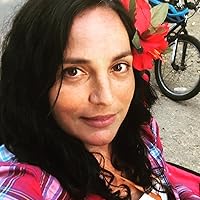
From an exciting new literary voice: a memoir that explores grief, Blackness, and recovery after the death of a dear friend.
After an unexpected phone call on an early morning in 2018, writer and model Eirinie Carson learned of her best friend Larissa’s death. In the wake of her shock, Eirinie attempts to make sense of the events leading up to Larissa’s death and uncovers startling secrets about her life in the process.
THE DEAD ARE GODS is Eirinie’s striking, intimate, and profoundly moving depiction of life after a sudden loss. Amid navigating moments of intense grief, Eirinie is overwhelmed by her love for Larissa. She finds power in pulling moments of joy from the depths of her emotion. Eirinie’s portrayal of what love feels like after death bursts from the page alongside a timely, honest, and personal exploration of Black love and Black life.
Perhaps, Eirinie proposes, “The only way out is through.”
Mixed feelings about this book! I resonated with and appreciated a lot of what Eirinie Carson wrote about grief: how the first therapist she saw was horrible and took up all the space and how fortunate she felt to find her second therapist, the way grief can still feel devastating even when other people cease to recognize it, and refusing to portray the people who die as all good or all bad. As she writes about with great self-awareness, oftentimes the only way to cope is to go through it, to face the sad and painful feelings head-on instead of avoiding them. I liked that she centered her best friendship in this book too, as deaths of friends aren’t talked about as often.
Unfortunately I didn’t love Carson’s writing style in this memoir. I think it’s a courageous and risky choice to use the second person point of view, though I didn’t feel that it worked too well. I read a lot of telling and not enough showing, in my opinion. The second person you and the lack of specific scenes created a narrative distance for me, so I wasn’t able to immerse myself into the memoir fully. Also, I found it interesting that Carson talked about the stigma of toward the end of the book. I wonder if the book would have felt a bit more compelling if she had started the book with this information and then unpacked and processed it throughout the memoir, instead of saving it for the end.
In this memoir, Eirinie Carson relays the story of her friendship with Larissa, who unexpectedly died in her Paris flat at the age of 32.
At that time, Eirinie was living in the States – she recalls how she rushed to Europe to her best friend’s funeral.
Eirinie and Larissa met in their teens. Eirinie thought Larissa was sophisticated and wasn’t afraid to be herself. Soon, they were inseparable. I loved the potato story – how they would cook potatoes for each other – it was their ‘love language’, a token of friendship and appreciation.
I liked how each chapter of the book finished with an email either to or from Larissa. You can tell that the two women really loved each other, and shared a special bond. In Poland, there is a saying that describes a relationship as ‘two halves of an orange’ – the first half is us, and the second one is the person that completes us. As I was reading, I truly felt that Eirinie and Larissa were two halves of an orange.
When Eirinie started to write this book, she began digging a bit deeper into Larissa’s past and she uncovered the shocking truth behind her friend’s death. This wasn’t revealed until nearly the end of the book – I thought that was cleverly done. Eirinie didn’t want to taint the reader’s conception of Larissa at the start of the story, she wanted us to get to know Larissa first, before we discover the truth.
Overall, it is an honest and stark account of friendship, grief, and loss. I definitely recommend it.
a transformational love-letter to friendship, grief, and identity.
i lost a dear friend a few years ago (it feels like a crime to say that and realize it has actually been more than a few years...) and i had a hard time processing my grief and the watching the grief of all of her family and friends from afar. but in reading this, i feel seen in how i reacted to her sudden death and the years to follow.
i also found so much solace in how eirinie explores her closest friendship with such pure passion. a beautifully examined female friendship is too far and few in nonfiction books.
the obvious companion/inspiration is The Year of Magical Thinking but I'd also like to suggest that if you find comfort here but need to distance a bit with fiction, check out The Elementals
Memoirs as objects made to obscure the author through knowledge, an act of reconsideration. This is a really good memoir with a definitive voice and should be entered into the friendship canon. Carson writes of her best friend, Larissa, in how factual it feels to inhabit a best friendship, to define your life in ‘us’ creeds and inform the important of self. I’ll read about somebody loving somebody else, because they love them any day. Friendship as the highest form of love or whatever!!!
I want to word this review delicately as someone who lost my own best friend three years ago on December 23rd, 2019 to an accidental fentanyl overdose. That's actually what made me want to pick this up; it seemed super relatable. I feel like I can't give this a negative review because hurty feelingsy but at the same time the "so what?" factor is looming LARGE. I disliked it. Read more to find out why...
This sort of has the same feel as memoirs that focus on the author's substance use disorder -- okay I get that this could fulfill your 12th step in AA but addiction stories are a dime a dozen and....so what? It seems tough but "So what?" was taught to me in grade school writing class. If grief therapy homework (goodbye letter to dead best friend; also see ch.12) gets you a book deal that pays actual, real money then....sign me up! Though I am mostly kidding. Monetizing someone's death to benefit your bank account is an odd way to express grief. I dunno. Reading this book made me dislike the author as well as her dead best friend. It got worse and worse as the book went on.
Maybe this book would go over better with teens or college students who have not yet lost their friends & who still think death is a Really Big Deal rather than something that happens to uh...literally everyone that has ever been born. Not having death touch you seriously until you're 32+ is prettttttttty dang privileged. Could not finish due to how whiny it is. Just chapters and chapters of "feel bad for me because this hasn't ever happened to another person before." Reached page 150/240 of a digital advanced reader copy. Sorry.
i got this book for free from my old bookstore job almost two years ago. I only decided to read it because about 4 weeks ago while packing to move i found my social security and birth certificate tucked in. I'm not sure why i chose this book to do so, but i lost them both for 8 months and now that they're back i took it as a sign that i should read this soon.
I have never read anything like this, memoirs are usually not my go to, but i'm so glad i picked it up. The Dead Are God's will stay with me for some time. It is so much more than a memoir, or even a look at grief. Eirinie exposes herself and Larissa so boldly. this is a violent expression of honesty. I desire to be this honest with not only my self but the world. for this to be Eirinie Carson's first story...the fact that the death of her best friend is what got her to publish a book... wow. It is so well written. The timing is so smart, the "reveal" at the end i think respects Larissa's life so much more than if Erinie explicitly said her cause of death from the beginning.
Also love the way Eirinie talks about shame. i needed to read this now, it found me at the right time. "For me it is important to be as truthful as possible because now I fully understand that secrets can kill you...Who am I helping if I hush up something that doesn't deserved to be hushed up? Who am I helping if I pile on a blanket of shame"
I was not expecting this when I started. The Dead Are Gods has made me cry in public three times now, miss my old friend horribly, reexamine my concept of death, and value every moment i have with everyone. I think this book is a beautiful gift to Larissa, and I'm honored that Eirinie opened herself up to let the world in
"To be honest I am not sure how many times I can write this. I don't feel like I am getting anywhere with your story, I feel like I am flogging a dead horse. I want closure, I want justice, I want answers but instead here I am, walking this dusty path back and forth so long I have made a divot and cannot get out...There are no answers in your death, there are no answers in your life. What happened, happened, just like how the sky is blue today, just like how the buds in my garden will bloom, just like how my child will continue to sprout up into the world. These things just happen and in searching for answers I fear I will only find my own madness waiting for me. But how do I stop? How do I pump the brakes, decide I have had enough? How do I get you out of my head? I don't want you out of my head but I am not sure I can ever stop analyzing your life if you're not."
How do you rate and judge someone’s grief? This book reminded me that even the most beloved of people are flawed. And that the circumstances of their death does not diminish the light that they radiated when they were still alive.
I appreciate the raw approach in the writing style. It feels personal. It feels genuine. This book feels like a loved one recounting their moments and memories of every good and bad part of life they shared with that person and I think that’s beautiful.
I rather enjoyed that we didn’t learn the more shocking details of Larissa’s death until later because to me, it felt like we were learning when Eirinie did. It made me quick to not judge Larissa or her life. Many times we think we know people and many times we are proved wrong, because we can only know as much as someone will allow. I feel this book does a great job of reminding the reader of that. All while still celebrating Larissa and relishing in the fond moments and memories.
Grief and loss are still met with such stigma and come with feelings we don’t always take the time to genuinely process. I’m thankful that Eirinie has allowed us as readers to grieve this great loss of hers.
Haunting and beautiful. The Dead are Gods is a must read.
I'm glad i read this. i liked the short chapters, i liked the writing, i liked the rawness & bravery, i like the message she was sending across. lastly, i liked that this wasnt boring.
As a bereavement memoir, the book is right in my wheelhouse, though I’ve tended to gravitate towards stories of the loss of a family memoir or spouse, whereas Carson is commemorating her best friend, Larissa, who died in 2018 of a heroin overdose, age 32, and was found in the bath in her Paris flat one week later.
Carson wrote this three years afterward, yet the feeling is still raw. Addressing Larissa as “you” for much of the book, she loops through their history in short chapters that hop around like memory does. They met as teenagers in London and bonded over being Black models and rock music fans. After their wild years, their paths started to drift apart. Carson moved to California and married and had children; Larissa relocated to Paris and, apparently, kept partying. Her dependency came as news to Carson – all the more ironic because her father, too, is a heroin addict and mostly not present in her life.
Anyone who has suffered a loss will find much that resonates here, no matter the circumstances or timing. Carson puzzles over the difficulty of making a narrative out of death and grief (“How should I remember you? Am I doing it right? Is this enough?”), of even comprehending the bare facts of permanent absence. She’s working towards understanding, and desperate to let people know about the marvel that was Larissa. Apart from in the title chapter, the language does not stand out so much as the relatable emotion. (And it’s hard to take their pet name- and typo-strewn e-mails seriously.) Still, I marked out lots of passages to save: “It is frustrating when the one person who could answer all of your many, many questions is the dead person. … Searching for meaning in the most meaningless event in our lives feels a little stupid but I still search.”
I was super excited to read this & enjoyed it. I love the cover, it’s texture, the size and feel of the pages & the short chapters.
I love memoirs and often seek out books with themes of loss and grief. This meets all of those. This book is essentially a love letter via reflections to a best friend. It felt a little like a glorified journal but with some beautiful metaphors and analogies.
This book is a reminder that everyone has secrets and sometimes we overlook flaws in those whom we love. I won’t give any spoilers, but I like that this book is raw and honest even when it is painful and there is potential for judgment. We’re judged regardless, so I applaud Carson’s bravery.
In the end, I think this book was a form of therapy for Carson and it appears to have helped her through her grief. Hopefully, it can also be a beacon for others who have friends die unexpectedly and under unexpected circumstances. It validates humanity as being flawed but nonetheless we are still worthy of being loved, admired, and remembered.
Carson effectively writes love letters to her friend who mysteriously passed away. Between the chapters are email threads of years prior retelling the stories of young adult women who don’t see each other often. I haven’t suffered loss of a friend but I imagine the grieving process looks like these questions after death and stories you wish you could tell your loved one about the mundane parts of life.
Easy to read diary entries of a woman grieving. An engaging combination of ruminations on grief, female friendship, and Black womanhood. Really beautiful!
during my reading of this book i had a horribly vivid dream that a girl from my high school volleyball team passed away and i can’t stop thinking about it. good read👍
Learned about this book at a panel discussion during the Texas Book Festival that the author was a part of. Powerful memoir of a best friend with raw emotions and personal anecdotes. Should resonate with anyone who has grappled with grief and wondered if they could have played the role of a savior.
‘Hold death close. Feel the pain and the nuances of your sadness. Remember those you loved. Say their names and tell their stories.’
The writing in this book is absolutely beautiful especially the first 30 pages, I was immediately drawn in. Carson takes us on a journey of grief and learning to grow with grief and find yourself again. Finding the happiness through the sadness.
At times I felt like an intruder. The memoir is so intimate and personal, it’s almost like stumbling over a private love letter to her best friend. Due to the nature and genre of the book I did find myself feeling uncomfortable with the talk off loss, but some people would find this very comforting to read about and appreciate what someone else is going through.
The pace throughout the book is quite slow. If you’re interested in memoirs and can relate to this story of love and loss more than I can, I think this one is for you.
I had the pleasure of reading this book for another upcoming Melville House reading group guide! A stunning debut memoir about grief, guilt, friendship, and Black identity, Eirinie Carson’s The Dead Are Gods is sure to be a bestseller!
This is the kind of book that will stay with you a long time. It is a beautifuly written, shattering exploration of love, grief and friendship. You feel as though you are there with them, experiencing life as young 20 something's and there with Carson as she wade's through the complex feelings of grief and guilt that come with the loss of someone so special. This book was a privilege to read, it's for anyone who has loved, lost or just wants to feel something.
Today is my spot on the blogtour for 𝐓𝐇𝐄 𝐃𝐄𝐀𝐃 𝐀𝐑𝐄 𝐆𝐎𝐃𝐒 by Eirinie Carson. Thank you to Nikki Griffiths and Melville House for sending me a copy of this absolutely stunning and moving memoir 💔 - 𝐁𝐮𝐭 𝐭𝐡𝐢𝐬 𝐢𝐬 𝐧𝐨𝐭 𝐚 𝐞𝐮𝐥𝐨𝐠𝐲 ... 𝐍𝐨𝐭 𝐚 𝐜𝐡𝐚𝐩𝐭𝐞𝐫 𝐭𝐨 𝐭𝐫𝐲 𝐭𝐨 𝐬𝐡𝐨𝐰 𝐲𝐨𝐮, 𝐝𝐞𝐚𝐫 𝐬𝐭𝐫𝐚𝐧𝐠𝐞𝐫, 𝐭𝐡𝐞 𝐭𝐫𝐮𝐞 𝐩𝐞𝐫𝐬𝐨𝐧 𝐲𝐨𝐮 𝐡𝐚𝐯𝐞 𝐥𝐨𝐬𝐭 𝐰𝐢𝐭𝐡𝐨𝐮𝐭 𝐞𝐯𝐞𝐫 𝐞𝐯𝐞𝐧 𝐤𝐧𝐨𝐰𝐢𝐧𝐠 𝐲𝐨𝐮 𝐡𝐚𝐝 𝐡𝐞𝐫. 𝐁𝐮𝐭, 𝐡𝐨𝐰 𝐝𝐨 𝐰𝐞 𝐝𝐢𝐬𝐜𝐮𝐬𝐬 𝐠𝐫𝐢𝐞𝐟 𝐰𝐢𝐭𝐡𝐨𝐮𝐭 𝐞𝐮𝐥𝐨𝐠𝐢𝐬𝐢𝐧𝐠 𝐭𝐡𝐞 𝐩𝐞𝐨𝐩𝐥𝐞 𝐰𝐞 𝐡𝐚𝐯𝐞 𝐥𝐨𝐬𝐭? - Where can I even start with reviewing a book as beautiful and heart-rending as The Dead Are Gods, other than to say it is the best memoir I've read to date. Carson writes in such a beautiful, lyrical, and poetic way that I devoured her book, reading it from cover to cover very quickly. But the poignancy of her words, and her grief, will stay with me long after reading. - I feel it's important to include some trigger warnings with my review here, for those who need them: death; suicide; addiction; eating disorder. - 𝐈𝐟 𝐬𝐨𝐦𝐞𝐨𝐧𝐞 𝐲𝐨𝐮 𝐤𝐧𝐞𝐰 𝐚𝐧𝐝 𝐥𝐨𝐯𝐞𝐝 𝐡𝐚𝐬 𝐝𝐢𝐞𝐝, 𝐲𝐨𝐮 𝐤𝐧𝐨𝐰 𝐭𝐡𝐞 𝐞𝐜𝐡𝐨𝐢𝐧𝐠 𝐬𝐞𝐧𝐭𝐢𝐦𝐞𝐧𝐭𝐬 𝐨𝐟 𝐢𝐭 𝐚𝐥𝐥 𝐭𝐨𝐨 𝐰𝐞𝐥𝐥. 𝐘𝐨𝐮 𝐤𝐧𝐨𝐰 𝐭𝐡𝐞 𝐩𝐥𝐚𝐭𝐢𝐭𝐮𝐝𝐞𝐬 𝐲𝐨𝐮𝐫 𝐟𝐫𝐢𝐞𝐧𝐝𝐬 𝐚𝐧𝐝 𝐟𝐚𝐦𝐢𝐥𝐲 𝐚𝐧𝐝 (𝐢𝐟 𝐲𝐨𝐮 𝐚𝐫𝐞 𝐥𝐮𝐜𝐤𝐲) 𝐭𝐡𝐞𝐫𝐚𝐩𝐢𝐬𝐭𝐬 𝐭𝐞𝐥𝐥 𝐲𝐨𝐮 - 𝐠𝐫𝐢𝐞𝐟 𝐜𝐨𝐦𝐞𝐬 𝐢𝐧 𝐰𝐚𝐯𝐞𝐬, 𝐭𝐡𝐞 𝐨𝐧𝐥𝐲 𝐰𝐚𝐲 𝐨𝐮𝐭 𝐢𝐬 𝐭𝐡𝐫𝐨𝐮𝐠𝐡, 𝐲𝐨𝐮 𝐡𝐚𝐯𝐞 𝐭𝐨 𝐛𝐞 𝐬𝐭𝐫𝐨𝐧𝐠 𝐟𝐨𝐫 𝐲𝐨𝐮𝐫 𝐟𝐚𝐦𝐢𝐥𝐲/𝐭𝐡𝐞𝐢𝐫 𝐟𝐚𝐦𝐢𝐥𝐲/𝐲𝐨𝐮𝐫𝐬𝐞𝐥𝐟, 𝐭𝐢𝐦𝐞 𝐡𝐞𝐚𝐥𝐬, 𝐲𝐨𝐮 𝐦𝐮𝐬𝐭 𝐤𝐞𝐞𝐩 𝐛𝐮𝐬𝐲. 𝐀𝐥𝐥 𝐢𝐦𝐩𝐨𝐬𝐬𝐢𝐛𝐥𝐞 𝐭𝐨 𝐬𝐨𝐚𝐤 𝐢𝐧 𝐚𝐧𝐝 𝐞𝐯𝐞𝐧 𝐦𝐨𝐫𝐞 𝐢𝐦𝐩𝐨𝐬𝐬𝐢𝐛𝐥𝐞 𝐭𝐨 𝐢𝐦𝐚𝐠𝐢𝐧𝐞 𝐢𝐦𝐩𝐥𝐞𝐦𝐞𝐧𝐭𝐢𝐧𝐠. - Carson's memoir is centred around her friend Larissa: their young lives together as models trying to make ends meet; the distance that was sometimes between them, all the secrets and things unsaid, and; Carson's life after Larissa died, trying to understand and make sense of something that we can never truly understand and get closure with. What stood out to me the most throughout Carson's writing is the honesty within her book. There is no doubt about how much she loves Larissa, but no one is without fault, and noone deserves to be judged solely by their best, or worst, moments in isolation. Carson lays herself bare and her emotions throughout the book are palpable. - 𝐓𝐡𝐚𝐭 𝐢𝐬 𝐭𝐡𝐞 𝐦𝐨𝐬𝐭 𝐞𝐯𝐞𝐫𝐥𝐚𝐬𝐭𝐢𝐧𝐠 𝐩𝐚𝐢𝐧 𝐨𝐟 𝐠𝐫𝐢𝐞𝐟, 𝐈 𝐭𝐡𝐢𝐧𝐤, 𝐭𝐡𝐞 𝐧𝐞𝐯𝐞𝐫-𝐞𝐧𝐝𝐢𝐧𝐠 𝐰𝐨𝐧𝐝𝐞𝐫𝐢𝐧𝐠. 𝐍𝐨 𝐦𝐨𝐫𝐞 𝐧𝐞𝐰 𝐦𝐞𝐦𝐨𝐫𝐢𝐞𝐬. 𝐈𝐭 𝐢𝐬 𝐬𝐨 𝐜𝐨𝐦𝐩𝐥𝐞𝐭𝐞. 𝐖𝐡𝐚𝐭 𝐰𝐚𝐬, 𝐢𝐬 𝐭𝐡𝐞 𝐥𝐨𝐬𝐬. 𝐖𝐡𝐚𝐭 𝐜𝐨𝐮𝐥𝐝 𝐡𝐚𝐯𝐞 𝐛𝐞𝐞𝐧, 𝐢𝐬 𝐭𝐡𝐞 𝐥𝐨𝐬𝐬. 𝐏𝐚𝐬𝐭, 𝐩𝐫𝐞𝐬𝐞𝐧𝐭, 𝐚𝐧𝐝 𝐟𝐮𝐭𝐮𝐫𝐞 𝐈 𝐚𝐦 𝐛𝐞𝐫𝐞𝐟𝐭 𝐚𝐧𝐝 𝐈'𝐦 𝐧𝐨𝐭 𝐬𝐮𝐫𝐞 𝐡𝐨𝐰 𝐈 𝐫𝐞𝐜𝐨𝐧𝐜𝐢𝐥𝐞 𝐭𝐡𝐚𝐭. - But don't be mistaken in thinking this book is all about grief and death; far from it, this book is about life, living life to the fullest, and ensuring that as a society we do better and take better care of those who need support. - Carson's honest feelings are, frankly, refreshing to read. We like to hold this idea that when someone we love dies, we'll be nothing but generous, throwing ourselves prostrate on their graves, sanctifying our dead loved one as though they were perfect and flawless. But that isn't reality. And even when we are moving through the 'stages' of grief, swinging back and forth between emotions like a pendulum, we naturally feel anger: anger at our loss; anger at the small hurts we perceive from our loved one; anger at everything we felt entitled to have that has been taken away from us. - 𝐓𝐡𝐞 𝐭𝐡𝐢𝐧𝐠𝐬 𝐈 𝐥𝐨𝐯𝐞𝐝 𝐦𝐨𝐬𝐭 𝐚𝐛𝐨𝐮𝐭 𝐲𝐨𝐮, 𝐭𝐡𝐞 𝐭𝐡𝐢𝐧𝐠𝐬 𝐈 𝐭𝐫𝐞𝐚𝐬𝐮𝐫𝐞 𝐬𝐭𝐢𝐥𝐥, 𝐚𝐫𝐞 𝐭𝐡𝐢𝐧𝐠𝐬 𝐭𝐡𝐚𝐭 𝐨𝐟𝐭𝐞𝐧 𝐦𝐚𝐝𝐞 𝐲𝐨𝐮 𝐢𝐦𝐩𝐨𝐬𝐬𝐢𝐛𝐥𝐞 𝐭𝐨 𝐝𝐞𝐚𝐥 𝐰𝐢𝐭𝐡 ... 𝐈 𝐝𝐫𝐨𝐩𝐩𝐞𝐝 𝐞𝐯𝐞𝐫𝐲𝐭𝐡𝐢𝐧𝐠 𝐭𝐨 𝐡𝐞𝐥𝐩 𝐲𝐨𝐮, 𝐚𝐧𝐝 𝐈 𝐚𝐦 𝐧𝐨𝐭 𝐬𝐮𝐫𝐞 𝐲𝐨𝐮 𝐬𝐚𝐢𝐝 𝐭����𝐚𝐧𝐤 𝐲𝐨𝐮. 𝐈𝐭 𝐰𝐚𝐬 𝐨𝐟𝐭𝐞𝐧 𝐥𝐢𝐤𝐞 𝐭𝐡𝐢𝐬, 𝐢𝐟 𝐈 𝐚𝐦 𝐡𝐨𝐧𝐞𝐬𝐭, 𝐚 𝐛𝐚𝐭𝐭𝐥𝐞 𝐭𝐨 𝐬𝐭𝐚𝐲 𝐰𝐢𝐭𝐡𝐢𝐧 𝐭𝐡𝐞 𝐥𝐢𝐧𝐞𝐬 𝐲𝐨𝐮 𝐡𝐚𝐝 𝐝𝐫𝐚𝐰𝐧 𝐟𝐨𝐫 𝐥𝐢𝐟𝐞, 𝐚𝐧𝐝 𝐚 𝐭𝐡𝐚𝐧𝐤𝐥𝐞𝐬𝐬 𝐨𝐧𝐞 𝐚𝐭 𝐭𝐡𝐚𝐭 ... 𝐬𝐨 𝐨𝐟𝐭𝐞𝐧, 𝐈 𝐟𝐞𝐚𝐫, 𝐈 𝐬𝐚𝐜𝐫𝐢𝐟𝐢𝐜𝐞𝐝 𝐦𝐲𝐬𝐞𝐥𝐟 𝐟𝐨𝐫 𝐲𝐨𝐮, 𝐟𝐨𝐫 𝐲𝐨𝐮𝐫 𝐜𝐨𝐦𝐟𝐨𝐫𝐭. - Carson's book is of course not about me, but as someone who lost a close loved one (my Mum) in a similarly shocking and unexpected way (suicide) I did feel a deep connection with Carson and her fluctuating feelings as I was reading them. Though throughout all of the fluctuation the same loss, sadness, and love remain. Larissa, sadly, died unexpectedly and at the time of her death was using heroin. There is an ongoing discourse about people who are judged and deemed to be somehow unworthy by our society, as though they have somehow made choices that should exclude them from receiving the support they sorely need. And sometimes, the 'choices' that such people are deemed to have made (addicts, alcoholics, homeless people, those with mental health issues), are not their choices at all. They are circumstantial, and the odds are already pitted against them. - 𝐖𝐡𝐨 𝐚𝐦 𝐈 𝐡𝐞𝐥𝐩𝐢𝐧𝐠 𝐢𝐟 𝐈 𝐡𝐮𝐬𝐡 𝐮𝐩 𝐬𝐨𝐦𝐞𝐭𝐡𝐢𝐧𝐠 𝐭𝐡𝐚𝐭 𝐝𝐨𝐞𝐬𝐧'𝐭 𝐝𝐞𝐬𝐞𝐫𝐯𝐞 𝐭𝐨 𝐛𝐞 𝐡𝐮𝐬𝐡𝐞𝐝 𝐮𝐩? 𝐖𝐡𝐨 𝐚𝐦 𝐈 𝐡𝐞𝐥𝐩𝐢𝐧𝐠 𝐢𝐟 𝐈 𝐩𝐢𝐥𝐞 𝐨𝐧 𝐚 𝐛𝐥𝐚𝐧𝐤𝐞𝐭 𝐨𝐟 𝐬𝐡𝐚𝐦𝐞? 𝐍𝐨𝐭 𝐭𝐡𝐞 𝐦𝐢𝐥𝐥𝐢𝐨𝐧𝐬 𝐨𝐟 𝐩𝐞𝐨𝐩𝐥𝐞 𝐬𝐮𝐟𝐟𝐞𝐫𝐢𝐧𝐠 𝐰𝐢𝐭𝐡 𝐬𝐮𝐛𝐬𝐭𝐚𝐧𝐜𝐞 𝐚𝐛𝐮𝐬𝐞 𝐨𝐫 𝐭𝐡𝐞𝐢𝐫 𝐟𝐚𝐦𝐢𝐥𝐲 𝐚𝐧𝐝 𝐟𝐫𝐢𝐞𝐧𝐝𝐬. 𝐍𝐨. 𝐍𝐨𝐭 𝐭𝐡𝐚𝐭 𝐭𝐡𝐢𝐬 𝐛𝐨𝐨𝐤 𝐢𝐬 𝐚 𝐜𝐫𝐮𝐬𝐚𝐝𝐞 𝐟𝐨𝐫 𝐭𝐡𝐞𝐦, 𝐢𝐭 𝐢𝐬 𝐚 𝐜𝐫𝐮𝐬𝐚𝐝𝐞 𝐟𝐨𝐫 𝐡𝐞𝐫. 𝐓𝐡𝐞 𝐮𝐧𝐯𝐞𝐢𝐥𝐢𝐧𝐠 𝐨𝐟 𝐭𝐡𝐞 𝐭𝐫𝐮𝐭𝐡 𝐬𝐡𝐨𝐮𝐥𝐝 𝐛𝐞 𝐫𝐢𝐠𝐡𝐭𝐞𝐨𝐮𝐬, 𝐚 𝐛𝐚𝐥𝐚𝐧𝐜𝐢𝐧𝐠 𝐨𝐟 𝐭𝐡𝐞 𝐬𝐜𝐚𝐥𝐞𝐬, 𝐚 𝐫𝐮𝐛𝐛𝐢𝐧𝐠 𝐨𝐟 𝐭𝐡𝐞 𝐞𝐲𝐞𝐬 𝐭𝐨 𝐬𝐞𝐞 𝐭𝐡𝐞 𝐟𝐮𝐥𝐥 𝐩𝐢𝐜𝐭𝐮𝐫𝐞. - And a part of the discourse regarding substance abuse, and the sorely-needed support (amongst many other things) needs to be the recognition of racial bias. Throughout Carson's book reflections on how racism has effected her and Larissa's life are woven into the narrative. From their days modelling where Larissa would not receive as many bookings, and would be compared to other dark-skinned models who she actually looked nothing like, to the criticism Carson has often faced for being "too black" or "too white" in her views, as though life is binary and she has to constantly prove herself. - 𝐑𝐚𝐜𝐢𝐬𝐦 𝐢𝐧 𝐭𝐡𝐞 𝐔𝐊 𝐟𝐨𝐫 𝐦𝐞 𝐰𝐚𝐬 𝐪𝐮𝐢𝐞𝐭, 𝐝𝐢𝐬𝐜𝐫𝐞𝐞𝐭, 𝐚 𝐛𝐞𝐞 𝐬𝐭𝐢𝐧𝐠. 𝐘𝐨𝐮 𝐝𝐨𝐧'𝐭 𝐧𝐨𝐭𝐢𝐜𝐞 𝐢𝐭 𝐚𝐭 𝐟𝐢𝐫𝐬𝐭, 𝐚 𝐬𝐦𝐚𝐥𝐥 𝐧𝐞𝐞𝐝𝐥𝐞 𝐚𝐭 𝐲𝐨𝐮𝐫 𝐬𝐢𝐝𝐞 𝐚𝐬 𝐬𝐨𝐦𝐞𝐨𝐧𝐞 𝐭𝐞𝐥𝐥𝐬 𝐲𝐨𝐮 𝐡𝐨𝐰 𝐰𝐞𝐥𝐥-𝐬𝐩𝐨𝐤𝐞𝐧 𝐲𝐨𝐮 𝐚𝐫𝐞 𝐚𝐧𝐝 𝐭𝐡𝐞𝐧 𝐥𝐚𝐭𝐞𝐫 𝐢𝐭 𝐬𝐰𝐞𝐥𝐥𝐬 𝐚𝐧𝐝 𝐩𝐮𝐥𝐬𝐞𝐬 𝐰𝐢𝐭𝐡 𝐩𝐚𝐢𝐧 𝐚𝐧𝐝 𝐲𝐨𝐮 𝐫𝐞𝐚𝐥𝐢𝐬𝐞 𝐡𝐨𝐰 𝐦𝐮𝐜𝐡 𝐝𝐚𝐦𝐚𝐠𝐞 𝐢𝐭 𝐡𝐚𝐬 𝐝𝐨𝐧𝐞. - Carson also raises questions of faith in relation to life and death, but not in an overly religious way. More from the sense of fate, and do we really have a 'time' that is meant for us. We can never know what's around the corner, or whether there is something more after our mortal life ends. But as sad as it is that Carson's reflections on grief speak to me so deeply, I'm glad to have read her book, and I fully believe it will help many people who are going through, or who have gone through, a similar experience. - 𝐇𝐨𝐰 𝐬𝐡𝐨𝐮𝐥𝐝 𝐈 𝐫𝐞𝐦𝐞𝐦𝐛𝐞𝐫 𝐲𝐨𝐮? 𝐀𝐦 𝐈 𝐝𝐨𝐢𝐧𝐠 𝐢𝐭 𝐫𝐢𝐠𝐡𝐭? 𝐈𝐬 𝐭𝐡𝐢𝐬 𝐞𝐧𝐨𝐮𝐠𝐡? - I highly recommend The Dead Are Gods to all readers who enjoy memoirs, and any person who would benefit from hearing a very true and honest account of how grief can impact you in a myriad of ways. I will definitely be rereading it, and will look forward to any future work that Carson may publish.
When Eirinie learns of her best friend's death, she's thrown into a tailspin. How do we honor the dead? How do you process the loss of someone who you were so close to, so intertwined?
She remembers the times she spent with her friend. They were popular, growing up together and attending clubs together, but then they drifted apart. She initially suspects foul play and that her friend didn't die the way described. When she investigates further, she finds how much they have drifted apart and all so suddenly.
Carson's book is a beautiful encapsulation of grief. The core of these essays is the titular one. The dead are Gods. We create shrines, talismans, and rituals to remember and honor the dead. The book itself becomes that shrine.
Favorite Passages: Trying to remember the details of a story only you and I were privy to and thinking to call you and realising suddenly that I can’t. These stories are now mine to remember, the burden of our history, long but simple as it was, falls on my shoulders. I don’t want it. I don’t want to remember our trips to New York on my own. I don’t want to think about that bar, Clem’s, that probably still exists but is definitely different, out in Brooklyn where we drank underage and marveled at the size of the shots. I don’t want to remember that man, that old Black man in his designated seat at the bar who, when you walked into the room, said, “Damn girl, you look like a Tutankhamen exhibit,” and we laughed so hard he turned away from us. I don’t want to think about these things alone. They are ours, not just mine. What if I forget? Or misremember? Now I come to think of it, was he even that old? Did he turn away or is that a fabrication of a storyteller’s mind?
My sadness wasn’t about his imminent death but about the loss of a judgement time I had been counting on. He would never face his crimes against us, he would never hear my detailed unflinching account of life without him, or rather a life built around a Devon- shaped hole, he would never be sorry. I wanted him prostrate and repentant, he couldn’t die now, where was the fucking justice?
The Dead Are Gods by Eirninie Carson is a deeply touching and moving memoir on grief and friendship.
It felt like such a personal account of grief – one of the best I’ve ever read. I really admire the courage it must have taken to write this and how openly Eirinie’s raw emotions are put across so powerfully.
It was so delicately, yet strongly written and really struck a chord with me. There was highs and lows and everything in between. It was simply breath-taking.
One thing I really loved was the email correspondence after each chapter as I felt it added a whole extra element of their personalities and the joy of their friendship.
The only thing I wasn’t too keen on was the POV of the narration. It was unique, but I’m not sure it quite worked for me a hundred percent. Aside from that, it was a stunning and beautifully emotive memoir.
This is an absolutely gorgeous book that I read in near enough one sitting.
In 2018, Eirinie receives a call to say that her best friend Larissa has died. As soon as I started reading I instantly fell in love with Eirinie's writing style and although the subject is a hard one, it was very easy to read. Grief is explored so well with a lot of raw honesty surrounding feelings, how to cope and remembering.
I adored reading about Eirinie and Larissa's friendship and from the personality descriptions to music that they enjoyed, I truthfully felt like I'd love to have been friends with them too.
Not only does it explore grief and the loss of a best friend who was like a sister, you also have the focus on Black life and love.
The transcripts between Eirinie and Larissa peppered between the chapters were a lovely addition. The Dead Are Gods is a beautiful book that I will be thinking about for a really long time.
I thought the first half of the book was great. But at some point I realized that she had told us very little about Larissa. Just little snippets or scenes. Did she fear we wouldn't like Larissa? Find her unworthy of so much grief? She says everyone loved her although she did only what she wanted and was sometimes hard to be around. She hides the real cause of death until much later in the book. Denial or fear that readers will be less sympathetic? The fact that she didn't know something so central to her friend's life and death begs the question-were you really as close as you believe. That wouldn't make her grief less overwhelming or real- but the gaps make it harder to join her in her grief.
The book is much more about her grieving process. Initially she does this very well. But her questioning whether she could have done something - and pretty consistently deciding she could not have - became a bit tiresome.
'The Dead Are Gods' by Eirinie Carson is a book you will read and will not forget.
Eirinie Carson learns one morning in an early morning phone call that her best fried Larissa is dead at the age of thirty two.
This memoir is a tribute to Larissa and a journey of what grief can look like.
Eirinie takes the reader through the story of her friendship with Larissa and also through the progress of how she grieves for her friend.
Both Eirinie and Larissa come to life in the pages and you get to learn how much they meant to each other and how their friendship went through stages, but was always a constant for both.
The writing in this memoir although very sad is also beautiful and it is a tribute to Larissa by Eirinie. You truly follow the path of emotions that someone feels when they have lost a loved one unexpectedly. Eirinie is truly a talented writer that takes you on the journey with her.
This book will be recognised and read by many and is highly recommended.
Thanks to the author and publisher for allowing me to read and review and be part of the Blog tour for this wonderful book.
Thank you @NikkiTGriffiths and @EirinieCarson for letting me part of this tour and reviewing this book. The Dead are Gods is the first book Eirinie Carson wrote and it's heartbreaking read but grabbed my attention and made me think of my friend that died last year of cancer. I could relate to this book the only different thing was Larissa died of an overdose but I could relate to how Eirinie felt losing her friend and the grief that came. I felt like I was going through an emotional rollercoaster with Eirinie. I feel like The Dead are Gods will stay with me because I could completely understand how Eirinie felt about losing her friend. The Book is beautifully written and I can't wait for her next book 5 stars. I love reading books I would not normally read. It was a pleasure to read. For anyone who has lost someone, I would recommend this book. Out now to buy.
The Dead Are Gods by Eirinie Carson was simply a gorgeous memoir on grief and love in friendship. Holding the book feels deceptive—it feels light and the pages felt thin. The deceptiveness comes in realizing just how deep the content is.
The Dead are Gods is about the loss of a friend and the grief that accompanies that loss. Carson looks at it as honoring the life of her beloved whilst being honest about who Larissa was. At times I felt like I was going to drown in her grief. The whole way through, I felt like l, too, had lost a beloved friend.
Carson avoids telling the reader, the onlooker to her grief, exactly what happened until she absolutely cannot. However, just like Larissa did, Carson leaves bread crumbs for us the whole way while we inherently decide that it doesn’t matter how Larissa died, just that she lived and was loved and was human.
A poignant and meaningful examination of one woman’s grieving process. Unflinching yet tender, we process the sudden death of the bright and beautiful Larissa along with the author, Eirinie. Recently I’ve been thinking about grief and loss and the different ways people process both. The author’s prose feels conversational, and familiar, and brings gravitas and depth. It feels like one of those nights when you stay up late talking with someone you hardly know and end up baring your souls to each other. Through the vehicle of the book we progress through stages of grief and end up in a place that is comfortable, with the understanding that the processing is not yet done and perhaps never will be.
I recently heard grief described as love that has no place to go. The Dead are Gods is about the unexpected loss of a dear friend. It's about the grief that accompanies that loss. It's about love, friendship, and black womanhood. I liked the use of text and email messages throughout the novel. The use of those private messages gave us an intimate look at the friendship between Eirinie and Larissa's through the years. It was a beautiful ode to a friend. Ultimately for me this was a different type of friendship exploration which I enjoyed.
"Grief is a journey. I understand that grief is love that has no place to go." -Regina King
If you have ever lost a loved one, especially a best friend, you should read this book. I lost my best friend decades ago, and I didn't realize until recently that I never fully let myself grieve that loss. Eirinie somehow put all the right words in just the right order in just the right voice that gave me the permission I didn't know I needed to let myself really feel it. The anger,the regret,the deep sorrow. It's been difficult but I am so grateful that Eirinie chose to share her story with the world.