

What do you think?
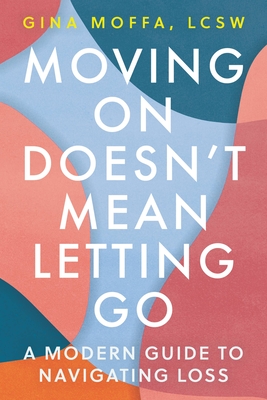
Moving On Doesn't Mean Letting Go: A Modern Guide to Navigating Loss
Licensed grief and trauma therapist Gina Moffa illuminates a non-linear path through grief, with tools and practices to grieve at your own pace and use loss as a catalyst for a more connected, meaningful life moving forward—perfect for readers of Grief Day by Day and It's OK That You're Not OK.
Grief hurts. Whether it’s the death of someone you love, the end of a friendship, a breakup, or an ambiguous loss, grief visits each of us in time. But even though it’s one of our most universal human journeys, grieving isn’t something most of us know how to do.
In Moving on Doesn’t Mean Letting Go , Gina Moffa takes an honest look at how grief affects our lives, offering a heartfelt, practical map through the dark terrain of loss—one that aims to shift the pain of your grief even when things feel unpredictable and overwhelming.
Grounded in nearly two decades of clinical experience and her own journey as a grief therapist in the throes of grief after losing her mother to cancer, Gina honors the individual momentum of each person’s process while guiding readers Gina gives readers permission to grieve authentically—with none of the toxic positivity that bypasses the possibility of true healing and transformation—because you don’t have to choose between falling apart or staying strong. You can learn to be empowered by the very thing you imagined would swallow you whole.
Grief hurts. Whether it’s the death of someone you love, the end of a friendship, a breakup, or an ambiguous loss, grief visits each of us in time. But even though it’s one of our most universal human journeys, grieving isn’t something most of us know how to do.
In Moving on Doesn’t Mean Letting Go , Gina Moffa takes an honest look at how grief affects our lives, offering a heartfelt, practical map through the dark terrain of loss—one that aims to shift the pain of your grief even when things feel unpredictable and overwhelming.
Grounded in nearly two decades of clinical experience and her own journey as a grief therapist in the throes of grief after losing her mother to cancer, Gina honors the individual momentum of each person’s process while guiding readers Gina gives readers permission to grieve authentically—with none of the toxic positivity that bypasses the possibility of true healing and transformation—because you don’t have to choose between falling apart or staying strong. You can learn to be empowered by the very thing you imagined would swallow you whole.
272 pages, Hardcover
First published August 22, 2023
Ratings & Reviews
Friends & Following
Create a free account to discover what your friends think of this book!
Community Reviews
Displaying 1 - 30 of 85 reviews

July 12, 2026
Right book at the right time for me. Reading this book felt like a warm hug – which I know is such a trite thing to say, but I really do feel that way. Gina Moffa brings astute clinical awareness and observations from her work as a grief therapist, integrated with a warm and relatable writing voice. I appreciated her honesty about her own grief process, her spot-on wisdom for grievers, as well as what platitudes to avoid saying (e.g., unhelpful phrases like “they’re in a better place” or “everything happens for a reason.”) She did an excellent job of normalizing different forms of grief that society often disenfranchises, such as the loss of a friendship, the loss of a life stage, and the loss of a pet.
I won’t disclose everything (and hopefully this isn’t too much), though I’m going through some relatively intense grief feelings right now related to friendship. The loss of one friend of over a decade, the loss of another friend who we’ve been able to maintain a connection though it’s not what it once was, like multiple audio messages shared a day kind of vibe. I still have two to three ride or die super close best friends, though the grief started to hit more recently and I’m so glad I found this book through a podcast episode at this time. Grief has been somewhat of a life long journey for me, with the loss of my grandmother – who was essentially what many would think of as my mother – as well as a therapist I saw for a couple of years in undergrad. So it’s great to read the perspective of someone such as Moffa who overall gets it.
Anyway, I’d definitely recommend this book for those grieving, those who work with grievers or want to know how to support grieving friends, and those interested in attachment/loss overall. Smart writing about the intersection of grief and trauma, as well as grief and attachment too. For fellow grievers, it’s nice to know we’re not alone!
I won’t disclose everything (and hopefully this isn’t too much), though I’m going through some relatively intense grief feelings right now related to friendship. The loss of one friend of over a decade, the loss of another friend who we’ve been able to maintain a connection though it’s not what it once was, like multiple audio messages shared a day kind of vibe. I still have two to three ride or die super close best friends, though the grief started to hit more recently and I’m so glad I found this book through a podcast episode at this time. Grief has been somewhat of a life long journey for me, with the loss of my grandmother – who was essentially what many would think of as my mother – as well as a therapist I saw for a couple of years in undergrad. So it’s great to read the perspective of someone such as Moffa who overall gets it.
Anyway, I’d definitely recommend this book for those grieving, those who work with grievers or want to know how to support grieving friends, and those interested in attachment/loss overall. Smart writing about the intersection of grief and trauma, as well as grief and attachment too. For fellow grievers, it’s nice to know we’re not alone!

February 27, 2024
Moving On Doesn't Mean Letting Go: A Modern Guide to Navigating Loss is a heartfelt and helpful map through any loss—a parent, a friendship, a job, a miscarriage—that helps shift the pain when it feels unpredictable and overwhelming. The author reflects on her experiences as a grief therapist, highlighting social discomforts and the need for supportive communities that embrace vulnerability. She also talks about trauma, societal expectations surrounding grief, and “moving on.”
This book was great for several reasons. It gives readers a new framework for grief, which everybody experiences at one point or another. Alongside her lessons about grief and dealing with grief, she includes her own story, including the loss of her mother, making this a powerful read. She speaks to the reader as if we are in session together. She is neither authoritative nor prescriptive. Instead, she is comforting as she walks us through the grief process. She also coins the term “griefall,” which she describes as a sort of grief integration. She explains that it’s the experience of being in a freefall at the moment of a traumatic experience before the actual grief sinks in. She uses the example of a moment of loss, like getting a diagnosis or holding your pet's paw if you must put them down. It's this moment that is a portal where everything will change. It’s not the grief itself but what leads us there. In Moving On Doesn’t Mean Letting Go, Moffa offers heartfelt, practical maps through which readers can shift the pain of grief even when things feel unpredictable and overwhelming—an excellent tool for every emotional toolbox.
To listen to my interview with the author, go to my podcast at:
https://www.momsdonthavetimetoreadboo...
This book was great for several reasons. It gives readers a new framework for grief, which everybody experiences at one point or another. Alongside her lessons about grief and dealing with grief, she includes her own story, including the loss of her mother, making this a powerful read. She speaks to the reader as if we are in session together. She is neither authoritative nor prescriptive. Instead, she is comforting as she walks us through the grief process. She also coins the term “griefall,” which she describes as a sort of grief integration. She explains that it’s the experience of being in a freefall at the moment of a traumatic experience before the actual grief sinks in. She uses the example of a moment of loss, like getting a diagnosis or holding your pet's paw if you must put them down. It's this moment that is a portal where everything will change. It’s not the grief itself but what leads us there. In Moving On Doesn’t Mean Letting Go, Moffa offers heartfelt, practical maps through which readers can shift the pain of grief even when things feel unpredictable and overwhelming—an excellent tool for every emotional toolbox.
To listen to my interview with the author, go to my podcast at:
https://www.momsdonthavetimetoreadboo...

October 3, 2023
Grief affects people in many different ways. Having tools to help guide and maneuver your way through makes it a bit better. If you or someone you know could use a helping hand in handling grief, give Gina Moffa a try.

Follow me on
✿KTBookReviews✿Instagram✿Twitter✿Facebook✿TikTok
Follow me on
✿KTBookReviews✿Instagram✿Twitter✿Facebook✿TikTok

Read
September 19, 2024i think this is a magnificent little book. i picked this up during my grief month, hoping for…i don’t know, some kind of insight into navigating the weird feelings, and in the end i found that i’m further along than i thought i was. maybe it’s because my grief has matured (it’s been seven years since the death of my grandmother but all the loss i’ve had in the 2020s has mellowed out a little too i think) or maybe it’s because i’ve been in therapy, but a lot of this felt like things i already knew and experienced. which doesn’t mean it isn’t well written or vital information! the author did such a beautiful job creating a guidebook for something that is so rarely talked about openly. the hardest part of grief for me (when it was fresh and even now) was understanding just what that looked like. how do you know if you’re making progress? if you’re doing the right things? if you’re healing? and more than that, how do you navigate the grief of people you know? i fully believe that whenever i have another serious loss i will revisit this book, but until then i’ll settle for pushing this on everyone i can. i think if more people knew what grief was and were more open to feeling and talking without judgement, the world would be a better place.
highly recommend!!
highly recommend!!
August 23, 2023
Thank you Gina Moffa, for this amazing guide to loss management. It is never a straight path, and there is comfort in knowing that others are also experiencing not fitting into the "recipes" for what grief is supposed to look like.
I love that the book also covers non-death loss and loss of a pet. Grief shouldn't be confined to the death of loved ones, as we grieve so many losses throughout our lifetime 🫶
I love that the book also covers non-death loss and loss of a pet. Grief shouldn't be confined to the death of loved ones, as we grieve so many losses throughout our lifetime 🫶

October 12, 2024
Gina Moffa, thank you for writing this book. The loss of my Dad this year completely devastated me, and trying to live in a world he no longer exists, even 8 months later, is so freaking hard. Society is uncomfortable with pain, and no one talks about it. The expectation for you to move on and get over it is everywhere, and there are very little resources to helping one understand this pervasive, messy, awful thing we call grief.
Moffa wrote this book post-COVID, after the loss of her own mother, to help as many patients as she could (even those who weren't billable). This book was like attending therapy. Sticking with it was hard, especially when there were times I knew reading it would re-open the grief wounds that were scabbed over. But, that's part of the process isn't it? The grief can sometimes feel far away, and resurface in agonizing ways. The cycle isn't linear, no one grieves the same way, but we all need the some of the same things: self-compassion, authentic connection, understanding and time.
In addition to learning about what happens within yourself, Moffa helps the reader with strategies on how to exist in life. She has tips for navigating work after loss, setting boundaries, explaining to friends and family what you need (and what you don't *cough* platitudes *cough*), even dating and social media. There are check-in exercises and reflections every few pages to ensure we are treating ourselves with gentleness and pausing if we need it.
Moffa also contributed to a grief children's story, "Zara's Big Messy Goodbye", which I immediately bought for my nieces who lost their "bop bop." It is validating to know that you are not alone, or broken, to know there is no "wrong" way to grieve or a set time limit. Moffa gives permission to allow for the time and space to experience the "full spectrum of our feelings" that deserve the "space and freedom to rise up and be seen, witnessed, and valued, no matter how shameful, ugly, scary, or painful." If you are grieving any kind of loss (death of a loved one, miscarriage, job loss, etc), this book has tools for you. If you have a loved one who is struggling with grief and want to know how to help them, this book is for you too.
"And that's the human condition, isn't it? To love again, to reconnect to life, even through pain, to rediscover a sense of "worthwhileness" as we crawl on hands and knees in search of what feels evasive, even impossible, amid the rubble of heartbreaking loss: meaningful connection to self, to life, to others - to hope." -Gina Moffa, LCSW "Moving on Doesn't Mean Letting Go"
Moffa wrote this book post-COVID, after the loss of her own mother, to help as many patients as she could (even those who weren't billable). This book was like attending therapy. Sticking with it was hard, especially when there were times I knew reading it would re-open the grief wounds that were scabbed over. But, that's part of the process isn't it? The grief can sometimes feel far away, and resurface in agonizing ways. The cycle isn't linear, no one grieves the same way, but we all need the some of the same things: self-compassion, authentic connection, understanding and time.
In addition to learning about what happens within yourself, Moffa helps the reader with strategies on how to exist in life. She has tips for navigating work after loss, setting boundaries, explaining to friends and family what you need (and what you don't *cough* platitudes *cough*), even dating and social media. There are check-in exercises and reflections every few pages to ensure we are treating ourselves with gentleness and pausing if we need it.
Moffa also contributed to a grief children's story, "Zara's Big Messy Goodbye", which I immediately bought for my nieces who lost their "bop bop." It is validating to know that you are not alone, or broken, to know there is no "wrong" way to grieve or a set time limit. Moffa gives permission to allow for the time and space to experience the "full spectrum of our feelings" that deserve the "space and freedom to rise up and be seen, witnessed, and valued, no matter how shameful, ugly, scary, or painful." If you are grieving any kind of loss (death of a loved one, miscarriage, job loss, etc), this book has tools for you. If you have a loved one who is struggling with grief and want to know how to help them, this book is for you too.
"And that's the human condition, isn't it? To love again, to reconnect to life, even through pain, to rediscover a sense of "worthwhileness" as we crawl on hands and knees in search of what feels evasive, even impossible, amid the rubble of heartbreaking loss: meaningful connection to self, to life, to others - to hope." -Gina Moffa, LCSW "Moving on Doesn't Mean Letting Go"
July 12, 2023
I won an advanced reader copy via Goodreads giveaway.
This book was thoughtful and compassionate. I felt validated by a lot of the subject matter. The anecdotes helped demonstrate ideas without domineering the text. It was well written.
Grief is a thing most people don’t talk about that affects us through our entire lives, once experienced. I really appreciated the author’s approach to the topic and it made me aware of thoughts and behaviors I hadn’t put this perspective to before.
The only minor complaint was that at some times it felt a little verbose and I found my mind wandering, but I don’t know how much of that was due to speculating on the content or just a little word fluff.
Would recommend.
This book was thoughtful and compassionate. I felt validated by a lot of the subject matter. The anecdotes helped demonstrate ideas without domineering the text. It was well written.
Grief is a thing most people don’t talk about that affects us through our entire lives, once experienced. I really appreciated the author’s approach to the topic and it made me aware of thoughts and behaviors I hadn’t put this perspective to before.
The only minor complaint was that at some times it felt a little verbose and I found my mind wandering, but I don’t know how much of that was due to speculating on the content or just a little word fluff.
Would recommend.

August 2, 2023
First, I loved the kindness of the author. She is obviously well educated and trained, but comes across as a warm and loving friend. She explains concepts in a way that is easily understandable to a grieving brain, which can feel foggy and overwhelmed. I found myself really attaching to some of the "clients" in her anecdotes, which tells me she is really tuned in and connected to her clients. There are many books on grief, but this one stands out as an up-to-date, approachable manual for someone in the thick of the grieving experience.
******I am editing my review, now that I am done, mostly because I saw there was a review here which said the book didn't seem to have enough "research". Grief itself isn't something one can really do too much research on, but I found this book to touch upon areas of loss that are not often talked about, such as physiological aspects of grieving, as well as trauma and grief, which had much research behind it. This book does touch upon other losses and the author is clear when she is speaking about only death related losses. Good reads can be a tough audience! I want to support this book, because it is unique, warm, and a wonderful guide.
******I am editing my review, now that I am done, mostly because I saw there was a review here which said the book didn't seem to have enough "research". Grief itself isn't something one can really do too much research on, but I found this book to touch upon areas of loss that are not often talked about, such as physiological aspects of grieving, as well as trauma and grief, which had much research behind it. This book does touch upon other losses and the author is clear when she is speaking about only death related losses. Good reads can be a tough audience! I want to support this book, because it is unique, warm, and a wonderful guide.

November 8, 2024
From start to finish there was not one thing Moffa said that I did not agree with, appreciate, or grow from. She handled an incredibly heavy and complex topic with unprecedented gentleness while also emphasizing the importance of the hard work asked of us while healing. I absolutely loved reading this 🥲
January 4, 2025
I’ve read many books about grief this past year and this one tops them all. I already know I will return to it in the future, as the author intended. The comfort and affirmation in these pages are a balm for a grief-weary soul. Highly recommend.

August 1, 2023
There's no one way to grieve a loss. There are however a lot of books written about the subject. I was so pleased with this author's advice and tips and just overall authentic approach to grief and moving on from it without just putting it in a box! This is a helpful resource that I think many people will benefit from. Thanks to NetGalley for the ARC.

May 15, 2025
Grief can be described as the reaction to the absence of an attachment and is not confined just to the parameters of death and dying. Gina Moffa discusses the intricacies of grief and how individuals are shaped by the four types of loss (anticipatory, ambiguous, disenfranchised, and secondary).
From start to finish, Moffa creates an empathetic posture to those who are grieving. She shares about her own experience of losing her mother along with her work as a grief and trauma therapist. The book includes guided mindfulness practices along with questions to reflect upon. At times, the information felt general but I could see it being really beneficial for those who are amidst the grieving process.
I might add it to my office bookshelf.
I would recommend this book.
From start to finish, Moffa creates an empathetic posture to those who are grieving. She shares about her own experience of losing her mother along with her work as a grief and trauma therapist. The book includes guided mindfulness practices along with questions to reflect upon. At times, the information felt general but I could see it being really beneficial for those who are amidst the grieving process.
I might add it to my office bookshelf.
I would recommend this book.
February 29, 2024
I picked this book up in the Fall after seeing Gina Moffa talk about her book at a book festival. I was grateful for the insights she shared about grief and loss although I wasn’t quite ready to delve into the book at that time. As Gina acknowledges in the book, grief is hard and we all process through it differently and in our own timeline.
I just finished the book and gave it five stars for all the insights and helpful, compassionate suggestions in the book. Gina also has a comfortable, gentle writing style which I liked.
I was drawn to this book to help me with the grief over losing my dad. But as Gina so rightly points out, we suffer losses throughout our lives, whether it is through loss of loved ones, divorce, loss of job, loss of friendship, etc. This book made me realize I had a lot more to process than just the grief over losing my dad.
Gina said a lot of notable things in her book. Some of the things I wrote down that I thought were helpful were -
* “What we resist persists” (meaning we can’t avoid working through grief; if we try to avoid it the loss will still be there in ways we may not fully realize)
* “Healing happens in the dark, deep layers we wish didn’t exist”
* “When it comes to grief, healing can involve looking at our lives from a bird’s eye view and watching the ripple effects of our losses and wounds”
I’ve read a number of different books on grief and this one is definitely one of the better ones I’ve read. I like that it addresses those unhelpful things people can say that come across as hurtful even though they may be well-intentioned (like “they are in a better place” when I wish nothing more that better place was still here with me), it includes positive affirmations to tell yourself, it encourages being gentle with yourself, it includes different ways people deal with grief and that we can cycle through all or some of those ways, and I like the tips to memorialize our loved ones.
Finally, even though I just finished this book, I know I will forever miss my dad and grief will wash over me from time to time. I can imagine picking this book up again as the need strikes me. I’m grateful to have it.
I just finished the book and gave it five stars for all the insights and helpful, compassionate suggestions in the book. Gina also has a comfortable, gentle writing style which I liked.
I was drawn to this book to help me with the grief over losing my dad. But as Gina so rightly points out, we suffer losses throughout our lives, whether it is through loss of loved ones, divorce, loss of job, loss of friendship, etc. This book made me realize I had a lot more to process than just the grief over losing my dad.
Gina said a lot of notable things in her book. Some of the things I wrote down that I thought were helpful were -
* “What we resist persists” (meaning we can’t avoid working through grief; if we try to avoid it the loss will still be there in ways we may not fully realize)
* “Healing happens in the dark, deep layers we wish didn’t exist”
* “When it comes to grief, healing can involve looking at our lives from a bird’s eye view and watching the ripple effects of our losses and wounds”
I’ve read a number of different books on grief and this one is definitely one of the better ones I’ve read. I like that it addresses those unhelpful things people can say that come across as hurtful even though they may be well-intentioned (like “they are in a better place” when I wish nothing more that better place was still here with me), it includes positive affirmations to tell yourself, it encourages being gentle with yourself, it includes different ways people deal with grief and that we can cycle through all or some of those ways, and I like the tips to memorialize our loved ones.
Finally, even though I just finished this book, I know I will forever miss my dad and grief will wash over me from time to time. I can imagine picking this book up again as the need strikes me. I’m grateful to have it.

September 11, 2025
I saw a post on IG about this book, so got the library ebook to see if it might be something I’d recommend to people who needed a grief book.
It’s been a long, long time since I read a grief book, and this would have been more useful to me 20 years ago as a freshly grieving 27yo. In that sense, it’s far better than the bulk of grief books that were out in the early 2000s, because it felt like it could speak to a younger generation rather than older ones. One upside of this book is that it isn’t specific to any one kind of loss — deaths, the endings of friendships and marriages, other intangible losses — so it could be good for more nebulous, confusing entries into grief.
I didn’t dislike it; I just didn’t have the time or enough desire to finish it before the ebook expired. Megan Devine’s “It’s OK That You’re Not OK” is still my default go-to grief book to recommend to people, but this one may make it onto my list in the future, for people who have non-death-related losses and grief.
It’s been a long, long time since I read a grief book, and this would have been more useful to me 20 years ago as a freshly grieving 27yo. In that sense, it’s far better than the bulk of grief books that were out in the early 2000s, because it felt like it could speak to a younger generation rather than older ones. One upside of this book is that it isn’t specific to any one kind of loss — deaths, the endings of friendships and marriages, other intangible losses — so it could be good for more nebulous, confusing entries into grief.
I didn’t dislike it; I just didn’t have the time or enough desire to finish it before the ebook expired. Megan Devine’s “It’s OK That You’re Not OK” is still my default go-to grief book to recommend to people, but this one may make it onto my list in the future, for people who have non-death-related losses and grief.

August 8, 2026
We lost our family dog very suddenly in the car on the way back from Spring Break earlier this year. Two days after, I walked myself to my happy place: a bookstore. I wasn't really looking for anything; I just wanted to be somewhere that felt safe and familiar.
On one of the shelves sat this book. As if it were waiting for me.
I can normally tear through a 300 page book in 24 hours but I followed Gina's advice and made my way through this book whenever it felt right. I abandoned it when I didn't feel like reading more and picked it back up on the days that felt right.
Four months later, I've finished this book. My grief still comes in waves and is triggered by random things, but just like my journey with this book (and honestly, thanks to a lot of the confirmation Gina provides) I'm slowly shifting towards grief being less all-consuming.
This book felt like sitting in a room with someone just willing to listen. And I am so grateful for that.
On one of the shelves sat this book. As if it were waiting for me.
I can normally tear through a 300 page book in 24 hours but I followed Gina's advice and made my way through this book whenever it felt right. I abandoned it when I didn't feel like reading more and picked it back up on the days that felt right.
Four months later, I've finished this book. My grief still comes in waves and is triggered by random things, but just like my journey with this book (and honestly, thanks to a lot of the confirmation Gina provides) I'm slowly shifting towards grief being less all-consuming.
This book felt like sitting in a room with someone just willing to listen. And I am so grateful for that.

May 1, 2024
This book was staggering right out of the gate. It beautifully acknowledges all the different ways grief and loss show up in our lives and wholeheartedly rejects the idea that some forms of grief just "aren't that bad."
I got so much from this book and already feel like I should read it again. It's beautifully validating, challenging, and put me through therapy even beyond what I thought I was signing up for.
If you have lost someone, or a pet, or a job, or literally anything meaningful to you, or if you will lose anything meaningful to you (hint: everyone), this book has something for you.
I got so much from this book and already feel like I should read it again. It's beautifully validating, challenging, and put me through therapy even beyond what I thought I was signing up for.
If you have lost someone, or a pet, or a job, or literally anything meaningful to you, or if you will lose anything meaningful to you (hint: everyone), this book has something for you.

November 4, 2023
Not quite sure how, or if I should, rate a book focusing on how to cope and move through grief and loss. I found a lot to relate to in this book and appreciated the author's nuanced & yet personal perspective. The author is realistic about the grieving process and also admits that her advice won't work or ring true for everyone, which I appreciate.

January 25, 2024
Excellent addition to my grief book library.

February 7, 2024
4.5 stars. A good book on grief. This is one to reference back to as well. One of my favorite parts was platitude vs compassionate consolation.

March 7, 2025
I’ve read so many grief books but this one is truly beautiful

March 5, 2025
I thought this was an excellent book on grief and loss, combining the author's personal and professional experience

September 24, 2023
We all experience loss in one form or another. This book felt like a warm embrace. A lifeline to help you through whatever stage of grief you are in. I felt so much reading this, not only because I can actually call the author a Dear Friend, but because it felt like she and I were in a room having a deep discussion. Navigating loss is difficult, I am glad I have this guide on my bookshelf to turn to when needed.
July 25, 2023
I got this book as an Advanced Reader. I thought this was the most comprehensive book on grief out there. Many books written on the topic are memoirs or may have a religious flair to them, but this was a warm, accessible, but incredibly intelligently written book on all types of losses. It teaches as well as comforts. I learned a lot about myself and past losses that have affected my most current one. I learned how to lean into my weird ways of coping with my loss with compassion and gentle self-reflection. Gina's story was honest, moving, and made her feel like a friend. At the same time, the tender work she does with clients made me want her as my therapist! I didn't think I'd learn so much about my self and my life as a whole in this book on grief and loss, but that's the talent of a good therapist. I'd recommend this book for people who want to lean into their grief and their loved ones, too.

March 18, 2025
There many kinds of losses in life. The loss maybe the death of someone, pr it could be the breakup of a friendship, divorce, loss of a pet, or loss of ability, loss of community, etc.
Throughout this book Gina in a compassionate and sometimes humorous voice helps us all to recognize our feelings and then our needs. It is also filled with some good sources to further explore to help our bodies with our emotions.
Throughout this book Gina in a compassionate and sometimes humorous voice helps us all to recognize our feelings and then our needs. It is also filled with some good sources to further explore to help our bodies with our emotions.

October 8, 2023
Gina Moffa’s guide to grief is a true respite in a world full of insensitive advice and general directionless when it comes to navigating this complex emotion. I appreciated the blend of personal experience, actionable advice, and client stories. This book is a MUST for anyone experiencing grief — in whatever form it shows up. You will walk away feeling empowered and validated — I can’t recommend this book enough!

July 15, 2025
This book is a breath of fresh air in a world that tries to stuff grief into clean, tidy boxes. When the feeling itself is anything but.
I’ve always been good at intellectualizing my emotions, which is great for understanding them on a deep level. But what I was missing was the feeling part. Just because I could name how and why I felt something didn’t mean I was allowing myself to sit with the discomfort. If anything, I was using my intellect to try and bypass the pain.
That heaviness in your chest that refuses to go away. The brain fog that follows you around like a lost puppy because what you lost is too overwhelming, too disorienting to fully grasp.
This book doesn’t judge. It refuses to let you gaslight yourself or your heart. I recommend it to anyone struggling with any type of loss…even something as seemingly “small” as your favorite cafe closing. It all matters. Because when you feel something - or someone - with your whole heart, you’re going to grieve it with your whole heart.
It reminds me of The Hobbit movie, when Tauriel is sobbing over Kili’s body and asks Thranduil why it hurts so much. His answer is as simple, and as complicated, as it gets: because it was real.
Grief is slow. It’s painful AF. But it’s the only way through.
I’ve always been good at intellectualizing my emotions, which is great for understanding them on a deep level. But what I was missing was the feeling part. Just because I could name how and why I felt something didn’t mean I was allowing myself to sit with the discomfort. If anything, I was using my intellect to try and bypass the pain.
That heaviness in your chest that refuses to go away. The brain fog that follows you around like a lost puppy because what you lost is too overwhelming, too disorienting to fully grasp.
This book doesn’t judge. It refuses to let you gaslight yourself or your heart. I recommend it to anyone struggling with any type of loss…even something as seemingly “small” as your favorite cafe closing. It all matters. Because when you feel something - or someone - with your whole heart, you’re going to grieve it with your whole heart.
It reminds me of The Hobbit movie, when Tauriel is sobbing over Kili’s body and asks Thranduil why it hurts so much. His answer is as simple, and as complicated, as it gets: because it was real.
Grief is slow. It’s painful AF. But it’s the only way through.
October 30, 2023
Best book about grief- my favourite chapter was about Platitudes. Gina's book needs to be on every grief support lending library bookshelf. This is perhaps the best book I’ve read so far about processing grief. In the ten years I’ve devoted to educating myself about grief, I feel like I’ve finally stumbled upon the one book I’d recommend to others processing loss. Written by a counsellor and a griever of her mom’s death, it would be a supportive read to anyone dealing with loss in general. This being said, I still think Dr. Dawn’s book regarding Surviving Sibling loss is great for processing the loss of a sibling through the eyes of an empathetic counsellor. Perhaps it's because I finally found an art therapist myself to support me in my processing of the sudden deaths in my family. I read a chapter or two every morning and took my time reading and processing the material in an emotional and creative way. I want to share this book with all my friends like Marie, who also loves a good book about grief.
March 1, 2024
Masterpiece. The quintessential digestible guide on grief.
In Gina's poignant work on grief, labeling it merely as "great" feels almost reductive, if not even insulting. It rises above anything I could have imagined, emerging as what I would call an essential compass for those navigating the treacherous landscape that can be grief. The raw authenticity Gina brings, both in her written and spoken words, lends the book a profound voice, underscored by her unmatched expertise, deeply lived experience, and outright passion.
Let me elucidate some of the nuances and anecdotes that culminate in why I use such words of praise:
1) Gina's unflinching use of straightforward terms like "die" and "died" is commendable. Thank you for this. In a world full of euphemisms that often dilute the gravity of loss, her choice of words deeply resonates with me with absolute clarity and strength. There are no mincing words here.
2) The book covers the concept of 'ambiguous loss' with paradoxical clarity. It addresses the bitter reality that some narratives lack closure, a profound truth we often grapple with for life.
3) Gina skillfully bridges the understanding of various losses beyond the confines of death. A case in point is the agonizing destruction of a friendship, which, while not equating to the finality of death, still can leave an indelible scar.
4) Amidst the profound insights, Gina expertly interweaves moments of levity, making the journey of understanding grief both enlightening and approachable. Despite thinking I had lots of answers for myself, I kept having ah-ha moments, one after another.
5) One standout theme is the freeing concept of granting oneself 'permission not to grieve.' This exploration truly sets the work apart as a holistic and comprehensive guide to grief. I feel as though many like to shy away from less popular yet important viewpoints like this.
6) Gina underscores a humbling revelation: the futile exercise of attempting to outsmart grief. It's a Jedi Master-level force to be reckoned with, perpetually one step ahead, urging us to confront it rather than evade it.
7) The work demonstrates impeccable balance, delving into the underlying science with the right depth, ensuring accessibility and accountability without compromising depth, but still sticking to the facts and science.
8) The chapter dissecting platitudes is nothing short of revelatory, perhaps my favorite. Phrases like “may her memory be a blessing” and other "pre-programmed prepackaged words" are dissected with sensitivity but clear assertiveness. Reading this section alone offers invaluable perspective, making the book a worthwhile investment of both time and money. Something you keep handy for future reference or more so when a friend or colleague may need it.
9) Gina's expertise shines through as she tackles a myriad of other topics, from the nuances of alone time to the intricate dynamics of family... with brevity and clarity.
In conclusion, Gina's exploration of grief transcends what I thought possible for me, and easily speaks to diverse readers across a wide spectrum. Achieving such breadth and depth in a single work seemed like it would not be easily possible, yet Gina accomplishes it with grace and wisdom. This is not just a book, this is the manual we should be required to read early in life, a must-read for anyone who wants to understand many types of grief, whether they are grieving themselves or supporting someone who is. Thank you for this, Gina Moffa.
In Gina's poignant work on grief, labeling it merely as "great" feels almost reductive, if not even insulting. It rises above anything I could have imagined, emerging as what I would call an essential compass for those navigating the treacherous landscape that can be grief. The raw authenticity Gina brings, both in her written and spoken words, lends the book a profound voice, underscored by her unmatched expertise, deeply lived experience, and outright passion.
Let me elucidate some of the nuances and anecdotes that culminate in why I use such words of praise:
1) Gina's unflinching use of straightforward terms like "die" and "died" is commendable. Thank you for this. In a world full of euphemisms that often dilute the gravity of loss, her choice of words deeply resonates with me with absolute clarity and strength. There are no mincing words here.
2) The book covers the concept of 'ambiguous loss' with paradoxical clarity. It addresses the bitter reality that some narratives lack closure, a profound truth we often grapple with for life.
3) Gina skillfully bridges the understanding of various losses beyond the confines of death. A case in point is the agonizing destruction of a friendship, which, while not equating to the finality of death, still can leave an indelible scar.
4) Amidst the profound insights, Gina expertly interweaves moments of levity, making the journey of understanding grief both enlightening and approachable. Despite thinking I had lots of answers for myself, I kept having ah-ha moments, one after another.
5) One standout theme is the freeing concept of granting oneself 'permission not to grieve.' This exploration truly sets the work apart as a holistic and comprehensive guide to grief. I feel as though many like to shy away from less popular yet important viewpoints like this.
6) Gina underscores a humbling revelation: the futile exercise of attempting to outsmart grief. It's a Jedi Master-level force to be reckoned with, perpetually one step ahead, urging us to confront it rather than evade it.
7) The work demonstrates impeccable balance, delving into the underlying science with the right depth, ensuring accessibility and accountability without compromising depth, but still sticking to the facts and science.
8) The chapter dissecting platitudes is nothing short of revelatory, perhaps my favorite. Phrases like “may her memory be a blessing” and other "pre-programmed prepackaged words" are dissected with sensitivity but clear assertiveness. Reading this section alone offers invaluable perspective, making the book a worthwhile investment of both time and money. Something you keep handy for future reference or more so when a friend or colleague may need it.
9) Gina's expertise shines through as she tackles a myriad of other topics, from the nuances of alone time to the intricate dynamics of family... with brevity and clarity.
In conclusion, Gina's exploration of grief transcends what I thought possible for me, and easily speaks to diverse readers across a wide spectrum. Achieving such breadth and depth in a single work seemed like it would not be easily possible, yet Gina accomplishes it with grace and wisdom. This is not just a book, this is the manual we should be required to read early in life, a must-read for anyone who wants to understand many types of grief, whether they are grieving themselves or supporting someone who is. Thank you for this, Gina Moffa.

January 10, 2024
Not every chapter in this audiobook held my attention very well. I enjoyed the beginning and the end the most, but several sections in the middle just didn't stand out to me. This is probably because each reader takes something different from their experience of listening to (or reading) a book, and the most resonant chapters will vary significantly from person to person.
I enjoyed the beginning, because it taught me concepts such as "disenfranchised grief," which refers to the experience of facing a loss that not everyone acknowledges as significant. This covers a wide range of experiences, from losing a pet (since some people will dismiss your grief for anyone who isn't human as inconsequential) to ending a relationship (since people often view loss as resulting exclusively from death, rather than from major life changes). Moffa's emphasis on acknowledging different forms of grief is eye-opening and validating (especially in the wake of a pandemic, during which people lost friends and family as well as experiences, such as graduations and the chance to see friends and family in person), and it served as a compelling opening to this book.
I enjoyed the end, as well, where Moffa discusses the history of grief psychology and provides biographical snippets of Sigmund Freud's life. I wasn't surprised when Moffa said that the widespread belief that the cure to grief is to move on and detach yourself from a loss comes from Freud's teachings. (A lot of psychological concepts, however disproven, come from Freud.) But I was fascinated to learn about how Freud's stance on grief changed later in life, after he lost one of his children. His story goes to show that grief is a highly personal thing, and it's unwise to assume that you know the cure to someone else's loss (or that they even want a cure in the first place).
I especially liked this quote of Freud's: "We know that the acute pain we feel after a loss will continue. It will also remain inconsolable, and we will never find a replacement. No matter what happens, no matter what we do, the pain is always there. And that's the way it should be. It's the only way to perpetuate a love we don't want to give up."
Since I listened to the audiobook version, I was treated to Gina Moffa's superb narration skills. I found the content of her book easy to follow and the personal anecdotes that she shared about herself and her patients incredibly compelling. I would recommend this book to anyone who has dealt/is dealing with grief and loss, as well as for people who are hoping to better understand their friends who are grieving in ways that they can't quite wrap their heads around. This book is all about kindness, sympathy, and patience, and I found it to be a very peaceful and life-affirming read.
I enjoyed the beginning, because it taught me concepts such as "disenfranchised grief," which refers to the experience of facing a loss that not everyone acknowledges as significant. This covers a wide range of experiences, from losing a pet (since some people will dismiss your grief for anyone who isn't human as inconsequential) to ending a relationship (since people often view loss as resulting exclusively from death, rather than from major life changes). Moffa's emphasis on acknowledging different forms of grief is eye-opening and validating (especially in the wake of a pandemic, during which people lost friends and family as well as experiences, such as graduations and the chance to see friends and family in person), and it served as a compelling opening to this book.
I enjoyed the end, as well, where Moffa discusses the history of grief psychology and provides biographical snippets of Sigmund Freud's life. I wasn't surprised when Moffa said that the widespread belief that the cure to grief is to move on and detach yourself from a loss comes from Freud's teachings. (A lot of psychological concepts, however disproven, come from Freud.) But I was fascinated to learn about how Freud's stance on grief changed later in life, after he lost one of his children. His story goes to show that grief is a highly personal thing, and it's unwise to assume that you know the cure to someone else's loss (or that they even want a cure in the first place).
I especially liked this quote of Freud's: "We know that the acute pain we feel after a loss will continue. It will also remain inconsolable, and we will never find a replacement. No matter what happens, no matter what we do, the pain is always there. And that's the way it should be. It's the only way to perpetuate a love we don't want to give up."
Since I listened to the audiobook version, I was treated to Gina Moffa's superb narration skills. I found the content of her book easy to follow and the personal anecdotes that she shared about herself and her patients incredibly compelling. I would recommend this book to anyone who has dealt/is dealing with grief and loss, as well as for people who are hoping to better understand their friends who are grieving in ways that they can't quite wrap their heads around. This book is all about kindness, sympathy, and patience, and I found it to be a very peaceful and life-affirming read.
October 14, 2024
A MUST READ
I have read many, many books on grief. I wish I had Gina Moffa’s book early on in my grief journey. Although our losses were different, I felt a deep connection to Gina. The words on each page felt as if I were sitting across from her in a therapy session but better. How? I could go at my own pace as I read each section. And that was helpful. Gina’s experience of losing her own mother was interspersed with her years of clinical experience. It was much more than a therapist talking about their own loss. The author does an excellent job of not over sharing of her own experience but truly bringing in many practical suggestions to help one as they are navigating any loss. Her writing is tender-hearted and a must read. Within these pages you will find hope for healing and an excellent understanding the grief process. It’s hard. And Gina has done an incredible service to the grief community by writing this book. I highly recommend Moving On Doesn’t Mean Letting Go to anyone who has experienced any loss (and who hasn’t) and also as a gift to those who want to help those of us in our grief. I am grateful for therapists who write about their personal journey with grief and can add their wisdom and knowledge. This is Gina Moffa. She cares. It’s obvious. You won’t be disappointed ❤️🩹
I have read many, many books on grief. I wish I had Gina Moffa’s book early on in my grief journey. Although our losses were different, I felt a deep connection to Gina. The words on each page felt as if I were sitting across from her in a therapy session but better. How? I could go at my own pace as I read each section. And that was helpful. Gina’s experience of losing her own mother was interspersed with her years of clinical experience. It was much more than a therapist talking about their own loss. The author does an excellent job of not over sharing of her own experience but truly bringing in many practical suggestions to help one as they are navigating any loss. Her writing is tender-hearted and a must read. Within these pages you will find hope for healing and an excellent understanding the grief process. It’s hard. And Gina has done an incredible service to the grief community by writing this book. I highly recommend Moving On Doesn’t Mean Letting Go to anyone who has experienced any loss (and who hasn’t) and also as a gift to those who want to help those of us in our grief. I am grateful for therapists who write about their personal journey with grief and can add their wisdom and knowledge. This is Gina Moffa. She cares. It’s obvious. You won’t be disappointed ❤️🩹
Displaying 1 - 30 of 85 reviews