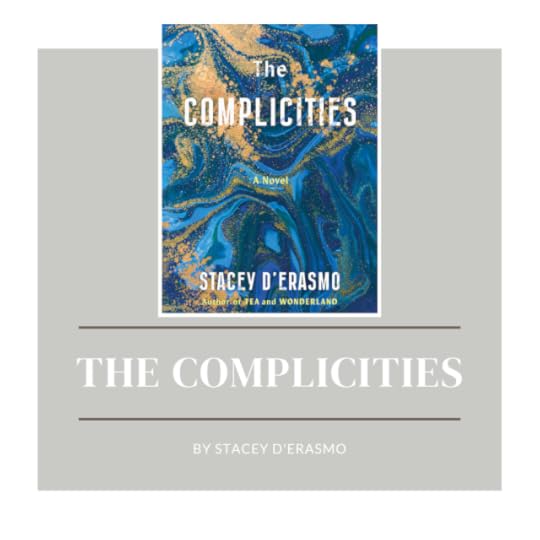
Award-winning author Stacey D’Erasmo tells a haunting and emotionally affecting story about a woman trying to rebuild her life after her husband’s arrest, and what she knew—or pretended not to know— about where their family’s money came from.
After her husband Alan’s decades of financial fraud are exposed, Suzanne’s wealthy, comfortable life shatters. Alan goes to prison. Suzanne files for divorce, decamps to a barely middle-class Massachusetts beach town, and begins to create a new life and identity. Ignoring a steady stream of calls from Norfolk State Prison, she tries to cleanse herself of all connections to her ex-husband. She tells herself that he, not she, committed the crimes.
Then Alan is released early, and the many people whose lives he ruined demand restitution. But when Suzanne finds herself awestruck at a major whale stranding, she makes an apparently high-minded decision that ripples with devastating effect not only through Alan’s life as he tries to rebuild but also through the lives of Suzanne and Alan’s son, Alan’s new wife, his estranged mother, and, ultimately, Suzanne herself.
When damage is done, who pays? Who loses? Who is responsible?
With biting wisdom, The Complicities examines the ways in which the stories we tell ourselves—that we didn’t know, that we weren’t there, that it wasn’t our fault—are also finally stories of our own deep complicity.
Stacey D’Erasmo is the author of the novels Tea, (a New York Times Notable Book of the Year); and A Seahorse Year (a San Francisco Chronicle Best Book of the Year and a Lambda Literary Award winner). Her writing has appeared in the New York Times Magazine, the New York Times Book Review, and Ploughshares. She is currently an assistant professor of writing at Columbia University.
What does it mean to be complicit? Who decides who is complicit? Given it’s a complicity of a crime, what does the complicit person owe? Author Stacey D’Erasmo explores complicities in her new novel “The Complicities”. The narrator, Suzanne Flaherty is now divorced from Alan, who defrauded hundreds of people of millions of dollars in a financial crime reminiscent of Bernie Madoff. After Alan was convicted and sent to prison, Suzanne divorces him and begin a new life. Her college-aged son disowns her because he feels she abandoned Alan and him after the financial debacle.
This is a brooding story, and we are left to wonder how accurate Suzanne’s recollections and opinions are. Much of the tale is Suzanne telling the reader that she knew nothing of what was going on. She did enjoy her wealthy lifestyle; all her job was, was to keep house and arrange family vacations. She didn’t worry her pretty little head over where her husband’s earnings came from. It wasn’t her fault.
Suzanne tells us of her new life. She took an online course to become a physical therapists and feels wronged when the authorities tell her she doesn’t have a “real” PT license. We hear all about how the world is against her.
Meanwhile, Alan is released from prison early, due to good behavior. He gets married again to a woman who has her own past with the law. While married, Alan starts a new building company garnering questionable financing. Suzanne also tells us a bit about Lydia, his new wife.
D’Erasmo makes a female trio by adding Alan’s mother, Sylvia. Sylvia was divorced from Alan’s father and required to give up custody of Alan. She moved away, always saying she’d find Alan, without making any effort into finding him.
All the characters in the story are flawed. None are likable. But then, what type of person would bilk people would of their hard-earned cash? What type of person would be attracted to that sort of person?
This would be a fabulous book club read. Alan, is complex; he ends up doing to his family exactly what his father did to him. But he doesn’t see it. Suzanne has no remorse nor any guilt that her life was supported of ill begotten gains. Lydia seems to suspect Alan might not be above board, but she wants to be supported. There’s a strong case to be made that all were complicit in something. But again, how do we determine who is complicit? How can we see into the minds of others? What obligations does a reasonable person have in being aware?
My only niggle was an inclusion of a whale. The whale story took too much time in the story and added little. Yes, there’s a piece where Suzanne feels like she’s paying back the universe because she’s a volunteer, and there’s a questionable donation to the cause. But, I found it to be distracting. Not enough to not recommend it, just to complain…
I listened to the audio, narrated by Xe Sands. She possesses the perfect brooding voice for Suzanne. I highly recommend the audio.
The Complicities is taken out of real life and put into a larger context about the people themselves.
Suzanne and Adam are a wealthy couple. Suzanne never considers where the money actually comes from and ignores signs that would have led to the truth. When Adam is arrested for running a ponzi scheme Suzanne gets some money. Believing she is doing the right thing she donates the money to charity.
This act denies those who were balked out of their money any financial recourse. Suzanne's action takes a heavy toll on these folks as well as her family. The blind eye that she had turned is explored as it the impact that a crime and a seemingly well-intentioned solution has. Privilege is central to this story.
The exploration of the far reaching implications of white collar crime is woven into the richness of each character that D'Erasmo writes.
A fantastic theme for our current times - how guilty are the supporting parties (in this case family members) when someone commits a crime with real victims
Suzanne flees New York when her husband Allen is jailed for a Bernie Madoff type scheme. She remains our narrator as she describes what happens when Allen is released and finds love anew, how his estranged mother is living and how Suzanne herself tries to live in the aftermath. Shunned by friends, neighbors and her own son, Suzanne is a sympathetic character. The question remains, however, how complicit was she? Filled with themes focusing upon capitalism, climate change, and family, this is a complex book with many characters. If you like modern and contemporary themes in your fiction and well written stories this book is for you! . #Algonquin #Algonquinbooks ##Netgalley #Netgalleyreads #TheComplicities #StaceyDErasmo
A fascinating experiment in what literary fiction can do: absolutely beautiful writing- the first fifty pages of this shook me to my core, just stunning and masterful. Then, the "plot" kicks in and it gets bizarre. I understand the whale as metaphor, I do not understand the 100 pages of describing the biology of the whale. I loved the Lydia parts, I think D'Erasmo shined when it came to characterizing her and describing her circumstances. The Sylvia chapters were nonsensical and the book really careened off course in the last third. I think definitely read this if you appreciate lovely writing and can handle plotless books. Otherwise, not sure I would rec.
Suzanne is a middle-aged woman determined to remake her life after her husband, Alan, is sent to prison for swindling his investment clients out of millions. Armed with the conviction that she was totally uninvolved in Alan’s illegal dealings, she divorces him and starts creating a new life for herself in a small town in Massachusetts. As she builds a nascent massage therapy business in a simple rental property, Alan is released from prison and becomes mired in restitution requirements; and her son, Noah, supports his father and won’t speak to her. When a whale beaches in town, Suzanne gets swept up in the rescue effort, seeing a possibility for her own redemption in the whale and the environmental activism organizations connected to it.
Meanwhile, two other women--Lydia, Alan’s second wife; and Sylvia, Alan’s estranged birth mother--have their own reckonings to make, and the women find their lives intertwined in ways they never could have expected. What each ultimately discovers is that no choice is made, and no action is taken, in a vacuum--and that the lies we tell ourselves are just as dangerous as those we tell others. This novel is a compelling, drawn-from-the-headlines examination of guilt, complicity, and regret.
***Review originally written for the City Book Review. I received a free ARC of this book in exchange for an honest review.***
I don't know why I finished this book. Probably because I usually like D'Erasmo and was eager to read her new work. I hated every character and every plot. I finished it in record time just because I needed to read something else to clear my mind.
In “The Complicities”, by Stacey D’Erasmo, our first-person (and unreliable) narrator, Suzanne Flaherty, begins “her side of the story” as the ex-wife of “Madoff-esque” Alan, who is in prison for financial crimes. Suzanne has pretty much lost everything and moved to an ocean-side village in Massachusetts, hiding in plain sight in a small rental house and driving an old Honda.
She equivocates a lot; “You don’t know how it was.” Suzanne whines. She insists that she didn’t know what Alan was doing, that she wasn’t really complicit, exactly. She compares Alan’s crimes to bigger/worse crimes. She rationalizes.
Suzanne isn’t sympathetic as a formerly rich and highly privileged woman, now laid low and chafing at being both pitied and scorned.
To make money Suzanne becomes a masseuse and starts to develop empathy for her clients through the stories that their bodies tell as she massages them. Still needing more income, she takes a job as a bartender and begins to interact with the denizens of her new home. And then a whale beaches itself and she becomes totally absorbed/obsessed with helping the whale survive and return to the sea.
Suzanne cares more about that whale than she ever did (or will) care about the victims of Alan’s thievery. It seems she thinks that she can “atone” through helping the whale. I’m not sure that symbolism holds up, but you’re going to learn a lot about whales here.
Through Suzanne we also learn about Lydia who is Alan’s current lover, and Alan’s long-lost mother Sylvia. But since we are only exposed to Suzanne’s point of view, we are continually a bit off-kilter about what are truths and what are Suzanne’s warped perceptions.
The story is well-paced, and Suzanne’s head is an interesting one to get into. I read the book in a day, and was intrigued with the questions it raised about complicities and also about ambiguities.
3.5 stars. The writing was good and the exploration of complicity was original. But the characters were not sympathetic and the book dragged and fizzled out at the end. I also didn’t care for the extended sections on the dying whale, which seemed to be wholly symbolic.
The Complicities is a book about three women who live in the shadow of what happens after 50 year old Alan has been convicted for financial fraud. The story is told in Suzanne's perspective, Alan's ex-wife. She claims she was ignorant of his crimes but enjoyed the lavish life his job provided. Suzanne divorces him when he's convicted and ceases all contact. She creates a new life in a blue-collar coastal town in Massachusetts.
After Alan is released early from prison, he lives with his son and lawyer. He eventually meets and marries a younger woman, Lydia. We learn about her complex past and mistakes and what led her to Alan. We also meet Alan’s long estranged mother. She was forced to give up custody of him when he was very young and has led a transient life since.
I found the relationships between these women and with Alan fascinating. He's highly intelligent but makes questionable choices to help his family again and again. I enjoyed pondering the ambiguity of choices we make and the ripple effects that come from them.
It definitely starts out stronger than it ends. The first forty pages or so are masterful, and, honestly, the end isn't terrible... it's just disappointing given the glow of the first half?
Personally, I liked the whale bits.
The thing is that, while it's clear the narrator is not reliable, and it's clear we're being shown something about complicity... it's not clear what? I wanted the book to take a stronger moral stand, to admit who it liked and who it didn't.
And I fear the end of it all is that Noah becomes an MRA douche. There's a lot of failed mothering in this book.
It was truly an effort of will to finish reading this novel. Half the time I was not sure who the narrator was. A suspiciously Madoff ex-wife, Suzanne claims not to have known anything about her husband's Ponzi scheme. Although she claims she knows nothing about money, she has enough sense to take what was left and donate it to an oceanic rescue charity.
It's too bad that the story was so unreal because it's clear that D'Erasmo is a gifted writer. The description of the rotting whale is intense. However, unfortunately, I could not have cared less for Suzanne, Alan, Noah, Sylvia or any of the other minor characters. Meh.
If the author wanted to write a quiet, contemplative book about unlikable, contemplative people who never actually realized anything, she succeeded. I liked the book, but it was annoying to have a book of characters thinking about their problems, blaming others and never realizing their own parts in their hardships. Maybe that’s the point of the book? Aren’t most people this way?
I received a copy of this book from the publisher in exchange for an honest review.
We've all seen the downfall of schemers on the news. Have you ever wondered about their families? How much do they really know and what happens to them now. How deep are their complicities? In this story we meet Alan and try to unravel his web of deceit, mostly through the eyes of his wife Suzanne, who has divorced and distanced herself from both her husband and her son. I flip-flopped back and forth between feeling sad and sorry for every character in this story and then the next minute fuming, thinking "well, what did you expect to happen?!"
This isn't a big *wow* novel but it is definitely a great character study into the ripple effect of white-collar crime and the lies we tell ourselves and others.
Come chat with me about books here, too: Blog | Instagram
When you’re a narrator with a story to tell, you shouldn’t let ignorance get in your way, the way, you think, so much in life already has. When the story you have to tell is of a dysfunctional family with crimes and secrets (that again!), it’s a great relief that the author lets you tell your story (or stories) in a very different way, creating them out of speculation, without clear transitions, complete with tall tales and tailed whales, and meetings that barely or never happen. The prose is solid, but not that special, but the novel’s structure and the narrator’s liberties are wonderful.
I don't know, it was ok. I don't really have strong feelings on this book one way or the other. It was a good enough time waster but I don't think any of this will stick with me.
I believe every character was too self absorbed and not one of them seemed to have any empathy towards others. Even in the end, it didn't feel like anyone really learned anything. Each character just felt still stuck in their ways.
This book had a lot of characters to try to keep track of and so I got a bit lost on who I was supposed to be focused on. I think the plotline was original but kind of dragged. It was a fairly quick read when I could focus on it. I received my advanced copy as a Goodreads giveaway.
Glad I picked this up. We’ll written and thought provoking. How many in a criminal’s life are guilty? How close of a friend? A spouse? A child? A parent? Maybe we are all guilty of levels of awfulness
Suzanne’s perspective fascinated me from beginning to end. Her questions about complicity, her description of the other women in her ex-husband’s life (and what they must have been thinking), her reactions when people hated her, her relationship with the whale, her takes on what was right and good and reasonable: all fascinating.
Even her own admission that she’s “making most of this up” didn’t shake my feeling that she was, in fact, a very reliable narrator- if what you’re interested in is one person’s inner workings. And I love when a book makes me feel like I can get inside someone else’s head.
The characters aren’t all that likable, but I appreciated the mood that brought to the story. People sometimes make bad choices as they try to keep their lives going. And, like Suzanne, I found myself wondering which parts were their fault.
It has a few good passages. The whale storyline is so overdone. By the story's end all that is in my mind is wow...the very definition of white privilege.
I liked the atmosphere of the book more than the book itself. It's hard to explain what that means, but basically I found the voice-over of the narrator to represent a person I would like to meet, and I found the heavy foreshadowing to make me want to read how things turned out as they did. But the writing itself isn't particularly good, and the interwoven stories are only occasionally as interesting as the foreshadowing promises. So overall, this is a decent book that's strongest in general impression, rather than in specific details.
The narrator is a woman in her late-40s with a college age son. Her husband committed financial fraud and was sentenced to prison. She divorced him after the proceedings -- for which she was not charged and was not alleged to have knowledge -- and she's trying to rebuild her life after all of their assets were stripped to pay defrauded investors. In conversation flashbacks, we find out the husband won't take any responsibility for his crimes, but says he was merely making investments and moving accounts like everyone else does, but he was singled out for not following the rules carefully enough. And that is why she left him and won't speak to him at all.
The woman's son won't speak to her because he believes his dad. He's dropped out of college to go into business as the front-man for his dad's attempted comeback as a small-time real estate developer on Cape Cod. The mom doesn't know what her son is doing, and she's very sad about that loss, but has no regrets about tossing her husband, except for wondering how much of those golden years of wealth were real.
As the story unfolds over about a year, she's living in a non-tourist Cape Cod town and struggling to make ends meet by giving massages and working as a bartender. She apparently has a knack for massages and sees them as a way to give back to the world at-large, a miniature amends for her husband's deeds. She's taking her downturn in life reasonably well and trying to live anonymously, even going to her maiden name so that a Google search won't turn her up.
Unknown to her because she won't take his calls from prison, the husband is released early. While he's trying to build these luxury homes that will renew him financially, the story occurs. His lawyer, whom she knows, tries to put her in contact with her husband, but she refuses, and so we are told how that goes after-the-fact. She also in that year comes into contact with a couple of people defrauded by her husband, with predictably ugly encounters, and she has a few minor miscues in her new hometown.
She also spends an inordinate amount of time looking at and thinking about a Right Whale that is beached in the town and ultimately dies. I found the whale part to be compelling at first and then too much, or her searches for metaphor in it to be too much. When I say too much, I'm not saying it's unrealistic, just saying it didn't hold interest for me.
Anyway, things come to a head, and she winds up reconnecting with her son and also meeting her ex-husband's new wife and his mom. We're told right from the start that this will happen, which I didn't mind, and so it's sort of like "here are the pieces of the puzzle" when the events are told late in the book.
Overall, by the end I'm deflated. It's realistic that the world isn't changed by events, even traumatic ones. But it's sometimes hard to make that a compelling statement at the end of a novel. And that's the ultimate feeling here. The descriptions of her town and of the sea and her life as a massage therapist and even of the initial whale rescue are the atmosphere that I said I liked, so I'll grudgingly accept that the plot and characters aren't that interesting. Worth a read, but not a book to reread.
After years of reading literary fiction, I’ve realized that the term “literary” mainly applies to stories centered on love and marriage (or lack of it, or loss of it), birth and death, babies and children, grandparents and grandchildren, kinship networks and all things genealogical. The archetypal “literary” novel has its climax when the main character learns who “the real father” was (or real mother, brother, etc.).
I have virtually no interest in these topics and I'm baffled why anyone would find them interesting, but people do, apparently. I prefer stories, well-told, of course, that have some idea that has not been described ten thousand times before. The best literary novels do. This one doesn’t.
It is nicely written and structured. The whale metaphor in a Massachusetts setting is a bit obvious but nicely handled. The promise of the novel was that it would explore the rippling effects of a financial fraudster on family and friends around him. The evil husband is a Bernie Madoff-like character, not well rounded or motivated, a generic white-collar crook. His crimes, discovery, and prison time are off-page. The book takes the point of view of Suzanne, his wife. She leaves the city and becomes a masseuse in a small seaside town, hoping to start over. But the past catches up with her.
The promised exploration of her possible complicity in her husband’s crooked life is perfunctory. She denies all knowledge of what he was up to, not a completely plausible claim, but this is not a police procedural, so we have no way of judging. Most of the story is not even about that. It’s about a beached whale metaphorically decaying into the sand, representing… what? Her life? Her husband’s crime? The metaphorical ripple effects of his actions? Even the central metaphor is not clear.
Beyond the character's whale obsession (unexplained) she describes her angst about her estranged son, her tense relationship with the husband when he gets out of prison. (I don’t remember if they ever got divorced. If they did, the event passed unnoticed in the pages). She stresses over his new girlfriend and is inexplicably interested in his mother. Several pages are devoted to her genealogical record—literally, the chart of it, as if it were a parody of the literary genre, but it’s no parody. Lengthy scenes are devoted to knitting and colored yarns. I forced myself to stay awake to the end, hoping for some payoff concerning “the complicities,” but there was none.
The reviews were stellar, by people and institutions I would otherwise respect, but my experience was quite negative. For me the book represents the worst of the literary genre. For comparison, some literary novels I have enjoyed include The Great Gatsby, To the Lighthouse, Lolita, The Melancholy of Resistance, Drive Your Plow over the Bones of the Dead, Remains of the Day, Sanctuary, As I Lay Dying, Slaughterhouse Five, Rules of Civility, and anything by Percival Everett. That’s a sample of the “good” literary genre. This book is sampled from the dark side of the genre, in my view, but obviously, others disagree. My rating is therefore as much about me as it is about the book
D’Erasmo, Stacey (2022). The Complicities. Chapel Hill, NC: Algonquin Press, 290 pp.
What an exploration of the opaqueness of morals in people's own minds. Right and wrong seem clear to me. I would never claim I've always acted with integrity, but I know (sometimes it takes a while) in my gut whether I've acted according to my values. However, I'm coming from the luxury of a life that hasn't known abandonment, poverty, or discrimination.
That's not the case for Suzanne, the protagonist of this book. Particularly not for her ex-husband Alan, his second wife Lydia, or Alex's estranged mother, Sylvia. The story starts with Suzanne fleeing Alan and making a new life after his arrest for financial fraud, some kind of Ponzi scheme that left clients holding empty bank accounts instead of the gains they were led to believe. She's fled to a non-touristy town on the Cape, apparently with little money and a fancy, valuable car which she sells. Becoming a hardworking bartender and massage therapist, making friends, and taking an obsessive interest in a beached whale form the structure of her life. She insists, as she tells her story, that she knew nothing about Alan's criminal activity, but we quickly see through that.
Alan's story is told from the viewpoint of Lydia when she meets him doing community service counseling people on debt. She's climbed up from a very hard life and recognizes Alan as a survivor. She sees him more clearly as time goes on, but takes his point of view, that numbers and money are there for the taking if only you're clever.
Noah, Alan and Suzanne's adult son, is estranged from Suzanne, siding with his father who's been outrageously, grievously wronged, and becomes involved in Alan's new life. He, too, takes his dad's viewpoint, that people are out for themselves; vendors and construction workers are "trolls."
This is an unsettling story with disturbing people. I was taken aback by that when I started reading, but really liked it after a few pages in.
This is a beautifully written book, and it contains memorable characters and genuinely moving scenes. But it's missing something, there's more of a sense of emptiness at its core than a beating heart. That's unfortunate, and it impacts the entire novel, as the plot feels loose and meandering.
Part of the issue may be the structure, as the narrator seems to be far less interesting than some of the supporting cast, but nonetheless is essentially engaging in a book length soliloquy where she relates what others were thinking/feeling/doing. The story is centered around the narrator's ex-husband, Alan, who has defrauded investors of vast sums of money. The title suggests the theme of complicity, and implies some emotional examination of how morally responsible the other people in Alan's life are, what they knew or didn't know, how they did or didn't enable him, etc. But it all falls a bit flat. Alan remains an unknowable quantity, which is maybe part of the point, but also makes him a hollow center to build around.
It's also strange that for a book that has so much to do with financial crimes, money in the narrative feels like it mostly exists in the abstract. A large hidden sum is electronically donated with barely a thought. Figures and sums about reparations and building scheme are meant to be pressures and motivations, but it never feels real or tangible.
Then we get to the whale. Which I am sure is supposed to be a metaphor for something, a Moby Dick that you don't have to chase, one that beaches and rots on your shore. But my goodness, the sheer amount of whale detail weighs the already thinly drawn story down like an albatross around its neck.
As a reader, I felt like I spent the whole book waiting for something else to happen, and it just never does.
How responsible are you for other people's actions, especially if you greatly benefit from them? As is indicated, even just by the title, The Complicities by Stacey D'Erasmo finds everyone shoulders the yoke of responsibility. Before her husband's financial malfeasance came to light, Suzanne Flaherty was leading a very good life. But for his crimes, her husband Alan was sent to prison, and her son Noah is ignoring her calls, siding with his father. After divorcing Alan, Suzanne rents a small house in Cape Cod, gets a certificate online in bodywork and gives massages, which she supplements with bartending a few nights a week. She's just able to get by. Suzanne claims that she had no idea what Alan was up to, too busy raising her son and running the family (even when unambiguous evidence was placed before her). Suzanne is slowly rebuilding her life when a right whale beaches nearby, causing a fervor over what to do with it. Suzanne becomes particularly taken by the whale. But this is also the story of Lydia, Alan's second wife, whom he marries once he's released early from prison, and Syliva, Alan's mother, a woman who didn't raise him. How much responsibility should Suzanne feel for these women, and the actions she did and didn't take when it came to Alan? For Alan is the axis that this story revolves around, even when it is Suzanne telling it. There are many incidences that Suzanne butts up against her own complicities and due diligence, where we have to question Suzanne's own story. But this spoked wheel story is unevenly, well, spoked, and everyone's complicities is not as finely explored. And is the whale an actual metaphor or just a whale that takes up a lot of space? Interesting questions are raised though about our purposeful blind spots. Are we all complicit, even when we don't want to be?
(thank you to the publisher for my copy of this book!)
The Complicities is a bit different than the typical fiction I read. At some points, I felt like I was waiting for something else to happen (and that's coming from someone who doesn't need a lot of plots in her books), but for the most part, I enjoyed how it was quiet and that I truly didn't know where the book was going.
Initially the book has some The Widow of Wall Street vibes- at least in terms of plot. Once wealthy Suzanne is going through a divorce after her husband Alan was sent to prison for running a Ponzi scheme. Suzanna wasn't aware he was engaging in illegal activity... Or did she? Maybe she had a feeling? It's not totally clear, which actually felt pretty realistic to me. She ends up moving to the coast of Massachusetts to start anew with very little money and no friends or contacts. Her son won't even speak to her anymore as he's upset she left his father.
Interspersed with details of Suzanne's new life are some details of Alan's life now that he's out of prison early, his new love interest, and his son. Honestly, I could have spent the entire book with Suzanne and been perfectly happy, but I did also enjoy reading about all the different ways people try to move on. There's A LOT about a whale that washes up on shore near where Suzanne lives and how it effects her.
Overall, I think The Complicities is beautifully written and an enjoyable read. It's also pretty short and I ended up reading it very quickly. It probably won't be the kind of book that will blow your mind, but I'm still glad I read it!