

What do you think?

The Second Plane: September 11: Terror and Boredom
A modern classic from one of the most gifted writers of his generation : this collection of essays about 9/11 constitutes a provocative and insightful examination of one of the most momentous events of our time.
“A walking tour of the motley post-September 11th mind — its fears, madnesses, misapprehension and insights.” — New York Observer
At the heart of this collection is the long essay “Terror and Boredom,” an unsparing analysis of Islamic fundamentalism and the West's flummoxed response to it, while other pieces address the invasion of Iraq, the realities of Iran, and Tony Blair's lingering departure from Downing Street (and also his trips to Washington and Iraq).
Whether lambasted for his refusal to kowtow to Muslim pieties or hailed for his common sense, wide reading, and astute perspective, Amis is indisputably a great pleasure to read—informed, elegant, surprising—and this collection a resounding contemplation of the relentless, manifold dangers we live with in the twenty-first century.
“A walking tour of the motley post-September 11th mind — its fears, madnesses, misapprehension and insights.” — New York Observer
At the heart of this collection is the long essay “Terror and Boredom,” an unsparing analysis of Islamic fundamentalism and the West's flummoxed response to it, while other pieces address the invasion of Iraq, the realities of Iran, and Tony Blair's lingering departure from Downing Street (and also his trips to Washington and Iraq).
Whether lambasted for his refusal to kowtow to Muslim pieties or hailed for his common sense, wide reading, and astute perspective, Amis is indisputably a great pleasure to read—informed, elegant, surprising—and this collection a resounding contemplation of the relentless, manifold dangers we live with in the twenty-first century.
224 pages, Paperback
First published January 1, 2008
About the author
Martin Amis
108 books3,071 followersMartin Amis was an English novelist, essayist, and short story writer. His works included the novels Money, London Fields and The Information.
The Guardian writes that "all his critics have noted what Kingsley Amis [his father] complained of as a 'terrible compulsive vividness in his style... that constant demonstrating of his command of English'; and it's true that the Amis-ness of Amis will be recognisable in any piece before he reaches his first full stop."
Amis's raw material is what he sees as the absurdity of the postmodern condition with its grotesque caricatures. He has thus sometimes been portrayed as the undisputed master of what the New York Times has called "the new unpleasantness."
The Guardian writes that "all his critics have noted what Kingsley Amis [his father] complained of as a 'terrible compulsive vividness in his style... that constant demonstrating of his command of English'; and it's true that the Amis-ness of Amis will be recognisable in any piece before he reaches his first full stop."
Amis's raw material is what he sees as the absurdity of the postmodern condition with its grotesque caricatures. He has thus sometimes been portrayed as the undisputed master of what the New York Times has called "the new unpleasantness."
Ratings & Reviews
Friends & Following
Create a free account to discover what your friends think of this book!
Community Reviews
Displaying 1 - 30 of 85 reviews

September 5, 2021
“One World Trade Center (WTC 1, or the North Tower) was hit at 8:46 a.m. Eastern time and collapsed at 10:28 a.m. Two World Trade Center (WTC 2, or the South Tower) was hit at 9:03 a.m. and collapsed at 9:59 a.m.” — Wikipedia
Twenty years later. Yes, I think I can finally read this one now. Though the sight of the North Tower’s collapse—I was on my Upper West Side roof with a few curious neighbors—will always be with me. (I watched the South Tower collapse on TV.) So, this book is very good. Reading it finally was exciting—for Amis is a brilliant writer—but also like a further memorialization. It’s a great refresher too of the details of 911 and also about the events leading up to the needless Iraq and Afghanistan wars. Nevertheless bravely fought by American and coalition forces. George W. Bush and his White House (Rove, Cheney, Rice et al.) are rightly evicerated. But so are the Islamists who want to kill us all (non-Muslims). One interesting point the author makes: he doesn’t think there will ever again be an opportunity for men pursuing a death cult to use passenger airliners like cruise missiles. Cold comfort, if true.
Twenty years later. Yes, I think I can finally read this one now. Though the sight of the North Tower’s collapse—I was on my Upper West Side roof with a few curious neighbors—will always be with me. (I watched the South Tower collapse on TV.) So, this book is very good. Reading it finally was exciting—for Amis is a brilliant writer—but also like a further memorialization. It’s a great refresher too of the details of 911 and also about the events leading up to the needless Iraq and Afghanistan wars. Nevertheless bravely fought by American and coalition forces. George W. Bush and his White House (Rove, Cheney, Rice et al.) are rightly evicerated. But so are the Islamists who want to kill us all (non-Muslims). One interesting point the author makes: he doesn’t think there will ever again be an opportunity for men pursuing a death cult to use passenger airliners like cruise missiles. Cold comfort, if true.

January 10, 2018
L'ho preso da Libraccio perché mi piacciono troppo i supercoralli, specialmente a metà prezzo, per la copertina bellissima che ricorda quella di Underworld e perché di Amis avevo appena letto La Freccia del Tempo che mi aveva impressionato (quasi turbato).
Il secondo aereo è in realtà una raccolta di articoli scritti tra il 2001 ed il 2007 sul Guardian e sul Times riguardanti l' 11 settembre ed il terrorismo islamico in generale.
L' articolo sul quotidiano è genere letterario soggetto a rapido oblio e la raccolta in volume non basta a renderli memorabili e nemmeno qui si sfugge alla regola.
Il punto di vista di Amis è sostanzialmente quello di considerare il fanatismo religioso - ed in particolare quello islamico - come l' indice inequivocabile di arretratezza culturale: come e più dei fanatismi ideologici che abbiamo ben conosciuto nella prima metà del '900 (Amis ci tiene sempre ad assimilare alla stessa stregua nazismo e stalinismo) sono un concentrato di pulsione di morte, risentimento, frustrazione sessuale e volontà di sottomissione.
A ciò si contrappone il pensiero laico e liberale, erede dell'illuminismo, che ha originato le società occidentali, aperte e tolleranti.
Questo lo schematismo concettuale (abbastanza tagliato con l'accetta e sempre nell'ottica dello scontro di civiltà) secondo il quale Amis ci dice più volte che è inutile sperare nel famoso islam moderato, perché in questa guerre etno-religiose bisogna aspettare che anche loro (gli islamici) facciano le loro brave guerre dei 100 anni, il loro illuminismo ed una volta pervenuti - forse fra tre secoli – ad una condizione culturalmente evoluta, si potrà trovare un terreno comune.
Il Medio Oriente tutto è stato per un secolo e più depredato e arbitrariamente spartito dagli "stati democratici", che hanno messo insieme quello che insieme non poteva stare (l'Iraq) e separato quello che invece doveva stare unito (i Curdi), tracciando confini a seconda delle convenienze e dell strumentali convergenze di interessi con questo o quel ras locale, opportunamente corrotto.
Seguendo il ragionamento di Amis circa il processo di conquista del pensiero laico e liberale, proviamo a pensare cosa sarebbe successo se a Lepanto avessero vinto i Turchi e se l'assedio di Vienna fosse andato a buon fine e che sulle beghe tra principi protestanti e cattolici in Germania e tra Ugonotti e papisti in Francia ci avesse ficcato il naso e fatto il bello ed il cattivo tempo il sultano di turno, con il solo scopo di sottomettere gli uni e gli altri. Ho come l'impressione che la nascita della nostra tanto amata tolleranza, che pure nasce con Cartesio e Spinoza come reazione all' insostenibilità del bellum omnium contra omnes delle guerre di religione, avrebbe fatto un po' più fatica ad affermarsi.
Amis rappresenta la nostra visione laica, liberale e tollerante (tanto vale che dica direttamente anglosassone) come una conquista storicamente conseguita, ma al tempo stesso come un traguardo che segna in qualche modo "la fine della storia", un valore in sè. A parte che ci abbiamo messo un bel po' a darlo per acquisito: hanno dato il Nobel per la pace all'Unione Europea perché ormai sono quasi settant'anni che non ci sterminiamo più a vicenda, attività che ci ha visti impegnati per un cinque secoli circa, con punte numericamente eccellenti proprio meno di un secolo fa. Ed il bello è che già questo concetto di tolleranza e razionalità (ed in questo gli articoli di Amis sono già belli datati) è messo parecchio in crisi dalla piega che le nostre società stanno prendendo. Se sono fanatici gli islamici, in quanto culturalmente ritardati, Amis dovrebbe dirci qualcosa sui blog dei no vax, le pagine facebook delle mammepancine e sui discorsi di Di Maio.
Leggendo un lavoro di uno studente per la laurea triennale che trattava l'argomento Islam concentrandosi sul concetto di ummah, ho scoperto cose interessanti che forse non tutti sanno: il concetto cardine di ummah come universalità del popolo musulmano viene rinverdito e teorizzato in epoca moderna dagli arabi in funzione anti turca. E' quindi originariamente un concetto etnico (i Turchi erano altrettanto islamici) e non religioso, Tra i principali propugnatori dell'ideale panarabo militavano nelle elite militari e dell'apparato amministrativo dell'impero ottomano, spesso arabi di etnia, ma cristiani di religione, formatisi prevalentemente in occidente, in particolare in Germania.
Passando per l'esperienza della Repubblica Araba Unita, il nasserismo e la fine degli imperi coloniali, ecco che da concetto identitario etnico è divenuto religioso. Ciò non toglie che i primi teorizzatori dell'ummah possono aver benissimo aver studiato Hegel e Kant.
Un'evoluzione ben paradossale della storia e ben più complessa di come ce la vuole presentare Amis con la sua strumentazione concettuale anglo-centrica.
Che poi abbia una scrittura sempre affilata e ricca di pathos e che non risparmi strali anche per Bush e Blair e la loro pretesa di fare una nuova Yalta nel Medioriente senza terzo incomodo, fa sì che la voglia di approfondire l'autore sia addirittura aumentata, ma per quanto riguarda l'essenza di questo Secondo aereo, quasi quasi tanto vale leggere un articolo di Giuliano Ferrara.
Il secondo aereo è in realtà una raccolta di articoli scritti tra il 2001 ed il 2007 sul Guardian e sul Times riguardanti l' 11 settembre ed il terrorismo islamico in generale.
L' articolo sul quotidiano è genere letterario soggetto a rapido oblio e la raccolta in volume non basta a renderli memorabili e nemmeno qui si sfugge alla regola.
Il punto di vista di Amis è sostanzialmente quello di considerare il fanatismo religioso - ed in particolare quello islamico - come l' indice inequivocabile di arretratezza culturale: come e più dei fanatismi ideologici che abbiamo ben conosciuto nella prima metà del '900 (Amis ci tiene sempre ad assimilare alla stessa stregua nazismo e stalinismo) sono un concentrato di pulsione di morte, risentimento, frustrazione sessuale e volontà di sottomissione.
A ciò si contrappone il pensiero laico e liberale, erede dell'illuminismo, che ha originato le società occidentali, aperte e tolleranti.
Questo lo schematismo concettuale (abbastanza tagliato con l'accetta e sempre nell'ottica dello scontro di civiltà) secondo il quale Amis ci dice più volte che è inutile sperare nel famoso islam moderato, perché in questa guerre etno-religiose bisogna aspettare che anche loro (gli islamici) facciano le loro brave guerre dei 100 anni, il loro illuminismo ed una volta pervenuti - forse fra tre secoli – ad una condizione culturalmente evoluta, si potrà trovare un terreno comune.
Il Medio Oriente tutto è stato per un secolo e più depredato e arbitrariamente spartito dagli "stati democratici", che hanno messo insieme quello che insieme non poteva stare (l'Iraq) e separato quello che invece doveva stare unito (i Curdi), tracciando confini a seconda delle convenienze e dell strumentali convergenze di interessi con questo o quel ras locale, opportunamente corrotto.
Seguendo il ragionamento di Amis circa il processo di conquista del pensiero laico e liberale, proviamo a pensare cosa sarebbe successo se a Lepanto avessero vinto i Turchi e se l'assedio di Vienna fosse andato a buon fine e che sulle beghe tra principi protestanti e cattolici in Germania e tra Ugonotti e papisti in Francia ci avesse ficcato il naso e fatto il bello ed il cattivo tempo il sultano di turno, con il solo scopo di sottomettere gli uni e gli altri. Ho come l'impressione che la nascita della nostra tanto amata tolleranza, che pure nasce con Cartesio e Spinoza come reazione all' insostenibilità del bellum omnium contra omnes delle guerre di religione, avrebbe fatto un po' più fatica ad affermarsi.
Amis rappresenta la nostra visione laica, liberale e tollerante (tanto vale che dica direttamente anglosassone) come una conquista storicamente conseguita, ma al tempo stesso come un traguardo che segna in qualche modo "la fine della storia", un valore in sè. A parte che ci abbiamo messo un bel po' a darlo per acquisito: hanno dato il Nobel per la pace all'Unione Europea perché ormai sono quasi settant'anni che non ci sterminiamo più a vicenda, attività che ci ha visti impegnati per un cinque secoli circa, con punte numericamente eccellenti proprio meno di un secolo fa. Ed il bello è che già questo concetto di tolleranza e razionalità (ed in questo gli articoli di Amis sono già belli datati) è messo parecchio in crisi dalla piega che le nostre società stanno prendendo. Se sono fanatici gli islamici, in quanto culturalmente ritardati, Amis dovrebbe dirci qualcosa sui blog dei no vax, le pagine facebook delle mammepancine e sui discorsi di Di Maio.
Leggendo un lavoro di uno studente per la laurea triennale che trattava l'argomento Islam concentrandosi sul concetto di ummah, ho scoperto cose interessanti che forse non tutti sanno: il concetto cardine di ummah come universalità del popolo musulmano viene rinverdito e teorizzato in epoca moderna dagli arabi in funzione anti turca. E' quindi originariamente un concetto etnico (i Turchi erano altrettanto islamici) e non religioso, Tra i principali propugnatori dell'ideale panarabo militavano nelle elite militari e dell'apparato amministrativo dell'impero ottomano, spesso arabi di etnia, ma cristiani di religione, formatisi prevalentemente in occidente, in particolare in Germania.
Passando per l'esperienza della Repubblica Araba Unita, il nasserismo e la fine degli imperi coloniali, ecco che da concetto identitario etnico è divenuto religioso. Ciò non toglie che i primi teorizzatori dell'ummah possono aver benissimo aver studiato Hegel e Kant.
Un'evoluzione ben paradossale della storia e ben più complessa di come ce la vuole presentare Amis con la sua strumentazione concettuale anglo-centrica.
Che poi abbia una scrittura sempre affilata e ricca di pathos e che non risparmi strali anche per Bush e Blair e la loro pretesa di fare una nuova Yalta nel Medioriente senza terzo incomodo, fa sì che la voglia di approfondire l'autore sia addirittura aumentata, ma per quanto riguarda l'essenza di questo Secondo aereo, quasi quasi tanto vale leggere un articolo di Giuliano Ferrara.

July 17, 2026
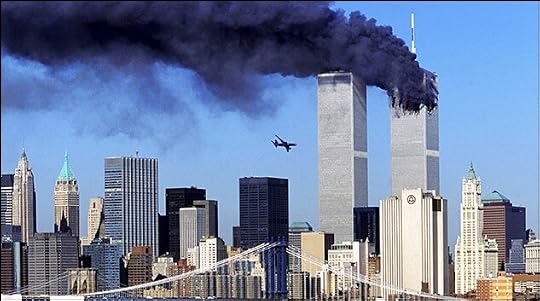
Pöpecül sokszínű kis kötet. Van benne esszé, recenzió, riport, sőt még két novella is. (De a novellákról később.) Ami összeköti őket, az az, hogy valamennyi szeptember 11-re reflektál. No most szeptember 11. (azaz: a 9/11) bizonyos értelemben a generációnk közös traumája, az Amerikai sérthetetlenség mítoszának halála. Azt tartják, hogy mindenki emlékszik rá, mit csinált 2001. szeptember 11-én. Hát, ami engem illet, azt hiszem, az azóta bezárt Queen sörözőben hallottam a hírt, de mérget nem vennék rá. Mindenesetre akkoriban sok időt töltöttem ott, szóval valószínűnek tűnik.
Ami Amist illeti, természetesen maximálisan megütötte a hír. Nem is szűnik meg folyamatosan reflektálni rá. Gondolatainak középpontjában pedig a fanatizmus bírálata áll, ami egyben az intézményesített vallások bírálata is. Amis indulatosan elutasítja, hogy a merénylőket "meg kell érteni", mégpedig velejéig ateista érvrendszerrel: úgy véli, ha a hitbéli dolgokat az értelem eszközével vizsgáljuk, akkor vakvágányra futunk. Számára a radikális iszlamizmus (és egyáltalán, minden vallási radikalizmus, ifjabb Bush humortalan kereszténységét is beleértve) kábé a legrosszabb dolog, amit az emberi civilizáció ki tudott termelni. Nem is érdemel megértést, véletlen sem szabad rá úgy tekinteni, mint egy szegény, kisemmizett osztály szabadságharcára - egyszerűen azért, mert nem szabadságharc, hanem hódító háború, ami nagyjából mindent ki akar törölni a létezésből, amiért élni érdemes. Az öngyilkos merénylő nem mártír, hanem agresszor, aki magát Isten hangjának hiszi, de valójában csak azt nem tudja megbocsátani a nyugati társadalomnak, hogy az jól érzi magát. Ez nem igazságérzet, ez szimpla irigység. A fanatikus teljesen híján van az önvizsgálatnak: ha merevedése támad egy női térdtől, akkor nem magában keresi az okot, hanem a komplett női nemet nevezi meg bűnösként. És még képmutató is, mert amikor felrobbantja magát, azt nem Allahért teszi, hanem a tízezer huriért a másvilágon, meg a borért, amit ott végre büntetlenül fogyaszthat.
Kemény ítéletek, néha kifejezetten provokatív módon megfogalmazva. És akkor visszatérnék a novellákra, ahogy az elején ígértem. Mert szerintem fantasztikus látni egymás mellett az esszét és a fikciót. Előbbiben Amis megpróbál lelkiismeretesen körbejárni egy gondolatot, utóbbiban pedig látjuk ezeknek a gondolatoknak az egyik elemét az irodalom eszközeivel átdolgozva és - mondjuk így - szabaddá téve. Amíg az esszét köti a tényszerűség és a formális logika, addig a fikció ezekből inspirálódik ugyan, de a képzelet tágas mezein barangolhat. Amíg az esszé válaszokat keres, addig a fikció a kérdések terét teremti meg. Piszok tanulságos ezt premier plánban figyelni.

July 30, 2018
Ci sono libri che hanno un titolo semplicemente perfetto. Il secondo aereo è il titolo perfetto – direi, definitivo – per un saggio composto da una serie di articoli sull’11 settembre. Perché, come osserva acutamente Amis, è con il secondo aereo e con la sua oscena traiettoria diretta verso la morte che il mondo si è reso conto di non trovarsi semplicemente di fronte al peggior incidente della storia, ma di avere a che fare con un istante che ne avrebbe cambiato Storia, confini, abitudini, sensazioni.
Ecco, Il secondo aereo contiene tonnellate di spunti simili. Amis è un osservatore lucidissimo, che siano passate poche ore dell’attentato o qualche anno (la raccolta include articoli fino al 2007), che si tratti di indagare la psicologia personale o di tracciare una sintesi storiografica di larga scala.
Un altro esempio:
“Un’insolita schiera di romanzieri ha deciso di scrivere articoli sull’11 settembre, come hanno fatto notare con maggiore o minore insofferenza tanti giornalisti. Io so dirvi che cosa facevano quei romanzieri: cercavano di guadagnare tempo. Il libro a cui stavano lavorando si era ridotto, dall’oggi al domani, allo sbaffo azzurro di un balbettio autistico”
Poi certo, per restare nel tema del confronto narratore-giornalista, c’è anche un po’ di Amis romanziere: nelle pagine che immaginano le ultime ore di uno degli attentatori o nella storia di un immaginario sosia del Dittatore. Ma quello che prevale è, appunto, una vista totalmente a fuoco, senza una sfocatura, della Vita Dopo l’11 Settembre. A volte politicamente schierata, per alcuni aspetti difficile da condividere (penso a una laicità di fondo che sfiora il nichilismo), ma sempre clamorosamente affascinante.
Ecco, Il secondo aereo contiene tonnellate di spunti simili. Amis è un osservatore lucidissimo, che siano passate poche ore dell’attentato o qualche anno (la raccolta include articoli fino al 2007), che si tratti di indagare la psicologia personale o di tracciare una sintesi storiografica di larga scala.
Un altro esempio:
“Un’insolita schiera di romanzieri ha deciso di scrivere articoli sull’11 settembre, come hanno fatto notare con maggiore o minore insofferenza tanti giornalisti. Io so dirvi che cosa facevano quei romanzieri: cercavano di guadagnare tempo. Il libro a cui stavano lavorando si era ridotto, dall’oggi al domani, allo sbaffo azzurro di un balbettio autistico”
Poi certo, per restare nel tema del confronto narratore-giornalista, c’è anche un po’ di Amis romanziere: nelle pagine che immaginano le ultime ore di uno degli attentatori o nella storia di un immaginario sosia del Dittatore. Ma quello che prevale è, appunto, una vista totalmente a fuoco, senza una sfocatura, della Vita Dopo l’11 Settembre. A volte politicamente schierata, per alcuni aspetti difficile da condividere (penso a una laicità di fondo che sfiora il nichilismo), ma sempre clamorosamente affascinante.

March 24, 2008
This book is a collection of 14 pieces by Amis relating to 9/11 and its aftermath, starting with his initial reaction on 9/18/01 and ending with a piece published 9/11/07. Amis has provoked fellow liberals by throwing their ideology of restrained multicultural relativism in their face, accusing them of not seeing the stark reality of the Islamists agenda. He carefully explains that this is not crude Islamophobia but rather the more particular fear of militant Islam as jihad by Islamists bend on martyrdom; Islamistophobia - those who have forsaken all else in the pursuit of jihad against the West, the destruction of infidels (Muslim and non-Muslim) everywhere: to them, death is nothing, this world is nothing. Amis argues that this distinction is necessary in understanding the true horror in the recrudescence of fervent and unyielding religious belief in the new century. No stranger to total belief systems (see his 'Koba the Dread') Amis has raised the ire of all those unwilling to shed the blinkers of western, liberal PC thought. I don't want him to be right, and I'm afraid of what his being right would entail. A work of topical non-fiction horror, where Amis's views should not be assailed with anything less sophisticated than the very rigorous thinking Amis himself has displayed.
April 12, 2011
Avoid this drivel at all costs. Amis is an Idiot and a Racist. Not only does the book read like a money grabbing piece of trash that promotes Muslim bashing, heightening and using the fear produced from 9/11, it also misquotes (because of the rush to publish it before that fear wore off). I will never read a book by Amis for as long as I live.

April 19, 2017
I borrowed The Second Plane from my Dad as it sounded fascinating, and I was in the mood for an essay collection. Amis is a very good writer, and each of these pieces, all of which revolve around the 9/11 attack on the World Trade Center in New York, has been thoughtfully informed. Whilst looking at the attack itself, Amis also discusses religion, 'cultification', literature, world leaders, his own writing, and differing outcomes of such attacks. The pieces here, many of which were published in newspapers, are arranged in chronological order.
Amis is undoubtedly opinionated about everything which he writes about, but one gets the impression that he has come to his own conclusions by observing and reading as widely as possible. Whilst The Second Plane is a touch slanted in terms of the author's politics, as any such collection would be, it is engaging and distinctive. The two short stories included were a nice addition to break up the horror within the journalistic pieces; 'The Last Days of Muhammad Atta' was a well-imagined foray into an incredibly troubled mind.
Amis is undoubtedly opinionated about everything which he writes about, but one gets the impression that he has come to his own conclusions by observing and reading as widely as possible. Whilst The Second Plane is a touch slanted in terms of the author's politics, as any such collection would be, it is engaging and distinctive. The two short stories included were a nice addition to break up the horror within the journalistic pieces; 'The Last Days of Muhammad Atta' was a well-imagined foray into an incredibly troubled mind.

March 31, 2014
What the hell happened to Martin Amis?
Years ago now, Amis first entertained me with his hilarious novel Money, a supercharged satire on 1980's greed. Then he intrigued me with his amnesiac mystery story Other People (I was only fifteen at the time), and dazzled me with the linguistic audacity of his time reversal story, Time's Arrow.
Admittedly, he then aggravated me with the narrative heavy-handedness of London Fields, and all but bored me to atrophy with its pointless redux, The Information. It seemed as though the celebrity had blunted his focus.
And then came 9/11 and the 'War on Terror'.
There couldn't have been a writer in the world who wasn't haunted and influenced by what happened that morning as the hijacked planes crashed into the twin towers of the World Trade Centre. But as the shock cleared, most of them recognized what they saw as an audacious act of terrorism committed by a pitifully under-resourced rag-bag of extremists on an administration asleep at the wheel.
Amis, however, saw an End of Days battle between East and West.
Though Amis quite rightly derides George Bush and his neo-Con cronies in some of the articles in this collection of journalistic pieces, reviews, and two short stories, it's worth pointing out that he seemed to see exactly the same thing the neo-Con nimconpoops wanted everyone to see.
In the central, infuriating article here, titled 'Terror and Boredom: The Dependent Mind', Amis says quite clearly and more than once: 'Naturally we respect Islam. But we do not respect Islamism'. Yet read this book and the dubious use of the impersonal pronoun in that statement comes across as revealing more than it should.
In fact, if you read this book I am sure that you will conclude, as I have, that Amis does not in the least respect Islam. He hates it. He fears it. To him, in the wake of 9/11 every male Moslem has become a potential terrorist, just as every boyfriend becomes a potential rapist to a paranoid father whose daughter has just come of age.
Seemingly in need of a bogey-man worthy of the name, Amis, just like Bush and Blair, wants to imagine a cataclysmic enemy in order to replace the temporarily supine Russians (yep, that's right, temporarily supine Russians: how did anyone think that a country with that size, natural resources and a nuclear arsenal had really been 'defeated' in the Cold War?).
Amis rues that the title '9/11' has come to denote the tragedy, that it demeans and dishonors the victims, trivializing the horror by reducing it to numerals, yet more than once he refers to the Iraq War as a 'misadventure'- a misadventure, incidentally, where tens of thousands of Iraqis were killed by the US carpet bombing of Baghdad.
Can you, like me, detect something very revealing in that, just like with that editorial 'we' I picked out earlier? It's another clear indication of Amis's belief of a all-encompassing battle between East and West, of a simple narrative featuring a Goodie and a Baddie, where the show-down could go either way.
Of course, what the jihad and the War on Terror really amounts to is the story of an unfortunate generation of arrogant, blithely religious politicians against a handful of hateful and delusional extremists, with a benign cast of billions looking on at both combatants with fear and incredulity.
Amis would disagree with me though, accuse me of 'moral equivalence' and call me a liberal, which is very much a pejorative term in his book. Does he really believe that trying to have empathy and understanding for people who don't see the world as you do is a fatal weakness that will inevitably lead the world to armageddon?
But he's not completely blinded by the impact of the second plane. As I mentioned earlier, he recognizes Bush as the 'dry drunk' he is, isn't fooled by the changing casus belli of the Irag War, although he won't just come out and call it what it was, a convenient target chosen by an administration that felt it had to 'strike back' at someone, anyone.
Likewise, he warns against the merging of religion and politics, rightly abhors the misogyny and persecution of the minority where this has happened in Islamic states. He's long been a vocal atheist, or 'agnostic' as he choses to refer to himself here ('The Voice of the Lonely Crowd'), but all history bares him out on this point.
Amis has a mighty vocabulary, which can be a great asset as a novelist (although he often overdoes it), but as a journalist he just comes across as a show-off. You can't speak from the heart and grab for a thesaurus at the same time.
In the reviews he rarely mentions the thing he is actually supposed to be reviewing (e.g. the film United 93) and in one instance ('Demographics') while reviewing the book America Alone: The End of the World as We Know it he again reveals his state of mind by registering concern at the birthrate in Islamic countries.
Elsewhere he illustrates his points about geopolitics with far too many quotes and phrases from other novelists. Fair enough in a way, he is, after all a novelist himself, it's the lexicon he knows best; but do Updike, Mailer and Naipul etc really know so much about terrorism? Anyone who has read Updike's novel Terrorist would certainly conclude that he didn't for starters.
Ultimately a feeling of contempt and paranoia towards the religion of Islam and not just the extremists - and therefore towards the hundreds of millions of Moslems without any desire for violence or world domination - pervades these pages like a poorly closeted smell.
His disgust tainted what should have been the collections strong points yet managed to be the nadir, the two short stories. Far more than merely unconvincing, they were truly terrible.
But at least he spared us a third short story, one he pulled the plug on yet talked us through in the 'Terror and Boredom' article. Called 'The Unknown Known', it was best left unknown.
Years ago now, Amis first entertained me with his hilarious novel Money, a supercharged satire on 1980's greed. Then he intrigued me with his amnesiac mystery story Other People (I was only fifteen at the time), and dazzled me with the linguistic audacity of his time reversal story, Time's Arrow.
Admittedly, he then aggravated me with the narrative heavy-handedness of London Fields, and all but bored me to atrophy with its pointless redux, The Information. It seemed as though the celebrity had blunted his focus.
And then came 9/11 and the 'War on Terror'.
There couldn't have been a writer in the world who wasn't haunted and influenced by what happened that morning as the hijacked planes crashed into the twin towers of the World Trade Centre. But as the shock cleared, most of them recognized what they saw as an audacious act of terrorism committed by a pitifully under-resourced rag-bag of extremists on an administration asleep at the wheel.
Amis, however, saw an End of Days battle between East and West.
Though Amis quite rightly derides George Bush and his neo-Con cronies in some of the articles in this collection of journalistic pieces, reviews, and two short stories, it's worth pointing out that he seemed to see exactly the same thing the neo-Con nimconpoops wanted everyone to see.
In the central, infuriating article here, titled 'Terror and Boredom: The Dependent Mind', Amis says quite clearly and more than once: 'Naturally we respect Islam. But we do not respect Islamism'. Yet read this book and the dubious use of the impersonal pronoun in that statement comes across as revealing more than it should.
In fact, if you read this book I am sure that you will conclude, as I have, that Amis does not in the least respect Islam. He hates it. He fears it. To him, in the wake of 9/11 every male Moslem has become a potential terrorist, just as every boyfriend becomes a potential rapist to a paranoid father whose daughter has just come of age.
Seemingly in need of a bogey-man worthy of the name, Amis, just like Bush and Blair, wants to imagine a cataclysmic enemy in order to replace the temporarily supine Russians (yep, that's right, temporarily supine Russians: how did anyone think that a country with that size, natural resources and a nuclear arsenal had really been 'defeated' in the Cold War?).
Amis rues that the title '9/11' has come to denote the tragedy, that it demeans and dishonors the victims, trivializing the horror by reducing it to numerals, yet more than once he refers to the Iraq War as a 'misadventure'- a misadventure, incidentally, where tens of thousands of Iraqis were killed by the US carpet bombing of Baghdad.
Can you, like me, detect something very revealing in that, just like with that editorial 'we' I picked out earlier? It's another clear indication of Amis's belief of a all-encompassing battle between East and West, of a simple narrative featuring a Goodie and a Baddie, where the show-down could go either way.
Of course, what the jihad and the War on Terror really amounts to is the story of an unfortunate generation of arrogant, blithely religious politicians against a handful of hateful and delusional extremists, with a benign cast of billions looking on at both combatants with fear and incredulity.
Amis would disagree with me though, accuse me of 'moral equivalence' and call me a liberal, which is very much a pejorative term in his book. Does he really believe that trying to have empathy and understanding for people who don't see the world as you do is a fatal weakness that will inevitably lead the world to armageddon?
But he's not completely blinded by the impact of the second plane. As I mentioned earlier, he recognizes Bush as the 'dry drunk' he is, isn't fooled by the changing casus belli of the Irag War, although he won't just come out and call it what it was, a convenient target chosen by an administration that felt it had to 'strike back' at someone, anyone.
Likewise, he warns against the merging of religion and politics, rightly abhors the misogyny and persecution of the minority where this has happened in Islamic states. He's long been a vocal atheist, or 'agnostic' as he choses to refer to himself here ('The Voice of the Lonely Crowd'), but all history bares him out on this point.
Amis has a mighty vocabulary, which can be a great asset as a novelist (although he often overdoes it), but as a journalist he just comes across as a show-off. You can't speak from the heart and grab for a thesaurus at the same time.
In the reviews he rarely mentions the thing he is actually supposed to be reviewing (e.g. the film United 93) and in one instance ('Demographics') while reviewing the book America Alone: The End of the World as We Know it he again reveals his state of mind by registering concern at the birthrate in Islamic countries.
Elsewhere he illustrates his points about geopolitics with far too many quotes and phrases from other novelists. Fair enough in a way, he is, after all a novelist himself, it's the lexicon he knows best; but do Updike, Mailer and Naipul etc really know so much about terrorism? Anyone who has read Updike's novel Terrorist would certainly conclude that he didn't for starters.
Ultimately a feeling of contempt and paranoia towards the religion of Islam and not just the extremists - and therefore towards the hundreds of millions of Moslems without any desire for violence or world domination - pervades these pages like a poorly closeted smell.
His disgust tainted what should have been the collections strong points yet managed to be the nadir, the two short stories. Far more than merely unconvincing, they were truly terrible.
But at least he spared us a third short story, one he pulled the plug on yet talked us through in the 'Terror and Boredom' article. Called 'The Unknown Known', it was best left unknown.
December 20, 2008
Haven't read this author before. Very high level of verbal fluency, and I have the nagging thought that I should have gotten more out of this collection of essays (with a couple short stories mixed in, oddly). Very little actually stuck with me, though. I'd finish one and then a couple hours later realize that aside from attitude and rhetorical flourish all I could recall was "waiting in line at airport security is boring and has gotten worse since 9/11", "if you follow a politician like Tony Blair around all day you see that they have to put up with a lot of BS and pretend to be interested, smile at the public, etc.", "9/11 changed everything", "radical Islamism is dangerous and has parallels with Nazism" and other true but unremarkable points.
Read
September 9, 2024While I enjoyed the book and read much of it with great interest, I am holding Martin Amis to blame for the poor mark I received on last week's modern history homework. Dr. Cove handed me my sheet back this morning, which was marked (somewhat irregularly, I must say) with many dashings of her daunting red pen. Question marks floated around the introduction—sometimes two next to each other—and whole sentences in the essay's body had been decapitated, thrown off like melon rind, the spongy, apparently worthless marrow of my argument. Her advice, scribbled at the page's bottom? "Take it down a notch."
If there is a "rule" that Amis's prose most flagrantly casts off, it is the idea that journalism (which is, at least under Martin's monocle, a kind of literature) should be somehow stripped-down, destylized and, in the process, attenuated. The Second Plane adjusts the notch, but only barely.
Approaching real-life atrocity (a break from his usual satirical fiction), Amis does take some care to ensure that his writing is tasteful and reasoned. His insights are similar to those of his friends, Sam Harris and Christopher Hitchens—two of New Atheism's (queue a clenching of the teeth in cringe) self-proclaimed "Four Horsemen". And indeed he quotes from the pair incessantly.
Although for me at least, Amis's book is cleverer than Harris's The End of Faith or 2003 Christopher Hitchens (which, in fairness, was Hitchens at his worst). Sure, he flaunts his inimitable style with great grace and uncharacteristic brevity, and uses it, as Hitchens did, to rail against the Great Boredom that is an Islamist worldview, providing antidotes both aesthetic and logical. But he also accesses—every once in fifty pages—a kind of pathos that the New Atheists were too drunk on anger and pretend ratiocination to ever even grasp at.
In "What Will Remain of Us", Amis contemplates United Airlines Flight 93. This was the final flight to be commandeered by terrorists on September 11. Passengers aboard famously launched a counter-coup. Amis captures the "desperate suddenness" of this last-ditch attempt at living: "They are coming down the aisle with their weapons—knives, wine bottles, boiling water." Ultimately, we readers well know, the event will end in tragedy, as at 10:03:11 (to the second—another sickening specific) the plane crashed into an empty field, killing forty women, children and men (as well as four terrorists).
Amis imagines the unbelievable scene of a parent, moments earlier, explaining what has occurred to her child: "'What's happening?' 'Well, you see, my child, the men with the bloodstained knives think that if they kill themselves, and all of us, we will stop trying to destroy Islam and they will go at once to a paradise of women and wine.'"
This is the sort of incident one might find in a book by Sam Harris or Richard Dawkins, were either of them imaginative-enough writers; instead, Amis subverts the scene, retreating from glib hypotheticals into a stunningly unembellished reckoning with death, terror and—ew!—love: "No," he responds to his own scenario: "I suppose you would just tell him or her that you loved them, and he or she would tell you that they loved you too. Love is an abstract noun, something nebulous. And yet love turns out to be the only part of us that is solid, as the world turns upside down and the screen goes black. We can't tell if it will survive us. But we can be sure that it's the last thing to go."
Ma'am, next task will almost certainly be better. And by better I mean better-written. Last week, I stole an unconscionable number of phrases & idioms from this great stylist's carcass, his still-electric, self-proclaimed "independent mind". But this week I have also admired his expansive empathy, moral seriousness and erudition. The bug that proffers long-winded sentences, excessive digressions and yawnable facetiousness has at last dug its sinister, white teeth out of the back of my neck and buzzed off somewhere. Just wait till you see next week's homework.
If there is a "rule" that Amis's prose most flagrantly casts off, it is the idea that journalism (which is, at least under Martin's monocle, a kind of literature) should be somehow stripped-down, destylized and, in the process, attenuated. The Second Plane adjusts the notch, but only barely.
Approaching real-life atrocity (a break from his usual satirical fiction), Amis does take some care to ensure that his writing is tasteful and reasoned. His insights are similar to those of his friends, Sam Harris and Christopher Hitchens—two of New Atheism's (queue a clenching of the teeth in cringe) self-proclaimed "Four Horsemen". And indeed he quotes from the pair incessantly.
Although for me at least, Amis's book is cleverer than Harris's The End of Faith or 2003 Christopher Hitchens (which, in fairness, was Hitchens at his worst). Sure, he flaunts his inimitable style with great grace and uncharacteristic brevity, and uses it, as Hitchens did, to rail against the Great Boredom that is an Islamist worldview, providing antidotes both aesthetic and logical. But he also accesses—every once in fifty pages—a kind of pathos that the New Atheists were too drunk on anger and pretend ratiocination to ever even grasp at.
In "What Will Remain of Us", Amis contemplates United Airlines Flight 93. This was the final flight to be commandeered by terrorists on September 11. Passengers aboard famously launched a counter-coup. Amis captures the "desperate suddenness" of this last-ditch attempt at living: "They are coming down the aisle with their weapons—knives, wine bottles, boiling water." Ultimately, we readers well know, the event will end in tragedy, as at 10:03:11 (to the second—another sickening specific) the plane crashed into an empty field, killing forty women, children and men (as well as four terrorists).
Amis imagines the unbelievable scene of a parent, moments earlier, explaining what has occurred to her child: "'What's happening?' 'Well, you see, my child, the men with the bloodstained knives think that if they kill themselves, and all of us, we will stop trying to destroy Islam and they will go at once to a paradise of women and wine.'"
This is the sort of incident one might find in a book by Sam Harris or Richard Dawkins, were either of them imaginative-enough writers; instead, Amis subverts the scene, retreating from glib hypotheticals into a stunningly unembellished reckoning with death, terror and—ew!—love: "No," he responds to his own scenario: "I suppose you would just tell him or her that you loved them, and he or she would tell you that they loved you too. Love is an abstract noun, something nebulous. And yet love turns out to be the only part of us that is solid, as the world turns upside down and the screen goes black. We can't tell if it will survive us. But we can be sure that it's the last thing to go."
Ma'am, next task will almost certainly be better. And by better I mean better-written. Last week, I stole an unconscionable number of phrases & idioms from this great stylist's carcass, his still-electric, self-proclaimed "independent mind". But this week I have also admired his expansive empathy, moral seriousness and erudition. The bug that proffers long-winded sentences, excessive digressions and yawnable facetiousness has at last dug its sinister, white teeth out of the back of my neck and buzzed off somewhere. Just wait till you see next week's homework.

December 12, 2018
Never a good sign when you have to reach for a thesaurus when reading a book. Amis raises some good points about Islam rejecting reason. However, a lot of the essays 10 years on from writing appear in hindsight weak.
Historically, the essays are interesting but the author lacks credibility. The Iraq war is over and now the battle wages in Syria and Yemen. I agree with his argument that democracy does not yet work in the Middle or should it be the Muddle East. Then again that argument could be used in the USA or England where democracy is a guise for the rich to retain power by muddling the waters via news. Oh how I miss the days where newsreaders read the news and you were left to analyze and make judgement.
Some of the essays were interesting such as the conspiracy theories, Tony Blair and Terror and Boredom. The two short stories were ok if a little far fetched.
Historically, the essays are interesting but the author lacks credibility. The Iraq war is over and now the battle wages in Syria and Yemen. I agree with his argument that democracy does not yet work in the Middle or should it be the Muddle East. Then again that argument could be used in the USA or England where democracy is a guise for the rich to retain power by muddling the waters via news. Oh how I miss the days where newsreaders read the news and you were left to analyze and make judgement.
Some of the essays were interesting such as the conspiracy theories, Tony Blair and Terror and Boredom. The two short stories were ok if a little far fetched.

March 16, 2025
Hmmmm… interesting perspectives

April 9, 2008
I wish that this book was a new novel. And I wish that Amis didn't think, as he says early on in his second essay, that his and every author's "whole corpus. . . could now" (after September 11th) "be dismissed with a sigh and a shake of the head." I wish that because I wish what I've just finished reading was a new novel.
If you look at the Also By page in the front of this collection, you'll see that out of his last seven books only two have been novels; whereas nine of the previous thirteen books that were Also By Martin Amis had been (and still are) novels. But something has changed, something that can't be explained by what he calls the day the towers came down because this change evinced itself in the late 1990's with his first memoir (first because I assume that someday there'll be another memoir remembering a later time in his life), Experience, and his first political book, Koba The Dread. And then there was September 11th or as we say here in American, 9/11.
I wish that hadn't happened, too.
September 11th, the invasions of Afghanistan and Iraq, the July 7th bombings in London, and all the events related to these events have kept Amis busy over the last six years or so. And you can read his passion and his reason here among the pages (just over two hundred) of this book. It's brilliant. He's read up on everything, talked with everyone and revamped his already impressive thinking cap for the cause. But I wish he'd just go back to writing novels. Because that's his genius, his contribution to Western Culture, in my humble: his authorial style. The two (too) short stories, which appear like playful ghosts among the tombs of a stern cemetery, had me weepy for more of this, had me wanting to go back to the way things were, when the words and worlds that Amis invented were all in his head.
If you look at the Also By page in the front of this collection, you'll see that out of his last seven books only two have been novels; whereas nine of the previous thirteen books that were Also By Martin Amis had been (and still are) novels. But something has changed, something that can't be explained by what he calls the day the towers came down because this change evinced itself in the late 1990's with his first memoir (first because I assume that someday there'll be another memoir remembering a later time in his life), Experience, and his first political book, Koba The Dread. And then there was September 11th or as we say here in American, 9/11.
I wish that hadn't happened, too.
September 11th, the invasions of Afghanistan and Iraq, the July 7th bombings in London, and all the events related to these events have kept Amis busy over the last six years or so. And you can read his passion and his reason here among the pages (just over two hundred) of this book. It's brilliant. He's read up on everything, talked with everyone and revamped his already impressive thinking cap for the cause. But I wish he'd just go back to writing novels. Because that's his genius, his contribution to Western Culture, in my humble: his authorial style. The two (too) short stories, which appear like playful ghosts among the tombs of a stern cemetery, had me weepy for more of this, had me wanting to go back to the way things were, when the words and worlds that Amis invented were all in his head.

November 3, 2012
A very passionate book. Mr. Amis shows no sympathy for the religion of Islam (or any other religion for that matter). Religions suppress reason, women and education. He also brushes aside those who sympathize with Islam – that the ‘terrorists’ are responding to repression from America or Israel. Islamic militants want to kill us and they are intolerant.
He also shows disdain to Bush and his Iraq invasion. As many others have pointed out - Bush looks for an analysis (or fabricates one) that supports his viewpoint and has no tolerance for contrary opinions.
Also Amis shows a good knowledge of Islamic fundamentalism quoting often from Sayyid Qutb, the founder of modern day Wahhabism.
Not an easy book for the digestion.
He also shows disdain to Bush and his Iraq invasion. As many others have pointed out - Bush looks for an analysis (or fabricates one) that supports his viewpoint and has no tolerance for contrary opinions.
Also Amis shows a good knowledge of Islamic fundamentalism quoting often from Sayyid Qutb, the founder of modern day Wahhabism.
Not an easy book for the digestion.

Read
April 8, 2021I'd heard Martin Amis was a douche but I had to see for myself. I quit very early in this book when, already fed up with his overuse of language, I read the line, "The so-called work in progress had been reduced, overnight, to a blue streak of autistic babble." Man, shut the fuck up.

January 31, 2016
Something of a hodge-podge of book reviews, short stories and essays concerning the events of 9/11 and the subsequent "war on terror" in the following six years. I found myself warming and cooling to Amis throughout the book; his style, at its best, thrill and disturb with its imagery and linguistic gymnastics, all as cool and cynical as can be. In other ways, his style can be a little forced and insecure, desperate to impress with every sentence. When translated to essay-writing, this instinct can come across as reactionary, denouncing religion, Bush, pacifists and so on with a dismissive condescension that never seemed entirely consistent or grounded, in my opinion.
Amis is an expert at coolly, even chillingly, turned phrases, and can shock and disturb with a casually brutal description. This style lends itself perfectly to the subject-matter of the short story "In the Palace of the End" which was one of the most tasteless and horrifying stories I've ever read (though undeniably based upon reality). Like his novel of the holocaust "Time's Arrow" I felt awed by Amis' moments of linguistic brilliance yet somehow sullied by the things I was forced to experience, even made to feel complicit in the crimes I had imagined. I think that this talent of Amis is something that he needn't necessarily be proud of, it's certainly depraved in some deep, dark way, but then perhaps he's simply willingly to confront the parts of his soul that other writers don't dare approach. Terrorism and war should be his natural literary subjects, then.
However, some of his nonfiction felt like a regurgitation of other people's ideas, particularly Christopher Hitchens, whose influence I felt in some of the pieces, and at other times Amis seemed unsure of what his positions truly were, as he swerved from agnosticism to militant atheism and from supporting the war in Afghanistan to being a fierce critic of George W Bush, whom he describes as more "psychologically primitive" than Saddam Hussein, because the former is a Christian and the latter seemingly irreligious (though I would describe Hussein's bloodthirsty wars and systematic use of torture and terrorism as as "primitive" as it gets).
I failed to find any clear conclusions to several of the pieces, especially "Demographics", an alarmist essay about the potential demographic "conquest" of Europe by Muslim reproduction.
In any case, I felt that his attempts to condense the complex story of the "War on Terror" into his trademark pithy, polished remarks felt inappropriate- I simply wasn't convinced that "Terrorism is political communication by other means" or "The other face of the coin of Islamist terror is boredom". Perhaps these events are too raw and recent, the story barely begun, or there are too many strands to the plot to neatly capture what is happening; no unambiguous enemy and no clear moral high ground.
Overall, I concluded that Amis is not a great essayist, his talents far better lent to the world of fiction. 3 stars.
Amis is an expert at coolly, even chillingly, turned phrases, and can shock and disturb with a casually brutal description. This style lends itself perfectly to the subject-matter of the short story "In the Palace of the End" which was one of the most tasteless and horrifying stories I've ever read (though undeniably based upon reality). Like his novel of the holocaust "Time's Arrow" I felt awed by Amis' moments of linguistic brilliance yet somehow sullied by the things I was forced to experience, even made to feel complicit in the crimes I had imagined. I think that this talent of Amis is something that he needn't necessarily be proud of, it's certainly depraved in some deep, dark way, but then perhaps he's simply willingly to confront the parts of his soul that other writers don't dare approach. Terrorism and war should be his natural literary subjects, then.
However, some of his nonfiction felt like a regurgitation of other people's ideas, particularly Christopher Hitchens, whose influence I felt in some of the pieces, and at other times Amis seemed unsure of what his positions truly were, as he swerved from agnosticism to militant atheism and from supporting the war in Afghanistan to being a fierce critic of George W Bush, whom he describes as more "psychologically primitive" than Saddam Hussein, because the former is a Christian and the latter seemingly irreligious (though I would describe Hussein's bloodthirsty wars and systematic use of torture and terrorism as as "primitive" as it gets).
I failed to find any clear conclusions to several of the pieces, especially "Demographics", an alarmist essay about the potential demographic "conquest" of Europe by Muslim reproduction.
In any case, I felt that his attempts to condense the complex story of the "War on Terror" into his trademark pithy, polished remarks felt inappropriate- I simply wasn't convinced that "Terrorism is political communication by other means" or "The other face of the coin of Islamist terror is boredom". Perhaps these events are too raw and recent, the story barely begun, or there are too many strands to the plot to neatly capture what is happening; no unambiguous enemy and no clear moral high ground.
Overall, I concluded that Amis is not a great essayist, his talents far better lent to the world of fiction. 3 stars.

December 9, 2012
I picked this up on the strength of his earlier book Koba the Dread: Laughter and the Twenty Million, which I thought was fantastic. There are some differences between the two books that I think will explain the different reactions to them. Koba the Dread is about Stalin and the effect Stalinism had on people. It was written long after the events had happened and the material had some perspective and some sense of proportion. On the other hand, The Second Plane is a collection of articles and two short stories that were written as events unfolded. What The Second Plane gained in this difference is a sense of immediacy at the time and I imagine what would have been a welcome expression of feelings that were new and raw to the reader. What this loses is any analysis that is more removed. Each approach has its place in literature, although I think I prefer the one with the longer view.
I think the stand-out article in this collection is "What Will Survive of Us", which is a review of the film United 93. I think Amis's talent of translating images and story lines into ideas and myths is one of his strongest selling points. The short story "In the Palace of the End" is also an interesting look at a totalitarian system run by maniacs. I also liked his article on Tony Blair, although I understand the criticism that it probably does not belong in this collection. However, being an American, I probably wouldn't have seen it otherwise, so I can't join in.
I applaud Amis for not shying away from coming to new conclusions based on new material. He is not one to be presented with new scenarios and shoehorn them into old patterns of thinking, whether they fit well or not. I don't agree with a lot of his points, but I think he makes a good case for them.
I think the stand-out article in this collection is "What Will Survive of Us", which is a review of the film United 93. I think Amis's talent of translating images and story lines into ideas and myths is one of his strongest selling points. The short story "In the Palace of the End" is also an interesting look at a totalitarian system run by maniacs. I also liked his article on Tony Blair, although I understand the criticism that it probably does not belong in this collection. However, being an American, I probably wouldn't have seen it otherwise, so I can't join in.
I applaud Amis for not shying away from coming to new conclusions based on new material. He is not one to be presented with new scenarios and shoehorn them into old patterns of thinking, whether they fit well or not. I don't agree with a lot of his points, but I think he makes a good case for them.

July 22, 2011
Martin Amis, the noted UK novelist, came under fire for remarks verging on anti-Muslim. This collection of his 9/11 themed essays, reviews and short stories attempt to clear the air about where he stands. This Big War of Big Ideas keeps Amis from being neatly slotted or totally agreeable; I doubt there are many Amis dittoheads. If there isn’t much original here—he relies too much on Paul Berman, Sam Harris, Bernard Lewis– he certainly has some electric phrases. He isn’t against Islam, but “Islamism” which is “misologist”—hating reason, “thanatoid”—death loving, a “chaotic penal code underscored by impotent dreams of genocide” and “a death-brimmed bog of circular gullibility and paranoia”. Moderates are confined to the “op-ed page and the public debate…supine and inaudible.” The Taliban: “village idiot vigilantes.” Bush: “a tax-cutting dry drunk” inhabits “yes-man’s-land” whose tragedy is to launch a war against Iraq, a “misadventure searching for an exit strategy”, rather than Iran.

September 28, 2016
The problem I found with this book was inherent in the nature of it and so therefore maybe churlish to criticize it for. You see I found that this collection of newspaper articles and stories by Amis, all on the topic of 911, seemed, apart from two short stories, rather samey and so therefore ultimately uninteresting. Too often the articles give no new information or insight into what is to all of us a very familiar topic. Instead Amis offers only cleverly worded and well crafted rhetoric that leaves one in admiration of his writing ability but with no lasting imprint on ones thoughts on the subject.
As I previously mentioned, there are two pieces here of note, one a story of body doubles for dictator not too dissimilar to Saddam Hussein is one of the most enjoyable short stories I have ever read and one I will go back to time and time again. Perhaps I should just stick to reading the authors fiction.
As I previously mentioned, there are two pieces here of note, one a story of body doubles for dictator not too dissimilar to Saddam Hussein is one of the most enjoyable short stories I have ever read and one I will go back to time and time again. Perhaps I should just stick to reading the authors fiction.
January 28, 2013
Martin's musings on events on and after 9/11 appear to come more from a passionate place than a knowledgable one. Not that Amis' meticulous research is unapparent here however, his writer's passion make the pieces a more enthralling and engaging read as opposed to just tedious ramblings on raw facts. What is the use of an opinionated response if it is not a little subjective, a little shocking, a little imaginative?
My favourite piece was the short fiction 'The Last Days of Mohammed Atta' which Martin deftly recites the horrific countdown to the first attack while gnawing at it with his satirical bite we're all used to. This doesn't turn the tragedy into a farce as Amis' disgust and horror at the event is transparent in this piece and throughout.
A collection not for the seriously studious types of this epochal subject but a definite read for fans of non-fiction Amis.
My favourite piece was the short fiction 'The Last Days of Mohammed Atta' which Martin deftly recites the horrific countdown to the first attack while gnawing at it with his satirical bite we're all used to. This doesn't turn the tragedy into a farce as Amis' disgust and horror at the event is transparent in this piece and throughout.
A collection not for the seriously studious types of this epochal subject but a definite read for fans of non-fiction Amis.

September 11, 2023
“The first would crash into the North Tower just as the working day hit full stride. Then a pause of fifteen minutes, just to give the world time to gather round it’s TV sets. With that attention secured, the second plane would crash into the South Tower, and in that instant America’s youth would turn to age.”

Want to Read
September 29, 2007Arrogant Mancunian Martin Amis found his ability to write cuckolded by the terrorporn of That Day. This is his story.

August 27, 2008
Amis has the ability to create dazzling phrases while writing with insight that few others have. After reading criticisms that found Amis racist, I was surprised at how even handed he actually was.

February 8, 2014
It is a series of essays/short stories. Some are good some are ok. I am glad it was a gift not something I bought. A tad pretentious

September 15, 2020
In this work, Amis presents a collection of essays on 9/11- arguably one of the most momentous events of our time.
Perhaps it is unfair of me to be so harsh on Amis as I spent a great deal of my university career peering at terrorism through various lenses and courses. I also lived 9/11 from a different perspective- that of an 8 year old and I was desperate to understand the event. I have consumed a vast array of material on the subject of 9/11- everything from mass media, to firsthand accounts, to academic articles.
In this work, Amis attempts to provide answers and meaning to the events surrounding 9/11, but he appears to have no more than the most basic understanding of al-Qaeda (or other terrorist groups) ideology, little understanding of the history leading up to the events and even comes across as an Islamophobe. He is clear to state that in fact he is not and that he is an Islamistmophobe, that is he is afraid of radical Islam. The more I read, the more unsure of this I became. I also read a couple of articles about the author after completion of the book and was unsurprised to see similar accusations cropping up again and again.
Amis clearly has a gift for dramatic flair and a love of language as he proves over and over again with bizarre word choices not particularly suited to a work of non-fiction. There are some speculative fiction pieces and passages interspersed within this work, which only serve to confuse the message Amis is trying to present.
Some of the pieces are reactionary, in particular The Second Plane written one week after the events of 9/11. This was perhaps my favourite piece because it didn't try to insert an opinion. It was a man, who like the rest of the world, was reeling with shock and trying to make sense of the new world he lived in.
It is my opinion that this author should stick to what he knows- that is fiction, or ensure that he has a fuller grasp on a topic before asserting opinions.
Perhaps it is unfair of me to be so harsh on Amis as I spent a great deal of my university career peering at terrorism through various lenses and courses. I also lived 9/11 from a different perspective- that of an 8 year old and I was desperate to understand the event. I have consumed a vast array of material on the subject of 9/11- everything from mass media, to firsthand accounts, to academic articles.
In this work, Amis attempts to provide answers and meaning to the events surrounding 9/11, but he appears to have no more than the most basic understanding of al-Qaeda (or other terrorist groups) ideology, little understanding of the history leading up to the events and even comes across as an Islamophobe. He is clear to state that in fact he is not and that he is an Islamistmophobe, that is he is afraid of radical Islam. The more I read, the more unsure of this I became. I also read a couple of articles about the author after completion of the book and was unsurprised to see similar accusations cropping up again and again.
Amis clearly has a gift for dramatic flair and a love of language as he proves over and over again with bizarre word choices not particularly suited to a work of non-fiction. There are some speculative fiction pieces and passages interspersed within this work, which only serve to confuse the message Amis is trying to present.
Some of the pieces are reactionary, in particular The Second Plane written one week after the events of 9/11. This was perhaps my favourite piece because it didn't try to insert an opinion. It was a man, who like the rest of the world, was reeling with shock and trying to make sense of the new world he lived in.
It is my opinion that this author should stick to what he knows- that is fiction, or ensure that he has a fuller grasp on a topic before asserting opinions.

October 12, 2024
There persists, and as such can now be said to define our age, an instinct to focus on the quotidian, the details, all the details. TV very quickly fixated on the game show, which along with the news is arguably the longest and most defining playground of the medium. We insist we’ve got to know things. But we rarely stop to understand them. Martin Amis’ The Second Plane is the definitive, perhaps, testament to 9/11, along this line of reasoning.
He disassembles, ruthlessly, the Islamist ideology and worldview. This he relentlessly pursues across the years in which these pieces are composed. That he has little enough respect, basically, for everything else, he conceals as much as possible, but when it surfaces it’s of comparable contempt.
And that’s basically how everyone views everything, these days. Also, always with that sheen of ego, that insistence that everyone else is getting it wrong, but not me.
So, years from now, such a book will be of great value, in understanding more than its author intended.
He disassembles, ruthlessly, the Islamist ideology and worldview. This he relentlessly pursues across the years in which these pieces are composed. That he has little enough respect, basically, for everything else, he conceals as much as possible, but when it surfaces it’s of comparable contempt.
And that’s basically how everyone views everything, these days. Also, always with that sheen of ego, that insistence that everyone else is getting it wrong, but not me.
So, years from now, such a book will be of great value, in understanding more than its author intended.

April 15, 2019
A dozen journalistic pieces on a variety of themes about 9/11. And two stories.
He has been descried as pretty much anti-everything. Muslim, the West at large -- particularly the US -- and his native UK. This is accurate: he's ruthless in his mockery of all the players. There were and are no 'winners.' He is quite inclusive about his exasperation. We should all be ashamed of ourselves.
Though there are sketches of well-known background, Qutb, Muslim Brotherhood, American pretexts for various invasions -- this is covered pretty well if it's background you're looking for -- it's not a history or a guide. Rather, occasional takes. A flavor: "Religious belief is without reason and without dignity." Many might find much of it extreme. Consider it a 'pose' if you like, but it's worth the time, and enlightening.
I have always enjoyed his writing. Some don't. Try it!
He has been descried as pretty much anti-everything. Muslim, the West at large -- particularly the US -- and his native UK. This is accurate: he's ruthless in his mockery of all the players. There were and are no 'winners.' He is quite inclusive about his exasperation. We should all be ashamed of ourselves.
Though there are sketches of well-known background, Qutb, Muslim Brotherhood, American pretexts for various invasions -- this is covered pretty well if it's background you're looking for -- it's not a history or a guide. Rather, occasional takes. A flavor: "Religious belief is without reason and without dignity." Many might find much of it extreme. Consider it a 'pose' if you like, but it's worth the time, and enlightening.
I have always enjoyed his writing. Some don't. Try it!

July 9, 2023
Potrebbe trattarsi di un facile espediente: raccogliere racconti e saggi scritti su un argomento specifico (nel caso, l’attacco alle Torri Gemelle) e dargli il tono dell’omogeneità. Ma la vera riuscita dell’operazione sta nella sua organizzazione cronologica (il primo pezzo fu pubblicato una settimana dopo l’attentato) e nella non automatica evoluzione del pensiero dell’autore. Che è poi quella del liberal di sinistra dopo aver fatto i conti con le conseguenze belliche di quel fatale martedì. Soprattutto per un inglese che deve subire la scelta acquiescente di Blair, accodato al giovane Bush per necessità più che per convinzione. La qualità dei pezzi è superiore alla media di quelli letti in quegli anni, grazie al sense of humor indefettibile, all’atteggiamento scettico verso le religioni in generale e alla capacità di mettersi sempre davanti al soggetto studiato, mai di fianco.

December 9, 2020
I have had this ebook in my collection for a while and in some respects I am glad I waited. Nothing has changed the West and the East are still a million miles from unity and acceptance and sadly religion is the culprit. After reading City of Lies and now reading The Silk Roads my feeling is there will never be peace while religion has such a stranglehold on the word. This is an alarming book which intelligently, through a series of essays and a few short stories gave a summary of the political and philosophical divide between the extreme religious beliefs of anyone who is prepared to murder innocent on the behalf of religion. I always love Amis’s writing style. Passionate and forthright as all good writers should be.
Displaying 1 - 30 of 85 reviews