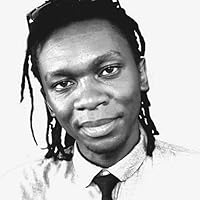
One of today's few living world-class artists--and rare spirits--narrates a magical journey around the world in this epic, music-soaked tale of love, excess, exile, and home.
Hugh Masekela is a prodigiously talented giant of jazz and world music and a pioneer in bringing the voice and spirit of Africa to the West, but his globe-trotting tale transcends music. Masekela has lived a rich and relentless life, infused with love and loss, sex and drugs, exile and revolution. And he survived it all--barely--with wit, passion, and eventually, wisdom.
Masekela's life began in a South Africa haunted by violence but redeemed by the consolations of family, music, and adventure. As the grip of apartheid tightened, he was driven into exile and embarked on what would become a thirty-year pilgrimage around the world. His first top was New York City, where he was adopted by bebop heroes like Dizzy Gillespie and Miles Davis and international stars like Harry Belafonte and Miriam Makeba. When his effervescent recording of "Grazing in the Grass" hit number one around the world in 1968, his career took off like a rocket.
Masekela lived through some of the most vital and colorful music scenes of our blowing with bebop legends in New York, playing with a young Bob Marley in Jamaica, hanging out with Jimi Hendrix and Sly Stone in the sixties, and getting lost in the madness of Fela's Afropop explosion in Lagos. He loved extravagantly, experimented wildly with drugs and alchohol, and stumbled into adventure after adventure, whether battling Don King over the Rumble in the Jungle concert, getting caught up in madcap smuggling schemes, or finding himself on the wrong side of coups and revolutions all over Africa. And through the hit musical Sarafina (which he conceived with Mbongeni Ngema), the Graceland tour he spearheaded with Paul Simon, and his fearless on-the-ground activism, he worked tirelessly to help hasten the destruction of apartheid. When he eventually returned to South Africa, he at last found the strength to confront the personal demons that tracked him around the world, and attained a new measure of peace at home.
Unfolding against the backbeat of the most revolutionary musical movements of the last forty years and one of the most inspiring political transformations of the twentieth century, this is the utterly engrossing and deeply effecting chronicle of a remarkable, one-of-a-kind life.
This is on a par with David Crosby's no-holds-barred autobiography, but, for me, way better, because he's South African, and so it's not just the story of a roller-coaster musical life, but also the story of how apartheid repeatedly fucked people up the ass with no lubrication. And despite all that, guys like Hugh pulled through, and then returned here to try to rebuild things.
I remember vividly the first time I saw him in a tv interview, in the 90s. Man, he chooned it like it was. He didn't mince his words. He said he'd been all around the world, and South Africa is the only country he's ever been to where no-one hears the music of their own country on the tv or radio. And not all that much, really, has changed.
My favorite part of this fantastic autobiography is the bit where he hangs out with Fela Kuti in Lagos. What a scream!!!
This was a life changing book for me. I wanted to be in the 80's and live my best life with Hugh and Mirriam. Seductive in every sense. The jazz legend shares in rich detail the story of his life - a story infused with love and loss, sex and drugs, exile and revolution.
Great read on his early years and his rise to fame in the 60's and finally part of bringing down apartheid in South Africa. The drug use and sex does get repetitive though.
This book is a must read for both avid music/politics lovers. I came across a lot of people that were involved in bra Hugh's life and also learned through this book that the great Maya Angelou was once married to a South African man. It is also a book about the South African struggle and ends on a beautiful note. Although hard to source, it is worth all the energy.
STILL GRAZING: THE MUSICAL JOURNEY OF HUGH MASEKELA HUGH MASEKELA AND D. MICHAEL CHEERS The musical Journey of Hugh Masekela starts in Witbank, Mpumalanga, to the world and back home after the dawn of freedom. His introduction to the jazz genre happened at the age of four. He was a pageboy at a wedding in his native town of Witbank. For the reception, that night, the Jazz Maniacs, South Africa’s then-top township orchestra, played a selection of their repertoire. The featured soloists were the young saxophonists Zakes Nkosi, Mackay Davashe, Kippie Moeketsi, and Ellison Themba. Masekela stood wide-eyed next to the lead trumpeter, Drakes Mbau, fascinated by all the gleaming silver instruments, the drums, guitar, and double bass. In 1945 Hugh and his sister Barbara, went to live with their parents in Payneville, Springs, where their father opened the first milk depot and vegetable market for the municipality. Realizing his passion for music, Hugh’s parents enlisted him for private piano lessons. After a few months of afternoon lessons, he began to excel. In a few months, he was playing excerpts from Johann Sebastian Bach, Wolfgang Amadeus Mozart, George Frideric Handel, Joseph Haydn, Ludwig van Beethoven, and Frans Liszt. The next destination for Hugh was Alexandra Township, Toneship as the natives called it. Alexandra, like Kliptown (Freedom Charter, 1955) and Sophiatown (Kofifi) townships were black freehold communities where Africans could own property. It was also a haven for radical political activists like A.B. Xuma, Walter Sisulu, Ida Mtwana, Lillian Ngoyi, Oliver Tambo, Albert Luthuli, and Nelson Mandela. There was also Father Trevor Huddleston (Naught for Your Comfort). Few white people in South Africa were as respected and held in disdain as Father Trevor Huddleston. Revered by the downtrodden, he was a pain in the ass to the white government because of his tireless campaign against apartheid. Masekela went to school at St Peter’s Seminary, which was directed by the same noted British cleric and activist Bishop Trevor Huddleston. St Peter’s produced some of South Africa’s greatest scholars and leaders, such as writers Eskia Mphahlele and Peter Abrahams, and African National Congress leaders Oliver Tambo and Duma Nokwe. What got Masekela’s goat however was a movie called Young Man With a Horn, starring Kirk Douglas as Leon “Bix” Beiderbecke, the talented jazz cornet virtuoso, who died in 1931, at age twenty-eight, from bootleg gin and other addictive habits. He suddenly couldn’t imagine himself doing anything else but playing the trumpet for the rest of his life. To be that independent, in demand, and virtually self-employed, never having to work for a baas for the rest of his life, that was what the life of a trumpet player seemed to hold in promise for him. He wanted that with all his heart and being – nothing else would do. The good Father Trevor Huddleston got Masekela going on his musical journey by getting a trumpet and organizing lessons for him. Other boys joined and the Huddleston Jazz Band was born. With the introduction of Bantu Education in 1955, Father Huddleston opted for the closure of St Peter’s, as other missionary schools opted to close instead of collaborating with the abominable apartheid system. He was expelled from the country for his revolutionary efforts of defiance against the apartheid regime. Masekela continued with his jazz apace – playing, listening, and collecting heavily. His studies came second to his jazz and this rubbed the wrong way as they wanted him to get a good education and a well-paying job. As apartheid intensified, he didn’t see a future in the country and wanted out. Father Huddleston who was winding down his business in the country promised to fix him a scholarship to further his music studies in England. Through Father, Huddleston, Louis Satchmo Armstrong sent Masekela his trumpet. Masekela was delighted at a gift of that magnitude. The Armstrong trumpet was the rage in the media and the community of Alexandra at large. The trumpet was his connection not just to Armstrong, but to a long powerful tradition that had crisscrossed the Atlantic from Africa to America and back. It was a sign that the direction of his life was cemented. Masekela dropped out of school and left home for jazz. His parents reconciled with his chosen path and admitted him back home after being away for a while He had an on-and-off relationship with musical star Miriam Makeba, seven years his senior. He joined the big names cast of King Kong The Musical and went on a country tour with the ensemble. Masekela eventually got the scholarship to England and after much hassle, he was issued a passport which saw him landing in London on Wednesday, May 18, 1960. He wasn’t impressed by the jazz scene in London and wanted to move to the United States where his heart was. Miriam Makeba landed him a scholarship and he moved to the US where he found himself in a music heaven. Masekela pursued his studies and his music. He got married to Makeba, but they divorced not long after. They maintained friendship and intimacy for many years though. Of their divorce, Makeba blamed it on his being too young, naïve, and immature, and that she was jealous of her career. He denied it, saying she was one of his inspirations, both as an activist and a professional artist. As his music career soared, Masekela went into drugs, drinking, and women. All these got him wasted and took him to near ruin and death. He married the crazy Chris Calloway against good advice, including from her sister. Their union didn’t last long and they are parted acrimoniously. Meanwhile, he continued in his old decadent ways of women, drugs, and booze. Then out of the blue, he took off on a music pilgrimage to Africa with the first stop in Guinea where Miriam Makeba was based. His second stopover was Mobutu Sese Seko’s Zaire, where he spent months of endless reveling with different women, dancing into the early hours, drinking and smoking pot. He also made his way to the Kalakuta Republic, Fela Kuti’s private kingdom. From here he organized the Rumble in the Jungle Music Concert in Zaire, on the sidelines of the Ali vs Foreman boxing extravaganza. Masekela performed all over Southern Africa, In between, he married Jabu and it was as if he would normalize, but not for long he was back to his wayward ways of cocaine, booze, and womanizing. In September 1990, after thirty years, Masekela returned to the land of his birth. His marriage wasn’t working and by 1977 he was drowning. Masekela eventually went into rehabilitation. From here he turned a new leaf and got married to his Ghanaian sweetheart. Life reverted to normal and he considered himself lucky to be around.
This book will take you places, it is a true journey and gives you a first class ticket on this wonderful ride. I couldn't let it go and when I reached the last page I knew I will read it again, just to go on this journey again. We should be grateful to the late Bra Hugh for this 'bare it all' display of his life and music. Oh, just make sure your music app is online because you will want to listen and experience each song performance he narrates about. I used to be a fan of his music, this book has turned me into a super fan. Hats off!
Not a book I would ordinarily pick up to read, but I received this as a gift from a friend, and it absolutely blew my mind. This is an incredible book for anyone interested in jazz, music generally, the “golden age of Hollywood”, or apartheid and its enduring effects. Alternatively, a wonderful read for someone who just wants an honest, funny, and frank book! Hugh Masekela has lived so many lives, and each as remarkable as the other!
Someone told me that this should be a recommended reading for all adult South Africans - I could not agree more!
What a riveting read. Hugh Masekela has an incredible musical career. I learned a great deal about South Africa: the Apartheid government and the musical scene. I was very surprised when Masekela writes about his gigs at Mikell’s and his friendship with Pat, Mike, and David Baldwin, because I had the distinct honor of working there as a waiter. I continue to explore the music this wonderful book has led me to. Thank you D. Michael Cheers - Hugh Masekela RIP.
Illuminating journey through High Masekela's life, told with searing honesty and empathy. Highly recommended as a perceptive insight into a hugely talented individual.
This Bra Hugh autobiography is not only my favourite ‘music book’ but one of my favourite books ever! It’s not only about him but also a look into history, politics, and the great artists back then and how they all intertwined. It truly is a “musical history of global import”.
What a trip through South African/American black music history beginning in 1960. At the age of 21, trumpeter Hugh Masekela comes to the states thanks to the sponsorship of Harry Belafonte and others. What a story this is. Miriam Makeba, Dizzy Gillespie, Miles Davis, Thelonious Monk, Duke Ellington, Cab Calloway, Roberta Flack. The 60s music scenes in New York and LA, London and Capetown. And the reality of their lives. Amazing and fun. Hugh Masekela autographed my book a few years back at Tanglewood's Jazz Fest.
Although I didn't end up finishing this book, I really enjoyed it. It's a graphic illustration of life in South Africa during apartheid and the response to those horrors through the saving grace of music. For jazz lovers, it has a wealth of history and key characters. At another time, I might have savored this to conclusion, but there were too many other books sitting at my bedside, due at the library
This book taught me that it is possible for any person, even a hardcore drug addict who only thinks of himself and his next fix, to change and become a better person.
The book is ripe with South African history and reflects the unwavering engagement of the author, as well as the personal adventures and misdemeanours of Hugh Masekela and it is definately worth reading.
The last Biography i read that was this good was the Malcom X one. The book reads like a work of fiction, even if you arent a fan of the mans music, i urge you to read the book and learn something from his experiences.
Excellent! Someone make this into a movie please. What a rockstar Bra Hugh is. Appreciate her and Miriam Makeba more after reading this. I can't imagine mama Makeba was happy with the way Bra Hugh depicted her in this book. Very interesting nonetheless.
Ha ha ha!!!Raw and true!!I learnt that in persuit of one`s purpose, the paths you travel through can shape or break you, it takes a whole lot of you to take it and Still Graze....