

What do you think?

Wolf Road #1
Wolf Road
The greatest adventure of all begins here, in the epic new prehistoric children's novel from bestselling author, academic and broadcaster, Professor Alice Roberts.
Tuuli is a prehistoric girl, travelling with her tribe through the seasons – making camp, hunting for food and protecting themselves against the many hazards that the climate throws at them. Tuuli knows there’s a bigger world out there, and when she spots a strange boy lurking outside their camp, she realises that he might hold the adventure she is looking for.
He is a Neanderthal, sent by his tribe to find safer ground and as he and Tuuli strike up an unlikely friendship, they set out on a journey that will impact the rest of human history.
A vast adventure with a very human heart, full of wild animals, huge scenery and heart-stopping danger and inspired by real anthropological discoveries. For fans of His Dark Materials, Wolf Brother and The Last Bear , join Tuuli on the adventure of a lifetime and uncover the start of all our histories.
Tuuli is a prehistoric girl, travelling with her tribe through the seasons – making camp, hunting for food and protecting themselves against the many hazards that the climate throws at them. Tuuli knows there’s a bigger world out there, and when she spots a strange boy lurking outside their camp, she realises that he might hold the adventure she is looking for.
He is a Neanderthal, sent by his tribe to find safer ground and as he and Tuuli strike up an unlikely friendship, they set out on a journey that will impact the rest of human history.
A vast adventure with a very human heart, full of wild animals, huge scenery and heart-stopping danger and inspired by real anthropological discoveries. For fans of His Dark Materials, Wolf Brother and The Last Bear , join Tuuli on the adventure of a lifetime and uncover the start of all our histories.
333 pages, Kindle Edition
Published August 3, 2023
About the author
Alice Roberts
46 books871 followersAlice May Roberts is an English anatomist, osteoarchaeologist, physical anthropologist, palaeopathologist, television presenter and author.
Roberts studied medicine and anatomy at Cardiff University, qualifying in 1997 as a physician with a Bachelor of Medicine, Bachelor of Surgery (MB BCh) degree, having gained an intercalated Bachelor of Science degree in anatomy. She earned a PhD in paleopathology in 2008 from the University of Bristol.
Librarian Note: There is more than one author in the Goodreads database with this name.
Roberts studied medicine and anatomy at Cardiff University, qualifying in 1997 as a physician with a Bachelor of Medicine, Bachelor of Surgery (MB BCh) degree, having gained an intercalated Bachelor of Science degree in anatomy. She earned a PhD in paleopathology in 2008 from the University of Bristol.
Librarian Note: There is more than one author in the Goodreads database with this name.
Ratings & Reviews
Friends & Following
Create a free account to discover what your friends think of this book!
Community Reviews
Displaying 1 - 30 of 117 reviews

August 19, 2023
This wonderful story was written for children, but I read an enjoyed it as a man of 75 years because it is so well written. An absorbing, intelligent, imaginative adventure informed by the science the author has lived with and her experience of life in appropriate lands.
I’ve followed Alice Roberts’ career with interest ever since I first encountered her work on the TV programme, Time Team, in the early 2000s. She has brought accessible science to a wide world with her sensible and empathetic treatment of historical facts.
The story takes the reader through a journey from a winter camp occupied by a tribe during a time around 30,000 years ago, to the camp where many tribes meet for the short summer period. There are encounters with wildlife, some of which is definitely food, with danger, and with a mysterious stranger along the way.
I particularly enjoyed her descriptions of the hunts. Living in a forest where deer and wild boar live, I’ve come to understand how these animals can be observed at close distance by a quiet and cautious walker in the trees. That experience makes it very easy to believe in the accounts of the hunts in the story.
The emotional journey is equally well explored and revealed. And the probable way in which myth and legend led us to religion is cleverly brought to life here. The main protagonist is a girl of twelve years, just at the age where she is no longer treated as a child by her tribe. She exhibits courage, asks questions, explores her surroundings, and wonders about the wider world, as she carries out her tasks throughout the trek to a more comfortable site.
The book is of necessity a work of fiction, since there is no written history of the period in which it is set. But Alice Roberts’ knowledge of that time, her research, her wide understanding of discovered artefacts, archaeological sites, and of human physiology all inform the story to bring it to life in a manner that makes the tale utterly plausible.
Her use of language is apt for the age of potential readers without any sort of condescension, and with enough challenge to help young readers develop a wider vocabulary.
This is a book I’d love to see installed in every school library, and even used alongside textbooks as an aid to understanding that prehistoric period we are slowly beginning to know more fully. In fact, had I been able to read this at the right age, I might well have decided on a career in archaeology instead of the route I took. This is a story many children will love to read for themselves or have read to them by a caring adult.
I’ve followed Alice Roberts’ career with interest ever since I first encountered her work on the TV programme, Time Team, in the early 2000s. She has brought accessible science to a wide world with her sensible and empathetic treatment of historical facts.
The story takes the reader through a journey from a winter camp occupied by a tribe during a time around 30,000 years ago, to the camp where many tribes meet for the short summer period. There are encounters with wildlife, some of which is definitely food, with danger, and with a mysterious stranger along the way.
I particularly enjoyed her descriptions of the hunts. Living in a forest where deer and wild boar live, I’ve come to understand how these animals can be observed at close distance by a quiet and cautious walker in the trees. That experience makes it very easy to believe in the accounts of the hunts in the story.
The emotional journey is equally well explored and revealed. And the probable way in which myth and legend led us to religion is cleverly brought to life here. The main protagonist is a girl of twelve years, just at the age where she is no longer treated as a child by her tribe. She exhibits courage, asks questions, explores her surroundings, and wonders about the wider world, as she carries out her tasks throughout the trek to a more comfortable site.
The book is of necessity a work of fiction, since there is no written history of the period in which it is set. But Alice Roberts’ knowledge of that time, her research, her wide understanding of discovered artefacts, archaeological sites, and of human physiology all inform the story to bring it to life in a manner that makes the tale utterly plausible.
Her use of language is apt for the age of potential readers without any sort of condescension, and with enough challenge to help young readers develop a wider vocabulary.
This is a book I’d love to see installed in every school library, and even used alongside textbooks as an aid to understanding that prehistoric period we are slowly beginning to know more fully. In fact, had I been able to read this at the right age, I might well have decided on a career in archaeology instead of the route I took. This is a story many children will love to read for themselves or have read to them by a caring adult.

July 23, 2023
3.5, a good filler for kids who loved Wolf Brother. Still explores a really interesting time period that we don’t get a lot in books, has lovely characters but the plot was missing anything driving it. The book info tells us about Andar but we never actually get that information in the book. It’s called Wolf Road and yes Tuuli tames a wolf, but other than that, Lupa is just a sweet side character along with all the cousins. It was pretty anticlimactic for me but I think will still find a home amongst young readers searching for an ancient adventure. Or young future historians.

February 6, 2024
This is a no plot just vibes book, which is fine... but I don't know if the vibes were interesting enough for the intended age group. They weren't enough for me. We barely get to know the stranger boy Tuuli finds, as he's introduced quite late in the book. So it makes what happens to him very emotionally void. He was words on paper, not a character who jumped off the page (if that makes sense?).
Side note: not sure why it's called Wolf Road. The wolf Tuuli tames is more of a side character and not a key part of any plot.
Side note: not sure why it's called Wolf Road. The wolf Tuuli tames is more of a side character and not a key part of any plot.

December 10, 2025
Pirmas sakinys: Tuuli sėdėjo stačios uolos viršūnėje ant suslėgto sniego ir žvelgė į upę.
Alice Roberts yra mokslininkė, rašytoja, laidų vedėja. 2012 m. ji buvo paskirta pirmąja Birmingamo universiteto visuomenės įtraukimo į mokslą profesore. Autorė specializuojasi žmogaus anatomijos ir evoliucijos, archeologijos ir istorijos srityse.
"Vilko kelias" yra pirmasis jos romanas vaikams. "Pasakojimas vyksta Vakarų Europoje ledynmečiu, maždaug prieš trisdešimt tūkstančių metų. Knygos veikėjai yra ledynmečio žmonės, gyvenę senajame akmens amžiuje, arba paleolito eroje." ("Autorės pastabos", 309 p.).
Kokybiškai įgyvendinta idėja įdomiai (per nuotykius) pristatyti žmonių gyvenimą tuo laikotarpiu minėtame regione: tvarkingas pasakojimas (tačiau nereikėtų tikėtis didelės įtampos ar detektyvinio siužeto) ir istorinis objektyvumas (tų laikų gyvenimas žiaurus, todėl knygoje miršta ne vienas veikėjas).
Pabaigos žodyje ("Autorės pastabos") Alice Roberts paaiškina, kuo grindė vieną ar kitą sprendimą aprašydama gamtą, veikėjus, įvykius.
"Vilko kelias" originalo kalba pasirodė 2024 m. (liet. 2025 m.).
Yra tęsinys (matyti ir iš atviros šios istorijos pabaigos) – "Vilko kalnas" (angl. "Wolf Mountain", 2025 m.). 2026 m. žadama ir trečioji serijos knyga.
4.2/5✰
Alice Roberts yra mokslininkė, rašytoja, laidų vedėja. 2012 m. ji buvo paskirta pirmąja Birmingamo universiteto visuomenės įtraukimo į mokslą profesore. Autorė specializuojasi žmogaus anatomijos ir evoliucijos, archeologijos ir istorijos srityse.
"Vilko kelias" yra pirmasis jos romanas vaikams. "Pasakojimas vyksta Vakarų Europoje ledynmečiu, maždaug prieš trisdešimt tūkstančių metų. Knygos veikėjai yra ledynmečio žmonės, gyvenę senajame akmens amžiuje, arba paleolito eroje." ("Autorės pastabos", 309 p.).
Kokybiškai įgyvendinta idėja įdomiai (per nuotykius) pristatyti žmonių gyvenimą tuo laikotarpiu minėtame regione: tvarkingas pasakojimas (tačiau nereikėtų tikėtis didelės įtampos ar detektyvinio siužeto) ir istorinis objektyvumas (tų laikų gyvenimas žiaurus, todėl knygoje miršta ne vienas veikėjas).
Pabaigos žodyje ("Autorės pastabos") Alice Roberts paaiškina, kuo grindė vieną ar kitą sprendimą aprašydama gamtą, veikėjus, įvykius.
"Vilko kelias" originalo kalba pasirodė 2024 m. (liet. 2025 m.).
Yra tęsinys (matyti ir iš atviros šios istorijos pabaigos) – "Vilko kalnas" (angl. "Wolf Mountain", 2025 m.). 2026 m. žadama ir trečioji serijos knyga.
4.2/5✰

June 7, 2024
This is such a beautiful book, I normally can't get on with too much description but the author describes just enough to paint a beautiful picture. As you follow the tale from Winter Camp to Summer Set it really feels like you are going along with them.
I love the way the author show's how everything was seasonal, from how much they carry and how they carry it, what they wear as the weather changes, to what food they can eat (t really made me appreciate being able to eat fruit all year round). I feel like / learned a lot from this book without it being obvious, from new words to the tools that early peoples used.
I won't lie I did not like the ending and it loses a star for that alone, I feel like the plot device is a lazy one and it made me very sad, but the rest of the book is still wonderful.
I love the way the author show's how everything was seasonal, from how much they carry and how they carry it, what they wear as the weather changes, to what food they can eat (t really made me appreciate being able to eat fruit all year round). I feel like / learned a lot from this book without it being obvious, from new words to the tools that early peoples used.
I won't lie I did not like the ending and it loses a star for that alone, I feel like the plot device is a lazy one and it made me very sad, but the rest of the book is still wonderful.

June 3, 2024
I thoroughly enjoyed this prehistoric adventure by Profeasor Alice Roberts. We follow Tuuli, Wren and their clan as they travel from their winter camp to summer camp following a herd of reindeer.
I was absolutely invested in their journey and how they survived on their trail, it was fascinating to learn the different foods they ate along the way, their relationships with nature and the animals around them and the new friends they made along the way.
There's emotional encounters and goodbyes and the while story was very educational.
I was absolutely invested in their journey and how they survived on their trail, it was fascinating to learn the different foods they ate along the way, their relationships with nature and the animals around them and the new friends they made along the way.
There's emotional encounters and goodbyes and the while story was very educational.

August 21, 2025
I’ve watched Dr Alice Roberts since her first appearance on Time Team as an Osteoarchaeologist, through her fascinating history programmes, her search for the origins of humans, in the footsteps of Hunter Gatherers and mapping genes and tracing traits back to their Palaeolithic origins. She is a remarkable person- a medical doctor, archaeologist, TV presenter, artist, author and now she writes for tweens. She’s a fantastic role model for young women and I’ve had a girlie crush on her since her Time Team days.
I loved the fact that this was totally written with her Palaeontologist hat on, she takes great pleasure in describing the intricate details of what her Stone Age characters ate, how they hunted, how they made their tools, what they wore, where they lived and how and why they travelled across the landscape. Her author’s note shows how much research went into this book, not just from her own archaeological knowledge, but she also consulted with the last few Hunter Gatherer communities in Northern Europe about the aspects of their own traditions, rhythms and ways of life that are unlikely to have changed much since the Stone Age.
I was surprised by how sad this story was, Roberts certainly doesn’t simplify or romanticise this life, her characters fight and separate, die, ostracise and murder, which you’d think would be a lot for a tween series, but it’s real and necessary and clearly important for future books to come.
I look forward to reading them.
I loved the fact that this was totally written with her Palaeontologist hat on, she takes great pleasure in describing the intricate details of what her Stone Age characters ate, how they hunted, how they made their tools, what they wore, where they lived and how and why they travelled across the landscape. Her author’s note shows how much research went into this book, not just from her own archaeological knowledge, but she also consulted with the last few Hunter Gatherer communities in Northern Europe about the aspects of their own traditions, rhythms and ways of life that are unlikely to have changed much since the Stone Age.
I was surprised by how sad this story was, Roberts certainly doesn’t simplify or romanticise this life, her characters fight and separate, die, ostracise and murder, which you’d think would be a lot for a tween series, but it’s real and necessary and clearly important for future books to come.
I look forward to reading them.

April 22, 2025
A well written narrative of the Swan talo as they journey from winter camp to summer camp. The book is informative of the way of life in prehistoric times, we learn about the treks, food, tools, animals, homes, weapons, landscapes and family & tribe relationships. Tuuli seeks adventure as she starts to wonder about the world beyond her experience, and in a near fatal incident she meets Andar. Who is he, where has he come from, why is he so different?
Whilst beautifully written, and a lovely read there is no gripping adventure, just the journey and questions poised. Ending does set up for book 2.
Whilst beautifully written, and a lovely read there is no gripping adventure, just the journey and questions poised. Ending does set up for book 2.
July 24, 2026
In the words of Aretha Franklin "Great gowns ... beautiful gowns"
The world building was really vivid and interesting but at no point did there feel like any plot was happening. Essentially all they did was walk and hunt - even if that is accurate of the prehistoric lifestyle being shown, a book needs plot even if it is aimed at children.
And did we really need to spend the first 50 pages introducing 17 different side characters ...?
The world building was really vivid and interesting but at no point did there feel like any plot was happening. Essentially all they did was walk and hunt - even if that is accurate of the prehistoric lifestyle being shown, a book needs plot even if it is aimed at children.
And did we really need to spend the first 50 pages introducing 17 different side characters ...?

June 15, 2024
Tuuli is a prehistoric girl living with her 'tribe' on the tundra. This novel follows her as they move from their winter camp to their spring one and prepare to move on to their summer camp. This is a lovely book with a sweet vibe to it despite some slightly darker issues dealt with (death).
October 21, 2024
Un viatge preciós 🧡
Ha sigut un plaer acompanyar a la Tuuli i a la seva llobatona Lupa. Ser una més del talo, la tribu dels Cignes, acompanyar-los a caçar, a recollir arrels i afilar les llances de Sílex.
Una història plena d'amor per la família i per la natura. Una història que fa olor de foguera, de molsa i de la pell dels tambors. 🌿
"El camí de la Lloba" és un llibre immersiu, ple d'una atmosfera càlida, que t'abraça com un foc viu 🧡
Ha sigut un plaer acompanyar a la Tuuli i a la seva llobatona Lupa. Ser una més del talo, la tribu dels Cignes, acompanyar-los a caçar, a recollir arrels i afilar les llances de Sílex.
Una història plena d'amor per la família i per la natura. Una història que fa olor de foguera, de molsa i de la pell dels tambors. 🌿
"El camí de la Lloba" és un llibre immersiu, ple d'una atmosfera càlida, que t'abraça com un foc viu 🧡
February 11, 2024
I love this book and am hoping to read more of Alice Roberts books, I find it heart-warming and quite a comforting book. I loved it and will read it again one day.
June 22, 2024
I don’t this I’ll ever actually be okay after this book. Never ever gonna recover.
July 25, 2024
It was good, sad at the end 😞
Was a little slow to start with but once you get going it was really good
Was a little slow to start with but once you get going it was really good

February 23, 2026
it was amazing it was a really good story
I love how it was set in the olden days and I actually learnt a bit it wasn't boring tho each chapter was a new adventure. I went through all of the emotions fear awr intreage and I cried at the end. I would say it is one of the best books I have ever read. highly recommend
I love how it was set in the olden days and I actually learnt a bit it wasn't boring tho each chapter was a new adventure. I went through all of the emotions fear awr intreage and I cried at the end. I would say it is one of the best books I have ever read. highly recommend

March 9, 2025
Wolf Road is a novel written for middle-school readers. It is set in prehistoric times, and it follows Tuuli and her tribe as they journey from their winter camp to their summer one, tracking a herd of reindeer.
I learned that the author holds a PhD in paleopathology, and her deep understanding of human history brought the story to life. Her vivid descriptions of the tribe's food, clothing, and housing were especially compelling, as were the hunting expeditions, the landscape, weather conditions, and the dangers the clan faced along the way.
While there were some interesting characters in the book, I felt something was missing. The plot didn’t quite hold my attention, and beyond Tuuli’s finding and caring for a wolf cub, I couldn’t see how the title Wolf Road fit the story. The ending was rather sad, and though there’s clearly a sequel, I don’t think I’ll continue with the series.
I learned that the author holds a PhD in paleopathology, and her deep understanding of human history brought the story to life. Her vivid descriptions of the tribe's food, clothing, and housing were especially compelling, as were the hunting expeditions, the landscape, weather conditions, and the dangers the clan faced along the way.
While there were some interesting characters in the book, I felt something was missing. The plot didn’t quite hold my attention, and beyond Tuuli’s finding and caring for a wolf cub, I couldn’t see how the title Wolf Road fit the story. The ending was rather sad, and though there’s clearly a sequel, I don’t think I’ll continue with the series.

July 7, 2024
Update: reread for readers cup question writing. Forgot there will be a book 2. Excited for it.
Novel set in pre-history times. Authentic serious exploration of survival, family, tribe and the cycles of life.
Sad though.
Novel set in pre-history times. Authentic serious exploration of survival, family, tribe and the cycles of life.
Sad though.

June 8, 2026
As a debut novelist, Alice Roberts brings something genuinely different to children’s historical fiction. Best known as an archaeologist and anthropologist, Roberts draws upon her professional expertise to imagine the lives of prehistoric hunter-gatherers, creating a story that feels firmly rooted in archaeological evidence while allowing room for creative interpretation.
Set in the Palaeolithic era, Wolf Road follows Tuuli and her tribe as they travel across the landscape in pursuit of the reindeer herds that sustain them. It is, first and foremost, a story about survival, about understanding nature, adapting to the seasons, and relying on family and community in a world where every day carries risk.
The novel also functions as a coming-of-age story. Tuuli’s curiosity about the wider world and her growing desire for independence drive much of the narrative. Her friendship with Andar, a boy from another tribe, introduces themes of acceptance and understanding, encouraging readers to consider how we respond to those who are different from ourselves. Beneath the adventure lies an educational purpose too; Roberts is clearly interested in helping younger readers understand humanity’s distant past and the ways our ancestors may have lived.
This educational aspect is where the novel is strongest. The details of tribal life, the natural world, animal behaviour, and the scientific understanding underpinning the story create an imaginative and convincing portrait of a period of history that is often overlooked in children’s fiction. Roberts’ passion for the subject shines through on every page.
However, while the setting is richly realised, the story itself feels less cohesive. Rather than building around a strong central plot, the novel often reads as a sequence of events encountered during the tribe’s seasonal migrations. There is certainly value in portraying the rhythms of an itinerant lifestyle, but it doesn’t always lend itself to compelling storytelling. At times the narrative feels more observational than dramatic.
Characterisation also feels somewhat limited. Tuuli is engaging enough as a protagonist, but many of the supporting characters serve more as functional roles within the tribe than as fully developed individuals. Even allowing for the younger target audience, there was room for deeper relationships and stronger emotional connections between the characters.
Ultimately, Wolf Road succeeds more as an educational journey than as a gripping adventure. Roberts creates a fascinating prehistoric world and introduces readers to a neglected chapter of human history with warmth and imagination. Yet the lack of a stronger overarching storyline prevents it from becoming truly memorable.
An interesting and informative debut that offers a vivid glimpse into prehistoric life, but one that could have benefited from a more focused narrative and deeper character development.
Set in the Palaeolithic era, Wolf Road follows Tuuli and her tribe as they travel across the landscape in pursuit of the reindeer herds that sustain them. It is, first and foremost, a story about survival, about understanding nature, adapting to the seasons, and relying on family and community in a world where every day carries risk.
The novel also functions as a coming-of-age story. Tuuli’s curiosity about the wider world and her growing desire for independence drive much of the narrative. Her friendship with Andar, a boy from another tribe, introduces themes of acceptance and understanding, encouraging readers to consider how we respond to those who are different from ourselves. Beneath the adventure lies an educational purpose too; Roberts is clearly interested in helping younger readers understand humanity’s distant past and the ways our ancestors may have lived.
This educational aspect is where the novel is strongest. The details of tribal life, the natural world, animal behaviour, and the scientific understanding underpinning the story create an imaginative and convincing portrait of a period of history that is often overlooked in children’s fiction. Roberts’ passion for the subject shines through on every page.
However, while the setting is richly realised, the story itself feels less cohesive. Rather than building around a strong central plot, the novel often reads as a sequence of events encountered during the tribe’s seasonal migrations. There is certainly value in portraying the rhythms of an itinerant lifestyle, but it doesn’t always lend itself to compelling storytelling. At times the narrative feels more observational than dramatic.
Characterisation also feels somewhat limited. Tuuli is engaging enough as a protagonist, but many of the supporting characters serve more as functional roles within the tribe than as fully developed individuals. Even allowing for the younger target audience, there was room for deeper relationships and stronger emotional connections between the characters.
Ultimately, Wolf Road succeeds more as an educational journey than as a gripping adventure. Roberts creates a fascinating prehistoric world and introduces readers to a neglected chapter of human history with warmth and imagination. Yet the lack of a stronger overarching storyline prevents it from becoming truly memorable.
An interesting and informative debut that offers a vivid glimpse into prehistoric life, but one that could have benefited from a more focused narrative and deeper character development.

July 2, 2023
Twelve year old Tuuli is a member of a talo, a small tribe of connected families. She lives with her parents, ten year old brother and her cousins, aunts and their partners. Their talo are reindeer people, “sustained by the reindeer, connected with the reindeer”.
One day, Tuuli meets a boy who doesn’t look like anyone she’s ever seen before.
I’m a sucker for an eye catching cover image but usually rely on the blurb to decide for sure if a book is going to be for me. My decision to read this book, though, was based solely on the fact that I saw Keith Robinson’s name on the cover. Keith is one of my favourite illustrators and I couldn’t pass up the opportunity to see more of his work. I was not disappointed.
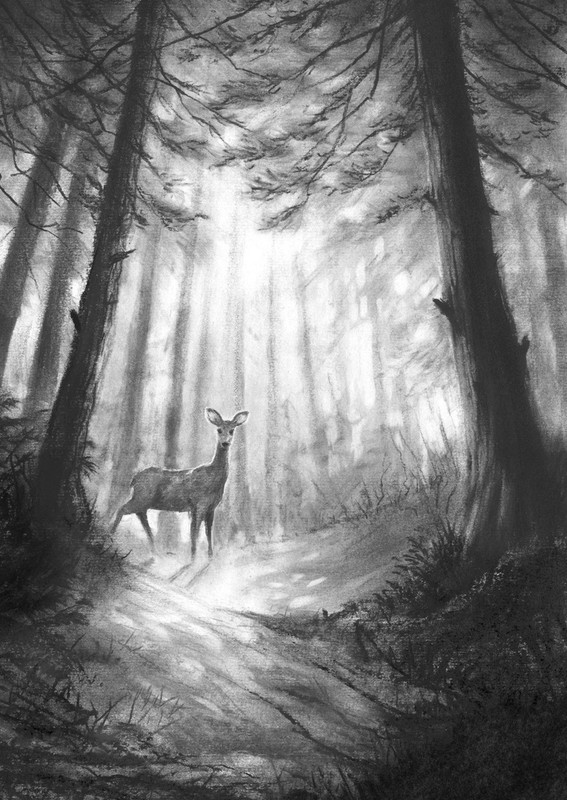
I only wish there had been more illustrations.
It’s obvious how much research has gone into this book. As I tagged along with Tuuli and her talo while they travelled through the seasons, I saw how they lived and was able to get to know them through their beliefs and customs. While I learned a lot reading this book, my emotions never really engaged.
I absolutely adored Lupa, Tuuli’s wolf, but didn’t form a connection with any of the humans. Andar was the one I was most intrigued by but I’m left with unanswered questions about his past. I thought I should be reaching for a tissue a couple of times but I experienced those events as an observer, looking on from a distance, rather than feeling them.
Kid me would have had difficulties with the hunting and the sad events. Adult me was too busy worrying that something bad would happen to Lupa.
While this story would work as a standalone, an opening is definitely left for a sequel. I would be interested to find out what happens next.
Content warnings include .
Thank you so much to NetGalley and Simon & Schuster UK for the opportunity to read this book. I’m rounding up from 3.5 stars.
Blog - https://schizanthusnerd.com/
One day, Tuuli meets a boy who doesn’t look like anyone she’s ever seen before.
I’m a sucker for an eye catching cover image but usually rely on the blurb to decide for sure if a book is going to be for me. My decision to read this book, though, was based solely on the fact that I saw Keith Robinson’s name on the cover. Keith is one of my favourite illustrators and I couldn’t pass up the opportunity to see more of his work. I was not disappointed.
I only wish there had been more illustrations.
It’s obvious how much research has gone into this book. As I tagged along with Tuuli and her talo while they travelled through the seasons, I saw how they lived and was able to get to know them through their beliefs and customs. While I learned a lot reading this book, my emotions never really engaged.
I absolutely adored Lupa, Tuuli’s wolf, but didn’t form a connection with any of the humans. Andar was the one I was most intrigued by but I’m left with unanswered questions about his past. I thought I should be reaching for a tissue a couple of times but I experienced those events as an observer, looking on from a distance, rather than feeling them.
Kid me would have had difficulties with the hunting and the sad events. Adult me was too busy worrying that something bad would happen to Lupa.
While this story would work as a standalone, an opening is definitely left for a sequel. I would be interested to find out what happens next.
Content warnings include .
Thank you so much to NetGalley and Simon & Schuster UK for the opportunity to read this book. I’m rounding up from 3.5 stars.
Blog - https://schizanthusnerd.com/

October 27, 2023
Set in the early days of humanity, when both Cro-Magnons and Neanderthals existed at the same time. Over the course of the story, the main character, a 12 year old girl named Tuuli, finds a wolf pup and an "other" (a Neanderthal) boy.
On one hand, I could describe the book as quiet and uneventful. Mostly it followed Tuuli's talo (family/tribe/clan) through a year of their migration following the reindeer herd. The ups and downs of the story were minor, there was little tension in the story until the very end.
But know what? That was really nice. It felt like a realistic look at that time period without artificial drama added.
The author did one thing I REALLY liked. I read a ton of stories set in this time period, and usually it's the modern people who have blond hair, blue eyes, and pale skin. In this one, the modern people had brown hair, brown eyes, and darker skin. The Neanderthal boy (Ander) was blond, blue eyed, and pale skinned.
The author has spent her whole career (decades of time) researching this period of human history, and that really showed in this book. She's worked on TV science shows about it, has written many nonfiction books about it, and does talks about it. I hope she writes more fiction books based on it, because her love and knowledge of it shines through.
There were only two minor elements I didn't like about this book:
The first was the title. While there was a wolf in it, "Wolf Road" just didn't fit. The wolf was just mostly a minor side character (and Ander certainly wasn't wolf-like).
The second thing was the naming scheme. The tribe members all had animal names, but based mostly on the Finnish language name for the animal (the author used a couple languages as stand-ins for the ancient one). Even by the end of the book I didn't have a handle on who most of the characters were because the names were just a seemingly random collection of letters.
But all in all, this was a lovely book!
On one hand, I could describe the book as quiet and uneventful. Mostly it followed Tuuli's talo (family/tribe/clan) through a year of their migration following the reindeer herd. The ups and downs of the story were minor, there was little tension in the story until the very end.
But know what? That was really nice. It felt like a realistic look at that time period without artificial drama added.
The author did one thing I REALLY liked. I read a ton of stories set in this time period, and usually it's the modern people who have blond hair, blue eyes, and pale skin. In this one, the modern people had brown hair, brown eyes, and darker skin. The Neanderthal boy (Ander) was blond, blue eyed, and pale skinned.
The author has spent her whole career (decades of time) researching this period of human history, and that really showed in this book. She's worked on TV science shows about it, has written many nonfiction books about it, and does talks about it. I hope she writes more fiction books based on it, because her love and knowledge of it shines through.
There were only two minor elements I didn't like about this book:
The first was the title. While there was a wolf in it, "Wolf Road" just didn't fit. The wolf was just mostly a minor side character (and Ander certainly wasn't wolf-like).
The second thing was the naming scheme. The tribe members all had animal names, but based mostly on the Finnish language name for the animal (the author used a couple languages as stand-ins for the ancient one). Even by the end of the book I didn't have a handle on who most of the characters were because the names were just a seemingly random collection of letters.
But all in all, this was a lovely book!
August 19, 2023
Hmmm… While starting dreadfully, the book soon turned into something at least interesting. In showing a girl in a small tribe back in prehistory, watching for the first signs of the end of winter and the reindeer movement that heralds spring, you fear this will be a lumpen story about climate change. It certainly feels lumpen – the first few conversations are just not written as anybody has spoken, ever, and the exposition is really high for a mighty long time, especially when the author has to use some of her archaeological nous to explain something. But no, the ice is not behaving perfectly and yet we're allowed to skip that and witness other things happen, such as Tuuli our heroine befriend an injured wolf cub, and keep it as a pet, and then… well, What Tuuli Finds Next would be telling.
And even the whole genre of the story, beyond the fact it's got its prehistorical setting, would be too much of a spoiler, so I shall leave it to other people to declare where it fits on the shelf. I just would not blame you to hesitate to place it there, though, for it was underwhelming to me. Tuuli and her people seem intent on inventing common, everyday phrases, such as "keeping it close to my chest". They may even invent Somerset. I mean on the whole their drama is played out reasonably well, but it's not that surprising or dramatic a plot, and when we see the motive, or lesson, behind the story you may be thankful it's been underplayed, but wonder why the anthropology wasn't given similar treatment. I certainly didn't hate it, but it fell into the three star category, and in fact onto the shelf marked "books where it's too easy to see an improvement".
And even the whole genre of the story, beyond the fact it's got its prehistorical setting, would be too much of a spoiler, so I shall leave it to other people to declare where it fits on the shelf. I just would not blame you to hesitate to place it there, though, for it was underwhelming to me. Tuuli and her people seem intent on inventing common, everyday phrases, such as "keeping it close to my chest". They may even invent Somerset. I mean on the whole their drama is played out reasonably well, but it's not that surprising or dramatic a plot, and when we see the motive, or lesson, behind the story you may be thankful it's been underplayed, but wonder why the anthropology wasn't given similar treatment. I certainly didn't hate it, but it fell into the three star category, and in fact onto the shelf marked "books where it's too easy to see an improvement".
August 30, 2023
What was the world like 30 thousand years ago? Before the dawn of civilisation and deep in the Ice Age how did our ancestors live? What did they think? How did they pass the time? How much were they like us?
These are a seriously BIG questions. They have filled academic tomes (not so much fun) and animated films (much more fun but a bit light on the facts and to be honest rather sloth focussed).
Alice Roberts chooses to tell the story in a short novel aimed at young adults (although I am an old adult and loved it). It is a very good choice and means that the world she creates is interesting and accessible. The reader can easily identify with the characters. And this is surely the point: underlining that they are every bit as human as we are. Professor Roberts also has a message about the nature of humanity that she much wants the world to hear and this also explains her target audience.
The plot is quite simple and the telling of the tale is clear and concise. But this is not at the expense of scientific detail. Professor Roberts is an expert in the field of human evolution and all the details or our young hero's life fit what we currently know about the lives of early hunter gatherers. The science is lightly worn but it is state of the art: taken from the latest archeological finds, recent genetic discoveries (see her book Tamed) as well as insights from the lives of surviving hunter gatherers.
What we know about prehistory sets the frame of the story. But humans were a marginal species at the time and there is very little surviving evidence of their lives. There is so much we don't know that inevitably there are many gaps that Professor Roberts fills in with her imagination.
Were girls and women given so much freedom and autonomy being allowed to explore and hunt? The talo, or tribe, we join for the duration of the novel is particularly gender liberated. Is this perhaps a 20th century view of how we would have like our state of innocence to have been? We simply don't know. Probably these elements of culture varied from talo to talo. This is not a criticism but a reminder that with so many gaps in the evidence there will always be large elements of imagination in the telling of such a story.
These are a seriously BIG questions. They have filled academic tomes (not so much fun) and animated films (much more fun but a bit light on the facts and to be honest rather sloth focussed).
Alice Roberts chooses to tell the story in a short novel aimed at young adults (although I am an old adult and loved it). It is a very good choice and means that the world she creates is interesting and accessible. The reader can easily identify with the characters. And this is surely the point: underlining that they are every bit as human as we are. Professor Roberts also has a message about the nature of humanity that she much wants the world to hear and this also explains her target audience.
The plot is quite simple and the telling of the tale is clear and concise. But this is not at the expense of scientific detail. Professor Roberts is an expert in the field of human evolution and all the details or our young hero's life fit what we currently know about the lives of early hunter gatherers. The science is lightly worn but it is state of the art: taken from the latest archeological finds, recent genetic discoveries (see her book Tamed) as well as insights from the lives of surviving hunter gatherers.
What we know about prehistory sets the frame of the story. But humans were a marginal species at the time and there is very little surviving evidence of their lives. There is so much we don't know that inevitably there are many gaps that Professor Roberts fills in with her imagination.
Were girls and women given so much freedom and autonomy being allowed to explore and hunt? The talo, or tribe, we join for the duration of the novel is particularly gender liberated. Is this perhaps a 20th century view of how we would have like our state of innocence to have been? We simply don't know. Probably these elements of culture varied from talo to talo. This is not a criticism but a reminder that with so many gaps in the evidence there will always be large elements of imagination in the telling of such a story.

July 2, 2023
I’ve always been a big fan of Alice’s work; her books, TV appearances and research. She has this effortless way of communicating history to anyone and in such a way that you feel like it’s alive, not just a dry tale of bygone eras. This book was a perfect example of that!
It’s written so vividly that you feel like you could almost be there with the Talos. You follow Tuuli on her adventures and get totally sucked into her way of life and living. This is a time of wooly mammoths, ice ages and living in the Palaeolithic.
It took a little while for me to sink into it and get its measure but it slowly and surely drew me in. It has a steady pace and gentle rhythm which becomes utterly charming and enthralling.
I definitely think though for the intended audience and as it’s meant for younger readers, it comes with caveats. There’s animal murders a plenty as would be historically accurate in this era, with guts, intestines and chomping on the raw livers of still warm animals. Just a warning! As a child I think I would have balked but I can appreciate the historical accuracy of this and really commend Alice Roberts for introducing this era of history in such a true to tale fashion. It isn’t necessarily happy (in fact, it’s rather sad) so as long as those picking this up are aware of such things, it’s a good to go.
Hats off to her first foray into fiction writing and I can’t wait for more!
Thank you to the author and publisher for this book on NetGalley in return for my honest thoughts and review.
It’s written so vividly that you feel like you could almost be there with the Talos. You follow Tuuli on her adventures and get totally sucked into her way of life and living. This is a time of wooly mammoths, ice ages and living in the Palaeolithic.
It took a little while for me to sink into it and get its measure but it slowly and surely drew me in. It has a steady pace and gentle rhythm which becomes utterly charming and enthralling.
I definitely think though for the intended audience and as it’s meant for younger readers, it comes with caveats. There’s animal murders a plenty as would be historically accurate in this era, with guts, intestines and chomping on the raw livers of still warm animals. Just a warning! As a child I think I would have balked but I can appreciate the historical accuracy of this and really commend Alice Roberts for introducing this era of history in such a true to tale fashion. It isn’t necessarily happy (in fact, it’s rather sad) so as long as those picking this up are aware of such things, it’s a good to go.
Hats off to her first foray into fiction writing and I can’t wait for more!
Thank you to the author and publisher for this book on NetGalley in return for my honest thoughts and review.

June 10, 2025
Wolf Road by Alice Roberts
Age range 10-14 (Warning: This book does contain death of humans and animals)
This story takes place over 30,000 years ago and follows a tribe on their journey from a winter camp along a river to a camp where many other tribes meet during summer. Along the way there are encounters with wildlife and a mysterious stranger.
The main character is a twelve year old girl called Tuuli. This story follows her travels to the different seasonal camps. Along the way she hunts for food and has to protect herself from the harsh climate, difficult terrains and predators. She shows courage and curiosity as she explores her surroundings on the trek.
Although this is a slow paced book, it is a great way to bring the Stone Age alive, my two children (age 9 and 11) were fascinated. We had some great discussions about what it would be like to live in that era!
I found the language in this book was appropriate for the age of potential readers. There were also some good words included that I thought would challenge young readers to help develop a wider vocabulary. Even I had to look up a few words my children were asking about!😄
Overall this is an interesting read, however, I’m not sure why it’s called Wolf Road, perhaps this will become more clear in the next book. Although this wasn’t an action packed fast paced read it still did keep my children’s attention and they even recreated parts of the book in one of their games they made up, so they were definitely inspired!❤️
Age range 10-14 (Warning: This book does contain death of humans and animals)
This story takes place over 30,000 years ago and follows a tribe on their journey from a winter camp along a river to a camp where many other tribes meet during summer. Along the way there are encounters with wildlife and a mysterious stranger.
The main character is a twelve year old girl called Tuuli. This story follows her travels to the different seasonal camps. Along the way she hunts for food and has to protect herself from the harsh climate, difficult terrains and predators. She shows courage and curiosity as she explores her surroundings on the trek.
Although this is a slow paced book, it is a great way to bring the Stone Age alive, my two children (age 9 and 11) were fascinated. We had some great discussions about what it would be like to live in that era!
I found the language in this book was appropriate for the age of potential readers. There were also some good words included that I thought would challenge young readers to help develop a wider vocabulary. Even I had to look up a few words my children were asking about!😄
Overall this is an interesting read, however, I’m not sure why it’s called Wolf Road, perhaps this will become more clear in the next book. Although this wasn’t an action packed fast paced read it still did keep my children’s attention and they even recreated parts of the book in one of their games they made up, so they were definitely inspired!❤️

June 26, 2025
Evocative, emotional and (almost) exceptional.
In this story we meet our main character Tuuli, a prehistoric 12 year old girl, who lives in a Talo/tribe amongst her close family and relatives. Despite her close-knit, tribal upbringing, she is desperate to go on a new exciting adventure. We are then later introduced to Andar (or ‘other’) - an innocent, yet wholesome, 13 year-old Neanderthal boy - who quickly befriends Tuuli and provides her an opportunity to go on the adventure she seeks, despite the many issues that could face the both of them.
I really enjoyed this book. The imagery created by Roberts is so strong and detailed that it feels that you’re watching a prehistoric movie like Ice Age or The Croods. Roberts makes the reader immediately aware of Tuuli’s lifestyle and the obstacles both herself and her tribe face throughout different parts of the year, which seems strongly, historically accurate to what we know of how our ancestors had then lived. It’s also as emotionally strong as it is historically strong, as we can clearly see and feel things from Tuuli’s POV.
For these reasons, as a Key Stage 2 teacher, I would love to teach this book in the near future for its storytelling, scene-setting and factual links to prehistory.
However, the only criticism I have with this book (and the main reason why it isn’t 5 stars, in my opinion) is that I find the pacing difficult at points. It didn’t make me want to turn the pages as quickly as I have done with other children’s books.
Nonetheless, a really good read and one I’d happily read again.
In this story we meet our main character Tuuli, a prehistoric 12 year old girl, who lives in a Talo/tribe amongst her close family and relatives. Despite her close-knit, tribal upbringing, she is desperate to go on a new exciting adventure. We are then later introduced to Andar (or ‘other’) - an innocent, yet wholesome, 13 year-old Neanderthal boy - who quickly befriends Tuuli and provides her an opportunity to go on the adventure she seeks, despite the many issues that could face the both of them.
I really enjoyed this book. The imagery created by Roberts is so strong and detailed that it feels that you’re watching a prehistoric movie like Ice Age or The Croods. Roberts makes the reader immediately aware of Tuuli’s lifestyle and the obstacles both herself and her tribe face throughout different parts of the year, which seems strongly, historically accurate to what we know of how our ancestors had then lived. It’s also as emotionally strong as it is historically strong, as we can clearly see and feel things from Tuuli’s POV.
For these reasons, as a Key Stage 2 teacher, I would love to teach this book in the near future for its storytelling, scene-setting and factual links to prehistory.
However, the only criticism I have with this book (and the main reason why it isn’t 5 stars, in my opinion) is that I find the pacing difficult at points. It didn’t make me want to turn the pages as quickly as I have done with other children’s books.
Nonetheless, a really good read and one I’d happily read again.

September 22, 2024
#82: Wolf Road, by Alice Roberts
“When Tuuli was tiny, Remi had carved things for her too. In the long winter evenings – after making sure weapons were fixed and ready, with plenty of replacement tips – there would still be time to make other things: objects that would never be used merely for survival, but were somehow more important. Remi had made Tuuli the small bone bird that she always wore on a thin sinew-string around her neck. Tuuli instinctively felt for it now, under her layer of furs. A talisman in the dark night.”
Tuuli is a twelve-year old girl, living with her talo (tribe) of hunter-gatherers in the Palaeolithic era. They follow the herd of reindeer, on which they live, from winter quarters to the Spring and Summer camps. Animals are plentiful; they eat game birds, salmon, herbs and vegetation. Tuuli’s a brave, independent-minded girl who meets a young wolf and a stranger.
Professor Roberts is an authority on the background and provides enough information on Stone Age living without overloading the story with exposition. A children’s story, which I enjoyed.
“When Tuuli was tiny, Remi had carved things for her too. In the long winter evenings – after making sure weapons were fixed and ready, with plenty of replacement tips – there would still be time to make other things: objects that would never be used merely for survival, but were somehow more important. Remi had made Tuuli the small bone bird that she always wore on a thin sinew-string around her neck. Tuuli instinctively felt for it now, under her layer of furs. A talisman in the dark night.”
Tuuli is a twelve-year old girl, living with her talo (tribe) of hunter-gatherers in the Palaeolithic era. They follow the herd of reindeer, on which they live, from winter quarters to the Spring and Summer camps. Animals are plentiful; they eat game birds, salmon, herbs and vegetation. Tuuli’s a brave, independent-minded girl who meets a young wolf and a stranger.
Professor Roberts is an authority on the background and provides enough information on Stone Age living without overloading the story with exposition. A children’s story, which I enjoyed.
February 12, 2024
Charming account of survival by paleolithic tribes as the ice age retreats from Northern Europe. Tuuli is an independent teenager who is good at hunting and who rescues a wolf cub then domesticates it.
She is also open minded when on one of her expeditions she meets a boy who is very different from her and her people. She and her 'tali' (family group) are dark skinned. This boy, Andar, is lighter skinned with sandy coloured hair and heavy brows.
The name Andar means 'other' and the wise woman of the tribe tells Tuuli that the 'other' are an entirely different people. In the afterword Roberts discloses that she on modelling Andar on Neanderthal people.
Bigoted suspicion of 'other' plays an unpleasant part in the story and Tuili is so upset by this that she determines to leave her 'tali' and strike out into the wide open world on her own. Do hope Alice Roberts will write a sequel. Would love to know what becomes of Tuuli.
She is also open minded when on one of her expeditions she meets a boy who is very different from her and her people. She and her 'tali' (family group) are dark skinned. This boy, Andar, is lighter skinned with sandy coloured hair and heavy brows.
The name Andar means 'other' and the wise woman of the tribe tells Tuuli that the 'other' are an entirely different people. In the afterword Roberts discloses that she on modelling Andar on Neanderthal people.
Bigoted suspicion of 'other' plays an unpleasant part in the story and Tuili is so upset by this that she determines to leave her 'tali' and strike out into the wide open world on her own. Do hope Alice Roberts will write a sequel. Would love to know what becomes of Tuuli.

November 23, 2024
I was intrigued to read Alice Roberts' first novel, as I am an admirer of her work as a professional archaeologist. I was not disappointed. Although "Wolf Road" is aimed at young adults, I found it engaging and well written as well as beautifully illustrated. It tells the story of a young girl, Tuuli, a member of an Upper Palaeolithic group of nomadic hunter gatherers, as they trek from their Winter to their Summer camp during the last Ice Age. The book is very well researched and presents a highly realistic account of what life would have been like at that time. The storyline is intriguing as it gathers pace, although I could have wished for a different ending to the one Alice Roberts chooses. But, it clearly leaves the door open for a sequel, which I look forward to reading if and when it is published. Though rather too advanced for my young niece, I plan to pass my copy of "Wolf Hall" on to her once she is old enough, in the hope it might encourage her to take an interest in Prehistoric archaeology.
February 27, 2026
Wolf Road is an exciting adventure story set a long time ago in Roman Britain. It is about a brave girl called Luna who has to leave her home and travel through wild forests and dangerous places. Along the way, she meets new people, faces scary challenges, and learns how strong she really is.
I liked how the story made me feel like I was actually there, walking through the trees and hiding from danger. The setting feels very real because the author knows a lot about history. It almost feels like you are learning while reading an adventure at the same time.
Luna is my favourite character because she is brave and doesn’t give up, even when things are frightening. The story shows that you can be stronger than you think.
Some parts are a little bit serious, but overall it is a really interesting and exciting book. I would recommend it to anyone who likes adventure stories and learning about the past.
I liked how the story made me feel like I was actually there, walking through the trees and hiding from danger. The setting feels very real because the author knows a lot about history. It almost feels like you are learning while reading an adventure at the same time.
Luna is my favourite character because she is brave and doesn’t give up, even when things are frightening. The story shows that you can be stronger than you think.
Some parts are a little bit serious, but overall it is a really interesting and exciting book. I would recommend it to anyone who likes adventure stories and learning about the past.
Displaying 1 - 30 of 117 reviews