

What do you think?

Giacomo Joyce
Joyce's fictionalized autobiographical love story is presented together with textual and documentary notes
64 pages, Paperback
First published January 1, 1957
About the author
James Joyce
1,897 books10k followersJames Joyce was an Irish novelist, poet, and a pivotal figure in 20th-century modernist literature, renowned for his highly experimental approach to language and narrative structure, particularly his pioneering mastery and popularization of the stream-of-consciousness technique. Born into a middle-class Catholic family in the Rathgar suburb of Dublin in 1882, Joyce spent the majority of his adult life in self-imposed exile across continental Europe—living in Trieste, Zurich, and Paris—yet his entire, meticulous body of work remained obsessively and comprehensively focused on the minutiae of his native city, making Dublin both the meticulously detailed setting and a central, inescapable character in his literary universe. His work is consistently characterized by its technical complexity, rich literary allusion, intricate symbolism, and an unflinching examination of the spectrum of human consciousness. Joyce began his published career with Dubliners (1914), a collection of fifteen short stories offering a naturalistic, often stark, depiction of middle-class Irish life and the moral and spiritual paralysis he observed in its inhabitants, concluding each story with a moment of crucial, sudden self-understanding he termed an "epiphany." This collection was followed by the highly autobiographical novel A Portrait of the Artist as a Young Man (1916), a Bildungsroman that meticulously chronicled the intellectual and artistic awakening of its protagonist, Stephen Dedalus, who would become Joyce's recurring alter ego and intellectual stand-in throughout his major works.
His magnum opus, Ulysses (1922), is universally regarded as a landmark work of fiction that fundamentally revolutionized the novel form. It compressed the events of a single, ordinary day—June 16, 1904, a date now globally celebrated by literary enthusiasts as "Bloomsday"—into a sprawling, epic narrative that structurally and symbolically paralleled Homer's Odyssey, using a dazzling array of distinct styles and linguistic invention across its eighteen episodes to explore the lives of Leopold Bloom, his wife Molly Bloom, and Stephen Dedalus in hyper-minute detail. The novel's explicit content and innovative, challenging structure led to its initial banning for obscenity in the United States and the United Kingdom, turning Joyce into a cause célèbre for artistic freedom and the boundaries of literary expression. His final, most challenging work, Finnegans Wake (1939), pushed the boundaries of language and conventional narrative even further, employing a dense, dream-like prose filled with multilingual puns, invented portmanteau words, and layered allusions that continues to divide and challenge readers and scholars to this day. A dedicated polyglot who reportedly learned several languages, including Norwegian simply to read Ibsen in the original, Joyce approached the English language not as a fixed entity with rigid rules, but as a malleable medium capable of infinite reinvention and expression. His personal life was marked by an unwavering dedication to his literary craft, a complex, devoted relationship with his wife Nora Barnacle, and chronic, debilitating eye problems that necessitated numerous painful surgeries throughout his life, sometimes forcing him to write with crayons on large white paper. Despite these severe physical ailments and financial struggles, his singular literary vision remained sharp, focused, and profoundly revolutionary. Joyce passed away in Zurich, Switzerland, in 1941, shortly after undergoing one of his many eye operations. Today, he is widely regarded as perhaps the most significant and challenging writer of the 20th century. His immense, complex legacy is robustly maintained by global academic study and institutions such as the James Joyce Centre in Dublin, which ensures his complex, demanding, and utterly brilliant work endures, inviting new generations of readers to explore the very essence of what it means to be hum
His magnum opus, Ulysses (1922), is universally regarded as a landmark work of fiction that fundamentally revolutionized the novel form. It compressed the events of a single, ordinary day—June 16, 1904, a date now globally celebrated by literary enthusiasts as "Bloomsday"—into a sprawling, epic narrative that structurally and symbolically paralleled Homer's Odyssey, using a dazzling array of distinct styles and linguistic invention across its eighteen episodes to explore the lives of Leopold Bloom, his wife Molly Bloom, and Stephen Dedalus in hyper-minute detail. The novel's explicit content and innovative, challenging structure led to its initial banning for obscenity in the United States and the United Kingdom, turning Joyce into a cause célèbre for artistic freedom and the boundaries of literary expression. His final, most challenging work, Finnegans Wake (1939), pushed the boundaries of language and conventional narrative even further, employing a dense, dream-like prose filled with multilingual puns, invented portmanteau words, and layered allusions that continues to divide and challenge readers and scholars to this day. A dedicated polyglot who reportedly learned several languages, including Norwegian simply to read Ibsen in the original, Joyce approached the English language not as a fixed entity with rigid rules, but as a malleable medium capable of infinite reinvention and expression. His personal life was marked by an unwavering dedication to his literary craft, a complex, devoted relationship with his wife Nora Barnacle, and chronic, debilitating eye problems that necessitated numerous painful surgeries throughout his life, sometimes forcing him to write with crayons on large white paper. Despite these severe physical ailments and financial struggles, his singular literary vision remained sharp, focused, and profoundly revolutionary. Joyce passed away in Zurich, Switzerland, in 1941, shortly after undergoing one of his many eye operations. Today, he is widely regarded as perhaps the most significant and challenging writer of the 20th century. His immense, complex legacy is robustly maintained by global academic study and institutions such as the James Joyce Centre in Dublin, which ensures his complex, demanding, and utterly brilliant work endures, inviting new generations of readers to explore the very essence of what it means to be hum
Ratings & Reviews
Friends & Following
Create a free account to discover what your friends think of this book!
Community Reviews
Displaying 1 - 30 of 171 reviews
December 11, 2017
Brilliant.
Absolutely. Fucking. Brilliant
Joyce is, no doubt, the mythic, masterful madman who I believe to be THE greatest writer in literary history thus far (of course, I still have much left to read...particularly the works of Homer, Shakespeare, Dante, Cervantes, etc...any one of whom you could make a counter-argument in favor of and probably be totally right), and this clearly autobiographical (he literally references his previous works in the text, it's really quite meta) and divinely poetic romance of sorts helps further cement his special place deep within my heart.
The writing here is relatable to a certain extent, but it is also highly complex, dense, and so forth despite only being 16 pages. It fits flashes of Joycean comedy, tragedy, word play, wit, and wisdom into one zany stream of consciousness journey you can read out loud in one sitting and have a blast doing so! I must warn you, however, of my only complaint about this work. The amount of phrases and sentences in a totally different language really caught me off guard and made the text even more impenetrable to the point in which I had literally no idea of what Joyce was saying. Of course, he was naturally an extremely devoted linguist and could have been too damned smart for his own good, but I love him for it never the less!
Absolutely. Fucking. Brilliant
Joyce is, no doubt, the mythic, masterful madman who I believe to be THE greatest writer in literary history thus far (of course, I still have much left to read...particularly the works of Homer, Shakespeare, Dante, Cervantes, etc...any one of whom you could make a counter-argument in favor of and probably be totally right), and this clearly autobiographical (he literally references his previous works in the text, it's really quite meta) and divinely poetic romance of sorts helps further cement his special place deep within my heart.
The writing here is relatable to a certain extent, but it is also highly complex, dense, and so forth despite only being 16 pages. It fits flashes of Joycean comedy, tragedy, word play, wit, and wisdom into one zany stream of consciousness journey you can read out loud in one sitting and have a blast doing so! I must warn you, however, of my only complaint about this work. The amount of phrases and sentences in a totally different language really caught me off guard and made the text even more impenetrable to the point in which I had literally no idea of what Joyce was saying. Of course, he was naturally an extremely devoted linguist and could have been too damned smart for his own good, but I love him for it never the less!

October 2, 2018
“Envío: Ámame, ama mi paragüas.”
“Giacomo Joyce” es, junto a “Finn’s Hotel”, uno de los libros menos conocidos de James Joyce y consta de un relato de ribetes poéticos escrito en un cuaderno de tapas azules, que consta de tan solo dieciséis páginas, de apretada escritura y que Joyce escribió durante su estadía en la ciudad de Trieste, en Italia en el año 1914, a poco del comienzo de la Primera Guerra Mundial.
Joyce decidió no publicarlo, y cuando dejó Trieste tras el estallido de la guerra, los papeles quedaron allí hasta que su hermano Stanislaus, los recuperó y publicó en 1968, después de la muerte de su hermano.
En el texto podemos ver sendas conexiones entre lo escrito por Joyce y que refieren a un posible romance que tuvo con alumnas mientras enseñaba el idioma inglés en esa ciudad italiana.
Los biógrafos sostienen que podrían haber sido tres alumnas: Amalia Popper, Emma Cuzzi o Annie Schleimer, siendo esta última la que más probabilidades tiene de haber sido seducida a un affaire amoroso y algo turbulento, dado que Joyce ya tenía una relación formal con quien fuera su esposa de toda la vida, Nora Barnacle.
En esta pequeña edición de Editorial Losada, que es bilingüe, nos encontramos con un extraordinario trabajo biográfico y literario a cargo de Pablo Ingberg, quien se encarga de relacionar lo escrito por Joyce en esos cuadernos con tres de sus libro principales: dos de sus novelas, “Ulises”, “Retrato del artista adolescente” y la obra de teatro “Exiliados”.
Se nota claramente que gran parte de los fragmentos escritos en 1914 conectan ideas que luego se plasmarán en esos libros, o sea que “Giacomo Joyce” funcionó como fuente de inspiración para las ideas que el autor tenía de cada uno de esos libros.
El estudio biográfico también incluye fotografías de la época de Joyce en Trieste, tres poemas que formaron parte de un libro llamado “Pomas a un penique” y decenas de notas aclaratorias que refieren a lugares geográficos, citas literarias, bíblicas y mitológicas que forman parte del universo Joyce.
Lo más interesante de todo esto, es que “Giacomo Joyce” es el único libro de James Joyce que a diferencia de todos sus otro libros, no está ambientado en Dublín, sino en esta pequeña ciudad italiana.
Verdaderamente y como comentaba, junto con “Finn’s Hotel” es una joyita que vale la pena leer para todos aquellos admiradores de la obra de este genio irlandés, que sigue tan vigente a través de los años.
“Giacomo Joyce” es, junto a “Finn’s Hotel”, uno de los libros menos conocidos de James Joyce y consta de un relato de ribetes poéticos escrito en un cuaderno de tapas azules, que consta de tan solo dieciséis páginas, de apretada escritura y que Joyce escribió durante su estadía en la ciudad de Trieste, en Italia en el año 1914, a poco del comienzo de la Primera Guerra Mundial.
Joyce decidió no publicarlo, y cuando dejó Trieste tras el estallido de la guerra, los papeles quedaron allí hasta que su hermano Stanislaus, los recuperó y publicó en 1968, después de la muerte de su hermano.
En el texto podemos ver sendas conexiones entre lo escrito por Joyce y que refieren a un posible romance que tuvo con alumnas mientras enseñaba el idioma inglés en esa ciudad italiana.
Los biógrafos sostienen que podrían haber sido tres alumnas: Amalia Popper, Emma Cuzzi o Annie Schleimer, siendo esta última la que más probabilidades tiene de haber sido seducida a un affaire amoroso y algo turbulento, dado que Joyce ya tenía una relación formal con quien fuera su esposa de toda la vida, Nora Barnacle.
En esta pequeña edición de Editorial Losada, que es bilingüe, nos encontramos con un extraordinario trabajo biográfico y literario a cargo de Pablo Ingberg, quien se encarga de relacionar lo escrito por Joyce en esos cuadernos con tres de sus libro principales: dos de sus novelas, “Ulises”, “Retrato del artista adolescente” y la obra de teatro “Exiliados”.
Se nota claramente que gran parte de los fragmentos escritos en 1914 conectan ideas que luego se plasmarán en esos libros, o sea que “Giacomo Joyce” funcionó como fuente de inspiración para las ideas que el autor tenía de cada uno de esos libros.
El estudio biográfico también incluye fotografías de la época de Joyce en Trieste, tres poemas que formaron parte de un libro llamado “Pomas a un penique” y decenas de notas aclaratorias que refieren a lugares geográficos, citas literarias, bíblicas y mitológicas que forman parte del universo Joyce.
Lo más interesante de todo esto, es que “Giacomo Joyce” es el único libro de James Joyce que a diferencia de todos sus otro libros, no está ambientado en Dublín, sino en esta pequeña ciudad italiana.
Verdaderamente y como comentaba, junto con “Finn’s Hotel” es una joyita que vale la pena leer para todos aquellos admiradores de la obra de este genio irlandés, que sigue tan vigente a través de los años.

April 5, 2023
47th book of 2023.
#8 in my challenge with Alan is to read a book less than 50 pages, so I finally decided to read this strange little beast. Faber & Faber published it with a tiny introduction from Colm Tóibín and endnotes by Joyce's biographer Richard Ellmann. The actual work itself is 32 pages long.
Having read all of Joyce's books now (Portrait and Ulysses twice) and Ellmann's biography, it's time to dig up Joyce's other published works. This. Stephen Hero. Exiles. It's clear that Giacomo Joyce is a sort of diary and a sandbox. Ellmann's endnotes show where the sentences from this story end up, mostly in Ulysses. (This was written, roughly, in 1914.) It was saved by Stanislaus, Joyce's brother, so I imagine it was never destined to be published. Joyce left it in Trieste. There's not much to it, some pages only have several fragmented sentences on it. It's like finding scraps of paper that Joyce has 'doodled' on. Interesting to see him refer to Portrait and Ulysses, even name-drop Nora ('—Nora!—'). Fans of Joyce will find it interesting as it feels like a mini autobiographical playground, a test-run. He's warming up for Ulysses. Other than that, it's random, albeit nice, sentences and images. 'This heart is sore and sad. Crossed in love?'
#8 in my challenge with Alan is to read a book less than 50 pages, so I finally decided to read this strange little beast. Faber & Faber published it with a tiny introduction from Colm Tóibín and endnotes by Joyce's biographer Richard Ellmann. The actual work itself is 32 pages long.
Having read all of Joyce's books now (Portrait and Ulysses twice) and Ellmann's biography, it's time to dig up Joyce's other published works. This. Stephen Hero. Exiles. It's clear that Giacomo Joyce is a sort of diary and a sandbox. Ellmann's endnotes show where the sentences from this story end up, mostly in Ulysses. (This was written, roughly, in 1914.) It was saved by Stanislaus, Joyce's brother, so I imagine it was never destined to be published. Joyce left it in Trieste. There's not much to it, some pages only have several fragmented sentences on it. It's like finding scraps of paper that Joyce has 'doodled' on. Interesting to see him refer to Portrait and Ulysses, even name-drop Nora ('—Nora!—'). Fans of Joyce will find it interesting as it feels like a mini autobiographical playground, a test-run. He's warming up for Ulysses. Other than that, it's random, albeit nice, sentences and images. 'This heart is sore and sad. Crossed in love?'

August 7, 2022
James Joyce's books are still waiting for me in my bookshelf so I though I could begin with this short book as an introduction for Joyce's works. I liked the introduction and also the explanation in the end. It was a literature sketch; an impressive, poetic work showing glimpses of obsessive love.
August 10, 2025
A Mr. James Review: Tact
She motioned around a dry dune, riding with tact loose fixed tight; the cob carried weight through land dreary with clouds. A plastic ghost moans, slapping from a semi cursed forward: speed twists sand, reaching towards caves of copper and bone. The cob slings forward, invincible to “haw” or “whoa.” Terror strikes eyes that devour all hours. Her cries are sliced, clinging to a muscular neck, pressing whispers into a pyramid ear. The muzzle turns; nostrils smell sweat shadows purged. A pause behind a shabby dune: both are silent with hungry chests.
She motioned around a dry dune, riding with tact loose fixed tight; the cob carried weight through land dreary with clouds. A plastic ghost moans, slapping from a semi cursed forward: speed twists sand, reaching towards caves of copper and bone. The cob slings forward, invincible to “haw” or “whoa.” Terror strikes eyes that devour all hours. Her cries are sliced, clinging to a muscular neck, pressing whispers into a pyramid ear. The muzzle turns; nostrils smell sweat shadows purged. A pause behind a shabby dune: both are silent with hungry chests.

February 8, 2019
Η αλήθεια είναι ότι με δυσκόλεψε αρκετά να το κατανοήσω και να μπω στον συγγραφικό κόσμο του Τζ. Τζόις. Απ' ό,τι κατάλαβα, όμως, δεν είμαι η μόνη! Εξαιρετική και λεπτομερής η δουλειά του Α. Μαραγκόπουλου στη μετάφραση, έρευνα και επιμέλεια.

February 6, 2018
fotoğrafla gelen edit:
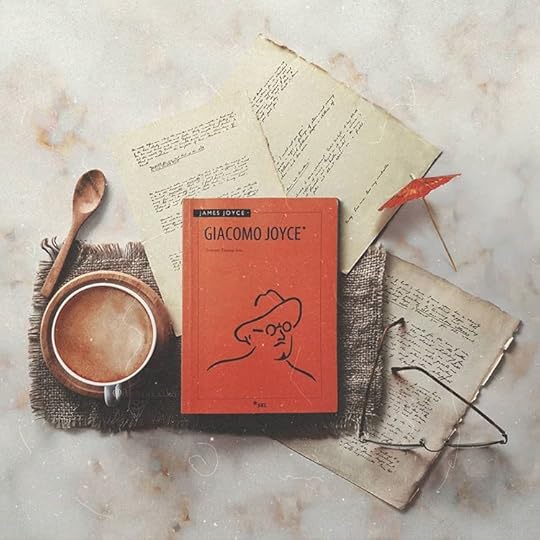
el yazıları bu kitapta yayımlanmış mektupların joyce el yazısı, yine bu kitapta yayımlandı (bacağın altından kulağı tutmak oldu anlatışım). şemsiye de Joyce'un imgeleminin bir parçası, benim suçum değil. hemen aşağıda anlicanız zaten.
fotoğrafla gelen edit bitti.
“Love me, love my umbrella.”
Büyük edebiyatçıların nasıl büyük edebiyatçı olduğunun birebir kanıtı bence. Giacomo Joyce, yazarın hayatının bir kesitinden, öğretmenliğini yaptığı Yahudi bir genç kıza duyduğu tutku, aşk ve şehvetin nesir ile nazım, ağıt ile güzelleme arasında, erotik ama melankolik tat bırakan, imgeleri dahi ima eden, kaotik anlatımla (bir Joyce itemi olarak) yazdığı eseri. Ellmann buna ‘içsel boşalma’ demiş, cuk olmuş.
Ben metinleri herhangi bir şekilde yorumlamayacağım zira zaten okuyacaksınız kitabı alırsanız. Biraz içini anlatıp biraz çeviri biraz baskı kusurunu dile getirip biraz da dramaqueenlik yapıp ayrılacağım (7000 küsür karakterli bi yorum oldu esasen hehe). Önce biraz dilinin inceliklerinden örnek vermek isterim:
“O asla sümkürmez. Bir anlatım biçimi bu: az ve öz.”
“Bronz rengi incecik iskarpinlerin üstünde kocaman fiyonklar: şımarık kuşun mahmuzları.”
“Karanlık bir duygu dalgası, bir daha, bir daha, bir daha. / ‘Şu benim gözlerim karanlıkta yetersiz, gözlerim yetersiz, / Şu benim gözlerim karanlıkta yetersiz aşkım.’ / Bir daha. Dahası yok. Karanlık sevda, karanlık özlem. Dahası yok. Karanlık.”
“…sevdalısının ana babasında doğanın o güzel imgesini kızlarında oluşturmak yolunda grotesk çabalardan başka bir şey göremediğinden… Mimledin mi bunu?”
“Gözleri düşüncelerimi içti: ve kadınlığının nemli, ılık, teslimiyetçi, kollarını açmış bekleyen karanlığına ruhum kendi kendine eriyerek boşaldı, bereketli tohumunu saçtı, seller gibi taşırdı… Kim alacaksa onu, haydi alsın şimdi!”
“Onbinlerce kılcal damar üstünde burucu bir öpücük.”
“…bağla / Şu ilmeği benim için ve topla şu saçı yukarı / Sıradan bir düğüm atıver.”
Ağağağhh.
Öhöm.
HUH.
Kitap 66 sayfa; ilk 22 sayfa Richard Ellmann’ın Sunuş adı altında kitabın bence hem eleştirisi, hem irdelenişi, hatta her şeyini ortaya koyan yazısı, sonraki 22 sayfa metnin kendisi, sonraki 11 sayfa el yazısından örnekler (fotoğrafta gördüğünüz) ve geri kalanı da yine Ellmann tarafından verilmiş notlardan oluşan bölüm.
Neden büyük edebiyatçı dedim, şöyle ki, Ellmann’ın tek tek verdiği örneklerde görülüyor ki Joyce, bu hiç yayınlamadığı eserinin içinden -cümleler, söz oyunları, betimlemeler, ifadeler vb- bir takım elemanları diğer eserlerinde kullanmış, yazı yazılıp kenara bırakılmamış, eserler arasında tek yönlü bir alışveriş söz konusu yani; bu da bence ‘yazma’ işinin ne kadar ciddi ve devinim halinde yapıldığının örneği; her sanatçı böyle çalışmayabilir elbette ancak az çok bildiğim kadarıyla (ve emekliliğimde okuma kararı alma nedenim olarak asdfasdf) Joyce’un yazarlığında dil işleyişi çok farklı, ağır ve zor olduğundan diyorum.
Ellmann’ın Sunuş’una gelirsem, ilk bir kaç sayfa eserin çıkışını, hammaddesini anlatıyor, sonrasında ise dil + üslub, tema, işleyiş, sonra kişilik-karakter ve kurgusallık, sonra üslub kurgusu ve işleyiş yöntemi, sonra diğer kitaplarıyla olan ilişkisi -bayağıca, sonra yeniden biçem ve bitiriyor.
Notlar kısmında da, her metnin (orijinal sayfalar numaralandırılıyor) paragraflara atıf yaparak yine diğer kitaplarında nerde/nasıl kullanıldığı ve imgeleri ve sembolleri gibi açıklamalar mevcut.
Ellmann’a göre uçucu, abartılı bir anlatım, ama ah, böyle anlatılsın sayfalarca okurum. Zaten Joyce’un bir tek (Dedalus’tan) Mektuplar’ı okumuştum, Nora’ya yazdıklarını geçtim neredeyse para hesabı yaptığı yerleri bile seveceğim, çok güzel dili var (romantizmden değil ukalığı etkin oralarda, haha). O yüzden minik bir aşinalığım var romantik Joyce’a (o mektupların içinde erotik olanlar yok, Alakarga’dan taze çıktı yine Joyce’un mektupları, onda varlar mı bilmiyorum, sordum yanıtlamadılar beni ezik olduğum için, aslına bakarsanız herhangi bir edisyonda hiç yer aldı mı erotikler onu da bilmiyorum ama inşallah basılır amin). Burada da eridim. Öldüm. Bittim.
Bir umut İngilizce baskı ararken buldum ve bir de oradan okudum. Dizgi birebir aynı. Tek eksik var: Sunuş’un başında Ellmann, Giacomo’nun, elde bulunan sayfalardan ilkinin sol üst köşesinde yazdığını belirttikten sonra ‘Giacomo Joyce’un el yazısı hali var orijinalde, ama bizde yok. Ayrıca benim baktığım baskıda, asıl kağıtlarda (normal kağıt boyutundan büyükler) bulunan paragraflar arası mesafeler dikkate alınmış, biz almamışız, üzücü. (Ki Sel’in iç dizayn… artık daha iyi, en azından metin sayfa içinde çerçeve gibi durmuyor; hâlâ var gibi gerçi, neden sayfanın son ve bir satırlık cümlesinin son kelimesi ‘yumuşakçalar’ın çoğul eki bi alt satırda, otomatik hecelemeden vazgeçin artık.) Geleyim çeviriye. Eyvallah, benim ne Joyce ne İr/İng edebiyatı hakkında sağlam bilgim var, ne de vurgu, ritim, ahenk, sesten anlarım, ama ben çeviri söz konusu olunca, nasıl yazılmışsa, dudaktan nasıl çıkıyorsa öyle aktarılması taraftarıyım. Mesele yalnız yazının özündeki atmosferi değil dil-diş-dudak arasını solutabilmek bence. Bazen sevmedim (yanlış demiyorum) ki yabancılaştığım satırlara baktım ve gerçekten de öyle oldu, mesela: “The housemaid tells me that they had to take her away at once to the hospital, poveretta, that she suffered so much, so much, poveretta, that it is very grave…” (11.metin)
Çev: “Hizmetçi onu acilen hastaneye götürmek zorunda kaldıklarını, poveretta, çok ama çok ama acı çektiğini, poveretta, durumunun pek ağır olduğunu…” (Poveretta zavallıcık demek.) Şöyle olsa daha güzel olmaz mı: “Hizmetçi anlatıyor bana onu derhal hastaneye götürmeleri gerektiğini, poveretta, çok, çok fazla acı çektiğini, poveretta, pek ağır hâlde olduğunu…”
Ya da mesela yukarıda alıntıda verdiğim: (14.metin) “…my soul, itself dissolving, has streamed and poured and flooded a liquid and abundant seed…” yerine “ruhum, kendi kendini eriyerek, akıttı ve boşalttı ve taşırdı sıvısı ile bereketli tohumunu…”, sıvı dediğim zevk sıvısının sıvısı; suyu da derdim de küçük ünlü uyumu, doğrudan çevirmedim yani.
Bir de bazı kelimelerin seçimlerini sevmedim (tekrar; yanlış demiyorum). Mesela ‘quoth’ var örneğin ‘dedi/dedim’ demek yalnızca, ‘aldı’ diye çevirmiş (10. metin), yarım saat düşündüm bunu yaa, niye beni üzüyonuz.
Ya da mesela; “A gentle creature.” (6. metin) Çeviride “İncecik bir yaratık.” Gentle creature dediği Jamesy, yani bizzat kendisi -olmasa bile-, harikadır ki gentle ile iki anlamı vurabiliyoruz, ilki Joyce’un fiziken ince herifin teki oluşu, diğeri de nazik olan ‘ince’. Çünkü ben aşırı eminim oradaki asıl anlamın incecik olmadığının. Her şey tastamam da o küçültme eki niye :(📜
Bunun subjektif bir zevk meselesi olduğunun farkındayım ama hâl böyleyken böyle. Ama bence çok güzel bir çeviri (hele self-deflation’a içsel boşalma demek (ben de bakıp öğrendim, argocuk bir kelime, erekt halin zıttı aslında)). Cidden başarılı. Hehe.
Bu arada kitabı Aylak Adam da yeni sayılır bastı. Ne Dost’ta ne başka kitapevinde bulabildim Kızılay’daki, almak için delirdiğimden düşmedim peşine, orada nasıl bilmiyorum. Bilen aydınlatsın.
Romantik olması bir şey ifade etmiyor, bu kitabı ponçik yapan şefkatli, yitik ve pek tabii erotik oluşu.
“Sonsöz: Sev beni, Sev şemsiyemi.”
Gidem de Dublinliler'i alam
xoxo
iko

December 2, 2023
Giacomo es un conjunto de apuntes o fragmentos que James Joyce escribió en 1914, el año en que terminó de escribir Retrato del artista adolescente y en el que comenzaba el grandioso Ulises. No fue publicado por el autor como una obra acaba, fueron insumos para sus magnas obras.
En ellos se narra su atracción por una o varias alumnas suyas cuando trabajaba en Trieste, alejado de su Irlanda natal. Joyce estaba obsesionado por el paso del tiempo y las mujeres plasmándolo en estas notas.
Bajo esa pasión amorosa nos muestra el discurrir de sus pensamientos, su monólogo interior, la importancia que tiene el flujo de la conciencia.
“Este corazón está lastimado y triste. ¿Un desengaño amoroso? Largos labios lascivos que apuntan de soslayo: moluscos de sangre”
En ellos se narra su atracción por una o varias alumnas suyas cuando trabajaba en Trieste, alejado de su Irlanda natal. Joyce estaba obsesionado por el paso del tiempo y las mujeres plasmándolo en estas notas.
Bajo esa pasión amorosa nos muestra el discurrir de sus pensamientos, su monólogo interior, la importancia que tiene el flujo de la conciencia.
“Este corazón está lastimado y triste. ¿Un desengaño amoroso? Largos labios lascivos que apuntan de soslayo: moluscos de sangre”

April 9, 2022
An unpublished short story by James Joyce. I actually had no idea this existed!
It's very beautifully told. It feels like later Joyce, but more approachable due to its length. I wonder if he would have wanted this published.
It's very beautifully told. It feels like later Joyce, but more approachable due to its length. I wonder if he would have wanted this published.

July 6, 2018
«Ποτέ δε φυσάει τη μύτη της. Μια μορφή λόγου: με το ελάχιστο τα μέγιστα» ;)
https://pepperlines.blogspot.com/2018...
https://pepperlines.blogspot.com/2018...

May 28, 2019
beautiful small piece on love by great writer

February 11, 2022
Giacomo Joyce might be an unpublished diary meant for nobody else's pair of eyes, but reading it feels like finding a missing piece in the jigsaw puzzle of Joyce's oeuvre.
Colm Tóibín's short introduction adds a sweet note to this edition.
The Book of Giacomo is not canon, but an apocryphal treasure.
Colm Tóibín's short introduction adds a sweet note to this edition.
The Book of Giacomo is not canon, but an apocryphal treasure.

January 29, 2023
Με ποιον ; ( Αναγνώστη ο Τζόυς ) Με τον Κανένα και τον Καθένα
Πότε ;(Ολοκληρώνεται η ανάγνωση του ) Με τον θάνατο του αναγνώστη
Που ; (Οδηγεί η ανάγνωση του ) Στα αστέρια και ακόμα παραπέρα )
-Από το ΥΓ -
Άλλη μια εξαιρετική έκδοση του Άρη Μαραγκόπουλου με πολύ ωραίες αναλύσεις , επίμετρο και σχόλια
Πότε ;(Ολοκληρώνεται η ανάγνωση του ) Με τον θάνατο του αναγνώστη
Που ; (Οδηγεί η ανάγνωση του ) Στα αστέρια και ακόμα παραπέρα )
-Από το ΥΓ -
Άλλη μια εξαιρετική έκδοση του Άρη Μαραγκόπουλου με πολύ ωραίες αναλύσεις , επίμετρο και σχόλια
December 9, 2023
Hauntingly brilliant.
The way Joyce puts his obsessive infatuation with the anonymous student into words exudes itself through the papers of the book and mantles the reader with a cloak of passion, frustration, and love.
Joyce unblurs the line between animus and love; and, this, in particular, speaks to me as someone who sees love as detestful yearning for the other. The other is reproached for selfishly taking possesion of your heart all to himself/herself. Such is Joyce's attitude towards the end, and it is strikingly reminiscent of Blake's Pebble: "Love seeketh only self to please,/ To bind another to its delight,/ Joys in another's loss of ease,/ And builds a Hell in Heaven's despite." Likewise, Joyce metaphorically depicts his loved one as a snake that spews its venom in him, showing the side of love that many are oblivious to.
Giacomo Joyce, yet another masterful work of Joyce that I enjoyed to the fullest. Short and bittersweet.
The way Joyce puts his obsessive infatuation with the anonymous student into words exudes itself through the papers of the book and mantles the reader with a cloak of passion, frustration, and love.
Joyce unblurs the line between animus and love; and, this, in particular, speaks to me as someone who sees love as detestful yearning for the other. The other is reproached for selfishly taking possesion of your heart all to himself/herself. Such is Joyce's attitude towards the end, and it is strikingly reminiscent of Blake's Pebble: "Love seeketh only self to please,/ To bind another to its delight,/ Joys in another's loss of ease,/ And builds a Hell in Heaven's despite." Likewise, Joyce metaphorically depicts his loved one as a snake that spews its venom in him, showing the side of love that many are oblivious to.
Giacomo Joyce, yet another masterful work of Joyce that I enjoyed to the fullest. Short and bittersweet.

February 5, 2021
จอยซ์เป็นอัจฉริยะ มันคือ 32 หน้าแห่งความลุ่มหลงหมกมุ่นที่หมิ่นเหม่ศีลธรรม ชอบความขี้เล่นกับคำของจอยซ์ชะมัดเลย
June 27, 2025
Sånn, akkurat sånn!
Veldig uvant å lesa Joyce så kort og fragmentert, men han får det til! Veldig likt Duras. Ikkje nødvendigvis strengt knytta te et fast narrativ, men heller relasjonsbasert. Intertekstuelle paralleller te flere av hans egne verk, i tillegg te ein øvrig litterær kanon!
Veldig uvant å lesa Joyce så kort og fragmentert, men han får det til! Veldig likt Duras. Ikkje nødvendigvis strengt knytta te et fast narrativ, men heller relasjonsbasert. Intertekstuelle paralleller te flere av hans egne verk, i tillegg te ein øvrig litterær kanon!

January 18, 2026
15-20 sayfalık metin, neydi ne değildi anlamadım bile

October 30, 2020
Is love a constant or fragmented? Love is kindness, but then does obsession count as love? What is love?
This short story is a collection of fragmented records from one of the most famous authors in the 20th century -- James Joyce, even psychologist writes about him, for analysing his love as an obsession.
The booklet Giacomo Joyce from Faber Stories is such a reflection on James Joyce's beautiful language, dandy style, and passionated mind on love.
Story itself is fragmented, and presumed as an advanced draft for James Joyce's famous novels. Folded and found between a school notebook covers, Joyce's Giacomo Joyce was preserved by the Publisher to its maximum extent, margins, handwritings, you name it.
Each paragraph is a story, yet connected, portraying somehow the murmuring author's self --
Easy now, Jamesy! Did you never walk the streets of Dublin at night sobbing another name?
Searching, the obsessive one will never find peace. Pain never need to be conceived involving two. His words, thoughts, all are swimming in the sea of constructed love, foundation is obsession. It is vulnerable.
The beautiful language, the words, this little fragmented short story from James Joyce paints a wintry portrait of a man in love, weathered by his own thoughts, while her, actively living her life through the eyes of "Jamesy", so painfully, so unrestrained.
Read more: https://coinywords.com/2020/10/30/fas...
This short story is a collection of fragmented records from one of the most famous authors in the 20th century -- James Joyce, even psychologist writes about him, for analysing his love as an obsession.
The booklet Giacomo Joyce from Faber Stories is such a reflection on James Joyce's beautiful language, dandy style, and passionated mind on love.
Story itself is fragmented, and presumed as an advanced draft for James Joyce's famous novels. Folded and found between a school notebook covers, Joyce's Giacomo Joyce was preserved by the Publisher to its maximum extent, margins, handwritings, you name it.
Each paragraph is a story, yet connected, portraying somehow the murmuring author's self --
Easy now, Jamesy! Did you never walk the streets of Dublin at night sobbing another name?
Searching, the obsessive one will never find peace. Pain never need to be conceived involving two. His words, thoughts, all are swimming in the sea of constructed love, foundation is obsession. It is vulnerable.
The beautiful language, the words, this little fragmented short story from James Joyce paints a wintry portrait of a man in love, weathered by his own thoughts, while her, actively living her life through the eyes of "Jamesy", so painfully, so unrestrained.
Read more: https://coinywords.com/2020/10/30/fas...
October 24, 2021
Youth has an end: the end is here. It will never be. You know that well. What then? Write it, damn you, write it! What else are you good for?
It is a perfect little shard of a story. If by someone else we could probably criticize: what's going on? Who-what-where? And why? But since it's Joyce someone else has already dissected it for you, made the notes, compared it to Ulysses to Portrait, probably made the walking tour and drawn the family tree of the love interest.
But never mind, all that is noise. Here, Joyce allows himself to write beautifully, dreamily about an obsession with an impossible love:
She stand black-robed at the telephone. Little timid laughs, little cries, timid runs of speech suddenly broken....
Great bows on her slim bronze shoes: spurs of a pampered fowl.
A flower given by her to my daughter. Frail gift, frail giver, frail blue-veined child.
It is a perfect little shard of a story. If by someone else we could probably criticize: what's going on? Who-what-where? And why? But since it's Joyce someone else has already dissected it for you, made the notes, compared it to Ulysses to Portrait, probably made the walking tour and drawn the family tree of the love interest.
But never mind, all that is noise. Here, Joyce allows himself to write beautifully, dreamily about an obsession with an impossible love:
She stand black-robed at the telephone. Little timid laughs, little cries, timid runs of speech suddenly broken....
Great bows on her slim bronze shoes: spurs of a pampered fowl.
A flower given by her to my daughter. Frail gift, frail giver, frail blue-veined child.

November 13, 2021
I had a hard time understanding this... I still dont feel like I fully understood this.
I am lost.
I am lost.
February 17, 2022
ჯოისი რთულია. უბრალოდ თხრობით ვიკაიფე. პოეზიით. სილამაზით. მაგრამ ქართულად მაინც ვერ იყო ისეთი ლამაზი. დართული ქონდა ორიგინალი ტექსტი და ორიგინალი ულამაზესი იყო.
November 14, 2022
I have no idea what I just read. The introduction by Colm Tóibín made more sense than the actual book.
April 23, 2020
prima întâlnire cu Joyce și pot spune că am fost dat pe spate.
Giacomo Joyce: un șir de imagini care cu cât sunt mai haotice, cu atât sunt mai clare. tablouri formate din cuvinte care provoacă mici gâdilături pe cerul
gurii, reușind a te face să scoți artificii din gură odată cu rostirea lor.
Epifanii: titlul spune tot. aceste epifanii nu sunt altceva decât niște epifanii. revelații. sublime revelații în extrem de scurte scene, banale la prima vedere.
Pisica și diavolul: o foarte scurtă povestioară care, zic eu, poate fi citită lejer unui copil, însă unui adult ar fi mai potrivit.
Giacomo Joyce: un șir de imagini care cu cât sunt mai haotice, cu atât sunt mai clare. tablouri formate din cuvinte care provoacă mici gâdilături pe cerul
gurii, reușind a te face să scoți artificii din gură odată cu rostirea lor.
Epifanii: titlul spune tot. aceste epifanii nu sunt altceva decât niște epifanii. revelații. sublime revelații în extrem de scurte scene, banale la prima vedere.
Pisica și diavolul: o foarte scurtă povestioară care, zic eu, poate fi citită lejer unui copil, însă unui adult ar fi mai potrivit.

November 15, 2017
joyce tabii ki.
ama bu defa da yayinevine bir kac kelam edelim; aylak adam gercekten iyi isler cikaran/acak bir yayinevi. iyi ki varlar.
ama bu defa da yayinevine bir kac kelam edelim; aylak adam gercekten iyi isler cikaran/acak bir yayinevi. iyi ki varlar.

June 2, 2024
سودایی که همیشه مثل دردی کوچک و بیضرر، مثل آهی نکشیده، زیر خاکسترهای خودش شعلهوره. [آه عمیق]

January 9, 2025
3,5 - 4 Stars.
it has the sound of a man whispering.
it has the sound of a man whispering.

October 23, 2018
A beautifully written short piece based on Joyce's infatuation with an attractive young student of his in Trieste. At only 16 pages and sparse text that could be described as somewhere between prose and poetry, there is so much in here. Joyce abandoned this work and never intended its publication (it was rescued by his brother Stanislaus), but reused pieces in A Portrait of the Artist as a Young Man, Ulysses, Exiles and even his poetry (A Flower Given to my Daughter). This nice limited edition has a great introduction and notes from Richard Ellmann and includes a facsimile copy of the original handwritten manuscript, four of the pages actual size.

December 21, 2016
(…)
Loggione. The sodden walls ooze a steamy damp. A symphony of smells fuses the mass of huddled human forms: sour reek of armpits, nozzled oranges, melting breast ointments, mastick water, the breath of suppers of sulphurous garlic, foul phosphorescent farts, opoponax, the frank sweat of marriageable and married womankind, the soapy stink of men...... All night I have watched her, all night I shall see her: braided and pinnacled hair and olive oval face and calm soft eyes. A green fillet upon her hair and about her body a green-broidered gown: the hue of the illusion of the vegetable glass of nature and of lush grass, the hair of graves.
Loggione. The sodden walls ooze a steamy damp. A symphony of smells fuses the mass of huddled human forms: sour reek of armpits, nozzled oranges, melting breast ointments, mastick water, the breath of suppers of sulphurous garlic, foul phosphorescent farts, opoponax, the frank sweat of marriageable and married womankind, the soapy stink of men...... All night I have watched her, all night I shall see her: braided and pinnacled hair and olive oval face and calm soft eyes. A green fillet upon her hair and about her body a green-broidered gown: the hue of the illusion of the vegetable glass of nature and of lush grass, the hair of graves.

September 24, 2020
(2/30 faber stories)
straddles the line between verse and prose but leaves no doubt regarding the near perfection of the writing (which frequently borrows from languages other than english, and has the trademark joyce approach of speech construction!)
“a rice field near vercelli under creamy summer haze. the wings of her drooping hat shadow her false smile. shadows streak her falsely smiling face, smitten by the hot creamy light, grey whey hued shadows under the jawbones, streaks of egg yolk yellow on the moistened brow, rancid yellow humour lurking within the softened pulp of the eyes a flower given by her to my daughter. frail gift, frail giver, frail blue-veined child.”
straddles the line between verse and prose but leaves no doubt regarding the near perfection of the writing (which frequently borrows from languages other than english, and has the trademark joyce approach of speech construction!)
“a rice field near vercelli under creamy summer haze. the wings of her drooping hat shadow her false smile. shadows streak her falsely smiling face, smitten by the hot creamy light, grey whey hued shadows under the jawbones, streaks of egg yolk yellow on the moistened brow, rancid yellow humour lurking within the softened pulp of the eyes a flower given by her to my daughter. frail gift, frail giver, frail blue-veined child.”

January 19, 2018
Impressive just for the fact that Faber managed to publish a couple thousand words (aphoristic poetic prose spread across 15 pages) as a $10 book.
It's always nice to have new material by Joyce, but he mined most of the (slight) material in Giacomo for various turns of phrase in Ulysses, and therefore this one is for completists only.
It's always nice to have new material by Joyce, but he mined most of the (slight) material in Giacomo for various turns of phrase in Ulysses, and therefore this one is for completists only.
Displaying 1 - 30 of 171 reviews