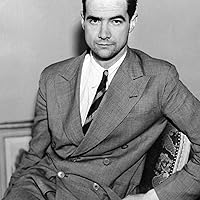
Futaro Yamada (山田 風太郎 Yamada Fūtarō?, January 4, 1922 – July 28, 2001) was the pen name of Seiya Yamada (山田 誠也 Yamada Seiya?), a Japanese novel writer, famous for his ninja stories and mystery fiction based on japanese legends. He worked in genre of historical fiction, popularizing legendary characters, ninjas and supernatural abilities in his works. Thanks to him many historical characters weren't forgotten in our days.
In 1947, he wrote a mystery novel Daruma-tōge no Jiken (達磨峠の事件?, lit. "The Incident on Dharma Pass") and was awarded a prize by a novel magazine Houseki (宝石?). He was discovered by Edogawa Rampo and became a novelist. He wrote many ninja (忍法帖 Ninpōchō series) and mystery stories. Many of his works have been adapted for film, TV, manga, and anime.
I received a review copy of this book from Pushkin Press via Edelweiss for which my thanks.
Set in the Meiji era (1868–1912), the period commencing from the end of the Tokugawa Shogunate, The Meiji Guillotine Murders by Futaro Yamada, originally published in 1979 and in this translation by Brayan Karetnyk by Pushkin in 2024 was quite different in its structure and in its mystery or mysteries compared to some of the other classic Japanese detective fiction I’ve read so far, and while initially confusing and somewhat slow to start, not only became absorbing but as other reviewers too have pointed out took me entirely by surprise in its final chapter. This seems from what I can see on Goodreads, the first of this set of mysteries translated into English.
In the initial chapters which set the scene for what’s to follow, we are given a sense of the Meiji period where Japan was at a crossroads of sorts with some powerful factions and groups in favour of modernisation (read: Westernisation) while others, particularly from the samurai class were strong advocates of traditionalism. In this there were newer government structures, among them a constabulary or police force, the rasotsu, its officials openly engaging in petty bribery and only out to line their own pockets (a small group of whom we are introduced to as the story opens). There is also the Imperial Prosecuting Office, intensely traditional including in their dress, and intent on checking corruption in all quarters besides solving the crimes they are charged with investigating, trying their utmost to ensure justice.
And Chief Inspector Kawaji Toshiyoshi (a historical figure credited with establishing Japan’s modern police force) and his colleague, the fictional Chief Inspector Keishiro Kazuki of this Imperial Prosecuting Office are the characters we primarily follow as they decide to engage in friendly competition in the cases that come their way. Kazuki has just imported a guillotine from France (at official request), part of testing out new methods of execution and with it has also come the beautiful (blond and blue eyed) Esmeralda a member of the family that made the guillotine, whom Kazuki is involved with though he is engaged to be married to O-Nui, the daughter of Naotsugu Manabe, an official in the Ministry of War. As Kawaji and Kazuki are faced with each strange murder, Esmerelda also plays another role. Apparently trained as a miko, she can summon the spirits of the dead. In each instance she calls on the deceased to relate what befell them, usually as confirmation of what Kawaji and Kazuki have found and supplying the missing details. We follow the two inspectors and the rasotsu who now assist them as they face various baffling cases which they must get to the bottom of.
The Meiji Guillotine Murders is a book strongly rooted in history. The historical figures, incidents and developments referred to are all ones that lived or took place in the Meiji period as are the details (I looked some though not all up on Google later) and these are interwoven with fictional characters and incidents to give us a thoroughly interesting read. Apart from specific personages and occurrences, one also gets a good sense of the period itself: social structures, simmering tensions between traditionalists and modernisers, the developments that were coming in (from technology being imported to English education, books being translated and the presence of foreign doctors practicing Western medicine), politics, and culture.
The book as I mentioned does take some time to get started as it were, and the initial couple of chapters do leave one wondering what’s happening and what direction things are going to take (no body is immediately found and we seem only to be witnessing executions in the prison). As Kawaji and Kazuki start to get their cases though, we settle more into the structure. Each case is resolved before we move onto the next, the solution not something to be worked out but enjoyed and Esmerelda’s summoning of the victim’s spirit not only adds an element of the mystical and occult but also functions as the denouement in each case. But don’t let the episodic nature of things dampen your enthusiasm at all, for right at the end comes the biggest surprise of all when everything that we’ve read ties up in a way one wouldn’t have ever imagined.
There is of course some graphic detail (not going overboard or gratuitous in any way), for there are executions using the guillotine throughout as well as the murders themselves. So we encounter severed heads and legs and various other not very pleasant things but if one doesn’t dwell on them too much or start reading those aspects too intently, one should be alright. I can be very squeamish about all this but I managed fairly ok. (This did leave me wondering why this is labelled as a cosy).
This isn’t a book to be picked up if one wants a traditionally structured mystery but for a book rich in historical detail and also fascinating in the mystery/mysteries and ideas that it deals with and definitely one which will leave you gobsmacked at the end, this one is certainly recommended.
4.5 stars; it loses that .5 for the initial confusion
I got hopelessly lost throughout this whole book and it's only the last chapter that makes the whole make sense. Therefore my advice to anyone reading this book is to take each murder on its own merits and wait till the end for your reward. I'm the world's worst detective so I usually give up hope of working out what is going on very early on. With the Guillotine Murders I gave up halfway through the first murder. This is one of those "trust the process" books.
I'm a huge fan of Japanese literary and crime fiction and I've read a little of the history as well so this book, which is stuffed full of history and culture, was am interesting read even if it hadn't had the murders in but you've got to take it slowly. I tried reading at my normal speed but found I was having to repeat read pages because I'd missed something.
So don't give up top soon, read and digest slowly and I promise you, you will be rewarded at the end.
This is my first Futaro Yamada but I'd definitely read more.
Thanks to Netgalley and Pushkin Press for the advance review copy.
Book 7 January in Japan 2024 Alright in all honesty, that last chapter what actually saved this book for me. I was befuddled by the seemingly incoherent plotline or rather aptly said different cases that make up the storyline which caught me off guard. But the last chapter tied everything and it all makes sense, its freaking make sense why those things happened. For starter, i dont know whether I should state what makes me a bit turn off with the investigative style of this book for the fear of spoiler. Its kinda hard to talk about what i dont like bcus i think its gonna give away the whole meaning of the story.
The Meiji Guillotine Murders set in the Meiji Restoration era where there is the transition period from Edo to Tokyo. Heavily inspired with historical elements and politics, this book was a feast for history buff I will say as I learned alongside the characters with the barrages of informations that are relatively close to the Japan's history which makes it both a compelling and also quite hard to grasp at times. With the new reign on power, The Imperial Prosecuting office established to root out the corruption amongst the higher rank officials and especially the police officers (rasotsu). Two highly esteemed Chief Inspector, the older one named Toshiyoshi Kawaji and the younger, Keishiro Kazuki are both ambitious and seek for a just government as their hope for a peaceful ruling and free from corruption. Kazuki had brought the execution weapon from French called guillotine that behead the criminals of indescribably cruel crimes and this had become an execution that prominently featured in the story.
To start with, it was uunexpected to read there are 5 different mysteries in here which are being solved by Kazuki and Kawaji in a sort of psychic or unnatural investigation that would get you thinking is it real. To be honest, the revelation for each mysteries bamboozled me for how absurd & also quite simple they are but then the last chapters really sealed the deal with an unexpected twist that are clever yet to get to that point, its a bit too anti-climatic. All in all, this book is gonna be a hit or miss to some. I'm in the middle because I do enjoyed some of the aspects of the story but I will honestly say reading this can be quite draggy for how heavy political the story is and there are sooo many names to remember. I even got confused by Kawaji and Kazuki at some point in the story 🤣 although I like Kawaji way more than Kazuki but the ending is pretty sad to me.
Huge thanks to @definitelybooks #pansing distribution and Pushkin Vertigo for the review copy in exchange for an honest review
It wasn’t exactly what I was anticipating, but it was still an enjoyable novel to read. The historical and political aspects of the plot are way more present that I thought they would be, but it gave a deep and interesting context to the murders. They are told through little tale-like chapters — with titles. In a way, it reads like a collection of very short stories about some murders in the area that follow each other in that moment in time. They don’t blend in a typical mystery thriller way. It was an intriguing manner to tell the story. It was not the standard mystery thriller and I found that to be engaging. The ending has a little twist that I wasn’t expecting and it was quite thrilling. Even though I did not particularly connect with the characters, I appreciated this novel.
Thank you to Netgalley for an ARC in exchange for a honest review.
A one-of-a-kind book, surely. And because of the nature of the story, it’s highly unlikely that this will be adapted to the small screen even though it’s perfect for a mini-series.
For the first few chapters, other than an immersive historical set-up and neat murder tricks, like me, you’d perhaps find it all a bit underwhelming, if entertained nonetheless because it’s pretty fast-paced.
But persist to the last chapter, where all the previous narrative snippets are tied up, no more loose strings in sight (pun intended) - it truly exemplifies the whole being greater than the sum of its parts.
In their own ways, the two main characters (one of whom is an actual historical person) tried to infuse their own brand of justice in the way each thought most effective, for better or worse.
Of course, even now nothing much has changed in terms of governments everywhere (hopefully not all); power corrupts those that do not adhere to an unshakeable integrity rooted in truth, come what may.
Yet every act of justice will leave their impact, as put forth by Yamada, who, through his words wrapped as an entertaining novel, unleashed his own mark that proves the pen is indeed mightier and more enduring than the sword (or guillotine), for as long as people read.
A tour de force of historical fiction, short story collection, murder mystery, and a treatise on the meaning of justice, all in one tightly woven cinematic drama.
The Meiji Guillotine Murders story set after the Boshin War which taking us back to the Meiji Restoration, a tempestuous period of when Government is still reshaping . We follow Inspectors Kawaji and Kazuki who work for the Imperial Prosecuting Office, a branch of the government that aims to root out corruption especially the police forces (Rasotsu). In this novella, they tackle a series of cases where various murder victims which most of them are the members of the government that murdered in mysterious ways. The Guillotine was a 'weapon' imported from French which is a famous execution method back then. We will see this been used almost each of the short stories.
To be honest, this story is not exactly what I was anticipating. I was expecting a full stories of a brutal murders and we follow their procedural investigation (of course it's my own fault for not reading it thoroughly). Instead of that, we get a collections of short stories which the plot focuses on the murder mysteries. Each of the short stories were so interesting, some are difficult to digest, and almost all of them are quite graphic & violence; the bodies cradling the severed heads, the man hanged at the bridge, the leg being cut-off. I quite enjoy the gory detailed despite being caught off guard.
However, maybe it's because of my expectation but most of how the case revealed and settled are quite unsatisfying.. I craved for more and satisfying revelation. However, the way this story ended was quite thrilling, unexpected and sad. I did not expected the last chapter to end that way. Overall, this is such a interesting read. I wouldn't doubt for this author abilities for the settings because he was so good at that (look at his anime adaptation works). Giving it 3.5 ⭐️
Thank you Pansing (@definitelybooks) for the review copy in exchange for a honest review! 💛
6 out of the last 10 books I've read are Japanese. For years, I resisted the popular allure of Japan - steering myself first to Chinese work, because I was learning their language, and then to Korean work - because I am living in their country. This book, a rich historical fiction based in the dawn of the Meiji era, has broken apart my abstinence from Japan.
This is a series of detective stories, sensational like the "penny dreadful" literature. My favorite part is that actual historical heroes and villains weave through the stories - reminiscent of Napolean in Tolstoy's War and Peace. And unlike Napolean, these characters are a bit obscure, with nearly empty Wiki pages, so it was more interesting to dig out the history.
A viral meme these days says that my generation is born too late to discover new lands and too early to fly to the stars. But in exploring East Asian culture - through translated books and TV shows - I have had the taste of what such discoveries, without risking my life.
Meiji era during the restoration phase when the new regime having its struggles to keep the peace from the aftermath of Civil War, a new police force has been formed by the imperial rule to fight the rebellions from the previous military dictatorship government. On corruption, privilege and threat due to its political turmoil to societal, economic and cultural change, I followed both Chief Inspectors Keishirō Kazuki and Toshiyoshi Kawaji from the Imperial Prosecuting Office in their investigative journeys dealing with a series of murders and deaths cases happening across the capital.
It started with rasotsu (police officer who taken advantage of the newly formed society) brief history to chapter of Esmeralda; a French shrine maiden who played an important role in infusing a mystical hue to the plot— bit surreal on her part but enticing much to delve into her interactions with Kazuki and the cases he handled. 5 chapters later with subsequent crime and murders, bit dense with its drama and tension but nothing too twisty or engrossing much for me as the mystery goes quite mediocre and mostly explored on one’s spiteful motive and immorality issue.
Too many characters come and go which I did not fancy much, I was more invested with Kazuki’s love affairs but reading his confession making me go digress— frankly an ingenious unexpected ending with that guillotine scene, I was perplexed. A bit dreadful in a way but love how the last chapter linked me back to its main theme with a perspective on modernization as well societal and political impact from the new established government.
“At death, I fear no dying, As in living, I steal no life.”
Thank you Pansing Distribution for the gifted review copy!
First of all, I'd like to thank NetGalley and Pushkin for letting me read an arc in exchange for an honest review.
Total rating: 4.5 ⭐⭐⭐⭐
I originally marked this as a 4 star when I finished, but after having the night to think on this, I've upgraded to a 4.5, rounded up to 5 stars.
This was my first time reading an arc of a book, and although it took me some time to get used to once i was into the book I thoroughly enjoyed. At every point I was intrigued at what happened next, enjoying doing my own reading on the Japanese culture and within the book and learning on the go. This book was a ridiculously easy read, and I would have finished it a lot sooner if it wasn't for outside circumstances.
Each character was unique in their own way, and I was growing more attached than I thought to Kazuki and Kawaji in their time as investigators for the new and upcoming police force in Tokyo. I didn't know what to expect when approaching this book (other than murders, of course), but the direction it took was amazing.
I will 100% be reading more of Fūtarō Yamada's books when they are translated, after how much I enjoyed this one, and will be purchasing a copy of it myself to both support the author and be able to read in the proper formatting.
Though the shogunate has been defeated, and the Emperor restored, this period is not without conflict, in the form of old jealousies, mistrusts and clan pride manifesting in assassinations and the like. To clean things up and ensure there are no corrupt officials remaining in power, the Imperial Prosecuting Office is formed, with rasotsu (patrolmen) arresting thieves and murderers, while investigators work cases against those in power. Two of these chief investigators are featured: Kawaji Toshiyoshi (a real figure credited with creating Japan's police force) and Keishiro Kazuki.
Kazuki is unusual, dressing unconventionally and having resided in France. He's recently returned with a descendant of a French executioner, Esmerelda Guillotine, and a shiny new guillotine. He takes a hardline against corruption, and wonders if a government can ever be just.
Kawaji is more conventional, is respectful, and feels a little stolid, but does notice vital details, and though against corruption, is a not as set as Kazuki against officials doing somewhat questionable things.
Though the two work together on all the of the seven cases presented in this novel, they're also in somewhat friendly competition with the other, or so Kazuki states, to get to the truth of a matter. Kazuki often employing the talents of Esmerelda, whom he says has trained to be a miko, someone who can channel spirits. Kazuki has her reveal what the newly dead knows about their murder and the culpability of those closest to them. These revelations often reinforce the conclusions Kazuki and Kawaji have come to on a case.
Eventually, the author reveals something surprising, which recasts the events of all the cases we've followed the two investigators on, and ends somewhat shockingly.
I was eager to read this as I find these moments in Japan's history: the reestablishment of the shogunate (early 1600s) then the restoration of the emperor (two hundred years later), fascinating.
This story certainly shows that though outright conflict is past, there is still much ill feeling, jealousy, nepotism and corruption as the new government attempts to clean up the bureaucracy. The author conveys some of this in each case, and we see the tensions between those attempting to modernize Japan and those wanting to keep Japan as it was. The author mentions translations of foreign books, a foreign doctor practising in the city, new technology, and how all this is affecting people.
The novel unfolds slowly, and each case is resolved before moving on to the next. I was kept wondering at Esmerelda's important role in each case, as there is both fascination for foreigners and some disgust directed at her, and frustration for Kazuki's reluctance to send her back to France.
There are several assassinations and beheadings over the seven cases. These are not rendered in graphic detail, but there is a lot of death along the way to the ending, which was both surprising, and not surprising, considering the questions I had from case one.
This is not a fast-moving story, but it is rich in historical detail, and makes for a an intriguing look at this specific time in Japan's history.
Thank you to Netgalley and to Pushkin Press for this ARC in exchange for my review.
Може аз да съм глупава, но си мислех, че гилотината ще играе доста по-голяма роля в тази книга. Резултатът е, че двама японци (или най-вече единият от тях) от ранните Мейджи години си харесват гилотината като съоръжение и си поръчват една такава за вкъщи... След това започват множество политически убийства, които са резултат от рязката и голяма промяна в страната, която отваря границите си за света (гилотината си стои предимно в склада или просто почти не се споменава). И макар че някои от убийствата са чудато извъртяни (когато най-после, след 5-6 или повече страници политиканстване, стигнем до тях), не четем класическо крими. Тази книга е от онези, в които читателят стои отстрани, чете за някакви сложни отношения между множество непознати хора, не пипа в никакъв случай случая и накрая присъства на класическо "шоу с духове", в което уж по магически начин се разкрива начинът и причината за дадено убийство. Толкоз. Не е лоша в истинския смисъл на думата, но може би ще е по-интересна на хора с исторически поглед за нещата и то не толкова свързан с културната история. През годините ми се е налагало да чета много за Мейджи и да, атмосферата е добре предадена, но никога не съм си падала по проблемите на младото японско правителство от XIX-ти век... Като цяло тематиката ми е скучна, независимо в кое кътче на света се развива действието :D Може би лоша шега ми изигра и това, че само малко преди да започна да я чета бях попаднала на аниме за същия период, което доста ми се покри с атмосферата тук. Знам ли... Представям си, че ако някое българско издателство реши да потърси "японска криминална книга" за издаване, ще е много вероятно да избере тази пред серията с Киндайчи например. Все пак в България трябва да се поддържа мнението, че Япония е някаква чудата и странна страна, а тази книга е в перфектния наратив хахахах :D
I loved the setting and atmosphere, the period details and the matter of factness about everyone even during 'spooky' revelations. But as a murder mystery it was a a bit...off. Perhaps a translation issue, or just a cultural/social one. Characters are not really developed beyond a small idiosynchratic personal detail that is occasionally mentioned to remind you they are, I guess. Anyway, I was feeling a bit 2 star for a large portion of the book but admit I did not see the ending coming. SURPRISE! Ok, that up's it a star, even though I felt it was a bit of a cheat going by western mystery/detective conventions. I was not able to look back and say to myself "Aaaah! Of course! It all makes sense! I should have seen that!"
One my brother wanted me to read. Funnily enough he didn't finish it. I almost didn't either. Felt like short stories bound together. After the first one I lost interest. It seemed to repeat with each one ending in the Miko revealing the truth. Also got confusing with two K names. Most of the book was lost on me.
This entire review has been hidden because of spoilers.
Thank you NetGalley and Pushkin Press for providing an ARC in exchange for an honest review.
In the heart of Tokyo at the beginning of the Meiji era, detectives Kazuki and Kawaji of the Imperial Prosecuting Office set out to investigate a series of seemingly impossible murders. Within a friendly rivalry, Kazuki has the upper hand on many investigations with help of his foreign Miko, Esmeralda that helps him put together "whodunnit."
During a time of reform and restoration, the Japanese government is still putting itself back together again, leaving plenty of room for corruption to slip through the cracks. The first "arc" as I will call it, follows a lax group of rasotsu going about their day-to-day business which includes extorting money wherever they can. The remainder of the story mainly follows Kawaji during his investigations, and while learning about each rasotsu was relevant, it didn't seem to be important until quite a number of chapters pass. After the first investigation is kicked off however, I was hooked.
Each method of murder was entirely unique and definitely felt "impossible" as described by Kawaji, but ultimately made so much sense. The writing is very clever in giving the reader only as much information as was available to the detectives without necessarily pushing you towards a solution. As the reader you could take your time to figure out how the murder was possible before the big reveal, which I think is the best way for a mystery novel to be; not obvious, but solvable. I was very excited to learn I was correct in a few of them!
Throughout the book, I did become a bit attached to Kawaji, and I wish there were a little more depth to the personalities of all of the characters. A lot of time is spent discussing the political state of Japan, and while I understand that is integral to what is happening in the story, I do wish more time was spent on the characters as well. It is important to note that several characters, including Kawaji himself, are real people in history, so I do understand that there is only so much creative liberty that can be taken.
I have one final note, but it's important for me to mention that this is not something I let influence my star rating as it is a nitpick with the translation. Many Japanese words are kept, likely to preserve their exact meaning, however there are no foot notes or glossary in the back of the edition I was provided. I do hope one of the two things are added, and again I did not let this influence my rating, and I still highly recommend The Meiji Guillotine Murders to those who have no experience with the Japanese language as it's story narrative is entirely worth it.
I really wanted to like this one, and to begin with, I did. The first cha did a good job of transporting me to another time and place, and I thought did a good job of evoking Japan just after the Shogunate had fallen and it was in a state of flux. The actual mysteries were just far too convoluted and I started to switch off and skin them, so when the whole thing was brought together at the end I had lost interest.
*Many thanks to Netgalley and the publishers for a copy in exchange for an honest opinion*
I have trouble understanding why this book is marketed as a detective story. It's so boggled down by historical context that it's more appropriate to classify it as a historical fiction. If I went in with correct expectations, I might have enjoyed it more. Instead, I was bored out of my mind and couldn't wait for it to be over. It doesn't help that the translation is awkward and the cast of characters is massive.
This is one of those books where the promise that it holds is much greater than what it is. A pulp fiction racy crime thriller set in the second half of the nineteenth century and written around hundred years after that, the story of two police officers who deal with increasingly baffingly and gruesome murders in Tokyo, it takes some time in getting to it but provides a satisfying coda.
As mysteries go, Meiji is a weak read. Set in the early days of Tokyo as Japan began its dash towards modernity in the 1870s, this book focuses on two police inspectors as they inspect several barely-related crimes. Does the guillotine show up? Yes. Does it tie the meandering narrative together? Hardly. Worse, the detectives seem good at investigating, but leave the final part of the case to an interesting third character. What does that look like in Meiji? Glad you asked!
The burden of the 'big reveal' at the end of each case falls on (follow me here) the beautiful French heiress to the family that created the guillotine, who traveled to Japan (after she fell in love with a member of a delegation of Japanese traveled to Europe in the 1860s to learn about modern legal systems) and who works as a translator of legal tomes and is the live-in lover of one of the detectives but is also a practicing priestess and who channels the spirits of the murdered at the end of each case through a Shinto seance to identify the culprits. It was a strange schtick the first time it appeared, and then it appeared over and over again.
If Meiji Guillotine is not great as a mystery (and let me be clear: mystery lovers would do well to avoid this), it is interesting for its place in history. Meiji Guillotine was written in the immediate aftermath of Japan's surrender to the Americans at the end of WWII, when there was rampant corruption, and broad social disillusionment at the country's political elite and wariness of what system was growing in its place. Japanese readers in the late 1940s may have empathized with Japan of the 1870s. As many elites of the late Tokugawa made choices that wrecked the country and then sauntered into positions of power under the new regime, so to would Japanese readers of the 1940s been cynical of the leaders of wartime Japan who were solidifying their own power bases in the new postwar order.
Adding to the historical cred, one of Meiji Guillotine's main characters was the actual historical figure who helped create the Meiji-era police system. He also has plenty of interactions with prominent figures of the day (Fukuzawa Yukichi among them), though none of those interactions leave the Meiji-era political luminaries looking good in any sense. Interesting from a historical perspective, absolutely! Sadly, it did not translate into a good mystery. Given that, I woudl recommend this only for those interested in historical literature. Mystery loves, look elsewhere!
My journey to reading Japanese classic mystery from the different era sensei is continuing with this amazing story.
The Meiji Guillotine Murder take set in the Meiji Era that followed the Restoration. I appreciate how author filled this book brimming with historical details, cultural politic and atmospheric scene of the era. The slower pace is perfect for the story and I wont missed any details.
The cases and investigation it self little bit simplistic with all twist and turn. But I enjoyed it bit by bits such as I watched my series. This book maybe not for everyone but I found my self quite enjoy it. This is my first experience read from Futaro Yamada Sensei and wont become my last.
Note : The Restoration was an era of major political, economic and social change in Japan. This era brought the modernization and westernization Japan to forge their way from feudal country become modern world's great power.
Thank you Netgalley and Pushkin Vertigo from Pushkin Press for providing copy of this ebook. I have voluntarily read and reviewed it. All thoughts and opinions are my own. Expecting release date : 4 Juni 2024
Thank you NetGalley and Pushkin Press for the opportunity to read this book! My spoiler-free review lies below, cradling its head in its hands:
My opinion on this book warmed so much the more I read—while it started feeling a bit like I was pushing through a fairly dense history book at the beginning, by the middle I couldn’t put the book down. The final 40 or so pages were devoured, leaving me thrilled.
For readers expecting a cozy murder mystery or a classic detective novel, know that this is more similar to a bound anthology in nature: our pair of detectives (technically government investigators) investigate five murders over the course of about a year, with the help of a French miko and a gaggle of dimwitted by useful rasotsu. The overarching through line is the interrogation of a Just Government—is it possible for a governing body to be free of corruption, to mete out justice, and to be manned transparently? The two main characters grapple with this throughout, within the heavily-detailed setting of early Meiji Japan.
At times the historical background and set dressing felt dry, and many of the less-fleshed-out characters bled into each other. I think in large part, this is due to my reading this out of it’s original context: many of the characters in the story, including one of the protagonists, are important figures in Japanese history. Even if Japanese readers aren’t necessarily familiar with all of them by name, the backdrop of the Meiji Restoration is enough to provide sufficient context. I can’t fault the writer or the translator for my own ignorance on the topic—I think it’s just worth noting to anyone picking up this book that they may get more of a history lesson than they may anticipate, as this element is less advertised in the summary.
While reading this book, I tried to keep in mind the context of it’s original publication—the late 1970s were a period of marked political, economic, and social change for Japan—and how the novel’s setting must have resonated with readers at that time. What’s more, I feel that Pushkin Vertigo’s decision to publish this book in 2023 is equally as timely. The feel of complete helplessness in a time of political turmoil is just as overwhelming now as it was for the characters in 1869, and I find both protagonists’ diametric ideals about government to echo public sentiment today.
Overall, I had hoped for a detective story and got something a little bit more than that. It wasn’t what I expected, and it had a slightly slow start, but the last chapter left me thinking about it a lot more than I probably would have if it were just another whodunnit. 4/5 stars.
As the title promises, this story is set during the Meiji era, during a time of great political upheaval. The government wasn't very stable yet so there was a lot of crime. People were very xenophobic but also very interested in foreign women (so exotic!). Kazuki's job is to weed out corruption. He spent three years in Paris and returned to Japan with a gorgeous French mistress, then gets caught up in a series of murders. When someone dies a gruesome death, he gets his French mistress to use Japanese shamanism to contact the deceased's spirit?? And she uses sex to get into a prophetic state?? And every murder gets 'solved' in this way. Very strange but also interesting to see the exoticisation of foreign women being turned on a blond-hair blue-eyed angmoh, a reversal of the usual orientalist tendencies in western works from that time. Loved the Madame Butterfly reference at the end.
Personally, there was a lot about this book that did not work for me, though I would be inclined to give another book by this author a try. The imported guillotine itself doesn't feature as often as I hoped, unless it's a metaphor for the foreign crime-solving tool that is the imported French mistress. The exposition is bogged down by ramblings about the government (what is justice? what is perfect governance?) and long detours into the historical context. Of course it's important to set the scene and let the characters speak, but no one (or not most people, I assume) reads a murder mystery for its slow pace and irrelevant side quests. I found myself wondering when we were going to get back to the main action. We tediously meet an entire cast of characters (are they all necessary? truly?) before we finally light upon the first actual murder at the 33% mark. Then after that, it's all murders getting resolved in the same way. At least all the loose strings get tied up at the end, which was the most enjoyable part of the book.
Esta novela es histórica y aunque no estoy habituada a leerla y el principio se me ha antojado quizá algo lento y descorcentante, mediante iba avanzando no podía dejar de leer.
Estaba fascinada por todos los elementos y es que decirme que un inspector, su colega y una mujer que fue asociada al invento de la guillotina trabajando juntos resolviendo asesinatos no tiene gancho. Además ducha mujer tenía ciertos dones por llamarlo de alguna manera y era capaz de entablar conversaciones con las víctimas para tratar de identificar a sus asesinos. Ves, aquí es donde te digo que ya estaba dentrisimo y de qué manera🤣
Los casos están divididos por capítulos cosas que también me ha gustado muchísimo. Ahora bien lo que no lo ha hecho tanto han sido ciertas escenas gráficas de cosas tales como ejecuciones y demás ya que quienes me conocéis, sabéis de antemano que no soy muy de este tipo de contenido, no obstante quiero recalcar que todas a mi punto de vista parecían tener un porque.
Si bien incluye descripciones gráficas de ejecuciones y mutilaciones, estas no resultan gratuitas.
Sin duda me ha gustado mucho y la recomiendo, sabiendo por supuesto la carga histórica y las escenas que os he comentado.
The Meiji Guillotine Murders is not strictly a murder mystery. Yes, there are a series of murders in this book with little sprinklings throughout hinting at their various solutions, but truly the solutions are so creatively bizarre that you can’t possibly be expected to call this “fair play.”
This disappointed me at first, but, as I proceeded reading, I came to realize that this book is less a whodunit, and more of an epic saga reminiscent of Akira Kurosawa’s films: it tells a gripping story of two prosecutor friends navigating the chaotic political landscape of the Meiji era. As treachery greets them at every corner, they have to come to terms with what they each believe is truly “justice.”
The book clearly calls upon many aspects of Japanese history, notably using fictionalized versions of real people from the era. Yet, even though I didn’t get the references since I was not familiar with these aspects of Japanese history, Yamada’s poetic and atmospheric descriptions of his characters and their surroundings caused me to become fully invested in his brilliant story.
So bummed to see the general rating on GR for this but it's probably more of a marketing mistake than anything. Not quite a whodunit or traditional mystery but a meta, philosophical romp through the worst elements of human nature, as told through anecdotes or a series of stories/incidents. The cultural and societal struggle of the Meiji Era is super fascinating. Requires a lot of concentration, though, so anyone expecting a popcorn read should understand that this is more dense historical fiction looking at crime and the rise of "modern policing" in Japan. Bonus: we have a story involving the most dangerous book of all.
Some thoughts: *The book made me wish I had a history book of Japan by my side, and I mean that both in the positive and negative sense. I appreciated all the details, but some references went completely past me.
*The amount of character names thrown at me became too much.
*Still, I did enjoy the fact that you can honest to God use the word "keikaku" to describe the overall point of the book and not in the sense one might be thinking picking up a crime/history novel like this. It took me by surprise, but it explained a lot.
This is 19th century Tokyo locked room mystery set in the Meiji Era. You can expect gruesome murders, detailed investigation and history of the Japan. The investigation is traditional and as the detective solve the murders. One leads to another and many more unthinkable things happens. The narration was good, a bit confusing as well. Though the writing is clever. The mysteries kept me intrigued.
It's crime or historical rather than detective fiction, and at first I was confused by the marketing, but the story in and of itself is odd too.
Once you get past the first, very long and quite dry section, the book details a more engaging series of feuds that end in murder. They're interesting but the narrative style denies any real suspense.
The closing section is extremely left field but does all tie together. That this was the first time in this whole novel where I actually reacted I'd probably a bad sign.
I'm not sure I'd pick up this author again, unless his other work is very different. 2.5* for me
Recently, there’s been an increase in historical Japanese mystery books being translated into English and I’ve found much joy in discovering different authors (like Seishi Yokomizo and Yukito Ayatsuji) who’ve written works under this genre. The Meiji Guillotine Murders is my first Futaro Yamada book but unfortunately, this one’s a miss for me.
The thing about historical Japanese mystery books is that they can get quite dry at times — especially since writing to tell is more often utilised than writing to show. Nevertheless, I’ve never really felt the dryness of reading such writing style until this specific book. There was just too much information relayed in the most straightforward manner and in chunks after chunks. It got better the further I was in the book, but that initial part was really a chore to go over.
It also didn’t help that The Meiji Guillotine Murders reads more like historical fiction than a murder mystery. The historical and political aspects of the setting are far greater than expected and this ended up being a 50/50 kind of thing for me. On one hand, I found the context intriguing and meaningful. On the other, this contributed to the strong historical fiction vibes which I’m not a fan of. If you’re a reader like me who doesn’t enjoy historical fiction on its own, then this might make it difficult for you to keep your attention from wandering away from the story too.
Even so, I did like the philosophical elements and symbolism. The titular guillotine and accompanying executioner come from the French. Both serve as part of the more prominent symbols of Westernization in this book, which I find intriguing. I liked that the chapters were more akin to a series of short stories that are ultimately linked together by the final chapter as well. It was an interesting, different approach compared to the other historical Japanese mysteries I’ve previously read. Though, this came with the downside of many of the characters being no more than just plot devices.
On the whole, just to emphasise again, The Meiji Guillotine Murders is a historical mystery set in mid-19th century Japan during a period of turmoil where enormous changes in the country’s political and social structure were taking place. It’s not your usual whodunit and does more oft feel like the casebook of two rivals. If that’s something you think sounds refreshing, then I believe you’ll enjoy this book more than I did.
Thank you so much Pushkin Press and Netgalley for providing me a copy of this in exchange for an honest review! The Meiji Guillotine Murders by Futaro Yamada is available at all good bookstores.