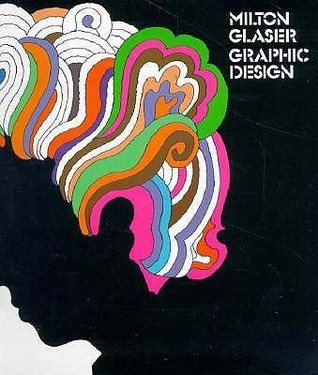
Available again, the enduring, iconic volume showcasing the key early-career work and process of the godfather of modern graphic design
Milton Graphic Design , perhaps the most famous book of its kind, explores the early decades of America’s pre-eminent graphic artist. Glaser’s work ranges from the psychedelic Bob Dylan poster to book and record covers; from store and restaurant design to toy creations; and magazine formats including New York magazine and logotypes, all of which define the look of our time. Here Glaser undertakes not only a remarkably wide-ranging representation of his oeuvre from the incredibly fertile early years, but, in a new introduction, speaks of the influences on his work, the responsibilities of the artist, the hierarchies of the traditional art world, and the role of graphic design in the area of his creative growth. First published in 1973, Milton Graphic Design is an extraordinary achievement and indisputably a classic in the field.
Milton Glaser was a celebrated American graphic designer and artist, whose notable designs include the "I ❤ NY" logo, the psychedelic Bob Dylan poster, and the logos for DC Comics and Brooklyn Brewery. Born in the Bronx in 1929, he was educated at Cooper Union. In 1954, together with Seymour Chwast, Reynold Ruffins and Edward Sorel, he co-founded Push Pin Studios, which became a guiding reference in the world of graphic design. In 1968 he co-founded New York magazine with Clay Felker. Glaser had one-man-shows at the Museum of Modern Art and the Georges Pompidou Center. He was selected for the lifetime achievement award of the Cooper Hewitt National Design Museum (2004) and the Fulbright Association (2011), and in 2009 he was the first graphic designer to receive the National Medal of the Arts award. Glaser died in June of 2020, of a stroke.
pretty good overview of his work, though quite a few colour images are reproduced here in black and white. some of the blown up close up plates are a bit soft.
The way that Glaser discusses each piece in the book gives the reader a lot of very valuable insight into his process - it's knowledge that I feel lucky to have, and I feel like I've grown from. Unfortunately, I also left the book with the feeling that despite his immense talent, Glaser was kind of a jerk.
Refreshing to see this master critique his own work, exploring his perceived failures as well as his greatest successes to that time. Has helped me think in creative directions that I wouldn't have before.
This is a coffee table book showing illustrations by Glaser though the early 70s. Overall a nice compilation but it offers very little text or analysis. It’s more like a bunch of eye candy with a short caption by Glaser on each work. It’s also annoying how none of the prints have the date created next to them.
If you are looking for a more thorough monograph or broader variety of his work, this is not it.
You can see photos of the actual book on Amazon reviews
I found myself particularly interested in Glaser’s explorations in motion and time. I counted at least 20 images of this kind. You could do a whole chapter on them. Many of them are displayed in such a way that each frame in the animation is contained on a single poster. In the current age of digital media and animated GIFs, it’s especially wonderful to see all frames at the same time.
I bought this part o research Milton Glaser as part of my Graphic Design class. I ended up really falling in love with his work. There is some good information in here, but I really recommend it for the high quality imagery.
A very honest reflection by this influential designer. I enjoyed reading all the captions and especially the introduction, which was most pertinent to me as a designer.
I absolutely loved how Milton Glaser commentates on the side rail as he walks you through his work process. It's invigorating to walk in the mind of a giant for a brief time.