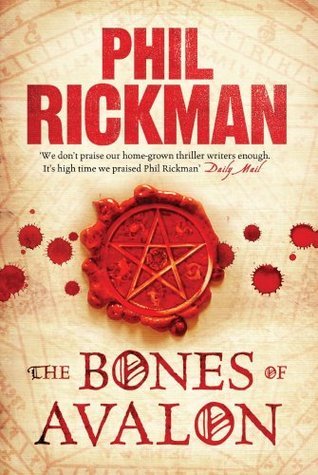
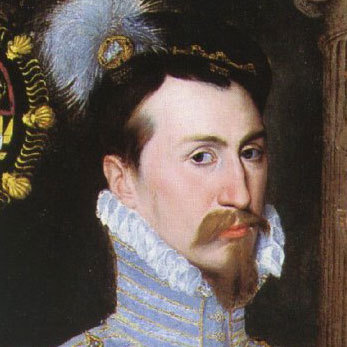
Religious strife, Glastonbury legends, the bones of King Arthur and the curse of the Tudors...can Renaissance man John Dee help the young Queen Elizabeth to avoid it? It is 1560. Elizabeth Tudor has been on the throne for a year, the date for her coronation having been chosen by her astrologer, Dr John Dee, at just 32 already famous throughout Europe as a mathematician and expert in the hidden arts. But neither Elizabeth nor Dee feel entirely secure. Both have known imprisonment for political reasons. The Queen is unpopular with both Roman Catholics and the new breed of puritanical protestant. Dee is regarded with suspicion in an era where the dividing line between science and sorcery is, at best, indistinct. And the assignment he's been given by the Queen's chief minister, Sir William Cecil, will blur it further: ride to the ruins of Glastonbury Abbey, bring back King Arthur's bones. The mission takes the mild, bookish Dee to the tangled roots of English magic and the Arthurian legacy so important to the Tudors. Into unexpected violence, spiritual darkness, the breathless stirring of first love...and the cold heart of a complex plot against Elizabeth. With him is his friend and former student, Robert Dudley, a risk-taker, a wild card...and possibly the Queen's secret lover. Dee is Elizabethan England's forgotten hero. A man for whom this world - even the rapidly-expanding world of the Renaissance - was never enough.
This is a wondrous story, a mix of history and fantasy and the supernatural. It features Elisabeth I, the Royal astrologer John Dee, Robert Dudley, horseman of the queen and supposedly Elizabeth's lover, but also king Arthur, Morgan LeFay, Avalon, the Zodiac sign, Nostradamus....and more. Story had its ups & downs, but overall, very good. Enjoyed it.
I had never heard of Phil Rickman before I stumbled, quite accidentally, upon this book. As a writer and historian myself, I am a harsh critic and have grown weary of predictable, run of the mill historical novels. Most are unconvincing both in characterisation and plot and when I picked up The Bones of Avalon I did not expect it to be any different. But I was wrong; Phil had me at the first line.
The Bones of Avalon is set in the 1560’s; a time of religious uncertainty, Popish plot and counterplot. The people walk in fear, trusting no-one in an England still reeling from the heretical burnings and hangings of Mary Tudor’s Catholic reign. Now, she is dead and another Tudor takes the throne. Another queen, the bastard daughter of Anne Boleyn – Elizabeth. Haunted by her mother’s death, uncertain if she will succeed or fail, the young Elizabeth allows herself to trust few men. Two of whom are Robert Dudley – mistrusted by the council, a wild card adventurer and rumoured to be the queen’s lover; and her consultant and astrologer, Dr Dee, a mild mannered scholar and dreamer. They are sent to Glastonbury to discover the missing bones of King Arthur, lost during the dissolution in Henry VIII’s reign, so that Elizabeth might fulfil a prophecy. Without its abbey Glastonbury is desolate, the town decaying and as soon as Dudley and Dr Dee set foot there, mystery and superstition unfolds. By the time I reached the end of the first chapter I knew I was in good hands. Mr Rickman’s first person narrative is authentic enough to make me forget I was actually reading. The fumbling investigative powers of Dr Dee endears him to the reader and the primitive, wary people of Glastonbury instil the plot with ambiguity. It was delightfully refreshing to find Robert Dudley illustrated, not as a broad shouldered, devil-may-care, wife killing braggart, but as an ordinary man, torn, confused, afflicted with sickness and, throughout it all, a stalwart friend to Dr Dee and loyal to his queen. The author’s knowledge of the period is indisputable, his understanding of 16th century uncertainty is flawless but, for me, the best thing about this book has to be the atmosphere. I am not a believer in the supernatural but Mr Rickman had me doubting my own sound good sense. He gave me goose bumps such as I have not experienced since childhood. An undercurrent of human evil runs through this book, illustrating mankind’s capacity to destroy that which they don’t understand as an evil far stronger than the supernatural. Although the author never infers that supernatural power truly exists, The Bones of Avalon is unsettling; it has you looking over your shoulder. It is a book to read with the doors and windows locked.
Phil Rickman has written an intelligent book. Some may find the length off putting, it certainly isn’t for lightweight readers but, if you have the ability to let go of disbelief and embrace the mindset of the late 16th century, then you will love it as much as I. A whopping five stars – brilliant.
This historical novel by an author I had not previously heard of brings together a lot of my interests and that alone made it quite compelling for me : King Arthur and Avalon, Elizabeth I, , parapsychology and the spirit world and Kabala. England reeling from the reign of terror of Bloody Mary in her blustering efforts to force the Roman Catholic faith back on England.
The new Queen Elizabeth I aims for a more tolerant course but is beset by troubles. she sends her astrologer and doctor of psychics and philosophy Dr John Dee, together with her secret paramour and advisor Sir Robert Dudley to Glastonbury to find the bones of King Arthur disinterred 20 years earlier by Henry VIII in the Dissolution.
Dee falls in love with the beguiling and beautiful young woman doctor Eleanor (Nel) Burrows and when she is accused of witchcraft will do what he can to save her. Glastonbury is haunted and tortured place under the thumb of a dour cleric who has stamped his tyrannic theology on the town
Meanwhile a vile murder takes this story into a murder mystery. great characterization and plot, with just the right amount of the eerie and mysterious.
"The Bones of Avalon" seemed to me to be a rather nice mystery/thriller set during the reign of Elizabeth I. But, it turns out that this is a rather loosely based historical fiction (I found this out after reading the author's endnotes).
Dr. John Dee is considered Elizabeth I's Court "Conjurer". We was, in fact, a mathematician, astrologer, as well as a dabbler in the occult. The real Dr. Dee did have one of the largest private libraries in Europe.
Dr. Dee is asked by the Queen to accompany Sir Dudley to Glastonbury to find the bones of Arthur. But along they way, they stumble on a Catholic plot and witchcraft. Dr. Dee must use his wits and knowledge to decipher what is going on. No more spoilers.
This was a well-researched and entertaining book. The mystery elements were well done and the concepts being discussed are based on the real writings of Dr. Dee. If you enjoy thrillers set in well-researched settings and historical fiction based around lesser-known historical figures then you will enjoy this murder mystery set in Elizabethan times.
I'm so divided over this book. Let's get one thing straight, I didn't like it. I'm not sure whether it has something to do with my high expectations of a novel entitled 'The Bones of Avalon', or if it was simply boring. It is well-written in so many ways, language, research, sentences that flow smoothly etc etc, which is why it gets two stars rather than one, but it just didn't ignite much of a spark. It seemed to take half the book to set up the story, about 40 pages of excitement (possibly, I haven't counted), a very rushed and short 'main conflict/drama point', and a windy explanation of whodunnit in the end that I had trouble following. I eventually got 'who did what' but there was no satisfying 'oh, my God, it was there all along and I didn't see it!' moment. It felt like the end result was hastily added on and just not exciting. I did not care enough for the characters. I didn't want the badies getting their comeuppance, and I didn't want the good guys to win. Total apathy. I don't think it's my fault, but I guess only critiques from others can tell.
I read this too long ago to remember its details, but here are my jumbled impressions. I was interested in this novel because of its historical characters and its mystery themes. If I had known that this was just another historical crime novel, I probably would not have read it. This aspect annoyed me.
Nonetheless, it was an entertaining read and I enjoyed the historical research immensely. It was interesting to see all the important Elizabethans at the beginning of their careers. Elizabeth I is in it, but only briefly at the beginning and the end. The depiction of her purported lover, Sir Robert Dudley, was intriguing. The main character, however, comes across as whimsical and geeky. I could not shake off the feeling that he’s a Renaissance version of a lonely computer geek. For example, the story makes it a really big deal how he loses his virginity and develops a crush of high-school worthy proportions on his elusive seductress.
Still, one thing I learned from the novel is the expression “Venus glove”. Interesting! It made me look up the history of the condom.
The main revelation to me was the whole Glastonbury Zodiac theory. As Glastonbury Tor, a local landmark hill in the coastal plains of Somerset, is often seen rising out of a sea of mist, it is understood to be Avalon, the apple island essential to Arthurian legend. Avalon literally means “apple island” in Welsh, while “Arthur” (Artos) is the Welsh word for “bear”. So, standing on Glastonbury Tor, seeing the land stretch out beneath you in every direction, the star constellation of Ursa Major (The Great Bear) above you, the Round Table is on display – a gigantic landscape zodiac that corresponds with the star constellations above.
Though this may be nothing but a highly disputed esoteric quirk from the 1930s which does not add up scientifically, I was quite impressed. It worked for the novel, which is set in the 1560s and deals with the queen’s astronomer.
(Though I do think there is something wrong with it, either the theory as such or its use in the narrative, as the North Star and Arcturus are two different stars.) Anyway, the novel made me want to travel to Glastonbury one day. We’ll see.
1560 г. в Англия царува кралица Елизабет I. Тя наследява своята предшественичка, наречена Кървавата Мери, поради религиозните гонения по нейно време. Новата кралица налага протестантството и проявява религиозна толерантност. Но на някои не им харесва това и кроят заговори против нея. Незнайно пророчество твърди, че тя трябва да намери костите на крал Артур, погребани в Гластънбъри, за да укрепи своето управление. На тази мисия биват изпратени Джон Дий, астролог и учен и Робърт Дъдли, близък приятел на кралицата. Двамата се отправят на тази тайна мисия, но в провинциалното градче, далече от столицата, те ще сблъскат с религиозен фанатизъм, преследвания на вещици и инквизиторски гонения. Същевременно Гластънбъри пази своите тайни за нещо мистериозно и езотерично. Нещо, за което могат да те обесят или изгорят на клада. Авторът е написал мистериозен исторически роман, смесица от трилър, езотерика, научни знания, астрология и малко хорър. Героите в него са действително съществували лица. За тях може да се намери информация в интернет. Авторът умее да борави с думите и лесно си представяме суеверието, мрака, фанатизма и злото в човешкото сърце. Страдах с героите и преживях всяка мрачна случка, всяка омраза към инакомислещите и всяко обвинение във вещерство и магия. Тъмни времена са били и авторът успя да го внуши чрез думите си. Ползвал е много източници, за да пресъздаде реалната историческа обстановка и да обрисува характера, заниманията и интересите на Джон Дий. Хареса ми, но ми беше трудна и тежка за четене. Целият този мрак дотежава и депресира. Не можеш да останеш безучастен към това, което е било тогава в уж цивилизована Англия.
I might try this book again, but this is the second time I've tried to read it. It just leaves me cold. Which is strange considering I like Rickman and the Tudors.
Dr John Dee is astrologer to Queen Elizabeth I and, in most people’s eyes, a conjuror. Not because of his magical ability (as he has none) but because…well, mostly because the general population back then wasn’t exactly known for its reasonability, and seemed to really enjoy watching people get executed (and accusing someone of witchcraft virtually guaranteed getting them killed). Menaced by apparent portents of doom, Queen Liz sends Dr Dee on a secret mission to help protect her - recovering the bones of King Arthur, known to have lain at Avalon but having disappeared following the dissolution of Glastonbury Abbey. He’s accompanied on said mission by her probable lover, Sir Robert Dudley, who’s almost immediately out of action thanks to a bout of illness, leaving Dr Dee alone to rub shoulders with the eccentrics that now people the town that remains. Only to have it turn out that the location of Arthur’s bones isn’t the only secret in town, nor is it the only which people are prepared to kill over.
Normally, The Bones of Avalon is the sort of book that I’d revel in, set as it is in one of my favourite historical periods as well as promising a touch of mysticism and magic. For some reason though, I found myself struggling to get into this, bored by the narrator and mostly spending my time checking how much was left before it would end. I couldn’t say that the writing or the plotting was particularly bad, although the pacing was an issue for me at times, but I can’t say I’ll be bothering with the rest of this series either.
I enjoy reading about the Tudors and love the Arthurian legends. This book was a natural for me, though it had more about the former than the latter. The protagonist is the astrologer John Dee, who many believed to be a conjurer. In this book, he's an intelligent searcher who wishes he could communicate with beings in another world, but can't. As in many books, the protagonist journeys with a friend, in this case Robert Dudley, who was rumored to be a lover of Queen Elizabeth. Elizabeth appears briefly in this book as a commanding yet fragile young woman. England is full of Catholic vs. Protestant intrigue. I don't want to spoil your reading pleasure, so I won't say too much more, except that I found it a good read. However, I dislike the fact that this book and some other historical fiction I've read shows gay characters who have strange perversions and are weak or evil. Authors, please stop doing this. It's dumb and dangerous. Have at least some decent gay characters.
Dr John Dee has already experienced much in his life by the time Elizabeth I has gained the throne. By his early twenties he is one of Europe's leading mathmeticians and an expert in astrology. He was introduced to court in the reign of Edward VI, but was lucky to survive Mary - he still has dreams about escaping his fate and nightmares about the burnings... Elizabeth has encouraged his love of learning, but not financially, and others view what he does as sorcery. This is a very atmospheric and well written view of England during that time, where a young Elizabeth is attempting to implement religious tolerance and a scarred country is awash with Catholic plots and the rise of puritanism. France is still hoping Mary (future Queen of Scots) will replace Elizabeth and return England to the Catholic Church and there is a sense of unease about what anybody can, or should, say.
It is easy to sympathise with Dr Dee. He wants a quiet life of study, but is disturbed by his mother's disappointment in his lack of funds and status and by the malevolence aimed at the young Queen he loves for her tolerance. Add to this that Robert Dudley, currently the Queen's Master of the Horse, but aiming much higher, was his student and it is unlikely he is going to get much peace in which to retreat to his library. When Cecil wants to see him it is to inform him that he wants him to travel to Glastonbury, where Jesus himself was said to have travelled to as a boy and where the bones of King Arthur are said to lay. Cecil wants Dee ('her Merlin') to find the bones of Arthur. Dudley is to accompany him, although he believe it is because Cedil wants him away from court, and Elizabeth, more than because he can help. Meanwhile, Dudley's wife Amy is hidden in the country, rumoured to be near death and hoping to bring Dudley near to a marriage with his Queen which France fears and Dee is almost afraid to think about. It is true that, in this England, people guard their thoughts as well as their words.
Glastonbuy is a great portrait of what a city was once the Dissolution had ripped through it. A place where the Abbot had been killed and the monks scattered, leaving a town without a livelihood and a feeling of despair. Dee is unsure what is actually wanted of him and, as he uncovers secrets and plots, there is murder added into the mix. Dee is a delightful character, unworldly and bookish, sharply intelligent and yet shy and naive. This was the first Phil Rickman novel I have read, but I am sure it will not be the last. At times I found the plot a little confusing, but overall it was an excellent read and I loved the characters and the real sense of place and time the author painted.
This is fiction set round the real life figure of John Dee, alchemist, perhaps conjurer, astrologer to Elizabeth I. The Elizabethan obsession with magic and superstition is vividly portrayed as Dee struggles to fullfil a brief from Cecil to find the bones of King Arthur in Glastonbury. There is a catholic plot and the smell of burning hangs over the entire book. England is still reeling from the bloody reign of Mary Tudor while Dee himself is haunted by dreams of being burned at the stake - a fate from which he narrowly escaped.
Rickman is a great story teller - his Merrily Watkins novels are terrific reading - and this book does not disappoint. It reminded me in some ways of C J Sansom's Sheldrake novels having the same knack of recreating Tudor England in all its colourful horror. Enjoy!
Imagine a season of True Detective set in early Elizabethan England.
It’s well written and well researched and an excellent presentation of a slice of life, but good lord it leaves you with little faith in humanity.
I liked how it showed where everyone was coming from having just survived Henry VIII and Mary I (going so far as to hint the whole country may have had PTSD after those two) and how it showed the people known for being well established members of Elizabethan life – Dr. Dee, Walsingham, etc. – just starting their careers in 1560, but it is just sooooo dark and depressing I won’t be continuing with the series.
As always, Rickman gives us a winner with a compelling plot, characters you care about (and some you hate), suspense and mystery, and great historical fiction.
My only complaint is there were a lot of typos in this edition. Also, nine times out of ten, Henry VIII was referred to as King Harry. I don't know if this was a known nickname for him back in the day, but I could find no mention of it on the internet. Also, I had to brush up on my knowledge of England's kings and queens, and Mary Queen of Scots, to understand the political and religious aspects of the story.
Enjoyable historical mystery with lots of twists and turns and a hint of the supernatural thrown in. If I'm totally honest I think I slightly prefer Phil Rickman's Merrily Watson series but that may just be because I'm familiar with them and I really like the main characters in them. This is still a good enjoyable book though. If he decides to do any more historical books based on this one I'd definitely read them.
This is what leisure reading was made for. A book like this, with real characters, a solid mystery and actual contemplation of philosophy. Please read it. I dont give out five star ratings like candy; I am very exacting about my reading material. This book meets all the criteria I have foe "excellent read" status, and then some.
What a book! I really enjoyed reading it. It’s a lot of history in the book (quite few times I even Googled some of the names in the books and events). Also it is a phantasy with some magic and mystery. So it was really fascinating to read it. The story takes us in the time of Queen Elizabeth I (around 1560), the first year of her rule.. when she was just 27 years old. Queen Elizabeth was the daughter of Henry VIII and Anne Boleyn (that was condemned as a which by her husband and murdered). She was also known as a “Virgin Queen”, although author kind of laughs about it, that she wasn’t one. Also in the book appears her lover, Robert Dudley (who was also a real person). He is the second main character of the book. Main character- John Dee - astrologer, scientist, mathematician and alchemist. He was court astronomer and adviser of Queen Elizabeth. John Dee and Robert Dudley are asked to go to Glustonbury to find out bones of King Arthur… During their search first thing what happens, Robert gets really sick and a young girl (daughter of the doctor, a herbalist) comes to treat him. It is a nice love story present in the book (I thought that it will end up bad, but luckily she survived). Lots of mystery, espionage and betrayal.. Nice reading!
Dr. John Dee – Wissenschaftler und vertrauter von Elizabeth I. – wird an einem regnerischen Morgen zu einem mysteriösen Vorfall gerufen. Passanten haben am Ufer der Themse einen Sarg gefunden, der eine verkrüppelte, aus Wachs gefertigte, Leiche enthält. Es wird vermutet, dass es sich dabei um eine Anspielung auf die Königin handelt – ein böses Omen. Wenig später wird Dee damit beauftragt mit seinem langjährigen Freund und Schüler Robert Dudley nach Glastonbury aufzubrechen, um die Gebeine des legendären König Artus ausfindig zu machen. Grund dafür sind Visionen der Königin. Kurz nach ihrer Ankunft in Glastonbury kommt es zu einem entsetzlichen Vorfall. Dr. John findet in den Ruinen der alten Abtei den ausgeweideten Leichnam eines Dieners seines Freundes Robert. Doch wer ist für diesen grausamen Mord verantwortlich? Wird es John Dee und Robert Dudley nach diesem grausamen Zwischenfall noch gelingen die Gebeine von Artus, dem Schöpfer der Tafelrunde, zu finden?
„Die Gebeine von Avalon“ ist der erste historische Roman von Phil Rickman und ein durchaus gelungenes Werk. Obwohl die Haupthandlung der Fantasie des Autors entsprungen ist, ist der Roman unheimlich reich an historisch belegten Fakten. Rickman zeichnet ein lebendiges und in meinen Augen sehr glaubwürdiges Bild der damaligen Zeit. Es sind gerade die kleinen und dezenten Hinweise auf die historischen Gegebenheiten, die dieses Buch so lesenswert machen. Hinzu kommt ein dichter spannungsgeladener Handlungsablauf, der den Leser nicht zur Ruhe kommen lässt. Durch den dramatischen Todesfall und die daraufhin beginnenden Ermittlungen erhält der Roman die Note eines Kriminalromans. Dass diese Vermutung nicht ganz abwegig ist, lässt sich durch die literarische Vorgeschichte des Autoren belegen.
Besonders gelungen empfinde ich die Schilderung des Verhältnisses von Kirche und Wissenschaft. Obwohl John Dee ein gottesfürchtiger Mann ist, lebt er für die Wissenschaft. Für ihn bildet diese Tatsache keinen Widerspruch. Für viele seiner Mitmenschen schon. Hinter seinem Rücken munkelt man, er sei ein Zauberer und Wahrsager. Auf Londons Straßen werden sogar Pamphlete über ihn verbreitet, die seine angeblichen Visionen propagieren. Auslöser für diese Verdachtsmomente sind vor allem seine mechanischen Basteleien und Erfindungen. Für den einfachen Bürger scheint Magie dahinter zu stecken, dabei ist es nichts weiter als reine Logik. Hier wird ganz deutlich, wie Unvereinbar zu dieser Zeit Wissenschaft und Kirche waren und wie tief sich diese Auffassung in die Köpfe der Bevölkerung gebrannt hat. Ein weiteres Beispiel dafür ist die junge Heilerin Helen. Sie kommt Robert Dudley in Glastonbury zu Hilfe, als dieser einem schweren Fieber zu erliegen droht. Viele Menschen aus dem Dorf nehmen ihre Hilfe in Anspruch, doch eigentlich heißt es, dass sie eine Hexe ist – genau wie ihre Mutter. Alles Unerklärliche wird sofort mit Magie und Zauberei in Verbindung gebracht.
Einen weiteren Pluspunkt erhält die Aufmachung des Werkes von mir. Es handelt sich um ein Hardcover mit wunderschönem Einband. Obwohl das Buch mit knapp 700 Seiten eher zu den dicken Wälzern gehört, liest es sich durch die kurzen Kapitel und die angenehme Setzung sehr flüssig. Dazu tragen auch die vielen Dialoge bei, was in meinen Augen überhaupt nicht negativ ist. Denn gerade durch sie lernen wir die Protagonisten erst richtig kennen.
Das Ende des Romans mündet in ein historisches Ereignis, das bis heute nicht wohl ganz geklärt ist. Ist es nur ein offenes Ende oder deutet sich hier eine Fortsetzung an? Über letzteres würde ich mich sehr freuen.
Fazit: „Die Gebeine von Avalon“ von Phil Rickman ist ein absolut empfehlenswertes Buch – vor allem für alle Freunde des historischen Romans und insbesondere für die Liebhaber der Tudors. Spannend, dramatisch und gut recherchiert – so wird mir dieses Werk in Erinnerung bleiben.
c2010. I agree with the Daily Mail's comments that "Its high time we praised Phil Rickman". Mr Rickman is able to blend magic and mystery into the world without any seeming effort and yet his protagonist manages to calmly investigate these on goings with a scientific air. I think this is the first novel to feature Dr Dee where I actually quite liked him! I like the author's use of dialogue to move the story along and to impart information without feeling bombarded with facts or that it is contrived in any way. The sun is frequently mentioned becoming almost a symbol for the tone ie "tired sun" and "as heavy as a new coin". In fact, typically for a British person, the weather plays an upfront role. I found it really beguiling that some of the sentences are abbreviated - not too much to cause annoyance - and done in the fashion that I think I would use if I kept a diary. They certainly make for a lightening of the tension. (Think of some Shakespeare's asides). Possible typo on Page 208. FWFTB: ambition, superstitious, scholar, investigator, vulnerable. FCN: Dr John Dee, Elizabeth Tudor, Robert Dudley, Joseph of Arimithea, William Cecil. "I could hardly deny that a ritual sacrifice in the Abbey of Glastonbury might well be thought to invoke a demon of substance."
There are few Elizabethan figures more infamous and mysterious than John Dee, the Virgin Queen's personal astrologer. Author Phil Rickman imagines a young John Dee, and sends him to Glastonbury, reputed resting place of King Arthur, on a secret quest. Rickman ups the ante by making Dee's cohort none other than Robert Dudley, the queen's favorite suitor. It isn't long before a kidnapping, a gruesome murder, and a blossoming love affair make this quest a perilous one.
Any novel set among the ruins of a famous abbey and Glastonbury Tor would promise intrigue, magic, and mystery, but throw in solid historical research, brilliantly drawn characters, skillful plotting and evocative period detail, and you've got a winner. Not since Pillars of the Earth (Ken Follett) have I encountered as dastardly a villain as the one who holds dominion here, and the touches of the paranormal, never over the top, add to the aura of eeriness. Phil Rickman never fails to deliver, and The Bones of Avalon is one of his best.
Recommended for fans of first rate historical fiction, first rate mystery, and first rate writing.
Phil Rickman is one of my favourite authors - I particularly like his series about Merrily Watkins, the Christian Deliverance Minister (Diocesan Exorcist) with the pagan daughter. Rickman writes about liminal places with an insight and sensitivity rarely seen.
The Bones of Avalon features one of England's most sacred places - whether Christian or pagan - and the central character is the fascinating Dr John Dee, Elizabethan mathematician, astrologer, scientist and magus. Also in a leading role is Robert Dudley, likely lover of Queen Elizabeth I, plus a cast of local characters who straddle the boundaries between good and evil.
With all this I expected "The Bones of Avalon" to leap to the top of my most favourite list but surprisingly, it didn't. I enjoyed the book and will almost certainly re-read it at some point, but there was some essential spark missing.
I would still recommend it as a good read though as it was probably my own high expectations that caused the slight disappointment when I read it.
An enjoyable historical mystery featuring Dr. John Dee, who was a scientist, mathematician, astrologer and occultist of the Tudor age, when that list of disciplines was entirely reconcilable. He was consulted by Queen Elizabeth I and she has a nice cameo in the book.
This is very well written, although the slow pace that I love in Rickman’s Merrily Watkins novels didn’t work quite as well for me here. I liked the pseudo-Elizabethan speech patterns, which are not accurate (for reasons of clarity, as he notes in the afterward) but do contribute to the atmosphere.
Robert Dudley, the queen’s Master of the Horse, is one of the main characters, and I particularly liked the way Rickman characterizes him. The question of whether or not Dudley is the queen’s lover is left as much in doubt as it is to history.
I wasn’t especially engaged by the mystery plot, possibly because I’ve read too many historical novels concerned with the legend of King Arthur. But I liked this well enough that I will read the next book, which seems to be concerned with the suspicious death of Dudley's wife.
I cannot for the life of me give this a fair review. It was one of those audiobooks that put me right to sleep, meaning it deserves five stars for curing insomnia alone. Of course that also means that I wasn't exactly sure what was going on, and I have a feeling it was kinda slow, but basically it was about John Dee (yes THE John Dee) looking for King Arthur's bones in Glastonbury, where he comes across fresher, murdered, corpses. Fun! Sir Robert Dudley acts as his side kick, although he's down with some kind of flu most of the time. Since I have nothing else of value to say in this the most useless of book reviews, I will just inform those who may not know that Sir Robert was a fox and may have been banging Queen Elizabeth:
Now I need to do some research...it's been so long since I've delved into anything that even borders on Merlin and Arthur (this just overlaps a tad) that now I'm wondering if the legends promoted here are/were common...Was Joseph of Arimetia really Jesus' uncle -- wasn't he the one who provided the grave? Was it really believed that Jesus had been in Wales/England as a child? Were the contents of English abbeys sent to France for safekeeping? Did the law after Henry VIII fine countrymen for NOT attending church?
In addition to all these thought-provoking bits and pieces there was a fascinating story that progressed quickly and had me coming back for more and more and more.
Another well written story set during the early reign of Queen Elizabeth. With the people of England torn between the Church of England and the Papal Church, comes the central character of John Dee, known throughout history as the Queen's Conjurer. A man of high education and a strong faith in the mystic, I first came across this true historical character in S J Parris' Prophecy.
In The Bones of Avalon a much younger John Dee must navigate his way through superstition, murder and greed to unearth the legend of a King called Arthur.
Complex, strongly plotted and moves forward without hesistation, a very well written story.
An excellent historical mystery, this book tells of the search for the bones of King Arthur. Queen Elizabeth I has been on the throne for a year and wants the bones of King Arthur (who she believes is her ancestor) to be found and brought to London where they will be re-buried with deserving ceremony. A young Dr John Dee and his friend Lord Robert Dudley are sent to Glastonbury to find them. Plot twists that include witchcraft and religion kept me reading, and guessing, right to the last page. Highly recommended.
I enjoyed this at least as much as the Merrily Watkins books. Phil Rickman evokes place and the power of the land on people better than I have ever read elsewhere. It was enhanced for me because having lived in the area for 20 years I was familiar with all the places.
It struck me how this authentic rendition of a Tudor Glastonbury bears so much resemblance to the town today! Still full of weirdos (in the nicest possible sense).
The main characters were sympathetically drawn and easy to empathise with but so much of that must be down to the excellent reading.
I love Phil Rickman for the Merrily Watkins stories. Snugglying up reading the ghost mysteries on a wintry evening is the best way to sepnd those long cold nights. However I started reading Rickman when I came across The Chalice, which I loved for his portrayal of life and characters in Glastonbury. In this novel he does even better, by exploring ledgends and deplicting life Totain the era of Queen Elizabeth I. Totally amazing!