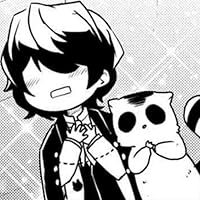
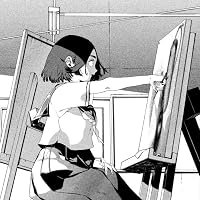
Yatora pasa días turbulentos al ver su pasión artística deslucida por las dudas y las inquietudes sobre su talento y la universidad.
En su segundo año en la Geidai, conoce a nuevos profesores y se reencuentra con una antigua compañera de la academia de arte. ¿Acabará recuperando su pasión por la pintura?
La edición especial limitada incluye un mini-artbook de 24 páginas con diferentes ilustraciones de la obra.
Now that his second term has started, Yatora’s back in the deep end, but with a strict new professor who’s here to destroy the weak. Faced with his faults as an artist, he starts visiting a commune, which appears to offer an enticing alternative to his current path…
I begrudgingly admit that we have clearly been intended to feel Yatora’s dissatisfaction with his university career this whole time, but we now come to the question of how much of that is from him and how much is from the way TUA teaches.
Inukai seems to be the traditional hard-ass professor with the unreasonable demands that isn’t uncommon in academia. He’s blunt, he’s punishing, but he also clearly has a regimen of his own. He puts his own work in.
And later, when Yatora hears him make a supposedly crass comment towards an artist staging their work, that comment could actually be taken more than one way and I’ll be impressed if it turns out that Yatora is misinterpreting the situation based on his own perception of his professor.
Doubly so since Yatora ends up really enjoying the first assignment, even if it is incredibly hard. There’s something to be said for learning something, no matter the method, especially when it’s hard but not necessarily malicious.
That, however, is not what’s on Yatora’s mind as he’s asked to help with an art commune and falls in with a bunch of artists who eschew the whole pompous gallery vibe for a more bohemian existence.
They’re lead by the very charismatic Fuji, who has a very easygoing style and a lot of charm. There’s also the hint that Yatora’s interest in this commune might be more of an interest in her and there’s certainly more chemistry than we’ve seen Yatora have with just about anybody thus far.
I don’t feel like the story is necessarily taking sides on which approach to art is better, but it’s not surprising to see Yatora drawn to this free expression after his struggles with his first year. It does feel like a bit of an easy answer that he’s not quite thinking through, however.
Even if neither side would agree, there’s room for both approaches to art, even if Yatora’s really letting himself fall down a rabbit hole here. He feels like somebody following a path he’s being lead down rather than somebody forging his own way. It’ll be interesting to see how that plays out.
It also helps that it’s not necessarily like the commune is portrayed as especially amazing. Fuji is basically the leader and the money behind it, and its members get by, but the whole thing has a ramshackle quality that would appeal to some people, but not everybody.
There’s a ton of new characters introduced this time around and a lot of art theory dumped in here as well. Usual annoyances apply - the cast is far too big to remember who nearly anybody new is; I think literally a dozen named characters get introduced this time out.
And, yes, you can disguise it all you want, but an art theory lecture is an art theory lecture, no matter who is giving it. It’s from the perspective of Yatora’s driving interest in what Fuji is saying, but it damn near bored me to tears. The fact that the writing isn’t conveying any interest to me makes it incredibly hard to relate to his enthusiasm.
Still, the basic premise is strong and Blue Period has strong narrative chops. Its decision to evolve and follow its lead character has paid off - sections of the story where it leans into teacher mode can drive me nuts, but the actual story and characters tend to more than make up for it.
4 stars - snore sections aside, the battle for the soul of the artist, not to be grandiose about it, is a great direction for things to go. Yatora is slowly growing up, but he’s not quite there yet and I’m interested to see how this all plays out in the next volume.
A solid volume that poses the question - what is art if not for everyone? Does it have to be propped up and exhibited to be considered “true” art? Is it the love that goes into it? The technique? The culture and the desire for it? Who gets to evaluate it and canonize it?
I love that this manga really delves into these thorny topics in a way that feels natural.
The art collective may not be a cult, but it sure acts more like one than a collective or a commune. Just when I was relieved that Nekoyashiki was out of the picture, Fuji comes along to fill the "annoying female character" space. They're actually quite similar; it's just that Fuji manages to hide her manipulative nature whereas with Nekoyashiki, what you saw was what you got. I appreciate that Yatora is struggling in art school (the professors all fall under "so quirky and set in their ways that they're actually stagnant and unhelpful"), and it's true that a college education isn't good for everyone. But Yatora also needs to learn to find his answers in himself, and I don't think Fuji's necessarily going to help him with that.
i liked the different turn the book took in contrast with the others so far. i can feel yatora falling in love with fuji and idk why it bothers me but it does
Yatora stars his second year at TUA. There's new professors, old and new friends, and of course new assignments. The first one, they need to do 500 drawings in two weeks. Yatora struggles with overthinking versus taking action, something I can definitely relate to. There's a beautiful two page spread showing drawing subject through his eyes. I absolutely loved it and kept flipping back to those pages. Later Yatora encounters an artist communes where he helps out some friends. The appeal of the commune with it's relaxed atmosphere is the opposite of TUA. Yatora finds himself drawn to it, especially the communes leader, Fuji-san.
Here's where the volume started to lose me. I like Yatora questioning if he should stay in school or he'd be wasting the next three years. But something about the commune No Marks and Fuji-san bothered me. Maybe I'm cynical. It reminded me too much of the 60s communes, all started with hope and great ideals before collapsing. Fuji-san struck me as more manipulative than honest. Maybe I'm wrong. I'm worried about my boy Yatora.
The volume ends with one of Yatora's new friends, who discussed leaving TUA with him, making an announcement. All I keep thinking is what, why, and how soon can I get the next volume.
Other tidbits, one of the new professors, Inukai is giving me weird vibes. He compares the students to diamonds in the rough, saying they need work to find the true diamonds among the cohort. Tough love professor or creepy villain?
Another good volume. Really wanna see Yatora have some confidence in himself soon. I know he’s always learning but there’s been so much self doubt I would love to see it balanced out with some self assurance.
At first I thought it was a little slow but then it just went a completely different way than I expected! I kind of loved it! Ends on a big cliffhanger so now I need to live in despair and suspense.
AVISO: esta reseña contiene spoilers sobre el manga Blue Period, una obra sobre el arte y lo difícil que puede ser perseguir tus sueños. Yatora Yaguchi es un estudiante que descubre la pasión por el arte y lucha por entrar en la universidad que desea para perseguir sus sueños. Un camino cargado de obstáculos en el que no sólo aprenderá sobre el mundo artístico, sino también sobre quién es él realmente.
Tras un año en la Geidai, Yatora pasa días turbulentos al ver su pasión deslucida por las dudas e inquietudes sobre su talento y la universidad. Al comienzo del segundo año, conoce a nuevos profesores y se reencuentra con una antigua compañera de la academia de arte… ¿Acabará recuperando su pasión por la pintura?
Como acostumbra Yamaguchi, en este manga nunca se habla sólo de arte. Una vez más, se tocan los miedos que puede afrontar cualquier persona en su camino por conocerse y las dificultades que conlleva convertirse en adulto. Además, vemos reflejadas distintas formas de afrontar este camino y cómo éstas hacen mella en un confuso Yatora que se siente estancado y perdido.
Aunque considero que en este tomo la trama y, especialmente, Yatora no evolucionan demasiado, me da la sensación de que prepara el camino para un tomo 13 de impacto. El círculo social de Yatora se amplía e integra a personas muy dispares que le enseñan formas diferentes de vivir el arte, abriendo nuevos posibles caminos a seguir por el protagonista. Es posible que este sea el volumen en el que menos arte vemos, pero en su lugar representa un período de cambio y transición que pienso que va a determinar el futuro de Yatora.
Este tomo más tranquilo que los anteriores sigue presentando temas interesantes e introduciendo personajes a un elenco que ya era rico de por sí. El pobre Yatora parece no salir de su confusión y no acaba de comprenderse a sí mismo ni el camino que quiere seguir en el arte. A pesar de ello, lo que tengo claro es que yo le acompañaré sea cual sea su destino.
Empieza segundo año y qué movidón. Me ha encantado. Los primeros capítulos con el tema de la presión, la inspiración y la práctica y los últimos abordando la educación seglar y la titulación. Qué ganas de seguir leyendo, que el último capítulo del tomo acaba en lo más interesante. Me han encantado Fuki y Takada, sobre todo esta última, que apenas es un personaje de fondo, pero se me ha quedado ahí en la memoria.
I don't know but this volume feels like a fever dream. Inukai and Fuji feels so unsettling but in very different manner. Fuji is really perceptive but also very distant, she's not obviously frightening especially to people like Yatora who is gullible. She lowkey feels inhuman some times. And if Fuji is blunt and alienating, Inukai is subtle and controlling. He's a different kind of disturbing. I wish you the very best of luck, Yatora.
J’avais tellement hâte d’avoir ce tome entre les mains! À la fin du tome précédent, Yatora avait terminé sa première année à Geidei, j’étais hyper impatiente de découvrir sa seconde année et surtout comment tout allait se goupiller pour lui par la suite. Je l’ai déjà dit un bon nombre de fois lorsque je parle de ce manga mais je le redis encore, quel bonheur de suivre les tomes les uns après les autres, de voir l’évolution de Yatora et j’en passe. On apprend tellement de choses à travers cette histoire. Et c’est ce côté là qui me plaît le plus dans ce manga. Le fait d’apprendre un tas de choses, c’est tellement plaisant!
Dans ce douzième tome, on retrouve Yatora qui entame sa seconde année à Geidei. Il est envahi par le doute et l’angoisse et ne ressent plus son enthousiasme des débuts. En plus, le professeur en charge de sa promotion n’est autre que l’impitoyable et stoïque M Inukai.. Mais des retrouvailles et surtout une rencontre très inattendue, vont peut être l’aider à retrouver sa passion pour l’art!
Ce tome est, sans surprise, génial. Yatora débute sa seconde année et ça commence très mal pour lui. Il se retrouve avec un professeur impitoyable et le premier sujet ne l’emballe pas plus que ça. Ils doivent réaliser 500 dessins en deux semaines. Mais Yatora va être semé de doutes. Plus son année avance et plus ils se posent de questions. Surtout depuis qu’il a intégré le collectif « No Marks ». Là bas, il va faire la rencontre d’une jeune fille qui va beaucoup l’aider mentalement. Mais il se sent encore plus perdu.. Il ne sait plus trop quoi penser, ni quoi faire. Le professeur est vraiment quelqu’un de très particulier, je ne sais pas trop quoi penser de lui, il me fait presque peur.. Le collectif No Marks va vraiment aider Yatora à avoir un autre regard sur l’art. Mais c’est aussi la découverte de ce collectif qui va encore plus semé le doute dans son esprit.
Comme d’habitude, maintenant j’ai hâte d’avoir la suite entre les mains. J’aime tellement voir le personnage de Yatora évoluer comme ça. on est loin du Yatora du premier tome, on peut dire qu’il en a fait du chemin depuis tout ce temps. J’aime le côté instructif du manga, on y apprend vraiment un tas de choses. Pourtant l’art n’est vraiment pas quelque chose qui m’attire mais ce manga est un vrai coup de coeur. Ça m’a permis d’acquérir des connaissances et c’est quelque chose que j’adore retrouver dans la lecture en général ça!
Non mi dispiace la piega che ha preso la storia di Yatora - anche se siamo più o meno sempre lì eh, con lui che non sa se gli piace disegnare o no. Comunque è disegnato troppo bene per dropparlo, inoltre questo continuo parlare del 'senso dell'arte' personalmente mi affascina molto durante la lettura.
Yatora inicia su segundo año y el maestro al frente será el Profesor Inukai....honestamente ese hombre no me cae bien se me hace muy rudo y no se porque parece que tiene algo contra Yatora...si es para que saque su máximo potencial no me voy a enojar pero bueno.
Así mismo conocemos al grupo No Marks y aunque se ve que son buena onda siento que no están siendo buena influencia para Yatora
4.2 stars another absolute banger from yamaguchi-sensei!!! god i love how this manga makes you think about art. yatora struggling with the rigidity of art in universities and looking beyond that is such an interesting story to read. i really believe that you do not need an art education from an institution to make ‘good’ art. art is, in my opinion, something subjective and different for everyone. the way we view uni/school educated artists as ‘good’ artists is something we have been conditioned by conventions and rules made by society. an artist who just makes art without a formal education, still can make ‘good’ art. universities are not the qualifications of making ‘good’ art. people used to make art without BA’s, so why shouldn’t you? how would that make a cave drawing less valuable or ‘good’? but what really stuck with me a lot too is the part with yakumo, who tells yatora to just stop thinking and make art. i really resonated with that, it made me think about how i should just write or choreograph whatever and not think so much about what it should be. also that part where yatora doesn’t choose to do his assignment about ‘guilt’ and picks up a book instead is CHEFS KISS. THIS is the kind of amazing writing i want to be able to do. something so seemingly simple yet so layered. god. all in all, for my first book of 2025, i got a lot out of it. but i get a lot out of every blue period volume really!
a chapter title i liked: “where’s the walkthrough site that’ll show me how to beat this deathloop of worry”
This entire review has been hidden because of spoilers.
{ESPAÑOL} Me alegra mucho volver a ver a Kuwana-san, se ve muy adorable con su nuevo corte de cabello. Me encanta que haya encontrado otra veta artística, donde no se sentirá la sombra de su hermana, y como siempre, Kuwana es sequísima en todo lo que hace.
Me apesta que todos los profes sean tan profesores universitarios endiosados, que parecen que su único placer es tratar mal a sus alumnos. No extraño eso de la Universidad.
Yatora siendo metido a una secta sin saberlo jajaja La jefa jefaza sabe mucho de arte, pero es bien nefasta. Sal de allí Yatora. Eres demasiado adorable para estar en un culto.
----------- {ENGLISH}
I'm so glad to see Kuwana-san again, she looks so adorable with her new haircut. I love that she has found another artistic vein, where she won't feel the shadow of her sister, and as always, Kuwana is great in everything she does.
I hate that all the professors are such self-important college professors, that it seems their only pleasure is to treat their students poorly. I don't miss that about college.
Yatora being unknowingly lured into joining a cult hahaha The boss lady knows a lot about art, but she's really nasty. Get out of there Yatora. You're soo sweet to be in a cult ;u;
While I resonate with how lost Yatora feels, I don't think No Marks is the answer either. He's always been like this, but this volume definitely highlights just how naive and impressionable he can be. Not everyone can thrive in the art school system, but doing stuff on your own takes a lot of discipline and willpower that he just doesn't have right now.
questo volume si può definire un capitolo intenso, dato che yatora si trova in conflitto con sé stesso su una scelta molto importante che definirà buona parte della sua vita. di che scelta si tratta? yatora deve decidere se continuare gli studi all'università d'arte "geidai" oppure lasciare questo percorso ed entrare nella comunità "no marks", molto anticonformista rispetto alle idee artistiche e a quelle delle istituzioni d'arte e lui a quanto pare trova piuttosto confortevole questo nuovo ambiente. (maybe perché ha trovato una compagna molto carina e carismatica idk)
che scelta compierà yatora? idk, sono molto curiosa. la mia idea è che rimanga alla geidai. per quanto possa trovarsi bene nel "no marks", la sua idea è sempre stata di studiare alla geidai, difatti nel momento in cui è stato ammesso, non ci credeva nemmeno lui. è adatto alla geidai, può farcela con le sue forze, perché è davvero bravo. deve credere più in sé stesso e darcela tutta.
non ho apprezzato molto questo volume, ma semplicemente per una questione di contrasto di pensieri. non sono d'accordo sulle idee che hanno esposto i ragazzi del "no marks". secondo la mia idea di pensiero non è vero che l'università non ti insegna niente. l'università è un'istituzione, dove ci lavorano professori che hanno studiato esattamente quanto stanno studiano gli studenti se non di più. loro sono fonte di conoscenza e sapere, quindi secondo quali basi logiche yatora non dovrebbe imparar nulla? alcuni metodi non saranno correttissimi, ma quasi mai la vita ti rende facili le cose e sottolineando questo aspetto, se fossero facili, imparar nuove cose sarebbe anche piuttosto noioso.
yatora please fai la scelta giustaaa!
citazioni qua e là✨✨
"devi sempre pensare e poi una volta messo il pennello sulla tela non ti rimane che correre." - yakumo
"avevi bisogno di frequentare la geidai per risolvere i conflitti che celi dentro di te?" - inukai
"il senso di colpa può contribuire a correggersi, poiché è l'anticamera dell'introspezione. ma quando, invece, lo si lega al senso di responsabilità, può essere sfruttato per controllare il prossimo." - inukai
"scegliere è un lusso faticoso. se qualcuno scegliesse la mia vita per me.. almeno nessuno direbbe: "te la sei scelta tu"."
3.5⭐️ honestly a little surprised with the new “too good for school” group swaying vulnerable Yatora into thinking quitting university will lead him to his answers. Yatora is too dependent on others to find his true purpose so honestly following a crowd of “cool quirky kids” is leading him almost right back to where he started. It’s kinda unsettling just how far back he is willing to fall due to his self doubt.
Anyway there were some great takeaways from this volume….
“the reasoning and logic you’ve crafted in your head will never exceed the limits of your imagination.”
“guilt is also a feeling that can be used to control others by linking it to responsibility.”
“Religious art depicting scenes from myths and holy books acted as items to spread different faiths to populations with low literacy rates.
Portraits acted as representational images for royalty and nobles to show how magnificent they were.
Landscape acted as commemorative photos of locations.
But as time moved on, cameras came into existence, in response, artists pursued expressions that could only be achieved through “art”. This led to the arrival of Impressionism and cubism styles of art that would have the viewer complete images in their own eyes and minds, in place of art that depicted their subjects exactly as they would be seen in real life.
This was then further developed into art that questioned art itself, such as conceptual art in which artists placed emphasis on the production process and concepts.”
“Art shouldn’t be great because someone made it, because art shouldn’t be a privilege only granted to the elite.”
This entire review has been hidden because of spoilers.
Tengo mis reparos con este volumen, No Masks es una organización anti-sistema que termina aboliendo un sistema dictado por Fuji. Ahora, ¿es realmente una crítica al sistema? Si y no. Sí, porque efectivamente se relata todo lo viciado que esta el sistema académico, no necesariamente el arte académico es y será arte, existen otras formas de expresar el arte y son válidos igualmente. Todo lo tradicional que presentan el profesor de segundo año de Yatora es una presentación totémica sobre qué debería ser el arte, siendo que no es así, por lo tanto siento que es muy interesante hacerse la pregunta sobre si realmente es necesario todo este proceso.
Pero por otra parte, ¿qué es Fuji, finalmente? Ahí es donde no me gusta como enfocaron el tema, porque los No Masks podrían haberlos llevados por una orientación política-filosófica-artística (qué son eso), pero llevados a lo concreto, sin realizar el prejuicio sobre si son secta. De esta manera, mencionar que grandes movimientos artísticos y culturales se debieron también a movimientos políticos. La guerra de Vietnam conllevó a un movimiento cultural importantísimo, las dictaduras y proceso previo en América del Sur, ya sea a nivel de protesta o concientización de las masas. Y todo esto último no lo veo plasmado, siento que son más unos estudiantes shuper-locos que son anti-sistema, que viven enajenados y sería. Muy buena idea, pero personalmente me hubiera gustado que lo enfocaran de otra forma, aun así valoro muchísimo que traten estos temas.
Este tomo me ha generado demasiada angustia, creo que nunca me había desagradado tanto un personaje en Blue Period como me desagradó Fuji Kirio, ella tenía toda esta vibra de víbora que me aterraba por la manera en la que pudiera influenciar a Yaguchi, creo que esta organización de No Marks es lo que más impacto ha tenido sobre mí. Sin embargo, no me molestó que incluyeran esta trama, porque creo que es cierto que en algún punto de la universidad uno se detiene y se pregunta si de verdad terminar la carrera es algo bueno, o si podrías triunfar sin la ayuda de esos años dentro de la universidad; que no le guste la manera en la que enseñan a Geidai, sus actividades, también cierto; he visto personas que quieren una carrera y se desencantan por la institución. No es que Yaguchi no ame el arte, sino que Geidai lo ha desencantado. Claro que tras sus tomos luchando por entrar y lo tanto que le costó el primer año, pensé que me iba a morir si se decidía por retirarse. Inokua, el profesor, pues es otro imbécil que se cree mejor que nadie, los conozco de a montón. Solo otra piedra en el zapato, y que Yaguchi no se tome tan a pecho sus críticas es un alivio. ¿Esta rara química algo sexual entre Yaguchi y Fuji kirio? aterradora, lo peor que he leído, parecía que ella quería succionarle su alma joven. 4 estrellas porque se lo merece, muy bueno como siempre.