

What do you think?
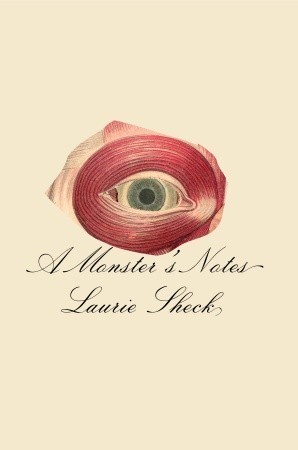
A Monster's Notes
What if Mary Shelley had not invented Frankenstein’s monster but had met him when she was a girl of eight, sitting by her mother’s grave, and he came to her unbidden? What if their secret bond left her forever changed, obsessed with the strange being whom she had discovered at a time of need? What if he were still alive in the twenty-first century?
This bold, genre-defying book brings us the “monster” in his own words. He recalls how he was “made” and how Victor Frankenstein abandoned him. He ponders the tragic tale of the Shelleys and the intertwining of his life with that of Mary (whose fictionalized letters salt the narrative, along with those of her nineteenth-century intimates) in this riveting mix of fact and poetic license. He takes notes on all aspects of human striving—from the music of John Cage to robotics to the Northern explorers whose lonely quest mirrors his own—as he tries to understand the strange race that made yet shuns him, and to find his own freedom of mind.
In the course of the monster’s musings, we also see Mary Shelley’s life from her childhood through her elopement with Percy Bysshe Shelley, her writing of Frankenstein, the births and deaths of her children, Shelley’s famous drowning, her widowhood, her subsequent travels and life’s work, and finally her death from a brain tumor at age fifty-four. The monster’s fierce bond with Mary and the tale of how he ended up in her fiction is a haunted, intense love story, a story of two beings who can never forget each other.
A Monster’s Notes is Sheck’s most thrilling work to date, a luminous meditation on creativity and technology, on alienation and otherness, on ugliness and beauty, and on our need to be understood.
This bold, genre-defying book brings us the “monster” in his own words. He recalls how he was “made” and how Victor Frankenstein abandoned him. He ponders the tragic tale of the Shelleys and the intertwining of his life with that of Mary (whose fictionalized letters salt the narrative, along with those of her nineteenth-century intimates) in this riveting mix of fact and poetic license. He takes notes on all aspects of human striving—from the music of John Cage to robotics to the Northern explorers whose lonely quest mirrors his own—as he tries to understand the strange race that made yet shuns him, and to find his own freedom of mind.
In the course of the monster’s musings, we also see Mary Shelley’s life from her childhood through her elopement with Percy Bysshe Shelley, her writing of Frankenstein, the births and deaths of her children, Shelley’s famous drowning, her widowhood, her subsequent travels and life’s work, and finally her death from a brain tumor at age fifty-four. The monster’s fierce bond with Mary and the tale of how he ended up in her fiction is a haunted, intense love story, a story of two beings who can never forget each other.
A Monster’s Notes is Sheck’s most thrilling work to date, a luminous meditation on creativity and technology, on alienation and otherness, on ugliness and beauty, and on our need to be understood.
530 pages, Hardcover
First published January 1, 2009
Ratings & Reviews
Friends & Following
Create a free account to discover what your friends think of this book!
Community Reviews
Displaying 1 - 30 of 65 reviews

September 13, 2009
Wow. I blazed through this (twelve hours or so, from the preface to the source notes on page 521, with some down time for watching a movie). This reimagining of Mary Shelley's life and the Frankenstein story was a brilliant idea--albeit a bit clumsy in execution. What I found particularly intriguing was the emphasis upon Cao Xueqin's classic "Dream of the Red Chamber", a story that constitutes a significant section of the disjointed story. This amplifies my desire to read my [ultra-abridged:] translation.
My issues with this book were similar to those mentioned in other reviews. It took me a long time, probably close to 200 pages, to get my bearings. Though Sheck differentiates between her characters' letters with various fonts, it took some time to determine which character represented which font. Moreover, I found it virtually impossible to differentiate between fictional correspondence and excerpts from actual letters and texts (though the source material in the back matter provided some clarification). Still, there is something deeply stirring about the monster's estrangement, a more introspective treatment of his total alienation than provided in "Frankenstein" itself. The story also illuminates the personal tragedies that must have crept into Shelley's work, offering ample fodder for biographical critics.
Overall, a solid, well researched effort.
My issues with this book were similar to those mentioned in other reviews. It took me a long time, probably close to 200 pages, to get my bearings. Though Sheck differentiates between her characters' letters with various fonts, it took some time to determine which character represented which font. Moreover, I found it virtually impossible to differentiate between fictional correspondence and excerpts from actual letters and texts (though the source material in the back matter provided some clarification). Still, there is something deeply stirring about the monster's estrangement, a more introspective treatment of his total alienation than provided in "Frankenstein" itself. The story also illuminates the personal tragedies that must have crept into Shelley's work, offering ample fodder for biographical critics.
Overall, a solid, well researched effort.

March 3, 2010
there's a lot going on here. big book. considering reading it again just to write commentary. considering buying my own copy to mark up with a pencil. my big problem reading poetry (which it is, don't be fooled by the intermittent letters) is that I'm always trying to "get it" by looking deeper and deeper, and so deep that I wind up staring at type serifs and forget to just enjoy the thing. Some random notes follow:
seeing oneself and defining oneself by that sight- and how one sees others
how others see the world more important than how he sees it- multiple perspectives, multiple narratives, from all over the world and different sciences- philosophy, engineering, navigation, exploration… all seem to be unafraid while the monster "he" is nothing but negative perception and emotion, never content or joyous, only perseverance like a badass machine that has no choice but to keep trucking on through hunger, cold and bitter winds and suffering..is it immortal? can it die?
lots of delving in death. death doesn't seem to be the end of perception or communication - lots about the shelleys, and some random others. he has a weird prescience about whatever these special selected characters happen to be writing, touching while they're writing, thinking or feeling while they're reading or writing.
he's alive but made out of dead things and walking in dead places but unable to let itself die, and unable to live (in society). it is jealous of human mortality and the personal connections people and even animals make. if he can't die is it truly alive? rational, educated, like it had a consciousness of being before he was put together, like all frosty's magic hat did was open its eyes, like the perception and personality was there from the start- animistic?
they're on the fringe of society- educated, moneyed, upper class- but outcast themselves by their own doing. he's outcast by his own doing as well- does he try to make connections or just never over the heartbreak of being rejected by his creator? how was he intelligent enough at that point to know what that meant? how is he content to smell the party from the door? is he just trying to be miserable? yearning for acceptance, to be seen, understood, even touched. watching from afar but never party to experience or participation, always hiding in the wings. he questions everything- is his purpose only to be and not to question itself, but everything else around it? accepts his fate without argument but drinks in all he has… suffering
seeing oneself and defining oneself by that sight- and how one sees others
how others see the world more important than how he sees it- multiple perspectives, multiple narratives, from all over the world and different sciences- philosophy, engineering, navigation, exploration… all seem to be unafraid while the monster "he" is nothing but negative perception and emotion, never content or joyous, only perseverance like a badass machine that has no choice but to keep trucking on through hunger, cold and bitter winds and suffering..is it immortal? can it die?
lots of delving in death. death doesn't seem to be the end of perception or communication - lots about the shelleys, and some random others. he has a weird prescience about whatever these special selected characters happen to be writing, touching while they're writing, thinking or feeling while they're reading or writing.
he's alive but made out of dead things and walking in dead places but unable to let itself die, and unable to live (in society). it is jealous of human mortality and the personal connections people and even animals make. if he can't die is it truly alive? rational, educated, like it had a consciousness of being before he was put together, like all frosty's magic hat did was open its eyes, like the perception and personality was there from the start- animistic?
they're on the fringe of society- educated, moneyed, upper class- but outcast themselves by their own doing. he's outcast by his own doing as well- does he try to make connections or just never over the heartbreak of being rejected by his creator? how was he intelligent enough at that point to know what that meant? how is he content to smell the party from the door? is he just trying to be miserable? yearning for acceptance, to be seen, understood, even touched. watching from afar but never party to experience or participation, always hiding in the wings. he questions everything- is his purpose only to be and not to question itself, but everything else around it? accepts his fate without argument but drinks in all he has… suffering
This entire review has been hidden because of spoilers.

December 3, 2012
Beautiful. Stunning use of language gives an amazingly unique work of fiction a certain feel of poetry. The writing, the use of language gives off a palpable sense of sadness, not in the actual events of the plot, but in the way the characters speak. There is a certain sad, tragic beauty in it.
It's understandable, the words of a monster such as this would be sad and mournful, he was built from dead, discarded parts, abandoned, and seemingly unable to die. From the first paragraph, the monster's first interjection of his thoughts and feelings, I knew I was going to love this book. It's not for everyone. It takes a sort of patience, a sort of sadness in oneself to be able to feel the emotion the book puts out. To fall in love with the characters, find yourself feeling for them, feeling with them, you almost need to be able to comprehend the unique brand of tragedy that Sheck creates.
I found myself reading slower than normal, drawing it out, savoring the language. It's not often that poetry and prose combine so perfectly. Definitely one of the best books I've read in a really long time.
It's understandable, the words of a monster such as this would be sad and mournful, he was built from dead, discarded parts, abandoned, and seemingly unable to die. From the first paragraph, the monster's first interjection of his thoughts and feelings, I knew I was going to love this book. It's not for everyone. It takes a sort of patience, a sort of sadness in oneself to be able to feel the emotion the book puts out. To fall in love with the characters, find yourself feeling for them, feeling with them, you almost need to be able to comprehend the unique brand of tragedy that Sheck creates.
I found myself reading slower than normal, drawing it out, savoring the language. It's not often that poetry and prose combine so perfectly. Definitely one of the best books I've read in a really long time.

December 22, 2010
Well - that was a complete waste of time and effort. The best part of this book was the cover - which oh so seduced me with it's suggestion of 'the eye of the soul' and 'an unfinished person' and 'a piece of the whole'...and on and on. I couldn't wait to read this book. What a complete disappointment. By the time I realized that it wasn't going to get any better, I'd already invested too much reading to just quit it. Lordy - the pain to finish it. Nearly did me in.
So what was this book about? Who cares! It was snippets of letters and disjointed thoughts - all whiny and philosophical about nothing and everything and ....did I mention fragments of ..and why did I bother? and who will care? The writing was thankfully done in the format of letters and disjointed thoughts so the pages weren't full. So I guess that was the second best thing about the book.
The third best thing was finally closing the cover. Don't ask me to read another book by Laurie Sheck. I may cry.
So what was this book about? Who cares! It was snippets of letters and disjointed thoughts - all whiny and philosophical about nothing and everything and ....did I mention fragments of ..and why did I bother? and who will care? The writing was thankfully done in the format of letters and disjointed thoughts so the pages weren't full. So I guess that was the second best thing about the book.
The third best thing was finally closing the cover. Don't ask me to read another book by Laurie Sheck. I may cry.

June 23, 2012
I did not find this to be a pleasurable read. For all the lovely language and meticulous research, I'm sorry to say that this beast of a book doesn't have much meat.
The reader is continuously and ferociously pounded by same themes. Each section has it's own emotional/philosophical focus and specific imagery which is repeated to the point of inciting eye-rolling and even page skipping. I believe a drastic paring down the the length of this volume could have made it something more meaningful. 520 pages is too much space to use in saying something that could be said in 120.
The reader is continuously and ferociously pounded by same themes. Each section has it's own emotional/philosophical focus and specific imagery which is repeated to the point of inciting eye-rolling and even page skipping. I believe a drastic paring down the the length of this volume could have made it something more meaningful. 520 pages is too much space to use in saying something that could be said in 120.

June 18, 2009
I actually quit reading this about half-an-hour in. I was exepcting a re-telling of the classic Frankenstein story, instead the book is a mish-mash of random thoughts categorized by topic. I found it difficult to follow and understand.

abandon_ship
August 17, 2009I grabbed this from the library at the last minute because I LOVED the title and cover art, and the copy on the flap sounded fantastic! The premise is that Frankenstein's experiment actually came to life and met Mary Shelley when she was a young girl, inspiring her to write "Frankenstein" as an adult. The monster is real and kept a diary. Sounds great, right?
Had I thumbed through a few pages first, I would have discovered that this was not going to be a pleasurable read for me. It is formatted as a messy journal and is so confusing, that I could not tell which were true bits of history in the form of quotations and newspaper excerpts, and which parts were entirely fiction. I never got a sense of what was going on and shut the cover after about ten pages.
I still like the premise and would love to see her rewrite this as a straightforward narrative!
Had I thumbed through a few pages first, I would have discovered that this was not going to be a pleasurable read for me. It is formatted as a messy journal and is so confusing, that I could not tell which were true bits of history in the form of quotations and newspaper excerpts, and which parts were entirely fiction. I never got a sense of what was going on and shut the cover after about ten pages.
I still like the premise and would love to see her rewrite this as a straightforward narrative!

January 8, 2010
i got 100 pages into this book before I could take it no more. It is almost like reading someone's grocery list.
February 27, 2010
worst. book. ever.
February 9, 2024
Not as good as Frankenstein but it eased my withdrawal pangs at least

November 5, 2016
As a lover of books, it is rare that I read one I don't like, I court books before I immerse myself into them...I know what I like. It is my pet-peeve to be a bit skeptical of books that 'take off' from another author's work or playing fast n' loose with the life story of someone real makes me squirm...it rarely works for me because when I have gone into one, I'm so dang nit-picky that I'd waste more time finding fault with it at every turn of the page because if it happens to be a story that I know by heart or a person I have researched, anything a little bit off would be too irritating, so I rarely read such things, unless there's something special about it that caught my attention...this one is pretty special. This is a gorgeously written book, a lyrical blend of prose and poetry, philosophy and ethics, history and biography, the research that had to be done to write this book is exhausting, damn it's good. I had to re-read Mary Shelley's Frankenstein while I was reading this book...just because I wanted to and thought it would be neat to do it that way (I'm a total book nerd.) Anyway, it was a good excuse to re-read a book that I read so long ago that I only vaguely remember the details, but found it fascinating at the time. (If you never read it and only know Frankenstein from the Hollywood depictions, you'd be hopelessly lost.) I even looked up Percy B. Shelley's poetry to refresh my memory. It took a little longer to read one and then the other side-by-side, but I enjoyed making a project out of it. Honestly, they are interesting companions and harmonize together...taking the narrative from the point of view of the Monster has re-imagined his life, and his sadness, his disconnection from the human race...a misfit, (he'll never fit in!) This deplorable, lonely, pitiful Monster. There's a little bit of the Monster in all of us...

June 6, 2009
I finally finished after savoring this over the past month. So much to say, collecting my thoughts which seems the appropriate thing to do for a book where the word "mind" appears at least once on almost every page.
It's a brilliant and rewarding book for those with patience and those who like a good challenge. The writing style will take some adapting to: between the Monster's note-taking, how he juxtaposes quotes, notes and snippets of his autobiography and the epistolary mode which presents the narrative and events of Claire, Clerval and Mary, but more importantly their inner monologues and perceptions. But what better way to explore the concept of our minds, how we think, how we trap or free ourselves, all questions vital to the Monster as he tries to make sense of his existence, of his solitude, of his ability to think and read and feel.
I need more time to flesh out my thoughts, but I found Sheck's previous book, her poetry collection Captivity a good primer for understanding her preoccupation with the mind, thought, the process of thinking.
It's a brilliant and rewarding book for those with patience and those who like a good challenge. The writing style will take some adapting to: between the Monster's note-taking, how he juxtaposes quotes, notes and snippets of his autobiography and the epistolary mode which presents the narrative and events of Claire, Clerval and Mary, but more importantly their inner monologues and perceptions. But what better way to explore the concept of our minds, how we think, how we trap or free ourselves, all questions vital to the Monster as he tries to make sense of his existence, of his solitude, of his ability to think and read and feel.
I need more time to flesh out my thoughts, but I found Sheck's previous book, her poetry collection Captivity a good primer for understanding her preoccupation with the mind, thought, the process of thinking.

August 14, 2015
An approach to a story that reflects reality. A mass of simultaneous events, connections, and time along which people careen more in control at some points than others.
The hybrid nature of the story is very effective providing an almost kaleidoscopic perspective that allows for multiple voices to speak.
The choice of Mary Shelley whose own life often mirrored that of the gothic horrors she envisioned was perfect.
Reader Beware: if you want an easy read where the author does everything for you except turning the pages, this book is not for you. If you are unimaginative or not willing to have your view of the reading experience shifted, this book is not for you. Stick with E.L. James.
The hybrid nature of the story is very effective providing an almost kaleidoscopic perspective that allows for multiple voices to speak.
The choice of Mary Shelley whose own life often mirrored that of the gothic horrors she envisioned was perfect.
Reader Beware: if you want an easy read where the author does everything for you except turning the pages, this book is not for you. If you are unimaginative or not willing to have your view of the reading experience shifted, this book is not for you. Stick with E.L. James.

August 10, 2009
I actually didn't finish this book. Couldn't really get into it.

October 5, 2020
This work can be approached any number of ways: as a novel, as a poem, as a scholarly inquiry into the ideas behind Frankenstein, as a critical analysis of modern life (circa 2007). I purchased this with the understanding it was a novel, and read it as such; therefore, I will review it as a novel.
Frankenstein's monster, still alive and unaged today, living in the Lower East Side of Manhattan (before gentrification, natch), alone save for a journal and the sort of book collection one would expect to find in an squat that's been abandoned by undergraduates: that's a good story. Unfortunately, the novel doesn't tell it.
Mary Shelley, living under the shadow of her creation all the rest of her life, unable to come to terms with her husband's death or her own poverty and illness: that's a good story. That one isn't told, either.
The meditations of the sole artificial life form on the planet, as he watches his creators die and their society move on: that's a good story. That one's not here, either.
Mary Shelley encountering the monster in a graveyard as a child, becoming obsessed with him/it the rest of her life, and writing her novel Frankenstein: The 1818 Text as a sort of therapy? That's the one we get, and it is not a good story. One might even call it a lame story at the risk of being mob-lynched for counterdisablery: not only is it a weak idea, it is insulting to Mary Shelley and it trivializes her singular accomplishment.
So, without any story to speak of, what are we left with? A bunch of notes and musings scribbled in a library while studying the complete correspondence of Mary Shelley, with an occasional break to read Dream of the Red Chamber.
The purported questioning of his place in existence by the monster is limited to the occasional, "What is my place in existence?". Lest you think I exaggerate:
By the way, if you thought the "stone face" in that excerpt was an insightful observation of a typical straphanger, then wow are you unprepared for the level of acuity in this book. It's face carved in stone. We're not even told the face of what, let alone who, or given any sort of description: a stone face is what it is, and a stone face is all you're going to get.
There's a bunch of this garbage, pages and pages and pages of it. The attempt to work in Mary Shelley's correspondence is particularly strained: the monster does not visit a library, perhaps while indulging an obsession with the woman who told his story; no, he/it is granted visions of these writers from the past, as their hands write the fragments of their letters that are included in this book. Are these hallucinations? Do ghosts haunt the monster? Is the monster actually peering back through time? Nobody knows, the author feels no need to explain this, and to be honest I don't see why anyone should care. Any answer would be more interesting than no answer, but still not interesting enough to make the disjointed fragments worth reading.
To be fair, the section on Dream of the Red Chamber is pretty good, and if the monster had been replaced meta-fictionally with a modern reader, a student perhaps, or a hermit crashed on an island, or someone who found the book in the seat-pocket on a flight and began reading it, that section would make for a fine standalone work. But, sadly, it's just kinda wedged in here, sans rhyme, sans reason, sans explanation of any kind.
One final note: it has long been a habit of mine, since being handed some anarchist screeds to "review" in my early years, to take a particularly problematic book and attempt to read it backwards, then randomly. If the book loses neither comprehension nor narrative drive though either of these methods, it is a one-star book like this one: disqualified through lack of coherence.
PREVIOUSLY:
I have not yet finished this one, but it's pretty clear what I'm in for.
The attempt is to tell a story through the journal written by Frankenstein's monster, starting around when he was trapped on the ice floe. An interesting idea, though why the need to make the monster a childhood friend of Mary Shelly is beyond me - certainly we all know this book is fiction, so why add the extra complexity of making a case for Frankenstein being non-fiction?
At any rate, the "journal" is just disjointed nonsense. I suppose the author believes this is stream-of-consciousness, but it isn't. Perhaps some time spent reading actual journals from writers of the period would have been helpful. A journal always has an audience, and while each day may contain ideas of events completely different from preceding and subsequent days, the content within a day is generally structured and coherent. Almost as if the purpose of a journal is to make sense of a day's events, rather than merely to waste the time of any future reader.
Frankenstein's monster, still alive and unaged today, living in the Lower East Side of Manhattan (before gentrification, natch), alone save for a journal and the sort of book collection one would expect to find in an squat that's been abandoned by undergraduates: that's a good story. Unfortunately, the novel doesn't tell it.
Mary Shelley, living under the shadow of her creation all the rest of her life, unable to come to terms with her husband's death or her own poverty and illness: that's a good story. That one isn't told, either.
The meditations of the sole artificial life form on the planet, as he watches his creators die and their society move on: that's a good story. That one's not here, either.
Mary Shelley encountering the monster in a graveyard as a child, becoming obsessed with him/it the rest of her life, and writing her novel Frankenstein: The 1818 Text as a sort of therapy? That's the one we get, and it is not a good story. One might even call it a lame story at the risk of being mob-lynched for counterdisablery: not only is it a weak idea, it is insulting to Mary Shelley and it trivializes her singular accomplishment.
So, without any story to speak of, what are we left with? A bunch of notes and musings scribbled in a library while studying the complete correspondence of Mary Shelley, with an occasional break to read Dream of the Red Chamber.
The purported questioning of his place in existence by the monster is limited to the occasional, "What is my place in existence?". Lest you think I exaggerate:
I look out at the stone face across the way, the PARK sign, read MTA posters as I ride:
IF YOU SEE SOMETHING, SAY SOMETHING.
[rest of the MTA fearmongering ad text]
REMEMBER. YOU ARE THE EYES AND EARS OF THE SYSTEM.
Didn't your world fill with suspicion because it had me in it? From the moment I opened my eyes, you couldn't trust who you were, what you had made or done, what I was or might become. Yet mostly you said nothing, until maybe those last hours of your dying. In that way weren't we alike?
By the way, if you thought the "stone face" in that excerpt was an insightful observation of a typical straphanger, then wow are you unprepared for the level of acuity in this book. It's face carved in stone. We're not even told the face of what, let alone who, or given any sort of description: a stone face is what it is, and a stone face is all you're going to get.
There's a bunch of this garbage, pages and pages and pages of it. The attempt to work in Mary Shelley's correspondence is particularly strained: the monster does not visit a library, perhaps while indulging an obsession with the woman who told his story; no, he/it is granted visions of these writers from the past, as their hands write the fragments of their letters that are included in this book. Are these hallucinations? Do ghosts haunt the monster? Is the monster actually peering back through time? Nobody knows, the author feels no need to explain this, and to be honest I don't see why anyone should care. Any answer would be more interesting than no answer, but still not interesting enough to make the disjointed fragments worth reading.
To be fair, the section on Dream of the Red Chamber is pretty good, and if the monster had been replaced meta-fictionally with a modern reader, a student perhaps, or a hermit crashed on an island, or someone who found the book in the seat-pocket on a flight and began reading it, that section would make for a fine standalone work. But, sadly, it's just kinda wedged in here, sans rhyme, sans reason, sans explanation of any kind.
One final note: it has long been a habit of mine, since being handed some anarchist screeds to "review" in my early years, to take a particularly problematic book and attempt to read it backwards, then randomly. If the book loses neither comprehension nor narrative drive though either of these methods, it is a one-star book like this one: disqualified through lack of coherence.
PREVIOUSLY:
I have not yet finished this one, but it's pretty clear what I'm in for.
The attempt is to tell a story through the journal written by Frankenstein's monster, starting around when he was trapped on the ice floe. An interesting idea, though why the need to make the monster a childhood friend of Mary Shelly is beyond me - certainly we all know this book is fiction, so why add the extra complexity of making a case for Frankenstein being non-fiction?
At any rate, the "journal" is just disjointed nonsense. I suppose the author believes this is stream-of-consciousness, but it isn't. Perhaps some time spent reading actual journals from writers of the period would have been helpful. A journal always has an audience, and while each day may contain ideas of events completely different from preceding and subsequent days, the content within a day is generally structured and coherent. Almost as if the purpose of a journal is to make sense of a day's events, rather than merely to waste the time of any future reader.

October 21, 2020
Sadly this book has spent more time on my shelf than it will in my mind. I found the book years back at a used book store and read the premise finding it to be an interesting take on the Frankenstein Monster. What saddened me more is that I couldn't continue past 100 pages.
I love experimental fiction, the change in tone between the letters and the Monster's thoughts is something I found fascinating in the beginning of the book. But with each page passed the "narrative" floundered and felt stale. Nothing grasped me into it, the themes feeling vapid and surface, the two storylines passing through felt disjointed. The language used was fine, nothing overly flowery but finding out the author was known for poems I felt that this was beyond my typical enjoyment.
I rarely do not finish a book, always finding reason to continue on. But with this novel, I had to save myself the discomfort my brain was going through. Maybe for someone else this will be a great book.
I love experimental fiction, the change in tone between the letters and the Monster's thoughts is something I found fascinating in the beginning of the book. But with each page passed the "narrative" floundered and felt stale. Nothing grasped me into it, the themes feeling vapid and surface, the two storylines passing through felt disjointed. The language used was fine, nothing overly flowery but finding out the author was known for poems I felt that this was beyond my typical enjoyment.
I rarely do not finish a book, always finding reason to continue on. But with this novel, I had to save myself the discomfort my brain was going through. Maybe for someone else this will be a great book.

April 12, 2018
I was SO BORED.

January 1, 2020
This was the most convoluted attempt at a book I ever attempted to finish. It would make as much sense as printing out news and stealing random journals.

May 4, 2020
This is a book of prose poetry, not an actual novel. Not that genre-defying, honestly.
Want to Read
July 19, 2020elibrary
July 21, 2023
I really didnt get this book to be honest. It was nothing like the description. It was just a lot of random musin
June 7, 2024
Only for the most die-hard of fans.

September 2, 2014
When I began reading this, I knew nothing about this book other than a 3 sentence summary of the plot. As it turns out, to the extent that there is a plot, it is presented in a piece-meal, impressionist sort of way rather than any sort of straight forward narrative. As the title suggests, the book is composed of the monster's notes, not an actual story as such. Instead the book is made up of a series of notes expressing the monster's thoughts about various things, mixed with letters between various members of the Mary Shelley's family, as well as a long section in the middle where the monster imagines correspondence between an Italian leper with no name and Clerval (a character killed by the monster in Shelley's novel) as Clerval translates the Dream of the Red Chamber. In between the main sections of the book there are various interstitial things such as the monster's thoughts on several 20th century cultural figures or ideas, or the monster's attempt to find information on Mary Shelley on the internet in the present day. It is also full of all sorts of references to literature and history that I didn't always understand. Sometimes I looked them up and at other times I just enjoyed the writing without fully understanding all of it. I don't think that understanding every single word, especially those references, was really the point of this book though.
The unconventional way in which this book is structured and composed make it not the easiest read ever, and I could see how it could be a big turn off for a lot of people. However, narrative issues aside, the language is poetic and beautiful. A large focus of the book is the monster's relationships with his creator and with Mary Shelley. It is unsaid, but is sort of implied that those may be the only two relationships he's ever had at all in a couple hundred years of living, but at the very least, those are the two most significant ones. As the monster contemplates what it means to have been created in the way that he was and to have been abandoned by his creator he provides lots of interesting insights into how where he came from defines him and his sense of self worth. As he looks back on Mary Shelley (as well as her step-sister Claire), he reflects on the nature of imperfect friendships, the impossibility of truly knowing someone else's thoughts (or even your own), and the limitations that exists in any relationship. I also thought it was interesting how the monster's thoughts differed between what he thought about his creator, who brought him into the world literally, and what he thought of Mary, who, in fictionalizing him, presented an interpretation of him to the world, in a portrayal that he is not always comfortable with.
The section with Clerval and the Dream of the Red Chamber was longer than it needed to be, and probably worse for people who aren't familiar with the Dream of the Red Chamber. I read it in college (though we called it the Story of the Stone in that class) so was familiar with the characters referenced, and remembered just enough about the story to be able to follow what Clerval was saying about it. For anyone reading this who isn't familiar with that story though, that section was probably very difficult to get through, especially as the letters between Clerval and the leper got more and more tiresome.
The unconventional way in which this book is structured and composed make it not the easiest read ever, and I could see how it could be a big turn off for a lot of people. However, narrative issues aside, the language is poetic and beautiful. A large focus of the book is the monster's relationships with his creator and with Mary Shelley. It is unsaid, but is sort of implied that those may be the only two relationships he's ever had at all in a couple hundred years of living, but at the very least, those are the two most significant ones. As the monster contemplates what it means to have been created in the way that he was and to have been abandoned by his creator he provides lots of interesting insights into how where he came from defines him and his sense of self worth. As he looks back on Mary Shelley (as well as her step-sister Claire), he reflects on the nature of imperfect friendships, the impossibility of truly knowing someone else's thoughts (or even your own), and the limitations that exists in any relationship. I also thought it was interesting how the monster's thoughts differed between what he thought about his creator, who brought him into the world literally, and what he thought of Mary, who, in fictionalizing him, presented an interpretation of him to the world, in a portrayal that he is not always comfortable with.
The section with Clerval and the Dream of the Red Chamber was longer than it needed to be, and probably worse for people who aren't familiar with the Dream of the Red Chamber. I read it in college (though we called it the Story of the Stone in that class) so was familiar with the characters referenced, and remembered just enough about the story to be able to follow what Clerval was saying about it. For anyone reading this who isn't familiar with that story though, that section was probably very difficult to get through, especially as the letters between Clerval and the leper got more and more tiresome.
July 17, 2012
This book started with such promise for me. The opening section with fragments questioning humanity vs machines, the nature of machine intelligence, whether astronauts are still human once they are detached from Earth and then... *sigh* it moved into following the live stories of the original writer of Frankenstein, it moved into talking about the isolation of the Arctic, which was also interesting if less so. And then I hit the section of on the friend of Dr. Frankenstein now living in China exchanging letters with a leper (who's name he never knows, but that's ok because the letters are never sent) and translating an odd Chinese novel he found in the wall of the house he's living in....
And wow, I was only halfway through and it was moving slower than dirt.
I just lost patience with it. I may eventually go back to it, but nothing happens and interesting thoughts are not entertained.
And wow, I was only halfway through and it was moving slower than dirt.
I just lost patience with it. I may eventually go back to it, but nothing happens and interesting thoughts are not entertained.

March 14, 2013
for !oulipo! fans. very creative fonts, addendas and has the whole gang too, little franky, mary, percy, clair claremont, ol doc victor, and MORE. neat idea too, mary shelley meets frank when she was a little girl of 8, and then the story takes off. frank is the "narrator" and prolific writer on this odd, long, interesting novel.
here's a recipe for you, for what ails ya:
"PRESCRIPTION (from chapter 10)
Ginseng .2 oz
Atractylis (clay baked) .2 oz
Pachyma cocos .3 oz
Prepared Ti root .4 oz
Aralia edulis (cooked in wine) .2 oz
White peony (cooked) .2 oz
Szechaun selenium .15 oz
Sophora tomentosa .3 oz
Cyperus torundus .2 oz
Genetian soaked in vinegar .08 oz
Dioscorea from the
Huai region (cooked) .2 oz
Genuine Tung-ngo
(prepared with powdered
Oyster shell) .2 oz
Corydalis ambigua (cooked
In wine) .15 oz
Dried licorice .08 oz
Take with seven Fujian lotus seeds
The pits extracted, and two large red dates."
here's a recipe for you, for what ails ya:
"PRESCRIPTION (from chapter 10)
Ginseng .2 oz
Atractylis (clay baked) .2 oz
Pachyma cocos .3 oz
Prepared Ti root .4 oz
Aralia edulis (cooked in wine) .2 oz
White peony (cooked) .2 oz
Szechaun selenium .15 oz
Sophora tomentosa .3 oz
Cyperus torundus .2 oz
Genetian soaked in vinegar .08 oz
Dioscorea from the
Huai region (cooked) .2 oz
Genuine Tung-ngo
(prepared with powdered
Oyster shell) .2 oz
Corydalis ambigua (cooked
In wine) .15 oz
Dried licorice .08 oz
Take with seven Fujian lotus seeds
The pits extracted, and two large red dates."

July 30, 2009
"Comprised of letters, newspaper clippings, journal entries, interviews, dreams, lists, Web pages, and essays, Sheck's demanding, erudite novel eschews a cohesive plot in favor of the monster's growing comprehension of his plight -- an outsider looking in on humanity. Despite the obscure references to long-ago philosophers, poets, and novelists that left the Washington Post ""lurching along about 50 IQ points behind,"" critics were oddly moved by the beauty of Sheck's desolate vision and lyrical language. They grumbled about the interchangeable voices of some of her characters and the belated meeting between the monster and Mary Shelley, which takes place three-quarters of the way through the book despite the surrounding hype. But they were generally impressed by this cerebral meditation on isolation and the hunger for companionship."

April 20, 2010
Almost done!
This book deeply explores the idea of being an outcast and being shunned by the world through the story of the fictional nameless creature created by Frankenstein and story of the real Mary Shelley. Sometimes the cerebral approach of writing this book in "notes" or inner monologues and the lack of dialogue can make the subject matter overwhelming. However the themes of desperation, loneliness and desire are deftly explored, giving real pause to the reader about human relationships and what it means to truly "live".
The best part of this book has proved to be at the end. This is where the reader finds the most compelling scenes between Mary and the creature.
Final review pending!
This book deeply explores the idea of being an outcast and being shunned by the world through the story of the fictional nameless creature created by Frankenstein and story of the real Mary Shelley. Sometimes the cerebral approach of writing this book in "notes" or inner monologues and the lack of dialogue can make the subject matter overwhelming. However the themes of desperation, loneliness and desire are deftly explored, giving real pause to the reader about human relationships and what it means to truly "live".
The best part of this book has proved to be at the end. This is where the reader finds the most compelling scenes between Mary and the creature.
Final review pending!

July 27, 2009
I loved the concept of this book but simply couldn't get into it. I wanted more of the backstory. How did Mary and the monster meet, why did she write him as she did, why is he obsessed with Claire? Obviously, some of these questions would have been answered if I could force myself to continue turning the page, but...I couldn't.
Fascinating musings and notes taken in small doses but a bit much in novel format. Write a more traditional fiction narrative and I'd be all over it! (Oh jeez, did I really just say that? Blame my atrophying summer brain.)
Fascinating musings and notes taken in small doses but a bit much in novel format. Write a more traditional fiction narrative and I'd be all over it! (Oh jeez, did I really just say that? Blame my atrophying summer brain.)

August 13, 2009
Written from the perspective of Frankenstein, these are his notebooks. The author Laurie Sheck is also a poet and this is a very lyrical novel. You could really open the book up at any point and find a really beautiful passage. This is what I did. I would never be able to read the book all the way through though. It's way too long and very reflective and philosophical. Not that I don't like reflective and philosophical - I do - just not long ones :) It's kind of like picking up Marcel Proust - beautiful and daunting and you wish you were retired so you had the time to read it.
February 9, 2012
I'm undecided as to how i feel about this book. It is obviously painstakingly researched and thought out. I like the idea that it proposes Frankenstein's monster met p with mary shelley when she was a little girl, b/c that's the kind of speculative shit i can get behind. And frankly, the whole Shelley entourage is fascinating. But the fragments... The lack of a strict narrative... The excessive existential philosophy... Ugh. Too postmodern for me, i'm having flashback to that insane class i took on postmodernism in college. Call me an old softie, i like a classic narrative voice.
Displaying 1 - 30 of 65 reviews