

What do you think?

Sri Saundarya Lahari/The Descent
Saundaryalahari is one of the most popular Sanskrit poems in India and deals with Sakti worship. The first 41 verses are the source of various mantras and deal chiefly with Sri Chakra. The mantra of Tripurasundary is also dealt with. The 59 verses that follow give a description of the form of the Devi utilizing most of the forms of speech known to Sanskrit poetics. The subject matter of this book is highly technical and deal with matters that get little publicity. The mantras and ways of worship need to be learned by a competent student from a competent teacher who is a Sampradayavit. Sanskrit text with transliteration. The translation and notes are based on Lakshmidara's commentary.
536 pages, Paperback
First published January 1, 800
About the author
Adi Shankaracharya
250 books237 followersAdi Shankara(788 CE - 820 CE), also known as Śaṅkara Bhagavatpādācārya and Ādi Śaṅkarācārya was an Indian guru from Kalady of present day Kerala who consolidated the doctrine of advaita vedānta. His teachings are based on the unity of the ātman and brahman— non-dual brahman, in which brahman is viewed as nirguna brahman, brahman without attributes.
Shankara travelled across India and other parts of South Asia to propagate his philosophy through discourses and debates with other thinkers. He is reputed to have founded four mathas ("monasteries"), which helped in the historical development, revival and spread of Advaita Vedanta. Adi Shankara is believed to be the organizer of the Dashanami monastic order and the founder of the Shanmata tradition of worship.
His works in Sanskrit concern themselves with establishing the doctrine of advaita (nondualism). He also established the importance of monastic life as sanctioned in the Upanishads and Brahma Sutra, in a time when the Mimamsa school established strict ritualism and ridiculed monasticism. Shankara represented his works as elaborating on ideas found in the Upanishads, and he wrote copious commentaries on the Vedic canon (Brahma Sutra, principal upanishads and Bhagavad Gita) in support of his thesis. The main opponent in his work is the Mimamsa school of thought, though he also offers arguments against the views of some other schools like Samkhya and certain schools of Buddhism.
AKA Śaṅkarācārya; Śaṃkara; Śaṃkarācārya; Ṣaṅkara Āchārya; Shamkaracharya; Çamkara; Śaṃkara-bhagavat-pāda; Shankara; Çankara; Ādi Śaṅkara; Shankarâchârya; Śaṁkarācharya; Sankara; Shang-chieh-lo; Shangjieluo; Śankaracharya; Adi Sankar; Āticaṅkarācārya Svāmikaḷ; Caṅkarācārya Svāmikaḷ; Adi Sankaracharya; Āticaṅkar; Āticaṅkarācāriyar; Āticaṅkarar; Adi Sankaracarya; Adi Shankaracharya; Camkaracarya
Shankara travelled across India and other parts of South Asia to propagate his philosophy through discourses and debates with other thinkers. He is reputed to have founded four mathas ("monasteries"), which helped in the historical development, revival and spread of Advaita Vedanta. Adi Shankara is believed to be the organizer of the Dashanami monastic order and the founder of the Shanmata tradition of worship.
His works in Sanskrit concern themselves with establishing the doctrine of advaita (nondualism). He also established the importance of monastic life as sanctioned in the Upanishads and Brahma Sutra, in a time when the Mimamsa school established strict ritualism and ridiculed monasticism. Shankara represented his works as elaborating on ideas found in the Upanishads, and he wrote copious commentaries on the Vedic canon (Brahma Sutra, principal upanishads and Bhagavad Gita) in support of his thesis. The main opponent in his work is the Mimamsa school of thought, though he also offers arguments against the views of some other schools like Samkhya and certain schools of Buddhism.
AKA Śaṅkarācārya; Śaṃkara; Śaṃkarācārya; Ṣaṅkara Āchārya; Shamkaracharya; Çamkara; Śaṃkara-bhagavat-pāda; Shankara; Çankara; Ādi Śaṅkara; Shankarâchârya; Śaṁkarācharya; Sankara; Shang-chieh-lo; Shangjieluo; Śankaracharya; Adi Sankar; Āticaṅkarācārya Svāmikaḷ; Caṅkarācārya Svāmikaḷ; Adi Sankaracharya; Āticaṅkar; Āticaṅkarācāriyar; Āticaṅkarar; Adi Sankaracarya; Adi Shankaracharya; Camkaracarya
Ratings & Reviews
Friends & Following
Create a free account to discover what your friends think of this book!
Community Reviews
Displaying 1 - 5 of 5 reviews

March 10, 2023
Beautiful poetic translation of The Saundarya Lahiri ( in which Adi Shankara has extolled the greatness of the Supreme Mother Goddess in 100 verses... )
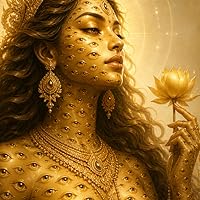
August 18, 2026
this review is less for this particular translation and more for the text itself amongst all its extremely variant translations.
the saundarayalahari is one of the few books i have the will to read.. along with Aurobindo's Savitri.. and when i say will to read.. those words fall as short as words can.. i have translated the text myself variously using AI and without.. finding some 20% of the text to be my own autobiography. the "translation" i have been working on.. is first person present tense of Lalita and very erotic. I have also converted some of that translation into musical album.. still my words stumble worse than ever... I will like all my principle texts edit the review endlessly as time passes as i try to image less and less imperfectly my absolute love and adoration and wonder at such a infinitely profound text.
Lalita Lalita.. I am yours.
the saundarayalahari is one of the few books i have the will to read.. along with Aurobindo's Savitri.. and when i say will to read.. those words fall as short as words can.. i have translated the text myself variously using AI and without.. finding some 20% of the text to be my own autobiography. the "translation" i have been working on.. is first person present tense of Lalita and very erotic. I have also converted some of that translation into musical album.. still my words stumble worse than ever... I will like all my principle texts edit the review endlessly as time passes as i try to image less and less imperfectly my absolute love and adoration and wonder at such a infinitely profound text.
Lalita Lalita.. I am yours.

August 3, 2025
this review applies to the commentary and translation, not the underlying text, which is beyond rating. this has extensively detailed notes on each mantra, often accompanied by a full-page mandala, the original sanskrit and a word-by-word translation, and proper yantras and japa for each are described in the appendix. the introduction is also nearly 100 pages, giving a general history and overview of shakta philosophy, history and metaphysics. i also appreciated the frequent references to modern quantum physics and cosmological theories. i can't imagine a more thorough and detailed edition than this one, at least, not in a single volume, anyways

February 5, 2026
it's a descent translation of a beautiful hymn but hard to read when you know what the institute gets up to 😢
also stop trying to sound more legit by using sciencey words like, it's ok spirituality can stand on its own as a coherent methodical intellectual system w/o putting everything in scientific terms, we got science for that
also stop trying to sound more legit by using sciencey words like, it's ok spirituality can stand on its own as a coherent methodical intellectual system w/o putting everything in scientific terms, we got science for that
Read
January 3, 2022This book is a must read for all Srividya and Dakshina Marga Upasakars.
Dr.Padmaja Suresh
www.aatmalaya.in
Dr.Padmaja Suresh
www.aatmalaya.in
Displaying 1 - 5 of 5 reviews