

What do you think?

Mystery Man #1
Mystery Man
A superbly gripping and blackly funny mystery by the king of the comic crime caper.
He’s the Man With No Name and the owner of No Alibis, a mystery bookshop in Belfast. But when a detective agency next door goes bust, the agency’s clients start calling into his shop asking him to solve their cases. It’s not as if there’s any danger involved. It’s an easy way to sell books to his gullible customers and Alison, the beautiful girl in the jewellery shop across the road, will surely be impressed. Except she’s not – because she can see the bigger picture. And when they break into the shuttered shop next door on a dare, they have their answer. Suddenly they’re catapulted along a murder trail which leads them from small-time publishing to Nazi concentration camps and serial killers...
He’s the Man With No Name and the owner of No Alibis, a mystery bookshop in Belfast. But when a detective agency next door goes bust, the agency’s clients start calling into his shop asking him to solve their cases. It’s not as if there’s any danger involved. It’s an easy way to sell books to his gullible customers and Alison, the beautiful girl in the jewellery shop across the road, will surely be impressed. Except she’s not – because she can see the bigger picture. And when they break into the shuttered shop next door on a dare, they have their answer. Suddenly they’re catapulted along a murder trail which leads them from small-time publishing to Nazi concentration camps and serial killers...
416 pages, Paperback
First published May 14, 2009
About the author
Colin Bateman
84 books357 followersColin Bateman was a journalist in Northern Ireland before becoming a full-time writer. His first novel, Divorcing Jack, won the Betty Trask Prize, and all his novels have been critically acclaimed. He wrote the screenplays for the feature films of Divorcing Jack, Crossmaheart and Wild About Harry. He lives in Northern Ireland with his family.
Ratings & Reviews
Friends & Following
Create a free account to discover what your friends think of this book!
Community Reviews
Displaying 1 - 30 of 266 reviews
November 19, 2025
I probably read about this title while I was looking for books similar to The Dublin trilogy. I love a good humorous murder mystery and this sounded exactly what I needed. And it was, up to a point. I loved the plot, the humor and the characters until they became too much. The Asperger Syndrome the main characters suffers from becomes a caricature of the condition. I don’t even mention that it was done to death in crime novels. Oops I just did mention it. Anyway, all became a bit too much, the characters, the crimes, the humor. I liked it, it was a pleasant read and l laughed a couple of times, but I was tired and, at the end, I was not left with the desire to continue with the series.
So what is this about? The hero is a crime bookshop owner who lives above his business with his mum ( we never see her, is she real?). He suffers from a form of Asperger , hypochondria and many other phobias and ailments. He is very smart, but lacks any social skills. When the private detective next door disappears, people start coming to his shop to ask for information and, gradually, for help. He does some odd assignments and becomes quite successful at detecting stuff. At one point he reluctantly accepts a job which involves bit too much danger . He will also get help from the shop assistant opposite his business, whom he secretly stalks and has no courage to approach. Was the stalking part a bit problematic, yes, a bit. The plot gets more and more intense, the bodies pile up and the danger becomes palpable.
So what is this about? The hero is a crime bookshop owner who lives above his business with his mum ( we never see her, is she real?). He suffers from a form of Asperger , hypochondria and many other phobias and ailments. He is very smart, but lacks any social skills. When the private detective next door disappears, people start coming to his shop to ask for information and, gradually, for help. He does some odd assignments and becomes quite successful at detecting stuff. At one point he reluctantly accepts a job which involves bit too much danger . He will also get help from the shop assistant opposite his business, whom he secretly stalks and has no courage to approach. Was the stalking part a bit problematic, yes, a bit. The plot gets more and more intense, the bodies pile up and the danger becomes palpable.

April 3, 2015
'Bookselling is hard, ladies and gentlemen.'
It's even harder when you've taken up crime-solving and nefarious people are now trying to kill you.
When a private detective disappears, he leaves a glut of clients in need of someone to find missing things. Eager to step up to the plate and grab their cash is the owner of the mystery bookshop next door. At first, the cases are simple, involving unpleasant graffiti and leather pants. Then things take a sinister turn and soon there are Nazis, death threats, car chases and painful bruising.
I started out loving this book, sure that it would easily by a five-star read. There are plenty of laugh-out-loud moments. Much of the humor stems from the day-to-day operations of the book store, and the name-dropping of various mystery authors. My favorite gag was when John Grisham comes into the store to sign books. But the BIG mystery is just not that exciting. Or believable. There's also a deadly serious testimony by an Auschwitz survivor that seems a little disconcerting amidst all the funny business.
Then there's the matter of our bookselling sleuth.
He is a whiny hypochondriac (unless he does INDEED have EVERY disease and ailment known to mankind) who has OCD and still lives with his mother. He's self-obsessed, contemptuous of others and totally lacking in charm. Yet somehow,
If your ideal evening is binge-watching Monk, this would probably be right up your alley. I prefer detectives who can down a pint of Guinness without breaking out into hives.
It's even harder when you've taken up crime-solving and nefarious people are now trying to kill you.
When a private detective disappears, he leaves a glut of clients in need of someone to find missing things. Eager to step up to the plate and grab their cash is the owner of the mystery bookshop next door. At first, the cases are simple, involving unpleasant graffiti and leather pants. Then things take a sinister turn and soon there are Nazis, death threats, car chases and painful bruising.
I started out loving this book, sure that it would easily by a five-star read. There are plenty of laugh-out-loud moments. Much of the humor stems from the day-to-day operations of the book store, and the name-dropping of various mystery authors. My favorite gag was when John Grisham comes into the store to sign books. But the BIG mystery is just not that exciting. Or believable. There's also a deadly serious testimony by an Auschwitz survivor that seems a little disconcerting amidst all the funny business.
Then there's the matter of our bookselling sleuth.
He is a whiny hypochondriac (unless he does INDEED have EVERY disease and ailment known to mankind) who has OCD and still lives with his mother. He's self-obsessed, contemptuous of others and totally lacking in charm. Yet somehow,
If your ideal evening is binge-watching Monk, this would probably be right up your alley. I prefer detectives who can down a pint of Guinness without breaking out into hives.

February 20, 2013
When you're lying in a hospital bed with a badly broken leg, I'm not sure you're supposed to laugh as much as I did reading this book. The nurses probably mistake your cackling as a nasty side-effect of the painkillers. But, no, Colin Bateman must take the credit for my laughter, not the endone. He really nails this black comedy. It's set in Belfast but he even brings my home city Canberra into it! He conjures up some very interesting characters too, including the main character who tells this wonderful story in the first person, allowing plenty of comic commentary. I've read a few Colin Bateman novels now. I've really like many of them, but I LOVED this one.

May 4, 2015
[7/10]
- When I was twelve I was bitten by an earwig. I hoped it might have been radioactive. I spent several months thinking that I might turn into Earwigman.
- What special powers would Earwigman have?
- Big pincers. Flight. And I could crawl into the ears of my enemies and lay eggs.
No such luck for our Mystery Man. He turned into a bookseller of crime fiction. In Belfast. He is not very succesful, probably because his clients are already fed up with the real violence that turned their city into a sectarian battleground. The specialized bookshop is called No Alibis and its motto is "Murder Is Our Business" , which proves strangely prophetic, as the disappearance of his next-door neighbor, a private investigator, sends most of his former clients knocking at the door of our first-person narrator. Dead bodies are soon to follow. There's a double play on words here, as the narrator abstains from providing us with his name or with details about his physical appearance, preferring to talk instead at length about his allergies, assorted illnesses and phobias, remaining an enigma to the last page. He's also starting a second career as an amateur private investigator, taking over the pending cases of his absent neighbour.
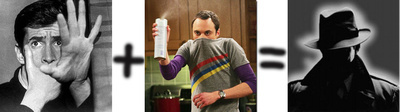
I had to build up my own image of this bookshop owner, and I came out with a crosbreed between Norman Bates and Sheldon Cooper. He is that funny in his extreme hypochondria and agoraphobia, plus any other phobias you can imagine. And he can be scary, in a stalkerish, urban guerilla guise (Note to self: do not put personalized license plates on you car, and please don't ask him about his mother!)
I like the night, always have. I've never been scared of the dark, and quite often prefer it. I particularly like the streets at night. I like the idea of being able to walk and not be seen, or if seen, not in detail. People examine people too much. My creative writing guru thought he's come up with something unique in describing 'the writer's muscle', but he was just putting into words what everybody does every second of every minute of every day anyway: they look at other people and they judge. The sexy girl, the old man, the fat thighs, the dodgy hairstyle. I don't like people looking at me and thinking anything. The night suits me: hood up, nail out; I walk for miles.
I stand behind trees.
Just stand.
In the nigt I have watched badgers snuffle and foxes quest. Sleeked cats. I have listened to lovers' tiffs and secret singers. I have haunted deserted mansions and paced wet-plastered new builds. I have written 'Please Clean Me' in the grime of white vans and put nuts on neglected bird tables. I have imitated Spitfires on manicured lawns and pruned roses while gardeners slept. I have felt the dew settle.
There's a very thin line to cross between the grim and the ridiculous, and our narrator falls usually on the wrong side of this line, with hilarious results. The comedy tends to take the bite out the occassional murder and out of "The Case of the Dancing Jews" which forms the backbone of this first novel in the series.
I didn't care much for the book in the beginning. The jokes fell flat and the investigative cases were uninteresting. "The Case of the Leather Trousers" and "The Case of the Fruit on the Flyover" proved to be only the warm-up, the flexing of the 'literary muscle' in preparation for the main event. The turning point that got me invested in the story was the entrance of Alison, the aspiring sidekick and prospective girlfriend for our not-so-stalwart investigator. She is the catalyst that moves the story into high gear, and bad things start to pile up in and around the "No Alibis". After being instrumental in solving the third mystery ("The Case of the Missing FA Cup", maybe the funniest of all four)), she is pushing our Man-With-No-Name to act against his nature: breaking-and-entering, chasing cars at speeds well over his usual 30 mph, going out into a countryside full of germs and killing cows, imbibing alcohol and even engaging in sexual promiscuity.
Femmes fatales find marriage to be confining, loveless and sexless, they use their cunning and sexuality to gain their independence.
Our narrator experience in life comes almost exclusively from the crime books he likes to read. So it is not surprising that he describes his characters and his situations by referencing the classics of the genre, like the "Know How To Whistle!" scene from 'To Have and To Have Not', or by seeing femmes fatales and assassins around every corner. To a trusted fan of the genre, these in-jokes add spice and humour to the proceedings, give the novel a meta-fictional angle and excuse the tongue-in-cheek approach to a very serious subject, like the Holocaust. I didn't find the actual mystery of the Dancing Jews very original or the build-up in tension very satisfactory. I read the book on the beach, and it was a fitting environment for what is mostly light entertainment. To give the author his due, he managed a grand finale, worthy of all the preparations and joking around that preceded it. Bateman went for inspiration to the trusted recipe of Agatha Christie, and brought it forward into the third millenium:
Agatha's many thousands of novels may be considered old fashioned, but the dame certainly knew how to wind up a plot. These days it's all SWAT teams and torture porn. Back then all she had to do was get all the protagonists into one room, present the facts, and then sit back and wait for the fallout. I saw no reason why, with proper undercover police protection, I should not reveal my findings in a similar fashion.
The conclusion almost convinces me that I could become a private investigator myself. All I need for success is an internet connection, a truck load of Diet Coke, a huge box of Twix and a feisty sidekick of the feminine persuasion. Like the fictional hero here, I don't particularly care to be exposed to danger, so most probably I will be content with reading the next book in the series.
Odds and ends that I have left out of my review:
- "Goose bumps is a misnomer. They only occur in mammals, so geese can't get them." is probably the quote that made me think of Sheldon Cooper
- apparently Chris de Burgh knows everything you need to know about love.
- I was hoping it is a deliberate joke, but Bateman refers throughout the novel to a certain Mark Mayerova, husband of a Czech immigrant named Anne Mayerova. As far as I know, in Slavic countries many family names and patronimics are gender sensitive, so the husband of Anne should be called Mark Mayer, not Mark Mayerova. In Romanian language for example, we use Ionescu for the man, Ioneasca for the wife. I was really annoyed, even knowing it is a very minor thing.
- I liked the book angle, and to those who enjoy literary references, 'I would recommend a better series written by John Dunning and featuring Cliff Janeway as the gumshoe("The Bookman").
- When I was twelve I was bitten by an earwig. I hoped it might have been radioactive. I spent several months thinking that I might turn into Earwigman.
- What special powers would Earwigman have?
- Big pincers. Flight. And I could crawl into the ears of my enemies and lay eggs.
No such luck for our Mystery Man. He turned into a bookseller of crime fiction. In Belfast. He is not very succesful, probably because his clients are already fed up with the real violence that turned their city into a sectarian battleground. The specialized bookshop is called No Alibis and its motto is "Murder Is Our Business" , which proves strangely prophetic, as the disappearance of his next-door neighbor, a private investigator, sends most of his former clients knocking at the door of our first-person narrator. Dead bodies are soon to follow. There's a double play on words here, as the narrator abstains from providing us with his name or with details about his physical appearance, preferring to talk instead at length about his allergies, assorted illnesses and phobias, remaining an enigma to the last page. He's also starting a second career as an amateur private investigator, taking over the pending cases of his absent neighbour.
I had to build up my own image of this bookshop owner, and I came out with a crosbreed between Norman Bates and Sheldon Cooper. He is that funny in his extreme hypochondria and agoraphobia, plus any other phobias you can imagine. And he can be scary, in a stalkerish, urban guerilla guise (Note to self: do not put personalized license plates on you car, and please don't ask him about his mother!)
I like the night, always have. I've never been scared of the dark, and quite often prefer it. I particularly like the streets at night. I like the idea of being able to walk and not be seen, or if seen, not in detail. People examine people too much. My creative writing guru thought he's come up with something unique in describing 'the writer's muscle', but he was just putting into words what everybody does every second of every minute of every day anyway: they look at other people and they judge. The sexy girl, the old man, the fat thighs, the dodgy hairstyle. I don't like people looking at me and thinking anything. The night suits me: hood up, nail out; I walk for miles.
I stand behind trees.
Just stand.
In the nigt I have watched badgers snuffle and foxes quest. Sleeked cats. I have listened to lovers' tiffs and secret singers. I have haunted deserted mansions and paced wet-plastered new builds. I have written 'Please Clean Me' in the grime of white vans and put nuts on neglected bird tables. I have imitated Spitfires on manicured lawns and pruned roses while gardeners slept. I have felt the dew settle.
There's a very thin line to cross between the grim and the ridiculous, and our narrator falls usually on the wrong side of this line, with hilarious results. The comedy tends to take the bite out the occassional murder and out of "The Case of the Dancing Jews" which forms the backbone of this first novel in the series.
I didn't care much for the book in the beginning. The jokes fell flat and the investigative cases were uninteresting. "The Case of the Leather Trousers" and "The Case of the Fruit on the Flyover" proved to be only the warm-up, the flexing of the 'literary muscle' in preparation for the main event. The turning point that got me invested in the story was the entrance of Alison, the aspiring sidekick and prospective girlfriend for our not-so-stalwart investigator. She is the catalyst that moves the story into high gear, and bad things start to pile up in and around the "No Alibis". After being instrumental in solving the third mystery ("The Case of the Missing FA Cup", maybe the funniest of all four)), she is pushing our Man-With-No-Name to act against his nature: breaking-and-entering, chasing cars at speeds well over his usual 30 mph, going out into a countryside full of germs and killing cows, imbibing alcohol and even engaging in sexual promiscuity.
Femmes fatales find marriage to be confining, loveless and sexless, they use their cunning and sexuality to gain their independence.
Our narrator experience in life comes almost exclusively from the crime books he likes to read. So it is not surprising that he describes his characters and his situations by referencing the classics of the genre, like the "Know How To Whistle!" scene from 'To Have and To Have Not', or by seeing femmes fatales and assassins around every corner. To a trusted fan of the genre, these in-jokes add spice and humour to the proceedings, give the novel a meta-fictional angle and excuse the tongue-in-cheek approach to a very serious subject, like the Holocaust. I didn't find the actual mystery of the Dancing Jews very original or the build-up in tension very satisfactory. I read the book on the beach, and it was a fitting environment for what is mostly light entertainment. To give the author his due, he managed a grand finale, worthy of all the preparations and joking around that preceded it. Bateman went for inspiration to the trusted recipe of Agatha Christie, and brought it forward into the third millenium:
Agatha's many thousands of novels may be considered old fashioned, but the dame certainly knew how to wind up a plot. These days it's all SWAT teams and torture porn. Back then all she had to do was get all the protagonists into one room, present the facts, and then sit back and wait for the fallout. I saw no reason why, with proper undercover police protection, I should not reveal my findings in a similar fashion.
The conclusion almost convinces me that I could become a private investigator myself. All I need for success is an internet connection, a truck load of Diet Coke, a huge box of Twix and a feisty sidekick of the feminine persuasion. Like the fictional hero here, I don't particularly care to be exposed to danger, so most probably I will be content with reading the next book in the series.
Odds and ends that I have left out of my review:
- "Goose bumps is a misnomer. They only occur in mammals, so geese can't get them." is probably the quote that made me think of Sheldon Cooper
- apparently Chris de Burgh knows everything you need to know about love.
- I was hoping it is a deliberate joke, but Bateman refers throughout the novel to a certain Mark Mayerova, husband of a Czech immigrant named Anne Mayerova. As far as I know, in Slavic countries many family names and patronimics are gender sensitive, so the husband of Anne should be called Mark Mayer, not Mark Mayerova. In Romanian language for example, we use Ionescu for the man, Ioneasca for the wife. I was really annoyed, even knowing it is a very minor thing.
- I liked the book angle, and to those who enjoy literary references, 'I would recommend a better series written by John Dunning and featuring Cliff Janeway as the gumshoe("The Bookman").

March 28, 2020
3.5 stars.
A mildly amusing story about a hypochondriac book seller who begins solving mysteries in his spare time.
I appreciated the local setting of Belfast and it was refreshing to see a protagonist who is a bit of a loser in life. That being said, we were meant to laugh at his shortcomings, but I often found them sad and some of his views were disturbing.
There wasn't much of a mystery but I did enjoy the twists and turns. Allison was a bright spark but she was far too good for our nameless main character.
A mildly amusing story about a hypochondriac book seller who begins solving mysteries in his spare time.
I appreciated the local setting of Belfast and it was refreshing to see a protagonist who is a bit of a loser in life. That being said, we were meant to laugh at his shortcomings, but I often found them sad and some of his views were disturbing.
There wasn't much of a mystery but I did enjoy the twists and turns. Allison was a bright spark but she was far too good for our nameless main character.

December 29, 2014
Our hero in this book is called "Mystery Man" perhaps for a number of reasons, one we aren't ever given his name, and two, he runs a mystery book store in beautiful downtown Belfast Ireland.
This book is sadistically funny - our hero describes the customers to his store as "a heady mix of silent-but-deadly farters, shoplifters, alcoholics, and students". Most have bad taste in reading, and he does not want to sell books anyway, especially Scandinavian mysteries which according to him are ruining the whole mystery genre.
As fate would have it our protagonist inadvertently becomes a private eye by picking up the loose ends when the proprietor of the detective agency next door disappears and the clients from there ask him for help.
The nameless protagonist, a self-deprecating, OCD sufferer and hypochondriac who obsesses over car licence plates is also in love with beautiful Alison from the jewellery shop across the way, to whom he has never spoken.
Our hero becomes a slightly bumbling detective and logically solves a few minor mysteries. Then the dead bodies start to show up. In abundance. And so does the humor.
I greatly enjoyed this book.
This book is sadistically funny - our hero describes the customers to his store as "a heady mix of silent-but-deadly farters, shoplifters, alcoholics, and students". Most have bad taste in reading, and he does not want to sell books anyway, especially Scandinavian mysteries which according to him are ruining the whole mystery genre.
As fate would have it our protagonist inadvertently becomes a private eye by picking up the loose ends when the proprietor of the detective agency next door disappears and the clients from there ask him for help.
The nameless protagonist, a self-deprecating, OCD sufferer and hypochondriac who obsesses over car licence plates is also in love with beautiful Alison from the jewellery shop across the way, to whom he has never spoken.
Our hero becomes a slightly bumbling detective and logically solves a few minor mysteries. Then the dead bodies start to show up. In abundance. And so does the humor.
I greatly enjoyed this book.

February 18, 2018
Mystery Man is a fun, light-hearted novel featuring the owner of a bookstore specializing in mysteries who gets roped into several of his own when a private detective's office next door gets shuttered and his clients start coming to the bookstore looking for help.
I've always been a fan of what's called the "amateur detective" sub-genre of mystery novels. There's something appealing about watching a regular person try to use their much more limited means of investigation to solve a case rather than the professionals who simply follow their tried-and-true procedures. The trick, of course, is making this at least somewhat believable. Despite the humorous tone of the novel, Colin Bateman does an excellent job of making his unnamed protagonist's unusual situation viable. This makes it much easier to go along for the ride.
And what a ride it is.
Mystery Man both embraces and subverts traditional mystery plots. The first few cases are brief, almost short stories within the novel itself. The overarching case that spans the book unfolds more gradually, at first in between these other little mysteries, before taking centre stage. It was the fun way the plot unfolded that carried me along to the end of the book. This, however, points to the aspect of the novel that kept me from loving it.
We've all seen more than enough of the hard-boiled, wise-cracking alcoholic P.I. characters to last . . . well, until the next one someone finds a way to make fresh again. Bateman goes the opposite direction with his hero. First of all, the protagonist is never once named in the novel. It's hard to pin down his age or appearance, other than his own frequent references to being either unattractive or feeble or both. This anonymity felt a bit forced to me – like a device or writing experiment. Certainly there was no particular way in which it enriched the story. But the real problem is that our hero, in an effort to be un-heroic, becomes difficult to enjoy. It's not just that he's constantly reminding us that he's not strong or daring – he's incessantly telling us what callow thing he plans to do (mostly involving letting the woman he's in love with and who, for no reason evident in the novel, decides to love him, take a bullet for him. Over and over again.) His various neuroses are fine, except that they're so hyperbolized that you're not sure any of them are real. Mostly, though, it's the fact that these very broadly-painted character flaws just keep coming and going without any discernible arc to them.
I've probably over-emphasized my dislike of the main character. There are moments of charm in there, too. My hope would be that in the second novel in the series some kind of progression would appear to the character. However I'm not yet sure if I want to jump into that second book yet.
Despite my issues, there's a lot to love about Mystery Man, and if you're hankering for a crime novel that's a little different from the rest, that sparkles with excellent prose and interesting twists, then give the book a try.
I've always been a fan of what's called the "amateur detective" sub-genre of mystery novels. There's something appealing about watching a regular person try to use their much more limited means of investigation to solve a case rather than the professionals who simply follow their tried-and-true procedures. The trick, of course, is making this at least somewhat believable. Despite the humorous tone of the novel, Colin Bateman does an excellent job of making his unnamed protagonist's unusual situation viable. This makes it much easier to go along for the ride.
And what a ride it is.
Mystery Man both embraces and subverts traditional mystery plots. The first few cases are brief, almost short stories within the novel itself. The overarching case that spans the book unfolds more gradually, at first in between these other little mysteries, before taking centre stage. It was the fun way the plot unfolded that carried me along to the end of the book. This, however, points to the aspect of the novel that kept me from loving it.
We've all seen more than enough of the hard-boiled, wise-cracking alcoholic P.I. characters to last . . . well, until the next one someone finds a way to make fresh again. Bateman goes the opposite direction with his hero. First of all, the protagonist is never once named in the novel. It's hard to pin down his age or appearance, other than his own frequent references to being either unattractive or feeble or both. This anonymity felt a bit forced to me – like a device or writing experiment. Certainly there was no particular way in which it enriched the story. But the real problem is that our hero, in an effort to be un-heroic, becomes difficult to enjoy. It's not just that he's constantly reminding us that he's not strong or daring – he's incessantly telling us what callow thing he plans to do (mostly involving letting the woman he's in love with and who, for no reason evident in the novel, decides to love him, take a bullet for him. Over and over again.) His various neuroses are fine, except that they're so hyperbolized that you're not sure any of them are real. Mostly, though, it's the fact that these very broadly-painted character flaws just keep coming and going without any discernible arc to them.
I've probably over-emphasized my dislike of the main character. There are moments of charm in there, too. My hope would be that in the second novel in the series some kind of progression would appear to the character. However I'm not yet sure if I want to jump into that second book yet.
Despite my issues, there's a lot to love about Mystery Man, and if you're hankering for a crime novel that's a little different from the rest, that sparkles with excellent prose and interesting twists, then give the book a try.

March 29, 2020
Mystery Man book 1: A gripping comedic mystery, with some great characters… a paranoid dysfunctional Belfast crime book store owner unwittingly becomes a private investigator and picks up a very dangerous case: 'The case of the Dancing Jews'. Although populist mainstream pulp… extremely enjoyable; will definitely read more of his work! 7 out of 12


November 12, 2025
3 stars for me.
I would be honest,this book was so bizzare and weird,and yet I had to keep reading.It was a surprise when I laugh few times,the leather pants and support note from his mother was just funny .I'm glad that I read this book,have few more from this author and it was weirdly fun.
I would recommend this book for dark humor and mystery fans.
I would be honest,this book was so bizzare and weird,and yet I had to keep reading.It was a surprise when I laugh few times,the leather pants and support note from his mother was just funny .I'm glad that I read this book,have few more from this author and it was weirdly fun.
I would recommend this book for dark humor and mystery fans.
April 27, 2013
Dang Benedict Cumberbatch recommended this for the Richard and Judy book club so then I had to read it. And it was good! Narrator is so flawed it is hilarious, the main mystery is gripping and the ending really surprised me

October 20, 2017
This was really very enjoyable. I’ve read three or four Colin Bateman novels before, and have generally quite liked them, but they can be a bit silly sometimes. This however was better balanced, witty and touching, interesting of plot without seeming overly contrived - overall a very funny and readable comedy/mystery novel with several very agreeable and amiable characters. I could pick apart the aspects that weren’t very literary, I could get more hung up on the fact not all the jokes worked for me, but I won’t - it was just an enjoyable few hours reading.

January 2, 2024
Brilliant book. Great story and funny throughout. I was a bit disappointed at the ending.. until I realised that wasn’t the very end!

August 20, 2016
Kein Alibi
Er ist Besitzer des besten Krimibuchladens in Belfast, welchen er sinnigerweise „Kein Alibi“ getauft hat. Im Nebenladen residiert eine Privatdetektei, deren Besitzer allerdings seit einiger Zeit verschwunden ist. Und so kommt es, dass immer mehr Kunden des Nachbarn im Buchladen auftauchen und darum bitten, ihre Probleme gelöst zu bekommen. Das gelingt besser als man meinen könnte, obwohl der Inhaber wegen diverser echter und eingebildeter Krankheiten weder die Stadt noch Land kaum je verlässt. Doch als ein Buchverleger in seinem Laden erscheint, der darum bittet, das Verschwinden seiner Frau aufzuklären, scheinen die Grenzen der Kunst erreicht. Und dann ist da noch Allison aus dem Juweliergeschäft gegenüber, die der Inhaber des Buchladens doch allzu gerne näher kennenlernen möchte.
Amüsiert folgt man dem Buchhändler auf seinen ersten Schritten zum Privatdetektiv. Als begeisterter Krimileser und natürlich auch Verkäufer, müsste er für seinen Nebenjob eigentlich bestens geeignet sein. Doch sein etwas undurchsichtiges Vorleben könnte sich als nicht zu unterschätzendes Hindernis erweisen. Und die hübsche Allison, die am liebsten das Abenteuer, Assistentin eines Privatdetektivs erleben möchte, bietet auch eine willkommene Gelegenheit zur Ablenkung. Dennoch wird so mancher Gedanke gewälzt und viele Seiten im Internet, denn trotz seiner Verschrobenheit, dumm ist der namenlose Buchhändler nicht.
Dieser Buchhändler ohne Namen ist schon etwas verschroben, seine Angst vor einem Virus oder sonst einer Krankheit ist beinahe größer als bei einer echten Gefahr. An seinen Schwarm traut er sich nicht richtig heran. Und seine Gedankenergüsse sind nicht von schlechten Eltern. Dennoch macht er Spaß. Skurril und ironisch, mit witzigen Anspielungen auf die großen Detektive, unterhält er sehr gut. Schließlich hat er einen Fall am Wickel, der sich packender entwickelt als man zunächst ahnen kann. Und wie es sich für den Beginn einer Reihe gehört, bleiben am Schluss auch genug Fragen zur Person des guten Buchhändlers offen, um ihm noch die Lösung weiterer Fälle zu wünschen.
Er ist Besitzer des besten Krimibuchladens in Belfast, welchen er sinnigerweise „Kein Alibi“ getauft hat. Im Nebenladen residiert eine Privatdetektei, deren Besitzer allerdings seit einiger Zeit verschwunden ist. Und so kommt es, dass immer mehr Kunden des Nachbarn im Buchladen auftauchen und darum bitten, ihre Probleme gelöst zu bekommen. Das gelingt besser als man meinen könnte, obwohl der Inhaber wegen diverser echter und eingebildeter Krankheiten weder die Stadt noch Land kaum je verlässt. Doch als ein Buchverleger in seinem Laden erscheint, der darum bittet, das Verschwinden seiner Frau aufzuklären, scheinen die Grenzen der Kunst erreicht. Und dann ist da noch Allison aus dem Juweliergeschäft gegenüber, die der Inhaber des Buchladens doch allzu gerne näher kennenlernen möchte.
Amüsiert folgt man dem Buchhändler auf seinen ersten Schritten zum Privatdetektiv. Als begeisterter Krimileser und natürlich auch Verkäufer, müsste er für seinen Nebenjob eigentlich bestens geeignet sein. Doch sein etwas undurchsichtiges Vorleben könnte sich als nicht zu unterschätzendes Hindernis erweisen. Und die hübsche Allison, die am liebsten das Abenteuer, Assistentin eines Privatdetektivs erleben möchte, bietet auch eine willkommene Gelegenheit zur Ablenkung. Dennoch wird so mancher Gedanke gewälzt und viele Seiten im Internet, denn trotz seiner Verschrobenheit, dumm ist der namenlose Buchhändler nicht.
Dieser Buchhändler ohne Namen ist schon etwas verschroben, seine Angst vor einem Virus oder sonst einer Krankheit ist beinahe größer als bei einer echten Gefahr. An seinen Schwarm traut er sich nicht richtig heran. Und seine Gedankenergüsse sind nicht von schlechten Eltern. Dennoch macht er Spaß. Skurril und ironisch, mit witzigen Anspielungen auf die großen Detektive, unterhält er sehr gut. Schließlich hat er einen Fall am Wickel, der sich packender entwickelt als man zunächst ahnen kann. Und wie es sich für den Beginn einer Reihe gehört, bleiben am Schluss auch genug Fragen zur Person des guten Buchhändlers offen, um ihm noch die Lösung weiterer Fälle zu wünschen.

December 13, 2011
I've never read a book by Colin Bateman, but to my surprise I am familiar with his work. I saw a pretty crazy but funny crime thriller called Divorcing Jack a few years ago and loved it. I also watched a crime series called Murphy's Law with the wonderful James Nesbit and thoroughly enjoyed that. So when I picked up a book with an interesting cover at a Xmas bazaar and I connect the dots between that work and the author of the book I was holding, I knew I had my next read sorted out.
It turned out that this was blackly funny, gripping, a little silly and a lot cool. It reminded me a little of the Dirk Gently novels by Douglas Adams, but slightly less 'fantastic'. It also read like a book that could (and should) be translated to TV either as a Drama series or TV movie. I was even more enchanted to find out that there are two more written with the same characters.
It was obviously written by a fan of the genre and I suspect some of the views about what is good and bad in the genre are shared by the author. The setting of the mystery bookshop was a great angle and I liked the way that our 'hero' set about solving his mysteries, which contrasted with the approach and that of his girlfriend who seemed determined to drag him into the real world...
It seems that most of the negativity about this book is related to the main character who seems to have a number of neuroses and phobias, but for me It really made the book come alive and helped me identify with Alison with whom i shared the frustration when our 'hero' who is never actually named, finds every way possible to avoid danger, the outside world and other people as well as just about every substance known to man know to trigger allergies.
It turned out that this was blackly funny, gripping, a little silly and a lot cool. It reminded me a little of the Dirk Gently novels by Douglas Adams, but slightly less 'fantastic'. It also read like a book that could (and should) be translated to TV either as a Drama series or TV movie. I was even more enchanted to find out that there are two more written with the same characters.
It was obviously written by a fan of the genre and I suspect some of the views about what is good and bad in the genre are shared by the author. The setting of the mystery bookshop was a great angle and I liked the way that our 'hero' set about solving his mysteries, which contrasted with the approach and that of his girlfriend who seemed determined to drag him into the real world...
It seems that most of the negativity about this book is related to the main character who seems to have a number of neuroses and phobias, but for me It really made the book come alive and helped me identify with Alison with whom i shared the frustration when our 'hero' who is never actually named, finds every way possible to avoid danger, the outside world and other people as well as just about every substance known to man know to trigger allergies.

November 29, 2015
Our hero owns No Alibis, a mystery fiction bookshop in Belfast. In a clever twist, the private investigator next door is missing and his clients come in the bookshop looking for him; our far from fearless bookshop owner takes up the cases. He is the epitome of the paranoid hypochondriac and ends up with every disease and personality disorder which crosses his mind. A self-proclaimed virgin, he pines after the girl (in the jewelry shop) next door who just happens to create graphic novels. Without her he manages to solve such safe cases as missing leather trousers and derogatory graffiti on flyovers, but when the beautiful girl teams with the armchair detective danger rears its ugly head. When The Case of the Dancing Jews mixes Nazis, Auschwitz, murder and more murder, our hero wants to hide under the counter with the Grisham’s, Patterson’s, and his prescription bottle of lithium. But he keeps being dragged back into the mystery until the case and the book come to a satisfying conclusion.
Mystery Man is an ingenious story with a wonderfully paranoid hero. It is downright funny (Warning: will elicit the kind of laugh that sneaks up on you and makes you snort a little). The medical terms, medications and disease descriptions are spot on. In the vernacular of our hero, don’t be a wanker. Read Mystery Man now!
Mystery Man is an ingenious story with a wonderfully paranoid hero. It is downright funny (Warning: will elicit the kind of laugh that sneaks up on you and makes you snort a little). The medical terms, medications and disease descriptions are spot on. In the vernacular of our hero, don’t be a wanker. Read Mystery Man now!
February 13, 2024
This book aged me a century. Writing style of a 13 yr old and the most insufferable main character ever. Took everything in me to actually finish it. Think my eyes are crossed now from how much I rolled them.

August 14, 2014
I managed to read them out of sequence, but I finally made it back to the first in the Nameless Protagonist series. And it's probably the best of them.Recommended.
August 6, 2023
Fairly interesting but mostly disappointing. The main protagonist, "Mystery Man", was offbeat and strange and at times humorous, but the humour became repetitive and fairly silly after a while. I did enjoy Mystery Man's in depth knowledge of books, specifically those of the mystery and whodunnit genre, and the quirky mysteries towards the beginning of the book were fun. The main mystery was interesting too, but overall, I felt that the author was trying way too hard to be funny.

December 21, 2018
Adored the first half; it was funny and dark and fast moving; if only it had continued on with individual, amusing cases, instead of getting bogged down in a long and boring one, with an unlikely and often confusing love story.

September 15, 2022
I'll give it 3.8
Is it thriller ?
Yes,it is!
Is it funny?
Yes,it is!
Is it mysterious?
Yes.
..but most of all hilarious!😁😁
U'll never find any detective this fragile ,this funny and this much scared 😱!
Is it thriller ?
Yes,it is!
Is it funny?
Yes,it is!
Is it mysterious?
Yes.
..but most of all hilarious!😁😁
U'll never find any detective this fragile ,this funny and this much scared 😱!

January 10, 2014
Mystery Man was right up my alley, humor-wise. The narrator is an unnamed, paranoid, hypochondriac bookshop owner, looking to seduce (or possibly just be noticed by) the girl who works at the jewellery shop across the street, and he gets dragged into case-work when the PI next door disappears. The mysteries in the book escalate in importance as the story goes on (it all starts with a missing pair of leather trousers and ends with the Holocaust).
Because the narrator has so many problems (health- and otherwise), he's a bit unreliable, and that's what I especially enjoyed about this story. He doesn't quite understand others, so he's often surprised (and nervous) about what goes on around him, and the things which might upset a normal person don't seem to phase him. The story is told in the first-person from his perspective, and that's why I loved it as much as I did -- he's simply hilarious.
I own a copy of this book, which is a discard from a library in Great Britain. I've also since bought a copy for Saxton B., so if you're a patron, stop by to pick it up!
Because the narrator has so many problems (health- and otherwise), he's a bit unreliable, and that's what I especially enjoyed about this story. He doesn't quite understand others, so he's often surprised (and nervous) about what goes on around him, and the things which might upset a normal person don't seem to phase him. The story is told in the first-person from his perspective, and that's why I loved it as much as I did -- he's simply hilarious.
I own a copy of this book, which is a discard from a library in Great Britain. I've also since bought a copy for Saxton B., so if you're a patron, stop by to pick it up!

August 12, 2012
Just what I needed for my book drought! Light-hearted, laugh out loud funny at times and a bit of a page turner. A comment on crime fiction rolled up in the mystery of the dancing Jew, this book was a really good read and I'm going to the library later to get the next one so I can find out what the cliff hanger leads to. Addictive!

January 7, 2013
3.5 stars.
A hilarious and maddening book! (Don't base on how long it took me to read fr start to end cos I was juggling to many books at one go). At times, I got really embarrassed by the main character being naive/ dense.
And what's up with the last line of the book? Now I'm curious, maybe will pick up book 2 soon.
A hilarious and maddening book! (Don't base on how long it took me to read fr start to end cos I was juggling to many books at one go). At times, I got really embarrassed by the main character being naive/ dense.
And what's up with the last line of the book? Now I'm curious, maybe will pick up book 2 soon.

June 30, 2019
Absolutely fantastic book. Thoroughly enjoyed it. Exciting throughout

January 22, 2020
A brilliant, quirky book. Reluctant hypochondriac hero who would push his own granny under a bus to save himself. Black comedy at its finest.

May 21, 2020
Entertaining light-relief comedy mystery with some interesting characters - I'm assuming he carried this on into a series.
Our narrator and investigator... now that I think of it, I'm not sure he ever mentioned his own name... owns a crime themed bookshop in Belfast. He's also an oddity, possible aspergers, OCD, stalker, slight Norman Bates leanings... there's an angry mother he lives with who no one has seen, and more hypochondria than you can shake a stick at. And he's our hero. I like the fact that he's so messed up, and yet manages to come across as likeable.
Next door there is a private detective agency, run by one man. One day it doesn't open up and no one knows why. His customers pop into the bookshop to ask about him, and randomly end up getting bookshop man to investigate. So there's a couple of amusing little investigations before he gets thrown into the case of the dancing Jews, and bodies start turning up.
Across the road is a jewellers, where Alison, his stalker focus is. She's pretty funky, I like her, and she strikes up a friendship-relationship with bookman, desperate to become his sidekick in these investigations.
Not as good as I remember Divorcing Jack being, but pretty good and not too hard on the brain.
Our narrator and investigator... now that I think of it, I'm not sure he ever mentioned his own name... owns a crime themed bookshop in Belfast. He's also an oddity, possible aspergers, OCD, stalker, slight Norman Bates leanings... there's an angry mother he lives with who no one has seen, and more hypochondria than you can shake a stick at. And he's our hero. I like the fact that he's so messed up, and yet manages to come across as likeable.
Next door there is a private detective agency, run by one man. One day it doesn't open up and no one knows why. His customers pop into the bookshop to ask about him, and randomly end up getting bookshop man to investigate. So there's a couple of amusing little investigations before he gets thrown into the case of the dancing Jews, and bodies start turning up.
Across the road is a jewellers, where Alison, his stalker focus is. She's pretty funky, I like her, and she strikes up a friendship-relationship with bookman, desperate to become his sidekick in these investigations.
Not as good as I remember Divorcing Jack being, but pretty good and not too hard on the brain.

May 8, 2020
This was a first for me - a mystery, comedy thriller. I enjoyed it nevertheless. The story and character development started really slow and got better linearly with every page. It was a struggle at first but I kept reading because the chapters were short. But as the book made it case, I was hooked. It was a satisfying read with an unexpected cliffhanger.
February 18, 2021
A laugh out loud thriller sounds like a contradiction in terms, but that’s just how I found this book to be. Cleverly written and plotted it presents us with an anti-hero we can root for on his journey to solve numerous mysteries. Some small cases and some Not so small. It’s book I will reflect on for a long time as the ending demands that of you.

January 23, 2023
An enjoyable read with some very funny moments and some interesting plot twists. While I enjoyed reading this novel I struggled to become fully invested in the main protagonist or the mystery and so found it a bit of a slow read.

December 25, 2020
This was fun . Will read the next one
Displaying 1 - 30 of 266 reviews