

What do you think?

Ecosublime: Environmental Awe and Terror from New World to Oddworld
Explores 19th-century, modern, postmodern, and millennial texts as they portray the changing ecological face of America
Lee Rozelle probes the metaphor of environmental catastrophe in American literature of the last 150 years. In each instance, Rozelle finds evidence that the ecosublime--nature experienced as an instance of wonder and fear--profoundly reflects spiritual and political responses to the natural world, America’s increasingly anti-ecological trajectory, and the ascendance of a post-natural landscape.
In the 19th century, Rozelle argues, Isabella Bird and Edgar Allan Poe represented the western wilderness as culturally constructed and idealized landscapes. Gardens, forests, and frontiers are conceptual frameworks that either misrepresent or uphold ecological space. Modernists like Nathanael West and William Carlos Williams, on the other hand, portray urban space as either wastelands or mythical urban gardens. A chapter on Charles W. Chesnutt and Rebecca Harding Davis analyzes a new breed of literary eco-advocate, educating and shocking mainstream readers through depictions of ecological disaster. A later chapter probes the writings of Edward Abbey and the Unabomber Manifesto to delve into the sublime dimensions of environmental activism, monkey-wrenching, and eco-terrorism.
Lee Rozelle probes the metaphor of environmental catastrophe in American literature of the last 150 years. In each instance, Rozelle finds evidence that the ecosublime--nature experienced as an instance of wonder and fear--profoundly reflects spiritual and political responses to the natural world, America’s increasingly anti-ecological trajectory, and the ascendance of a post-natural landscape.
In the 19th century, Rozelle argues, Isabella Bird and Edgar Allan Poe represented the western wilderness as culturally constructed and idealized landscapes. Gardens, forests, and frontiers are conceptual frameworks that either misrepresent or uphold ecological space. Modernists like Nathanael West and William Carlos Williams, on the other hand, portray urban space as either wastelands or mythical urban gardens. A chapter on Charles W. Chesnutt and Rebecca Harding Davis analyzes a new breed of literary eco-advocate, educating and shocking mainstream readers through depictions of ecological disaster. A later chapter probes the writings of Edward Abbey and the Unabomber Manifesto to delve into the sublime dimensions of environmental activism, monkey-wrenching, and eco-terrorism.
- GenresCriticism
144 pages, Hardcover
First published February 12, 2006
About the author
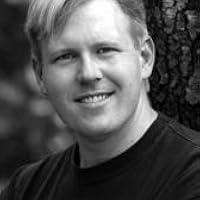
Lee Rozelle
11 books17 followersLee Rozelle is the author of Backwaters: 12 Murky Tales, the novel Ballad of Jasmine Wills, and nonfiction books Zombiescapes & Phantom Zones and Ecosublime. He's published short stories in Cosmic Horror Monthly, Southern Humanities Review, HellBound Books' Anthology of Bizarro, Shadowy Natures by Dark Ink Books, If I Die Before I Wake Volume 3, and the Scare You to Sleep podcast. Learn more at https://leerozelle.com/.
Ratings & Reviews
Friends & Following
Create a free account to discover what your friends think of this book!
Community Reviews
Displaying 1 - 3 of 3 reviews

May 31, 2009
Beautiful cover. Premise that's right up my alley. But the writing's very insular, jargon-y, self-consciously academic (usually, these things don't turn me off, but in this case I found myself seeing over and over how much more simple was the idea being expressed than the language used to express it. That gets tiring. And for such an intriguing premise, I often didn't think Rozelle went far enough to merit the linguistic trudge--very specific literary analysis of very specific, if somewhat arbitrarily chosen, works, but with conclusions that rarely seemed to forward my understanding of what's meant by the "ecosublime" in more than the most plodding way.
Two chapters stood out for me--I could've left the rest:
Ch. 6, Decentralized Visions
and Ch. 7, Sabotage and Eco-Terror
Two chapters stood out for me--I could've left the rest:
Ch. 6, Decentralized Visions
and Ch. 7, Sabotage and Eco-Terror

February 19, 2023
Sublime the feeling of astonishment when a subject come across with something greater than itself. The book explained the concept of ecosublime from the Kantian point of view. It analyzes many different texts. It was good overall. But sometimes it felt unintelligible. I couldn't understand the some statements stated by the author
May 17, 2014
Let's start with the author, one of America's premier eco-literary critics, Dr. Lee Rozelle. He is a professor at the University of Montevallo, a small state-funded liberal arts school in central Alabama. His essays have been published widely. One chapter of the book, for example, was presented at the Sorbonne in France. Unfortunately, many Americans will need to be reminded that France is in Europe. Rozelle is a young scholar, a recent Ph.D. graduate of the University of Southern Mississippi. I might add that this book solidifies Rozelle as one of the luminaries in USM's century-long history.
The book. Its seven chapters highlight the ecocritical aspects of influential works of American literature. Some of the chapters include cutting-edge readings of works by Edgar Allan Poe, Charles Chestnutt, T.S. Eliot, Wendell Berry (God bless him!), Don DeLillo, and Edward Abbey, among others.
One needs to read this book in the context of today's deadly human illness called terrorism, both terrorism against nature and persons. This is a seminal work related to the terrorist spirit in literature. How and why it has developed. The reader must not miss this. The book is about how we got here to the year 2006, from the rational to the absurd, and how the environment is at the crux of the experiment in human understanding of the outside world.
Ecosublime is intended for a learned audience. I challenge you to tackle it. The book is far deeper than it is wide, and it is not a comprehensive look at "green writing." It is a brave reading of key texts.
For other significant works in the field, see Ecocriticism (Greg Garrard), The Ecocriticism Reader: Landmarks in Literary Ecology (Cheryll Glotfelty et al), The Green Studies Reader (Laurence Coupe), and The Isle Reader: Ecocriticism, 1993-2003 (Branch and Slovic).
--Dayne Sherman, author of Welcome to the Fallen Paradise: A Novel and Zion: A Novel (coming soon)
The book. Its seven chapters highlight the ecocritical aspects of influential works of American literature. Some of the chapters include cutting-edge readings of works by Edgar Allan Poe, Charles Chestnutt, T.S. Eliot, Wendell Berry (God bless him!), Don DeLillo, and Edward Abbey, among others.
One needs to read this book in the context of today's deadly human illness called terrorism, both terrorism against nature and persons. This is a seminal work related to the terrorist spirit in literature. How and why it has developed. The reader must not miss this. The book is about how we got here to the year 2006, from the rational to the absurd, and how the environment is at the crux of the experiment in human understanding of the outside world.
Ecosublime is intended for a learned audience. I challenge you to tackle it. The book is far deeper than it is wide, and it is not a comprehensive look at "green writing." It is a brave reading of key texts.
For other significant works in the field, see Ecocriticism (Greg Garrard), The Ecocriticism Reader: Landmarks in Literary Ecology (Cheryll Glotfelty et al), The Green Studies Reader (Laurence Coupe), and The Isle Reader: Ecocriticism, 1993-2003 (Branch and Slovic).
--Dayne Sherman, author of Welcome to the Fallen Paradise: A Novel and Zion: A Novel (coming soon)
Displaying 1 - 3 of 3 reviews