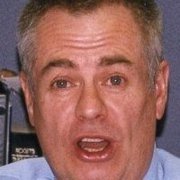
Randy Shilts was the preeminent LGBTQ+ reporter of his generation.
He was the first openly gay reporter assigned to a gay beat at a mainstream paper and one of the nation’s most influential chroniclers of gay history, politics, and culture. Shilts wrote three seminal works on the community: The Mayor of Castro Street, on the life, assassination, and legacy of Harvey Milk; And the Band Played On, detailing the failure of politics as usual during the early AIDS epidemic; and Conduct Unbecoming, a history of the US military’s mistreatment of LGBTQ servicemembers.
Yet the intimate life story of Randy Shilts has been left unwritten. When the Band Played On tells that story, recognizing his legacy as a trailblazing figure in gay activism, journalism, and public policy.
Author Michael G. Lee conducted interviews with Shilts’s family, friends, college professors, colleagues, informants, lovers, and critics. The resulting narrative tells the tale of a singularly gifted voice, a talented yet insecure young man whose coming of age became intricately linked to the historic peaks and devastating perils of modern gay liberation.
When the Band Played On is the authoritative account of Randy Shilts’s trailblazing life, as well as his legacy of shaping the history-making events he covered.
In 2023, I read Conduct Unbecoming, which hit a spark in me wanting to learn more about queer history, and I wanted to know more about the author with the fascinating name of Randy Shilts. I learned he'd written a book on Harvey Milk that was considered to be thee definitive biography (more or less), and that he'd also written a book on the AIDS epidemic after having reported on it for years.
I prefer to listen to my nonfiction, so I had been delighted to find the 40-hour long audiobook version of Conduct, but finding the audios of The Mayor of Castro Street and And the Band Played On proved a lot more difficult when Audible tightened its restrictions. So to the print copy it was.
And then while cruising NetGalley I saw that this was an ARC. Admittedly, I did not read my egalley beforehand, but my library picked up the audiobook on hoopla and I read it while also reading And the Band Played On.
Anywho, all this to say that Randy Shilts was a complicated, real life human. He was egotistical, arrogant and incredibly flawed, but he had a passion for investigative journalism and a desire to root out the truth in discriminatory practices and polices centering injustice in the gay community.
While his second novel, And the Band Played On has many glaring errors (many scientific errors and an obsession with Gaeton Dugas, aka the misnomered "Patient Zero"), Shilts brought national attention to the AIDS epidemic, particularly in the US government's absolute failure to do anything about it. The emphasis on Dugas as this Great Villain was not Shilts' intention; the book itself doesn't villainize Dugas (it doesn't paint him in a great picture), but his publisher wanted an angle that would prompt readers to buy the book. This angle damaged Dugas' memory and put harm on the gay community.
After his AIDS diagnosis, Shilts turned away from AIDS reporting (although not from the community, despite what his many critics said), and toward working on a book centering gay and lesbian military service members—a minority who had fallen between the cracks of the anti-war gay rights movement and the ultra conservative military leadership. Conduct is the book he considered to be his masterpiece, and it is a master work of reporting. It's a book that clearly influenced Bill Clinton, who somehow read that book and thought "oh, Don't Ask Don't Tell is a good compromise" instead of a complete failure of policy and politics.
I learned a lot about a person who has occupied more than his far share of my brain space, particularly for a man who has been dead over thirty years. Randy was a dick. He was brilliant. He was charismatic. He was opinionated. He cared deeply. He craved attention and fame. He used his platform to speak out for AIDS victims and the gay community, even if he didn't represent the majority of the gay community. He was pulled between conservative values and liberal mindsets. He was a polarizing figure who has mostly been forgotten by the crush of time. He was deeply human.
But one thing Shilts did was open the doors for queer journalists of today. He shined a spotlight on AIDS and queer military service. He got people talking critically about previously taboo subjects and how government policy impacts unwanted minority communities, I and that, I think, is good journalism.
I love "And the Band Played On" and was so excited for the opportunity to learn about Randy Shilts. This book did not disappoint.
Michael G. Lee is careful not to paint a one-note portrait of Shilts. We get a complex look at the man as well as at his legacy and his relationship to the queer community during his life. I could have guessed he'd be controversial, but I was not prepared for how heated some of the criticism he received was. Some of it was justified, and some of it was just cruel.
I really liked learning about how he wrote "And the Band Played On" and digging into some of the inaccuracies, particularly regarding Patient Zero. I just generally enjoyed reading about his work processes.
This feels fairly comprehensive, and it reads really well. It definitely left me mourning all over again all of the lives that have been lost to HIV/AIDS. I really would have loved to have had more books from Randy Shilts, especially knowing he was planning an investigation into the Catholic Church.
The comprehensive biography of journalists Randy Shilts. The author did not pull any punches presenting Randy warts and all. Reading this book brought back memories of the AIDs crisis, homophobia that existed and the governments failure to deal.with the AIDS crisis. I did not realize how much hate Randy dealt with from the gay community for his reporting and the call to close the bathhouse. I all found the reporting of patient zero fascinating.
Absolutely fascinating overview of Randy Shilts that will probably not fully satisfy any thinking reader. Half the pages in the book either provide insights into the history of AIDS reporting or print this author's disputable lop-sided spin on the topic.
What Lee thought he was doing in presenting a strong outline of Shilts' career as an example of progressive journalism actually does the opposite--proving that the stereotyped historical narrative about 1980s gay reporters, Democrat politicians, and the Reagan administration is mostly wrong. And that's because two of those three end up looking much worse here than media credit them (hint: the president is not the problem).
There are three important fundamental takeaways that a thoughtful reader will draw (even if Lee doesn't come to these conclusions himself):
1) Shilts was not a great true journalist because he attempted in his "reporting" to push a biased agenda, but he was good at propagating his personal truth to be publicized in order to match his goals. Note that there is a big difference between an objective professional reporter and a guy who spends every waking hour trying to make public information that will support his subjective feelings and lifestyle.
2) Those responsible for the over five-year delay in having the AIDS crisis taken seriously were mostly liberals, those in public health at all levels of government, and Bay area politicians. This means Dianne Feinstein, Nancy Pelosi, leaders and scientists at the CDC, and other "progressives" were often standing against Shilts' attempt to expose the complete truth of gay bathhouses, the coverup money trail, or how the disease was being spread through irresponsible behavior (mostly via gays who refused to heed warnings).
And that leads to 3) Ronald Reagan is not the main reason there was a delay in solving the AIDS crisis (despite almost every gay/queer non-fiction book stating that as truth over the past couple decades). Nor were conservatives or Republicans. There are only minor mentions of these groups in the book because the major problems in the delay of dealing with AIDS early on came from the liberal political community and scientists who fought over results.
This book's author actually puts words in Shilts' mouth by paraphrasing in the middle of a paragraph filled with Randy's quotes this phrase that is NOT in quotes in this book: "If there was a villain to be found in And the Band Played on, he emphasized, it was the Reagan administration." Those are Lee's words, stuck in the middle of six sentences Shilts is quoted as saying that don't exactly reflect that.
Extremely unprofessional to start with, inserting this author's opinion into of a paragraph where everything else is a quotation. And I haven't read Shilts original book so I can't say if the summary is representative, but this one-sentence slam comes after only mentioning Reagan twice in passing in the previous 180 pages and devoting chapters to proving that the villains in failing to take AIDS seriously were San Francisco politicians, businesspeople, research scientists, lying medical doctors, and half of the homosexual community!
Lee does this spin throughout the book, using standard inaccurate stereotypes to quickly brush past those he doesn't like. He claims Jerry Falwell's proclaiming AIDS to be a result of sin as being the preacher "capitalizing on fears toward an unpopular minority group to gain and consolidate his power." No proof, just a typical lop-sided anti-conservative discrimination. Why do liberals not believe a preacher can actually be concerned about the souls and salvation of those that choose to do harmful behavior with others despite knowing it might kill them?
It's almost laughable then when Lee inserts a ONE SENTENCE mention that "stalwart conservative" Surgeon General C. Everett Koop in 1987 (before Shilts book was released) "stunned his political overseers by distributing a report on AIDS bluntly calling for safer-sex education, condom use and strong antidiscrimination laws to incentivize voluntary testing." Hmmm...funny that Republicans actually did something that many Democrat leaders (especially those in San Francisco!) had refused to do for five years!
Could the Reagan administration have better funded research? Yes. And Reagan can be held accountable near the end of his administration when the AIDS community was more cohesive in presenting needs. But if you're using the president as the excuse for why thousands died in the early years, it's merely a copout, and this book shows how the five-year behind-the-scenes bickering among progressives, public health researchers, media, and those in the queer community actually caused many of their own problems. "If the president would have just thrown more money at this issue sooner..." is the typical rallying cry to blame-shift and divert attention from real issues caused by two-faced hypocrites within the LGBTQ community.
Here's the truth, also included in the book: "Randy laid the responsibility, at least partly, on gay elites for their devotion to pushing an agenda of respectability and economic clout (writing) 'As part of the campaign to gain social acceptance for what had long been considered a deviant lifestyle the gay political leaders argued convincingly that homosexuals certainly were not the old stereotypes of depraved, drugged-out, alcoholic, promiscuous, sex-obsessed men with a penchant for kinky sexual acts." Yet gays, and Shilts, were all those things--which propelled him to object to the propaganda-pushing leaders in order to proclaim that truth.
And if you look closely, extreme liberal media members (like Mother Jones and Larry Kramer) may have done more harm than good by propagating a false anti-Reagan emphasis instead of supporting Shilts in bringing to light the real issue of massive attempts by liberals to repress truth. During the same time period people blame Reagan, Shilts was being harassed within the San Francisco gay community for his more honest attempt to place responsibility on guys having unprotected sex (including himself) and the political figures who fought any common-sense restrictions. Shilts was so hated because while he showed negatives of U.S. government response, he dared to also uncover the failures of progressives.
I'd even argue that Shilts is a bit of a villain in this story--he does a lot of illegal drugs, alcohol, unprotected sex, and isn't a very nice guy. He even outed people who asked him specifically not to. Compare that to the years he took extreme measures to hypocritically hide his own HIV diagnosis from the public. He had already proven himself willing to lie to keep a job, when his boss at a bathhouse forced Shilts to turn away trans claiming the rooms were "full up." And his work is riddled with errors (his famous book alone had 38 things incorrect). Is the man intentionally bending the truth thinking he has a higher purpose or was he just sloppy at his supposed profession?
Almost all that Shilts does in the name of journalism involves self-interest and helping himself bed more guys. The writer tries to spin Shilts into a quirky angel but downplays the alcoholism and illegal drug usage and sex with strangers in the very bathhouses he was trying to shut down, revealing a devilish side to the man who was technically bisexual (which gets downplayed as well). The book quotes many as saying Shilts was bad at what he did or how he mistreated others--does the reporter's one self-centered redeeming side to stand up for a cause make up for all his negatives?
Lee never quite figures Shilts out but tries by saying his career was based on instant romances with gay men that led to "crushing rejections. At times, he dreamed of liberating the sexually ambivalent men he chased...if he could will them to embrace their true selves, maybe then they'd love him." So Randy's "journalism" wasn't pure-hearted in trying to proclaim the truth. As Shilts wrote later, "I need to be loved and/or liked. I use my career as a way of getting that affection and attention." Namely, the man's main purpose for proclaiming gay freedom was so that he could be admired and find guys who wanted to sleep with him. And, no, that's not okay nor true journalism.
Lee adds, "The paradox of Randy Shilts would always be that in critically covering his (gay) community, he became an unacknowledged actor in his own stories. By openly questioning the self-defeating patterns of gay life and assailing the motives of its leaders, he revealed, intentionally or not, a litany of his own dissatisfactions." And, I'd add, his own failures! His stories may have been hidden confessionals in order to assuage frustrations over not being as attractive as he wanted to be and his guilt of doing the very unhealthy things he condemned others for.
I'd call this book a "must read" for those truly objective who will not simply buy into the author's limited perspective about the facts he lays out and his repeated cheerleading for the very left-wingers who caused so much harm.
If you take it as is, Shilts was a needed but bigoted voice trying to save a dying community that he was a member of, Reagan and Republicans had little to do with issues that delayed solving the pandemic (mostly ignoring it because gays and liberals couldn't come to agreements themselves), and those who call themselves Democrats (whether in political office, public health, business community, or media) should be ashamed of how they tried to hide what was happening in the gay community, allowing young men to die by failing to put public health policy rules into place or raise private money for research as quickly as they could.
It's disappointing that when Shilts was at times misusing his profession in a noble cause to save lives, the liberal band just played on.
Michael Lee does an excellent job painting a portrait while providing key biographical information. This book provides various contexts for the start of the HIV epidemic, the failed governmental response, and Randy’s other work. Overall, it was a very enjoyable read!
In Michael G. Lee’s fine biography of journalist Randy Shilts, Shilts’ former partner recalls an early 1980’s conversation with a stressed out Shilts, under pressure from San Francisco politicians and businesses to suppress reporting on the nascent AIDS crisis. His partner suggested that “it was time to move on and cover something else and let the science reporters covers AIDS.” An angry Shilts replied, “’You don’t understand. I am the only one who can do this. There is nobody else that is going to warn us. It has to be me!’” That, in a nutshell, encapsulates what people admired and distrusted about Randy Shilts. He felt uniquely qualified to report on the initially timid response to AIDS from local gay politicians and business owners as one of the few openly gay journalists at the time. He knew San Francisco politics and could see how it was slowing down the response to AIDS. He felt it gave him insight that no science reporter would have. On the other hand, Shilts’ drive and determination made many enemies who mocked his age and lack of science background. Shilts was not afraid to step on toes, and his critical reporting and opinion writing made him a pariah to some AIDS activists. In Shilts’ short forty-two years, he produced three groundbreaking books— “The Mayor of Castro Street,” “And the Band Played On,” and “Conduct Unbecoming: Gays and Lesbians in the Military.” Lee reports his publishing success led to pushbacks from some critics who felt his books had major flaws. Lee provides an unvarnished look at Shilts’ personal life, his sexual promiscuity and struggles with alcoholism—as well as his long friendships and funny, scruffier side. Had Shilts lived (he’d be 75 years old today), it would have been interesting to see his take on the politicalization of the response to the Covid virus. Recommended reading.
"I want to be the kind of writer who still connects to people on a human level." - Randy Shilts
I really enjoyed learning about Randy Shilts. Too often, I think the journalism industry can forget the power a person has when they are allowed to cover their own community (faults and highlights.) Randy was able to write difficult stories because of who he was and his identity allowed him to connect to people in a way that shouldn't be ignored. That's huge. I greatly admire all of the risks he took to be a reporter, to not be afraid of pleasing everyone, and to call out the powers that be.
As for this book, I enjoyed it as well. I do think I got a little lost with all the constant revolving characters, or people from Randy's life, though. I kept forgetting who people were because the author kept bringing them up randomly. I also felt like the writing style itself was a bit dense for me to get through, but, nonfiction is also not my usual thing so that might be why. I did feel like there could be a bit of editing. For example, I don't think we needed to hear everyone's reception of Randy's books.
Anyway, I'm glad I picked this book up and read it and learned about Randy, his journalism and his life.
A concise but very informative bio about one of the more noted journalists of the last part of the 20th century. This work looks at the life and actions of Randy Shilts, who became perhaps the most notable gay journalist of his time. In particular, focus on his reporting about AIDS will dominate much of the discourse in the work. Still, Shilts had quite the influence while he was reporting on gay politics (Harvey Milk in San Francisco), the emergence of AIDS and the responses to the epidemic in the US and his final discussions about gays in the military before he passed away from AIDS complications in 1994. This work follows his upbringing and his foray into journalism. He had a talent for writing and getting the story out, but he was also known for being a bit of a show-boat, and he, not unlike many other fellow homosexuals in the 1970s, engaged in less-than-ideal sexual behaviors. Still, his work and influences are felt to this day. For its flaws and issues, And the Band Played On is still among the top works to consider when discussing the history of AIDS in America and he set a path for future journalists (gay and straight) to consider in the years ahead. Worth the time to read, regardless of format.
"When the Band Played On" tells the story of the journalist behind one of the most influential non-fiction works of modern times.
Randy Shilts "And the Band Played On" became one of the first fact based source that exposed the masses to the AIDS crisis. He deftly personalized the science and the politics and the struggle.
But he remained a mystery, which is typical for most journalists, but now long after his death readers are getting a chance to meet the Shilts behind the book. What influenced his life, fed his passion and led him to become the voice he did for the gay community and beyond.
This book intricately weaves his personal diaries and interviews within the news of the time to help see the progression of his passions. We meet the human and the journalist.
It's a well deserved profile of a groundbreaking man and his legacy.
I was a little confused by the fact this was first published in 1975. By my calculations Randy Shilts was only 24 years old.
In the 1980s Rolling Stone did a series of articles about HIV/AIDS and it was enlightening. When I finally got around to reading And The Band Played On in 2019 I was riveted and angry at how the government ignored the evidence and medical researchers acted irresponsibly, seemingly not caring for the patients but more from what they could gain personally.
When the Band Played On is a biography of Randy Shilts and while I learned more of what he did, how he became a prominent gay journalist I don't feel I really learned more about the man. I feel that with his death we lost a great writer and wonder what other things he would have explored and exposed.
Thank you to Netgalley and IPG - Chicago Review Press for providing me with a digital copy.
This book is an interesting summary of the life and works of Shilts. It focuses on his activism, writing, and his life surrounding all of that. While it was interesting, there were definitely moments where I questioned the accuracy of what I was reading, considering everything seemed to be from a white, cis, male perspective (such as when the author claimed trans women sex workers were treated well in a certain jail). I think believe this book is an important read, and I accept the fact it was written a while ago, so I don’t expect it to be perfect. For when it was written, it does a good job of showing the struggles of the times for those involved in Shilts’ life. Thank you NetGalley for the arc.
A fantastic biography and a beautiful tribute to the life, times, and world of Randy Shilts. This biography does so many things well; Lee situates his subject in their own time and contextualizes the world as Shilts saw it. This book humanizes a deeply thoughtful person gone long before their time on Earth should have ended. The tragedy of his untimely death is made more raw and important by this book, and I implore all of you to pick this up and learn more about the journalist who helped humanize the victims of the AIDS epidemic to an unwitting American public that turned its back on the folks who fell victim to this most-terrible affliction.
Thank you to the author, NetGalley, and IPG | Chicago Review Press for this eARC in exchange for my review.
A few years ago Chris and I were in Guerneville taking a walk to clear our heads. We wandered into a large old cemetery. Neither of us were really reading the gravestones, but one of us noticed in passing the gravestone of Randy Shilts. Since that moment I really felt connected to Bay Area gay history. It probably wasn't long after that when Chris and I realized Cleve Jones was eating chicken fingers across the bar at the Rainbow Cattle Company and I had a mini silent freak out.
I wish I could have known Randy. He wasn't a perfect person, but I don't think we need angels, we need humans. He was a human. And he was an early voice for people who needed walls to be destroyed.
I owe it to you to take on And The Band Played On, I think by the end of the year.
What a great book. I met the author several years ago when he was only planning to write it, and I'm so glad it's now in the world.
I've read all of Shilts' work but Conduct Unbecoming, but I knew nothing about Shilts. This biography is short and sweet - short because Randy's life was short - and gives fair consideration to the many controversies he waded through. I also knew nothing about his struggles with alcohol, so it was good to learn about that and to see how it fit with his larger career and personal issues.
I got a clear picture of what Shilts was like and I think you would too. I highly recommend it.
There's a sentence near the end of this so-so bio regarding a historical reevaluation of Shilts' legacy: "Randy's experiences with addiction, recovery, and trauma merit much closer attention than they received." I agree. But Lee did not do that.
For some reason, he did not seem to dig too deeply into Shilts' life and work at all. The entire book read like a DVD 'extras' section of that life and work...OK, but not particularly fulfilling either.
Shilts' three published books speak for themselves. Stick with them.
Michael Lee does a very good job of chronicling the life of Randy Shilts. Randy was a historical figure in the gay rights movement and AIDS advocacy. It is great that his story is told in the detail that Lee provides. Although it is a sad story it is important to document people like Randy who make a difference and who give their whole lives for a cause.
A well-written biography of an important gay journalist and author. I have read all three books written by Randy Shilts so, knowing little more about him than his books and that he died of AIDS, I was interested in learning more about his life. Lee has done an admirable job tracing Shilts' life from his unhappy childhood in Michigan until his death. I highly recommend it.
I am so glad this book exists! After reading all of Randy Shilts' books, I really wanted to know more about HIM, and this was exactly what I was looking for. It was really interesting to learn about how he navigated his journalism career while being a member of the gay community he was writing about.
Very well researched book about the author of The Band Played On which was a defining book about AIDS in the 1980s . Randy Shilts led a difficult and complicated life but through his journalism was able to cast a light into the gay community and educate others .
La biografia di Randy Shilts e allo stesso tempo un quadro dell'America di quei tempi. L'uomo, il giornalista, le sue battaglie per i diritti ed i libri su argomenti sensibili per la comunità LGBT di San Francisco.
Excellent Read. Honest and accurate. Michael bought to life all the voices of Randy's friends and acquaintances. So many memories of Randy and my fiendship with him. Very well researched and written.
So interesting to read this story of Randy Shilts' life - of course, I read all of his books, and I actually met him a few times. Really odd to put myself back into that time in San Francisco.
I’ve read the book And the band played on so many times, it was nice to read an autobiography of Shilts. Tragic, of course, due to his demise from aids.
Michael G. Lee brings Randy Shilts—legendary gay journalist and author—fully to life in this book. Readers really feel like we get to meet Randy and sense his thoughts and characters. Lee brings thorough research to this biography, weaving material from interviews, Randy’s journals and archives, and other source material together. But the detailed research never distracts from the story, which Lee tells in a way that makes you appreciate Randy—for his commitment to speaking truth to power, for refusing to toe any party line, and for his faults and foibles. By the end of the book, I was crying with everyone at Randy’s funeral, which is a testament to Lee’s powerful writing ability. Randy told so many important stories about people whose stories needed to be told to the public, and I’m so glad his story has now been told so incredibly well!



![Profile Image for laurel [the suspected bibliophile].](https://i.gr-assets.com/images/S/compressed.photo.goodreads.com/users/1645808644i/7494844._UX200_CR0,6,200,200_.jpg)