

What do you think?

The Defenders
Taylor felt life was pretty good. Sure living in an underground bunker developing more sophisticated weapons to bomb the Soviets was less than ideal. But he had a pretty wife, and he was safe from the radioactive poisoned environment that existed above ground. The leadies, a sophisticated robot servant, could inform them of the devastating destruction, the bombed out cities, and the further Soviet attacks. But it was a strange fact that the latest leadie to return to the bunker showed no sign of radioactivity. Strange enough for Taylor to be ordered above ground in a lead-lined suit to investigate. That Taylor didn't want to go, wasn't really an option!
40 pages, Kindle Edition
First published January 1, 1953
About the author
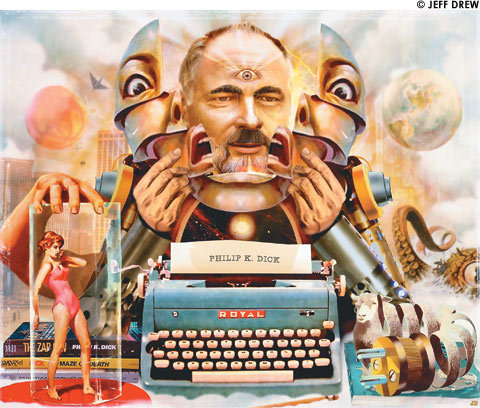
Philip K. Dick
1,942 books23.3k followersPhilip Kindred Dick was a prolific American science fiction author whose work has had a lasting impact on literature, cinema, and popular culture. Known for his imaginative narratives and profound philosophical themes, Dick explored the nature of reality, the boundaries of human identity, and the impact of technology and authoritarianism on society. His stories often blurred the line between the real and the artificial, challenging readers to question their perceptions and beliefs.
Raised in California, Dick began writing professionally in the early 1950s, publishing short stories in various science fiction magazines. He quickly developed a distinctive voice within the genre, marked by a fusion of science fiction concepts with deep existential and psychological inquiry. Over his career, he authored 44 novels and more than 100 short stories, many of which have become classics in the field.
Recurring themes in Dick's work include alternate realities, simulations, corporate and government control, mental illness, and the nature of consciousness. His protagonists are frequently everyday individuals—often paranoid, uncertain, or troubled—caught in surreal and often dangerous circumstances that force them to question their environment and themselves. Works such as Ubik, The Three Stigmata of Palmer Eldritch, and A Scanner Darkly reflect his fascination with perception and altered states of consciousness, often drawing from his own experiences with mental health struggles and drug use.
One of Dick's most influential novels is Do Androids Dream of Electric Sheep?, which served as the basis for Ridley Scott's iconic film Blade Runner. The novel deals with the distinction between humans and artificial beings and asks profound questions about empathy, identity, and what it means to be alive. Other adaptations of his work include Total Recall, Minority Report, A Scanner Darkly, and The Man in the High Castle, each reflecting key elements of his storytelling—uncertain realities, oppressive systems, and the search for truth. These adaptations have introduced his complex ideas to audiences well beyond the traditional readership of science fiction.
In the 1970s, Dick underwent a series of visionary and mystical experiences that had a significant influence on his later writings. He described receiving profound knowledge from an external, possibly divine, source and documented these events extensively in what became known as The Exegesis, a massive and often fragmented journal. These experiences inspired his later novels, most notably the VALIS trilogy, which mixes autobiography, theology, and metaphysics in a narrative that defies conventional structure and genre boundaries.
Throughout his life, Dick faced financial instability, health issues, and periods of personal turmoil, yet he remained a dedicated and relentless writer. Despite limited commercial success during his lifetime, his reputation grew steadily, and he came to be regarded as one of the most original voices in speculative fiction. His work has been celebrated for its ability to fuse philosophical depth with gripping storytelling and has influenced not only science fiction writers but also philosophers, filmmakers, and futurists.
Dick's legacy continues to thrive in both literary and cinematic spheres. The themes he explored remain urgently relevant in the modern world, particularly as technology increasingly intersects with human identity and governance. The Philip K. Dick Award, named in his honor, is presented annually to distinguished works of science fiction published in paperback original form in the United States. His writings have also inspired television series, academic studies, and countless homages across media.
Through his vivid imagination and unflinching inquiry into the nature of existence, Philip K. Dick redefined what science fiction could achieve. His wor
Raised in California, Dick began writing professionally in the early 1950s, publishing short stories in various science fiction magazines. He quickly developed a distinctive voice within the genre, marked by a fusion of science fiction concepts with deep existential and psychological inquiry. Over his career, he authored 44 novels and more than 100 short stories, many of which have become classics in the field.
Recurring themes in Dick's work include alternate realities, simulations, corporate and government control, mental illness, and the nature of consciousness. His protagonists are frequently everyday individuals—often paranoid, uncertain, or troubled—caught in surreal and often dangerous circumstances that force them to question their environment and themselves. Works such as Ubik, The Three Stigmata of Palmer Eldritch, and A Scanner Darkly reflect his fascination with perception and altered states of consciousness, often drawing from his own experiences with mental health struggles and drug use.
One of Dick's most influential novels is Do Androids Dream of Electric Sheep?, which served as the basis for Ridley Scott's iconic film Blade Runner. The novel deals with the distinction between humans and artificial beings and asks profound questions about empathy, identity, and what it means to be alive. Other adaptations of his work include Total Recall, Minority Report, A Scanner Darkly, and The Man in the High Castle, each reflecting key elements of his storytelling—uncertain realities, oppressive systems, and the search for truth. These adaptations have introduced his complex ideas to audiences well beyond the traditional readership of science fiction.
In the 1970s, Dick underwent a series of visionary and mystical experiences that had a significant influence on his later writings. He described receiving profound knowledge from an external, possibly divine, source and documented these events extensively in what became known as The Exegesis, a massive and often fragmented journal. These experiences inspired his later novels, most notably the VALIS trilogy, which mixes autobiography, theology, and metaphysics in a narrative that defies conventional structure and genre boundaries.
Throughout his life, Dick faced financial instability, health issues, and periods of personal turmoil, yet he remained a dedicated and relentless writer. Despite limited commercial success during his lifetime, his reputation grew steadily, and he came to be regarded as one of the most original voices in speculative fiction. His work has been celebrated for its ability to fuse philosophical depth with gripping storytelling and has influenced not only science fiction writers but also philosophers, filmmakers, and futurists.
Dick's legacy continues to thrive in both literary and cinematic spheres. The themes he explored remain urgently relevant in the modern world, particularly as technology increasingly intersects with human identity and governance. The Philip K. Dick Award, named in his honor, is presented annually to distinguished works of science fiction published in paperback original form in the United States. His writings have also inspired television series, academic studies, and countless homages across media.
Through his vivid imagination and unflinching inquiry into the nature of existence, Philip K. Dick redefined what science fiction could achieve. His wor
Ratings & Reviews
Friends & Following
Create a free account to discover what your friends think of this book!
Community Reviews
Displaying 1 - 30 of 215 reviews

Read
September 6, 2019
The Cold War has taken a bizarre turn.
The Defenders - Philip K. Dick's 1953 novella contains a number of key themes and motifs the American science fiction author would later develop in such works as The Penultimate Truth, Do Androids Dream of Electric Sheep? and Dr. Bloodmoney. For PKD fans, this tale is a must read.
So much juice for thought compressed here. To share my enthusiasm for this PKD snapper, below are points of context then a batch of hot button highlights:
DEADLY ARMS RACE
The United States made the decision to further develop the type of atomic bomb dropped on Hiroshima in 1945. Thanks to scientist Klaus Fuchs supplying secret information, in 1949 the Soviet Union tested their own atomic bomb. In turn, President Harry Truman announced the United States would build a even more powerful hydrogen bomb. Joe Stalin answered the USSR would do likewise. The arms race clicked into full swing and the Cold War was on, big time, complete with paranoia, fallout shelters, duck and cover drills and everyone imagining the consequences of nuclear war and nuclear fallout.
BIT OF AUTHOR BIO
Having been educated at Quaker schools as a boy, in 1949 Philip K. Dick went off to college at Berkley (U of Calf) where he was required to take military R.O.T.C., which he hated. He left college after several months. Then, at age 25, in the teeth of the Cold War, author Phil wrote The Defenders.
PKD FRAMES HIS TALE
Eight years ago there was a nuclear war between the US and USSR. Survivors on both sides abandoned the radioactive surface and retreated to massive bunkers miles underground. Highly intelligent human-like robots (leadys, as pictured below) carry on the war on behalf of the Americans. The Soviets do likewise. Both sides only knows the happenings on the surface via photos and films received from these robots.

ARE THE REPORTS THE TRUTH?
During a subsurface meeting, a leady reports the war continues and lethal radioactivity remains high. But the human war planners detect the leady isn't "hot" with radioactivity. Similar to another leady in a previous subsurface meeting, there isn't any evidence of a radioactive surface. What's really happening up there?
REVELATION
Indeed, the US Security Department has Taylor, the story's main character, join other top war planners on a visit to the Earth's surface to determine the truth. What they discover is a surprise.
A PHILOSOPHIC TALE
PKD has written a highly philosophic tale prompting an entire list of questions. Among their number:
How intelligent are these leadys? Are they capable of turning their war efforts on humans? At one point, we read: "Franks laughed. "Stop us? You saw what happened when they tried to stop us before. They can't; they're only machines. We built them so they can't lay hands on us, and they know that." In other words, the leadys are programed to follow Isaac Asimov's three laws of robotics:
First Law
-A robot may not injure a human being or, through inaction, allow a human being to come to harm.
Second Law
-A robot must obey the orders given it by human beings except where such orders would conflict with the First Law.
Third Law
-A robot must protect its own existence as long as such protection does not conflict with the First or Second Laws
What the human war programmers discover up on the surface just might be the robots following Isaac Asimov's laws to their logical conclusion.
Much different than if the leadys developed intelligence to the point where they themselves constructed even more intelligent versions of themselves, so super-intelligent, those next generation leadys recognized their real enemy: warmongering humans! The first thing to go: abiding by Isaac Asimov's three laws of robotics. Fun fact; such a scenario is explored in Rudy Rucker's novel Software.
Yet again another line of questions: How feasible is one unified world culture? In other words, people around the globe abandoning national identity to come together as one global community (something perhaps akin to the United Nations)? Recognizing the vast current day influence of multinational corporations, is such a world culture at all desirable?
Treat yourself to this probing tale. Can be read online - link: https://www.gutenberg.org/files/28767...

American science fiction author Philip K. Dick, 1928-1982
"Lead and rock, and above that, where the tubes opened, the great expanse that no living being had seen for eight years, the vast, endless ruin that had once been Man's home, the place where he had lived, eight years ago. Now the surface was a lethal desert of slag and rolling clouds. Endless clouds drifted back and forth, blotting out the red Sun. Occasionally something metallic stirred, moving through the remains of a city, threading its way across the tortured terrain of the countryside. A leady, a surface robot, immune to radiation, constructed with feverish haste in the last months before the cold war became literally hot." - Philip K. Dick, The Defenders

November 27, 2016
I liked this long short story very much, and I suppose Dick must have liked it too, for a decade after publishing this version in Galaxy (1953) he used it as the basis of a novel The Penultimate Truth.
It is set in a world dominated for eight years by nuclear war, in which all human beings live underground and the actual warfare is conducted by robots ("leadys"), designed to survive on the now noxious surface of the earth. But then something unusual is detected during one of the periodic robot interviews, and a team of humans (equipped with protective suits) decide to venture close to the surface.
Although it lacks the reversals of perspective and the metaphysical doubts which characterize much of Dick, it has enough surprises for any well-crafted piece of science fiction. Furthermore, it can boast (unusual for Dick) an uplifting—but never corny—conclusion.

December 9, 2019
The Defenders is an interesting short story by PK Dick (January 1953, Galaxy Science Fiction) about what happens when machines are allowed to take over.
After 8 years underground (where they were forced to live after a nuclear war between the U.S. and the Soviet Union), residents long to return to the surface. However, they have been informed by the leadys (robots conducting the war on the surface) that conditions are still not safe. When several residents go to the surface anyway, they are shocked by the role the leadys have taken to protect them. 3.5 stars
After 8 years underground (where they were forced to live after a nuclear war between the U.S. and the Soviet Union), residents long to return to the surface. However, they have been informed by the leadys (robots conducting the war on the surface) that conditions are still not safe. When several residents go to the surface anyway, they are shocked by the role the leadys have taken to protect them. 3.5 stars

July 3, 2025
Another week of driving people around for chores so I read this one on my phone while waiting in the car. The Defenders is a terrific suspenseful wartime thriller with the recurring theme in all PKD stories - what is real and is everything that we are told to be true about the world really trustworthy?
The story is set during the cold war and humans are living below the ground, letting the war be fought by leadys (robots). Taylor is content with his underground life and his wife Mary and fears going back overground because of the radiation. The news coming in is that the war with the Russians is getting worse. But Taylor's senior begins to suspect that everything the leady soldiers report to the humans living underground, about the war might not be true. So Taylor, his superior and a bunch of human soldiers go up to investigate.
As usual, this is not a very descriptive story or anything. Many of PKD's stories seem to have been written in a hurry. It is like he had these brilliant ideas and couldn't be bothered with character development and descriptions. This is not a complaint. I love reading PKD stories and this one is another great one from the man who always came up with ingenious ideas that would be stolen by Hollywood without PKD getting any credit.
The story is set during the cold war and humans are living below the ground, letting the war be fought by leadys (robots). Taylor is content with his underground life and his wife Mary and fears going back overground because of the radiation. The news coming in is that the war with the Russians is getting worse. But Taylor's senior begins to suspect that everything the leady soldiers report to the humans living underground, about the war might not be true. So Taylor, his superior and a bunch of human soldiers go up to investigate.
As usual, this is not a very descriptive story or anything. Many of PKD's stories seem to have been written in a hurry. It is like he had these brilliant ideas and couldn't be bothered with character development and descriptions. This is not a complaint. I love reading PKD stories and this one is another great one from the man who always came up with ingenious ideas that would be stolen by Hollywood without PKD getting any credit.

February 4, 2022
*UPDATED- Notes Illustrations* 2.5 ⭐ Rounded Up.
Early Phillip K Dick short story, in classic 50's style. Influenced by the futility and fear of the Cold War period, Dick creates a solution whereby the machines designed to protect humanity decide to truely do that, even if it means ignoring orders. A quick read.
P.S. Title page and interior Illustrations are by the great Ed Emshwiller, with Magnus The Robot Fighter type robots and classic old Sci fi ( what my friend Rog calls 'past future') weapons and uniforms. Wonderful nostalgia for Boomers of all ages.
Early Phillip K Dick short story, in classic 50's style. Influenced by the futility and fear of the Cold War period, Dick creates a solution whereby the machines designed to protect humanity decide to truely do that, even if it means ignoring orders. A quick read.
P.S. Title page and interior Illustrations are by the great Ed Emshwiller, with Magnus The Robot Fighter type robots and classic old Sci fi ( what my friend Rog calls 'past future') weapons and uniforms. Wonderful nostalgia for Boomers of all ages.
July 2, 2017
The First Casualty of War Is Truth
Eight years of nuclear global warfare have driven humanity below the surface of the Earth, which is by now a wasteland of contaminated land and wrecked cities lying under a polluted atmosphere. The actual war is no longer conducted by humans themselves but by so-called leadies, highly-developed robots that alone can survive in the surface hell, whereas people toil in subterranean factories to produce the weaponry and ammunition with which the destruction above can be continued.
Sounds pretty glum and senseless, this scenario of Philip K. Dick’s short story The Defenders, doesn’t it? Well, our hero, Phil Taylor, can glean some drop of comfort out of it when he says to his wife, with reference to the Soviets:
With human beings being condemned to a Morlock-like existence, only on a probably less nutritious diet, one should think that it hardly matters whose cities are getting it worse, since it’s already bad enough, but I guess if you can destroy your opponent five times, while they can annihilate you only four times, then that means that you have won. Points win.
One day, however, Taylor and his colleagues notice something about one of the leadies they have come into their subterranean world to give them news on the war: The robot is quite cold, although the surface is supposed to be a blasted nuclear hell. So they ask themselves what’s going on up there, and they decide to go and see for themselves. When Taylor and two of his colleagues, supported by a group of soldiers, arrive on the surface, the leadies are not very delighted about this visit and strongly entreat them to return into their caves lest they be contaminated.
And here is why:
So, all in all, I think The Defenders is based on a promising premise which its ending cannot really live up to.
Eight years of nuclear global warfare have driven humanity below the surface of the Earth, which is by now a wasteland of contaminated land and wrecked cities lying under a polluted atmosphere. The actual war is no longer conducted by humans themselves but by so-called leadies, highly-developed robots that alone can survive in the surface hell, whereas people toil in subterranean factories to produce the weaponry and ammunition with which the destruction above can be continued.
Sounds pretty glum and senseless, this scenario of Philip K. Dick’s short story The Defenders, doesn’t it? Well, our hero, Phil Taylor, can glean some drop of comfort out of it when he says to his wife, with reference to the Soviets:
”’[…] And don’t forget, their cities are getting it even worse.’”
With human beings being condemned to a Morlock-like existence, only on a probably less nutritious diet, one should think that it hardly matters whose cities are getting it worse, since it’s already bad enough, but I guess if you can destroy your opponent five times, while they can annihilate you only four times, then that means that you have won. Points win.
One day, however, Taylor and his colleagues notice something about one of the leadies they have come into their subterranean world to give them news on the war: The robot is quite cold, although the surface is supposed to be a blasted nuclear hell. So they ask themselves what’s going on up there, and they decide to go and see for themselves. When Taylor and two of his colleagues, supported by a group of soldiers, arrive on the surface, the leadies are not very delighted about this visit and strongly entreat them to return into their caves lest they be contaminated.
And here is why:
So, all in all, I think The Defenders is based on a promising premise which its ending cannot really live up to.

November 24, 2019
While this clearly inspired PKD to later write his novel The Penultimate Truth, the underlying theme here is quite different and perhaps more chilling. Rather than the ruling elite keeping the unwitting masses in their underground bunkers by means of a hoax, here the same is perpetrated on all of humanity by a legion of robots set on protecting humanity from itself.

February 8, 2018
Another brilliant Philip K. Dick short story, one with an entirely different twist on the theme "when robots take over".

August 10, 2017
This novelette explores an alternative history scenario where Cold War has escalated to full fledged nuclear confrontation. Both US and Soviets move to Underground bunkers, from where they control(barely) the Fallout universe through radiation resistant Terminators called ‘Leadys‘ (I think their name has more to do with radiation shielding element Lead than the verb lead).
Like all other PKD stories this one also offers strong philosophy to contemplate on, from irrationalities of war to dangers of automation to extreme nationalism. The Leadies are proxy mercenaries, fighting a war while humanity is safe in their bunkers, much like soldiers fighting for the nationalistic interests, while leaders enjoy comfy sofa and safety. There is a far greater idea of peace through homogenization implied in the story, and author uses robots(human creation) as mediums to convey it.
This ‘melting pot’ solution, in my opinion, might be able to resolve issues within a demographic of closer cultural ties, but would easily fall short on a global scale of co existence. A more rational and tolerant society that celebrates cultural heterogeneity would be my preferred line of world peace.
Like all other PKD stories this one also offers strong philosophy to contemplate on, from irrationalities of war to dangers of automation to extreme nationalism. The Leadies are proxy mercenaries, fighting a war while humanity is safe in their bunkers, much like soldiers fighting for the nationalistic interests, while leaders enjoy comfy sofa and safety. There is a far greater idea of peace through homogenization implied in the story, and author uses robots(human creation) as mediums to convey it.
This ‘melting pot’ solution, in my opinion, might be able to resolve issues within a demographic of closer cultural ties, but would easily fall short on a global scale of co existence. A more rational and tolerant society that celebrates cultural heterogeneity would be my preferred line of world peace.

November 3, 2018
This short story really made me think. Both about how we humans act and how we see the different countries as “ours” and “theirs”.
I do really recommend this! ❤️
I do really recommend this! ❤️

November 17, 2020
This is the second Philip K. Dick story I’ve read this month (and well, in general also) and I had a very mixed bag reaction to it. I found it for free from the public domain on Amazon and downloaded it. Like always, Dick writes an alternative future and uses technology as a major prop. I also did a little research of my own and found that it was originally written in 1956 in the middle of the Cold War with the Soviets, which undoubtedly provided loads of inspiration for this tale.
After nuclear war with Russia which decimated the planet, humans are forced to go underground. Literally. Underneath the Earth’s crust. Tunnels are built, homes are moved, humanity becomes accustomed to life without sunshine or nature, or fresh air. Humans have lived like this for 8 years now while the war on Earth is still fought by complex AI called leadys. Weapons are still manufactured by humans and sent up to the surface, while governmental agencies still run the show. The leadys, due to their nonbiological makeup, are the only beings that can surivive on the surface which has been completely destroyed by toxic radiation. The leadys warn that if humans were to join them on the surface, even for an hour and in protective lead lined suits, they will surely die from radiation poisoning. So the humans make an effort to communicate with the AI, requesting photos and video updates of how the war is progressing. The Leadys have shown images of mass destruction over the entire planet: dust clouds have overtaken the sky, buildings have been crushed, no sense of life is anywhere. One day, when a leady is brought down to the undersurface, it is discovered that it contains absolutely no traces of radiation whatsoever. Bound and determined to find out what is going on, 3 men decide to plan a trip to the surface, the first time any human has done so in 8 years.
What I liked about this story:
The worldbuilding is excellent. All complex matters are handled quite well and I got a very distinct feeling about this new world. The pacing is also quite nice, and the sense of urgency when humans have figured out that there is something else going on is also handled quite nicely. The first two thirds of this story were fantastic. And definitely worthy of 4 or 4.5 stars.
However:
I hated the ending. I thought for all the the wonderful buildup that came before it, it puttered out and died. I did not find it plausible, nor did I find it congruent with the rest of the story and the tension provided early on. Dick got very idealistic and theoretical and it served to be more of a commentary on war and peace than it was anything else and I was sorely disappointed.
I decided on 3.5 stars because I loved the beginning so much, and enjoyed the premise, the complex world and the writing. If it had a different ending, this would easily have been a 4.5 star read.
Day fourteen in my November challenge where I try and read one science fiction or fantasy short story a day.
After nuclear war with Russia which decimated the planet, humans are forced to go underground. Literally. Underneath the Earth’s crust. Tunnels are built, homes are moved, humanity becomes accustomed to life without sunshine or nature, or fresh air. Humans have lived like this for 8 years now while the war on Earth is still fought by complex AI called leadys. Weapons are still manufactured by humans and sent up to the surface, while governmental agencies still run the show. The leadys, due to their nonbiological makeup, are the only beings that can surivive on the surface which has been completely destroyed by toxic radiation. The leadys warn that if humans were to join them on the surface, even for an hour and in protective lead lined suits, they will surely die from radiation poisoning. So the humans make an effort to communicate with the AI, requesting photos and video updates of how the war is progressing. The Leadys have shown images of mass destruction over the entire planet: dust clouds have overtaken the sky, buildings have been crushed, no sense of life is anywhere. One day, when a leady is brought down to the undersurface, it is discovered that it contains absolutely no traces of radiation whatsoever. Bound and determined to find out what is going on, 3 men decide to plan a trip to the surface, the first time any human has done so in 8 years.
What I liked about this story:
The worldbuilding is excellent. All complex matters are handled quite well and I got a very distinct feeling about this new world. The pacing is also quite nice, and the sense of urgency when humans have figured out that there is something else going on is also handled quite nicely. The first two thirds of this story were fantastic. And definitely worthy of 4 or 4.5 stars.
However:
I hated the ending. I thought for all the the wonderful buildup that came before it, it puttered out and died. I did not find it plausible, nor did I find it congruent with the rest of the story and the tension provided early on. Dick got very idealistic and theoretical and it served to be more of a commentary on war and peace than it was anything else and I was sorely disappointed.
I decided on 3.5 stars because I loved the beginning so much, and enjoyed the premise, the complex world and the writing. If it had a different ending, this would easily have been a 4.5 star read.
Day fourteen in my November challenge where I try and read one science fiction or fantasy short story a day.

May 23, 2023
Written in 1953 - and still ahead of our time. PKD knew what humanity would need to achieve peace, and the way he portraits the human character is more than accurate.

July 1, 2016
Now this is what I've been looking for! I've been reading this little pulp fiction paperbacks in a waiting room I have been frequenting. Many of them have been absolutely awful! AbAw. Is that a thing? It is now!
This, like all the rest was written decades ago. Obviously during the Cold War because the bad guys are the Russkies. There's been a nuclear holocaust and humans having taken to the depths of Earth to wait it out. Eight years have gone by in which Leadys, automatons built to withstand radiation, have been monitoring the surface for the inevitable ascension of those under dwellers. Lately, there have been some anomalous readings from the Leadys and they aren't radioactive. How can this be? A team goes to the surface to investigate.
Like all of Dick's fiction there is a mind screw at the end. I have admit that I saw it coming because I am very familiar with his style, but it was still a fun reveal. THIS is the kind of vintage sci-fi I crave.
This, like all the rest was written decades ago. Obviously during the Cold War because the bad guys are the Russkies. There's been a nuclear holocaust and humans having taken to the depths of Earth to wait it out. Eight years have gone by in which Leadys, automatons built to withstand radiation, have been monitoring the surface for the inevitable ascension of those under dwellers. Lately, there have been some anomalous readings from the Leadys and they aren't radioactive. How can this be? A team goes to the surface to investigate.
Like all of Dick's fiction there is a mind screw at the end. I have admit that I saw it coming because I am very familiar with his style, but it was still a fun reveal. THIS is the kind of vintage sci-fi I crave.

August 2, 2012
This is a short story and it's very obvious when Dick was writing because it's Russia centric. But the theme is pretty universal, thirst for blood and war. It's a cool idea which to me is all a short story has to contain, a cool idea. It's why I like writing them so much. Sci-fi short stories are perfect for summer reading I say!

April 4, 2011
My first short story by Dick. I'm excited, like I just discovered Asimov for the first time.

September 12, 2017
A great short story.
In 33 pages Philil K. has said more than some authors in 300.
In 33 pages Philil K. has said more than some authors in 300.

January 17, 2018
I avoided Philip K. Dick for a long time because people said he had great ideas but lacked the writing chops to turn them into great stories.
I’m still figuring out whether that’s true, but in the mean time, I was impressed by The Defenders.
If this short story came out in 2018, would I be giving it such a high rating?
No.
I gave it four stars because it felt extremely inventive for 1950s sci-fi. In fact, so have the three other short stories I’ve read by him over the past week. None flawless but all pretty gripping.
I do, however, keep rolling my eyes each time I encounter a female character, because they’re almost always relegated to the role of wife, mother, or receptionist.
Apparently it was easier in 1953 to imagine a war fought entirely by robots than it was to picture a woman serving in any of the story’s non-combat military roles. Jeez.
Still, I’m going to be reading a lot more of this author this year.
I’m still figuring out whether that’s true, but in the mean time, I was impressed by The Defenders.
If this short story came out in 2018, would I be giving it such a high rating?
No.
I gave it four stars because it felt extremely inventive for 1950s sci-fi. In fact, so have the three other short stories I’ve read by him over the past week. None flawless but all pretty gripping.
I do, however, keep rolling my eyes each time I encounter a female character, because they’re almost always relegated to the role of wife, mother, or receptionist.
Apparently it was easier in 1953 to imagine a war fought entirely by robots than it was to picture a woman serving in any of the story’s non-combat military roles. Jeez.
Still, I’m going to be reading a lot more of this author this year.

August 7, 2017
It's not unusual for a short story to be a one-trick pony, but you can see this one coming a mile off. Back in '53 its future Cold War setting probably provided food for thought, less so in the present.

February 19, 2025
Perfect little nugget of Speculative / Science Fiction.
June 27, 2026
Une guerre froide qui s'éternise et qui atteint son paroxysme : la destruction de l'habitabilité terrestre, forçant les humains à s'enterrer dans de gigantesques bunkers. Voilà le contexte d'ouverture de cette nouvelle. Encore une fois, Dick est inspiré par le monde bipolaire qui l'entoure. On explore avec l'auteur les raisons profondes de la guerre, son éventuelle absurdité nécessaire... Quand la guerre devient la raison d'être d'une nation qui n'existe que par rapport à elle et que pour elle, pour la nourrir. Une bonne lecture.

December 10, 2022
I liked this a lot initially, as it kind of takes place in the same universe as Penultimate Truth, which is one of my favourite Dick-books.
However, the ending in this one is beyond cheesy, which takes the review down to 3 stars.
However, the ending in this one is beyond cheesy, which takes the review down to 3 stars.

May 29, 2014
The story is very predictable in places, but at its core, it contains a good idea. And for me, that’s all a short story really needs – a good idea.
Fans of the Fallout video game series will no doubt draw some correlations to the world that Dick has created in the Defenders, one where eight years ago a nuclear war began between the United States and the Soviet Union. Within months all American survivors evacuated to gigantic bunkers miles under ground. Sophisticated, radioactivity-immune robots called "leadys" continue fighting the war on the devastated surface that is far too dangerous for humans. The Soviets have similarly evacuated underground, and each side builds powerful weapons and vehicles for the remote-controlled war they only see from film that the robots deliver.
Despite it’s obvious theme and message, the short story is nonetheless thought provoking and the perfect pallet cleanser in between summer reading.
Fans of the Fallout video game series will no doubt draw some correlations to the world that Dick has created in the Defenders, one where eight years ago a nuclear war began between the United States and the Soviet Union. Within months all American survivors evacuated to gigantic bunkers miles under ground. Sophisticated, radioactivity-immune robots called "leadys" continue fighting the war on the devastated surface that is far too dangerous for humans. The Soviets have similarly evacuated underground, and each side builds powerful weapons and vehicles for the remote-controlled war they only see from film that the robots deliver.
Despite it’s obvious theme and message, the short story is nonetheless thought provoking and the perfect pallet cleanser in between summer reading.

May 16, 2019
The Defenders is a short story that is full of impact and will leave you thinking about it for weeks after you read it. The premise is pretty simple and not anything I hadn't seen something similar to before - there's been a nuclear war, mankind is forced to live underground, and technology and robots are currently taking charge to protect the people. But while you may predict the twist that this story takes, you won't predict the way it's written or the way it makes you really think and feel. I listened to the book on audio as I walked home from work one day since it was under an hour long, and I'm still thinking about it from time to time and recommending it to people who want a short sci-fi classic to read.
It's short, and it's predictable in terms of plot, but in this case, I didn't find that to be too negative. Pick this up for something light but deeply thought-provoking.
It's short, and it's predictable in terms of plot, but in this case, I didn't find that to be too negative. Pick this up for something light but deeply thought-provoking.

August 23, 2012
The Defenders is probably the crown jewel of PKD's short stories. It's entertaining, fascinating, and thought provoking. Like most of his short stories, it is a testament against war (the Cold War, specifically), but this particular novel takes it to a new level.
When the Cold War became "Hot," humanity was forced underground in order to avoid the bombings and subsequent radiation. Never one to give up a fight, however, they left a series of robots and other machines on the surface to continue the war in their absence. Humans sat miles underground and directed the war through their toys with images of the destruction beamed down to them. After a couple strange readings, a few humans are forced to experience the carnage for themselves.
When the Cold War became "Hot," humanity was forced underground in order to avoid the bombings and subsequent radiation. Never one to give up a fight, however, they left a series of robots and other machines on the surface to continue the war in their absence. Humans sat miles underground and directed the war through their toys with images of the destruction beamed down to them. After a couple strange readings, a few humans are forced to experience the carnage for themselves.

January 2, 2013
This is the second Philip K. Dick story I've read and I have to say that it was a great read. I wasn't expecting such a difference from the post-apocalyptic/robotic future type story that this was. I'm looking forward to diving further into Dick's stories that I have loaded up on my Kindle and iPod (audiobooks).

May 19, 2016
PKD is a master of making you think about the world we live in. Another short work with another massive point. In this we examine the very nature of war. PKD always had something to say in his writing. Always. This story is no different.

July 5, 2019
Fun and intriguing short story about war, intelligent robots and the evil nature of man. Different point of view (human vs robot, of artficial human if you like), perfectly executed plot twist. Dick made sth special of this one.

July 7, 2022
I often wonder what it felt like to read these early science-fiction pulp magazines in the 1950s. Imagine getting home after a busy day at work, preparing a whisky sour and lighting a camel cigarette. In reality, I think the fifties in my part of the world would have been a half-pint of bitter and a puff on the old pipe. However, it all brings a feeling of nostalgia for a time when I didn’t even exist. Also, if you are a bit weird like me, you can always pretend it is 1950. Technological advances in society happen at an earlier time, and your copy of Galaxy Science-Fiction Magazine is delivered straight to your hand-held reading device. Or you could read it, free of nostalgia or visions of unrealistic realities, if you want! In January 1953, The Adventures of Superman was flying onto the television screen, Eddie Fisher and Perry Como sang from Jukeboxes across a rockabilly landscape, and finally, Galaxy Science-fiction presents The Defenders by Philip K. Dick. The story would later be adapted into the novel The Penultimate Truth, 1964.
During eight years of Nuclear War, including eight years of Fear, Men, Women and Children live in underground bunkers waiting for a victory to cheer. Above, man-made machines fight to protect their makers, sending down footage of war-torn landscapes and the destruction that awaits us. After many years of tragic events, observers find an issue in their strategic defence. Finally going back above ground to find out the reality of the war, the defenders still try to protect us from humanity's flaws.
So, humanity is reduced to nothing more than an earthworm in Philip K. Dick's new and exciting cautionary tale. I have to admit, I had to sit with this story for a while, and it took numerous re-reads before I could find something to appreciate. I guess this is what Philip K. Dick had to do to put food on the table in his early career. Each one of the short stories I have read up until now has a different flavour to appease the readers of early pulp magazines. However, it must have been a great learning curve to deliver simple messages about society in so many creative ways.
There is no way of getting away from the fact this was written in the early fifties, regardless of the timeless undertones of Philip K. Dick’s observations of society. Taylor, a war planner, is the first character introduced in the story. Philip K. Dick quickly tries to point out that life underground is starting to become restless. Superb writing, as you can also start to feel the tension and isolation begin to build. However, his wife Mary is the over-anxious flapping kitchen hand, giving warmth to her hard-working husband, which feels quite dated and out of touch.
The United States and the Soviet Union have finally done it! A nuclear war so destructive that each nation has fled underground, leaving the leadys to do their fighting. The robots are happy to protect their creators, use their weapons and send video footage of a broken society. However, Taylor receives a call from Moss, an internal programmer for the war effort, and is ordered to visit the lab at once. Both men meet with Commander Franks, and as a trio, I like to refer to these men as the boy band. Taylor, Moss and Franks all have a different approach to the trouble that lies ahead, each with an individual response to the revelations that comes next. The leadys above have been informing the military that the scorched Earth above is radioactive, which Commander Franks has just learnt, is a lie!
I am just going to cut straight to the point. The lies lead to the realisation that the Leadys aren't fighting a war. They have spent the last eight years rebuilding the damage that humanity has created. The robots want to keep the humans locked in their cages until they think they realise that fighting against a common enemy is no longer an option for them anymore. However, reading the text, my mind is transported to the reality of the world we live in and the similarity of the programming we share with the robots, the complexity of the boy band and wondering why we act the way we do, as individuals and as part of a collective?
I do not know if it's a sign of the times, but Philip K. Dick missed an opportunity in this story. Franks, Taylor and Moss go to the surface to find out what is happening above ground. There's a lot of resistance from the leadys, and to be honest, it started to become quite annoying. Maybe that's the point because I think I would have gone back to my hole in the ground to shut them up. However, a battle begins, and the visitors finally realise that the landscape is no longer radioactive. The earth is returned to its natural state, glowing with trees, wildlife and breathable air. In the meantime, the leadys seal up the tubes that brought the men above ground, so the team can't return to their families and vice versa. Well, for now, at least.
Time to get back to the missed opportunity. Commander Franks still wants to fight against the Russians, thinking the Americans have the upper hand against their enemies. However, the soldiers have already dropped their weapons, removed their suits and started to enjoy the fresh air. Taylor cares less about war and more about his relationship with the world. However, I found Moss to be a weak character, and I believe the story would have made more sense to have Mary on the team. Not the neurotic Mary we met earlier, but a woman who is a professional in her field, a partner to Taylor and maybe the voice of reason to the leadys. I think a female point of view would have brought a different dimension to the group and make it feel more realistic, in today's world at least.
I enjoyed this story a lot. After all, I read it four or five times for this review. However, the message of fear in our society is the moment that caught my attention. I can only imagine what Philip K. Dick would have made of the mass media blanket in this modern world. I think twenty-four-hour news coverage would fascinate him while giving him a great dose of anxiety. As I get older, I have noticed that anxiety drips through my veins. I feel lucky enough to remember a time when we had three television channels, one local paper and the daily rags to get the news, and it felt secondary to our everyday life. Today, the world feels far more intense, and the landscape between countries is a little smaller. I understand that global events impact us all and are very important, but will hours and hours of continuous footage make it any better? At some point, it will start to debilitate your mental health, which affects your personal life. For me, it's that way, but I can't speak for everyone.
It’s not just the tragic news, but constant information that is supposed to make you feel better. Eat your five fruit and veg a day. Drink a glass of red wine a day to keep the doctor away. Alcohol is bad for you, stick to water. Walk your 10,000 steps a day. If you fail to follow all this advice from your leaders, you will certainly combust into a ball of flames, whilst watching the news.
Remember covid? in England, we had the outbreak charts. Each town and city had an individual case count, and I remember the fear creeping in as my local town headed for contagious stardom. Finally, I had to switch off from the insanity, check the government website, and go about my day. I have to say, the feeling of freedom was instant and is something I still try to do today. However, there is always that one breaking story that drags you back into the void.
The thing is, one person can't worry about the entire Planet. I need to see the tranquillity of Nature, understand the value of Friendship and enjoy the beauty of Art in all its offerings. I make donations, check in on friends, and try to be nice to others. Unfortunately, I can also be cruel sometimes. Please don't get me wrong! I am not going around booting cats and pushing pensioners over. I don't mean to be that way, but the environments, incidents and moments in life make me that way. We, as humans, have a wide range of emotions, all clashing with each other at certain times. Unlike the leadys, we are simply not programmed for a single task. All I can do is try harder to be better. That is the uniqueness of humanity. We are all completely different, and not one of us is alike. That is what attracts me to the works of Philip K. Dick. The writer had many layers and was honest enough to share those feelings with his readers. I sometimes don't get enough fruit and veg, and I also like to enjoy things the government warns me against, but I also want to enjoy some variety in life. I don't just read science fiction for a peek into the future. I also want to learn about the past and most definitely want to learn something about today.
In the final moments of the story, Philip K. Dick reminds the reader that the leadys vision of the future is not as easy as it seems. The Russians have also escaped their cages, and the two enemies will have to work together if they want to create a new civilisation.
"It has taken thousands of generations to achieve," the A-class leady concluded. "Hundreds of centuries of bloodshed and destruction. But each war was a step toward uniting mankind. And now the end is in sight: a world without war. But even that is only the beginning of a new stage of history." "The conquest of space," breathed Colonel Borodoy. "The meaning of life," Moss added."Eliminating hunger and poverty," said Taylor"
Not too bad for a story that is seventy years old. Sometimes, all you need from a story is a new perspective on life. It also reminded me of some early films that I watched at school as a child. When the Wind Blows, 1986 and Threads, 1984. Both these films made a lasting impression, with Threads scaring the life out of me. I don't think this is the first time I have mentioned Threads, and I will revisit both of these films very soon.
What are your thoughts on The Defenders? I would love to hear from you in the comments below.
During eight years of Nuclear War, including eight years of Fear, Men, Women and Children live in underground bunkers waiting for a victory to cheer. Above, man-made machines fight to protect their makers, sending down footage of war-torn landscapes and the destruction that awaits us. After many years of tragic events, observers find an issue in their strategic defence. Finally going back above ground to find out the reality of the war, the defenders still try to protect us from humanity's flaws.
So, humanity is reduced to nothing more than an earthworm in Philip K. Dick's new and exciting cautionary tale. I have to admit, I had to sit with this story for a while, and it took numerous re-reads before I could find something to appreciate. I guess this is what Philip K. Dick had to do to put food on the table in his early career. Each one of the short stories I have read up until now has a different flavour to appease the readers of early pulp magazines. However, it must have been a great learning curve to deliver simple messages about society in so many creative ways.
There is no way of getting away from the fact this was written in the early fifties, regardless of the timeless undertones of Philip K. Dick’s observations of society. Taylor, a war planner, is the first character introduced in the story. Philip K. Dick quickly tries to point out that life underground is starting to become restless. Superb writing, as you can also start to feel the tension and isolation begin to build. However, his wife Mary is the over-anxious flapping kitchen hand, giving warmth to her hard-working husband, which feels quite dated and out of touch.
The United States and the Soviet Union have finally done it! A nuclear war so destructive that each nation has fled underground, leaving the leadys to do their fighting. The robots are happy to protect their creators, use their weapons and send video footage of a broken society. However, Taylor receives a call from Moss, an internal programmer for the war effort, and is ordered to visit the lab at once. Both men meet with Commander Franks, and as a trio, I like to refer to these men as the boy band. Taylor, Moss and Franks all have a different approach to the trouble that lies ahead, each with an individual response to the revelations that comes next. The leadys above have been informing the military that the scorched Earth above is radioactive, which Commander Franks has just learnt, is a lie!
I am just going to cut straight to the point. The lies lead to the realisation that the Leadys aren't fighting a war. They have spent the last eight years rebuilding the damage that humanity has created. The robots want to keep the humans locked in their cages until they think they realise that fighting against a common enemy is no longer an option for them anymore. However, reading the text, my mind is transported to the reality of the world we live in and the similarity of the programming we share with the robots, the complexity of the boy band and wondering why we act the way we do, as individuals and as part of a collective?
I do not know if it's a sign of the times, but Philip K. Dick missed an opportunity in this story. Franks, Taylor and Moss go to the surface to find out what is happening above ground. There's a lot of resistance from the leadys, and to be honest, it started to become quite annoying. Maybe that's the point because I think I would have gone back to my hole in the ground to shut them up. However, a battle begins, and the visitors finally realise that the landscape is no longer radioactive. The earth is returned to its natural state, glowing with trees, wildlife and breathable air. In the meantime, the leadys seal up the tubes that brought the men above ground, so the team can't return to their families and vice versa. Well, for now, at least.
Time to get back to the missed opportunity. Commander Franks still wants to fight against the Russians, thinking the Americans have the upper hand against their enemies. However, the soldiers have already dropped their weapons, removed their suits and started to enjoy the fresh air. Taylor cares less about war and more about his relationship with the world. However, I found Moss to be a weak character, and I believe the story would have made more sense to have Mary on the team. Not the neurotic Mary we met earlier, but a woman who is a professional in her field, a partner to Taylor and maybe the voice of reason to the leadys. I think a female point of view would have brought a different dimension to the group and make it feel more realistic, in today's world at least.
I enjoyed this story a lot. After all, I read it four or five times for this review. However, the message of fear in our society is the moment that caught my attention. I can only imagine what Philip K. Dick would have made of the mass media blanket in this modern world. I think twenty-four-hour news coverage would fascinate him while giving him a great dose of anxiety. As I get older, I have noticed that anxiety drips through my veins. I feel lucky enough to remember a time when we had three television channels, one local paper and the daily rags to get the news, and it felt secondary to our everyday life. Today, the world feels far more intense, and the landscape between countries is a little smaller. I understand that global events impact us all and are very important, but will hours and hours of continuous footage make it any better? At some point, it will start to debilitate your mental health, which affects your personal life. For me, it's that way, but I can't speak for everyone.
It’s not just the tragic news, but constant information that is supposed to make you feel better. Eat your five fruit and veg a day. Drink a glass of red wine a day to keep the doctor away. Alcohol is bad for you, stick to water. Walk your 10,000 steps a day. If you fail to follow all this advice from your leaders, you will certainly combust into a ball of flames, whilst watching the news.
Remember covid? in England, we had the outbreak charts. Each town and city had an individual case count, and I remember the fear creeping in as my local town headed for contagious stardom. Finally, I had to switch off from the insanity, check the government website, and go about my day. I have to say, the feeling of freedom was instant and is something I still try to do today. However, there is always that one breaking story that drags you back into the void.
The thing is, one person can't worry about the entire Planet. I need to see the tranquillity of Nature, understand the value of Friendship and enjoy the beauty of Art in all its offerings. I make donations, check in on friends, and try to be nice to others. Unfortunately, I can also be cruel sometimes. Please don't get me wrong! I am not going around booting cats and pushing pensioners over. I don't mean to be that way, but the environments, incidents and moments in life make me that way. We, as humans, have a wide range of emotions, all clashing with each other at certain times. Unlike the leadys, we are simply not programmed for a single task. All I can do is try harder to be better. That is the uniqueness of humanity. We are all completely different, and not one of us is alike. That is what attracts me to the works of Philip K. Dick. The writer had many layers and was honest enough to share those feelings with his readers. I sometimes don't get enough fruit and veg, and I also like to enjoy things the government warns me against, but I also want to enjoy some variety in life. I don't just read science fiction for a peek into the future. I also want to learn about the past and most definitely want to learn something about today.
In the final moments of the story, Philip K. Dick reminds the reader that the leadys vision of the future is not as easy as it seems. The Russians have also escaped their cages, and the two enemies will have to work together if they want to create a new civilisation.
"It has taken thousands of generations to achieve," the A-class leady concluded. "Hundreds of centuries of bloodshed and destruction. But each war was a step toward uniting mankind. And now the end is in sight: a world without war. But even that is only the beginning of a new stage of history." "The conquest of space," breathed Colonel Borodoy. "The meaning of life," Moss added."Eliminating hunger and poverty," said Taylor"
Not too bad for a story that is seventy years old. Sometimes, all you need from a story is a new perspective on life. It also reminded me of some early films that I watched at school as a child. When the Wind Blows, 1986 and Threads, 1984. Both these films made a lasting impression, with Threads scaring the life out of me. I don't think this is the first time I have mentioned Threads, and I will revisit both of these films very soon.
What are your thoughts on The Defenders? I would love to hear from you in the comments below.

May 25, 2020
The concept of this story is SO clever. There's a bit of everything in this post-apocalyptic tale.
Eight years after a nuclear war, humans are still living underground and robots are above fighting their war. Taylor is supposed to have a bit of time off, instead he ends up stumbling on a surprising secret about what's really going on...
Yikes! This was really cool.
I really enjoyed the surprises, twists and turns. Even the ending was totally unexpected. Not to mention how well the social commentary about men and war is captured. And these robots are so interesting. Did I mention that I love stories about robots? 😁
My only problem was the portrayal of Taylor's wife. Mary is so crippled by fear that she's annoying and crabby, not much more. Then again, it makes total sense. I'd be crabby too if I couldn't see the sun and sky and the world was radioactive. 😳
Anyway, this is another great PKD story.
Eight years after a nuclear war, humans are still living underground and robots are above fighting their war. Taylor is supposed to have a bit of time off, instead he ends up stumbling on a surprising secret about what's really going on...
Yikes! This was really cool.
I really enjoyed the surprises, twists and turns. Even the ending was totally unexpected. Not to mention how well the social commentary about men and war is captured. And these robots are so interesting. Did I mention that I love stories about robots? 😁
My only problem was the portrayal of Taylor's wife. Mary is so crippled by fear that she's annoying and crabby, not much more. Then again, it makes total sense. I'd be crabby too if I couldn't see the sun and sky and the world was radioactive. 😳
Anyway, this is another great PKD story.

October 8, 2020
PKD's post nuclear war short story was later expanded into the novel The Penultimate Truth. This incarnation was originally published in 1953 in Galaxy Science Fiction. People living underground to avoid radiation after war with the Soviets use robots to conduct the war above ground. Loved it, except for the 1950's 'hysterical female' housewife character whose part is thankfully short.
Displaying 1 - 30 of 215 reviews