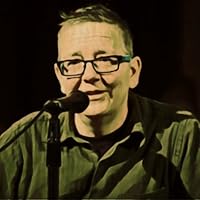
Poetry. African American Studies. "Cortez has been and continues to be an explorer, probing the valleys and chasms of human existence. No ravine is too perilous, no abyss too threatening for Jayne Cortez."—Maya Angelou
"If you haven't read Jayne Cortez, you're missing some of the best that life has to offer. A compellingly original voice of fire and freedom."—Franklin Rosemont
"Jayne Cortez's poems are filled with images that most of us are afraid to see."—Walter Mosley
Jayne Cortez was born in Arizona, grew up in Los Angeles, California, and maintained two residences, one in New York City and one in Dakar, Senegal.
She was the author of ten books of poems and has performed her poetry with music on nine recordings. Her poetry is celebrated for its political, surrealistic, dynamic innovations in lyricism, and visceral sound.
Cortez has presented her works and ideas at universities, museums, and festivals including: the Museum of Modern Art New York, UNESCO. Paris, the Berlin Jazz Festival, Germany, 11 Perfil da Literatura, Sao Paulo, Brazil,. Fourth World Congress on Women, Beijing, China, the Arts Alive International Festival, Johannesburg, South Africa, Banlieues Bleues Festival, France, Tampere Happening, Finland and New York University.
Her poems have been translated into many languages and widely published in anthologies, journals, and magazines including: Post Modern American Poetry, Daughters of Africa, Poems for the Millennium, The Jazz Poetry Anthology, Surrealist Women, Sulfur, Black Scholar, Presence Africaine and Mother Jones. She is the recipient of several awards: Arts International, New York Foundation on the Arts, the National Endowment for the Arts, the International African Festival Award, the Langston Hughes Award, and the American Book Award.
Cortez appears in the Canadian film 'Poetry in Motion' and the music video "Nelson Mandela is Coming" produced by Globalvision. Her poem "I Am New York City" was used as the theme for "Honor" an episode of the Fox Television series "Tribeca. " She is also on screen in the film "Women In Jazz." Her most recent books are "Somewhere in Advance of Nowhere" published by Serpent's Tail/ High Risk Books, and soon to be released "Jazz Fan Looks Back" published by Hanging Loose Press. Her work as activist and organizer is typified by her presidency of the Organization of Women Writers of Africa, her coordination of the Yari Yari International Conference of Women Writers of African Descent, NYU, the direction of the film Yari Yari, her organization of the 1999 international symposium "Slave Routes: The Long Memory," and her participation in the Round Table: Dialogue Among Civilizations at the United Nations Millennium Summit 2000.
"The Dictionary of Literary Biography" asserts that Cortez has distinguished herself as "a creative artist uniquely able to reach audiences for whom books of poetry have little appeal." And critic Barbara Christian notes, Cortez "has forged connections in her work that help us see how our histories are related. The result is a poetry as wide in its scope as it is compelling in its craft."
Jayne Cortez died of heart failure in Manhattan, New York, on December 28, 2012. A memorial celebration of her life, organised by her family on February 6, 2013, at the Cooper Union Foundation Building, included tributes by Amiri Baraka, Danny Glover, Robin Kelley, Genna Rae McNeil, Quincy Troupe, Steve Dalachinsky, George Campbell Jr., Eugene Redmond, Rashidah Ishmaili, and Manthia Diawara, as well as musical contributions by Randy Weston, T. K. Blue and The Firespitters. The Spring 2013 issue of The Black Scholar (Vol. 43, No. 1/2) was dedicated to her memory and work
This poetry collection took a while to read for me because it was just so powerful, I could not rush through it. It presents an overview of the poet's work with some new pieces at the end. Very richly textured poems with the rhythms and energy of spoken word behind them. I'll need to pick up more by Jayne Cortez, because this was breathtaking. It reminded me of Andrea Hairston's Mindscape, specifically, but in prose; a very strong sense of music and song jumping off the page. ______ Source of the book: Bought with my own money (Friends of LPL Booksale - thank you!)
Don't ask me who I'm speaking for who I'm talking to why I'm doing what I do in the light of my existence
You rise you spit you brush you drink you pee you shit you walk you run you work you eat you belch you sleep you dream & that's the way it is
In the morning tap water tasted fishy coffee sits in its decaffeinated cup caca & incense have a floating romance & a stale washcloth will make you smell doubly stale so don't get kissed on the cheek don't get licked on the neck
at 8 a.m. the trains & buses are packed with folks farting their bread & butter farts the gymnasium is dominated by the stench of hot tennis shoes & one in the locker room a few silly-talking intellectual-looking coke-drinking cloth-dropping paper-littering spinach-pooting smug arrogant women wait to be waited on
& in another locker room there are odors of crotches & jock straps bengay, tiger balm & burning balls sweat socks & sweat suits of body-building door-slamming iron-pumping phlegm-hawking men all sour & steamy & wrapped up together in a swamp of butt-popping towels but don't let it get you down don't let it psych you up
Outside the ledges are loaded with pigeons clouds are seeded with homeless people & lyricism of the afternoon in a sub-proletarian madman squatting & vomiting from his bowels a brown liquid of death in front of your house
& it's not happening because of you those socks don't stink because of me a bureaucrat is not a jerk because of us I'm not this way because of them you're not that way because of me don't ask about influences
You rise you spit you brush you drink you pee you shit you walk you run you work you eat you belch you sleep you dream & that's the way it is
If I could use prose to explain to you the mind-blowing, brain-bending power of some of these verses, then we wouldn't need poetry. Some things can't be adequately said in straight-line sentences marching into paragraphs. Some people use movement or music (or painting or poetry) to convey the otherwise unspeakable. Jayne Cortez does that in many of the verses collected here. This is an anthology of sorts, collecting new pieces along with gems from earlier publications dating back to the 1970s. It has inspired me to be sure to go back and read all of those previous books. And again I say that I cannot, other than by sharing the poems themselves, adequately inform you about them. You'll just have to read them yourself. I suggest that you do.
I love Cortez. She is not a poet who uses words to show the essence of the familiar. She is a poet who crosses meaning, combines nouns in sense-defying similes, celebrates, plunders, and burns philosophies to create an alchemy that is all her own. Her dictum seem to be the same as the free jazz masters, "Make it new."
Politically sharp and visceral, this poetry collection takes the reader on a tour of what is for many of us familiar and some of us unfamiliar, the ways imperialism and colonialism affect us all.
Having just had the supreme pleasure of hearing Cortez read live, I was able to hear her rhythms in my head as I read. But for those who have never seen her live, I recommend buying a Cortez record first/instead. She's unbelievable on the mic. Check out this hotness. The real deal: