Pierwsza czesc znanego cyklu esejow historycznych Pawla Jasienicy to - według slow samego autora - "swobodne literackie opowiadanie" o dziejach Polski w okresie formowania sie jej panstwowosci. Ogladamy tu losy kraju i narodu, ktory - rzadzony przez przedstawicieli jednego rodu krolewskiego - zdobywa sobie poczesne miejsce na mapie Europy. Jasienica wysuwa na plan pierwszy dzieje dynastii, sugestywnie ukazujac zmagania, osiagniecia i koleje zycia piastowskich wladcow Polski.
Pięknie napisany i świetnie zinterpretowany* esej popularyzatorski o Polsce pod rządami Piastów. Paweł Jasienica pisał z niebywałą swadą, elegancko i przystępnie, słuchanie Polski Piastów to była czysta przyjemność. Pomimo wyczuwalnej sympatii do piastowskiego rodu, Jasienica pozostaje obiektywny, analizując panowanie kolejnych potomków Mieszka I potrafi dostrzec plusy i minusy ich rządów i ich wpływ na przyszłe losy kraju, a co najważniejsze: Jasienica traktuje historię jako proces, dużą wagę przykładając do problemów geopolitycznych, etnicznych, czy kulturowych epoki, warto jednak pamiętać, że książka została wydana po raz pierwszy około 60 lat temu i siłą rzeczy książka mogła się nieco zestarzeć, co absolutnie nie odbiera przyjemności z lektury.
*słuchałem audiobooka w wykonaniu Zbigniewa Wróbla
„Tak się złożyło, że blask epok późniejszych, w szczególności kultury Złotego Wieku Odrodzenia, pozornie pogłębił cienie czasów piastowskich. Najwybitniejsi historycy nie wahali się lekceważyć ich dorobku […]. Dopiero lata drugiej wojny światowej wydobyły na jaw prawdę, że jedynym naszym dziedzictwem, którego istnienia najgorszy wróg zaprzeczyć ani przekreślić nie może, jest fakt egzystencji narodu i międzynarodowy problem państwa polskiego, zajmującego określone miejsce w Europie i posiadającego odrębną kulturę. I jedno, i drugie – naród i jego państwo o zdecydowanym obliczu – uformowały się i okrzepły w dobie piastowskiej”.
„Polska Piastów” zawiera zbiór esejów o początkach państwa polskiego. Nie jest to książka typowo historyczna, co niewątpliwie ułatwia przyswajanie, a nawet momentami można odnieść wrażenie, że czyta się jak powieść. Autor nie zarzuca nas suchymi faktami czy ogromem dat i nazwisk, ale stara się przedstawiać związki przyczynowo-skutkowe, analizować określone wydarzenia, przedstawiać swój punkt widzenia. Dzięki temu odczarowuje trochę historię, jaką wpałczano nam do głów w szkołach.
Lubiłam czytać Jasienicę jako nastolatka, a i teraz z przyjemnością wysłuchałam sobie audiobooka dla przypomnienia. Może momentami faktycznie troszeczkę czuć przykurzenia, ale do licha, nie czepiajmy się, tylko korzystajmy! Na pewno jeszcze kiedyś wrócę do tej książki. 8/10
Ah, the mighty Jasienica, finally we meet. I think I've already tried reading his once, in lower secondary school, I think, and bounced away. I'm kinda surprised, because the book was really good.
I don't know how accurate it is (hell, one of the THREE introductions as well as the epilogue informs us that some of the things he describes have been proven by later research to have happened in a bit different way) but what he presents seems entirely plausible and reasonable. I never had much problems in the way I was taught history but now it seems to me, instead of those lessons (at least the ones on Polish history) we could have just been told to read Jasienica. Finally I began to understand what led to what and how one decision influenced or caused some event.
Not to mention that somehow I completely forgot about a couple of rulers that we had and only now I was learning about them.
The feudal fragmentation part ("rozbicie dzielnicowe") was a bit chaotic but I think this is mainly due to the fact I was "reading" it as an audiobook and couldn't really stop or go back a couple pages to check which branch of the family we're talking about (a lack of map also didn't help).
I'm looking forward to following more of our history with Jasienica.
This is yet another great book from Beynar, aka Jasienica, I wish I had come across much earlier.
I was under the impression that inheriting the crown was a somewhat smoother business within the first dynasty of Polish kings, because they were technically family – a misapprehension now proven wrong, since it was blood, cunning, deceit and stealing of land from under one another’s feet.
In a world where people hoard money to buy power, it’s quite refreshing to read about people so organically and instinctively bent on power, their money arrived almost as a side-effect. A much appreciated one, though, without a doubt, because money and power go together like hot and bothered.
Styl pisania w miarę łatwy do przyswojenia.Minus za pierwsze 20 stron, które są tak nudno napisane i mimo wszystko faktami średnio wpływającymi na historię,miały znaczenie ale jednak średnio mają dla mnie znaczenie jakieś garnki czy inne rośliny
That was a very informative book, explaining a lot of early politics. Basically, it came down to a fact - eat or be eaten. Constant fights and arguments. Not very positive times. And I feel that not much changed until this day in some countries. Anyway, I'm going to read other parts of our history to understand it better than the school tried to teach me.
8/10 - bardzo dobra. "Polska Piastów" czyli imć Jasienicy historii Polski przedstawienie. Dzięki drygowi do opowiadania i miejscowemu uzupełnieniu niewiadomych wyobrażeniami autora, książka ta stanowi świetny punkt wyjściowy do zainteresowania nauką i drążeniem historii. Jasienica przenosi czytelnika w zamierzchłą przeszłość, ku słowiańskim plemionom i procesom, które zaowocowały powstaniem naszego kraju (błędne koło: Ciężkie czasy tworzą twardych ludzi, którzy wykuwają dobrobyt, z którego rodzą się słabi ludzie - którzy bardzo szybko zakładają sobie na szyję pętlę ciężkich czasów itd. w nieskończoność). Książka napisana może niemodnym już stylem (do tematyki jednakże pasującym!), nieco zdezaktualizowana, pełna stronniczych opinii i wyraźnych sympatii (i antypatii) ale też pełna emocji, zdrowej dumy z wybranych praojców i wciągająca jak białowieskie bagna ;) Na pierwszą wycieczkę z Piastami w sam raz!
Niestety, nie jestem w stanie dokończyć tej książki. Nie odmawiam oczywiście autorowi ani wiedzy, ani umiejętności pisania, ale mierzi mnie pisanie o średniowieczu w kontekście realiów politycznych, w których znajduje się autor. Jest to wszystko bardzo ewidentne już od pierwszych stron. Ze względu na to, jak bardzo mnie to irytuje, to ja niestety muszę sobie tę książkę darować, za dużo tam dla mnie tego. Dla osób, którym to nie przeszkadza, książka będzie dobrym źródłem wiedzy, bo styl jest „gawędziarski” i czyta/słucha się płynnie.
This book is magnificent, telling the story of a state in which power guaranteed authority "for the country."
It was not until the 5th century BC that the great Greek historian Herodotus, who traveled by boat up the Bohu River, recorded the first data on the Slavs. He mentioned the mysterious Neuri, each of whom transformed into a wolf once a year, and who migrated south together, driven from their former homes by a vast, prolific serpentine force. There is speculation that these Neuri originated from present-day Greater Poland, from the Ner River. Legends of their sorcery are vividly reminiscent of indigenous Slavic werewolf tales.
From the 1st to the 4th century AD, the period known in scholarship as the Roman era lasted. This does not mean, however, that our lands became part of the vast empire of the Caesars, who ruled all the shores of the Mediterranean. Even a Roman soldier's sword unearthed in Poland doesn't prove that the legion in which its owner served watered horses in the Vistula. It's just that some southern merchant, having acquired this valuable weapon somewhere in Hungary, brought it to us and sold it, receiving in exchange a lump of amber, a bundle of furs, or perhaps a slave. The Polish lands' connections with the Roman world at that time were economic and commercial. Cultural influences may also have followed the merchants. Traders exported not only goods but also information about countries and peoples previously unknown to enlightened societies. This news must have spread widely, since in the second century AD, the scholar Ptolemy of Alexandria, Egypt, was able to record the name of Kalisz, which thus became the first Polish settlement known to the entire contemporary world. Since we know that Ptolemy drew his data from the works of Marinus of Tyre, who had lived several decades earlier, it is probably reasonable to assume that even at the very beginning of our era, the name Kalisz was familiar to the ancient Romans, Greeks, and even Egyptians. One of the branches of the aforementioned Amber Route, which supplied the rich South with amber, valued at its weight in gold, ran through Kalisz. Therefore, the early Poles did not fight against the Roman legions. Instead, they had to defend their lands from those peoples whose histories would henceforth clash with ours. In the last centuries BC, Germanic tribes of Burgundians and Vandals appeared in Trans-Oder Pomerania. In the first century AD, the Goths arrived by boat from Scandinavia and landed at the mouth of the Vistula River, followed by the Gepids. Their stay in Pomerania was short-lived. Several hundred years later, both tribes found themselves on the Black Sea. The route that took them to such distant lands likely led through Polish lands. But some scholars dispute this, claiming that the Germanic peoples advanced along the Danube. Invasions by foreign tribes did not halt the development of their native culture. A little east of Kraków, in the fields of the villages of Igołomia, Cło, Kościelniki, Wyciąże, Tropiszów, Zofipole, and where Nowa Huta stands today, extraordinary archaeological discoveries were made. Specifically, numerous pottery kilns were found, which, in all likelihood, produced not only to meet local needs but also for export. In those distant times, the Vistula River flowed just below the slope, where kilns stood with their openings facing south. (My mother studied pottery and ceramics in Krotoszyn.) When the Roman Empire collapsed 1500 years ago, the Slavs established a large center of pottery industry on the left bank of the upper Vistula, traces of which have been excavated here, as the inscription at the field museum in Igołomia states.
Further research proved that this center was located in a place where pottery had been developing for a long time, dating back to the last centuries BC. Many ironworks furnaces, called bloomeries, used for smelting iron, dating back to the first and second centuries AD, were also discovered in Igołomia. A people capable of organizing such an industry could not have been primitive and savage. They must have possessed considerable experience and technical skills, and they likely also developed a political organization. Some authority and power certainly ensured the safety of the work center, as well as the roads.
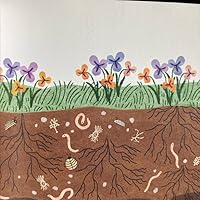
It is no coincidence that Gniezno and Kiev—the capitals of the two largest and most powerful Slavic states: Poland and Ruthenia—lie on the lands of tribes very distant from each other, but bearing the same name, the Polans. By the beginning of the 8th century at the latest, forest burning had ceased. In other words, scorch agriculture finally gave way to harness plowing. This did not happen everywhere simultaneously. In the Kurpie region, scorching continued for a very long time, while in the remote parts of northeastern Russia, the forests were still smoking in the 20th century. But the history of states began to be shaped by the tribes most advanced in civilizational development. The scorch burning technique has numerous variations. Their common feature is the deliberate setting of fires in the forest undergrowth by humans, setting fires between tree trunks, sometimes previously stripped of their vegetation.
The flames died out, leaving a thick layer of ash on the ground. Now the farmer appeared. He threw seed directly into the ashes, but more often, he would first plough the ground with a hoe or scratch the ground with a radio. Sometimes he would harvest only once and then continue the fire the next summer; other times, he would sow the burned area for longer, harvesting as many as five times before abandoning it. In the latter case, the ash was supplied by trees that had already died. No one cleared or removed the stumps or roots. Professor Henryk Łowmiański calculated that, with this system of work, approximately 30 hectares of forest were needed to support one person, and a village inhabited by a single large family of twenty to thirty people had to farm an area of 6 to 9 square kilometers. If one also takes into account marshes, water, and wasteland, it turns out that in the era of slash-and-burn agriculture, one person lived per square kilometer. With such a low population density, a state capable of defending its territories, which, given this particular farming system, would inevitably have to be extensive, cannot emerge. At the end of the first millennium AD, the population density in Poland was 4 to 5 people per square kilometer. This was due to harness plowing. It was this plowing that created the material foundation on which the Polish state was built. The name "Polan," given to the tribes inhabiting the Warta and middle Dnieper rivers, referred to peoples who had long ruled vast fields, permanently reclaimed from forests. Present-day Greater Poland had no known clear-cut cultivation practices as early as the 8th century. Western Europe was then dominated by the decisive dominance of the Frankish state, ruled by the Carolingian dynasty (inheriting the throne from the even older Merovingian family). On October 9, 768, Charlemagne began his reign, a ruler who became legendary and whose name gives rise to the title of king. He united in his state present-day France, including Corsica, almost all of Italy - except Sicily and parts of the far south - and the lands of the Germanic tribes, except Jutland and Scania.
Mieszko converted to Christianity from Bohemia. This was no simple formality, as three-quarters of Polish church vocabulary comes from Czech. Titles—bishop, dean, parish priest, priest, priest, as well as—priest, abbot, monk, and the names of many services and liturgical implements—all of this was brought by the Czech clergy, who must have been very active in Poland at the time, thus preventing a German invasion. The first missionary bishop in Poland, Jordan, was probably not German, or at least not an eastern German. He probably came from Lorraine.
Her Slavic name was Dobrawa, which in German translates to "Good." Seeing her husband steeped in the multiple errors of paganism, this follower of Christ pondered how she could win him over to her faith.
Until 1197, priestly marriages were commonplace in Poland and considered valid. The situation was different—though not always—only for bishops, who were largely recruited from Western European monks. As late as the mid-13th century, a certain Ogierowicz, the legitimate son of Ogier, Bishop of Włocławek, lived in Greater Poland. In 1197, the papal legate Peter, Cardinal of Capua, arrived in Poland, bringing a ban on priestly marriages. The Polish clergy remained calm toward him, but the Czech clergy nearly executed him. The sons of priests are mentioned in sources long afterward, as the new law was adopted slowly and with resistance. Banished from Gniezno by Spindleshanks, Archbishop Kietlicz traveled to Rome, where he received the decisive support of Pope Innocent. Under its provisions, in 1207, the first bishop was elected in Poland by a chapter without the interference of the secular authorities. Wincenty Kadłubek, a chronicler, became the new bishop.
...and then, having occupied Halych, proclaimed his own son, Andrew, King of Halych. In Latin, this title was Rex Galatiae, from which derives the once-important and still quite popular name for Galicia. However, Vladimir managed to bribe the guards, escaped prison, and appealed to Poland for help. Casimir's army drove the Hungarians from Halych and restored him to the throne.
The ruler of the Saxon dynasty, Otto III, also known as Otto the Red, was an emperor who sincerely understood his title and wanted to be more Roman than German. Painters of the time depicted him as an emperor on his throne, receiving homage from four crowned female figures—Italy, Gaul, Germany, and Slavdom—treated as equals.
The theory he himself espoused and imposed on others held that all secular authority must be subordinate to the spiritual. There was no longer any question of liberating the papacy from imperial domination, but of reversing that order—of obedience to Rome by all the capitals of Catholic Europe. Innocent III simply strengthened the secular rule of the popes over the world. The German emperor paid him homage and acknowledged himself as his vassal. The cruel and cunning English king, John the Landless, surrendered his crown to a papal legate and received it back—but this time as a fief. However, towards the end of his reign, Innocent III stumbled. In 1215, John the Landless proclaimed the Magna Carta, the foundation of civil liberties in Great Britain, which remains in force today. He did so against his will, forced by society, and had no thought of implementing its provisions. The Pope, as the sovereign of England, by a papal bull of August 24, 1215, excommunicated the nobility and the city of London, forbade its application, and vehemently condemned it. But the English refused to obey him in secular matters.
As for Germany proper, there were three partners. The Luxembourg, Habsburg, and Wittelsbach dynasties vied for supremacy there, each wresting the imperial throne from the other. Each had its own hereditary land, upon which its power rested. For the Luxembourgs, this was Bohemia; for the Habsburgs, Austria; and for the Wittelsbachs—who also extended their reach to Brandenburg in the 14th century—Bavaria. The Luxembourgs posed the greatest threat to Poland; the other two families could sometimes provide a favorable counterweight. Poland at that time was also a hereditary monarchy and had a ruling dynasty. But the difference between our Piast dynasty and those three German houses was fundamental. Poland, alongside France, was the most progressive type of political system at the time – a national monarchy, aiming to unite the lands inhabited by Poles. In our country, the interests of the ruler and the country are one and the same. There – both during the Habsburg era and among the Luxembourgs and Wittelsbachs – the good of the dynasty was paramount. Hence the constant scheming, arrangements, bargaining, and exchanges – all of them shaky, momentary, and ultimately paralyzing German policy. Thanks to this, the Empire was unable to develop its great material advantage against us. Poland had the opportunity to play games.
For a true statesman, three quarreling opponents are a boon – even if only the only possible gain. It was supposed to consist in /saving ourselves from further losses and winning in time. \ At that time, the King of France, including the national monarchy, was no ally for us. The Pope, however, still residing in Avignon and submissive to the will of Paris, was perfectly suited for this role. Casimir the Great knew how to exploit this advantage brilliantly. He not only allowed thousands of grzywny of silver to be exported from Poland every year as tithes and Peter's Pence, but also paid for it. It's fair to say that he bought papal support with money. Any reduction in Poland's state territory meant a reduction in Avignon's revenues, and at that time, no one except us and England paid Peter's Pence.
Noblemen also had to pay the tithes due to the Church from the entire population of the country. But unlike people of "lower social standing," they could freely choose the priest or monastery they wished to pay.
In Poland, the epidemic was somewhat less severe, so its material and moral effects were less severe. The king's diligent social welfare, which included the distribution of grain from state granaries and providing work for the impoverished on numerous construction projects, significantly mitigated the effects of the disaster. Among our lands, Silesia suffered the most. It was flooded with processions of flagellants, whose bloody, publicly performed practices were meant to appease God and avert disaster. Bishop Przecław of Pogorzela of Wrocław supported this movement... until a radical trend took over, condemning the wealth and debauchery of the clergy. It smacked of heresy. Przecław of Pogorzela therefore handed over to the secular authorities for burning the same Wrocław priest and leader of the Flagellants, whom he had shortly before allowed to operate freely in the diocese.
On May 28, 1349, pogroms against Jews began in Wrocław. Refugees from Germany and Hungary, from where they had been expelled by King Louis, were settling in Poland (it should be remembered that Philip the Fair of France did something in the 14th century that Adolf Hitler repeated several hundred years later: he ordered his Trabants to arrest all Jews in France in a single day, confiscate their property for the treasury, and expel them from the borders without the right of return). However, the legend quite unfairly portrays Casimir as some special protector and benefactor of Jews. The king did one thing: he confirmed and extended to the entire country the privilege granted to them, issued in 1264 by Bolesław the Pious, which had previously been in force only in Greater Poland. Casimir, however, authored laws against usury. His regulations allowed for a fine of 48 groszy to be charged: 1 grosz in Greater Poland, and 1/2 grosz in Lesser Poland per week. And so, by royal grace, this limited interest on the loaned sum either more than doubled or increased by fifty-four percent within a year.
Banger. Przybliża początki Polski w sposób bardziej powieściowy / publicystyczny niż naukowy, wybiega w przyszłość pokazując nieraz współczesne konsekwencje wydarzeń sprzed prawie tysiąca lat.
W ramach nadganiania listy rzeczy, które trzeba przeczytać, zanim się kojfnie, postanowiłem wreszcie na raty poczytać klasyki o historii Polski. Jasienica jako ten sławny i wspaniały był oczywiście pierwszy na liście. Okres piastowski znam dość pobieżnie: średniowiecze bardzo mnie zawsze interesowało, ale od strony społeczeństwa i kultury, natomiast polityczne podjazdy księcia Bolka Kłapouchego z Lolkiem Szczerbatym jakoś do mnie nie trafiały. Jasienica opisuje właśnie ten drugi aspekt - historię polityczną i militarną, z niewielkimi tylko elementami historii rozwoju państwa i społeczeństwa, ale to właśnie była luka, którą chciałem nadrobić. Czytało mi się to bardzo dobrze, choć zwłaszcza okres rozbicia dzielnicowego przytłaczał - wszystkich tych Przemysławów i Henryków było jakby za dużo, trochę jak Ann i Agnieszek z mojego pokolenia. Natomiast wyjaśnienie logiki dziejów, a także nieco informacji o strukturze 'góry' społeczeństwa, roli i pozycji kleru etc. - bardzo fajne. Martwię się tylko, że nie zapamiętałem tyle ile bym chciał i znowu mi się kolejność wczesnych władców będzie mieszać. No ale cóż, nie od razu historię Krakowa zapamiętano. A i jeszcze ciekawostka - zawsze postrzegałem moją ukochaną Warszawę jako gród cokolwiek świeży, a tu proszę - w XIV odbył się tu już proces sądowy polsko-krzyżacki, a więc jednak coś tu było.
Kilka lat temu widziałem film o Pawle Jasienicy. Od tamtego czasu chciałem w końcu przeczytać jakąś jego książkę. W końcu teraz postanowiłem się przemogłem i sięgnąłem po Polskę Piastów. Przesłuchałem audiobooka w formie uzupełnionej o komentarz gdzie współczesny historyk analizuje co w książce Jasienicy jest jeszcze aktualne, a co nie. Okazuje się, że sporo rzeczy jest trafnie i prawidłowo opisana przez Jasienicę. Jednak niektóre nowsze badania arheologiczne oraz nowe źródła historyczne rzucają nowe światło na historię. Dlateog myślę, że wydanie nowsze wraz z komentarzem i analizą współczesnego historyka jest ciekawsze. Ważne jest jednak to, że książka Jasienicy przybliża nam w świetny sposób historię Polski i z książki możemy zaczerpnąc sporą porcję wiedzy historycznej.
Mam mały problem z tą książką, ponieważ mimowolnie porównuję ją z pierwszą częścią trylogii "Rzeczpospolita Obojga Narodów" tego samego autora. W związku z powyższym zwróciłem uwagę na: - bardzo dużo postaci i faktów historycznych - lekko się w tym gubiłem - mniej subiektywnej analizy zdarzeń przez autora - tak odległe czasy wymuszają wiele przypuszczeń i domniemań
Książka sama w sobie jest oczywiście bardzo dobra. Mamy ten sam styl Pawła Jasienicy co w "Rzeczpospolita Obojga Narodów" - analiza z wielu perspektyw oraz szukanie konsekwencji upadku Rzeczpospolitej w XVII wieku już kilkaset lat wcześniej. Bardzo podobało mi się przedstawienie "zaściankowości" Słowian jako zalety i ważnego argumentu w wielu transformacjach.
Aż sam jestem zaskoczony - jak ciekawie opowiada Jasienica o dziejach Piastów. Dla mnie - świetne. Początkowo myślałem o porównaniu do Gry o Tron, jednak ostatecznie skłaniam się właśnie ku wnioskom autora na końcu, które przyćmiewają ewentualne podobieństwa beletrystyczne. A skąd zaskoczenie? Byłem przekonany, że historię zjem owszem, ale w solidnym sosie fabularnym. A tutaj - mimo jego braku - treść wciągająca, zachęcająca do czytania. Polecam!
Jasienica chronologicznie streszcza historię Piastów, obala popularne mity o początkach polskiej państwowości, chwali swoich ulubionych władców i wymienia winy tych, których sympatią nie darzy. Nie wybiela na siłę. Jeśli to potrzebne, to przytacza najważniejsze wydarzenia dziejące się poza ziemiami polskimi, ale mające wpływ na historię państwa, na przykład rolę papieża. Jeśli czegoś nie wie, to przyznaje się do tego i podaje kilka możliwych wersji. W mojej opinii doskonale równoważy opis wydarzeń i prezentowanie swojej opinii. Zalecam skupienie zwłaszcza we fragmencie o rozbiciu dzielnicowym, ponieważ zamiast jednej kluczowej postaci pojawia się kilka i trzeba zapamiętać kto jest kim, nad czym panuje, po kim dziedziczy i jakie ma sojusze.
Po prostu fantastycznie napisana książka. Jestem w szoku że ktos może tak ciekawie przedstawic historie Panstwa i Narodu Polskiego w epoce dynastii Piastów... Wupada tylko ubolewac że nie zapoznalem sie z pisarstwem Pawła Jasienicy wczesniej w życiu...
Wartoo szybko obrazowo i krzepiąco jest pisana na t od serca Historia.
Czytało się dobrze, mimo rozmaitych stronniczych wycieczek (Niemcy jako naród są zawsze czarnym charakterem, aczkolwiek zważywszy kiedy książka została napisana, nie ma się co dziwić), mnóstwa przypuszczeń (Masław???) i przemilczania kobiecych postaci. Pierwszy dla mnie Jasienica, na pewno nie ostatni.
Bardzo ciekawie i przystępnie napisana powieść, dało się wiele dowiedzieć o czasach piastowskich. Mimo, że była to dla mnie pierwsza książka tego typu, wcale mnie nie znudziła, wręcz ją pochłonęłam w audiobooku. Oprócz tego o wielu z poruszanych zagadnień nigdy nie słyszałam, co też może świadczyć o wartości merytorycznej książki.
Nie można traktować tej książki jako źródło wiedzy historycznej, bo ani nie było to zamiarem autora, ani nie można się tego spodziewać po książce napisanej ponad 60 lat temu. Jednak jeśli szukacie luźnego zbioru chronologicznej i politycznej historii Piastów, tak żeby mieć ogólne pojęcie - warto dać tej pozycji szansę.
Przyjemna lektura, choć miejscami chaotyczna i trudna do ogarnięcia przy takiej liczbie aktorów ówczesnej gry politycznej Europy. Mimo wszystko książka jest warta przeczytania. Zdecydowanie wolałem czytać, niż słuchać audiobooka, m.in. dlatego że w tym przypadku liczyła się pamięć wzrokowa do nazwisk i nazw.
Bardzo przystępne przedstawienie historii Piastów. Nie tylko podsuwa wiedzę historyczną w bardziej atrakcyjny, gawędziarski sposób, niż większość dzisiejszych lektur szkolnych, ale i pozostaje wiarygodnym źródłem wiedzy nawet pomimo upływu czasu. Piękna książka!
Niestety czuć, że książka jest przestarzała. Po pierwsze dlatego, że niektóre informacje przedawniły się w obliczu nowych badań. Po drugie z powodu charakterystycznego dla PRL lawirowania, by przejść sito cenzury, co wymagało "specyficznego" relacjonowania.
Bardzo dobrze napisana, choć nie zawsze zgodna ze współczesną wiedzą historyczną książka o przeszłości Polski. Czyta się przyjemnie, czerpie się z niej wiedzę o dawnych dziejach naszego kraju. Po prostu dobrze mieć to w dłoni i czytać.
I enjoyed the book :) Jasienica puts everything in a good perspective. I like his style of writing, the book even though it was written long time ago, is still interesting.