Since the beginning of this Covid 19 quarantining, I've been fairly certain that there's a better way to do this. Holed up at home and tracking the models and the numbers non-stop, I remain a skeptic. Nobody knows as much as they think they do about this virus, but the powers-that-be are making drastic and long-reaching decisions as if they do know. Big mistakes are being made. But I continue to obey the rules.
I'm worried and already feeling overburdened by what it's going to take to restore the people who are losing so much. I worry about the people who are utterly alone in this, the people who are locked in with abusers, the people who were teetering on the edge of mental health before this started, the hungry kids, all the people who are losing their small businesses, and all the people who are growing comfortable in this mistrustful state of viewing every person as a possible contaminant-- seriously, when does it stop? What does that mindset do to a society? There is just too much error to correct.
So then I look around my house at all the things I could be/should be doing and I beat myself up a bit, and then I do something-- not enough, but something. Then I crab at other people around here for not doing enough either. Then I feel bad because they're dealing with this crap storm too. So I try to help the kids out with what they're doing-- school work, prepping for college, figuring out how to stay active without their teams... It's a really good day if the kids take my suggestions.
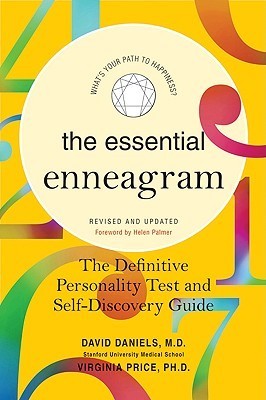
So, yeah... 1 w 2, body center, self-preservation sub-type. That was a fun little covid project. :/
The book did its job though, and now I've got numbers just like all the cool Bible study leaders & VSCO girls. Haha!
A few notes:
1) I'm a fan of Myers Briggs, and at first, this seemed kind of confusing and messy with the different centers, the wings, the integration/disintegration types, sub-types, and diagrams.
2) Also, at one point, I was pretty sure that I was 6 of the 9 types. That could be a function of the book, of my semi-crazy mental state at the time of reading, or my personality type. Most likely, one of the latter 2 options.
3) Putting the book down and putting it all out of my head for a few days at a time, and then re-reading sections added clarity for me.
4) The book circles back a couple of different ways to double-check and help you confirm your types. I liked that very much.
5) I also liked the fact that this test is not a long series of multiple-choice questions. You read 9 paragraphs, pick 3 that seem most like you, and that's your jumping off point. (But I did find a couple of free multiple-choice tests online and took them, too, just to be extra sure.)
6) I googled my types and read some online articles. After reading them, I felt even more confident in the outcomes of this book.
7) I see other readers were unhappy that this book didn't go deeper. I'm fairly introspective to begin with, and this was just a new way of sorting what's already going on in my head, so I didn't really need anything deeper right now. The brevity was just fine for me.
8) Other readers were also quite unhappy with those important "truths" that each type has supposedly lost sight of. Truth be told, I'm a Christian, and I'm used to ignoring those kinds of statements whenever I see them outside of a Biblical context. I skipped over that part as unimportant. (Type 1 thinking, right there...)