Winner of the prestigious James Laughlin Award of the Academy of American Poets and the 2009 Perugia Press Prize, this collection is life-affirming but without illusions. How to Live on Bread and Music, showcases poet Jennifer K. Sweeney's mature consciousness and circumspect intelligence. The book takes us on a physical and spiritual trip, symbolized in recurring images of the train. Exploring broad themes such as identity formation, nostalgia, and impermanence, the poet passes through risk to find refuge in the sensory world. Afaa M. Weaver says, These are poems that tell us we move forward in moments when motion seems all too risky and stillness all too intolerable.
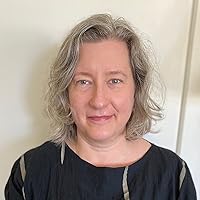
Jennifer K. Sweeney is the author of three poetry collections: Little Spells, newly released from New Issues Press, How to Live on Bread and Music, which received the James Laughlin Award, the Perugia Press Prize and a nomination for the Poets’ Prize, and Salt Memory. She is the recipient of a Pushcart Prize, a grant from the San Francisco Arts Commission, a Hedgebrook residency, the Elinor Benedict Poetry Award from Passages North and two Dorothy Sargent Rosenberg awards. Recent poems have appeared in Academy of American Poets’ Poem-a-Day series, American Poetry Review, Cimarron Review, Linebreak, Mid-American Review, New American Writing, Pleiades, and Verse Daily.
A beautiful book of poetry with images that stayed with me for days, delivering sharp intakes of breath and long exhales. One stanza perfectly described my life when I wasn't looking for such a naming, making me feel less alone and more courageous than I am on my own.
As the title suggests How to Live on Bread and Music is full of lyrical, and whimsical, how-tos and biographical allusions to the speaker's "bread" of life. The poems echo lastingly and leave a lot to unpack in their apparent simplicity. "The Listeners" is my favorite part. It's a poetic sequence about a father and daughter bonding over listening to music and what that teaches her about listening and hearing in general. Indeed, the speaker of the poems in How to Live on Bread and Music seems to sound out her inward living as well as holding her ear close to what is around her in order to catch the slightest vibrations and follow wherever they may lead. How to Live on Bread and Music does as it says through a great musical sensibility and intuitive attention.
Ms. Sweeney caught my eye because an excerpt of her poem, In Flight, was used as an introduction to another book I recently read, We Never Asked for Wings.
I'm an under-appreciator of poetry generally and am routinely disappointed by the genre as a whole, but Ms. Sweeney's observations of nature and life piqued my interest. This short collection of poems was a welcome change of pace from my usual reading fare.
Jennifer K. Sweeney’s second collection of poetry How to Live on Bread and Music consists of five sections, two of them being multi-page poems, which are somewhat unusual as longer poems are notoriously more difficult to maintain, but Sweeney manages to avoid the common pitfalls of longer works with ease. Both of her longer poems radiate with fresh imagery, clever word choice, and an uncommon strength of metaphor. Clearly Sweeney is one of the brightest stars in emerging poetry. Her multi-page poem, “The Listeners” recounts the poet’s childhood with her father and music. Song lyrics are embedded seamlessly into the stanzas and each moment feels very carefully wrought. Sweeney moves from the abstract to more narrative moments:
I’d sit between the six foot speakers, ache of my adolescence
and his adulthood soothed by those vinyl voices
surging from the Magnaplanes in a shared and private anthem.
Perhaps the most immediate trait of Sweeney’s work is the rich language one finds in her poetry coupled with a very precise use of metaphor. Throughout this impressive second collection we find a wealth of strong imagery, and an intense focus no matter what the subject. There are no weak poems in this collection; each poem dazzles in its own way. In her poem “Weathering” her gift of precision is on display:
At dusk the sky lowered a spectrum of whites and rested atop it like thickest netting, rows of rooftops dwarfish under the fog.
Much of weathering is erasure, the daily words disintegrating in the mouth each night to mist.
Sweeney is never more strong than in the poem “In Flight,” the first poem in section five. Here she begins with legend and ends with a mysterious wisdom that holds the reader’s imagination in suspension. It is in moments like this where the world’s nature and all its subtle beauty are brought to the forefront. Sweeney captures that notion of being born in the air and turns back to the reader for a moment to pose the fascinating question:
Maybe you have been born into such a life
with the bottom dropping out. Maybe gravity is claiming you and you feel ghost-scripted.
Sweeney’s work has already garnered a lot of attention. Her first book, Salt Memory won the 2006 Main Street Rag Poetry Award and this most recent collection won the 2009 James Laughlin Award of the Academy of American Poets. In short, this collection rings with thought-provoking images and the silence she employs is noticeably well-thought out. Sweeney is one of those rare poets who can take a subject and make it true. Through careful technique she brings each poem to life and the music we hear is truly inspired.
from How to Live on Bread and Music by Jennifer K. Sweeney:
How to Tune a Xylophone
Go for a drive and let it sit in the passenger seat. When the air feels dusty as a roadside chapel, pull over and start walking. If you come across train tracks, lay the xylophone on the rungs and let the vibrations tune it. One note is a wasp boring holes in the air. One note is a bleached newspaper rattling in the brush.
Looked forward to reading this every night before falling asleep; its unexpected language and near (but not) fabulist tone held my interest and also offered a weirdly peaceful sense of camaraderie. These poems are gentle spells.
This is a poet to watch! I've already ordered another of Sweeney's books. Filled with amazing poems and wonderful images, Sweeney has an excellent book here. Some of the lines that caught my eye:
• Take the numbers off the clock and mail them / to your creditors
• quiet as a theatre of monks / watching a woman cross the stage.
And the poem, "The Silence of Girls" about the pockets in women's bodies where they carry their mothers. Powerful stuff. But my favorite poem is "Nocturne", the opening poem. Surreal, quiet, beautiful.
Second time reading this. I love Jennifer K. Sweeney's poems: I love her ear, her eye, her sense of rhythm. I return to these intricate, unexpected images and musings again and again.
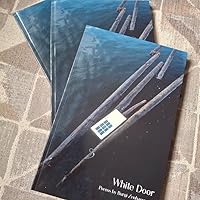
As recipient of the 2009 James Laughlin Award of the Academy of American Poets, the only major American award for a second book of poetry, it would be easy to passively dismiss Jennifer K. Sweeney’s How to Live on Bread and Music as another collection in the long line of contest winners that swell our local bookstores’ shelves. Though it is exquisitely designed by the good folks at Perugia Press with stunning cover art furnished by the poet’s father, an accomplished painter, the book’s didactic title does it no favors; for those of us inclined to grumpiness, it is reminiscent of the imperative platitudes often found in the least inspired work of Mary Oliver. All of this snarky skepticism fades, however, as soon as one creases the cover open, as How to Live on Bread and Music is not only a volume of great range and depth, but is full of sonorous, deeply felt poems that evoke Marianne Moore’s famous adage that our best verse strive to create “a place for the genuine.”
“Nocturne,” a brief, apocalyptic lyric serves as the collection’s opener, and it makes for an appropriate tone-setter, with its allegorical dreamscape of “a blue city in mind” where a purgatorial pall is marked only by the presence of “a musician/who plays a harp without strings.” Sweeney’s “rippling canal” and “zeppelin sky,” much like her other atmospherics, are intentionally ambiguous—this is surely a place of latent violence, but also a place where “a lone streetlamp tends/its blue arc of light,” so it is not completely absent of hope. It all makes for a pleasant imagistic catalog, the sort of Surrealism-Lite that reminds one of Mark Strand or Jorie Graham, when the wallop comes in the poem’s abrupt final couplet: “Maybe you hear a song or maybe you don’t./That is the choice we are always making.” This swift exeunt from the poem’s hallucinatory realm, in addition to the blunt directness of the second person address, combine to make “Nocturne” a sucker-punch ars poetica that not only questions the reader’s expectations, but which fittingly introduces the candid, gripping, and widely varied poems that follow.
Though it is broken into five sections, How to Live on Bread and Music avoids goose-stepping to a predictable thematic march. True, many of the poems early in the collection address themes of childhood and innocence, such as “The Three Sisters” and “The Silence of Girls,” whereas motifs of gardening, domesticity, and locomotion develop later, but overall these poems echo and reverberate like voices in a canyon, so the sense of play and surprise are never lost. Another remarkable aspect of Sweeney’s book is her ability to express the full range of her voice. It is easy to see that the terse lyric is her default mode, especially in poems such as “Requiem for America” and “Death Valley”—the latter of which begins with the startling line “the desert is a woman with no ideas”—but narratives such as “Adolescence,” “How to Uproot a Tree,” and “White Shadow” benefit from the same local brilliances and musical compression of language.
Among the many impressive aspects of this volume, Sweeney’s ear is perhaps most noteworthy. Regardless of length or form, she writes a supple, resonant line that displays an acute attention to sound, which is a gift rarely seen or cherished among her contemporaries. (This reviewer should know, since he too is a product of Generation Irony.) In light of these many riches, then, it is easy to overlook Sweeney’s rare miss, such as the overwrought sequence “The Listeners,” that for all its ambition and muscle never quite unifies its loose collage of turntable allusions. Such missteps are few indeed, as How to Live on Bread and Music is an exquisite book that transcends our literary moment, and one hopes readers will hear its lush grace singing for many years to come.
Just finished reading Jennifer K. Sweeney's How to Live on Bread and Music, this year's winner of the James Laughlin Award for a second book of poems. The poems about siblings, in the first section, are not memorable in either image or music. The long poem "The Listeners" that makes up section two stretches a tolerable idea to intolerable length. One of its parts is about back-masking, a common enough subject rendered in a prosaic idiom:
The music teacher told her third graders if you played "Strawberry Fields Forever" backwards it would sing John is dead. The children imagined her hand steering the record counterclockwise like witchcraft revealing the secret warped message.
After five dead lines, the witchcraft simile sticks out like a fragment of a thumb. "Revealing the secret warped message" is a bathetic and redundant conclusion to the sentence. Sweeney continues by describing "scratchy" school movies:
After the credits rolled, the reels rewound. Flowers sealed up, musicians laid their instruments in their laps and the paper factory returned its reams to the trees.
The flowers image lacks precision. The musicians image lacks interest. I like, however, the image of paper becoming trees again. There are such vivid moments of poetry dotting this book. They lure me to read on, only to be frustrated time and again.
Section three presents poems of places. Many of them are about natural places, forests, valleys and such, but the best poem here is urban. "5 O'Clock Poem" begins evocatively with "Descending the gray nudge of Market Street" and develops that nudge into a direction towards home. "The Arcata and Mad River Railway," which forms section four, uses a fragmented method deployed in a number of places in the book. But here the railway setting anchors the fragments, and they appear like lost and found objects along the tracks.
The last section of the book is the strongest. "White Shadow" has genuine poetic power. It has density of thought and image, and its tercets orchestrate a music of meditation. There are a couple of poems here about teaching grade school, and they are boring as often such poems are. Throughout the book, Sweeney wishes to teach us "How to Make a Game of Waiting," "How to Feed an Orchid," "How to Uproot a Tree," "How to Grow a Mushroom," and "How to Tune a Xylophone." Writing How-tos is potentially interesting but that strategy is not pursued rangingly, and that world view not questioned rigorously. After reading How to Live on Bread and Music, I am no wiser.
Reading Jennifer K. Sweeney’s HOW TO LIVE ON BREAD AND MUSIC was, oddly enough, like listening to a classical pianist. There’s a musicality in her poetry, a graceful flow paired with sprightly language, rich imagery, and evocative metaphors. Sometimes I find that too much clever wordplay saps a poem of emotion. But Sweeney blends the two qualities in a way that heightens the impact each piece leaves on you by the end. Her approach brings out an unabashed joy that’s sometimes wild and other times meditative, turning the seemingly little things – listening to old records, watering flowers, rush-hour commuting – into transcendent events and emphasizing why we should embrace life in all its darkness and light.
You might like HOW TO LIVE ON BREAD AND MUSIC if… you enjoy reading poetry, period. Seriously. This has become one of my favorite poetry books ever, so please do yourself a favor and add it to your bookshelf. <3