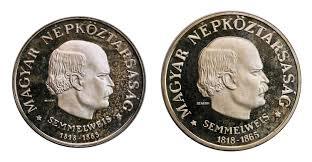
Surgeon, scholar, bestselling author, Sherwin B. Nuland tells the strange story of Ignác Semmelweis with urgency and the insight gained from his own studies and clinical experience. Ignác Semmelweis is remembered for the now-commonplace notion that doctors must wash their hands before examining patients. In mid-nineteenth-century Vienna, however, this was a subversive idea. With deaths from childbed fever exploding, Semmelweis discovered that doctors themselves were spreading the disease. While his simple reforms worked immediately--childbed fever in Vienna all but disappeared--they brought down upon Semmelweis the wrath of the establishment, and led to his tragic end.
Sherwin Nuland was an American surgeon and author who taught bioethics and medicine at the Yale University School of Medicine. He was the author of The New York Times bestseller and National Book Award winning How We Die, and has also written for The New Yorker, The New York Times, The New Republic, Time, and the New York Review of Books.
I first became aware of Dr Ignac Semmelweis through reading ‘The Cry and the Covenant’ back in the early 1970s. Microbiology, theories of germ transfer and other sciences of medicine became more familiar to me later, but I’d not critically revisited the role of Dr Semmelweis until recently.
Dr Nuland’s book is valuable on two fronts. Firstly, it provides background and insight into Dr Semmelweis himself which goes some way to explaining why his theory was not universally embraced even though it appeared to be proven in practice. Secondly, it is a reminder that scientific understanding of causation does not always accompany insight.
Dr Semmelweis proved that taking precautions to prevent cadaveric contamination of recently delivered women led to a reduction in puerperal sepsis, but not ‘why’ or ‘how’. Unfortunately, Dr Semmelweis’s abrupt and abrasive personality alienated many of the medical establishment including some of his earlier supporters. This, combined with the fact that it took him 14 years to publish his findings made it easy for many to ignore his findings.
At various times Dr Semmelweis has been ignored or condemned, or subjected to hero worship and hagiography. Surely, the truth rests between the extremes. Dr Nuland has written a book which, while it will be accessible to interested non-medical readers also provides an historic insight into the life and times of Dr Semmelweis. It should also provide a timely reminder, too, that some of the best solutions to iatrogenic illness are the simplest ones: effective handwashing remains a front line defence.
I dottori si lavano le mani. E questo perché, come ormai sanno anche i muli, il mondo è pieno di microscopici piccoli bastardi pronti a zomparci sul groppone e a piantare la bandiera della malattia nel nostro organismo.
Non è sempre stato così ovvio, però. Poiché lavarsi le mani era troppo radical chic e i medici si offendevano al solo pensiero, l'infezione passava in scioltezza e tranquillità di malato in malato e dal cadavere al futuro cadavere.
Una malattia che sembrava "stranamente" portata dai dottori era la febbre puerperale, un'infezione che colpiva le donne dopo il parto.
E qui entra in gioco Ignàc Semmelweis, medico ostetrico ungherese attivo tra Vienna e Pest negli anni intorno al 1847 o giù di lì. Dopo varie osservazioni ed esperimenti si rese conto che il problema era nelle mani dei dottori e ne impose a tutti il lavaggio prima di iniziare il giro di visite in reparto. E le morti di febbre puerperale iniziarono a calare. Calare di molto.
La comunità scientifica però nn fu così propensa a dargli ragione. Sia perché non era semplice ammettere di essere i responsabili della morte delle proprie pazienti e sia perché la mediazione non spiccava tra le doti del Nostro che, evidentemente frustrato dalla situazione, nn si faceva scrupoli a sbattere in faccia la realtà ai dottori al suon di "lavatevi le mani imbecilli assassini teste di caxxo!" Inutilmente.
Semmelweis morì solo in un ospedale psichiatrico.
Poi vennero Lister e Pasteur, scoprirono i "piccoli bastardi" e si capì che aveva ragione. E come sempre accade, mentre il suo cadavere si decomponeva in una bara, gli vennero riservati tutti gli onori del caso. Postumi. E ben 40 anni dopo la sua scoperta!
Questo breve libro racconta la sua storia e quanto sia dura per gli uomini accettare di rivoluzionare una prassi condivisa. Anche se è sbagliata.
Per fortuna poi arrivarono i protocolli e il metodo scientifico. Adesso puoi essere uno stronzo antipatico, ma se i dati lo confermano ti daranno ragione. Alé. Vittoria per noi. Fuck the bias!
Leggetelo se potete, è un modo per conoscerlo e rendergli il merito che non ha avuto in vita.
Mint oly sok tragédia, ez is a legjobb szándékból született. A felvilágosodás lendülete szülte ugyanis az igényt, hogy az egészségügy vívmányait a szélesebb néptömegek is élvezhessék, ezért emelték az első kórházakat. Ugyanakkor ezzel mellékesen egyetlen épületbe tereltek mindenkit, aki orvosi segítségre szorult – a gyermekágyas anyákat éppúgy, mint a fertőző betegeket -, az orvosok és gyakornokaik pedig szorgalmas méhecskeként hordták egyiktől a másikig a halált. Mai ésszel felfoghatatlan, hogy a számtalan nőt elpusztító gyermekágyi láz oka egy olyan pitiáner dolog, mint az alapos kézmosás elmaradása a boncolások után – értem én, hogy a tudomány akkoriban még nem ismerte a kórokozókat, de ha egy hullában turkálok, akkor utána csak kezet mosok, nem is a kórokozók miatt, hanem hogy ne legyen hullás a kezem. Mert az undi. De Semmelweis Ignácnak kellett lenni az embernek, hogy erre az evidenciára felhívja a figyelmet. Ráadásul falakba is ütközött, mert az orvostársadalom konzervatív krémje akkoriban egy négyéves fiúgyermek szintjén állt, és juszt se volt hajlandó kezet mosni.
Nuland könyve olvasható általánosabb orvostudomány-történeti munkaként is, ami annak a forradalomnak állít emléket, amikor a homályos kozmikus-tellurikus miazmaelméletek tarthatatlanná váltak, és átvették a helyüket a mikroszkopikus kórokozókkal számoló modern felfogások. Ennek a változásnak persze maga Semmelweis az egyik főszereplője, aki ebben a kötetben is központi figura. Ugyanakkor Nuland bizonyos szempontból szembemegy az „Anyák Megmentője” mítosszal. Nála ugyanis Semmelweis nem magányos hős, akit a gonosz külvilág pusztulásba hajszol, hanem egy olyan tudós, aki nem kis részben saját korlátai miatt bukik el. A közhiedelemmel ellentétben például a bécsi egyetemen nem ütközött teljes ellenállásba, kifejezetten sok, reformokra nyitott orvos támogatta céljait. Annak ellenére, hogy Semmelweis szemmel láthatóan patologikus irtózással viseltetett egy rakás olyan dolog iránt, ami nélkül tudományos munka nem létezik. Nem igyekezett például kísérletekkel alátámasztani állításait, és attól is ódzkodott, hogy orvosi szaklapokban írjon nézeteiről. Ehelyett az ellenállás annyira felbőszítette, hogy otthagyott csapot-papot, és elhúzott Bécsből az akkor szellemi ugarnak számító Pestre, cserben hagyva ezzel támogatóit. Igazából ott sem fogadta olyan egyértelmű ellenállás, mint ahogy tudni véljük – hat évig vezette a Rókus Kórházat, ez aligha ment volna totális ellenszélben -, pedig hát karcos természetével elég sokat tett azért, hogy mindenkivel összevesszen. Jellemző, hogy amikor végre összegezte egy nagy léptékű tudományos munkában a gyermekágyi lázról összegyűjtött tapasztalatait, annak nagyjából fele riválisainak ekézéséről szólt. Ami egyfelől borzalmasan vontatottá tette művét, másfelől meg valljuk meg, nem a legjobb nyitánya egy tudományos vitának, ha az egyik fél kapásból gyilkosnak nevezi a másikat. Mondhatjuk erre, hogy „de hát igaza volt”, csak hát nehezen fogadja el az ember, ha legyilkosozzák – inkább zsigerből elutasítja az olyan nézeteket, amelyek elfogadása ennek elismerésével jár*. Még ezzel együtt sem lett volna ennyire tragikus a pályafutása, ha nem hatalmasodik el rajta egy rejtélyes elmezavar, amit sokan szifiliszként, Nuland viszont korai Alzheimer-kórként azonosít. Ami nyilván lényegesen jobban is hangzik.
Persze ez semmit sem von le abból a tényből, hogy Semmelweis nagy tudós volt, aki nélkül az orvoslás talán nem tartana ott, ahol. Manapság, amikor a tudományos gondolkodást megint kezdik kikezdeni a retardált populisták, érdemes inspirálódni a történetéből.
* Érdemes összevetni ezzel Joseph Lister, az antiszeptikus orvoslás kidolgozójának pályafutását. Az ő újításai is merev ellenállásba ütköztek, de képes volt arra, hogy nyugodtan és türelmesen reagáljon ellenfeleire, úgyhogy megérte, hogy Viktória királynő őt válassza saját házi sebészének.
If you're even remotely squeamish, you probably shouldn't read this book. It's about childbed fever, so there are women dying in agony left right and centre, and then their bodies are autopsied and found to be full of stinky pus. It's pretty graphic and pretty gross a lot of the time. And definitely don't read it if you're pregnant or planning on becoming pregnant in the near future.
But it's fascinating to see how something that seems so completely obvious - "Hey, maybe don't touch the insides of rotting corpses with your bare hands and then shove your unwashed fingers into some poor woman's birth canal repeatedly!" - took so long to be worked out, and how determined Semmelweis' colleagues were that he was wrong and washing your hands would do absolutely nothing. In some ways, it's not surprising that they resisted. I mean, accepting the theory meant accepting that you were personally responsible for the deaths of hundred and thousands of women. But at the same time, there was OVERWHELMING evidence in front of them and they still refused to believe it.
Semmelweis' life was a fairly tragic one, both personally and professionally. His attitude and his personal background meant that his colleagues and students were often rubbed the wrong way, making them determined not to accept his theories purely because they were Semmelweis' theories. Even historically, Semmelweis is largely overshadowed by Lister and Pasteur.
It's a pretty fascinating book, but it's occasionally a little clinical for those of us who don't have medical degrees. I would have liked a little more information about Semmelweis, but given that it seems such information is fairly thin on the ground, it's not surprising that Nuland didn't go into more detail.
This is a short, quick and interesting introduction to Ignác Semmelweis, an obstetric surgeon, who spent many frustrating years trying to determine the cause and prevention of childbed/puerperal fever - and then try to convince the medical establishment (both doctors and nurses) to simply to wash their hands before examining patients, along with other general practices of cleanliness such as washing the hospital bed-sheets more frequently etc. Semmelweis' abrasive personality and lack of communication skills resulted in the making of enemies and the medical establishment ignoring his recommendations, rather than accolades. Reading things like this just makes me wish for a time machine, so I can go smack all those know-it-alls who couldn't be bothered to look at the evidence because they are too set in their ways, and politically-motivated "bureaucrats". The poor bugger ended up being committed to an insane asylum and being beaten to death when he tried to leave (this was covered up and only discovered a century of so later).
A doctor, reading about a doctor in a book written by a doctor, would seem to be doctorly, at the very least. But Dr. Semmelweis lived in the nineteenth century, Dr. Sherwin B. Nuland is a surgeon and an academic physician I have admired from afar, and this reviewer turned to a book published seven years ago because of how timely it was for his own medical book, curently being written--hint, hint to all editors and agents--by way of measuring how a doctor writes about a doctor, or, in my case, quite a few of them over my ten years in medicine, basically 1960 to 1970. Before writing this I looked over reviews by other members of this book and have nothing to add to those excellent reviews. What I gleaned from reading this book was that a doctor author may both praise a doctor (Simmelweis) and in the same work provide a cogent analysis of what the doctor did not do that he could have done to avoid criticism and other humiliations that conspired to ridicule him and probably contribute to his early demise. Doing so a century and a half after the fact is both more difficult in its required research and less risky to the author for the obvious reasons. These are things I will keep in mind. The other matter is that of arrogance, which Dr. Semmelweis voiced in full measure, and which was not entirely absent in the doctors I write about. But the main thing I learned here is that my own arrogance has all along been one of my greatest enemies, and the love of my wife and family have redeemed me, a self-imposed outcast from medicine, from the fate the plagued doctor suffered 150 years ago.
Appreciated this exploration of the professional life and times of Ignac Semmelweis. It reassured me to learn that other physicians were in agreement with his thesis that childbed fever was spread from cadavers of infected women to new mothers and their infants. This was before the development of germ theory and the microscope which could have provided strong evidence and credibility. He had the support of some of his colleagues in Vienna where he worked & studied but he neglected to take advantage of it. It seems his personality, or possibly mental illness, or his low self-esteem limited his ability to succeed.
First Line: "She felt lucky in at least this one thing - it was a Sunday, and she would not have to go to the hospital alone."
Wowzers - so it really sucked to give birth hundreds of years ago whether you were at home or at a hospital. In fact, your chances were probably better in the middle of a gross alley alone than at the hospital with all the doctors who examined corpses and then came right up to shove their hands repeatedly where hands just really shouldn't go too often. The images from the first part of this book might cause me to go screaming from the birth ward when the doctors try to examine me if I ever decide to have children. Also, I found the story fascinating because Ignac Semmelweis basically develops the ideas of germs and correctly identifies why perfectly healthy women suddenly kill over after their delivery, but that his inability to effectively communicate and his own pompous attitude about his discoveries basically prevented the rest of the world from accepting his theory for many years to come, unltimately resulting in the needless death of thousands of women and babies. I also was interested in the fact that the study of anatomy through frequent autopsies which allowed medical practitioners to begin to make great strides in medicine was also the direct cause of repeated epidemics of childbed fever, as the doctors would carry the bacteria from the corpses directly to the women they examined. This is a thin book and a quick read with lots of fascinating tidbits. It is a bit heartbreaking to understand Semmelweis's struggle. I would suggest you not read it if you plan on giving birth any time in the future.
This entire review has been hidden because of spoilers.
I loved this book. It was very short, but it told a vital story about a man who tried all his life to warn doctors in Austria that their movement from the morgue to delivering babies in the delivery rooms without cleaning their hands was killing women. All he wanted the doctors to do was wash their hands with soap and water. He demonstrated again and again that it worked, and in places where it was put into place deaths went down significantly. But administrators called him nuts, and worked against him. He ended up in some obscure place...and eventually was admitted to an insane asylum where he died a violent death at someone else's hands.
This is one of many medical books written by physician-author Sherwin Nuland (1930-2014), though its audiobook edition (to which I listened) wasn't released until 2020. One of Nuland's scholarly foci was on Hungarian obstetrician Ignac (also spelled Ignaz) Semmelweis, who epidemiologically linked high rates of postpartum (purpureal) fever to a lack of proper hand sanitization by delivering obstetricians in 1840s Vienna. Importantly, Semmelweis' conclusions were drawn before the germ theory of disease gained acceptance, and Semmelweis didn't discover that the causative agent of postpartum fever was bacterial infection (often Group B Strep). Semmelweis' theory was not well-received at the time for a variety of factors outlined in the book, and he passed away at the age of 47 of, ironically, sepsis, while committed to a mental institution.
This is a quick read/listen, though the beginning (a long, fictional account of a young woman dying of postpartum fever - why not use an actual historical anecdote?) and the ending (lots of speculation about Semmelweis' mental decline) were a bit problematic. Semmelweis' story has also been heavily covered in popular medical nonfiction, though Nuland's work predates the books I'll recommend below.
Ignac Semmelweis, an obstetrician from Hungary working at Vienna’s Allgemeine Krankenhaus, successfully implemented hand washing and other sanitary procedures, cutting the cases of puerperal fever to less than one percent. His doctrine or Lehre was proven to work, but Semmelweis’ refusal to publish his finding and his lack of experimental data caused others to misunderstand the Lehre. When Semmelweis finally did publish, bitterness and a lack of writing skill obscured his finding. It would take until well after Semmelweis’ death for his Lehre to be vindicated.
One of the Doctor’s Plague’s themes is ineffective communication. Nuland does well in connecting this theme across the book when he talks about Holmes and Gordon, both early proponents of sanitary methods for delivering babies, but whose ideas never gained mainstream acceptance. Semmelweis, of course, published his evidence for effective prevention of puerperal fever 10 years too late and in an almost unreadable state. Nuland then compares Louis Pasteur and his success gaining the acceptance of the scientific community with Semmelweis’ constant battle to even convince the people he worked with of the Lehre’s validity. The contrast of Pasteur and Semmelweis is stark, something which Nuland uses to effectively drive his communication theme home.
The Doctor’s Plague stumbles when it leaves the realm of verifiable facts and starts to wildly speculate about Semmelweis’ state-of-mind. Indeed, Nuland says it is hard to resist examining the scant clues of Semmelweis’ motivations. As you can guess, he doesn’t resist and delves into full- blown “pop psychologist” mode, attributing Semmelweis’ failure to publish with his feeling as an outsider in his own country and sense of unworthiness. Nuland continues in this vein for the last 10 pages, blaming Semmelweis’ unconscious self- destructive tendencies for abandoning his professorship at Vienna and laying waste to his career. Nuland’s evidence is unsurprisingly weak considering the highly subjective nature of his conclusions.
The Doctor’s Plague successfully makes the case for competent and effective communication in the sciences despite the last portion of the book. Semmelweis’ publishing failures are so blindingly obvious that maybe even the scientist afraid to write will take note.
This was a short but gripping book - meticulously researched - describing the life of the Hungarian doctor who discovered that doctors, students, and midwives who washed their hands in a disinfectant wash had much, much lower rates of "childbed" or puerperial fever among their patients. (1 in 100 instead of 1 in 6!)
Nuland combines a strong understanding of the history of medicine and academia, how doctors interact professionally, and more than a bit of detective work. Several passages are horribly graphic, giving you just an inkling of what 19th c. hospitals were like and what puerperial fever did to a person.
Turns out many of the doctors and students sticking their hands into the vaginas of women in labor had just come from dissecting pus-ridden corpses. If that wasn't bad enough, unwashed sheets helped transfer infection.
Unfortunately, Semmelweis was such a difficult person and alienated so many people that he was unable to change routine practices in these hospitals. It wasn't until a couple of decades later that Pasteur & Lister showed the world germs in pus from corpses, and infection began to be understood.
Semmelweis suffered various professional and personal setbacks, and may have developed early-onset Alzheimer's. At any rate, he was admitted to a mental hospital in his early 50's, where he appears to have died as result of being beaten by the attendants.
Childbed fever killed women in enormous numbers before the significance of bacteria in the travel of illness was discovered. This book discusses the work of one physician to solve the mystery of puerperal fever, and why it was that hundreds of women would die if they went into one ward of a specific hospital, but only a few would die in the other ward.
Sometimes the language used is a bit too clinical for the average reader, but the puzzle being assembled is a fascinating one. How Dr. Semmelweis was able to connect the dots using such rudimentary evidence is nothing short of genius. Sadly, the doctor's own behavior and attitude caused him to be largely ignored. It wasn't until many years later when the calm, methodical Dr. Lister came along, that things finally began to change. It's an interesting, infuriating and investigative story - one that is well written and well worth the reader's time.
This book was a really good history of a forgotten problem. Before we understood germ theory there were so many situations where doctors just couldn't figure out why people were dying seemingly without a direct cause. This is the story of one of those situations, with a tragically high death toll, and one doctor who did figure it out, though he stopped just short of discovering all of germ theory.
It's a very interesting subject, unfortunately written more in the style of a university paper than a novel or biography, but still very readable. I liked it.
I found this book very absorbing. I really enjoyed learning more about the history of the germ theory of disease, and specifically about Semmelweis, who was quite the character. Fascinating. Made me VERY glad to be living in the era of modern medicine.
Probably one of the best science books I've ever read. Not dumbed down but completely accessible to the layman. The science is explained well without being dry. The medical mystery is intriguing. All around a fascinating story.
“The Doctors’ Plague” is a particularly important read today, when so many people are still actively denying science. I’m sure that present-day doctors (and especially epidemiologists) feel just as frustrated as Dr. Ignác Semmelweis felt when he tried to prove his theory about the origins of the so-called childbed fever and its prevention just to be ignored at best and ridiculed and discredited at worst. It’s devastating to think about all the lives that could have been saved if Dr. Semmelweis’s contemporaries listened to him and adhered to his teachings instead of sticking to the outdated medical procedures that harmed the patients more than they helped them. Well-written, educational, and so very relevant, this book is a must-read that I would highly recommend to everyone.
kopumā interesants stāsts par to, kā viens cilvēks 19. gadsimtā ir centies rast izskaidrojumu, kāpēc izplatās nāvējoša slimība, un nonācis pie mūsdienu pašsaprotamības, ka iemesls un vienlaikus risinājums ir higiēnas normu ievērošana. visvairāk mani gan uzrunāja tēze par to, cik ļoti dārgas cilvēcei var izrādīties jauno zināšanu un iepriekšējās pieredzes sadursmes. jo patiesība - tā tomēr mīl iegult kaut kur pa vidu.
“In order to put an end to these murders, I have no resort but to mercilessly expose my adversaries, and no one whose heart is in the right place will criticize me for seizing this expedience.”
Semmelweis was a victim of his own personality and perhaps presenile Alzheimer’s.
Working as a junior assistant doctor at the Allgemeine Krankenhaus in Vienna, a giant public hospital where perhaps 1 in 6 women died of “puerperal fever” of unknown origin around the time of birth, the barely 30-year-old Ignác Semmelweis made a life-saving discovery. The hospital had kept meticulous records and was a hotbed of academic activity. By careful observation and deduction, Semmelweis was able to conclude that the doctors and medical students (who also performed autopsies on the obstetrical patients who died of infection) were the vector for disease in the hospital. The physician ward had a stratospheric mortality rate. The midwife ward a fraction thereof. Pregnant women would beg to be taken to the midwife ward.
Disinfection of sheets, clothes, hands, ensued after his discovery. He saved thousands of lives in his small sphere of influence. The usual bureaucratic maneuvering and ossified resistance ensued, including everyone from the head housekeeper to rival physicians. Eventually Lister, who didn’t even know of Semmelweis’ work, would take antisepsis further into the mainstream.
Here is why Semmelweis is fascinating. He was seemingly unyielding, rigid. Probably had a chip on his shoulder, an inferiority complex. Might have been insecure about his language and accent. Did not appear to be a good writer (in fact, he refused or chose not to publish about his “theory” until the twilight of his life, which ended in tragedy.) He felt no compunction calling other doctors murderers, in print, if they did not adhere to this infectious principles.
In sum: a great, tight little biography.
“Because of my convictions, I must here confess that God only knows the number of patients who have gone to their graves prematurely by my fault. I have handled cadavers extensively, more than most accoucheurs. If I say the same of another physician, it is only to bring to light a truth, which was unknown from many centuries with dire full results for the human race. As painful and depressing, indeed, such an acknowledgment is, still the remedy does not lie in concealments and this misfortune should not persist forever, for the truth must be made known to all concerned.”
I have been obsessed with Ignac or Ignatz Semmelweis since I first learned of him in my medical readings. I was happy to find this book, one of the only ones out there on this pioneer who is all but left off the list of celebrated medical geniuses. This book provides excellent history on germs and disease, with a specific focus on healthy women who died in childbirth in Vienna's public hospital in the 1800s. It's amazing to see how arrogant and dismissive doctors of that day were regarding Semmelweis's discovery and Doctrine. But, this is a human condition which I fully understand. Lives, careers, and money was and is always at stake.
Dr. Semmelweis discovered that washing one's hands with a chlorinated lime solution before examining pregnant women reduced the number of deaths in Division 1 of the public hospital. Doctors and medical students were in the regular practice of doing autopsies on sick cadavers and then heading in to examine healthy women, poking around unnecessarily - we would never allow that today. Sadly, Semmelweis didn't get around to writing up his theory, or doing clinical trials or experiments to prove his doctrine. All the same, he figured it out and others were left to take his work and expand on germ theory. Thank you Dr. Nuland for taking the time to research and write about this pioneer.
This was a wonderful little book! Sherwin Nuland is a great writer and really makes medical subjects come alive for the average reader. This one is about Ignace Semmelweis, who through careful observation alone was able to determine the cause of "childbed fever" or puerperal sepsis, which well into the 1800s was killing off a substantial number of women who gave birth in hospitals. He developed a commonsense solution (doctors should wash their hands thoroughly before examining women in labor) which would have been implemented to a far greater degree had he been willing to do some simple experimentation and written his findings in a clear and concise monograph. He was reluctant partly due to stubbornness, but also because his language skills were not really good in either Hungarian or German. Sadly, many more women died before it became common practice.
The latter part of his life was quite sad, as he developed what is now thought to be early Alzheimer's and was placed in an asylum, where autopsy evidence showed he was assaulted by guards.
I knew about Semmelweis and his discovery from nursing school, but found out a lot about his life and times reading this.
This book starts out with a story that made my skin crawl. Daniel suggested that perhaps I shouldn't read it before bed since he could tell I was upset by it. Something about me spouting off about doctors and raging against ignorance must have clued him in. It was too gripping to put down, so I read on, and kept my mumblings down so as not to wake him again.
The rest of the book outlines the history behind finding the pathology of puerperal fever and how the doctors of the era reacted to it. Mainly, the story of Ignac Semmelweis, the doctor who identified the cause and solution, is brought to light. It is a tragic tale of pride and megalomanic tendencies on his part in justaposition with the even more tragic part played by the wounded pride and purposeful blindness of his opponents.
This book made me upset at stupidity, pride, and ignorance. It also made me wonder what sorts of things we are currently doing that are causing harm and if we will be more open to change than they were.
A book about a doctor written by a doctor...fun. It's a little dry, plenty terrifying and tells the often frustrating story of Dr. Semmelweis and his quest to find the cause and prevent childbed fever in the mid-19th century. As a woman expecting my first little one and having no idea what constitutes labor and delivery aside from what I see on television, this was eye-opening. I knew from my studies of European history that childbed fever was a leading cause of death among women of childbearing age, but had no idea the extent of the carnage left in its path. Sherwin Nuland covered the subject well and I even found myself getting frustrated on behalf of Semmelweis because of those who would not listen to him and his findings (as well as getting frustrated WITH Semmelweis for not formally publishing his findings...). It was okay. Not spectacular.
Sherwin Nulan's books on the history of medicine are always clearly written and fascinating. The Doctors' Plague traces the history of medical understanding (and misunderstanding) of childbed fever, which could reach epidemic proportions in hospitals. The book is also a tale of heroism, self-destruction, and tragedy, most particularly for the thousands of women who died needlessly because of the resistance of the medical establishment to evidence that failure to sterilize the hands and bedlinen killed. Another tragic figure is Ignac Semmelweis, who analyzed mortality rates in the hospital where he worked to conclude that doctors themselves were infecting their patients. Even before Lister, Semmelweiss called for doctors to wash their hands in sterilizing solutions, along with other reforms, but his self-destructive behavior ensured that his knowledge would be rejected by most establishment doctors.
A great tale about the doctor that discovered modern hand washing. I always reference his story in conversation about the changing aspect of medicine and how unrelenting our views of medicine can be since were taking care of people. We don't want to be proven wrong when people's lives are on the lines and this can have disastrous effects.
One could argue if we choose not to adopt a new technology it can cause more harm to people than good, especially in the case of Semmelweis who went insane attempting to persuade people his theory would save lives. Unfortunately, his standing in the medical community, poor attitude, and strict adherence made his theory unpopular in his ward. It was later proved correct by Lister and Pasteur and adopted worldwide because of their easier temperament. As a lesson hard learned in Semmelweis' time, we should always be open to the possibility that new medical treatment might be healthier for us even if it's not widely understood or liked.
The Doctors’ Plague: Germs, Childbed Fever, and the Strange Story of Ignac Semmelweis (2004) by Sherwin B. Nuland is a very good short overview of the discoveries and life of Semmelweis, the man who discovered the link between cleanliness and doctors spreading disease.
Many people would know the story of how Semmelweis made his discoveries and the doctors around him failed to take heed, resulting in the deaths of many more women in childbirth. This book details why Semmelweis failed to promulgate his ideas and missed the facts that could have led him to discover the germ theory of disease earlier than Pasteur. Nuland points out that Semmelweis, while doing great diligent work in making his discoveries failed to publish them in detail. Semeelweise became his own worst enemy and fought with other doctors.
The book is really very interesting in giving some more depth to Semmelweis’s discoveries and life.