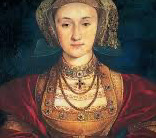
I like her not! was the verdict of Henry VIII on meeting his fourth wife, Anne of Cleves, for the first time, complaining that he had been sent a Flanders mare. Anne, having been promised the most handsome prince in Europe, was also destined to be disappointed in the elderly and corpulent king. Forced to proceed with their wedding for diplomatic reasons, Henry and Anne tried to make the best of the situation, but attempts to consummate the match were farcical. After only seven months of marriage Henry was so desperate to rid himself of Anne that he declared himself impotent in order to secure a divorce. Anne was also eager to end her marriage and, with her clever handling of Henry, obtained one of the biggest divorce settlements in English history. Following her divorce, Anne made good use of her many properties, including Richmond Palace, Hever Castle and the house at Lewes now known as Anne of Cleves House. Anne of Cleves is often portrayed as a stupid and comical figure. The real Anne was both intelligent and practical, ensuring that, whilst she was queen for the shortest period, she was the last of all Henry VIII's wives to survive. Henry's chief minister, Thomas Cromwell, lost his head for his role in the Cleves marriage, but Anne's shrewdness ensured she kept hers. Anne of Cleves led a dramatic and often dangerous life but, for all this, of Henry VIII's six wives, she is truly the wife that survived."
Elizabeth Norton is a British historian specialising in the queens of England and the Tudor period. She obtained an Master of Arts in Archaeology and Anthropology from the University of Cambridge in 2003 and a masters degree in European Archaeology from the University of Oxford in 2004.
Elizabeth Norton is the author of five non-fiction works: She Wolves, The Notorious Queens of England (The History Press, 2008), Anne Boleyn, Henry VIII's Obsession (Amberley, 2008), Jane Seymour, Henry VIII's True Love (Amberley, 2009), Anne of Cleves, Henry VIII's Discarded Bride (Amberley, 2009) and Catherine Parr (Amberley, 2010).[2]' She is also the author of two articles: Anne of Cleves and Richmond Palace (Surrey History, 2009) [3] and Scandinavian Influences in the Late Anglo-Saxon Sculpture of Sussex (Sussex Archaeological Collections, 2009)
When Anne of Cleves was introduced to King Henry VIII (of England) for the first time it must have been an enormous shock and disappointment. Henry, once regarded as the most "handomest prince in Christendom", was obese, balding and old, and nothing of what Anne, aged 25, would have been expecting. Sent to a strange country where she didn't understand the language or the culture, Anne's marriage to Henry was to create an alliance between England and the German states that at the time was deemed necessary in the event that either France or Spain decided to invade English soil.
As the middle daughter of the Duke of Cleves, Anne's education and upbringing focused on what was considered to be a woman's traditional role and duties. Whilst she was taught to read and write, Anne was not taught music, the arts or politics; however, she was taught to be polite, modest and patient.
This does not mean that Anne was lacking in smarts. In fact, Anne was far more intelligent than what she is often given credit, and in retrospect was probably the most intelligent of all of Henry's wives. When faced with the reality of her failing marriage, Anne was clearly devestated, not because she loved Henry, but instead for the fear and uncertaintly that came with it. Anne was faced with two options: To stand firm and refuse to accept that her marriage to Henry was null and void, or to conform to Henry's wishes, whether she agreed with him or not.
It's not surprising that Anne would have been apprehensive about suffering the same fate as Henry's earlier wives Katherine of Aragon and Anne Boleyn if she refused to agree to an annulment. She was popular with the English people and enjoyed being their Queen, and was also fully aware that the alliance with the German states was important to Henry, who would be looking for a diplomatic way out of their marriage so as to not damage that alliance. Therefore, Henry went on to promise Anne a substantial divorce settlement, which included being adopted as the "King's beloved sister", and being given numerous palaces and properties where she could reside and derive income. Anne readily agreed: This decision, quite possibly, saved her life. Not only did she remain in Henry's high favour, she also suddenly became very independently wealthy. For many, this would have been seen as a far greater prize than the constant uncertainty of being Henry VIII's wife.
However, after Henry's death Anne's good fortune started to fade: The young King and his advisors did not see Anne in the same light as Henry had. Almost overnight she became an unwanted expense and a major nuisance, and as the new King slowly diminished her holdings, her wealth began to disappear and she struggled to meet her household expenses each year. When the young King died and Mary I took throne, Anne returned to court and favour, for a short time at least. However, Mary I was a paranoid Queen and due to Anne's fondness of her sister and rival, Elizabeth, felt that she could not be trusted and was not invited to court after the coronation, nor was she provided with any additional holdings to replace those she had lost during the reign of the young King.
Anne passed away at Chelsea in July 1557, aged 41, having outlived all of Henry's other wives. Although she lived the remaining few years of her life not having enough money to pay all her expenses and being unable to support the lifestyle she had become accustomed to, she kept a much-loved and trusted household, bequeathing most of her remaining possessions to those who served her since her arrival in England. She received a royal funeral and was buried in Westminster Abbey.
Elizabeth Norton's biography Anne of Cleves: Henry VIII's Discarded Bride is a reminder of all these facts, yet it fails to produce any new information on Anne's life. A lot of what is written about her life before England and after Henry are facts already known, and there appears to be quite a bit of assumption about Anne's response to the events that were taking place around her.
At the same time, however, Norton's biography reiterates the fact that Anne was not the woman she is often portrayed to be in legend: She was a beautiful, dutiful princess, fully aware of what her position and status entitled her to, and if she expected certain treatment to be shown to her she was not afraid to ask for it. However, overall Anne was a down-to-earth woman who possessed a love of food and cooking, even going to far as to have a kitchen installed in her quarters so she could partake in this hobby at any time. Anne was born and lived her life a Catholic (not a Lutheran as has often been suggested), was thought of fondly by the English people, and received the utmost devotion and care from her servants, a fact that on its own exemplifies the amazing type of woman she was.
Anne of Cleves: Henry VIII's Discarded Bride is short and sharp biography that covers all the major events in Anne's life, but skims over the areas where information may be lacking. Although failing to provide anything new, this is an easy-to-read historical biography for anyone interested in Tudor England.
If you walk into any bigger book-store in England, you will find shelf after shelf after shelf with books on Tudor history. There are books on Henry VIII and his court, his wives, his mistresses, and books on a chosen individual from these groups. Several on each. Finding a book on Anne of Cleves should therefore be easy. It isn't. She is the one that obviously hasn't tickled the imagination of neither many writers nor readers. That is quite a pity - admittedly she wasn't queen for long, but she is still a member of the group.
There are a few biographies out there, though, and this one is quite interesting. There are a few instances of 'Anne must have felt this/that', but the guessing is kept to a minimum (and are quite sound and believable) and most is based on contemporary sources with a lot quotations from them (if you need to brush up on your 16th century English, this might be a nice place to start). I am very glad I read it - I just knew her, as I think many others do, as the ugly, discarded one, but there is more to her story than that.
Anne of Cleves was Henry VIII’s fourth wife. She outlived him and all his other wives, though she was only 41-years old when she died. She was only his wife for about 6 months before he divorced her (or found a way out of the marriage, anyway); he never liked her while they were married (though they got along well afterward). She was well taken care of while he was still alive (though this did not necessarily continue after he died, at least until Mary became queen).
There is not as much written about Anne of Cleves as some (all?) of Henry’s other wives, though I believe I have read one other that focused on only her. I like Anne, and she was well-liked by the people of England while she was there. It is sad to read that although she was well-taken care of and Anne put on a brave public face that she was ok with everything after they were apart, she really did consider herself to still be his wife after he put her aside for the young Katherine Howard. Lots of interesting little tidbits about Anne in this book. Also a great section of pictures, some of seen before and some I haven’t.
The style of this follows a pattern across all Elizabeth Norton biographies I've read: skillfully researched, not too drily academic, and effectively enough written that we feel present in certain episodes.
This never-crowned queen consort, whose marriage was famously annulled, was passed down to us in a assortment of unkind and unjust ways, usually as an uneducated frump, the 'Flanders mare' whose looks and personal odours repulsed Henry VIII so much that he felt unable to consummate their marriage, paying her off with a wealth of palaces and income.
While this royal couple's chemistry was, evidently, all wrong, Anne was actually attractive and intelligent. Attractive enough to have had her admirers' remarks well documented and intelligent enough to negotiate probably the best deal of all Henry's wives, becoming an honorary royal 'sister' who remained in high favour and enjoyed her independence.
Neither formally well-educated nor culturally sophisticated, Anne was skilled in needlework, loved card games and considered 'gentle, virtuous, and docile'. Thought solemn by English standards, she perhaps appeared older than her years, but her paintings had undergone Holbein's 'treatments' to suit her much older king (these likenesses were famously accused of inaccuracies, blamed for overly flattering her to win Henry's approval).
The French ambassador described her as tall and slim, 'of middling beauty and of very assured and resolute countenance'. She was fair haired and was said by chronicler Edward Hall to have had a lovely face.
A sister of Duke Wilhelm of Cleves, Anne was a Roman Catholic who converted to Anglicanism to suit Henry but later reverted to suit his Catholic daughter Queen Mary I. A popular figure with the public and Tudor royal family alike, Anne had a great life and was universally liked and respected. The last of Henry's wives to die, she is the only one buried in Westminster Abbey.
Following the current trend of biographical amendments to Anne's reputation - from spurned, ugly foreign hausfrau to wily, highly esteemed great dame - Elizabeth Norton's contribution may offer no groundbreaking revelations, but her style is among the most accessible.
Without lowering standards to the emotively driven novel-style of some, Norton strikes a fine balance granting us authentic entry into her subject's personal world without losing that all important scholarly perspective. Here she once more shows herself to be an erudite historian blessed with literary talent and a popular voice.
3.5 Stars -- It's nice to read something focusing on Anne for once, who generally goes forgotten or is at best quickly glossed over. A very quick and easy read, which I appreciated. My only complaint is the lack of footnotes, considering just how many excerpts there were from various letters. I personally like my history books to be generous with their use of footnotes...
Anne of Cleves was Henry VIII's fourth wife, and I've often thought of her as the lucky one who didn't have to live with him, had some measure of freedom, and survived him. This biography really shed some light on some misconceptions I had and has transformed my understanding of Anne of Cleves. And, this being the second biography of one of Henry VIII's wives that I've read by Elizabeth Norton (the other being Jane Seymour), the ultimate conclusion I have reached is that after Henry had Anne Boleyn executed, every future woman that he married was doing their best to appease him to avoid the same fate. And the thing that became clear the more I read this was that because she spent her life trying not to cross Henry, Anne of Cleves sadly never realized her full potential.
The first perception that Ms. Norton challenged was that Anne was Lutheran or Protestant. I've read many biographies of the Tudor monarchs and most of them also assumed this, if they addressed it at all. In fact, during Anne's lifetime people apparently assumed this with Protestant factions in England incorrectly assuming that Anne of Cleves would be sympathetic to them. Yet, like Henry VIII, Anne considered herself to be Catholic but they did not recognize the Pope as head of the church. This had some implications for when Henry died. During Edward's brief reign Anne, someone who focused on survival, became Protestant because it was expedient to do so. But when Mary assumed the throne Anne was happy to reembrace her true faith.
I was also surprised to read that Anne of Cleves was actually an effective queen given the standards of the day. Aside from Henry, people who met her liked her, were charmed by her and impressed with her manners and how she handled her affairs. She quickly won the love of the English people and when she was cast aside they were upset and astonished. She fulfilled her public duties well and was apparently brighter than she is often given credit for. The conclusion I have to draw from this is that Anne of Cleves was unfairly robbed of a public role that she was rather well suited for.
After Henry discarded her, Anne did not stop hoping that she could one day become Queen of England again. Yet this often does not make it to the historical record because, as Ms. Norton points out, keeping Henry happy was a survival strategy. And to keep Henry happy, Anne had to appear to be happy being his beloved sister, something that Anne did rather well. Further, while I'd thought staying in England was a choice preferable to Anne given how restrictive Germany was, Ms. Norton points out that she was essentially a political hostage. As long as Anne's family back home didn't rock the boat over her outrageous treatment then she was safe. Her correspondence with her family was read and searched and she had spies in her household. Of course, Anne was well provided for during Henry's lifetime, but to say she lived a life of freedom in England is an exaggeration.
Anne had hoped to become queen again, not out of love for Henry but because she was ambitious and desired the crown, and because it would also rehabilitate her image and be a balm to the indignities that she had suffered after being cast aside. After Katherine Howard's execution Anne pressed to try again with Henry, and felt slighted when he chose Katherine Parr over her. After Henry died, Anne's financial position was a lot less secure, particularly during Edward's reign, as no one was interested in providing for the king's beloved sister. Anne wanted to return to Germany, but if she did she would lose all financial assistance and have to rely on her brother's charity. Anne, who always thought of herself as the rightful queen, tried to be recognized as Henry's dowager widow so she could be well provided for on her return to Germany, but no one was interested in advocating this, so in the end Anne was stranded in England.
I do wish the book had focused a bit more on who Anne was outside of Henry and what was going on at court, though there may not be a lot on the record. I wish there had been more of an examination of her relationship with Elizabeth I. It was interesting to learn that Anne took up cooking to give herself something to do, but it seems that even after reading this there is still much I don't know about Anne of Cleves. Her cause of death, at the young age of 41, was never mentioned or speculated on for instance.
Yet the fact that Anne was kind and beloved by people who knew her is what really stood out. Even Henry developed a friendship with her after they divorced. When she realized she was going to die she began drafting her will and had a remarkable memory for detail of people who had helped her out in England and made sure her servants were well compensated and provided for. Her servants were apparently genuinely upset at her death, and in the end they were all she had. Anne of Cleves set out for England full of hopes and expectations to be a good queen. She fulfilled those duties admirably during the six months she was allowed to, but because Henry was, by that point, an unrelenting tyrant, she was cast aside and, like every woman unfortunate to have married Henry VIII, caught in a battle to keep him appeased so she would not lose her head. Anne of Cleves deserved better.
Anne of Cleves is often unfairly pushed aside when it comes to the wives of Henry VIII, but in my opinion she certainly is the most fascinating of the six. This novel perfectly captures her story and her character, finally giving her the proper attention she deserves.
I think that Anne of Cleves is often unfairly pushed aside. There are simply more interesting wives of Henry VIII - Anne Boleyn, Katherine of Aragon, Katherine Howard. But I have always had an interest in her, which was why I picked up this book. I wasn't too daunted because it's quite slim, so it didn't take me more than three days to read, which was great, because often the problem I have with biographies is that they drag. This was perfectly easy to get through whilst still being extremely interesting.
Elizabeth Norton, I think, gave a fair and accurate account of Anne's life, and I think that she portrayed Anne as a strong, intelligent woman who was actually pretty sensible. And although Anne of Cleves was the luckiest of the wives, who outlived all of them and never had to marry again, Elizabeth Norton is entirely correct when she says that being the luckiest of an unlucky group of women did not mean she was happy.
Anne of Cleves went through some hardship in her life - she had to leave her homeland forever, to marry a man who discarded her on sight. It must have seemed like such a waste, and she was to live and die in England. She was, as the author puts it, an intelligent woman who enjoyed the role of queen. However, a small fault I have with this book is that Elizabeth Norton often stated how Anne felt, but offered no evidence to support it, which leaves me wondering whether I can actually fully believe it. It feels more like an assumption than reality.
All in all, I think this was a well researched biography and I really liked it. I think it was interesting and not heavy going, it gave Anne a story of her own and I enjoyed it a lot. I think that maybe Elizabeth Norton could have gone into a little more detail, but this was a good overview and gave me a good and detailed idea of her life.
Norton is writing a series profiling each of Henry XIII's wives. This volume follows Norton's book on Jane Seymour. The Jane book was wanting, perhaps due to her short life and time of fame. This new book is a very good account of Anne and how she came to marry Henry, how he came to divorce her and her life beyond his.
The author is sympathetic to her subject. Anne comes to England speaking German. She has had little formal education and very little worldly experience. She is a bridal candidate somewhat by default. Her marriage deteriorated quickly. She did not understand why and is humiliated by it. Anne tries to be the pleasing model wife, but Henry's lack of attraction to her is deep. As it becomes a legal issue, Norton describes what little room she had to maneuver.
Norton feels Anne is the most fortunate of all Henry's wives. She survives him, and his gratitude for her not contesting his divorce made her very wealthy... at least for a time.
A very good, if basic, biography. Although there's some conjecture and Norton doesn't really offer anything new, this bio is highly readable and short enough so that people won't get tired of the book and not finish. I think Norton makes some very good points about how, even though Anne of Cleves was made wealthy and treated relatively well by Henry VIII, she would still have been much better off if she'd never met the man. This book makes me want to read the other biographies in this series on Henry VIII's wives.
PREPOSTEROUS!! I am Anne of Cleves, I am NOT to be known as "Henry viii's discarded bride"!! This is absolutely atrocious behaviour. Off with your head.
A part of me wants to give this a higher rating because parts of it are very interesting, but this book does unfortunately suffer from a couple of issues.
One is it's incredibly short and, as a result, lacks any deeper context or aby kind of in depth explanation for things like the history of cleeves and more details on Anne's family beyond what feels like a few paragraphs. Instead, ypure left with the distinct feeling like the book is nurturing you to the marridge as quickly as possible, which ends up leaving he life before Henry feels really hollow. Like I know more about the hole in portrait what she was wearing and the families thoughts around it from a book not even about Anne yet that is absent from this book.
Also, absent in pretty much the first half of this book is anything written by Anne or any of the events, mostly from her perspective, until you get to the marridge. Instead, the first chunk of this book reads like a section from a book about Henry the 8th because that's mostly what it talks about, and Anne is barely mentioned at all.
I don't know if it's just because there's so few records of her writings remaining but there's almost nothing written by Anne actually in here and the summary style that the book tends to go with concerning most of the events of her life ends up leaving you with the distinct feeling that you could have just read an in depth Wikipedia article or a couple others about her family and the period and you'd walk away with about the same amount of information this book gives you.
Another rpuece taht bothered me was the pictures and how inconsistent the priorities with them were. The portrait of Anne by Holbein the younger featured on the cover and one of the most defining amd well known objects of her life isn't even in colour and barley occupies a few square incense of space. While the sketch of a possibly planned portrait for the ducess of suffox who is barley mentioned at all is an entire colour page.... like are you fukking kidding me. You're gonna give more space to images not even of or concerning Anne at all and at the same time you won't even put the incredibly import portrait of her a colour image or even a full page? Like the other portrait of her is also not in color and is super small and the book is even missing another suspected miniaturw portrait of Anne in English dress by Holbein... which considering the book spends a bunch of time talking bout her efforts to please Henry and how she was unaware of his true feeling not including this portrait is a really odd choice considering there's sooooo much space dedicated to almost irrelevant portraits amd images.
The suspected Anne Bolyn portrait by Holbein that this book lists as a portrait even now and that's of at least to my knowledge since 2020 has not actualky been confirmed as a portrait of Anne boleyn. It's is only theorized but the description of that image in this book treats that as fact which I think is at best not being as entirely truthful as you should be when writing and publishing what is supossed to be a factual history book.
Overall I won't say that I didn't enjoy this book I did find it very entertaining. It is however a very hollow work taht barley includes Anne at all in some sections, and In my option fails to give any greater insight into Anne and her life at all beyond a few small sections. There is more than room for a better and more extensive book on Anne to be written.
If you're looking for an introduction if you know next to nothing I can recommend this however if ypu have even basic knowledge of Henry the 8th or Anne of Cleeves speficalky ypure going to get practically nothing put of this and googling or reading more extensive books on the tudors is a better option.
Anne of Cleves has always been the joke of Henry VIII’s wives. She has been known to be Henry VIII’s ugliest wife. Her position as Queen of England only lasted for a few months. However, her divorce with Henry VIII landed Anne as one of the wealthiest women in England. She was the second highest lady after the queen. This biography stresses that even though her marriage to Henry VIII was very unlucky, her fate was the best out of all of his wives. Anne of Cleves was indeed the wife that survived.
Anne of Cleves was not destined to be Queen of England. She was betrothed to Francis of Lorraine. When the betrothal fell through, she eventually became a candidate for a suitable marriage to Henry. At first, Anne was at the bottom of the list as a possible wife for Henry. Henry wanted Marie of Guise and Christina of Denmark. When those fell through, Henry began to take an interest in Anne. The duchy of Cleves was very wealthy and powerful. Anne was descended from the kings of England and France. Henry requested a portrait of Anne and liked it so much he wanted to marry her.
Being courted by Henry VIII was an honor. The family happily accepted and immediately began making preparations for her marriage. When Anne arrived in England, he decided to surprise his future bride. However, the meeting did not go so well. Mrs. Norton suggests that Anne had ignored Henry and did not recognize him as her betrothed until he formally introduced himself. However, Henry held grudges. He never forgave Anne for her mistake and that is why he disliked her intently. The author emphasizes that Anne was not the ugly bride that has been depicted in popular culture. Rather, Anne was very pretty, and she was discarded because she wounded Henry’s vanity.
Mrs. Norton also tells us that Anne did not want to submit to divorce easily. She was terrified of the divorce and was afraid to suffer the same fate as Catherine of Aragon. She was so embarrassed about her divorce that she dreaded telling her family of the news. Even after the annulment, she always saw herself as the true wife of Henry VIII and the real queen of England. The author even speculates that Anne was happy about Catherine Howard’s beheading because she believed that Henry would take her back. She was very disappointed when Henry chose Katherine Parr to be his next wife. Even after Henry’s death, she saw herself as Henry’s widow. She wanted to be recognized as the dowager queen of England and wanted the same rights as Katherine Parr.
Overall, Anne fought for the recognition as Queen of England throughout her life. While she had a better fate than Henry’s other wives, she was always regarded as the cast aside wife. She always came in second in prestige and rank. Anne went through many obstacles and challenges. It makes us wonder if Anne was ever happy. Still, the biography shows Anne not as a discarded queen, but as a woman of intellect. Even though this was a short read, Anne of Cleves is very detailed and well-researched. There were many times that it became difficult to read because of the numerous primary sources. Still, Anne of Cleves is a must-read for any Tudor fan! It gives us a very different Anne than the silly and stupid Anne of Cleves that is often portrayed in popular media!
Norton takes the refreshing step of starting off an Anne of Cleves biography with the history of Anne’s family, rather than starting with Henry VIII’s marital career. In doing so, we find out Anne did not come from a family of the royal equivalent of backwater hillbillies, as her background is often portrayed, but rather from a fairly distinguished royal house that had connections all over Europe and we learn that members of her family often played fairly high roles in Medieval and Renaissance-era politics.
And THEN we get into Henry’s marital career, but with a heavy emphasis on what the political situation was on both sides of the Channel at that moment of the engagement, showing just how this marriage came to be. Norton covers not just how Henry was in need of a wife of certain characteristics, she shows what the Cleves family was looking for, and also gets into the political background of Anne’s prior engagement, and both why it was made and why it was called off.
Norton is a little too heavy handed at pronouncing what people “must” have been feeling at times: “Anne awoke with trepidation,” etc., but she also starts digging into the subtext of quotes, questioning the motives behind what people said, and remembering to ask what was happening to Anne after so many centuries of people focusing on Henry.
Norton shows just how fast this quickie divorce was, (fast enough to make my grandmother’s 1954 Reno divorce look long and dragged out) and how it left Anne’s head spinning and she was probably more confused than complacent regarding how she felt about things ended. And Norton has plenty of snarky quotes from various people around both country and Continent to show how surprised absolutely everyone except Henry was that Henry got divorced (again).
And what really made this book stand out was digging into what happened to Anne not just post-married life, but post-Henry’s life altogether. We see her pop up in histories at Mary I’s coronation. But what happened between Henry’s death and Mary’s coronation? A lot of financial bickering, apparently.
Edward VI and his officials decided to take the viewpoint that “payment for life” meant Henry’s life, not Anne’s, and it was like pulling teeth to get the money owed her during Edward’s reign. Its petty and full of the dull, daily grind of paying bills, but it shows just how human these distant historical figures were as we read about them arguing about contracts and invoices, real estate and rent.
Anne of Cleves had a lot of financial difficulties at the end of her life, but always kept her head (literally and figuratively), cared about those around her, and was always aware she was royal acted with royal dignity.
When we think about the wives of Henry VIII, we often think about the ones who made an impact. Katherine of Aragon, Anne Boleyn, Jane Seymour, Catherine Howard, and Kathryn Parr all left their own distinguished marks on the Tudor court. But there was one more bride of Henry VIII who didn’t make the greatest first impression, yet she is the one who outlived Henry VIII and the other brides. She was a foreign princess whose marriage did not work out, but was able to create a life for herself in England. Her name was Anne of Cleves, and her story is told in the biography, “Anne of Cleves: Henry VIII’s Discarded Bride” by Elizabeth Norton.
I have enjoyed learning about Anne of Cleves ever since I read Heather R. Darsie’s debut book about her, “Anna, Duchess of Cleves: The King’s Beloved Sister,” a few years ago. When I heard that Elizabeth Norton had written a biography about Anne of Cleves, I was excited to see what new information she would provide.
Anne of Cleves was the daughter of John III, Duke of Cleves, and Maria of Juliers. Before she was destined to be the wife of King Henry VIII, she was briefly engaged to Francis I, Duke of Lorraine, to align Lorraine with Cleves for the Schmalkaldic League, but the marriage alliance did not pan out. Meanwhile in England, Henry VIII was mourning the death of Jane Seymour, who gave him his long-sought-after male heir in the future Edward VI. His councillors believed that he needed to marry again, so the search began for a new bride. Unfortunately, every other eligible bride pick chose to reject him completely, so they had no other choice but to select a bride from Cleves, which was Anne. Norton goes into great detail about Anne’s trip to England, her first meeting with Henry VIII, their brief marriage, and the annulment, which happened in quick succession. Finally, we get to see what happened to Anne of Cleves during the reigns of Edward VI and Mary I, until she died in 1557.
I enjoyed this bite-sized biography of Anne of Cleves. It was very informative, and Norton’s writing style is easy to follow. If you want to read a very good biography about Henry VIII’s fourth wife, I recommend you read “Anne of Cleves: Henry VIII’s Discarded Bride” by Elizabeth Norton.
I rated this then I thought I should come back and leave a review because having just read a more recent biography of Anne of Cleves, this one did not stand up at all. As other reviewers have pointed out, the worst part of this biography is the projection of emotion onto Anne. She felt this or believed that. Unless you are sitting on her secret diary, you have no idea what she felt. We know from her later actions she desired to be seen as Henry's rightful queen since she tried to have the annulment quashed, but we also know that she struggled with her finances and that being recognised as the Queen Dowager would have made her life a lot more comfortable. Less of the suppositions, we can do that for ourselves.
The second thing I disliked is some sloppy research. I appreciate that for the last few hundred years we have taken Henry's view of events as gospel, but for a woman who has written about other Tudor queens to just take the official record as fact is not awesome. She relates Anthony Browne's re-telling of his an Henry's first meeting with Anne without acknowledging that this account was actually given 6 months later as a deposition during the Secret Council to annul the marriage, and Browne, along with all the other nobles who testified, were saying what Henry wanted them to, and were based on Cromwell's revisionist letter that was written under so much duress its ridiculous. There are no contemporary accounts which support Henry's later claims that he didn't want to marry her or that she was unappealing.
I think that if you are interested in Anne this is as good a place as any to start and will give a good grounding, but I would recommend 'Anna, Duchess of Cleves' by Heather Darsie as a more detailed and nuanced account of her life and the political motivations behind her repudiation.
A decent look at the life of Henry VIII's fourth wife, Anne of Cleves. Plucked from a German duchy, Anne came to the court of Henry VIII expecting to be Queen of England, which she was for about six months. Her life became one of irrelevance after he decided to divorce her because "I like her not". Because of her willingness to divorce, Anne was richly rewarded by her former husband with a comfortable income and estates. And her friendship with his daughter, Mary, ensured that she was a fixture at court in subsequent reigns.
The book is interesting, especially so after Henry VIII's death. I enjoyed reading Anne's life beyond Henry. It's interesting to note that she was the last of his wives to die, outliving them all. One of the drawbacks of the book, for me, is the use in full of letters written by or about Anne. These letters are produced in their original writing or Old English. This makes them difficult to read and I quickly lost interest. I wish the author would've summed them up in today's vernacular and then noted the letter in the "Notes" section. One of the assets of the book is its plethora of illustrations that accompany the text.
Good reading if you wish to know a little more about Anne of Cleves.
This book is a complete yet short book on the life of Anne of Cleves, fourth wife of Henry Vlll. I have read several books on the wives as a group as well as books about some of the wives individually but this was the first book I have read about just Anne. For many years Anne Boleyn has been my favorite wife but lately I have come to fully appreciate the worth and bravery of Anne of Cleves. I have long thought that Anne of Cleves was a person of greater depth than many give her credit for. So many people view her as the smartest of luckiest of Henry's wives. This book confirmed my beliefs that these two adjectives are not wholly accurate. While Anne was smart her intelligence did not play a part in her divorce agreement like many assume. She did not use her intelligence to broker a deal. Nor was she lucky in obtaining the divorce. Norton fully explains how humiliated and hurt she was by her divorce from Henry. Anne has over time gained a new respect from me. Bravery and courage comes in many forms and Anne displayed those in her quiet and calm actions. She showed humility and resignation while maintaining her dignity. Her story deserves to be told.
Anne Of Cleves has long been one of my favourite historical figures, but there is unfortunately little written on her. That said, I found this book wildly informative as an introduction to her life though I desperately wish it was longer and more in depth. While wives like Katherine Howard and Anne Boleyn had more "dramatic" stories, the fact that Anne successfully divorced Henry (rather than being killed) and subsequently lived out her life as one of the richest women in England is truly much more fascinating to me. Unfortunately, not many through history have shared mine (and Norton's) interest in this Queen so I believe Norton's account is probably one of the best you'll find. A lovely albeit quick read for an upcoming Cleves-Connoisseur.
I've got a couple mixed feelings on this one. On one hand, I'm really happy with the fact it exists and the premise it sets out on- so much of the history of the Tudors (and really, most history) is dominated by androcentric accounts and it's really cool getting to see someone seeking to challenge that. It's really well-written too- it flows super well, it's not particularly difficult to follow and doesn't overstay its welcome. Norton's clearly very knowledgable, and she approaches the sources with maturity and a professional level of questioning. I just wish it had gone further in its focus. There were a lot of points where it felt more like a biography of Anne, wife of Henry, than Anne of Cleves. I suppose I went into it expected a very detailed account of her life, but there was a lot of analysis of the political situation in Europe at the time instead. I can appreciate that those elements of life were important in understanding what she experienced, and I get there's a limitation to sources. It just didn't always feel like it was focused enough on Anne for me- I don't feel like it gave a very good image of what she was like as a person. For example, there was a point where it was describing what she was up to in a period of political stagnation as "pursuing her passions" - well, sure, but what were they? It was still an enjoyable read and definitely a step in the right direction for the historical record, I just wish it had gone a little further in challenging conventional ways of telling her story.
I enjoyed reading this, but had a problem with some of the illustrations at the end. It seems very unlikely that no. 3 is Anne. It is nothing like other portraits of her and bears a marked similarity to her younger sister, Amalia. And surely no.19 is not Jane Seymour! Rather trust Holbein on her. Also, no.41 is by most authorities thought unlikely to be Catherine Howard, at most she was 21 years old and if this is her, she was not "the prettiest" of Henry's wives! Look up an early portrait of Katharine of Aragon.
This book fills in many details most books omit or gloss over in the Tudor era. This is the first book I’ve seen that puts Anne at the center and gives us any sense of who she was. This isn’t an easy task, as she has never received the historical attention needed, which means the author dug deeply.
Her use of primary materials is both instructive and difficult. These are used in long stretches and not easy reading. Better to have shortened them and spend more time explaining them and their impact.
All in all, an important addition to Tudor history.
Another excellent book in this series. Like most people I knew little about Anne of Cleves before and after her marriage to Henry VIII. I had not realized how she got the shaft after he died. People were just like 'yeah, don't care that Henry left her this that or the other for her lifetime. I want it, she's nobody, I'm taking it.' A really in depth insightful look at, as the author puts it, the luckiest luckless woman among all the luckless women whose lives were blasted by Henry.
2.5 to 3 stars Although I wanted to know about Anne I was not expecting an in depth history of the political and religious conflicts of Europe. Anyone studying these conflicts would find this book of great interest and full of the minutiae of political intrigue. However, this was not what I was looking for and so, therefore, after the second chapter I gave up. Maybe at a later stage I will dive into this book now I know what to expect.
As this book was written 15 years ago, some of the information is now a little out of date/other scholars have used different documents which show a different interpretation of events ( Heather Darsie has a more updated book about Anna). However, I like Elizabeth Norton’s writing style and hearing her on podcasts so I’ll continue to read her books, even if some are not the most current scholarship.
Great biography of Anne of Cleves. It was really interesting to learn what happened to her before and after her marriage to Henry VIII. I think she really lucked it out, of all his wives, and she seemed to be quite a kind person, according to the sources, very lively. Writing style was very enjoyable too.