The fourth in the Strangers and Brothers series begins with the dying Master of a Cambridge college. His imminent demise causes intense rivalry and jealousy amongst the other fellows. Former friends become enemies as the election looms.
For an academic and someone who reads a lot of fiction, I have an amazingly bad record on campus novels. Malcolm Bradbury, David Lodge, Philip Roth’s The Human Stain … you name it, I have completely failed to read it. Worst of all, I had never read The Masters before now, despite having been a “fellow” (a.k.a. professor) of a Cambridge college for quite a long period of my life—in fact, the very same one where this novel is set.
Having finally got round to it, I enjoyed The Masters much more than I thought I was going to. It’s the kind of unfashionable, half-forgotten novel you fear is going to be rather stodgy, but which turns out to be suprisingly compelling.
The novel is highly condensed in terms of plot and setting, in a way that made me think of the Aristotelian unities. The whole narrative takes place in the arc of a year and almost entirely within the boundaries of the college. The plot is also highly unified, consisting of the scheming and plotting associated with the election of a new master, or head of the college. Snow is pretty rigorous in pushing anything else to the perimeters of the plot. We get a few hints about the private lives and the academic interests of some of the fellows, and some allusions to the rapidly darkening political situation in Europe (The Masters is set in 1937, though written in 1951). Snow’s focus remains tightly on the election plot throughout, however; nothing beyond the college gates is really allowed to intrude.
This all sounds very narrow and claustrophobic, and it is—but Snow manages to work very adroitly within his self-imposed narrative constraints. He writes well, in an unflashy way, and he is strong on characterization, nicely mixing some intriguingly complex and tortured main characters with a few breezy semi-caricatures on the side for light relief. Snow’s main interest is in the psychology and social dynamics of political competition, and on power relations between individuals and within groups. This gives the book a universality that belies its distinctive and cranky college setting (although the college, with its weird rituals and interesting patterns of daytime alcohol consumption, has a folkloristic interest of its own).
The Masters is the fifth book of an eleven-book series, Strangers and Brothers, following the trajectory of Lewis Eliot, the young law fellow who is the first-person narrator here. Given that, I was quite impressed by how well the novel worked as a self-standing narrative. Reading it in isolation actually gives the book a slightly more experimental feel than it would otherwise have, in that so much is alluded to but left unexplained. Eliot is clearly living through some kind of marital tragedy, but we hear virtually nothing of it within the bounds of this novel; we are simply left to speculate how much of his emotional investment in “his” candidate, Paul Jago, has to do with this personal trauma.
In addition to its merits as a novel, The Masters has value as a historical testimonial or memoir. Snow knew the world of the Cambridge colleges very intimately and was a fellow at Christ's College during these same years. One thing I found poignant in The Masters is the contrast between the younger and middle-aged fellows, Snow’s contemporaries, most afflicted with some kind of twentieth-century angst or melancholy, and the much more buoyant surviving Victorians, in their seventies, who seem much happier in their skin. I enjoyed Snow’s sketches of these game old boys: the suave political radical Pilbrow and the preposterously vain elderly toddler Gay, an expert on the Icelandic sagas, whose fond allusions to his marauding “saga-men” offer an ironic counterpoint to the less swashbuckling brand of masculinity on display in the novel.
I first read C.P. Snow's 'Strangers and Brothers' series some time ago, and it became a favorite. The novels focus on an English barrister/civil servant, Lewis Eliot, who rises from poverty to a position of influence in the early-to-mid 1900s. Eliot is present in the entire eleven-book series, but he's not always the central character.
The Masters is part of the series, but it works fine as a standalone book.
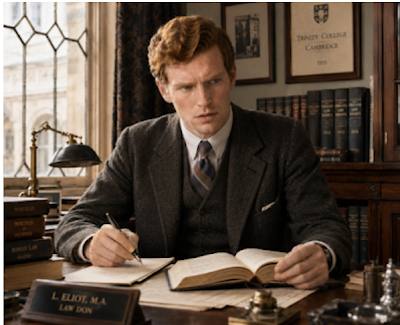
The story takes place in 1937, when narrator Lewis Eliot is a 32-year-old law don and Fellow at Cambridge University. Lewis has rooms at the college as well as a home in London with his wife Sheila.
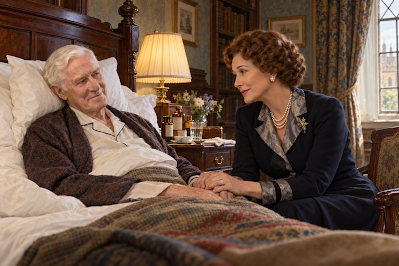
As the narrative begins, the Master of the college, Vernon Royce, has terminal cancer and is given only months to live. Royce's wife, Lady Muriel, tells him he has an ulcer and is recovering, and she insists NO ONE tell Royce the truth. So the Master lingers in bed and gets visits from his family and college Fellows - all of whom find the situation very difficult. The Master's decline and demise is a thread that runs through the story.
The college statutes dictate that a new Master be elected two weeks after the position is vacated, but the maneuvering begins with Royce's sad prognosis, months before his death. Elections are by nature contentious, and the combative process is the theme of this novel.
The college has 13 Fellows who'll elect the new Master, and two camps quickly form. The two Fellows proposed for Master are Senior Tutor Paul Jago - an English literature scholar;
and Dr. Redvers Crawford - who's renowned for his studies in physiology.
If neither man gets a majority, the selection goes to the Visitor, a bishop in a northern diocese - and no one wants that to happen.
Loyalties shift over time, but early in the campaign, the Fellows line up as follows:
▶▶ Jago's supporters are Arthur Brown, Charles Chrystal, Lewis Eliot, Roy Calvert, Ronald Nightingale, and Walter Luke. Generally speaking, these men champion Jago because he's a warm and sympathetic man who understands people - good qualities for a Master.
▶▶ Crawford's supporters are Albert Despard-Smith, Godfrey Winslow, Francis Getliffe, Eustace Pilbrow, and Maurice Gay. They back Crawford for a mixture of reasons. Overall, the feeling is more anti-Jago than pro-Crawford. Some fellows dislike Jago as a person, and Jago's work in English literature hasn't received any accolades. On the other hand, Crawford is a distinguished scholar, well known outside the college.
Jago and Crawford are precluded from voting for themselves, so they must either abstain or vote for each other.
▶▶ To sum it up, at the start of the electioneering process, it looks like Jago can get a seven vote majority and win. Of course a great deal happens before election day, because some fellows are petty and spiteful, and some have an honest change of mind.
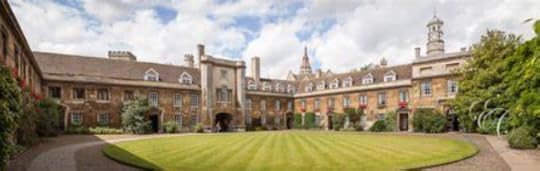
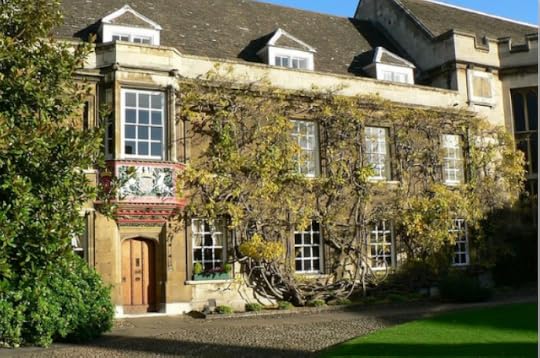
Author C.P. Snow based this book on his own experience at Cambridge, where he was a fellow of Christ’s College and participated in the election of a Master.
Christ's College at Cambridge University
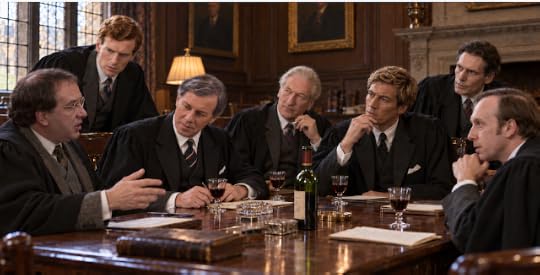
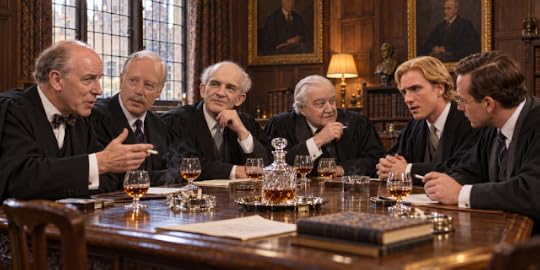
For me, this is one of the less compelling books in the Strangers and Brothers series. Much of the novel is about the Fellows, their specialties, their personalities; their prejudices, and their foibles. There are endless meetings in the Combination Room (the college’s private common room for the Fellows) where the men 'present' bottles of brandy, or claret, or wine, and smoke and talk. Added to these are meetings in the Fellows' private apartments, with more drinking and conversation.
There's maneuvering to 'bring over' a Fellow from the other side; anonymous missives are sent; vicious bad mouthing occurs; rumors get spread. You get it - typical behavior before any election.
Some legitimate concerns during the election process are: Fellows' attitudes about the Spanish Civil War and the Nazis; a huge donation to the college being dangled by a business magnate; Fellows' publications that garner accolades or not; Fellows' personalities and ability to lead; and more.
Another thing that comes up is a Fellow's family, which is legitimate for a candidate for Master. The Master's position comes with the Master's Lodge on the college grounds, and the necessity to entertain frequently.
While Crawford has a happy home with a wife and two children, Jago has no children and his wife Alice is a difficult and needy woman. Worse yet, Alice brings attention to herself for all the wrong reasons.
▶▶ Alice is overly sensitive and easily offended, and Jago is compelled to comfort and soothe her.
▶▶ Alice has 'absurd flirtations.' Narrator Lewis Eliot observes, "They were the flirtations of a woman with not a shred of confidence in her attractions, trying to prove them."
▶▶ When Jago becomes a candidate for Master, Alice assumes he'll win and talks about moving into the Master's Lodge, how she'll decorate it, the furniture she'll buy, the guests she'll invite, etc. This sense of entitlement is very offensive to the Fellows and their wives.
Alice's assumptions and eccentricities are used against Jago, which may not be fair, but it's human nature.
A good part of the book covers the political machinations, but there's more going on, such as: a Fellow who's desperate to get admitted to the Royal Society, but has no chance; a Fellow whose son is failing out of Cambridge; a Fellow who just wants to spread his own misery; unrequited love when the Master's daughter Joan Royce falls for Roy Calvert, who's not a settling down kind of man; and more.
Though I didn't love the book, I was interested in the outcome of the election, which is so high stakes at the college.
I'd recommend the book to readers interested in college politics. (By the way, Cambridge has women Fellows now, and women Masters. 😊)
Цей роман — це майже театральна постановка в мініатюрі, де на сцені розгортається битва за владу в коледжі. Здавалося б, події тривіальні, але в цьому й суть.
Давайте розбиратися!
Замкненість системи контрастує з глобальними загрозами, що нависли над світом — 1937 рік, Європа на порозі Другої світової війни. Але герої, здається, зовсім не відчували масштабів зовнішніх викликів.
Коледж, описаний у романі, здається застиглим у часі: все — від статутів до обстановки — залишається незмінним протягом століть. Ця стабільність перетворюється на застій.
Конфлікти й труднощі професорів видавалися такими дріб’язковими, майже комічними. Це науковці, які мали б вражати своїм інтелектом, але натомість вони здаються сміховинними у своїх суперечках.
Я сприймала їхню «боротьбу за владу» радше як гостру сатиру на реальність, на людські амбіції й внутрішні слабкості.
Попри всю іронію, роман піднімає багато важливих питань — як вибори впливають на людину й групу? Чи здатні закриті системи змінюватися? Хто може стати хорошим лідером? Що саме впливає на наш вибір?
Роман актуальний до сьогодні. Я приємно вражена, хоча подібна література — дуже нетиповий для мене вибір. Проте дуже рада, що саме ця книга розширила трохи мої читацькі вподобання.
The setting of The Masters is Cambridge in 1937. It is the fifth novel in the eleven novel sequence the comprises C. P. Snow's masterpiece, Strangers and Brothers. Narrated by Lewis Eliot, the story tells of the election of a new Master to replace the old Master who, as the novel opens, lays dying. The choice facing Eliot and the other dons is whether to elect Paul Jago, a scholar of literature, or Crawford, a biologist. The novel slowly, but effectively, develops suspense from the political machinations of the various academic characters while the contrast between the two candidates' personalities clearly becomes an important factor. In the confined sphere of the academy Snow delineates a paradigm of the political process in action. All this is set against the backdrop of international political changes roiling the continent. There are hints of this when one of the dons visits Berlin and another goes to the Balkans. In clear lucid prose the tale spins out, with a thin veneer of academic respectability continually covering the power struggles in the background. Through it all my interest was maintained by the suspense that builds till the end. While this is only one of several novels in the series that is set in Cambridge it may be read independently of the others. However, I found Snow's story-telling ability such that I will likely return to discover what happens in other novels in the series.
« — Чому вони не хочуть бачити те, що має значення? Людина повинна усвідомити свою сутність. І жахнутись. І пробачите себе, щоб жити далі».
Перша книжка 2025 року і перше хороше попадання ✅. І якщо можна було б описати цю книгу одним словом, цим словом було б: напруга.
Директор вигаданого коледжу але в реальному місці (❗️) помирає, але йому про це не говорять, але про це знають усі… І постає доволі логічне питання: а хто буде його наступником? Також може постати інше логічне питання: от ми зараз виберемо директора, а наш як встане з ліжка, як звільнить нас почне знову працювати! Але ні, здається Ройс безнайдійний і вже ніколи не зможе керувати коледжем.
І починається наааайцікавіше і найдраматичніше в цій книзі! 😬Передвиборча кампанія. У нас два кандидати: Джаґо і Кроуффорд. Обидва харизматичні професори, обидва поважні пани. І Рада розділяється на два ворогуючих між собою табори (вони цього не визнають, але напруга цієї книги про це говорить).
1️⃣ Коли я тільки читав анотацію, мені було цікаво, що автор зможе написати про вибори директора коледжу? Ну от вдумайтесь: вибори директора коледжу. Не країни, не, я не знаю там, коледжу! Але тут просто ТАКА ДРАМА 😵💫, тут така напруга. Герої постійно розмовляють про вибори, вони постійно намагаються переманити на свою сторону. Деякі навіть використовують заборонені мораллю методи. Я не міг відірватись тому що я знав, що в кінці мене, власне, очікує результат. І мені було цікаво, до чого це все приведе!
2️⃣ Тут дуууже багато персонажів. Коли видавництво Апріорі реагували на мою історію в Instagram, де я це сказав, вони сказали, що потрібно робити схему, щоб втримати в голові хто є хто. Додавало складності те що це твір 20 сторіччя, в якому посади/титули відрізняються від сучасних, і доводилось багато ґуглити, щоб зрозуміти, як та чи інша посада відповідає на сучасний лад 🫠 Але я таке люблю, це щось нове для мене, тому мені з цим ок.
В цілому мені сподобалось. «Наставники» розповіли мені про Роман “Наставники” Чарльза Персі Сноу зображає складні відносини між людьми у світі науки та академічних інтриг. Ну і звісно, цей роман про владу. Про те, як її гіпотетична наявність може посунути людину зі шляху дотримання якихось моральних устоїв і принципів.
І можна навіть сказати, що це такий перший роман «дарк-академії» 🤭
Four stars for the abilty to portray the psychology of men in a closed society maneuvering to achieve their ends, by both intentional strategy and actions arising from their core natures, outside their control. But Snow simply can't sustain interest in the election of the new Master for 300 pages with only the one plot line. I was bored halfway through, and only the need to finish it for a book group discussion forced me to march through 150 pages more of the same. Perhaps working in higher education for 25 years reduces tolerance for fiction about the academic minutiae of departments and colleges.
When I was a young man, in the first of my undergraduate years, the head of our department retired. This started the process of finding a successor. Should the next head be an economist of belong to one of the ancillary disciplines? Should they be a macro-economist or a micro-economist? Ought the department promote internally or seek the successor externally? From my position of insignificance I could see all sorts of discord in the Olympian heights, so I asked my tutor what was going on. He replied that the department had become a real bear garden. The atmosphere had become poisonous. "It's very much like" he said, "'The Masters'". That was my introduction to this book. A vague reference from a tutor to explain a degree of discord within a provincial university economics department. I just had to go out and read it for myself.
I have read this book several times. I now find that I even own three copies of it. It is so good. There is an element of mystery in that the final vote could have gone one way or another, right up to the very end. There is the high drama that surrounds the election to office. And there is the pathos in that much of the action in the book covers a period when there wasn't, actually, a vacancy to fill.
This book introduced me to a number of characters in the Strangers & Brothers series. In terms of where it sits, it is at the pivotal middle point in the life of Lewis Eliot. He had just left his early life behind, but had not quite found his later life. This book had me hooked to C P Snow as an author, and I find myself still enjoying his work. It certainly spurred me to read the whole of the Strangers & Brothers series.
I think that what I like about the book the most is the writing it contains. The characters are very closely observed. The narrative manages to capture a feature of life in Britain - the small committee. Such bodies, even today, can command a great deal of emotional input. They are personality driven, and it is the interaction of the personalities that gives them their drama. It is something of my life that I recognise.
I think that, if a reader wants to get at the heart of British public life, there is no better starting point than here. This has to be one of the best books you will ever read.
Interesting for its precise and analytical treatment of the election and its psychology. It's a shame that Snow is no longer much read.
I was also struck by the fact that several voters choose a candidate with radically different politics than themselves, feeling that the candidate was, despite these differences, better suited for the office as an individual. I cannot image that happening today.
Would that Farhang-e Javid Press might yet come to its senses and bring forth this great work in my translation, ere it be too late; ere I depart this world without ever beholding my own book in print. And that day may not be so far off as one would hope.
Камерний і атмосферний роман, в якому події відбуваються у стінах багатосотрічного університету, де заледве щось міняється від покоління до покоління. Сюжет абсолютно неважливий, на мою думку: теперішній директор при смерті і університету треба вибрати наступного. Рада розділяється на дві партії, які починають боротьбу один з одним. Постійні дискусії не зупиняються протягом всього року, допоки не настає день виборів і один із кандидатів буде вимушений прийняти поразку.
Чим далі, тим більше розкриваються мотиви кожного голосуючого, які ніяким чином не повʼязані з якостями та характеристиками кандидатів. У протистоянні розкривається сутність людини. Але чи зміниться щось для життя університету? Чи це буде крахом тільки одної людини?
Було приємно поринати в неспішність академічного життя, де немає щурячих бігів, немає невтомного розвитку заради розвитку, де століттями немає змін і життя пливе розмірено, хоча це 1937 рік і відчуття бурі, яка насувається, все ж таки присутнє. Це моє «комфортне читання», яке багатьом може здатися нудним, але для мене є медитативним.
Definitely the most boring English book I have ever (half) read. It was recommended by my literature professor (who physically resembled P.C. Snow) back in my college days. I finally decided to read it, years later, to my regret. The issue being the upcoming election of a new Master in an imaginary college in Cambridge, a limited group of lecturers/dons/scholars are continually meeting, walking in the court yard, meeting, having dinners served by the butler, meeting, drinking fine wines and whiskey, meeting, visiting each other privately, walking back to their rooms, meeting again the next day and so on. Throughout this repetitive pattern: talks, talks and talks about who would be the best candidate, how to support our best man, how the opposing party would promote their man, what do you think? I think, it's going to be difficult. What is your opinion? You ought to have told us. You owed it to us, I'm dreadfully sorry. That is nice of you. I'm definitely sorry. You're not far off the mark. I should have been told about it. I don't see why.... and on and on and on it goes. The language is irritatingly ornate for those who like Hemingway's conciseness ('I must say it looks perfectly splendid' - Hemingway: 'Splendid!'). Perhaps it is all 'happening' while nothing is happening (a bit like: 'life is what happens while we are making other plans') but if so, I missed the point entirely. And the patience to feel it happen. I closed the book half way.
Fourth in the series as far as I'm concerned as I'm reading them in the order they were published. In this one the thirteen Fellows of a minor Cambridge college treat their vote for a new Master as if it affects the wellbeing of the country as a whole. The more ironic when all their agonising about a backwater, parochial decision of little moment is happening in 1937 – the very brink of world war. Against my inclination to dismiss the machinations of the Fellows living their feather-bedded lives pre-occupied by feasts and wines, I was swept – no, not swept but nudged – along by the pace and tension in CP Snow's writing. But the nagging niggle that this was a fuss about nothing was always there. In my own moments of introspection (while still under the influence of CP Snow's style) I have to admit that my negativity to this book owes much to the chip on my shoulder about my own failure to get into any university and my antipathy towards those who dwell in the Oxbridge college milieu of scouts, porters, servants, tea ordered and taken at one's fireside, the difficult decision as to whether to take port or claret after dinner etc – I could (and given free rein, would) go on. I was outraged when one Fellow's face-to-face with a student was curtailed abruptly so that the fellow could attend an impromptu caucus planning meeting: As soon as Francis Getliffe left me, I rang up Brown. He said that he was kept by a pupil but would get rid of him and come. The primary purpose of this college appeared to have little to do with the education of its students and much more with the welfare and comfort of its Fellows. The novel is very much of its time. An example of this is that one of the primary reasons for voting against one of the candidates is that his wife wants the job of being hostess in the Master's Lodge too much and too obviously. Despite my dislike of the characters in this book and the way they lived their lives, I was engrossed. Isn't this is one test of what makes a good read?
CP Snow's The Masters is the fifth chronologically of the Strangers and Brothers sequel. Like all the books in the series, The Masters can be read either as a self-sufficient novel or as part of the lengthy autobiographical novel sequence which is Strangers and Brothers. If all novels are close to autobiography, this is so close to autobiography, that the narrator in the novel and the novelist become indistinguishable, for I have little doubt that the story which gave rise to this drama could easily be traced and closely reflected in C.P. Snow's own life. The novel is focussed on, and does not digress from, the matter of the election of a new master in a Cambridge College at a time in the inter-war years. The fellows of the college are bitterly divided on the subject of who is the best candidate for the job until one group gets its way and the other does not, thus the drama ends. It might well seem of only academic interest, so to speak, to care which fellow is elected to become master of an anyway fictional Cambridge College at a date many years past.
The fact that the event is so remote in time and of superficially such small account, yet so gripping, is explained by the insight and craftsmanship of the writer. For the reader a long forgotten dispute is brought to life again and the reader is intrigued by events long past and settled. CP Snow makes the dispute over the new mastership exciting and contemporary. Events unfold as though we are being updated on the latest developments in events happening at the present moment in our own lives.
“the latest in the unfolding drama at Cambridge, our reporter on the spot, CP Snow. "Percy, can you tells us about the latest developments in this extraordinary saga? We hear that Crystal has been to see the Master.. " "Yes John that's right, well I've just heard that leading fellow Chrystal, who as you will remember..."
CP Snow succeeds in rising to this daunting challenge of making a subject exciting which is by no means exciting of itself and intriguing when we might be inclined to shrug it of as of little interst one way or another, part of our lives as though we ourselves were fellows of the college, by virtue of two great talents. The first is that he is a deft story teller, telling his tale succinctly and confidently within a cultural milieu that he understand and not experimenting with himself or the reader by exploring milieux which he does not know. CP Snow is intimately acquainted with English university college life and The Masters belongs firmly to the tradition of novels set in the Western academic closed community. His accounts are accurate with no unnecessary comment, no discursion or digression and the narrative pace does not slacken before the day of the election. The writer has an ear for dialogue. He recalls exactly how people speak, with the memory and power of observation of the professional scientist whose job it is to provide succinct and accurate reports or the professional lawyer for whom it is necessary to have an accurate memory. CP Snow's second talent which accounts for the achievement of this novel is in his psychological shrewdness. He understands "what makes people tick" and I think he would have been a very successful psychiatrist had he chosen to be so. He describes intrigues credibly and compassionately because he observes well and understands the deepest resentments, the ideals and motivations open or concealed, (and can empathise if not always sympathise) which play their role in causing people to make the often unexpected decisions and follow the course of action that they do. This novel is both a fascinating and instructive study in human psychology and remains despite that, a very enjoyable and easy read, a remarkable achievement in itself.
Slow in unwinding, not particularly well-styled but absorbing if you like groves of academe/government settings. Like Trollope's Barchester novels, but without the humor and vividness and caricaturing. Good psychology. The best entry into Snow's roman a fleuve called Strangers and Brothers, of which this is I think fifth. I like the portrait of major character Lewis Eliot that develops throughout the series. Another one well worth reading is the later Homecomings, to which I would give three stars as it is not a penetrating as The Masters though it is moving. Read first in 1970s. again in 1980s.
For a work in which nothing happens, The Masters is surprisingly good. It's all down to the excellent characterisation and sense of claustrophobia that CP Snow generates. Every chapter takes place in the college, and only a few events from the outside world are permitted to intrude - the novel is set in 1937. It's therefore not a work for everyone - some will find it a drag - but of its kind I think it will give pleasure to the discerning reader.
My economics professor recommended this book to me. I finally found it at the strand (for only 48 cents). I think he was saying that this book is a good example of ex-ante transaction costs in governance structures that use elections. The book also has interesting descriptions of college life and the ambitions of the professors involved in the election, which go far beyond the intellectual.
My feelings generally remain unchanged. While I find flashes of brilliance in Snow, he is not at all as comfortable to me as is Powell. One interesting comparison re this novel might be made with David Lodge’s more recent novels of academia. Someone (I can never remember who) once called Strangers and Brothers a sort of Dance to the Music of Time as narrated by Widmerpool. I don’t think Lewis Eliot is quite in Kenneth Widmerpool’s league, but he is certainly much more dry (and self-focused) than is Nicholas Jenkins. This particular novel in Snow’s sequence might be thought of as chapter 4 of Powell’s A Question of Upbringing as narrated by Sillery and thereby stretched to the length of an entire novel.
Worth it for the fascinating historical appendix at the end. The novel itself is an interesting enough read from a historical point of view but its plot is not really exciting enough to justify an entire novel in my view. There’s an element of bathos in trying to find eternal truths about politics and human nature in an internal college election. But as an elegy to a college life in the hey day of pre-WWII Cambridge it is an interesting read.
Though it is in many ways a period piece, this book captures the intricacies of electing a master for a college at Cambridge in the late 1930s. Snow’s characterizations are so well created, it is easy to feel present at all the gatherings, even taste the multiple courses of wine served. I found this book very enjoyable though I have to object to the way women are portrayed, even if the book is a period piece.
Set in the very small world of a Cambridge college in the mid-1930s, this is a novel of well-drawn characters, managing affairs that are meaningful, yet which will seem strangely inconsequential in the hindsight of the war. It makes me worry about our own academic woes and the crises of our time.
It looks like I may be the first person on goodreads to ever read this book and mark it down on the site.
I've grown a very personal relationship with this book, having taken so long to read it. This book has taken me forever to read. I regret all the books I've missed reading in this slow, slow time. It does make you feel rather personally attached to it, though. There's a strong sense of companionship in this book. That doesn't necessarily make it good, though.
I picked this up at the public library at Williamsburg. I suppose this is where my relationship begins. After reading Auster's New York Trilogy after my final semester at William and Mary, I immediate sought more post-modern anti-detective novels. I did Crying of Lot 49, and thought about my past experience with Pierrot, Mon Ami (my favorite book), but I went to fellow William and Mary student Bobby Moeller, and I said, "Bobby, I'm looking to read some good post-modern anti-detective fiction. Have any suggestions." Then he handed me a book with a chapter on just the subject. That chapter brought me to the Amanda Cross/Kate Fansler novels (not all that great), another boring detective novel, and a great academic satire called Death of an Old Goat by Robert Barnard. I loved this latter one, and it led me to academic satires. I fell in love with Lucky Jim by Kingsly Amis, I stumbled upon The Petty Demon which reminded me much of Ferdydurke. All these books, I'd borrowed from the Williamsburg Public Library. The Masters, I'd BOUGHT from the library for 50 cents. I judged the book by its cover (which I far later discovered was illustrated by Edward Gorey--no wonder my attraction!), and hoped for another hilarious academic satire.
This academic satire lacks the qualities of a satire, but retains those of the academic. It's a very unexciting book that should have been far shorter. It just wasn't gripping enough to call "good".
But I don't dislike it, and I'm glad I've read it. There's a certain charm to it. The characters are likable, and some are humorous--just not in a way that evokes laughter or smiling.
A curious and pure window back in time to an all male college culture. I mean the characters don't mean to be sexist, this was just a completely different time. If the women are "oppressed" they certainly, cheerfully, don't know it. But the society is so segregated it's not just weirdly fascinating, it's interesting. On the one hand, it makes all these 50 year old guys act kind of high-school. On the other hand, when a society is unadulterated male they sure drink a lot. One wonders how they get any work done staying up beyond midnight essentially gossiping, although I suppose they would characterize their actions as "scheming."
I read this book because an acquaintance of mine said it was his favorite book. He goes back and re-reads it every couple of years. There isn't a whole lot of movement / action, it's a subtle books. It's more about relationships and motivations. I thought it painted a clear picture of how things used to be. Although it was written later (in the 50s) it reads like a primary source for life in the 1930s. It's not a book I would have chosen for myself but I am not sorry I read it.
For such a short book, slightly over 300 pages, this book took me a long time to read. And I'm really not sure why, perhaps it didn't really capture my imagination. But that's not right, every time I opened it I enjoyed the time traveling back to a pre-screen lifestyle: no smartphones, TVs, wi-fi. . . . No, it's not that I didn't appreciate the setting. It's not that I didn't like the characters - - I think it's just the subject matter itself: the election of the new master, was a hard thing to relate to. I get that it is a career at stake, and basically a life time appointment but it was a very slow moving target to put at the center of a fiction novel. It embraced me more than grabbed me.
I’m on a bit of a C.P. Snow bender this past month or so. Currently reading Two Cultures again for the HPS reading group. Read Sam Dresser’s excellent one of the articles I read about the Jason Arday case from August. And I happened to spot this book on a display table in the Cambridge Waterstones. Had no idea about his novels, and this one had an intriguing plot, so back to Denmark it came with me.
It’s the late 1930s, and the Master of a fictional Cambridge college is terminally ill. The twelve fellows almost immediately divide into two camps, each supporting their candidate for the upcoming vacancy. We view the events from the perspective of Snow’s semi-autobiographical protagonist, Lewis Eliot, one of the young fellows. The split is initially 7-5 in favour of Eliot’s preferred candidate, Paul Jago, who is more charismatic than his opponent Crawford. But Jago has weaknesses, and the other fellows have their own interests to look after. Despard-Smith is a bitter old man, who still feels hard-done by at the previous Mastership election. Nightingale is a vain scientist who wants nothing more than to be elected to the “Royal” (Society). Although they are friends, Francis Getliffe cannot reconcile Eliot’s decision to support someone from the wrong political party. And so there are 12 men ( truly the perfect number of men to have in a room making weighty decisions) with more or less transparent motives, making the election not so clear-cut as it may seem at first.
The relatively small college setting makes for a claustrophobic atmosphere. Fellows can spy on one another through their windows, paying attention to who goes up which staircase, and who shows up to dinner or not. The arcane traditions of the college (heightened by the zeal with which some of the fellows cling on to them) underline how this political struggle seems anachronistic. On a couple of occasions, the characters worry about the troubles in Europe (the ongoing Spanish Civil War mainly), and the ‘lamentable’ direction Britain’s leadership is going in. And yet much more time is spent inside the college bubble visiting one another’s rooms to discuss the election. These discussions are rarely ever about the substance of the Mastership. There is a sub-plot about securing a large endowment from an external benefactor, but beyond that, little is said about policy or plans for the college. The election is about culture and character.
In a way, that’s understandable. The older fellows have been associated with the college for the majority of their lives (one even for over half a century). The younger fellows are hoping to stay for the remainder of theirs. Personal and institutional identities are wrapped up in such a way that fellows take the decision to elect a new Master personally. It’s not just about who will do a better job, but also in a way who will make me be able to live with myself being a fellow of this college for the next decade or two. The merging of professional and personal identity in academia is a well-established problem—the setup of a Cambridge college exaggerates it to the extreme. On that note, the appendix of the book is actually a very readable historical overview of how the Oxbridge college system developed, which I knew little about.
As you can expect with a book published in 1951, taking place in the 1930s, there are unsavoury parts to the narrative. The elitism and self-obsession of some fellows is repulsive at times, but also a little tragic, as some characters cling on to a sense of importance that they enjoy within the college (or academia) but not outside it. The fact that the story plays out among a small group of very privileged men within the confines of a small but fortress-like institution gives the ordeal a theatrical quality. Both in the sense of inflated importance and emotion, and in the sense that it doesn’t matter so much in the grand scheme of things. But what annoyed me the most was the misogyny. Jago’s biggest weakness is his wife. One of his opponents exploit this mercilessly, but his supporters are also unhappy with her. It’s not surprising that a cloistered group of men in a chauvinistic environment are broadly dismissive of women. But I at least hoped Snow would use one of the characters to challenge this attitude. Instead, the tacit agreement among the characters that she is a problem—Jago’s patronising attitude towards his wife included—was more than just an oversight to me.
This doesn’t take away from the fact that, as an anthropology of college politics, and to a certain extent academic politics in general, this is a really compelling read. Reading this alongside the tragic developments in the Jason Arday case made me particularly attentive to how performative the appointment and behaviour of academics can be. In The Masters, Snow suggests that, in college politics, self-interest reigns supreme, and people can twist rules and traditions to their own advantage. These are timeless forces. So while it’s nice to think we’ve moved past the academia of the 1930s, reading this book now was also a reminder of how little has changed.
Finally, a warning: the 2018 Bello edition of this book is not good. The copyediting is horrible—I found multiple type-setting errors throughout. The design is bland and uninspired. It feels like very little effort was put into this edition, which is a shame.
هي من الروايات التي انتهيت منها وصرخت بسعادة "أخيراً تخلَّصتُ منكِ" .. .. فقد كانت كابوساً أرجوا أن لا يتكرر مجدداً
كانت قابعة في رفٍ سُفلي، مَنسي في المكتبة ،يعلوها الغبار، وغلافها أنهكه الزمن، وهذا ما جعلها باهتة، شاحبة .. .. قرأت ملخصها فقررت أن أمنحها فرصة جديدة للحياة بقراءتها فاشتريتها
بين موت مدير الكلية بمرض عضال، ومعارك انتخابية بين شخصين للفوز بالمنصب الشاغر دارت أحداث الرواية .. .. قمة الملل وصراع كبير مع النفس لإنهائها .. .. فلو كانت من الكتب المستعارة لتوقفت وأرجعتها، ولو كانت نسخة إلكترونية لتخلَّصت منها بضغطة زر، ولكنها ملك شخصي سيقبع في مكتبة قيد الإنشاء، فكان لزاماً عليَّ أن أعلم بمحتواها لأعرف أي رف سيحتويها
Классическая проза, со всеми традициями длинных книг, однако легко читается. Очень много фактов про героев, про жизнь, мало воды. Рекомендую всем, кому нравится длинные романы, с главным героем, побочными сюжетными линиями, в общем эпос. Тема - жизнь британской элиты в 1920-1940-е годы.
Am example of why old college men shouldn't be the only ones with time & support to write books. No characterisation, tedious plot, like a romance for power rather than marriage.
As I prepared to write this review I skimmed through other reviews and gagged at the first which described the Master's death as "imminent", a comment which can only be described as a gross misreading. The lingering death of the incumbent master is crucial to the story as the fellows conspire to influence the election of his successor which can only take place after his death. The first ever review I read of this novel which encouraged me to look for a copy, described it as an accurate account of how men behave in groups. What I found interesting was Snow's description of a rather select group of Cambridge dons, not your usual band of brothers. I knew that in the days of Charles Lutwidge Dodgson, (Lewis Carroll) the fellows lived in the college and were single men. In 1937 married men could serve as fellows and live outside the college but there are no women and no one who was not British and white; a rather select group. Snow through the action and his dialogue shows us many other characteristics of this group which makes them a distinct social minority. They speak to each other as Master, Bursar, Mr Deputy, Senior Tutor or by their surnames. It seems only very close friends use first names. It is also rather formal in manner, language and dress. It also describes the English class system, in all its peculiarities. While Sir Horace Timberlake is feted at the college as a potential donor, the fellows feel just a bit superior that they don't dirty their fingers in commerce. Lewis Eliot has a servant who arrives early on cold winter mornings to start his fire and to prepare his breakfast. He dines in the hall with the other fellows and the students as part of a rather formal proceedings. The fellows living outside have domestic help as well. Eliot also has some petty criticisms of his servant's performance. I can't help but feel what could be done to improve education if the money spent on maintaining this lifestyle as diverted to more worthwhile purposes. In 1959 Snow gave a lecture, The Two Cultures, which was soon expanded and published as a book. In it, he argued that the British education system had produced two cultures, one who read Shakespeare and one who understood concepts of physics such as mass and acceleration. My reading of that, is that Snow was on the side of the scientists. Yet in this novel we might well feel that Snow was criticizing the attitudes of Sir Horace Timberlake, who wanted to sponsor research in applied science, as this would benefit commerce and manufacturing. On the other hand, Snow exposes Maurice Gay's conceit, making the point that his work on the Icelandic sagas was scarcely the popular read that he imagines it to be. Next, the appendix to the novel explains how the need for expensive laboratories had weakened the power of the colleges and restored that power to the university. While I can not see how this novel is a commentary on the topic. we can see that he was developing the ideas which inform The Two Cultures as he wrote The Masters. The subject, the machinations of the fellows of a Cambridge college, as they prepare to elect a new Master may seem such a dry subject but Snow crafts his story with care, keeping the narrative moving along and building to a climax. However, once the vote is taken, I felt an unexpected sense of anticlimax. Placing the events of the novel in 1937 and having Calvert, Nightingale and Pilbrow visit Berlin means this story plays out as a sideshow to the events taking place in Europe. Snow certainly has Getliffe and Pilbrow bring in the global context and suggest the vote is a vote for liberalism or conservatism, but we are left with the feeling that the other fellows visit Berlin for more academic concerns and think nothing of the German Jewish scholars who were expelled from Germany in the years before 1937. Snow does not emphasise this point but, like other reviewers, I think he is saying that all this energy expended on this election is out of proportion to its wider importance and the fellows would have done better to look outside their ivory tower. Snow and many of the reviewers suggest that the experience he describes in the novel are universal. I agree that human beings are social beings and that our interactions are complex and various, but the election of a college master in the 1930s is a product of its time and place. As I have suggested, the fellows of the college are a privileged group who are scarcely typical of human kind. What made this novel interesting for me was the parallels between the behaviour of the Cambridge dons and teachers in a large secondary school, just so long as you do not stretch the parallels too far. A college of thirteen dons is not fertile breeding ground for toadying and social exclusion, although Snow covers backstabbing and the more petty forms of blackmail. I wonder though what we would see if performance pay was introduced into our schools.