

What do you think?

On Monsters: An Unnatural History of Our Worst Fears
Hailed as "a feast" ( Washington Post ) and "a modern-day bestiary" ( The New Yorker ), Stephen Asma's On Monsters is a wide-ranging cultural and conceptual history of monsters--how they have evolved over time, what functions they have served for us, and what shapes they are likely to take in the future. Beginning at the time of Alexander the Great, the monsters come fast and furious--Behemoth and Leviathan, Gog and Magog, Satan and his demons, Grendel and Frankenstein, circus freaks and headless children, right up to the serial killers and terrorists of today and the post-human cyborgs of tomorrow. Monsters embody our deepest anxieties and vulnerabilities, Asma argues, but they also symbolize the mysterious and incoherent territory beyond the safe enclosures of rational thought. Exploring sources as diverse as philosophical treatises, scientific notebooks, and novels, Asma unravels traditional monster stories for the clues they offer about the inner logic of an era's fears and
fascinations. In doing so, he illuminates the many ways monsters have become repositories for those human qualities that must be repudiated, externalized, and defeated.
fascinations. In doing so, he illuminates the many ways monsters have become repositories for those human qualities that must be repudiated, externalized, and defeated.
351 pages, Hardcover
First published January 1, 2009
About the author
Stephen T. Asma
27 books73 followersStephen T. Asma is Professor of Philosophy at Columbia College Chicago, where he holds the title of Distinguished Scholar.
He is the author of "Why We Need Religion" (Oxford) and "Against Fairness" (University of Chicago Press), among others.
In 2003, he was Visiting Professor at the Buddhist Institute in Phnom Penh, Kingdom of Cambodia. There he taught "Buddhist Philosophy" as part of their pilot Graduate Program in Buddhist Studies. His book, entitled The Gods Drink Whiskey: Stumbling Toward Enlightenment in the Land of the Tattered Buddha (HarperOne, 2005) explores the Theravada Buddhism of the region. He has also traveled and studied in Thailand, Laos, Vietnam, Hong Kong, and Mainland China – eventually living in Shanghai China in 2005.
Asma is the author of several books: "Stuffed Animals and Pickled Heads: The Culture and Evolution of Natural History Museums" (Oxford University Press, 2001), "Following Form and Function" (Northwestern Univ. Press, 1996), and "Buddha for Beginners" (Hampton Roads, 2008). He has written many articles on a broad range of topics that bridge the humanities and sciences, including “Against Transcendentalism” in the book _Monty Python and Philosophy_ (Opencourt Press, 2006) and “Dinosaurs on the Ark: Natural History and the New Creation Museum” in _The Chronicle of Higher Education_ (May, 2007). He has also written for the _Chicago Tribune_, _In These Times_ magazine, the _Skeptical Inquirer_, the _Chronicle Review_, _Skeptic magazine_, and Chicago Public Radio's news-magazine show _Eight-Forty-Eight_.
His wide-ranging natural history of monsters was published by Oxford University Press in 2009. In this book, titled "On Monsters," Asma tours Western culture's worst nightmares. And his book "Why I Am a Buddhist" was published by Hampton Roads Publishing in 2009.
He is the author of "Why We Need Religion" (Oxford) and "Against Fairness" (University of Chicago Press), among others.
In 2003, he was Visiting Professor at the Buddhist Institute in Phnom Penh, Kingdom of Cambodia. There he taught "Buddhist Philosophy" as part of their pilot Graduate Program in Buddhist Studies. His book, entitled The Gods Drink Whiskey: Stumbling Toward Enlightenment in the Land of the Tattered Buddha (HarperOne, 2005) explores the Theravada Buddhism of the region. He has also traveled and studied in Thailand, Laos, Vietnam, Hong Kong, and Mainland China – eventually living in Shanghai China in 2005.
Asma is the author of several books: "Stuffed Animals and Pickled Heads: The Culture and Evolution of Natural History Museums" (Oxford University Press, 2001), "Following Form and Function" (Northwestern Univ. Press, 1996), and "Buddha for Beginners" (Hampton Roads, 2008). He has written many articles on a broad range of topics that bridge the humanities and sciences, including “Against Transcendentalism” in the book _Monty Python and Philosophy_ (Opencourt Press, 2006) and “Dinosaurs on the Ark: Natural History and the New Creation Museum” in _The Chronicle of Higher Education_ (May, 2007). He has also written for the _Chicago Tribune_, _In These Times_ magazine, the _Skeptical Inquirer_, the _Chronicle Review_, _Skeptic magazine_, and Chicago Public Radio's news-magazine show _Eight-Forty-Eight_.
His wide-ranging natural history of monsters was published by Oxford University Press in 2009. In this book, titled "On Monsters," Asma tours Western culture's worst nightmares. And his book "Why I Am a Buddhist" was published by Hampton Roads Publishing in 2009.
Ratings & Reviews
Friends & Following
Create a free account to discover what your friends think of this book!
Community Reviews
Displaying 1 - 30 of 107 reviews

February 3, 2010
Asma takes us on a stroll down horror lane, from monsters of our imagination to those of a more concrete origin. Are monsters merely what is different, unknown, upsetting? How has our view of the monstrous changed over time? What was once considered monstrous is now often considered merely anomalous. What was once thought the creation of Satan is now seen as genetic damage or diversity. And why is it that people across cultures and history are so willing to seek out the monstrous and exclude it, sometimes terminally, rather than studying and trying to understand the nature of difference?
Asma has written a fascinating book that addresses just what it means to be a monster, in different times, in various places, in sundry aspects. While it is written for a general readership, I did get the sense that Asma was more comfortable with an academic audience, particularly in the latter third of the book. It might be useful to have a dictionary handy if you don’t know your epistemological from you teleological.
In all, I found this to be a worthwhile, informative and entertaining read. There be monsters there.
P 239
"Us-versus-them thinking comes remarkably easily to us," says the primate biologist Frans de Waal. He finds the demonization of others to be strong in primate communities as well: "There is no question that chimpanzees are xenophobic." Jane Goodall described some chimp aggression toward out-group members as so violent and degrading that it was clear that the chimps were treating the enemies as members of some other species. de Waal also describes such behavior: "One attacker might pin down the victim(sitting on his head, holding his legs) while others bit, hit and pounded. They would twist off a limb, rip out a trachea, remove fingernails, literally drink blood pouring from wounds, and in general not let up until their victim stopped moving." Chimps, like humans, can perceive their enemies as monsters and then respond with torture and other forms of excessive brutality. Perceived monsters bring out monstrous reactions.
Asma has written a fascinating book that addresses just what it means to be a monster, in different times, in various places, in sundry aspects. While it is written for a general readership, I did get the sense that Asma was more comfortable with an academic audience, particularly in the latter third of the book. It might be useful to have a dictionary handy if you don’t know your epistemological from you teleological.
In all, I found this to be a worthwhile, informative and entertaining read. There be monsters there.
P 239
"Us-versus-them thinking comes remarkably easily to us," says the primate biologist Frans de Waal. He finds the demonization of others to be strong in primate communities as well: "There is no question that chimpanzees are xenophobic." Jane Goodall described some chimp aggression toward out-group members as so violent and degrading that it was clear that the chimps were treating the enemies as members of some other species. de Waal also describes such behavior: "One attacker might pin down the victim(sitting on his head, holding his legs) while others bit, hit and pounded. They would twist off a limb, rip out a trachea, remove fingernails, literally drink blood pouring from wounds, and in general not let up until their victim stopped moving." Chimps, like humans, can perceive their enemies as monsters and then respond with torture and other forms of excessive brutality. Perceived monsters bring out monstrous reactions.

July 3, 2017
I should have rated this book ages ago because I used it for my doctoral dissertation and now teach a class in which it's central. It's SO good! It's thoroughly scholarly, but also a fun read--clearly and engagingly written. It's the best scholarly book I've found on monsters, going through all the eras and ideas about monstrosity in a systematic way. Thank you, Stephen Asma! I found your book both enjoyable (even through the gruesome bits) and immensely helpful.

July 26, 2010
My mom has been "in the process" of turning my old bedroom into a sewing room for about 10 years now. To that end, I get a lot of stuff dumped on me from time to time because she's cleaning out the closet (I think mostly just so new crap can be kept in that room). I'm sorry, not dumped-returned to me, or handed down to the grandkids, or whatever. Legacy stuff. Lots of comic books, lots of books like this:
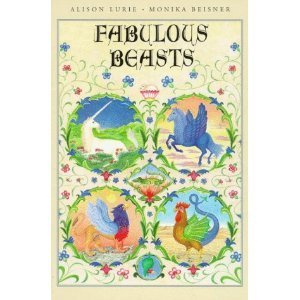
[image error]
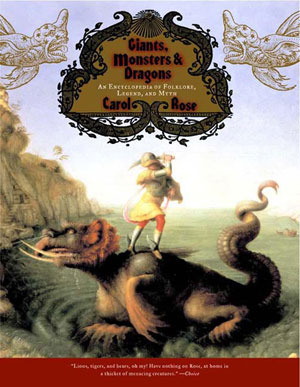
We also found, on our last visit, a composition book with "CRECHERS" scrawled on the front, full of painstaking illustrations by a 6-year-old Zach. My imagination always outstripped my artistic ability by a pretty wide margin, though, so it's mostly triangles attached to squares with some wavy lines blowing up a building.
Anyway, my point is that monsters-as in nonhuman species of animals that play some sort of malignant role in our cultural imagination-are kind of a lifelong fascination of mine.
If these are the kinds of monsters you're interested in, though, you'll be pretty disappointed in this book, because they occupy about 15% of the text. What you get instead is a kind of rambling treatise on monsters-as in those things, mostly human, that have been "othered" to the degree that they are now considered inhuman. If this is a new and impressive idea to you, you might like this book. If you've read Benedict Anderson or Edward Said or David Roediger or (you get the picture), then the use of literal monsters to make this point might seem kind of clumsy and useless to you.
Also serial killers are monsters. See what he did there? Do you care about learning about serial killers? I don't.
Towards the end, furthermore, this book becomes a bizarre screed against "our" modern idea that everything is relative and that society is always to blame for monsters committing monstrous acts, never the specific individuals. "No sir," says Stephen Asma. "I think that people who do monstrous things simply ARE monsters." He then goes on to take a daring stance against some murderers from the Taliban, followed by a kind of halfhearted comparison with the torturers at Abu Ghraib. Seriously. Thank you, Stephen Asma, for standing up against all those intellectuals AND middle Americans AND neoconservatives who believe in a relativistic postmodern hyper-insistence on nurture over nature.* Again, seriously. This is his argument.
So, if you're interested in literally inhuman monsters, you'd be better off with Timothy Beal's Religion and its Monsters or any of the kid's books I mentioned above or pretty much anything else that's ever been written on the subject.
If you're interested in preserved fetuses and cabinets of wonder and physical evidence of "monsters," read Wonders and the Order of Nature, 1150-1750 by Lorraine Daston and Katharine Park
If serial killers are your thing... I got nothing for you. Sorry. Maybe William Vollmann's book on violence?
This book is a dud.
* I guess this goes hand in hand with his repeatedly-mentioned macho essentialist arguments about male readers understanding his points about protecting children or needing to fight monsters to prove their manliness. This is usually preceded by something along the lines of "Although modern stories have produced female monster-killers like Ripley from the Alien films, traditionally..."**
** And one of those times, in a footnote, he goes on to explain that although cultural relativism or whatever is drawing women monster-killers into these narratives, biology just might win out in the end and make the man the dominant slayer of nightmares and defender of families once again... seriously.
[image error]
We also found, on our last visit, a composition book with "CRECHERS" scrawled on the front, full of painstaking illustrations by a 6-year-old Zach. My imagination always outstripped my artistic ability by a pretty wide margin, though, so it's mostly triangles attached to squares with some wavy lines blowing up a building.
Anyway, my point is that monsters-as in nonhuman species of animals that play some sort of malignant role in our cultural imagination-are kind of a lifelong fascination of mine.
If these are the kinds of monsters you're interested in, though, you'll be pretty disappointed in this book, because they occupy about 15% of the text. What you get instead is a kind of rambling treatise on monsters-as in those things, mostly human, that have been "othered" to the degree that they are now considered inhuman. If this is a new and impressive idea to you, you might like this book. If you've read Benedict Anderson or Edward Said or David Roediger or (you get the picture), then the use of literal monsters to make this point might seem kind of clumsy and useless to you.
Also serial killers are monsters. See what he did there? Do you care about learning about serial killers? I don't.
Towards the end, furthermore, this book becomes a bizarre screed against "our" modern idea that everything is relative and that society is always to blame for monsters committing monstrous acts, never the specific individuals. "No sir," says Stephen Asma. "I think that people who do monstrous things simply ARE monsters." He then goes on to take a daring stance against some murderers from the Taliban, followed by a kind of halfhearted comparison with the torturers at Abu Ghraib. Seriously. Thank you, Stephen Asma, for standing up against all those intellectuals AND middle Americans AND neoconservatives who believe in a relativistic postmodern hyper-insistence on nurture over nature.* Again, seriously. This is his argument.
So, if you're interested in literally inhuman monsters, you'd be better off with Timothy Beal's Religion and its Monsters or any of the kid's books I mentioned above or pretty much anything else that's ever been written on the subject.
If you're interested in preserved fetuses and cabinets of wonder and physical evidence of "monsters," read Wonders and the Order of Nature, 1150-1750 by Lorraine Daston and Katharine Park
If serial killers are your thing... I got nothing for you. Sorry. Maybe William Vollmann's book on violence?
This book is a dud.
* I guess this goes hand in hand with his repeatedly-mentioned macho essentialist arguments about male readers understanding his points about protecting children or needing to fight monsters to prove their manliness. This is usually preceded by something along the lines of "Although modern stories have produced female monster-killers like Ripley from the Alien films, traditionally..."**
** And one of those times, in a footnote, he goes on to explain that although cultural relativism or whatever is drawing women monster-killers into these narratives, biology just might win out in the end and make the man the dominant slayer of nightmares and defender of families once again... seriously.

July 26, 2010
I am so disappointed in this book. Not only is not what I expected when I ordered it but it is bad. It rambles, lacks a clear argument, reiterates a lot of stuff that is already widely available elsewhere, sets up straw man arguments about postmodernism (which seems rather off-topic for a book about monsters), includes way too many endnotes that distract from the main body of the text, lacks a cohesive style or tone (sometimes condescending and overexplaining and sometimes forgoing explanation of complicated or unfamiliar terminology altogether), and, for no good reason, casually reinforces gender stereotypes (Men are heroes who fight monsters because this narrative of the monster-killing hero is something that all fathers who want to protect their children identify with; boys play video games and invent play narratives that are about monsters--where do the girls and women fit into this? One mention of Ripley from Alien isn't going to cut it, especially when most mentions of women in the book are to show them as the monsters themselves (e.g., Medea, Susan Smith, witches, Grendel's mom) or as victims).
I began the book expecting to enjoy it and my estimation of it gradually decreased as I read. The first half of the book is somewhat interesting if you are not already familiar with the material he covers, but otherwise I recommend skipping it.
I began the book expecting to enjoy it and my estimation of it gradually decreased as I read. The first half of the book is somewhat interesting if you are not already familiar with the material he covers, but otherwise I recommend skipping it.

December 16, 2012
Reviews of this are all over the place. Some people are disappointed because it wasn't an encyclopedia of mythical creatures; others are disappointed because it wasn't deep and insightful and philosophical enough. I think it strikes a fascinating and fun balance.
It does begin by telling some interesting legends and reports from ancient times, like the monsters Alexander the Great was recorded to have faced while in India or the weird stories of a race of people with no head but faces on their chest. There are lots of entertaining and interesting stories and factoids here and throughout the book. We hear about the Greek natural philosopher, Thales; how Roman culture developed over time in its treatment of "monstrous" newborns; various theories 16th and 17th century physicians had about how the experiences and thoughts of pregnant women could lead to monstrous children; Mary Shelley's Frankenstein monster; and a treatment of Freud and his concept of the uncanny ("unheimliche") among other things. And all of these are not simply listed or cited but explained, explored philosophically, and put in context.
It is not a simple bestiary, nor is it groundbreaking philosophy. I didn't know anything about the book when I got it and didn't expect anything in particular. I was looking for an audiobook to listen to during commutes and grabbed this. It quickly drew me in and sustained my interest throughout.
It does begin by telling some interesting legends and reports from ancient times, like the monsters Alexander the Great was recorded to have faced while in India or the weird stories of a race of people with no head but faces on their chest. There are lots of entertaining and interesting stories and factoids here and throughout the book. We hear about the Greek natural philosopher, Thales; how Roman culture developed over time in its treatment of "monstrous" newborns; various theories 16th and 17th century physicians had about how the experiences and thoughts of pregnant women could lead to monstrous children; Mary Shelley's Frankenstein monster; and a treatment of Freud and his concept of the uncanny ("unheimliche") among other things. And all of these are not simply listed or cited but explained, explored philosophically, and put in context.
It is not a simple bestiary, nor is it groundbreaking philosophy. I didn't know anything about the book when I got it and didn't expect anything in particular. I was looking for an audiobook to listen to during commutes and grabbed this. It quickly drew me in and sustained my interest throughout.

June 21, 2011
Three stars for the first half of the book; two stars for the second.
The first part of the book is intersting. It is look at how people viewed or defined monsters at various points. Asma then moves into the changing view of monsters. The second half (more like the last 1/3) seems to ramble. It feels like little more than a list and obvious statements about mass media. He almost seems to go off topic and wants to avoid offending anyone. It isn't boring, but it isn't very interesting.
The part on the anicent Greeks and Biblical times was the most intersting and fasinating. Asma does an in depth look at how the anicents viewed the other. He does not group Romans and Greeks together, but takes each and examines them. The discussion in this section of the book is lively and quite present to read. This section really makes the book. Also of note was Asma's look at the once popular freak shows and how the views on biology changed the way we looked at monsters. This seciont, it should be noted, includes pictures that if you can not handle the Mutter Museum in Philadelphia, you should skip.
Average rating of 2.5. The first half of the book is worth reading; the second isn't.
The first part of the book is intersting. It is look at how people viewed or defined monsters at various points. Asma then moves into the changing view of monsters. The second half (more like the last 1/3) seems to ramble. It feels like little more than a list and obvious statements about mass media. He almost seems to go off topic and wants to avoid offending anyone. It isn't boring, but it isn't very interesting.
The part on the anicent Greeks and Biblical times was the most intersting and fasinating. Asma does an in depth look at how the anicents viewed the other. He does not group Romans and Greeks together, but takes each and examines them. The discussion in this section of the book is lively and quite present to read. This section really makes the book. Also of note was Asma's look at the once popular freak shows and how the views on biology changed the way we looked at monsters. This seciont, it should be noted, includes pictures that if you can not handle the Mutter Museum in Philadelphia, you should skip.
Average rating of 2.5. The first half of the book is worth reading; the second isn't.

November 9, 2009
Not very insightful or interesting if you're already familiar with the subject. Wanted more about monstrous institutions. Wanted much less evo-psych and manly men.
August 21, 2022
A dud. Really well-researched, but there’s no insight here.

August 14, 2018
bleh. i started this book expecting to enjoy it, because the cultural history of the monstrous is a rich field, but even though asma's got some good anecdotes he keeps throwing in weird gender-essentialist comments, lets a lot of loaded and biased statements about islam go unchallenged in the later third or so of the book (which is the weakest), is wildly insensitive about intersex people, doesn't actually discuss the place of ableism in concepts of the monstrous (and, you know, perpetuates it by letting the concept of physically disabled people as "monsters" run unchallenged), keeps tossing out stuff about "the postmodernists" (who commit the sin of...thinking that "monsters" of the serial killer/torturer/etc. type are generally created by their circumstances?), and relies uncritically on sigmund goddamn freud. i feel bad donating this to the library because i don't want other people to face this same disappointment. the book is also in general kind of disorganized and goes pretty far afield of what one would expect from a book on monsters, which if asma didn't also do all the stuff i just complained about above would be forgivable buuuut no.
i will say that the section on witches stealing penises was a fun time, but that's 1.5 pages out of 284 pages of actual content.
i will say that the section on witches stealing penises was a fun time, but that's 1.5 pages out of 284 pages of actual content.

September 9, 2015
I was quite excited about this book. I waited a while to plunk down money for it. But, sadly, it wasn't really what I thought it would be, nor was it as engaging as I hoped. It was not slyly and cleverly written, as reviews on the back intimated. It was not a feast. It was difficult to slog through, actually. It was uneven and unfocused. And whilst he decided to summarize Beowulf and Blade Runner and make inaccurate assessments of certain aspects of horror, he neglected to dissect certain elements of his psychological and philosophical lingo. There are parts where one feels as though one is reading around in circles. Tell me more of what I DON'T know; don't tell me the plot of something that is a complete no-brainer.
That being said, since my education lacks in certain sciences (due to a highly conservative Christian education), I was interested in information with which I was not familiar. It gave me a brief introduction to things I didn't know I wanted to know. And so, I don't really regret reading it, problematic as it is.
Also awkward. He talks about things that he, as a white male, doesn't necessarily understand. That's almost always awkward.
That being said, since my education lacks in certain sciences (due to a highly conservative Christian education), I was interested in information with which I was not familiar. It gave me a brief introduction to things I didn't know I wanted to know. And so, I don't really regret reading it, problematic as it is.
Also awkward. He talks about things that he, as a white male, doesn't necessarily understand. That's almost always awkward.
December 25, 2009
Less an individual history of famous monsters and creatures of folklore, but more a history of the monster and the monstrous. Asma does a particularly nice job linking social morays and beliefs with our need to create "the other" throughout the history of civilization. Highly recommended for monster and social philosophy geeks alike.

September 3, 2021
"My own sympathies, which are probably obvious by now, lie with the neo-Enlightenment liberals. Yes, some monsters have turned out to be wrongfully accused and others have been conjured entirely by politicians and priests, but that doesn’t mean there is no such thing as monsters."
Yikes. Full of vague rambling about "the postmodernists", overall confused at best.
Yikes. Full of vague rambling about "the postmodernists", overall confused at best.

August 4, 2023
Very interesting but not very entertaining
April 18, 2024
Ich wurde als Mensch geboren. Aber das war eine Laune des Zufalls, es hing von der zeitlichen und örtlichen Situation ab. Ich bin sicher, dass wir in der Lage sind, das zu ändern. *Kevin Warwick*

December 6, 2010
On Monsters is a genre-straddling volume that seeks to answer the questions: how has Western civilization defined the monster over the past two millennia, and how does this definition correlate to historical paradigms?
These queries are perhaps too large for one text to answer, but Asma provides a well-researched précis of monsters in ancient philosophical texts and mythology, monsters in theology, the monsters of 18th and 19th Century natural history and literature, the psychology of monstrousness (Freud and beyond), and contemporary and future monsters, from murderers to cinematic slashers to cyborgs. Each chapter also contains Asma’s own meditations on the meaning of monstrousness and the ways in which the monster embodies changing cultural taboos.
On Monsters straddles several areas: it is written in the accessible tone of the general interest title, but the but philosophical analysis and historical details have clearly been lovingly and laboriously researched. Asma’s background in philosophy, theology, and natural history shines through; in fact, translations from Ancient Latin texts are the author’s own.
Rather than dwell on popular monsters like vampires, On Monsters revels in historical and contemporary oddities. Readers are treated not just to Plato’s thoughts on monsters, but also to accounts from the “history” of the rather gullible Pliny the Elder who believed in every latter-day monster save the werewolf; excerpts of the Malleus Maleficarum – the definitive medieval text on witch hunting – appear lovingly translated; and a delightful subsection on taxidermy hoaxes of the 18th Century entertains as well as informing. Even readers knowledgeable in one area or field that the book covers are likely to discover an new and intriguing angle on monstrousness.
Perhaps due to the wide scope of his topic, Asma’s analysis of the meaning of monstrousness seems incomplete, and therefore less satisfying than his historical recounting. In fact, snappy chapters are often interspersed between heavier ones full of philosophical analysis, which sometimes gives the feeling that one is reading two different works inserted into one book. Half of the chapters dwell on philosophy, and the other half on history, without the twain ever quite coming together.
A further sticking point: Asma inserts his own opinions freely into the text. While this post-positivist approach can be refreshing, it does, at times, color the text. Some readers may chafe at Asma’s emphasis of personal choice (rather than social structure) as being responsible for criminal acts. His scorn for other theorists may be off-putting for some: in footnote Asma dismisses both Julia Kristeva’s The Powers of Horror and Judith Butler’s Bodies That Matter, stating, “I have not found Kristeva’s and Butler’s work very helpful in understanding monsters or anything else, really, but the work certainly has its own devoted following.”
Regardless, On Monsters is always interesting. The footnotes, which double as a bibliography, are copious, lengthy, and entertaining. The book also benefits from excellent overall design and well-considered visuals aids including, in some cases, the author’s own drawings.
On Monsters would make excellent pleasure reading for those looking to find a new angle on a well-loved subject. The chapters are not detailed enough to serve as individual overviews for a reader wanting to get into a topic, but as introductions to new areas of interest, it works well, and individual chapters could be given to students as a starting point for discussion on taboos or beliefs of specific centuries. Despite its fragmented nature, On Monsters is at its most delightful when read as an imperfect but fascinating meditation on the the fluctuating meaning of monstrousness.
These queries are perhaps too large for one text to answer, but Asma provides a well-researched précis of monsters in ancient philosophical texts and mythology, monsters in theology, the monsters of 18th and 19th Century natural history and literature, the psychology of monstrousness (Freud and beyond), and contemporary and future monsters, from murderers to cinematic slashers to cyborgs. Each chapter also contains Asma’s own meditations on the meaning of monstrousness and the ways in which the monster embodies changing cultural taboos.
On Monsters straddles several areas: it is written in the accessible tone of the general interest title, but the but philosophical analysis and historical details have clearly been lovingly and laboriously researched. Asma’s background in philosophy, theology, and natural history shines through; in fact, translations from Ancient Latin texts are the author’s own.
Rather than dwell on popular monsters like vampires, On Monsters revels in historical and contemporary oddities. Readers are treated not just to Plato’s thoughts on monsters, but also to accounts from the “history” of the rather gullible Pliny the Elder who believed in every latter-day monster save the werewolf; excerpts of the Malleus Maleficarum – the definitive medieval text on witch hunting – appear lovingly translated; and a delightful subsection on taxidermy hoaxes of the 18th Century entertains as well as informing. Even readers knowledgeable in one area or field that the book covers are likely to discover an new and intriguing angle on monstrousness.
Perhaps due to the wide scope of his topic, Asma’s analysis of the meaning of monstrousness seems incomplete, and therefore less satisfying than his historical recounting. In fact, snappy chapters are often interspersed between heavier ones full of philosophical analysis, which sometimes gives the feeling that one is reading two different works inserted into one book. Half of the chapters dwell on philosophy, and the other half on history, without the twain ever quite coming together.
A further sticking point: Asma inserts his own opinions freely into the text. While this post-positivist approach can be refreshing, it does, at times, color the text. Some readers may chafe at Asma’s emphasis of personal choice (rather than social structure) as being responsible for criminal acts. His scorn for other theorists may be off-putting for some: in footnote Asma dismisses both Julia Kristeva’s The Powers of Horror and Judith Butler’s Bodies That Matter, stating, “I have not found Kristeva’s and Butler’s work very helpful in understanding monsters or anything else, really, but the work certainly has its own devoted following.”
Regardless, On Monsters is always interesting. The footnotes, which double as a bibliography, are copious, lengthy, and entertaining. The book also benefits from excellent overall design and well-considered visuals aids including, in some cases, the author’s own drawings.
On Monsters would make excellent pleasure reading for those looking to find a new angle on a well-loved subject. The chapters are not detailed enough to serve as individual overviews for a reader wanting to get into a topic, but as introductions to new areas of interest, it works well, and individual chapters could be given to students as a starting point for discussion on taboos or beliefs of specific centuries. Despite its fragmented nature, On Monsters is at its most delightful when read as an imperfect but fascinating meditation on the the fluctuating meaning of monstrousness.

May 30, 2014
I'm really torn about this book. It was fascinating overall, and I've amassed a whole list of further reading thanks to Asma, but a fair amount of the book (especially toward second half or so) seems to fall a little flat. The conversation about how we define monsters was really interesting, as was the discussion of ancient monsters (I'd never heard of the Blemmyae and I never knew that Saint Christopher is sometimes depicted as having a dog's head, for instance). I frequently dashed over to my computer to do more research about the different topics that came up. And maybe, in the end, that's what's making me feel so conflicted. "On Monsters" is a great springboard - if you're into the creepy and macabre, it will have you staying up late Googling a serial killer you never heard of or a list of Victorian circus "freaks" - but the book itself might linger too much on the surface of the topics it touches on. I understand there was a ton of ground to cover, but the book may have worked better if Asma had taken an even narrower approach so he could really dive in. That said, I'd still recommend this to anyone remotely interested in monsters, psychology, and the nature of human fear.

March 29, 2010
Asma has collected and given perspective to an interesting collection of monster history and psychology in On Monsters. It's generally an interesting and informative read for both monster experts and monster novices. He doesn't seem to have quite decided whether his audience is academic or popular, sliding back and forth between formal academic language and informal discourse. (The latter is dominant in the beginning of the book, while the former becomes more prevalent towards the end.)
I was a bit disturbed by his descriptions of Eric Harris and Dylan Klebold, which repeat popular (and erroneous) tropes which were thoroughly debunked in Columbine, Dave Cullen's authoritative book on the 1999 shootings. Columbine was published six months before On Monsters which, yes, is cutting it fine for changes to the text, but it seems strange that no one involved in the production of Monsters was aware of Cullen's research. This definitely affected my perception of the authority of the author.
I was a bit disturbed by his descriptions of Eric Harris and Dylan Klebold, which repeat popular (and erroneous) tropes which were thoroughly debunked in Columbine, Dave Cullen's authoritative book on the 1999 shootings. Columbine was published six months before On Monsters which, yes, is cutting it fine for changes to the text, but it seems strange that no one involved in the production of Monsters was aware of Cullen's research. This definitely affected my perception of the authority of the author.

June 16, 2012
Asma's history is fascinating in the first section of the book, which is more of a literal history of the development and conception of the predominant idea of "monsters" in the (mostly) European world. This portion of the book is strong and the sociological information Asma lays out matches the history. Sadly, the second section, loses focus. It dwells in the moment world and mostly a series of reflections on the ideas of monster with various (some-what meandering) theories for the different aspects discussed. However, all sorts of things bubble up in the contemporary miasmas, including half-baked straw man about "post-modern" relativism, long contemplations of Freud, essay like reflections on ethics, etc. This actually causes the book to loss any sense of focus and starts to feel like reading semi-related essays than a history. It really does feel like two very different and only tangentially connected books attached by breaking it down into two sections.

May 7, 2010
This is a remarkably well-researched, thoroughly engaging and awfully thought-provoking (Western) cultural history of the concept of the "monster," in all its myriad forms—mythical and legendary monsters, malformed birth-defect created monsters, religious monsters, criminal monsters, symbolic monsters and so on. Asma covers a lot of very specific subjects while keeping the overall focus of the book on the conceptual level. That's no mean feat, and yet there's an effortlessness about the book that makes it a pleasure to read. If Asma sweat very much in its production, I certainly couldn't tell from reading it.

December 2, 2021
This is a very messy book. Partly I think that's the nature of the subject, but it is SO patchy. Obviously this is not a popular non-fiction title, and academic titles are often a bit weird by necessity, but I really wasn't impressed by so much of this.
The main problem was that, to me, it read like the book was greenlit as man wants to ramble about things he wants to ramble about and then nothing more happened. Occasionally this works, but here it really didn't. The biases of the author were abundantly clear and permeated every sentence; while this is not inherently a bad thing, here it was infuriating, because it meant an whole book where the author argued entirely from his world view and experience with apparently zero awareness that his opinions and beliefs are not universal truths, and showed a complete inability to accurately separate assumptions from truths. It was very much an example of the worst of the beginnings of rational centrism, where the totally clear-headed centrist assumes that he is both perfectly rational and perfectly centred and therefore must be correct, even when none of those things are true.
This was made more frustrating because Asma is clearly not an idiot. If one thing comes across in this book, it is that the author is abundantly well read. The notes alone deserve a star (I love a good reference section/bibliography and this one contains multiple pieces I'll be following up on as further reading.) There are certain areas where the text is pretty clear, well-argued, and actually does manage to put across multiple viewpoints and interpretations well. However, this is mostly limited to academic philosophy, ie the summary and examination of certain philosophers and their ideas, and beyond that the thread quickly unravels. Through the rest of the text, assertions vary from questionable to outright false (obviously I don't know enough to make this judgement on everything, but a lot more of this book was in my wheelhouse than I'd expected and this unfortunately wasn't a good thing.) Arguments and suggestions are wildly erratic and often ignore or misrepresent key areas. The text itself varied from readable to dense, which I didn't mind but was a little difficult at times.
Overall I think the way I read this book speaks volumes. I started it as soon as I found it in the library, because I was so excited and it sounded right up my alley. I read small bits of much of it, occasionally stopping after a few paragraphs even though I tried never to read less than a chapter at a time, and in many cases did plough through. Consistently there were months between me putting it down and picking it up, not because I wanted to prolong the reading experience but because even when I prioritised it I just didn't want to read it. Eventually the thought of finishing got me through, but I fear I would have got more out of tracking down a few works cited in the notes and re-reading my undergrad philosophy notes, as these were the best bits.
The main problem was that, to me, it read like the book was greenlit as man wants to ramble about things he wants to ramble about and then nothing more happened. Occasionally this works, but here it really didn't. The biases of the author were abundantly clear and permeated every sentence; while this is not inherently a bad thing, here it was infuriating, because it meant an whole book where the author argued entirely from his world view and experience with apparently zero awareness that his opinions and beliefs are not universal truths, and showed a complete inability to accurately separate assumptions from truths. It was very much an example of the worst of the beginnings of rational centrism, where the totally clear-headed centrist assumes that he is both perfectly rational and perfectly centred and therefore must be correct, even when none of those things are true.
This was made more frustrating because Asma is clearly not an idiot. If one thing comes across in this book, it is that the author is abundantly well read. The notes alone deserve a star (I love a good reference section/bibliography and this one contains multiple pieces I'll be following up on as further reading.) There are certain areas where the text is pretty clear, well-argued, and actually does manage to put across multiple viewpoints and interpretations well. However, this is mostly limited to academic philosophy, ie the summary and examination of certain philosophers and their ideas, and beyond that the thread quickly unravels. Through the rest of the text, assertions vary from questionable to outright false (obviously I don't know enough to make this judgement on everything, but a lot more of this book was in my wheelhouse than I'd expected and this unfortunately wasn't a good thing.) Arguments and suggestions are wildly erratic and often ignore or misrepresent key areas. The text itself varied from readable to dense, which I didn't mind but was a little difficult at times.
Overall I think the way I read this book speaks volumes. I started it as soon as I found it in the library, because I was so excited and it sounded right up my alley. I read small bits of much of it, occasionally stopping after a few paragraphs even though I tried never to read less than a chapter at a time, and in many cases did plough through. Consistently there were months between me putting it down and picking it up, not because I wanted to prolong the reading experience but because even when I prioritised it I just didn't want to read it. Eventually the thought of finishing got me through, but I fear I would have got more out of tracking down a few works cited in the notes and re-reading my undergrad philosophy notes, as these were the best bits.

February 16, 2015
Herakles bekämpft im antiken Griechenland die mehrköpfige Hydra. Beowulf legt sich mit dem Monster Grendel an. Die Kirche sieht sich im Mittelalter von Häretikern und Hexen der übelsten Sorte bedroht. Das Unmenschliche, das Fremdartige, das Missratene – eben das Monster – ruft im Menschen ambivalente Gefühle von Faszination und Abscheu hervor. Grund genug für Stephen T. Asma, sich mit der Geschichte des Monströsen zu befassen.
Für Asma sind Monster „unsere schönsten Alpträume“, denen er sich in seinem Werk „Monster, Mörder und Mutanten – Eine Geschichte unserer schönsten Alpträume“ widmet. Asma steckt sich das hohe Ziel, eine umfassende Abhandlung über das Thema zu schreiben, statt sich auf die Monster und Monstervorstellungen einer Epoche zu beschränken. Das Konzept des Monströsen ist ein immer wiederkehrendes Moment in der Geschichte der Menschheit. Gleichzeitig erfuhr es über die Jahrhunderte auch gewisse Bedeutungsverschiebungen und Veränderungen.
In seiner Abhandlung über das Monströse verzichtet der Autor bewusst auf eine Definition des Begriffes des „Monsters“ und dessen genaue Eigenschaften. Jedes Zeitalter sei von anderen Ungeheuern fasziniert, die aber mit allen Mitglieder der Familie der „Monster“ einige prototypische Eigenschaften teilen. So seien beispielsweise die Eigenschaften „Hässlichkeit“ und „Bosheit“ in sehr vielen Monsterbeschreibungen seit der Antike bis in die Gegenwart untrennbar verbunden. Asmas Abhandlung über Monster ist denn auch eher eine breit angelegte kulturhistorische Abhandlung. Sie beginnt mit bekannten und unbekannteren antiken Monstern und endet in der Gegenwart. Der Autor legt dabei fünf Schwerpunkte, drei davon zeitlich und zwei thematisch. Die ersten drei Kapitel befassen sich mit diversen Monstervorstellungen und philosophischen oder theologischen Abhandlungen zu Monstern in der Antike, im Mittelalter und in der Neuzeit bis ins anfangende 20. Jahrhundert.
Monster in verschiedenen Zeitaltern
Alexander der Grosse ist ein klassischer antiker Held, der auszieht, um gegen Feinde zu kämpfen. Auf seinen Reisen in weit entfernte Länder begegnet er auch einer Vielzahl von Monstern, die er bekämpft. Antike Berichte sind voll von solchen Monstern. Zyklopen, Greifen und Hydren sind nur einige wenige dieser Sagengestalten, deren Existenz diskutiert und selten angezweifelt wurde. Asma legt nahe, dass viele dieser Monster auf reale, aber verzerrt dargestellte Tiere oder Knochenfunde zurückgeführt werden können. Sein Hauptziel liegt allerdings nicht darauf, jeden einzelnen antiken Monstermythos zu entkräften. Er legt mehr Wert auf die philosophischen Betrachtungen über das Monster.
Im Mittelalter ergibt sich durch das erstarkte Christentum ein erster bedeutender Wandel für diesen Heldenkult. In seinem Kampf gegen Feinde und Monster wird dem antiken Held Alexander das erste Mal auch von seinen Ratgebern zur Demut geraten. Mitleid mit dem Feind, Demut und Einsicht erheben einen wahren Menschen über das Monster. Es muss nicht mehr unbedingt von einem Helden mit Waffen bekämpft werden, damit dessen Männlichkeit bewiesen ist.
Im christlichen Mittelalter sind die Monster und Ungeheuer im Gegensatz zur Antike immer mehr auch in der eigenen Gesellschaft zu finden. Das xenophobe Bild vom bösen Juden, aber auch die Vorstellung von Hexen, die mitten in der Gemeinschaft existieren und Schaden anrichten, sind nur zwei Beispiele hierfür.
Ein Bruch mit den monströsen Gestalten, die seit der Antike tradiert werden, läuten die Wissenschaftler ein, die von der Aufklärung geprägt sind. Zum ersten Mal werden Monstrenbeschreibungen auf ihren Wahrheitsgehalt analysiert – Augenzeugenberichte sind dabei als wahrheitsgemässer einzustufen als schriftlich überlieferte Monster. Die zunehmende Kategorisierung der Natur und ihrer Geschöpfe, das Interesse an fötalen Missbildungen und der Versuch der Systematischen Einordnung leiten die frühen empirischen Wissenschaftler. Ausgestopfte Monstren werden als taxidermische Fälschungen entlarvt. Die zunehmende Entdeckung der Welt entlarvt weitere Irrtümer. Mit Darwins Evolutionstheorie haben Wissenschaftler schliesslich das erste Mal eine Erklärung zur Hand, warum es zu Missbildungen kommen kann.
Die Diskussion um das Monströse ist damit noch nicht beendet. Sie verlagert sich auf psychologische Aspekte. In Kapitel vier behandelt Asma unter anderem die Einordnung des Monsters durch Sigmund Freud. Denn nachdem das „Monster“ aus Reiseberichten, Karten und der Biologie vertrieben worden ist, findet es im Freudschen Unterbewussten seine neue Heimat. In jedem Menschen wohnt also das Monströse.
In Kapitel fünf stellt Asma schliesslich Fragen zum Monströsen in der heutigen Zeit. Künstliche Intelligenzen, denen es an Empathie mangelt, wecken Assoziationen zu den bösen, emotionslosen Monstren aus alten Zeiten. Geschlechterangleichende Operationen ermöglichen Transgendern ein Wechsel der körperlichen Geschlechts und lassen Hybridwesen entstehen, die die klassische Kategorisierung verunmöglichen. Bereits hält die Gegenwart biotechnologische Verbesserungen bereit, die den Menschen „verbessern“, die Zukunft verspricht immer mehr solcher Veränderungen. Daraus mögen Ängste vor dem entmenschlichten, verbesserten, maschinenartigen Menschen entstehen.
Das gute Monster und der böse Held
Der Leser stellt verblüfft fest, dass es Asma gelingt, erstaunliche Gemeinsamkeiten in alten und gegenwärtigen Monstervorstellungen zu finden. Ein heldenhafter, guter Beowulf, der das böse Monster Grendel bekämpft, wird im 21. Jahrhundert vielleicht durch einen ebenso heldenhaften Menschen ersetzt, der in einem Videospiel böse Monster bekämpft oder in einem Horrorfilm als einziger gegen eine Vielzahl Monster überlebt. Dieses Erzählmuster hat die Jahrhunderte überdauert. Gleichzeitig gelingt es dem Autor auch, Wandlungen und Verlagerungen im Konzept des „Monsters“ über die verschiedenen Epochen hinweg darzustellen. Die neuste filmische Adaption des Beowulfmythos („Die Legende von Beowulf“, 2007) erklärt das Monster Grendel zu einem missverstandenen und verstossenen Wesen, dass nur durch die Ablehnung der Umwelt zu etwas Bösem wird. Dies erinnert an den Stellenwert von Psychologie und Psychopathologie in der heutigen Gesellschaft. Die Diskussion ob ein Mensch von sich aus böse ist oder durch Umwelteinflüsse böse wird, kann auch aus dem Monster Grendel ein missverstandenes ausgestossenes Wesen machen.
Auf knapp 400 Seiten führt Asma den Leser mit einer Vielzahl von Beispielen und gut dokumentierten Quellen durch die Geschichte des Monströsen und Alptraumhaften. Mit dem Werk hat Asma den heiklen Spagat zwischen Populärliteratur und wissenschaftlicher Arbeit gut gemeistert. Durch den ansprechenden Schreibstil ist das Buch sowohl für faszinierte Laien als auch für wissenschaftliche Leser interessant. Eine Vielzahl von Querverweisen und Quellenangaben in den Fussnoten kann als Zeichen eines gewissen wissenschaftlichen Standards gesehen werden. An manchen Stellen würde sich der wissenschaftliche Leser allerdings eine nähere Ausführung zu Thesen wünschen, die in einem Nebensatz angesprochen, aber nicht ausgeführt werden.
Für Asma sind Monster „unsere schönsten Alpträume“, denen er sich in seinem Werk „Monster, Mörder und Mutanten – Eine Geschichte unserer schönsten Alpträume“ widmet. Asma steckt sich das hohe Ziel, eine umfassende Abhandlung über das Thema zu schreiben, statt sich auf die Monster und Monstervorstellungen einer Epoche zu beschränken. Das Konzept des Monströsen ist ein immer wiederkehrendes Moment in der Geschichte der Menschheit. Gleichzeitig erfuhr es über die Jahrhunderte auch gewisse Bedeutungsverschiebungen und Veränderungen.
In seiner Abhandlung über das Monströse verzichtet der Autor bewusst auf eine Definition des Begriffes des „Monsters“ und dessen genaue Eigenschaften. Jedes Zeitalter sei von anderen Ungeheuern fasziniert, die aber mit allen Mitglieder der Familie der „Monster“ einige prototypische Eigenschaften teilen. So seien beispielsweise die Eigenschaften „Hässlichkeit“ und „Bosheit“ in sehr vielen Monsterbeschreibungen seit der Antike bis in die Gegenwart untrennbar verbunden. Asmas Abhandlung über Monster ist denn auch eher eine breit angelegte kulturhistorische Abhandlung. Sie beginnt mit bekannten und unbekannteren antiken Monstern und endet in der Gegenwart. Der Autor legt dabei fünf Schwerpunkte, drei davon zeitlich und zwei thematisch. Die ersten drei Kapitel befassen sich mit diversen Monstervorstellungen und philosophischen oder theologischen Abhandlungen zu Monstern in der Antike, im Mittelalter und in der Neuzeit bis ins anfangende 20. Jahrhundert.
Monster in verschiedenen Zeitaltern
Alexander der Grosse ist ein klassischer antiker Held, der auszieht, um gegen Feinde zu kämpfen. Auf seinen Reisen in weit entfernte Länder begegnet er auch einer Vielzahl von Monstern, die er bekämpft. Antike Berichte sind voll von solchen Monstern. Zyklopen, Greifen und Hydren sind nur einige wenige dieser Sagengestalten, deren Existenz diskutiert und selten angezweifelt wurde. Asma legt nahe, dass viele dieser Monster auf reale, aber verzerrt dargestellte Tiere oder Knochenfunde zurückgeführt werden können. Sein Hauptziel liegt allerdings nicht darauf, jeden einzelnen antiken Monstermythos zu entkräften. Er legt mehr Wert auf die philosophischen Betrachtungen über das Monster.
Im Mittelalter ergibt sich durch das erstarkte Christentum ein erster bedeutender Wandel für diesen Heldenkult. In seinem Kampf gegen Feinde und Monster wird dem antiken Held Alexander das erste Mal auch von seinen Ratgebern zur Demut geraten. Mitleid mit dem Feind, Demut und Einsicht erheben einen wahren Menschen über das Monster. Es muss nicht mehr unbedingt von einem Helden mit Waffen bekämpft werden, damit dessen Männlichkeit bewiesen ist.
Im christlichen Mittelalter sind die Monster und Ungeheuer im Gegensatz zur Antike immer mehr auch in der eigenen Gesellschaft zu finden. Das xenophobe Bild vom bösen Juden, aber auch die Vorstellung von Hexen, die mitten in der Gemeinschaft existieren und Schaden anrichten, sind nur zwei Beispiele hierfür.
Ein Bruch mit den monströsen Gestalten, die seit der Antike tradiert werden, läuten die Wissenschaftler ein, die von der Aufklärung geprägt sind. Zum ersten Mal werden Monstrenbeschreibungen auf ihren Wahrheitsgehalt analysiert – Augenzeugenberichte sind dabei als wahrheitsgemässer einzustufen als schriftlich überlieferte Monster. Die zunehmende Kategorisierung der Natur und ihrer Geschöpfe, das Interesse an fötalen Missbildungen und der Versuch der Systematischen Einordnung leiten die frühen empirischen Wissenschaftler. Ausgestopfte Monstren werden als taxidermische Fälschungen entlarvt. Die zunehmende Entdeckung der Welt entlarvt weitere Irrtümer. Mit Darwins Evolutionstheorie haben Wissenschaftler schliesslich das erste Mal eine Erklärung zur Hand, warum es zu Missbildungen kommen kann.
Die Diskussion um das Monströse ist damit noch nicht beendet. Sie verlagert sich auf psychologische Aspekte. In Kapitel vier behandelt Asma unter anderem die Einordnung des Monsters durch Sigmund Freud. Denn nachdem das „Monster“ aus Reiseberichten, Karten und der Biologie vertrieben worden ist, findet es im Freudschen Unterbewussten seine neue Heimat. In jedem Menschen wohnt also das Monströse.
In Kapitel fünf stellt Asma schliesslich Fragen zum Monströsen in der heutigen Zeit. Künstliche Intelligenzen, denen es an Empathie mangelt, wecken Assoziationen zu den bösen, emotionslosen Monstren aus alten Zeiten. Geschlechterangleichende Operationen ermöglichen Transgendern ein Wechsel der körperlichen Geschlechts und lassen Hybridwesen entstehen, die die klassische Kategorisierung verunmöglichen. Bereits hält die Gegenwart biotechnologische Verbesserungen bereit, die den Menschen „verbessern“, die Zukunft verspricht immer mehr solcher Veränderungen. Daraus mögen Ängste vor dem entmenschlichten, verbesserten, maschinenartigen Menschen entstehen.
Das gute Monster und der böse Held
Der Leser stellt verblüfft fest, dass es Asma gelingt, erstaunliche Gemeinsamkeiten in alten und gegenwärtigen Monstervorstellungen zu finden. Ein heldenhafter, guter Beowulf, der das böse Monster Grendel bekämpft, wird im 21. Jahrhundert vielleicht durch einen ebenso heldenhaften Menschen ersetzt, der in einem Videospiel böse Monster bekämpft oder in einem Horrorfilm als einziger gegen eine Vielzahl Monster überlebt. Dieses Erzählmuster hat die Jahrhunderte überdauert. Gleichzeitig gelingt es dem Autor auch, Wandlungen und Verlagerungen im Konzept des „Monsters“ über die verschiedenen Epochen hinweg darzustellen. Die neuste filmische Adaption des Beowulfmythos („Die Legende von Beowulf“, 2007) erklärt das Monster Grendel zu einem missverstandenen und verstossenen Wesen, dass nur durch die Ablehnung der Umwelt zu etwas Bösem wird. Dies erinnert an den Stellenwert von Psychologie und Psychopathologie in der heutigen Gesellschaft. Die Diskussion ob ein Mensch von sich aus böse ist oder durch Umwelteinflüsse böse wird, kann auch aus dem Monster Grendel ein missverstandenes ausgestossenes Wesen machen.
Auf knapp 400 Seiten führt Asma den Leser mit einer Vielzahl von Beispielen und gut dokumentierten Quellen durch die Geschichte des Monströsen und Alptraumhaften. Mit dem Werk hat Asma den heiklen Spagat zwischen Populärliteratur und wissenschaftlicher Arbeit gut gemeistert. Durch den ansprechenden Schreibstil ist das Buch sowohl für faszinierte Laien als auch für wissenschaftliche Leser interessant. Eine Vielzahl von Querverweisen und Quellenangaben in den Fussnoten kann als Zeichen eines gewissen wissenschaftlichen Standards gesehen werden. An manchen Stellen würde sich der wissenschaftliche Leser allerdings eine nähere Ausführung zu Thesen wünschen, die in einem Nebensatz angesprochen, aber nicht ausgeführt werden.

August 4, 2025
The author is a professor of philosophy and the book is essentially a bird’s eye view of the history and development of monsters, primarily in the Western world, in folklore, mythology, biology, criminology, literature, and futurism. The first section deals with monsters of the ancient world. We then survey the subject through the medieval period, nature and science, psychology and criminology, and conclude with a look at monsters of the future (think of cyborgs and artificial intelligences and that sort of thing).
Overall, it’s an entertaining and informative book, but it shines most strongly in its first half or so, discussing monsters of the ancient and medieval worlds. Chapters concerning more recent topics are still interesting but the explosion in the types and interpretations of monsters in modern literature means a great deal of important information is necessarily omitted from the book. And as the author tries to explore different philosophical interpretations, contrasting for instance postmodern views of monsters from the views of neo-Enlightenment liberals, the book seems on occasion to veer away from its historical presentation of monsters into philosophical debates that distract from what is, at least to me, more interesting subject matter. Further, readers interested mostly in monsters from literature and cinema may find the book somewhat lacking. These monsters ARE presented, to be sure, but often take a backseat to the varieties of “real” (whether actually real or imagined to be real) monsters people might think about or believe in.
Still, one book can’t be all things to all readers and the information presented is quite useful. It’s written for a general audience but in a fairly academic tone that might turn off readers looking for something more akin to a spooky story, but is nevertheless accessible to anyone who might want to learn about how human societies (particularly Western ones) have thought about monsters.
Overall, it’s an entertaining and informative book, but it shines most strongly in its first half or so, discussing monsters of the ancient and medieval worlds. Chapters concerning more recent topics are still interesting but the explosion in the types and interpretations of monsters in modern literature means a great deal of important information is necessarily omitted from the book. And as the author tries to explore different philosophical interpretations, contrasting for instance postmodern views of monsters from the views of neo-Enlightenment liberals, the book seems on occasion to veer away from its historical presentation of monsters into philosophical debates that distract from what is, at least to me, more interesting subject matter. Further, readers interested mostly in monsters from literature and cinema may find the book somewhat lacking. These monsters ARE presented, to be sure, but often take a backseat to the varieties of “real” (whether actually real or imagined to be real) monsters people might think about or believe in.
Still, one book can’t be all things to all readers and the information presented is quite useful. It’s written for a general audience but in a fairly academic tone that might turn off readers looking for something more akin to a spooky story, but is nevertheless accessible to anyone who might want to learn about how human societies (particularly Western ones) have thought about monsters.

November 21, 2017
If you can judge a man by his enemies, then you can judge a society by its monsters.
That, in a nutshell, is the supposition of Stephen Asma's On Monsters, which takes the reader by the hand and leads them through the darkness of human imagination and the nightmares the sleep of reason breeds. Starting with the ancient world - by which we mean the ancient Western world - and moving up through the present and future, Asma unpacks the rise and fall of the horrors that most preoccupied us across the ages and their probable social, philosophical, and technological underpinnings.
As the book moves forward through time from the ancient to the medieval to the 19th century to today and beyond, the monsters move ever closer to home, from the things that lurk in the dark beyond the campfire or beyond the grave to the things that lurk in our own bodies and minds. While the progression is fascinating, it comes with an increasing tendency to use academic language and get bogged down in theory. When Freud came up I gave the book some serious stank eye and would probably have DNF'd if Asma hadn't moved on fairly quickly. (I have something of a zero tolerance policy for Freud's bullshit, though if you're talking about cultural zeitgeist I guess you can't avoid mentioning him.)
While interesting, On Monsters will likely yield diminishing returns for the non-academic reader, or those who are simply interested in a catalog of things that go bump in the night. If you like your creepy crawlies with a side of history and theory, however, it makes for a moderately entertaining read.
That, in a nutshell, is the supposition of Stephen Asma's On Monsters, which takes the reader by the hand and leads them through the darkness of human imagination and the nightmares the sleep of reason breeds. Starting with the ancient world - by which we mean the ancient Western world - and moving up through the present and future, Asma unpacks the rise and fall of the horrors that most preoccupied us across the ages and their probable social, philosophical, and technological underpinnings.
As the book moves forward through time from the ancient to the medieval to the 19th century to today and beyond, the monsters move ever closer to home, from the things that lurk in the dark beyond the campfire or beyond the grave to the things that lurk in our own bodies and minds. While the progression is fascinating, it comes with an increasing tendency to use academic language and get bogged down in theory. When Freud came up I gave the book some serious stank eye and would probably have DNF'd if Asma hadn't moved on fairly quickly. (I have something of a zero tolerance policy for Freud's bullshit, though if you're talking about cultural zeitgeist I guess you can't avoid mentioning him.)
While interesting, On Monsters will likely yield diminishing returns for the non-academic reader, or those who are simply interested in a catalog of things that go bump in the night. If you like your creepy crawlies with a side of history and theory, however, it makes for a moderately entertaining read.

November 10, 2017
I love monsters, I always have. But it never occurred to me to ever look into the history of what makes a monster a monster. Believe it or not, learning about why human beings have been scared of the same things since the dawn of time is not boring at all.
Thankfully, On Monsters was a nonfiction book that was easy to read and comprehend. Some of the terms/words could be a bit complicated but context helped. The book is organized into a timeline from when the term “monster” first appeared in written texts, all the up to modern times.
I gave the book five stars because I enjoyed reading it all the way through. It was a well-written book on a subject that has always interested me. A fun addition to On Monsters was the photographs and the sketches done by the author himself. Its one thing to read a description of a monster, or what was considered a monster but it’s different to see it in black and white.
It was very fun to read how what societies considered to be monsters. The book kind of held your hand and pointed out how it science kept changing what was considered normal and what was considered monstrous.
I felt a bit naive reading some parts of the book, mostly because what should be considered common knowledge was brand new to me. I didn’t know how long Jewish people had been considered “monsters”, but when I thought about it made so much sense throughout history all the way to present day.
If you like monsters or are a horror addict like me, I would 100% tell you to read this book. If not for the content, then at least for the pictures, because some of them are out of this world.
Thankfully, On Monsters was a nonfiction book that was easy to read and comprehend. Some of the terms/words could be a bit complicated but context helped. The book is organized into a timeline from when the term “monster” first appeared in written texts, all the up to modern times.
I gave the book five stars because I enjoyed reading it all the way through. It was a well-written book on a subject that has always interested me. A fun addition to On Monsters was the photographs and the sketches done by the author himself. Its one thing to read a description of a monster, or what was considered a monster but it’s different to see it in black and white.
It was very fun to read how what societies considered to be monsters. The book kind of held your hand and pointed out how it science kept changing what was considered normal and what was considered monstrous.
I felt a bit naive reading some parts of the book, mostly because what should be considered common knowledge was brand new to me. I didn’t know how long Jewish people had been considered “monsters”, but when I thought about it made so much sense throughout history all the way to present day.
If you like monsters or are a horror addict like me, I would 100% tell you to read this book. If not for the content, then at least for the pictures, because some of them are out of this world.

October 20, 2023
The biggest weakness to me was how unfocussed it was. If anything, the book focused on the word 'monster' but the topics didn't necessarily connect to each other.
The first third talked about ancient and medieval monsters, the idea that in far off India or Ethiopia there was all these strange things like griffons, unicorns, men without heads, one footed men, etc, and discussed how these ideas started and why someone might believe such things.
It started to lose steam in the medieval section but when it got to the Victorian era it really lost the thread. It got into severe birth defects like conjoined twins or microcephaly. And that was a major change in tone and topic.
After that, it got into modern day, human monsters like murderers, torturers and terrorists. Which was more interesting but it never really got back on track.
Overall 2/3 of the book was interesting but it was so disjointed that I'd lost interest by the end.
The first third talked about ancient and medieval monsters, the idea that in far off India or Ethiopia there was all these strange things like griffons, unicorns, men without heads, one footed men, etc, and discussed how these ideas started and why someone might believe such things.
It started to lose steam in the medieval section but when it got to the Victorian era it really lost the thread. It got into severe birth defects like conjoined twins or microcephaly. And that was a major change in tone and topic.
After that, it got into modern day, human monsters like murderers, torturers and terrorists. Which was more interesting but it never really got back on track.
Overall 2/3 of the book was interesting but it was so disjointed that I'd lost interest by the end.

May 16, 2023
This might be the definitive book on monsters I read so far. Starting with ancient monsters (e.g. griffin, hermaphrodites, Medea), the author speaks about medieval monsters (biblical monsters, the Apocalypse) filled with intriguing illustrations. Then we hear about monster killers (Beowulf), demons and witches, scientific monsters (hydras and sea devils), Frankenstein, mutants. It gets very interesting with inner monsters (e.g. torture porn), criminal monsters (rage and aggression, John Wayne Gacy), monsters today and tomorrow (Xenophobia), monster ideologies (bin laden), future monsters (robots, cyborgs). The author made some tremendous research here and comes up with a very complete and sophisticated modern work on monsters. Page turning and intriguing. He really sets a new standard here with this non fiction volume. Highly recommended!

December 20, 2020
This volume is erudite in every sense of the word, and to be perfectly honest, it's just not very readable. However, I did learn some new and fascinating things and enjoyed the teleological arguments posed by the author against the backdrop of, well, all of recorded history. The biggest thing that made this read a slow one for me was the focus on "monstrous" humanity for the majority of the book. I tend to think of monsters more along the creature or supernatural lines, which are certainly mentioned, but I would say the majority of the book focuses on an academic analysis of history's response to human deformities, differences, monstrous desires, and antisocial impulses rather than the godzillas and ghosts I was hoping to find.
September 29, 2022
Not quite what I expected. I thought this would be more about historical monsters and their literary importance and parts of the book were. However, the book delves deeper into what a monster is holistically. Asma makes some really interesting points, though I do take issue with his interpretation of social constructionism, but these points are hard to find in his somewhat long winded prose (ironic that I say that writing this long-winded review). Overall, he had convinced me of his main thesis and I appreciate the book overall, but in many ways it just made me want to speak to him to get his thoughts out more.
June 5, 2017
I'd never have read this book if it weren't required of me for a class. That said, I rather enjoyed parts of it. Asma does an amazing job of creating a modern bestiary, which creatively spans the ancient to the futuristic. He utilizes relatable anecdotes and fantastical stories to complement his unmatched research into the subject material. The greatest shortcoming of the book is Asma's tendency to frequently digress, going on tangents that are barely related to the central theme, which is that of the monster/humanity dichotomy.

December 14, 2019
Man, it took me a over month to read this one (which is highly unusual)! I kept passing it over for other books, but I can’t leave anything unfinished, even if I don’t gain much from the text. I like dissecting monsters both the real (I’m a forensic psychologist) and the unreal, but this book can be more of a textbook in some of the details. It also jumps around and tries to cover too many topics. I don’t care about biblical monsters and you have to get through a ton of that to get to the horror monsters and serial killers.
Displaying 1 - 30 of 107 reviews