

What do you think?

Nimrods: a fake-punk self-hurt anti-memoir
In Nimrods , Kawika Guillermo chronicles the agonizing absurdities of being a newly minted professor (and overtired father) hired to teach in a Social Justice Institute while haunted by the inner ghosts of patriarchy, racial pessimism, and imperial arrogance. Charged with the “personal is political” mandate of feminist critique, Guillermo honestly and powerfully recounts his wayward path, from being raised by two preachers’ kids in a chaotic mixed-race family to his uncle’s death from HIV-related illness, which helped prompt his parents' divorce and his mother’s move to Las Vegas, to his many attempts to flee from American gender, racial, and religious norms by immigrating to South Korea, China, Hong Kong, and Canada. Through an often crass, cringey, and raw hybrid prose-poetic style, Guillermo reflects on anger, alcoholism, and suicidal ideation—traits that do not simply vanish after one is cast into the treacherous role of fatherhood or the dreaded role of professor. Guillermo’s shameless mixtures of autotheory, queer punk poetry, musical ekphrasis, haibun, academic (mis)quotations, and bad dad jokes present a bold new take on the the fake-punk self-hurt anti-memoir.
- GenresMemoirNonfiction
240 pages, Hardcover
Published September 12, 2023
About the author
Kawika Guillermo
9 books15 followersKawika Guillermo is the author of Stamped: an anti-travel novel (Westphalia Press, 2018), and Transitive Cultures: Anglophone Literature of the Transpacific (Rutgers University Press, 2018) written under his legal name Christopher B. Patterson. His stories can be found in The Cimarron Review, Drunken Boat, Word Riot, The Hawai’i Pacific Review, Smokelong Quarterly, and decomP Magazine, where he serves as the Prose Editor. He works as an Assistant Professor of Gender, Race, Sexuality and Social Justice at the University of British Columbia.
Ratings & Reviews
Friends & Following
Create a free account to discover what your friends think of this book!
Community Reviews
Displaying 1 - 6 of 6 reviews

December 19, 2023
“Nimrods: A Fake-Punk Self-Hurt Anti-Memoir” by Kawika Guillermo uses images and words to submerge readers in a turbulent confessional biography on masculine energy, the father figure, and multi-faceted male existence.
Opening with fatherhood anxiety, presumably Guillermo’s to his new son, “Nimrods” serves as a first-hand confrontation of mixed-race male identity in white patriarchy. Guillermo’s father, a large, white male is centric throughout this collection. Guillermo uses his father to point to the balancing act of owning a personal identity under the authority of a father figure. Can we create new relationships with parents we felt oppressed by, or do we emerge as our own only when the trinitarian symbolism of family is shattered?
As teens, Guillermo and his brother follow their father to East Asia, where the three begin teaching English and assimilating to their new cultural identities. Despite Guillermo’s choice to follow his father, he considers his father to have left him and his brother in the U.S. with no intention of recognizing them as his own. Key in Guillermo’s perception of his father is the endless taking that men act out. His father’s example of leave-taking creates a crisis of identity for Guillermo into adulthood. As a new father, Guillermo questions his ability and desire to parent his gender when he is unsettled about his own masculine identity.
The latter section of Guillermo’s collection is parceled in thirds. A single page contains a collage of prose, margin poetry, and historical anthology, leaving me to wonder which two of the three parts begets the third. Even in Guillermo’s expressed desire to leave his father behind, he includes a trinitarian structure that ensures his father is integral to at least one part of the union. It seems that Guillermo depends on the disdain of the father figure to fuel his world, sometimes rising from ashes and sometimes getting burned.
Throughout “Nimrods,” Guillermo challenges the White Savior trope while staying shackled to his father’s perspective. Eventually, however, Guillermo exacts revenge on his father with the line,
I’ll forget everything, if you forgive me for this.
This, presumably being the forced intimacy with readers through the confessional poems of “Nimrods.” On the last page, I feel like an eavesdropper, pressing my ear closer to the door for what Guillermo will reveal next.
Opening with fatherhood anxiety, presumably Guillermo’s to his new son, “Nimrods” serves as a first-hand confrontation of mixed-race male identity in white patriarchy. Guillermo’s father, a large, white male is centric throughout this collection. Guillermo uses his father to point to the balancing act of owning a personal identity under the authority of a father figure. Can we create new relationships with parents we felt oppressed by, or do we emerge as our own only when the trinitarian symbolism of family is shattered?
As teens, Guillermo and his brother follow their father to East Asia, where the three begin teaching English and assimilating to their new cultural identities. Despite Guillermo’s choice to follow his father, he considers his father to have left him and his brother in the U.S. with no intention of recognizing them as his own. Key in Guillermo’s perception of his father is the endless taking that men act out. His father’s example of leave-taking creates a crisis of identity for Guillermo into adulthood. As a new father, Guillermo questions his ability and desire to parent his gender when he is unsettled about his own masculine identity.
The latter section of Guillermo’s collection is parceled in thirds. A single page contains a collage of prose, margin poetry, and historical anthology, leaving me to wonder which two of the three parts begets the third. Even in Guillermo’s expressed desire to leave his father behind, he includes a trinitarian structure that ensures his father is integral to at least one part of the union. It seems that Guillermo depends on the disdain of the father figure to fuel his world, sometimes rising from ashes and sometimes getting burned.
Throughout “Nimrods,” Guillermo challenges the White Savior trope while staying shackled to his father’s perspective. Eventually, however, Guillermo exacts revenge on his father with the line,
I’ll forget everything, if you forgive me for this.
This, presumably being the forced intimacy with readers through the confessional poems of “Nimrods.” On the last page, I feel like an eavesdropper, pressing my ear closer to the door for what Guillermo will reveal next.

December 17, 2025
Very interesting to read directly on the coattails of Of Floating Isles, which I think is a better book, because it covers a lot of the same autobiographical ground in a very different style. In this book, I found that I wanted to get more into it about every subject touched on except Guillermo’s father. Stylistically, a mixed bag: lacks the discipline to rank among my favorite poetry, emotionally punchy, has some excellent drawn out narratives. the way guillermo pulls your attention physically in different directions across the page is very interesting but the abstraction of language and sentence fragments is wildly variable in its effectiveness. Guillermo has a genuinely interesting life which is a huge boost in writing memoir. The writer and writing are emotional and (in his writing) Guillermo lashes out with powerful descriptions of pain and resentment and wistfulness—this I really like. I mostly wish Guillermo had been forced to focus up in terms of both language and subject matter. The sprawling, hectic nature of the book is I think part of the goal, I just don’t think it entirely works. If it had been constrained to the length of a poetry collection, it would have had to be fine tune significantly and I can’t say that would be a bad thing. Still really interesting and I’m glad I read two of Guillermo’s books in a row.

February 6, 2024
what I appreciated about this book:
* significant new addition to the discipline of Asian Canadian/American studies
* working in multiple registers; intentionally thought out and researched (hundreds of citations, spanning from critical race/feminist theory to punk music)
* subversion, challenges the traditional "memoir" form
* the use of form itself, notably how the 2nd section riffs off of traditional haibun
* addressing punk subculture from an Asian American/racialized POV
* the narrator does not excuse himself, or his potentially problematic actions/behaviours
* addresses intergenerational trauma in a unique way
* the story comes full circle to addressing the complexities and innate contradictions of personhood as a mixed-race (white/se asian), queer academic working professionally in the context of "social justice"
will add more thoughts later.
* significant new addition to the discipline of Asian Canadian/American studies
* working in multiple registers; intentionally thought out and researched (hundreds of citations, spanning from critical race/feminist theory to punk music)
* subversion, challenges the traditional "memoir" form
* the use of form itself, notably how the 2nd section riffs off of traditional haibun
* addressing punk subculture from an Asian American/racialized POV
* the narrator does not excuse himself, or his potentially problematic actions/behaviours
* addresses intergenerational trauma in a unique way
* the story comes full circle to addressing the complexities and innate contradictions of personhood as a mixed-race (white/se asian), queer academic working professionally in the context of "social justice"
will add more thoughts later.
April 2, 2024
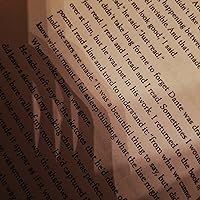
solid, loses itself sometimes but rlly like the visual elements

Read
January 1, 2024Given that his complicated relationship with his father serves as the catalyst for much of the book’s content, it seems fitting that author Kawika Guillermo begins Nimrods with a reflection of his own experiences as a recent father. But the vision of fatherhood he presents is not an especially idyllic or sentimental one; rather, he compares the sounds of his crying newborn to those of a bleating goat as he wonders to himself whether he has the fortitude to maintain his new role and the responsibilities that come with it.
Insecurities about fatherhood are surely a natural part of the journey, but likely doubly so in the case of Guillermo, who dedicates a majority of his “Fake-Punk, Self-Hurt Anti-Memoir” to documenting the fraught role his own father has played in his life, along with his newfound anxiety that he is, whether through genetic predisposition or social conditioning, doomed to initiate similar mistakes with his own son.
Guillermo’s father (stylized as The FATHER in the book’s biblically-modelled middle section) factors heavily in each of Nimrod’s three parts, and the reader learns how his upbringing as the son of a prominent evangelical leader shaped his outlook and worldview, and how alcoholism impacted (and eventually disintegrated) many of the relationships in his life, including his relationship with Guillermo himself.
Within the vignettes of Nimrods, The FATHER is depicted as a Trump-voting, Facebook-arguing, Jimmy Buffett-singing, balding white man seemingly unaware of any privileges his race may have afforded him in American society. And while I don’t know Guillermo’s father, I certainly know this guy.
Were this a conventional work of fiction, The FATHER might be thought of as the ‘villain’ of Nimrods, but as with most things in real life, people are more complicated than this. The FATHER is not depicted here as a sadist or some cartoonishly evil antagonist. Guillermo’s memories and musings present him as a flawed man to be sure, but not one without sympathetic qualities. To his credit, Guillermo has self-awareness and maturity enough to recognize that his father, a working-class man, “works far harder, for far longer, for far less pay” than he ever will, and he acknowledges his father’s struggles with alcoholism, depression, and suicidal ideation.
What he doesn’t do, however, is let his father off the hook for his problematic behaviour of the past and the ways that it impacted the author as a child and young man.
And while Guillermo’s relationship with his father arguably serves as the crux, Nimrods is about much more than this.
Sometimes cryptically, but more often with a raw and straightforward honesty, Guillermo walks the reader through his various struggles of identity from his childhood in Portland and Las Vegas to the present day. He details his experiences with queerness, gender identity, eating disorders, mixed-race background, initial doubts of and eventual break from a highly religious upbringing. He traces his initiation into punk rock subculture and international living arrangements; and he chronicles his more recent concerns with navigating newer roles—father, recent Vancouverite, and young academic at a post-secondary institution.
Regardless of whether he’s discussing childhood or more recent experiences, ‘Outsider’ seems to be the role that consistently follows Guillermo.
His mixed-race status rendered him as an outsider with his father’s side of the family and the all-white church they attended. His questioning of gender and sexuality as a young person in the ’90s rendered him as an outsider to conventional performances and expectations of gender.
Even today as a young, tenure-track professor at one of the most prestigious universities in Western Canada, it seems he cannot fully shake his outsider status, as he shares various anecdotes that reveal the ‘polite racism’ of the academic world and Canada more broadly–a society where “people insist to hug you so their faces never need look you in the eyes.”
The ‘anti-memoir’ subtitle is apt here as Nimrods is not presented or written in the way of a conventional memoir or autobiography. The stories are not always in chronological order, important events are briefly alluded to only to be revisited in detail later, and the text is presented as a mixture of often fragmented prose, poetry, images, song lyrics, and other creative vehicles of expression, complete with clever wordplay, some terminally online lingo that other ‘children of the Internet’ might recognize, and creative use of the physical space of the pages themselves.
He also treats readers to photos of the young author–pictures of a happy, smiling child which are deliberately defaced and vandalized, crass Green Day lyrics superimposed overtop them as if Guillermo is attempting to retcon the very history these photos suggest.
Adding to this unconventional format are the short phrases sprinkled throughout the book (often in the page margins) that are meant to elaborate or otherwise punctuate what’s being said in the main text. These phrases are a mixture of, among other things, original prose, song lyrics (punk rock being the preferred genre here), quotes from literature/poetry, Bible verses, as well as the author’s personal correspondences such as text messages and remembered conversations. The short phrases provide some nice context, mystery, and flavour to the main text, but more importantly, they act as the scattered pieces that, when combined, create a more fully formed identity.
Ironically, this ‘anti-memoir’ ends up being a more accurate depiction of how memory tends to work than a conventional memoir or autobiography. Most of us don’t remember our past as a chronological sequence of noteworthy events. We remember it as sporadic moments, as songs we heard for the first time, as first and last kisses, as awkward encounters, as scattered images, as times our parents scared us–all of which are presented here. We dwell on decisions we made and how our lives might have played out had we chose something else–in the case of Guillermo, it was brief flirtations with ‘redpill ideology’ as a young man before he was thankfully steered away from that by a girlfriend, or his decision to turn down a cushy academic job in Dubai because he felt it a bad fit for his politics and beliefs.
As the story of one man’s life, Nimrods is worthwhile due to its unconventional approach as well as Guillermo’s honesty, creativity, emotional maturity, and overall skill as a writer.
As something even bigger, it is an effective meditation on the power of perseverance and the possibility of reconciliation between the people we once knew and the people that we are now.
Insecurities about fatherhood are surely a natural part of the journey, but likely doubly so in the case of Guillermo, who dedicates a majority of his “Fake-Punk, Self-Hurt Anti-Memoir” to documenting the fraught role his own father has played in his life, along with his newfound anxiety that he is, whether through genetic predisposition or social conditioning, doomed to initiate similar mistakes with his own son.
Guillermo’s father (stylized as The FATHER in the book’s biblically-modelled middle section) factors heavily in each of Nimrod’s three parts, and the reader learns how his upbringing as the son of a prominent evangelical leader shaped his outlook and worldview, and how alcoholism impacted (and eventually disintegrated) many of the relationships in his life, including his relationship with Guillermo himself.
Within the vignettes of Nimrods, The FATHER is depicted as a Trump-voting, Facebook-arguing, Jimmy Buffett-singing, balding white man seemingly unaware of any privileges his race may have afforded him in American society. And while I don’t know Guillermo’s father, I certainly know this guy.
Were this a conventional work of fiction, The FATHER might be thought of as the ‘villain’ of Nimrods, but as with most things in real life, people are more complicated than this. The FATHER is not depicted here as a sadist or some cartoonishly evil antagonist. Guillermo’s memories and musings present him as a flawed man to be sure, but not one without sympathetic qualities. To his credit, Guillermo has self-awareness and maturity enough to recognize that his father, a working-class man, “works far harder, for far longer, for far less pay” than he ever will, and he acknowledges his father’s struggles with alcoholism, depression, and suicidal ideation.
What he doesn’t do, however, is let his father off the hook for his problematic behaviour of the past and the ways that it impacted the author as a child and young man.
And while Guillermo’s relationship with his father arguably serves as the crux, Nimrods is about much more than this.
Sometimes cryptically, but more often with a raw and straightforward honesty, Guillermo walks the reader through his various struggles of identity from his childhood in Portland and Las Vegas to the present day. He details his experiences with queerness, gender identity, eating disorders, mixed-race background, initial doubts of and eventual break from a highly religious upbringing. He traces his initiation into punk rock subculture and international living arrangements; and he chronicles his more recent concerns with navigating newer roles—father, recent Vancouverite, and young academic at a post-secondary institution.
Regardless of whether he’s discussing childhood or more recent experiences, ‘Outsider’ seems to be the role that consistently follows Guillermo.
His mixed-race status rendered him as an outsider with his father’s side of the family and the all-white church they attended. His questioning of gender and sexuality as a young person in the ’90s rendered him as an outsider to conventional performances and expectations of gender.
Even today as a young, tenure-track professor at one of the most prestigious universities in Western Canada, it seems he cannot fully shake his outsider status, as he shares various anecdotes that reveal the ‘polite racism’ of the academic world and Canada more broadly–a society where “people insist to hug you so their faces never need look you in the eyes.”
The ‘anti-memoir’ subtitle is apt here as Nimrods is not presented or written in the way of a conventional memoir or autobiography. The stories are not always in chronological order, important events are briefly alluded to only to be revisited in detail later, and the text is presented as a mixture of often fragmented prose, poetry, images, song lyrics, and other creative vehicles of expression, complete with clever wordplay, some terminally online lingo that other ‘children of the Internet’ might recognize, and creative use of the physical space of the pages themselves.
He also treats readers to photos of the young author–pictures of a happy, smiling child which are deliberately defaced and vandalized, crass Green Day lyrics superimposed overtop them as if Guillermo is attempting to retcon the very history these photos suggest.
Adding to this unconventional format are the short phrases sprinkled throughout the book (often in the page margins) that are meant to elaborate or otherwise punctuate what’s being said in the main text. These phrases are a mixture of, among other things, original prose, song lyrics (punk rock being the preferred genre here), quotes from literature/poetry, Bible verses, as well as the author’s personal correspondences such as text messages and remembered conversations. The short phrases provide some nice context, mystery, and flavour to the main text, but more importantly, they act as the scattered pieces that, when combined, create a more fully formed identity.
Ironically, this ‘anti-memoir’ ends up being a more accurate depiction of how memory tends to work than a conventional memoir or autobiography. Most of us don’t remember our past as a chronological sequence of noteworthy events. We remember it as sporadic moments, as songs we heard for the first time, as first and last kisses, as awkward encounters, as scattered images, as times our parents scared us–all of which are presented here. We dwell on decisions we made and how our lives might have played out had we chose something else–in the case of Guillermo, it was brief flirtations with ‘redpill ideology’ as a young man before he was thankfully steered away from that by a girlfriend, or his decision to turn down a cushy academic job in Dubai because he felt it a bad fit for his politics and beliefs.
As the story of one man’s life, Nimrods is worthwhile due to its unconventional approach as well as Guillermo’s honesty, creativity, emotional maturity, and overall skill as a writer.
As something even bigger, it is an effective meditation on the power of perseverance and the possibility of reconciliation between the people we once knew and the people that we are now.
March 27, 2024
3.5 stars rounded up to 4
There were some really interesting ways of playing with form and space (bible-esque for a section in the middle) and some of the language was quite interesting.
However, the readability of some sections (like the bible) was low and felt like a long slog.
There were some really interesting ways of playing with form and space (bible-esque for a section in the middle) and some of the language was quite interesting.
However, the readability of some sections (like the bible) was low and felt like a long slog.
Displaying 1 - 6 of 6 reviews