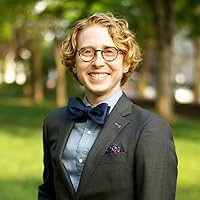
His routine was the same every day for 38 years: up at 4:15, make a turkey-on-rye, drive the deserted Henry Hudson Parkway to the hospital, check the schedule, scrub, cut, reattach, save a life or two, repeat. Until March 2020, when the Covid-19 pandemic shut hospital surgeries all over the world.
Craig Smith, M.D., Chairman of the Department of Surgery at Columbia Presbyterian Hospital, went from performing heart surgeries on patients both everyday and celebrated (he performed the quadruple bypass that saved Bill Clinton’s life in 2004) to sitting in his tomb-quiet office looking out at George Washington Bridge. And he started to write. His Covid emails were balm to the staffers and later became celebrated for Dr. Smith’s care and thought in his assessment of the work of the hospital–of any hospital.
Nobility in Small Things not only takes us into the mind and soul of a surgeon with the ability to “play God” but into the heart of a man who chose a lifesaving career. The book introduces us to patients and peers, and moves from family-building and heartbreak at home, to the tragic suicide of two fellow M.D.s. Dr. Smith also writes vulnerably about his debilitating social anxiety and how he overcame it.
Dr. Smith shows us not just the making of a surgeon in Nobility in Small Things, but the maintenance of one: the deep feeling and moral philosophy that anchor the daily miracles that define his profession.
Dr. Smith earned his MD at Case Western Reserve University in Cleveland, Ohio (Phi Beta Kappa), going on to a general surgery internship and residency and a vascular surgery fellowship at the University of Rochester Medical Center/Strong Memorial Hospital (1977-1982). He completed his cardiothoracic surgery residency at Columbia-Presbyterian Medical Center in 1984, immediately joining the faculty of the Columbia University College of Physicians and Surgeons.
He was Director of Cardiopulmonary Transplantation at Columbia-Presbyterian Medical Center during 1986-1996 and was appointed Chief of the Division of Cardiothoracic Surgery in 1996. He became a full professor of surgery in 1998. In 2010, Dr. Smith became Chair, Department of Surgery.
Nobility in Small Things: A Surgeon's Path Craig R. Smith, M.D.
I have read several autobiographical books by doctors who take the time to explain why they chose medicine as a career and how they honed their craft.
Nobility in Small Things: A Surgeon's Path frustrated me. I was excited to read another medical autobiography but as I read the book, I couldn’t figure out exactly what I was reading.
Yes, I could say that it was a medical autobiography, but it also wandered into painfully detailed discussions of his job as a lineman for AT&T as well as a long discussion on medical funding. There were also other meanderings that really didn’t have to do with the job of being a heart surgeon. The author may have felt that these extra experiences were necessary to document, but they really didn’t add to his overall training of Dr Smith to become a cardiac surgeon.
Having said all the above, this book is not all that bad. His discussion of treating former President Bill Clinton was really fascinating, especially having to work around the fact that he was treating a former president surrounded by the United States Secret Service.
I initially wanted to give Nobility in Small Things: A Surgeon's Path two stars but I felt that the parts of the book that did work worked very well. I find myself wishing that the author had a better editor who could have worked with Dr Smith to weave a more coherent and to the point medical autobiography.
I honestly can’t recommend this book except for those who might be interested in reading about how a surgeon and hospital handle a VIP.
3/5 stars
[Thank you to NetGalley and the author for the advanced ebook copy in exchange for my honest and objective opinion which I have given here.]
What could have been a fascinating memoir by the Chairman of the Department of Surgery at Columbia Presbyterian Hospital is marred by a need for judicious editing. Many medical non-fiction fans, however, will likely appreciate it.
I asked to read this book because I loved the title and the description. Dr. Smith's experience with the loss of a child sounded like the type of formative event that can lead to deep empathy. I expected this book to exhibit that. But it didn't.
Dr. Smith had interesting growing up years. I enjoyed his stories about his youthful jobs. He described some things through the modern lens of privilege - acknowledging that he was a privileged man. But he also worked hard.
The writing style is clear and mostly flows well, except when he forgets his audience may not consist of scientists and mathematicians. That seemed to happen more toward the end of the book. The timeline jumps around for no apparent reason, so it's sometimes difficult to follow.
The account of his child's death was deeply personal and heartfelt. Dr. Smith vulnerably shares an issue with anxiety. His stories about caring for President Clinton were interesting. And one thought-provoking discussion about nobility centered on the changing values in our society from putting others first to self-focus first.
But the overall tone is pompous and lacking in true sensitivity. There are several unflattering stories about coworkers with their identities thinly veiled. I felt a lot of his writing was vengeful. He would often make a statement that seemed broad-minded (usually acknowledging privilege regarding racial/economic disparities), but in the end he seemed to simply be trying to look good, rather than be good.
This didn't make my recommended reading list. I was given advance access to an electronic copy to review. #NetGalley #NobilityInSmallThings
I embarked on this literary adventure with high hopes, as the book's initial chapters promised a captivating start. However, my enthusiasm dwindled as the narrative unfolded into a perplexing labyrinth. Despite my appreciation for medical memoirs, this particular journey fell short for me.
While the author showcased moments of commendable writing, the overall experience felt disjointed & would have greatly benefited from extensive editing. The potential of the narrative was overshadowed by its confusing evolution.
I extend my thanks to #NetGalley, the author, and the publisher for providing me this ARC. My review is an honest & voluntary reflection of the book.
Craig Smith, MD, chairs the department of surgery at New York-Presbyterian Hospital/Columbia University Medical Center; he has been practicing cardiothoracic surgery there since 1984, with his biggest claim to fame being heading the quadruple bypass operation on former US President Bill Clinton in 2004.
In his 2023 memoir Nobility in Small Things, Dr. Smith takes readers on a very detailed walk through his life, which, as the cover suggests, wasn't a linear path into medicine. He was an amateur daredevil as a kid, did various dangerous manual labor jobs growing up, spent several years in a PhD program after undergrad but dropped out, and worked as a lineman immediately before medical school in a section of the book that goes on way longer than it should. I found the most interesting aspects of the book to be about his residency and fellowship training as a surgeon in the '70s and '80s, which were unsurprisingly brutal (as surgery residencies are no joke, even today). I would have liked to hear more about how he and his wife (a lawyer) navigated two highly stressful jobs while raising kids and managing a household and staying married; the only meaningful discussion of this is when he writes poignantly about the loss of their third child two months after birth from SIDS. The rest of the book is largely focused on his career, which, as the book continues, devolves somewhat into the "old man yelling at a cloud" meme as he rails against the humanistic and culturally aware zeitgeists of modern medical training.
A medical memoir that details the events that lead Dr. Smith to apply for medical school after leaving graduate school without a degree and asking his wife to uproot her goals to follow him.
I really enjoyed reading the inner workings of Dr. Smith’s mind. Human thoughts are a fascination of mine and it’s why I rank memoirs so high. The most fascinating section was his experience treating Former President Bill Clinton.
This is a niche read so if you enjoy memoirs and medicine this will be easy to connect with.
Was good at points but disappointing to see a surgeon not talk about surgery for most of the book. It was cool to see his care of Bill Clinton and how he handled leadership during the pandemic, though.
Mobility in Small Things by Dr. Craig Smith is a book about the life of a surgeon and to understand how complex the medical field can be. As a trauma surgeon myself, I fully grasp the challenges that Drs face on a daily basis. When covid hit and many hospitals were not performing scheduled surgeries it gave Dr. Smith the opportunity to slow down a bit. As a physician myself, I am fully aware how hospitals run and the political and financial hold that hovers over it. But Dr. Smith #poke a lot about this aspect of medicine. We learned about his previous jobs such as when he worked s a lineman for AT&T but in all honesty it really did not give the reader anymore of a glimpse into his medical career. I honestly was very frustrated because I wanted to hear more about his career as I am beginning and Dr Smith has pretty much finished his career in medicine. I wish this book focused more on the actual job of a surgeon and dealing with patients instead of what makes a hospital run. If there were more self reflection or intimate details about his work such as the lives of those he saved it may have felt more rewarding.
3 out of 5 stars
Thank you to NetGalley as well as the author/publisher for allowing me to read this book in exchange for my unbiased and honest review.
Craig Smith, M.D. shares his journey from an injury-prone childhood to working odd jobs in New England before finally landing in medical school. Smith spent time in a factory and working as a linesman before beginning med school at Case Western. He went on to fellowship at University of Rochester before completing his residency at Columbia-Presbyterian. While Smith shares intimate details of his personal life and family, much of the memoir is devoted to his medical research, practice, and reflection. His most poignant reflections are shared in regard to the Covid-19 pandemic in the final few chapters.
**I received a digital copy of this book from the publisher, through Netgalley, in exchange for an honest review.
When I was asked to read this by the publisher, after reading the blurb, I was pretty excited. Unfortunately, this excitement dwindled away as I read the book.
This book should have been awesome, and to be fair, there were moments that were really enjoyable [The Clinton triple bypass, some of the Covid parts, the part about being a lineman for AT&T <--my Dad was a "phone guy" who did it all and I totally got these parts, though I can see how it would be so deadly dull to people who have no frame of reference LOL], but it was mostly just a dull and tedious read and left me wishing I could have been reading something else. I am truly disappointed over this as I was expecting so much more.
I was able to also receive an audiobook ARC [I need to note here that all of chapter 5 was missing from my audiobook ARC] and I will admit now, it will be tough to review it. I liked the narrator well enough, but with the job he had before him in narrating this snooze-fest of a book, it is difficult to tell if I would like him in other books, but I do believe I would listen to him again as he did the best job he could with the material he was given.
I was asked to read/review this book by St. Marten Press and I thank them, Dr. Craig R. Smith, Braden Wright - Narrator and Macmillan Audio for providing the book ARC and the audiobook ARC in exchange for an honest review.
When this book was great, it was great. The middle chapters talking about med school,COVID, and surgery on President Clinton were page turners. Other chapters however felt like the needed a bit more editing before the final book. As I read an ARC it is possible those edits will happen, and the early/late chapters will be tightened up, but I do not know.
This book very much reads like “someone who went viral got offered a book deal on a topic and it turns out either they aren’t ready to release a whole book yet. The early chapters didn’t tie in enough to the authors choice to become a doctor. The end chapters felt like filler.
I did learn a lot of things, and enjoyed a lot of the commentary which is why I rated it 3 starts, but I feel like this book could be so much more.
I received a free ARC of this book from the publisher.
not my favorite book written by a surgeon. maybe just not what I expected. the parts about the pandemic were interesting but ultimately felt unorganized. I will say there's no doubt he's lived a very interesting and at times intense life
I listened to the audio book, which I felt was very well read and fitting to the author’a voice.
This book is memoir of a heart surgeon. It begins with an introduction of his experiences during the Covid-19 pandemic and then truly begins with his upbringing and life. He works a variety of odd jobs and then finds himself on the path to medical school and eventually surgery. I personally found his writing to be articulate and well done. His story telling is organized, well mannered and unabashed. He is vulnerable in his faults and confident in his abilities. Overall, I found his life to be very interesting and admirable; though I will say it was likely easier for me to absorb it via audio book. Had I been reading it in print, I may have become more bored at times.
Towards the end of the book he begins to share his more recent experiences as a veteran heart surgeon. He describes the unprecedented challenges he faced during the pandemic, and uses this as a springboard to share his own opinions on surgery, medical systems, and working in a triage setting where death and unfortunate outcomes are inevitable. Personally, I found his insights around these topics to be fascinating and I felt that I agreed with and admired much of his prospective.
However, in evaluating the book as a whole, it does progress in a rather unexpected manner. What starts as a story of his life ends with his personal philosophy on medical ethics and practices. Of course it’s his memoir and so he can write it however he wants, but it is a truly unique in that I don’t know who this book is intended for and his the ideal target audience. This didn’t detract from the book, but made it a little less cohesive as a whole. I will say it covers a lot of ground and I really enjoyed listening to it and learning about his life and perspective.
I would recommend this book to those who enjoy medical memoirs or take interest in the intense systems of high stakes medical procedures, but just know that this book covers a broad spectrum of Smith’s personal life, professional work, and personal values and opinions.
I was very excited to start this book, hoping for an inside perspective on leadership during the early COVID-19 pandemic. Unfortunately, this was profoundly disappointing. The writing voice was often tone deaf and unaware of his privilege. I recommend skipping this clinician memoir in favor of others, such as When Breath Becomes Air or Delivering Doctor Amelia.
Thank you to NetGalley and the publisher for the audiobook ARC in exchange for an honest review!
I made note of this book when I got notice of it as a book giveaway. Found it via my local library. Kind of on the fence of loving it, but his story is compelling. A jagged path indeed to medicine.
If the path to becoming a surgeon in long and hard, the one that Dr. Smith took was extremely winding. He grew up in a family, on the wrong side of the tracks, and money certainly was not taken for granted. I often think that people who pursue a career as a doctor were related to one, and followed in family footsteps, or were taken by an incident or illness they encountered growing up and were inspired by the medical community. Craig, took a very winding path to becoming a doctor, eschewing the inclination early in his college career for other pursuits.
His early work experiences took him to labor in a coal mill in Pennsylvania, working with coke ovens that blasted coal dust over everything. He worked as a belt cleaner, and most often left work covered in coal dust. It was a dangerous job, and his younger self didn't appreciate the dangers and he took short cuts that would not nave been approved by OSHA. The next summer he worked at a coke factory, a step up from his previous summer. That he took dangers short cuts there belie his previous summer's experiences. While reading of his time there, I wondered how he even survived. But, those experiences proved to him that he never wanted to be a manual laborer. Yet, still he hadn't found his path to medicine.
Once a surgeon, he dabbled with lung transplants, until he finds his calling working as a heart surgeon. He was one of those who cared to Bill Clinton when he encountered heart issues.
He is honest about his profession, almost to fault. Doctors and surgeons are often put up on a pedestal, but that is never where he saw himself. Early in his marriage, after he and his wife had 2 daughters, when he experienced one of his extreme low points when he lost his healthy baby daughter, Lydia, to SIDS. "Something I had always imagined was among the worst things that can happen had just happened. How was I still standing, walking, breathing, capable of speech? I felt like I was looking down from some dimensionless cold emptiness, far away, watching myself exist."
"Trish and I both returned to work after a week. There wasn't much to 'deal with,' in the usual sense of that phrase. When I die, my survivors will be tying up myriad loose ends and rummaging through possessions for months, all the residue commensurate with a long life. Lydia was all perfection and possibility, snatched away before she could become entangled in complicating relationships, disappointments, ecstasies, legalities. She left an empty crib. Trish kept the one0piece sleeper Lydia had worn the longest, until it stopped smelling of her."
My heart ached for him and his family...
He tells of his career and subsequent rises in stature, and talks honestly about his faith and doubts. Doctors, after all, are people just like the rest of us. "I'll say again, its a big thing surgeons do. People hand their bodies and minds over to us. When they die, they've lost everything they have and everything they ever will have. We have an obligation to improve our performance by learning from bad outcomes so that no one suffers or dies in vain. The spotlight must beam on our myriad systems, but also on each of us. We need to remember basking in personal responsibilities for triumphs when accepting responsibility for bad outcomes that hurt. Neither the responsibility nor the pain can be waived away. What makes it bearable? In part, it's knowing hat I've helped far more people than I've hurt. And here's where intent does matter. If I intended to help, and I never quit trying , my soul, sliding, can self-arrest short of the crevasse. I slash the ice axe of best intentions into the glacier of imperfectability, and it holds."
He tells of the time of Covid and the uncertainties were encountered at the hospital and challenges that the staff faced. Surgeries were for the most part, cancelled, and everyone was called to tend to the patients with the illness. "Our pandemic adversary was silent, invisible, tasteless, odorless, and impalpable. SARS-CoV-2 was everywhere and nowhere, a nothing so huge it shut down everything."
One or two chapters deal with medicine and science that I found hard to follow., but that certainly shouldn't deter one from picking up this book. You probably wouldn't think a doctor would be capable of inspired prose, but he does write with aching beauty.
"Where I get to make a difference, even save lives. The high highs come with low lows. Real people with real families have died in my hands, sometimes because I failed them profoundly. I am not unusually extroverted or relentlessly cheerful. I have perfectionist tendencies, which helps with endless refinement of repetitive tasks but doesn't help me accept that nothing I do is perfect, complete, or permanent. I brood over losses that were never contests or were never mine to win. But I am incurable optimist. I can't imagine a darkness so deep that it overcomes a desire to see what tomorrow brings. Looking out is a break from looking in. I never see the same river twice. " (referring to his view of the river from his office window.)
"Nobility in Small Things: A Surgeon's Path" by Craig R. Smith, M.D., is an extraordinary memoir that offers readers a captivating glimpse into the mind and soul of a highly respected surgeon. Through heartfelt storytelling and introspection, Dr. Smith takes us on an emotional journey, from the routine of his daily life as a surgeon to the profound impact of the COVID-19 pandemic.
The book begins by immersing us in the meticulous routine of Dr. Smith's life—waking up early, preparing his turkey-on-rye sandwich, and embarking on his drive to the hospital. The author's dedication to his craft is evident as he performs life-saving surgeries, including the quadruple bypass that saved Bill Clinton's life. However, everything changes when the pandemic hits, forcing the suspension of hospital surgeries worldwide.
Dr. Smith's transition from the bustling operating room to the solitude of his office provides the catalyst for his writing. His emails, initially intended to uplift and console his colleagues, eventually gain recognition for their empathetic insights into the challenges faced by hospitals everywhere. In "Nobility in Small Things," Dr. Smith shares these poignant messages, allowing readers to witness the care and thought he invests in assessing the work of his own and any hospital.
While the book delves into the world of medicine, it transcends mere professional accounts. Through intimate narratives, the author introduces us to his patients and colleagues, delving into the joys and heartbreaks of their lives. Dr. Smith explores not only the triumphs and tragedies within the hospital walls but also the profound impact these experiences have on his personal life. He fearlessly addresses the devastating loss of two fellow M.D.s to suicide and opens up about his own battle with social anxiety and the transformative journey towards overcoming it.
What truly sets "Nobility in Small Things" apart is its exploration of the deeply human elements behind the medical profession. Dr. Smith artfully reflects on the moral philosophy and profound emotions that underpin the daily miracles performed by surgeons. The book invites us to contemplate not only the development of a skilled physician but also the continual cultivation of compassion, empathy, and integrity that define this noble profession.
Throughout the memoir, Dr. Smith's writing is sincere, vulnerable, and deeply introspective. He masterfully intertwines personal stories, medical expertise, and insightful observations, resulting in a narrative that is both intellectually stimulating and emotionally resonant. The author's ability to convey his experiences with such authenticity and depth is a testament to his exceptional storytelling skills.
"Nobility in Small Things: A Surgeon's Path" is a remarkable testament to the resilience and dedication of medical professionals. Dr. Craig R. Smith's memoir not only sheds light on the extraordinary work of surgeons but also provides a profound meditation on life, empathy, and the pursuit of excellence. This book is a must-read for anyone seeking to understand the humanity behind the white coats, and it will leave a lasting impact on readers long after they turn the final page.
In a loquacious, informative, touching, even philosophical memoir, Nobility in Small Things: A Surgeon's Path, Dr. Craig Smith chronicles his journey from his oft-injured childhood to the Chair of Surgery at New York-Presbyterian/Columbia University Medical Center, with many stops in between. Like many of us, Smith did not have an easy time choosing a career path and dropped out of graduate school. As a youngster, he enjoyed – perhaps “thrived” is a better word – on risk-taking. He and a buddy would sneak off to climb towers, rooftops, and other high places for thrills. Never mind that as a boy he suffered numerous fractures due to mishaps and sports injuries.
It may have been this endeavor to strive and succeed that pushed him toward more challenging, even dangerous jobs. He describes in great detail summer jobs at a steel company in Pennsylvania, where he describes the nitty-gritty work of working as a belt cleaner. Another dangerous job he held just before heading off to medical school was working for his father-in-law as a pole climber or the phone company. Who knew his earlier experience with heights would come in handy? However, the protracted descriptions of this job caused me to begin skimming the pages. I was waiting to hear about med school!
I was fascinated to learn that Dr. Smith was one of the early practitioners of heart-lung transplants. This field is not without its unhappy endings, as patients, especially in the early years, more often than not had poor survival rates due to infection or other complications. After years of success in this area, Smith returned to thoracic surgery.
His family was growing. There were some difficult moments there too. He and his wife Trish lost their daughter, Lydia, to sudden infant death syndrome. Later, daughter Halley developed osteomyelitis, a serious bone infection, which was addressed promptly but was frightening for her and her parents.
In later chapters, Dr. Smith discusses some of the financial and political burdens of medicine, Mortality and Morbidity Conferences, which are meant to help doctors and residents improve quality and openly discuss errors, accept responsibility and accountability, and recognize the needs of patients as the primary goal. As someone who lives in Rochester, Minnesota, and who worked at Mayo Clinic for a short time, I will paraphrase what Dr. Smith says in the words of the Mayo mantra: “The needs of the patient come first.”
I truly believe that Dr. Smith believes in medical ethics, that he acknowledges his imperfections and strives to do his best possible job for patients. I enjoyed reading about his career. I think that some chapters could do with some streamlining, however.
I received a digital copy of Nobility in Small Things as an ARC in exchange for my honest review. My thoughts and opinions are my own. Thanks to NetGalley, St. Martin’s Press, and the author.
Nobility in the Small Things: A Surgeon's Path, written by Dr. Craig R. Smith, takes readers on an intimate exploration of the life of a surgeon. This poignant memoir offers a captivating glimpse into the demanding world of surgery, shedding light on the dedication, skill, and sacrifice required to navigate such a career. As I immersed myself in the pages of this book, I couldn't help but feel an overwhelming sense of gratitude towards the remarkable individuals who choose to pursue this noble path.
Dr. Smith's candid narrative explores the challenges and triumphs of a surgeon's life, revealing the immense responsibility that comes with holding lives in one's hands. His vivid descriptions of the operating room, the intricate procedures, and the emotional toll of his profession paint a vivid picture of the dedication and passion that fuels the surgical field.
As the pages unfolded, I found myself gaining a newfound respect for the men and women who dedicate their lives to this pursuit. The unrelenting hours, the perpetual state of alertness, and the constant weight of life-and-death decisions all underscored the tremendous fortitude and resilience required to thrive in this field. It became clear to me that being a surgeon is a calling, a path meant for those with an unwavering commitment to serving others.
While reading Nobility in the Small Things, I couldn't help but reflect on my own limitations and the realization that a surgeon's life may not be suited for everyone. The level of expertise, the ability to handle immense pressure, and the stamina to navigate the demanding schedules are qualities that only a select few possess. Dr. Smith's eloquent storytelling reinforced my gratitude for the exceptional individuals who choose this path, knowing that it is not one that I am personally suited for.
In a world where medical advancements often steal the spotlight, Nobility in the Small Things reminds us of the human element behind the science. It highlights the impact that surgeons have on their patients' lives, and the tremendous trust that is placed in their hands. Dr. Smith's compassionate approach and dedication to his craft serve as a shining example of the noble qualities that define a true surgeon.
Nobility in the Small Things: A Surgeon's Path is an enlightening and deeply introspective memoir that evokes a profound sense of gratitude towards those who devote their lives to the field of surgery. Dr. Smith's candid account of his own journey offers a unique perspective into the sacrifices and triumphs that define the surgeon's path. This book serves as a poignant tribute to the men and women who possess the rare combination of skill, compassion, and determination needed to excel in this demanding field. I am truly thankful for their unwavering commitment to the art and science of surgery.
Before I get into it, I just want to say that I think if you're going to med school or are in the medical field then this would be a good read for you because it gives you a lot to think about that has to do with that career.
That said, I'm just a regular person reading this and I... struggled. The first 75 pages were tough to get through. I felt like I was reading a foreign language with the over detailed pictures painted about his jobs that had nothing to do with medicine. Then there was a patch of the book that detailed medical stories and his surgeries on President Clinton and that all fascinated me! The thanksgiving portion of the book broke my heart and I cried through it all and then multiple stories about patients also made me cry. They were written well and I like that their lives are remembered forever in literature.
Where it lost me was the covid chapters in the end EVEN THOUGH going into this book I thought it was JUST stories from him being a surgeon in a pandemic (it's very very little of the book). Here's the thing. He makes it very clear that he is a rich, privileged, white male. He does it the whole way through the book and honestly, do we need more perspectives from this group of people? Especially when it becomes condescending? No. We don't. He couldn't seem to comprehend why anyone wouldn't wear a mask if get the vaccines and made me as a reader feel stupid for not doing EXACTLY as he thinks is needed. (Side note, I'm saying this as someone who wore masks religiously well into 2023 and has had every vaccine and booster. But I also only got covid after all of that and I got it two months in a row). But I don't like being talked down to by a man who has no real touch with reality. He didn't know what the majority of the country was as dealing with during the pandemic. He was in his rich surgeon man's bubble. He presented a few interesting insights about covid and I learned about alligator hearts but honestly most of the covid stuff was from a perspective that we saw splashed all over the media for years and do we need more of that?
I would have preferred this book if it wasn't so wordy about non medical things and the chapters about his previous jobs (where he makes it known that he got to live a middle class life while his coworkers all lived in poverty) could have been cut down to one chapter.
Like I said, I think medical school students could benefit from getting insights into a few corners of the medical world that they might not have thought about but otherwise... I don't see a huge point in this book, at least in the way it's formatted. I would have liked more medical stuff and more actual insights into what the pandemic was like as a surgeon. But it wasn't the worst thing I've read, I just wasn't the right audience for it!
Disclaimer: There are a lot of heavy topics in this book, suicide, countless deaths including infants, covid etc. so readers please keep in mind that this can be a tough and triggering read.
Dr. Craig R. Smith who considers himself a surgeon who writes, begins this story with him growing up. I could have done with a more condensed version of these first chapters because I felt it went on tangents that didn’t feel relevant. It may have felt important to him, but as a reader I didn’t find necessary (i.e. his lineman job I even paused reading and flipped back pages because I was wondering how we were still on that topic). As I continued on with his story I felt sometimes it was a bit back and forth in the timeline of his life. Not necessarily confusing, but would have benefited by keeping it simple. He would highlight certain events that I thought seemed important to shaping who he was and then it was glossed over and moved on to the next subject (i.e. his daughter being born or her going through treatment for a mass when she was a baby, a colleague committing suicide).
When Dr. Smith began going into detail about the heart and lung transplants and the transformation of NYC during the 80s that’s when this story took a turn and locked me in. I just found it all so fascinating him thinking back on all his successes and failures during that time. I enjoyed reading about how he formed his team to work on President Clinton too, what an experience that must have been with all eyes on you.
Chapter 11 and on is where he really dives into to Covid and how it impacted the hospital. I’ve heard stories from friends who worked in NYC during this time and it just confirms how unprecedented and scary it must have been being on the front lines. These chapters felt more focused as Dr. Smith was documenting his experience during this time and would frequently refer back to his thoughts he wrote down. I thought they were raw and authentic feeling and I respect what everyone went through and the after effects.
I enjoyed the idea of getting the perspective of someone like this on the front lines telling their story, I think the beginning chapters could have been edited a bit to stay on topic and keeping it a bit more concise. I understand that doctors may have families and balancing family and work is part of their being, but I think his perspective on the pandemic or operating on Bill Clinton is what we don’t see from any other author, so that’s what I was craving more of and was left a bit disappointed. #goodreadsgiveaway #nobilityinsmallthings #drcraigsmith @stmartinspress
Nobility in Small Things: A Surgeon's Path Craig R. Smith, M.D. Expected publication date: October 10th, 2023, St. Martin’s Press
I read this book before a summary was available, and to be honest, I am not sure what the summary would be even after having read it.
This is an autobiography of Craig R. Smith’s life and career, from working odd jobs on telephone lines, steel factories, dabbling in the sciences, to finally entering and excelling in cardiothoracic surgery. He discusses many important topics such as living with and overcoming social anxiety, the many political and financial layers involved in running a hospital, implications of recent modifications to the Hippocratic oath (when does a doctor’s emphasis on ‘self-care’ begin to intrude on their ability to care for their patients?) and goes into detail about some very interesting medical cases he’s had over the years.
The main thing that I believe could use some improvement is building in more coherent connections between events in life and career. Some stories are brought up and then just never explained, almost like they don’t play a significant part in his path. I would have liked to see some more wide-reaching self-reflection, and maybe for the book to have more direction throughout.
Lastly, I found certain racial topics in this book to have been brought up in an insensitive and potentially problematic matter. For one, Dr. Smith touches on racial injustice in the context of hospital employees, but then focuses this discussion to the minorities that work as housekeepers and cleaning crew for the hospital. His reasoning that it’s because that area of the hospital staff is more racially mixed than MDs or faculty, but it seemed dismissive to fact that minorities work across all medical ranks, and at increasing rates. I also thought it was tone-deaf that he made a comment that “All Lives Matter” became controversial in June 2020. The topic has been going on for much longer than that. Lastly, I found it off-putting that even in the beginning of the book, he would use terms like “Black man” as a key descriptive factor when talking about people, even when it was completely irrelevant to the story he was telling.
Overall, I still found the story interesting and, at many points, insightful and surprising. I would give this a solid 3.5 out of 5.
Thank you to NetGalley and St. Martin’s Press for the opportunity to read an advanced readers copy!
Interesting life events. This book will be more interesting to those of us in and retired from the healthcare field than the general population. I loved that he describes being a bit of a wild child and was not coddled despite being a grandchild of MD's. He actually worked in some dangerous and dirty places to save money during his college years. I did find a few lags and it was difficult to follow as the book is written topic chapters rather than completely chronological. I believe he downplayed his intellect in all his schooling with the 'D' in calculus. Obviously he has an exceptional IQ and especially for the sciences as evidenced by his experience in research and a PHD before an MD. Anyone in healthcare can relate to the politics that transpire in hospitals,teaching hospitals and academia- it can be very competitive and brutal dealing with egos and power plays. I think he is trying to tell us that despite working on people of high rank and social status, he feels he has given as much of his talent to those less fortunate and that he has to see the organs he is repairing as that, organs, regardless of the body it inhabits. All in order to keep himself at bay so that it does not break him emotionally when there is a bad outcome, not due to his of his lack of trying. He skirts the issue of religion and personal beliefs which is fine, religion in itself is not the goal, a personal relationship with Jesus. A bit disappointing that he isn't able to outright say that God is the great physician and only through Him has his own hands been given the blessing of helping to heal. As for his Covid information, he is straightforward-handwashing and masks work as do the vaccines- . I looked up his bio and the daily notes to colleagues are available on line. I believe they add more of a personal touch to this memoir. I wish him well on his continued journey. I was provided am advanced reader copy and was under no obligation to review this book. The opinions expressed are !y own. Many thanks to the author, publisher and NetGalley for allowing me the opportunity to read this book.
A book by a surgeon in New York City during the COVID crisis, who had previously performed the bypass surgery on former Pres. Bill Clinton? Sounds like this would be a fascinating book. The book opens up with the author feeling ill in Feb 2020 with "the flu" - despite feeling terrible, he still was able to perform surgeries and although he later realized he had COVID at the time (antibodies testing in May 2020), he fortunately did not infect anyone else (as far as he knows).
Unfortunately, overall this book fell short and I gave up.
In the 2hrs + 10 mins that I listened to, this book spent considerable time on:
1) Multitude of freak accidents he suffered as a kid. (Countless broken bones). 2) Wandering aimlessly through college and later PhD studies (which he abandoned). 3) Summer work at a mine, where he engaged in reckless behavior resulting in a fractured pelvis. 4) A friend's girlfriend (and later wife) who fell in love with him. Her mom even called him up at the hospital he was recuperating at to let him know why it would never work out between the two of them (although he himself comes from what appears to be a middle-class well-off family, her family was of a higher social class). 5) Getting a job at New England Telephone & Telegraph (thanks to his father-in-law's VP position) and starting climb school.
I get that a memoir is, by definition, based on the author's past and memories, but this felt very disjointed and much too detailed. Although I'm sure all of this has shaped the author into who he becomes later in life, the smugness that exuded in the first part of the book is just too much.
[arc review] Thank you to St. Martin’s Press for providing an arc in exchange for an honest review. Nobility in Small Things releases October 10, 2023
Rating/reviewing memoirs is not an easy thing. I want to put emphasis on this being the path of a surgeon. I understand that every experience a person goes through in life leads them to where they are now, and I find beauty in that. Having said that, I found myself skimming a lot of the introductory chapters that weren’t medical based (steel working, telephone lines, etc.) and I’m not sure those had to be as detailed as they were. I would have liked there to been more focus on residency and the early stages of becoming a surgeon.
Some of the chapters were presented in a jarring way. For example, the one in which the author recounts the death of his child. I didn’t feel like there was any lead up to prepare me for such a hard-hitting scene. This happens a few more times when mentioning the deaths of other colleagues.
My reading experience felt very scattered due to the constant jumping around in the timeline, so in that sense, it could’ve benefitted from more structure.
There was one part where the author was discussing his social anxiety, to which he compares approaching that to the likeness of having any other disability such as vertigo or Tourette’s. As someone who actually has social anxiety, vertigo, and other disabilities, I would never navigate or compare disabilities on such a broad/equal playing field.
This book is so much more than a memoir from a brilliant physician who has seen and experienced more in his lifetime than most of us ever will. Dr. Craig Smith, is the Chairman of the Department of Surgery at Columbia Pres. Hospital. I’ve read some reviews criticizing his writing for going into his childhood and young adult years, including many pages devoted to his jobs as a lineman and work at a steel plant before that. I did in no way find that to be superfluous or insignificant to the story. He was a daredevil from early on and developed grit and great tenacity the older he got. His strength of character and work ethic has gotten him to where he is today. He was among the pioneer of heart transplants, and then on to heart and lung transplants. He’s held countless hearts of men in his hands and kept them beating. He’s done bypass surgery on a President, and more recently endured the Covid pandemic, deep in the trenches of a New York ER, when shortages of ventilators and PPE’s were reality. The story delves deeper into philosophical issues of the more recent concern of the Physicians wholeness placed above the patient’s best interest as outlined in the Hippocratic oath . I found that quite profound , and indicative of later generations. I think that the book was very well done, and a most enlightening read!
--The author seemed desperate to include the chapters, with all their minutiae, on working in a steel mill and working as a telephone lineman. The book could just as well have omitted them. Another example of too much detail is George Washington Bridge construction. The author repeats some events throughout the book. --The book contains excessive (two and three) quotations, especially at the beginning of chapters. I failed to see the relevancy of many of the quotations to the chapters. Although only a few of his daily emails (or bits of) to staff at the beginning of the COVID pandemic we're included, the style of the content didn't fit - often seemed like the author was trying to be literary. --Overall, I think an editor should have significantly tightened and more succinctly organized the chapters and topics. e.g., the chapters around COVID flowed, meandered and/or morphed into other topics like trans myocardial revascularization (TMR). --I would have liked the author to have provided more commentary on the home life such as his wife's feelings about 1) the author being away from home so many hours at a time, and 2) the amount of childcare and house making his wife was responsible for ( did she have live-in help?). --I am surprised the author seems to have never chosen to get psychological help for his many decades of experiencing "storms" (panic attacks).
This entire review has been hidden because of spoilers.
I received an eARC of this book from NetGalley and the publisher, for which I thank them.
“Nobility in Small Things” is a non-fiction book by Dr. Craig Smith. I must admit, I’d never heard about Dr. Smith before opening this book - I actually did an Internet search while reading the book to learn a bit more about him. I’m not sure how to rate this book. I thought it would be more like an auto-biography (which it is) but focusing more on why/how he chose his medical career. A lot of time is spent discussing other jobs (relevant to his travels to becoming a doctor) but sometimes I felt like those jobs had no relation to his becoming a surgeon. I think this book needs an editor to take a stronger look at the overall story thread; it can be tighter. However, that being said, I think that Dr. Smith has an interesting way with words (the section about former President Bill Clinton’s surgery were interesting) and I found some of his observations interesting. I have always been grateful to anyone associated with the actual hands-on medical profession - from surgeons to nurses and all those in-between - and that gratitude was strengthened by this book. Overall, I rate this book about 3.25-3.5 stars.
Doctor Smith, Chairman of the Department of Surgery at Columbia Presbyterian Hospital, had a busy life leaving early every morning to go to the hospital where he performed heart surgery. His life seemed much the same. Then came the Covid epidemic and surgery was stopped cold. He was relegated to his office. This is when he started to write.
The book discusses the early life experiences that pushed him in the direction of medicine, and gives a glimpse of some exciting surgeries like the quadruple bypass performed on Ex President Bill Clinton. I found both of these threads interesting, but perhaps his most intense thoughts came when he talked about how the pandemic affected the hospital and it’s employees. Some of it was very difficult such as the suicides of two doctors at the hospital.
I found the book interesting. It’s not a cohesive account of the life of a busy surgeon. It wanders a bit and contains philosophical musings that are more or less interesting depending on your perspective. If you enjoy learning more about how a surgeon approaches his experience, this book may be perfect for you. However, it is a bit fragmented covering diverse topics.
Thanks to the publisher and Net Galley for this review copy.






![Profile Image for Kelly {SpaceOnTheBookcase].](https://i.gr-assets.com/images/S/compressed.photo.goodreads.com/users/1672255572i/4799500._UX200_CR0,0,200,200_.jpg)