Drawing its title from the 1863 Federal Act that banished the Dakota people from their homelands, this remarkable debut collection reckons with the present-day repercussions of historical violence. Through an array of brief lyrics, visual forms, chronologies, and sequences, these virtuosic poems trace a path through the labyrinth of distances and absences haunting the American colonial experiment.
Removal Acts takes its speaker’s fraught methods of accessing the past as both subject and family photos, the fragile artifacts of primary documents, and the digital abyss of web browsers and word processors. Alongside studies of two of her Dakota ancestors, Lynch has assembled an intimate record of recovery from bulimia, insisting that self-erasure cannot be separated from the erasures of genocide. In these rigorous, scrutinizing examinations of “removal” in its many forms―as physical displacement, archival absence, Whiteness, and vomit―Lynch has crafted a harrowing portrait of the entwined relationship between the personal and historical. The result is a powerful affirmation of resilience and resolute presence in the face of eradication.
Loved this collection! Even though Lynch returns to similar ideas and explores various aspects of the same stories, each poem is fresh and takes on a new perspective.
Lynch's book focuses on dispossession, repression, and death among the Dakota people, and North American indigenous nations more generally. The title of the collection reflects the loss of history, and some poems take this loss literally as erasure poems. Others use disjointed phrases and hints at references to past trauma. Lynch feels acutely—almost pathologically, as it distorts her sense of her own body—the erasure of her tribe's and family's histories. "Would that I had a past within me, I would possess all tomorrows."
She also returns a lot to the irony of the filtering of tribal culture through various academic forums she has participated in. But Lynch's commitment to her ancestors is beyond doubt. She deals explicitly with the ambiguity of a dress made partly to honor her tribe's culture and partly to exploit it for presentation to White outsiders.
from Figure [?] I’m searching for a bridge between lineation and lineage, but no bridge is there. We put too much stock in such things, you and I. And the “we” is always the right mode of address here. We read, reread the root.
Form, not flesh. Consumed, unconsumed. You know you still retain half the calories. Acid as method. Acid as extract. I know you know.
At a life-drawing class, the model sits naked in a window, artists in the dark outside. I can’t write anything where anything but this happens. I envy the dead their past-tense bodies. (33)
from 00000000 There must be some form of doing
some form of having done
Even privately […] My country pervaded by an inarticulable lyric pressure (67)
"May my embarrassments oft open me. Split halves of a peach and the knife between— / one straight line. A clean wound, observed" (Figure [?], 77).
Absolutely remarkable. A bold experiment with form that tears as the heart and explores the elliptical violence of forgetting. Lynch dances through silhouettes and shadows, gaps of language and memory. She takes full advantage of the page as canvas, and my jaw dropped at her gravestone found poems.
This collection reminded me of the spirit of Tyehimba Jess' Olio and Robin Coste Lewis' Voyage of the Sable Venus—Lynch joins these strong, oracular voices.
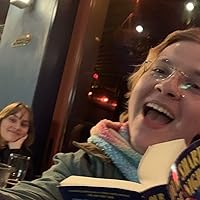
Thank you, Open Books. So grateful for this bookish safe haven in Chicago. <3
Drawn from the 1863 Federal Act that displaced the Dakota people, Removal Acts is a form-breaking force of nature. Lynch speaks on cultural identity, kinship, and mental health. The poetry is vibrant and captures attention. A must read for poetry fans who like to break free from the norm.
My favorite poems are: "Removal Act" (the picture frame one), "From the Archive of American Object Lessons", and "Epigenesis".
Lynch's work inserts a theatricality to removal - something to be performed, dramatized, felt - with no hesitation that this performance has capacity for violence and resistance. The unagi in "00000000" and the Coca-Cola bikini in "The Real Thing" haunt me. A text to hold, Removal Acts proposes the body can perform within text and archive, perhaps most notable with "Screenshots" concluding the book. I echo others, in that I am so glad I've read, and will return to, this book.
I wanted to like this book and I just did it. I would say, though that is more because it was an e-book and not having the physical book in my hands I lost a lot of the power that this piece has on the page. I would recommend that anyone who does read it gets a physical copy and does not try to read it as an e book. It ruins the experience.
Might need to revisit, but as perhaps my most anticipated poetry collection of the year, this was a letdown. Too self-consciously academic and conceptual by half. Probably a YMMV situation and I'd like to test my response again sometime, but my first go with this was a mixed bag, generating qualified admiration and little more.