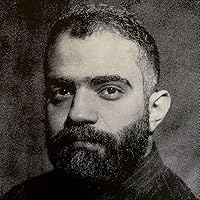
Alan Alexander Milne (pronounced /ˈmɪln/) was an English author, best known for his books about the teddy bear Winnie-the-Pooh and for various children's poems.
A. A. Milne was born in Kilburn, London, to parents Vince Milne and Sarah Marie Milne (née Heginbotham) and grew up at Henley House School, 6/7 Mortimer Road (now Crescent), Kilburn, a small public school run by his father. One of his teachers was H. G. Wells who taught there in 1889–90. Milne attended Westminster School and Trinity College, Cambridge, where he studied on a mathematics scholarship. While there, he edited and wrote for Granta, a student magazine. He collaborated with his brother Kenneth and their articles appeared over the initials AKM. Milne's work came to the attention of the leading British humour magazine Punch, where Milne was to become a contributor and later an assistant editor.
Milne joined the British Army in World War I and served as an officer in the Royal Warwickshire Regiment and later, after a debilitating illness, the Royal Corps of Signals. He was discharged on February 14, 1919.
After the war, he wrote a denunciation of war titled Peace with Honour (1934), which he retracted somewhat with 1940's War with Honour. During World War II, Milne was one of the most prominent critics of English writer P. G. Wodehouse, who was captured at his country home in France by the Nazis and imprisoned for a year. Wodehouse made radio broadcasts about his internment, which were broadcast from Berlin. Although the light-hearted broadcasts made fun of the Germans, Milne accused Wodehouse of committing an act of near treason by cooperating with his country's enemy. Wodehouse got some revenge on his former friend by creating fatuous parodies of the Christopher Robin poems in some of his later stories, and claiming that Milne "was probably jealous of all other writers.... But I loved his stuff."
He married Dorothy "Daphne" de Sélincourt in 1913, and their only son, Christopher Robin Milne, was born in 1920. In 1925, A. A. Milne bought a country home, Cotchford Farm, in Hartfield, East Sussex. During World War II, A. A. Milne was Captain of the Home Guard in Hartfield & Forest Row, insisting on being plain 'Mr. Milne' to the members of his platoon. He retired to the farm after a stroke and brain surgery in 1952 left him an invalid and by August 1953 "he seemed very old and disenchanted".
This is a book I personally hold very dear and close to my heart. This little, sweet, colorful book of poems is not as relevant for its content (it's more in the lane of children's poetry) as it is for its great sonority, rhythm and great use of phonetic literary resources.
A.A. Milne definitely knows how to give a text a sense of catchiness and solid sound, one that warms your eardrum just for the sake of reading the poems out lout. I think that it highlights exceptionally well the many attributes poetry possesses, primarily focusing on the sound. Also, the design and illustrations are just the perfect complement this collection of poems could have as an ally.
You should hold on to this one very tight. It may help you remember why honey, nature and a simple life are essentials. That's why I love re-reading it so much.
I have to say I really admire the translator of Winnie the Pooh. I know most of the Czech translation by heart and when reading the original I could really appreciate how good a job the translator did.
The poems are lovely. Even great, considering they were created by a bear of very little brain.
Of course, I adore this book and that funny little bear (where?) Pooh is never (ever) far from my thoughts, he and his friends were with me in my early formative years and a (very) long time into my adulthood, he's still there, where he has always belonged.