

What do you think?

The Same Sea
“In a world full of hype, noise, and confusion, the simple lucidity of The Same Sea is totally unexpected.” — New York Times Book Review
The Same Sea is Amos Oz’s most adventurous and inventive book, a novel of lyrical beauty and narrative power. We meet the middle-aged Albert; his wife, whom he has lost to cancer; his prodigal son, who wanders the mountains of Tibet hoping to find himself; and his son’s young girlfriend, with whom Albert becomes infatuated. The author himself receives phone calls from his creations, criticizing him for his portraits of them. A fever dream of chaos and order, love and eroticism, loyalty and betrayal.
“A prose poem . . . at once melancholic and sensual.” — The New Yorker
The Same Sea is Amos Oz’s most adventurous and inventive book, a novel of lyrical beauty and narrative power. We meet the middle-aged Albert; his wife, whom he has lost to cancer; his prodigal son, who wanders the mountains of Tibet hoping to find himself; and his son’s young girlfriend, with whom Albert becomes infatuated. The author himself receives phone calls from his creations, criticizing him for his portraits of them. A fever dream of chaos and order, love and eroticism, loyalty and betrayal.
“A prose poem . . . at once melancholic and sensual.” — The New Yorker
216 pages, Paperback
First published January 1, 1999
About the author
Amos Oz
195 books1,698 followersAmos Oz (Hebrew: עמוס עוז; born Amos Klausner) was an Israeli writer, novelist, journalist and intellectual. He was also a professor of literature at Ben-Gurion University in Beersheba. He was regarded as Israel's most famous living author.
Oz's work has been published in 42 languages in 43 countries, and has received many honours and awards, among them the Legion of Honour of France, the Goethe Prize, the Prince of Asturias Award in Literature, the Heinrich Heine Prize and the Israel Prize. In 2007, a selection from the Chinese translation of A Tale of Love and Darkness was the first work of modern Hebrew literature to appear in an official Chinese textbook.
Since 1967, Oz had been a prominent advocate of a two-state solution to the Israeli–Palestinian conflict.
Oz's work has been published in 42 languages in 43 countries, and has received many honours and awards, among them the Legion of Honour of France, the Goethe Prize, the Prince of Asturias Award in Literature, the Heinrich Heine Prize and the Israel Prize. In 2007, a selection from the Chinese translation of A Tale of Love and Darkness was the first work of modern Hebrew literature to appear in an official Chinese textbook.
Since 1967, Oz had been a prominent advocate of a two-state solution to the Israeli–Palestinian conflict.
Ratings & Reviews
Friends & Following
Create a free account to discover what your friends think of this book!
Community Reviews
Displaying 1 - 30 of 136 reviews

August 29, 2023
REGNA SOVRANA LA CONFUSIONE
Il fantomatico narratore chiude la penna e scosta il quaderno. È stanco. La schiena poi. Si domanda dove gli si sia schiodata una storia così, bulgara e Bat Yam, in righe sincopate quando non, a tratti, in strofa.
Adesso che i figli sono già grandi e ci sono i nipoti che danno tanta gioia,
adesso che ha già scritto svariati libri, viaggiato parlato e ritratto,
dove sta il senso di tornare di punto in bianco a fare il poeta?
Così si legge a pagina cinquanta, così Amos Oz ha scritto a un certo punto di questo romanzo in versi, romanzo molto diverso da quello cui mi ha abituato, pur se anche qui si parla di una famiglia non felice.
Il narratore, fantomatico o meno – meno, perché è presto chiaro che Oz s’identifica con la voce narrante – torna più volte: dialoga con i personaggi, i quali gli si rivolgono a volte in un gioco di botta-e-risposta; introduce avvenimenti e personaggi che fanno parte della biografia dello stesso Oz (il numero di figli e nipoti, il suicidio della madre, avvenuto quando Amos era solo dodicenne, ecc.); interviene, commenta, suggerisce, propone ma mai onnisciente, partecipe, comprimario, curioso.
Ho trovato questo aspetto particolarmente affascinante. Senz’altro più dei momenti di lirismo puro, che data la mia scarsa dimestichezza con la poesia, su me hanno avuto un effetto non esaltante.
Regna sovrana la confusione per questi suoi personaggi – un padre, un figlio, una specie di nuora ma anche un po’ figlia, un’amica che potrebbe esser eun nuovo amore - sospesi e attoniti nei confronti di eventi sconcertanti come l’innamoramento, la perdita, l’abbandono, la morte.
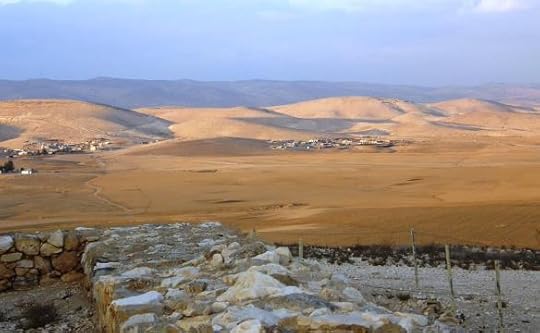
Per quanto un Oz per me oltremodo anomalo, l’ho sentito dentro ogni pagina e ogni riga, col suo volto scavato dal vento del deserto. Quello stesso deserto in cui aveva deciso di vivere (Arad nel Negev) e del quale viveva:
Mi sveglio ogni mattina un po’ prima dell’alba e cammino per quaranta minuti nel deserto, inspirandone l’aria secca e pulita, e ascoltando il silenzio. Tutto, lì, assume giuste proporzioni. Quando torno a casa, accendo la radio e sento un politico che pronuncia parole come “mai” o “per sempre” o “per l’eternità”. Allora so che le pietre del deserto stanno ridendo di lui.
(Citazione da una sua intervista).
Quando lo scriveva aveva probabilmente in testa della musica.

Il deserto del Negev intorno ad Arad.
Il fantomatico narratore chiude la penna e scosta il quaderno. È stanco. La schiena poi. Si domanda dove gli si sia schiodata una storia così, bulgara e Bat Yam, in righe sincopate quando non, a tratti, in strofa.
Adesso che i figli sono già grandi e ci sono i nipoti che danno tanta gioia,
adesso che ha già scritto svariati libri, viaggiato parlato e ritratto,
dove sta il senso di tornare di punto in bianco a fare il poeta?
Così si legge a pagina cinquanta, così Amos Oz ha scritto a un certo punto di questo romanzo in versi, romanzo molto diverso da quello cui mi ha abituato, pur se anche qui si parla di una famiglia non felice.
Il narratore, fantomatico o meno – meno, perché è presto chiaro che Oz s’identifica con la voce narrante – torna più volte: dialoga con i personaggi, i quali gli si rivolgono a volte in un gioco di botta-e-risposta; introduce avvenimenti e personaggi che fanno parte della biografia dello stesso Oz (il numero di figli e nipoti, il suicidio della madre, avvenuto quando Amos era solo dodicenne, ecc.); interviene, commenta, suggerisce, propone ma mai onnisciente, partecipe, comprimario, curioso.
Ho trovato questo aspetto particolarmente affascinante. Senz’altro più dei momenti di lirismo puro, che data la mia scarsa dimestichezza con la poesia, su me hanno avuto un effetto non esaltante.
Regna sovrana la confusione per questi suoi personaggi – un padre, un figlio, una specie di nuora ma anche un po’ figlia, un’amica che potrebbe esser eun nuovo amore - sospesi e attoniti nei confronti di eventi sconcertanti come l’innamoramento, la perdita, l’abbandono, la morte.
Per quanto un Oz per me oltremodo anomalo, l’ho sentito dentro ogni pagina e ogni riga, col suo volto scavato dal vento del deserto. Quello stesso deserto in cui aveva deciso di vivere (Arad nel Negev) e del quale viveva:
Mi sveglio ogni mattina un po’ prima dell’alba e cammino per quaranta minuti nel deserto, inspirandone l’aria secca e pulita, e ascoltando il silenzio. Tutto, lì, assume giuste proporzioni. Quando torno a casa, accendo la radio e sento un politico che pronuncia parole come “mai” o “per sempre” o “per l’eternità”. Allora so che le pietre del deserto stanno ridendo di lui.
(Citazione da una sua intervista).
Quando lo scriveva aveva probabilmente in testa della musica.
Il deserto del Negev intorno ad Arad.
July 7, 2009
Ever since the first time I read this, it has become the book by which all other books are judged. Oz's verse has such a melancholic beauty to it. Still not a book for everyone, but if it's a book for you, you will never forget it.

April 2, 2025
Încerc să îmi revin după lectura acestei cărți de o zi și jumătate, dar sunt ca în transă.
Dacă aș cădea de la înălțime, aș alege să iau carte asta cu mine acum...
"Aceeași mare" este o carte cu un stil inedit al scriitorului Amos Oz, un stil parcă fotografic.
Chiar însuși scriitorul mărturisește că acesta este cel mai apropiat copil al său dintre toți. Chiar dacă întâlnim și "parabola fiului rătăcitor", prin Riko, cel refugiat în Tibet în căutarea vindecării spirituale.
Totuși, aceasta nu este o temă fundamentală a romanului. Pe mine m-a atras alte aspecte la cartea aceasta.
În primul rând, personajul Dita, viitoare noră a lui Albert și iubita lui Riko cel plecat e cea care exprimă inocența dar și profanul acestui roman.
Dita este o "Lolita" contemporană în relație cu Albert, viitorul său socru.
Albert nutrește gânduri malefice față de Dita, fata inocentă care doarme liniștită în fosta cameră a fiului său timp de o lună cât o găzduiește Albert.
Prin văduvia sa, eu îl consider pe Albert - protagonistul romanului, un ticălos.
Un Humbert cu obsesii.
Pentru prima dată într-o carte citită de mine până acum, apare și naratorul ca și personaj secundar. Este chiar Amos Oz scriitorul din Arad care vorbește la telefon cu cititorii săi.
Într-un mic capitolul, cu totul unic pentru, Amos are o discuție telefonica cu Bettine o pensionară cititoare, despre Cehov și cartea lui Henry Troyat.
Unde mai găseam eu așa o magie astăzi?
Ca două personaje dintr-un roman absolut întâmplător, să discute despre una dintre cărțile mele preferate, pe care nu o doboară nici timpul? Și anume "Cehov" de Henry Troyat.
"Aceeași mare" este, întâi de toate, un roman care refuză convențiile literare, rigorile, ordinea prestabilita a narațiunii.
Este un roman linear, sincer, echivoc, de o duritate acută a pierderii, dar și a întoarcerii.
În plus, pe unele pagini, nu mai deslușesc poezia lirică de firul epic. Totul se amestecă, paginile albe sunt doar pe jumătate scrise sau chiar pe o treime din ele.
Îți dă impresia unei "tabula rase", ca atunci când se naște pruncul.
Așa e începutul cărții. Dar mai târziu trăiești experiențe empirice, devii implicit o ființa cunoscătoare pe baza a ceea ce ai învățat, a ceea ce ai trăit.
Totodată, romanul lui Amos îți dă impresia că te regăsești în ceva abia la sfârșitul vieții, că te aflu într-un loc plin de emfaza din nu vei mai evada ca în tinerețea rebelă.
Umbra tainică a versului din carte, m-au condus prin niște catacombe demult uitate ale memoriei.
De parcă totul are loc sub un impas mnemonic.
Dita, această Lolita modernă, citește Idiotul a lui Dostoievski în ebraică.
Lucrurile o iau razna uneori, chiar și acolo unde stabilitatea căminului era mereu prezentă.
Această carte m-a readus din punctul din care pornit.
Simt că citindu-l pe Amos Oz, m-am aparat de-o vină în fața unui tribunal nemilos, așa cum face și naratorul, de fapt.
Dacă aș cădea de la înălțime, aș alege să iau carte asta cu mine acum...
"Aceeași mare" este o carte cu un stil inedit al scriitorului Amos Oz, un stil parcă fotografic.
Chiar însuși scriitorul mărturisește că acesta este cel mai apropiat copil al său dintre toți. Chiar dacă întâlnim și "parabola fiului rătăcitor", prin Riko, cel refugiat în Tibet în căutarea vindecării spirituale.
Totuși, aceasta nu este o temă fundamentală a romanului. Pe mine m-a atras alte aspecte la cartea aceasta.
În primul rând, personajul Dita, viitoare noră a lui Albert și iubita lui Riko cel plecat e cea care exprimă inocența dar și profanul acestui roman.
Dita este o "Lolita" contemporană în relație cu Albert, viitorul său socru.
Albert nutrește gânduri malefice față de Dita, fata inocentă care doarme liniștită în fosta cameră a fiului său timp de o lună cât o găzduiește Albert.
Prin văduvia sa, eu îl consider pe Albert - protagonistul romanului, un ticălos.
Un Humbert cu obsesii.
Pentru prima dată într-o carte citită de mine până acum, apare și naratorul ca și personaj secundar. Este chiar Amos Oz scriitorul din Arad care vorbește la telefon cu cititorii săi.
Într-un mic capitolul, cu totul unic pentru, Amos are o discuție telefonica cu Bettine o pensionară cititoare, despre Cehov și cartea lui Henry Troyat.
Unde mai găseam eu așa o magie astăzi?
Ca două personaje dintr-un roman absolut întâmplător, să discute despre una dintre cărțile mele preferate, pe care nu o doboară nici timpul? Și anume "Cehov" de Henry Troyat.
"Aceeași mare" este, întâi de toate, un roman care refuză convențiile literare, rigorile, ordinea prestabilita a narațiunii.
Este un roman linear, sincer, echivoc, de o duritate acută a pierderii, dar și a întoarcerii.
În plus, pe unele pagini, nu mai deslușesc poezia lirică de firul epic. Totul se amestecă, paginile albe sunt doar pe jumătate scrise sau chiar pe o treime din ele.
Îți dă impresia unei "tabula rase", ca atunci când se naște pruncul.
Așa e începutul cărții. Dar mai târziu trăiești experiențe empirice, devii implicit o ființa cunoscătoare pe baza a ceea ce ai învățat, a ceea ce ai trăit.
Totodată, romanul lui Amos îți dă impresia că te regăsești în ceva abia la sfârșitul vieții, că te aflu într-un loc plin de emfaza din nu vei mai evada ca în tinerețea rebelă.
Umbra tainică a versului din carte, m-au condus prin niște catacombe demult uitate ale memoriei.
De parcă totul are loc sub un impas mnemonic.
Dita, această Lolita modernă, citește Idiotul a lui Dostoievski în ebraică.
Lucrurile o iau razna uneori, chiar și acolo unde stabilitatea căminului era mereu prezentă.
Această carte m-a readus din punctul din care pornit.
Simt că citindu-l pe Amos Oz, m-am aparat de-o vină în fața unui tribunal nemilos, așa cum face și naratorul, de fapt.

September 3, 2021
"Aceeași mare", un lung poem care se citește ca un roman-sau poate un roman care se citește ca un poem.
"Fiecare nu-și aparține decât lui însuși."
"Fiecare om e o enigmă, chiar și cel mai apropiat. Treizeci și cinci de ani dormim în același pat, cunoaștem fiecare fir de păr, secrete, necazuri, detaliile cele mai intime și până la urmă de adeverește că nu știm nimic."
"Fiecare nu-și aparține decât lui însuși."
"Fiecare om e o enigmă, chiar și cel mai apropiat. Treizeci și cinci de ani dormim în același pat, cunoaștem fiecare fir de păr, secrete, necazuri, detaliile cele mai intime și până la urmă de adeverește că nu știm nimic."

April 16, 2020
Meraviglioso! Prosa e poesia che si intrecciano ....bravissimo Oz : non lo leggi ti ci immergi... credo sia il libro di Oz che amo di più.

August 24, 2017
Narimi,Narimi...
Romanzo dalla struttura assai particolare:prosa e poesia si intrecciano, si alternano nel racconto e l'autore,ha un duplice ruolo,è sia osservatore che"attore":osserva,delinea con tratti sapienti i personaggi,rincorrendone i pensieri e i desideri e, ad un certo punto,entra nella storia stessa, dialogando con loro,prendendo parte alla narrazione.
C'è un'assenza e diversi modi di comprenderla e di superarla;
c'è il dolore ,incalcolabile,del signor Danon, ragioniere che fa sempre conti e bilanci,
che diviene insonnia,stanchezza,solitudine e quello di Rico,il figlio,che diviene fuga ,ansiosa ricerca di un nuovo senso di sé attraverso il viaggio,tra le montagne del Tibet.
In tutti i personaggi c'è l'incapacità di comunicare,il senso di lontananza,di separazione tra il sé e cio' che si ama, persona reale o virtuale...
Vite parallele,che per pochi istanti si incrociano,fugacemente, per poi restare ognuno con i propri silenzi- Fuori il mare,liscio,freddo,lastra di vetro nera,liquidità corrente e, in giardino,il canto di un usignolo "Narimi,Narimi...."
Le pagine piu' belle sono quelle di poesia:delicate,intrise di dolcezza e di malinconia
qua e la' invece ,in alcuni passaggi ,si fa fatica a capire
(nota culinaria :non è facile immaginare caffè e bastoncini salati o thè con formaggi salati e olive piccanti,per chi di solito preferisce un buon rosso corposo ;) )
Romanzo dalla struttura assai particolare:prosa e poesia si intrecciano, si alternano nel racconto e l'autore,ha un duplice ruolo,è sia osservatore che"attore":osserva,delinea con tratti sapienti i personaggi,rincorrendone i pensieri e i desideri e, ad un certo punto,entra nella storia stessa, dialogando con loro,prendendo parte alla narrazione.
C'è un'assenza e diversi modi di comprenderla e di superarla;
c'è il dolore ,incalcolabile,del signor Danon, ragioniere che fa sempre conti e bilanci,
che diviene insonnia,stanchezza,solitudine e quello di Rico,il figlio,che diviene fuga ,ansiosa ricerca di un nuovo senso di sé attraverso il viaggio,tra le montagne del Tibet.
In tutti i personaggi c'è l'incapacità di comunicare,il senso di lontananza,di separazione tra il sé e cio' che si ama, persona reale o virtuale...
Vite parallele,che per pochi istanti si incrociano,fugacemente, per poi restare ognuno con i propri silenzi- Fuori il mare,liscio,freddo,lastra di vetro nera,liquidità corrente e, in giardino,il canto di un usignolo "Narimi,Narimi...."
Le pagine piu' belle sono quelle di poesia:delicate,intrise di dolcezza e di malinconia
qua e la' invece ,in alcuni passaggi ,si fa fatica a capire
(nota culinaria :non è facile immaginare caffè e bastoncini salati o thè con formaggi salati e olive piccanti,per chi di solito preferisce un buon rosso corposo ;) )

November 30, 2017
No, this was not for me.
This reads as a collection of related poems that strung together are meant to tell a story. Some of the lines were pretty and did have me thinking, but most of the time I was just confused. Poems are intermixed with sections of prose poetry. Some of the poems have lines that rhyme, but the rhymes were silly, simplistic; other words would have made more sense! The poetry made the story disjointed and hard to understand.
The book's central character is a sixty-year-old man living in Tel Aviv, Israel. His wife has died. His son has gone off to find himself in Tibet. The son's girlfriend remains. She doesn't care; she’s independent. The telling flips back and forth between Israel, Tibet and then Siri Lanka. All of them are sleeping with more than one person.
Neither the story nor the writing did anything for me.
In addition, I did not I like the audiobook narration by Elijah Alexander. The tempo is uneven - one minute fast and the next slow and drawn out. The whole performance was, in my view, unprofessional.
Book I have read by Amos Oz, in order of preference::
A Tale of Love and Darkness 4 stars
My Michael 4 stars
Panther In The Basement 4 stars
Judas 3 stars
The Same Sea 1 star
This reads as a collection of related poems that strung together are meant to tell a story. Some of the lines were pretty and did have me thinking, but most of the time I was just confused. Poems are intermixed with sections of prose poetry. Some of the poems have lines that rhyme, but the rhymes were silly, simplistic; other words would have made more sense! The poetry made the story disjointed and hard to understand.
The book's central character is a sixty-year-old man living in Tel Aviv, Israel. His wife has died. His son has gone off to find himself in Tibet. The son's girlfriend remains. She doesn't care; she’s independent. The telling flips back and forth between Israel, Tibet and then Siri Lanka. All of them are sleeping with more than one person.
Neither the story nor the writing did anything for me.
In addition, I did not I like the audiobook narration by Elijah Alexander. The tempo is uneven - one minute fast and the next slow and drawn out. The whole performance was, in my view, unprofessional.
Book I have read by Amos Oz, in order of preference::
A Tale of Love and Darkness 4 stars
My Michael 4 stars
Panther In The Basement 4 stars
Judas 3 stars
The Same Sea 1 star

June 21, 2014
Um romance que é um imenso poema de vozes que se entrelaçam, de vidas arrebatadas por outras vidas e pela morte, de recordações, de procura e de encontro… e de perda.
Amos Oz edifica “O Mesmo Mar” a partir de fragmentos de alma, de cintilações mudas, de ausências presentes, de epopeias interiores e o resultado é um fresco de vidas em busca de um sentido. Navegando o mesmo mar.
“Como uma corça ansiando pelas águas vivas, assim a minha alma.
E dois ciprestes movem-se de cá para lá em silenciosa devoção.
Como as águas cobrem o mar, as águas impetuosas passaram por cima:
Passaram-se foram-se, e já não são. Volta ao teu repouso alma minha.
Onde está o teu repouso?
Responde, alma minha: para onde voltarás,
Por que ansiarás, como uma corça? A cafeteira está a assobiar.
É tempo de um café. E se a luz que há em ti
Escurecer, que profunda será a escuridão. Está uma mosca
Presa entre o estore e a rede. A casa está vazia. Um tapete.
Um gato enroscado. Quando virei, quando surgirei? A luz é escuridão.
À beira da água estava uma corça e foi-se.”
Amos Oz edifica “O Mesmo Mar” a partir de fragmentos de alma, de cintilações mudas, de ausências presentes, de epopeias interiores e o resultado é um fresco de vidas em busca de um sentido. Navegando o mesmo mar.
“Como uma corça ansiando pelas águas vivas, assim a minha alma.
E dois ciprestes movem-se de cá para lá em silenciosa devoção.
Como as águas cobrem o mar, as águas impetuosas passaram por cima:
Passaram-se foram-se, e já não são. Volta ao teu repouso alma minha.
Onde está o teu repouso?
Responde, alma minha: para onde voltarás,
Por que ansiarás, como uma corça? A cafeteira está a assobiar.
É tempo de um café. E se a luz que há em ti
Escurecer, que profunda será a escuridão. Está uma mosca
Presa entre o estore e a rede. A casa está vazia. Um tapete.
Um gato enroscado. Quando virei, quando surgirei? A luz é escuridão.
À beira da água estava uma corça e foi-se.”

November 3, 2019
A beautiful dreamlike prose, a delicate poetry and genuinely brilliant. There are some superb allusions but the most striking was a novel perspective to look at the mundane things. I cannot describe it. Will add a few liners to backup.
The story goes around a writer, a family of Albert, Nadia and their son who is wandering in Tibet and Srilanka in search of himself, his once girlfriend and her friends and a few more people. The story is told in poems and incidents switching back and forth. If you are looking for one continuous story, stop looking for it. Like a breeze on the shore, this story flows freely everywhere, as whimsical as breeze.
Amor is the central theme. There's not a single person who doesn't love few others. I felt sometimes it's bit more than I could get but rest of it is just a beautiful journey. Wish I could read it in the original language.
The story goes around a writer, a family of Albert, Nadia and their son who is wandering in Tibet and Srilanka in search of himself, his once girlfriend and her friends and a few more people. The story is told in poems and incidents switching back and forth. If you are looking for one continuous story, stop looking for it. Like a breeze on the shore, this story flows freely everywhere, as whimsical as breeze.
Amor is the central theme. There's not a single person who doesn't love few others. I felt sometimes it's bit more than I could get but rest of it is just a beautiful journey. Wish I could read it in the original language.

April 20, 2014
Най-много ми харесаха страниците 1, 2, 3, 4, 5, 6, 7, 8, 9, 10, 11, 12 ……………… 249.
Или: искаше ми се да препиша цялата книга. Това не звучи много убедително, защото съм използвала изречението и преди за други книги. Но не за стотици. А за десетина...
Може ли в един роман да има всичко? Може – но рядко с такава лиричност. И споеност на цялата история въпреки нетрадиционната форма. Дори със своите около 260 части. Мънички или средни перлички. Ако това е наречено експеримент, за мен резултатът е върхов. Не връх в онзи смисъл на надпревара. А като откриване на непопулярни светове в литературните възможности.
Тухличките в този уникален строеж. Личност, семейство, народи, страни. Млади и стари. Умрели и живи. Политика – глобална и местна (неусетно почти). Секс красив, секс мръсен. Сочни маслини и черен хляб. Смисъл, търсене, страх и кураж. Низост и честност. Бреме и свобода. Памет и помирение. Двойки във всичко. И все — същото море.
Дано ме преследва дълго гласът на книгата. Как искам да благодаря на Маргарита Терзиева!
А за автора искам да кажа баналното: „Амос Оз е гений!“ Във всякакъв смисъл (по моите критерии). Когато съм прочела почти всички книги на други автори, все някоя от тях ми хареса по-малко. При Амос Оз: всички – много. Дори да има повторения (теми, стил), пак всичко ми е плътно и смислено. Проникновено и предизвикателно. При такива твърдения се запитвам като самия Оз – да не съм се фанатизирала?! ;))) Но не – мога да си обоснова всичко, за всяка прочетена книга, ако не се възпирах да пиша прекалено дълго (но пък той и Хитлер е обосновал неговото си…).
Не зная дали да определя тази книга като „харесала ми най-много в литературно отношение“. Май да. Много съм изненадана и много ми хареса. В такъв литературен свят не съм била. Книгата беше избутвана към края, все други на автора я изпреварваха. А тя била 1000% „моя“!
Често обаче правя разграничение на два аспекта за всеки автор. Как го намирам като писател и как възприемам позициите му (във всякакви области). Амос Оз за мен - абсолютно съчетание и на двете страни.
Заглавията на перличките! ГОРЕЩА ЖАРАВА; ОТЧАСТИ СИ СПОМНЯШ, ЧЕ СИ ЗАБРАВИЛ; ОБГОРЕНА ЗЕМЯ; РАЗКАЗВАЧА ПРЕПИСВА ОТ ФРАЗЕОЛОГИЧНИЯ РЕЧНИК…
Много фино е предадено специфичното за всички герои, с идеална мярка на символичност и завоалираност. Хем не е буквално стандартно разказване на история за хора и места, хем не се прекалява със скритото между редовете. За мен то беше много видимо и красиво. Всеки от героите – със своето място и светлина. А събрани всички заедно на едно място в книгата (включително Разказвача) – Амос обича да прави така…
Мога да продължа надълго за всяка част, с някакви мои ненужни думи, но истината е: Не може да се изрази с думи това, което преживях и изпитвам към автора и книгата.
Затова – следват примери за „многогласието и хармонията“ на амосовата мерена реч. Оз ме омагьоса до (без)крайност!
*Много важно – винаги съм във „физически комфорт“ с поредицата на Амос Оз. Любимата ми плътност, цвят и мекота на страниците (не зная професионалните термини). Перфектен за мен шрифт и размер. Удобно разгръщане. Съдържание дори в такава книга с безброй части. Не очаквах. Погледах отзад – има. Всичко е идеално като за Амос Оз!
Или: искаше ми се да препиша цялата книга. Това не звучи много убедително, защото съм използвала изречението и преди за други книги. Но не за стотици. А за десетина...
Може ли в един роман да има всичко? Може – но рядко с такава лиричност. И споеност на цялата история въпреки нетрадиционната форма. Дори със своите около 260 части. Мънички или средни перлички. Ако това е наречено експеримент, за мен резултатът е върхов. Не връх в онзи смисъл на надпревара. А като откриване на непопулярни светове в литературните възможности.
Тухличките в този уникален строеж. Личност, семейство, народи, страни. Млади и стари. Умрели и живи. Политика – глобална и местна (неусетно почти). Секс красив, секс мръсен. Сочни маслини и черен хляб. Смисъл, търсене, страх и кураж. Низост и честност. Бреме и свобода. Памет и помирение. Двойки във всичко. И все — същото море.
Дано ме преследва дълго гласът на книгата. Как искам да благодаря на Маргарита Терзиева!
А за автора искам да кажа баналното: „Амос Оз е гений!“ Във всякакъв смисъл (по моите критерии). Когато съм прочела почти всички книги на други автори, все някоя от тях ми хареса по-малко. При Амос Оз: всички – много. Дори да има повторения (теми, стил), пак всичко ми е плътно и смислено. Проникновено и предизвикателно. При такива твърдения се запитвам като самия Оз – да не съм се фанатизирала?! ;))) Но не – мога да си обоснова всичко, за всяка прочетена книга, ако не се възпирах да пиша прекалено дълго (но пък той и Хитлер е обосновал неговото си…).
Не зная дали да определя тази книга като „харесала ми най-много в литературно отношение“. Май да. Много съм изненадана и много ми хареса. В такъв литературен свят не съм била. Книгата беше избутвана към края, все други на автора я изпреварваха. А тя била 1000% „моя“!
Често обаче правя разграничение на два аспекта за всеки автор. Как го намирам като писател и как възприемам позициите му (във всякакви области). Амос Оз за мен - абсолютно съчетание и на двете страни.
Заглавията на перличките! ГОРЕЩА ЖАРАВА; ОТЧАСТИ СИ СПОМНЯШ, ЧЕ СИ ЗАБРАВИЛ; ОБГОРЕНА ЗЕМЯ; РАЗКАЗВАЧА ПРЕПИСВА ОТ ФРАЗЕОЛОГИЧНИЯ РЕЧНИК…
Много фино е предадено специфичното за всички герои, с идеална мярка на символичност и завоалираност. Хем не е буквално стандартно разказване на история за хора и места, хем не се прекалява със скритото между редовете. За мен то беше много видимо и красиво. Всеки от героите – със своето място и светлина. А събрани всички заедно на едно място в книгата (включително Разказвача) – Амос обича да прави така…
Мога да продължа надълго за всяка част, с някакви мои ненужни думи, но истината е: Не може да се изрази с думи това, което преживях и изпитвам към автора и книгата.
Затова – следват примери за „многогласието и хармонията“ на амосовата мерена реч. Оз ме омагьоса до (без)крайност!
*Много важно – винаги съм във „физически комфорт“ с поредицата на Амос Оз. Любимата ми плътност, цвят и мекота на страниците (не зная професионалните термини). Перфектен за мен шрифт и размер. Удобно разгръщане. Съдържание дори в такава книга с безброй части. Не очаквах. Погледах отзад – има. Всичко е идеално като за Амос Оз!

July 20, 2020
Una belleza belleza de libro. Para una tarde de domingo, fría y melancólica. Para recuperar a ese Amos Oz tan cálido. Tan él.
March 1, 2011
"In fondo ognuno è condannato ad aspettare la propria morte nell'isolamento di una gabbia. Anche tu, che cosa credi, con i tuoi vagabondaggi e la tua ossessione di andare lontano e accumulare esperienze, in fondo non fai che trascinarti dietro la tua gabbia da un angolo all'altro dello zoo."
Confesso che ho molto peccato, perché a leggere questo libricino a metà tra prosa e poesia, fatto di suggestioni leggere, riferimenti paesaggistici (il mare sopra tutti), languori e sentimenti, ho pensato facilmente a Baricco. E mi dolgo dei miei peccati!
La verità è che scrivere un libro che mescoli prosa e poesia, nell'assoluta anarchia di forma e struttura, è sempre impresa ardua, si finisce sempre col suscitare occhiatacce di sospetto e scetticismo. E' anche vero che un libro del genere non chiede solo di esser letto: vuole essere ascoltato. Scrivere versi a caso, in un'apparente confusione, è alla portata di tutti, ma Amos Oz va ben oltre. Nella profonda umanità dei personaggi, nelle spirali chiuse dei loro sentimenti, nelle frequenti incursioni autobiografiche dello scrivente (allo stesso modo de Una storia di amore e di tenebra) si cela il cuore pulsante e vivo di questa opera.
E' un libro che vuole esser letto piano, con dolcezza, assaporato, riletto, che negli ampi spazi bianchi lascia al lettore la possibilità di riflettere, di inserirvi quasi la sua personale narrazione. Se riuscite a superare il facile ostacolo della sua forma apparentemente artificiosa, dell'assenza di struttura, vi aprirà il suo cuore. Come con il mare, non avete che da spezzarne la superficie ed immergervi in profondità.
Confesso che ho molto peccato, perché a leggere questo libricino a metà tra prosa e poesia, fatto di suggestioni leggere, riferimenti paesaggistici (il mare sopra tutti), languori e sentimenti, ho pensato facilmente a Baricco. E mi dolgo dei miei peccati!
La verità è che scrivere un libro che mescoli prosa e poesia, nell'assoluta anarchia di forma e struttura, è sempre impresa ardua, si finisce sempre col suscitare occhiatacce di sospetto e scetticismo. E' anche vero che un libro del genere non chiede solo di esser letto: vuole essere ascoltato. Scrivere versi a caso, in un'apparente confusione, è alla portata di tutti, ma Amos Oz va ben oltre. Nella profonda umanità dei personaggi, nelle spirali chiuse dei loro sentimenti, nelle frequenti incursioni autobiografiche dello scrivente (allo stesso modo de Una storia di amore e di tenebra) si cela il cuore pulsante e vivo di questa opera.
E' un libro che vuole esser letto piano, con dolcezza, assaporato, riletto, che negli ampi spazi bianchi lascia al lettore la possibilità di riflettere, di inserirvi quasi la sua personale narrazione. Se riuscite a superare il facile ostacolo della sua forma apparentemente artificiosa, dell'assenza di struttura, vi aprirà il suo cuore. Come con il mare, non avete che da spezzarne la superficie ed immergervi in profondità.
June 25, 2017
A captivating story, of a widower and his son, trying to come to terms with and find meaning in the loss of his wife/mother. It is all the more poignant as Oz pours out his soul, he himself losing his mother at a young age.
It is an interesting hybrid, experimental novel, utilising different formats, views and devices. It may not be to everyone's taste but Oz's style and prose are recognisable.
A pale, opaline mist is rolling slowly upwards: a filmy nightdress on the curve of the mountain.
Some of the regional & cultural references are so inviting.
Sometimes the taste of these strong olives cured slowly in oil, with cloves of garlic, bay leaves and chillies an lemon and salt, conjures a whiff of a bygone age: rocky crannies, goats, shade and the sound of pipes, the tune of the breath of primeval times. The chill of a cave, a hidden cottage in a vineyard, a lodge in a garden, a slice of barley bread and well water. You are from there. You have lost your way. Here is exile. Your death will come, and lay a knowing hand on your shoulder. Come, it's time to go home.
I find the ending a bit wanting but get the sense that the author himself has already reached some degree of resolution.
Prose. Poetry. Epistolary. Play. Narrative. Journal.
Motley. Eclectic.
Intentional or Disorganized.
Creative or Lazy.
Albert & Rico. Father & son.
Loss. Grief. Catharsis.
Remembrance. Nostalgia.
Searching for Lost.
Searching for Love.
Father's defeat.
Son's retreat.
Dita entreats.
Bettine. Maria. Giggy. The Replacements.
Dubi. The Repulsive.
Narrator interjects.
Author injects himself, even his family, into the story.
Albert & Bettine. Two sixty year old widowed and lonely. Like "Our souls at night".
Dita & Albert. Mutual Substitutes.
Temptation. Seduction. Consolation.
Bettine & Dita. Interloper. Jealousy.
Memories of Nadia & Nadia's memories.
Allusions. References.
Religious. Spiritual. Mystical.
Observations. Yearnings. Sayings.
Incomplete. No resolution.
Life remembered. Life resumed.
Was it all a dream?
One who has come through fire and water, his early promise has come to nothing. It has not come easily to him. He has come to blows. He has not come up in the world nor has he come into money. He has come to grief, has come down to his last crust. Now he has come to judgment, and at last he has come to terms.
It is an interesting hybrid, experimental novel, utilising different formats, views and devices. It may not be to everyone's taste but Oz's style and prose are recognisable.
A pale, opaline mist is rolling slowly upwards: a filmy nightdress on the curve of the mountain.
Some of the regional & cultural references are so inviting.
Sometimes the taste of these strong olives cured slowly in oil, with cloves of garlic, bay leaves and chillies an lemon and salt, conjures a whiff of a bygone age: rocky crannies, goats, shade and the sound of pipes, the tune of the breath of primeval times. The chill of a cave, a hidden cottage in a vineyard, a lodge in a garden, a slice of barley bread and well water. You are from there. You have lost your way. Here is exile. Your death will come, and lay a knowing hand on your shoulder. Come, it's time to go home.
I find the ending a bit wanting but get the sense that the author himself has already reached some degree of resolution.
Prose. Poetry. Epistolary. Play. Narrative. Journal.
Motley. Eclectic.
Intentional or Disorganized.
Creative or Lazy.
Albert & Rico. Father & son.
Loss. Grief. Catharsis.
Remembrance. Nostalgia.
Searching for Lost.
Searching for Love.
Father's defeat.
Son's retreat.
Dita entreats.
Bettine. Maria. Giggy. The Replacements.
Dubi. The Repulsive.
Narrator interjects.
Author injects himself, even his family, into the story.
Albert & Bettine. Two sixty year old widowed and lonely. Like "Our souls at night".
Dita & Albert. Mutual Substitutes.
Temptation. Seduction. Consolation.
Bettine & Dita. Interloper. Jealousy.
Memories of Nadia & Nadia's memories.
Allusions. References.
Religious. Spiritual. Mystical.
Observations. Yearnings. Sayings.
Incomplete. No resolution.
Life remembered. Life resumed.
Was it all a dream?
One who has come through fire and water, his early promise has come to nothing. It has not come easily to him. He has come to blows. He has not come up in the world nor has he come into money. He has come to grief, has come down to his last crust. Now he has come to judgment, and at last he has come to terms.

July 24, 2011
A novel told in a mixture of poetry and prose – a novel approach, I dare say. However, I came to understand why novels and poetry stand apart as two different forms, and although they borrow heavily from each other, the fusion of the two into “the same sea” leaves one quite “at sea.”
The author enters the minds of a group of people in Israel: a widowed father, his soul-searching son, the son’s stay-behind girlfriend and her lovers, the son’s pick-up girlfriend while on the road, the father’s wannabe girlfriend who is herself a widow, the matriarch while she is alive and dead, and most interestingly, the author himself, who as the narrator mixes freely with his characters and dissects their lives.
Nothing much happens in this book other than for the narrator offering us rich insights into each of the characters through set pieces of poetry or short prose. Their relationships to each other, their desires (or loss of desire in the case of the widower), memories, angst and feelings are laid bare in lyrical language. Oz takes us into taboo places: the father’s lust for his son’s girlfriend, the girlfriend’s reciprocation, the son’s anger at his mother dying on him. I felt the author was enjoying himself not only in taking tea with his characters and spying on them but also in playing with words.
At times I had difficulty identifying some of the voices as they blur amongst each other. Given the style selected, there is not a lot of movement, other than for the son’s peregrinations through South Asia which are elegantly rendered.
Is this one of my favourite novels? No. Is this the best book of poetry I’ve read? No. Is it the best work of experimental fiction I’ve read? Perhaps. I was left hanging, wondering how much more impactful this novel would have been had Oz, given his flair for language and his fearlessness to plumb character, decided to write it as a conventional novel, replete with a story line that would have seen some of the conflicts resolved; how much further could he have travelled with this book that way? Yes, then perhaps I would have cast a more favourable vote.
The author enters the minds of a group of people in Israel: a widowed father, his soul-searching son, the son’s stay-behind girlfriend and her lovers, the son’s pick-up girlfriend while on the road, the father’s wannabe girlfriend who is herself a widow, the matriarch while she is alive and dead, and most interestingly, the author himself, who as the narrator mixes freely with his characters and dissects their lives.
Nothing much happens in this book other than for the narrator offering us rich insights into each of the characters through set pieces of poetry or short prose. Their relationships to each other, their desires (or loss of desire in the case of the widower), memories, angst and feelings are laid bare in lyrical language. Oz takes us into taboo places: the father’s lust for his son’s girlfriend, the girlfriend’s reciprocation, the son’s anger at his mother dying on him. I felt the author was enjoying himself not only in taking tea with his characters and spying on them but also in playing with words.
At times I had difficulty identifying some of the voices as they blur amongst each other. Given the style selected, there is not a lot of movement, other than for the son’s peregrinations through South Asia which are elegantly rendered.
Is this one of my favourite novels? No. Is this the best book of poetry I’ve read? No. Is it the best work of experimental fiction I’ve read? Perhaps. I was left hanging, wondering how much more impactful this novel would have been had Oz, given his flair for language and his fearlessness to plumb character, decided to write it as a conventional novel, replete with a story line that would have seen some of the conflicts resolved; how much further could he have travelled with this book that way? Yes, then perhaps I would have cast a more favourable vote.


April 8, 2010
This is a rare and special sort of read! An entire story is told through short poems. I would recommend this book to anyone who loves words. Beautiful imagery - some of it referenced from the Bible. It is a translation from the original Hebrew - I cannot imagine it could be more lovely. A widower awaits his son who has gone wandering. A boy leaves his parents (one living, the other dead) and is haunted by both their ghosts. His girlfriend stays with his father the widower and creates the story Nirit's Love. The narrator steps in and out of the story unexpectedly, but okay, no more spoilers.
This book inspired a few poems that I'm proud of. Described as mythic, a GREAT book. To think I found it at a Booksale!
This book inspired a few poems that I'm proud of. Described as mythic, a GREAT book. To think I found it at a Booksale!

May 30, 2013
The novel, infused with sadness, longing and ache, slips easily from prose into poetry and vice versa. The series of poems, like the sea of the title, are constantly changing, yet remain the same. Each section can stand on its own or be read as part of the whole. We know very little about the cast of characters and yet they feel like family by the time the story is finished.
This book will entertain anyone who can enjoy an 'out of the ordinary' reading experience. A master creation by Israel's greatest living writer.
This book will entertain anyone who can enjoy an 'out of the ordinary' reading experience. A master creation by Israel's greatest living writer.

March 4, 2017
Много красива и мъдра книга, но мисля, че не бих я препоръчала на всеки. Всъщност, знам точно на кого бих я препоръчала. Причудлива като форма - роман в стихове. В началото е леко некомфортно четенето, докато се уловиш, че си почнал да четеш в мерена реч.
Обърнатия словоред, паузите, които внушават ритъма, и музиката, която неволно си почнал да чуваш. И герои, объркани и спасени от любов и раздяла. Както каза тук една съмишленичка по книги - "Искаше ми се да препиша всяко изречение от тази книга".
След "История за любов и мрак", която помня и до днес, прочетох още две или три книги на Амос Оз, които не ме развълнуваха и не запомних. Със "Същото море" имах чувството, че съм се върнала на хубаво място. Както и в онази среща с Амос Оз в България през 2009 година в НДК. С него имаме повече светлина, отколкото мрак.
Обърнатия словоред, паузите, които внушават ритъма, и музиката, която неволно си почнал да чуваш. И герои, объркани и спасени от любов и раздяла. Както каза тук една съмишленичка по книги - "Искаше ми се да препиша всяко изречение от тази книга".
След "История за любов и мрак", която помня и до днес, прочетох още две или три книги на Амос Оз, които не ме развълнуваха и не запомних. Със "Същото море" имах чувството, че съм се върнала на хубаво място. Както и в онази среща с Амос Оз в България през 2009 година в НДК. С него имаме повече светлина, отколкото мрак.

October 11, 2013
Много ми хареса тази книга на Амос Оз. Още от "Познание за жена" си знам, че ще прочета всичко негово (на български) и сега съм повече от надъхана. Представям си как потъвам в историите му през студените, зимни месеци и с последната страница едвам се измъквам от тях.
Всъщност ми остават "Черната кутия", "Сцени от живота на село", "История за любов и мрак" и "Между приятели". Но няма да бързам, както досега.
Всъщност ми остават "Черната кутия", "Сцени от живота на село", "История за любов и мрак" и "Между приятели". Но няма да бързам, както досега.

January 17, 2009
ohhhhhhhhhhhh, oh ohhhhhhhhhhhhh. wonderful. he intertwines hope and despair in a way that seems to wrap tight in a foggy blanket the main point of all that we do and are. revolutionary way to write a novel, prosy poetry, or poetic prose???

January 4, 2017
Difficult to read until you realize it is poetry.

January 7, 2019
A gutsy work by an established writer who uses his fame in order to spread out and take chances by experimenting with many literary elements, including form (there is some poetry, and much of the prose is in the form of verse), voice (a base of third-person omniscient, with bits of other voices here and there), tense (mostly present, but other tenses appear as well), and structure (short pieces that move forward for the most part chronologically; something has to be conventional).
For the first fifty pages or so, it didn’t grab me. But then it did, and held on. There is beauty, humor (this is a novel that benefitted from the translator working with the author to attain a level of freedom that made the humor work), wisdom, and bits of plot, with just a handful of characters who come in and out (but not as narrators, thankfully). In fact, this is a work about relationships, even with those not around or alive. Beyond this, it’s difficult to describe. It’s amazing how much of Oz’s experimentation works, and how it builds in beauty and interest. It's not perfect, but it doesn't seek to be.
For the first fifty pages or so, it didn’t grab me. But then it did, and held on. There is beauty, humor (this is a novel that benefitted from the translator working with the author to attain a level of freedom that made the humor work), wisdom, and bits of plot, with just a handful of characters who come in and out (but not as narrators, thankfully). In fact, this is a work about relationships, even with those not around or alive. Beyond this, it’s difficult to describe. It’s amazing how much of Oz’s experimentation works, and how it builds in beauty and interest. It's not perfect, but it doesn't seek to be.

April 2, 2023
Μου ταίριαξε αυτό το βιβλίο; Μάλλον σχεδόν καθόλου.
Πρόκειται για ένα συνοθύλευμα πρόζας σε μορφή ποιήματος και καθαρά ποιημάτων ή ίσως πρόκειται ίσως για κάποιον πειραματισμό του συγγραφέα με την δομή του βιβλίου που ήθελε να δώσει στο κοινό, όμως με έχασε σχεδόν εντελώς.
Διάβαζα και ξαναδιάβαζα την ίδια ενότητα, χωρίς να καταλαβαίνω εντελώς τι διαβάζω, χωρίς οι λέξεις να βγάζουν εντελώς νόημα, ειδικά δεδομένου ότι η αφήγηση δεν ήταν καν γραμμική χρονικά.
Σαν να μην έφτανε αυτό, μιλάμε για διάφορα ονόματα, ο πατέρας, ο γιος, η πρωην κοπέλα του γιου, η νυν κοπέλα του γιου, σχέσεις όλων με όλους, Ισραήλ, Σρι Λάνκα και Θιβέτ,ε χάθηκε η μπάλα.
Ήταν ένα ρίσκο αυτό το βιβλίο, αλλά για μένα δεν του βγήκε του συγγραφέα, δεν πέρασε το μήνυμα που ήθελε, σε μένα τουλάχιστον.
Η θεματική δεν μπορώ να πω πως μου πέρασε αδιάφορη και ήταν ο λόγος που εξ αρχής θέλησα να πιάσω αυτό το βιβλίο, μιας και ο συγγραφέας καταπιάνεται με αρκετά θέματα ταμπού και δίνει αρκετά γλαφυρούς χαρακτηρισμούς προσώπων - όταν καταλαβαίνεις τι λέει όντως...
Πρόκειται για ένα συνοθύλευμα πρόζας σε μορφή ποιήματος και καθαρά ποιημάτων ή ίσως πρόκειται ίσως για κάποιον πειραματισμό του συγγραφέα με την δομή του βιβλίου που ήθελε να δώσει στο κοινό, όμως με έχασε σχεδόν εντελώς.
Διάβαζα και ξαναδιάβαζα την ίδια ενότητα, χωρίς να καταλαβαίνω εντελώς τι διαβάζω, χωρίς οι λέξεις να βγάζουν εντελώς νόημα, ειδικά δεδομένου ότι η αφήγηση δεν ήταν καν γραμμική χρονικά.
Σαν να μην έφτανε αυτό, μιλάμε για διάφορα ονόματα, ο πατέρας, ο γιος, η πρωην κοπέλα του γιου, η νυν κοπέλα του γιου, σχέσεις όλων με όλους, Ισραήλ, Σρι Λάνκα και Θιβέτ,ε χάθηκε η μπάλα.
Ήταν ένα ρίσκο αυτό το βιβλίο, αλλά για μένα δεν του βγήκε του συγγραφέα, δεν πέρασε το μήνυμα που ήθελε, σε μένα τουλάχιστον.
Η θεματική δεν μπορώ να πω πως μου πέρασε αδιάφορη και ήταν ο λόγος που εξ αρχής θέλησα να πιάσω αυτό το βιβλίο, μιας και ο συγγραφέας καταπιάνεται με αρκετά θέματα ταμπού και δίνει αρκετά γλαφυρούς χαρακτηρισμούς προσώπων - όταν καταλαβαίνεις τι λέει όντως...

October 25, 2022
När jag läser recensioner av denna bok ser jag att det är en bok som man antingen älskar eller hatar… och jag hatar den.
May 4, 2015
Startlingly wonderful!! This is one of the most amazing books I have read, and I rarely give 5 stars. The copy I hold in my hands is from the library, and I am going to have to force myself to turn it in. I will probably have to have my own copy.
The novel was written in Hebrew and translated into English, but the words are so perfect that you don't know how they were not written exactly like they are from the beginning. The format is unusual -- most pages containing one poem establishing or embellishing a character, a situation, a setting, an idea. Many of the poems could stand alone and be appreciated such as "A shadow," "A feather," "Like a miser who has sniffed a rumor of gold," "The peace process," "Every morning he goes to meet," ... well, there are so many. I want to underline or highlight pages and phrases. I am posting a portion of the poem on pages 144-145 onto my Facebook page just to share. The author, of course, is full of commentary on his subjects. The poems on page 106 and pages 174-175 are flash fiction embroidered into the story. Now I must admit that some of the poems challenged me to identify who the "I" was in them -- which character is speaking. And then there is the mystery of the Narrator, which is revealed and makes you want to read the entire book again.
The novel was written in Hebrew and translated into English, but the words are so perfect that you don't know how they were not written exactly like they are from the beginning. The format is unusual -- most pages containing one poem establishing or embellishing a character, a situation, a setting, an idea. Many of the poems could stand alone and be appreciated such as "A shadow," "A feather," "Like a miser who has sniffed a rumor of gold," "The peace process," "Every morning he goes to meet," ... well, there are so many. I want to underline or highlight pages and phrases. I am posting a portion of the poem on pages 144-145 onto my Facebook page just to share. The author, of course, is full of commentary on his subjects. The poems on page 106 and pages 174-175 are flash fiction embroidered into the story. Now I must admit that some of the poems challenged me to identify who the "I" was in them -- which character is speaking. And then there is the mystery of the Narrator, which is revealed and makes you want to read the entire book again.
August 18, 2018
El mismo mar al abrirlo me echó para atrás al ver que estaba escrito en verso. Prejuicios. No debería haber dudado de Oz. Es una novela en verso y en prosa, la historia de Albert y de su hijo y de la novia de éste y otros tantos personajes entre los que aparece, por sorpresa, el propio Oz. Los personajes se acompañan en sus soledades, pero está vez no con amargura y violencia contenida como en otros libros de Oz, aquí el cariño y la dulzura lo impregnan todo. Sus soledades se acoplan, unas con otras, en un vaivén como las olas del mar que ven desde sus casas en Telaviv. Oz escribe bonito, hay ternura en todas las páginas y por eso es un libro tranquilizador aunque sea triste, porque la tristeza no tienen porqué doler y ser angustiosa siempre, también puede ser dulce y tierna y llenar los ojos de lágrimas pero sin causar angustia.
Los capítulos son breves, algunos solo tienen una estrofa en medio de la página. Una estrofa que lo dice todo.
A través de nosotros.
Antes de perdón, está libre la silla,
antes de el color de tus ojos, antes de qué quieres tomar,
antes de soy Rico y me llamo Dita, antes del roce
de una mano en tu hombro,
eso pasó a través de nosotros
como una puerta entreabierta durante el sueño
No hay mayúsculas, ni puntuación, ni comillas. Oz juega.
Los capítulos son breves, algunos solo tienen una estrofa en medio de la página. Una estrofa que lo dice todo.
A través de nosotros.
Antes de perdón, está libre la silla,
antes de el color de tus ojos, antes de qué quieres tomar,
antes de soy Rico y me llamo Dita, antes del roce
de una mano en tu hombro,
eso pasó a través de nosotros
como una puerta entreabierta durante el sueño
No hay mayúsculas, ni puntuación, ni comillas. Oz juega.

February 22, 2016
I can't think of another book whose chapters are one page each. Poetic without sounding like poetry, like Margaret Duras (rhythmic, terse, clean, rich with pictures), but more grounded in a concrete, sensuality, this strange blend of fiction and reality moves from character to author as character--in his study in Arad, Israel (I know, I visited him there)--via each page's stunning beauty springing us to the next. How Oz manages to convey what feels like the arc of an entire chapter in one page is astounding (it's not that this is micro-short stories a la Isaac Babel, but whole pieces of life that push you to grab for the next installment). The book also is a bit reflective of Faulkner's chapter by chapter Point of View changes in As I Lay Dying. Look, this is the only book I literally kissed while reading because of its beauty. Read it.

November 28, 2010
Più che la storia mi sono rimaste impresse delle frasi ed il raccontare la solitudine, la perdita, le molte voci d'Israele.
Bello, conto di rileggerlo. Credo che Oz abbia il dono di saper descrivere bene quel che sente un uomo dentro, fino in fondo. La sua unica "pecca", ricordare troppo, nei temi e nello stile il suo amico Yehoshua. (Mia opinione, magari non condivisibile).
Bello, conto di rileggerlo. Credo che Oz abbia il dono di saper descrivere bene quel che sente un uomo dentro, fino in fondo. La sua unica "pecca", ricordare troppo, nei temi e nello stile il suo amico Yehoshua. (Mia opinione, magari non condivisibile).

December 22, 2011
Тази книга ми се струва по-различна от останалите романи на Амос Оз. Нещо като творчески експеримент.Замислена е като серия поетизирани картини, които разкриват чувствата и страховете на героите, както и техните взаимоотношения.. Липсва малко спойката на прозата, но ми хареса. Има някои красиви моменти, интересно се преливат чувствата на героите, като поредица моментални снимки.
August 19, 2009
I enjoyed the exposure to cultures and places I am not at all familiar with. The writing style takes a little bit of energy as time is fluid and reality and dreams are somewhat blurred, but I always like ambiguous reality. It felt new and exotic.
Displaying 1 - 30 of 136 reviews