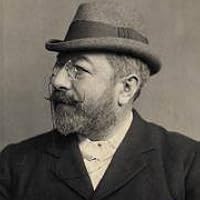
The son of a deranged Italian immigrant, Joseph Grimaldi (1778-1837) was the most celebrated of English clowns. The first to use white-face make-up and wear outrageous coloured clothes, he completely transformed the role of the Clown in the pantomime with a look as iconic as Chaplin's tramp or Tommy Cooper's magician. One of the first celebrity comedians, his friends included Lord Byron and the actor Edmund Kean, and his memoirs were edited by the young Charles Dickens.
But underneath the stage paint, Grimaldi struggled with depression and his life was blighted with tragedy. His first wife died in childbirth and his son would go on to drink himself to death. In later life, the extreme physicality of his performances left him disabled and in constant pain. The outward joy and tomfoolery of his performances masked a dark and depressing personal life, and instituted the modern figure of the glum, brooding comedian.
Drawing on a wealth of source material, Stott has written the definitive biography of Grimaldi and a highly nuanced portrait of Georgian theatre in London, from the frequent riots at Drury Lane to the spectacular excess of its arch-rival Sadler's Wells; from stage elephants running amok to recreations of Admiral Nelson's sea battles on flooded stages at the height of the Napoleonic Wars.
Joseph Grimaldi left an indelible mark on the English theatre and the performing arts, but his legacy is one of human struggle, battling demons and giving it his all in the face of adversity.
Andrew McConnell Stott is the author of The Pantomime Life of Joseph Grimaldi, which won the Royal Society of Literature Prize, the Sheridan Morley Prize for Theatre Biography, and was a Guardian Best Book of the Year. The Poet and the Vampyre is his first book to be published in America. In 2011, Stott was named a Fellow at the New York Public Library’s Cullman Center for Scholars and Writers. He is a Professor of English at the University of Buffalo, SUNY.
A well written and researched book. Very well organized in terms of a timeline but unfortunately, I didn't find it really had much to do with Grimadli's life more to do of the times he lived in. Sure there were snippets to do with some aspect of his life so when these came up I paid that much more attention. Interesting times that he lived in or through but to satisfy my interest in Joey the clown I think I'll look elsewhere, as in Grimadli's own memoirs; edited by Charles Dickens.
Andrew McConnell Stott starts The Pantomime Life of Joseph Grimaldi a little inauspiciously. He attends a church service held by clowns every February and concludes that he doesn’t really like clowns and finds them drab and uncanny. Luckily for the reader, this dislike doesn’t translate into what is a fascinating history of Joseph ‘Joey’ Grimaldi, the ur-clown. Even more lucky for this reader is that Joey wasn’t a Victorian figure, he was a late-eighteenth century/ Regency figure, ensuring that his story is filled with larger than life characters, improbable events and sheer fun.
It doesn’t start fun though. Joey’s father, also called Joseph is a true monster of a person. Descended from a long line of performing Grimaldis, including ‘Iron Leg’ Grimaldi who caused an international incident when he vaulted from a stage into a box and accidentally broke a chandelier over a visiting dignitary, the young Joey had a lot to live up to and his dad made sure he did by using terror as his chief encouragement. The older Joseph was also a choreographer in Drury Lane which gave him access to lots of pre-pubescent girls he forced himself on, including Joey’s mother. The older Joseph locked children in cages when they got their steps wrong as well as beating them, that young Joey was a prodigy in clowning was not really an option for him. (Interestingly, one of the father and son’s early acts involved older Joseph comically beating Joey and swinging around by a chain - an act very close to one that young Buster Keaton had with his own dad. Though Buster claimed he loved every minute). Old Joseph was also a creepily morbid person, pretending to lay dead to see the reactions of his sons, leaving tuppence to the children who had disappointed him, and including a stipulation in his will that his daughter should cut his head off to ensure he was dead before being buried.
When old Joseph finally did leave this mortal coil, young Joey could really begin to make his own way. He secured contracts in Drury Lane and the summer season of Sadler’s Wells and married a woman he was besotted by after an awkward romance. She died only a year later and although Joey did remarry, it seemed to be out of gratitude to a nurse then love to a wife. On stage he was a star, possessing a comic talent that everyone seemed to recognise but no-one could explain, off stage he was a depressive, convinced that any good part of his life would have to be paid for somehow.
With daring and creative show-writers he changed the character of clown, adding the now recognisable make up and costume. He was a huge success, replicated in china, in print and in imitation. Navigating the tricky politics of regency theatre he played stints at all the main theatres, running from one to another to play two houses a night. All this took a heavy toll on his body, notwithstanding accidents (of which there were many, including accidentally shooting himself in the foot with a prop gun), his act was punishing and he was crippled by his mid-forties. Left to the mercies of theatrical charities and well-wishers, he had hope in his son, another promising clown. However, that son, JS was haunted by the ghost of his father’s act, he was always good but never quite as good. He fell into drink, drugs and epileptic fits which started after he fought a policeman and was hit on the head with a truncheon. He died before Joey, while getting ready for a performance, possibly poisoned by a jealous husband. A truly pathetic story tells of Joey and his wife Mary agreeing to kill themselves, taking pills and laying on the bed asking each other if they were dead yet. They didn’t need to try, they both died shortly after.
After a story so grim, how could I describe this book as sheer fun? The fact is, that although this is a biography of Joseph ‘Joey’ Grimaldi, he often fades into the background. His wishes and aims, a comfortable and stable family life and a successful career based on hard work, were simply more pedestrian than many of the exaggerated events and people around him.
There’s the tale of Sadler’s Wells, a theatre whose USP was a free pint of port with every ticket, which later redirected a river to make a huge water tub in which they held ‘aqua-dramas’. These including miniature recreations of naval battles with children manning scaled down man o’ wars, or melodramas where drowning children were saved by ‘Carlo, the Wonderdog’. There was also the dog ‘Moustache’, who was dressed in military uniform and led dog armies in battle recreations. Incidentally, Sadler’s Wells had a backstage code of conduct that included a fine for farting.
Other near-unbelievable stories include the one about the French clown who single-handedly sailed a ship through a storm from Ireland when the sailors all gave up, or the strong-man who became the British Museum’s main agent in Egypt, stealing all the treasures for them. Not to mention the circus proprietor who was on the wrong side of the channel during the French Revolution, escaped prison by swimming down the Seine and retired back to England where he wrote poetry about how much he hated his wife and kids. Or the story of William Betty, the twelve year old boy who became a huge star for a year playing leading Shakespeare roles in adult companies, including Macbeth and Richard III - a career which lessoned off after his voice broke. Even the relatively staid Joey and wife, Mary, found themselves being wined and dined by highwaymen posing as rich theatre fans.
There’s a lot more, this is a packed book and surprisingly, it all hangs together very well. It also explains what the original pantomime actual was and makes an attempt to explain what made Joey such a star.
The pantomime was a form of afterpiece played after the main performance and originally based on Italian commedia dell’arte, though it had been going its own direction for some time. In a pantomime, the audience were given a situation, usually from folk-tale, though it could be inspired by other stories and even topical happenings. The characters had large immobile masks on during this part. Then, one of characters is given a magic sword (the original slap-stick) and the masks are taken off, revealing the four main characters to be one of four stock figures (This is when the Clown usually said ‘here we are again’.. meaning back as these stock figures. A catchphrase later associated with Dan Leno). The stock figures were; Harlequin, originally a trickster but increasingly a lover, Colombine, his beloved and Pantaloon, the old father/rival lover of Colombine. Finally there was Clown, a country rustic who worked for Pantaloon. This part of the pantomime was called the Harlequinade and it sounds nuts. Harlequin uses his magic wand to transform items to create chaos and outwit his rivals to Colombine.
Joey’s big revolution was to detach Clown from the country bumpkin servant role, to make him colourful and otherworldly and make him a figure of pure chaos, as unhelpful to Pantaloon as anyone else. Another skill Joey had was to perform slowly and carefully, with a wide-eyed, childish innocence. Some of his gags of transformation reminded me of Chaplin, who could transform shoes into a delicacy. In one pantomime, Joey made a snowman figure out of vegetables that then tried to box him with turnip hands - I’d love to have seen that.
McConnell Stott has a real skill at describing the ludicrous without losing the general plot of things, which makes me really excited that he wrote a book about Garrick’s Shakespeare Jubilee - I think he’d handle that story very well.
A riveting idea: to write about the life of the first modern clown, Joseph Grimaldi. It is a name I came across on a London walk that took us past Sadler’s Wells and into the birthplace of pantomime, when theatre was the home of physical comedy in the late 18th and early 19th centuries, and when Grimaldi first joined his father on the Sadler’s Wells stage. It is a subject with great potential, and a difficult genre to take on — biography requires real talent. This book set out to be a history of comic theatre, exploring what theatrical comedy looked like before pantomime became the Christmas tradition we recognise today. Where the book fell short was not in a lack of detail, but in the sheer excess of it: masses, oodles, lashings of information about every single character who formed part of this chaotic circus life. The words, the phrases, the weight of knowledge were overwhelming and at times suffocating, especially in an already frenzied world of entertainers a largely unprofessional troupe of stuntmen and women and circus performers, where safety was virtually non‑existent, abuse was rife, paedophilia, child labour and abuse were ubiquitous. The chaos, risk and danger of that precarious existence are exactly what one expects and wants from such a book. But the author goes too far in demonstrating his erudition and microscopic command of the subject, ultimately drowning the enthusiastic reader in an avalanche of academic show‑offness. In the end, less would definitely have been more for this comedian‑turned‑academic. In the end, if it wasn't for the larger than life comic and sad persona of Joseph Grimaldi, even he would have ended drowning in his own biography.
A really interesting look into the history of regency theatre, clowning and pantomime. I'd never actually heard of Grimaldi until I saw this book in a charity shop, but I do like theatrical histories so I thought it would be worth a read. It seems really well researched, there's lots of fascinating little anecdotes and footnotes included with the main history, and a thoughtful commentary on the nature of celebrity and comedy which in some ways has not changed much at all. It's interesting to see how sorts of entertainment fall in and out of favour... We may not be entertained by the same sort of 'pantomime' today, but it's easy to spot similar trends for physical comedy, satire etc today. Also, while we may think of past audiences as prudish, or modern ones as 'easily offended', this just shows that such things are always changing.
Interesting tidbits throughout, such as historical staging of spectacles like full naval battles in water tanks on stage and when Pantomime became a Christmas tradition, but not a page turner in its delivery. Took me longer to read even though I did want to know more about Joe Grimaldi but if I hadn't had that driving me to keep reading I probably wouldn't have finished the book.
A very interesting book, not just about Joseph Grimaldi but the whole world of 19th century pantomime as well. Through a series of well-intentioned or bad choices along with some outside meddling of others, Grimaldi's legacy as the prototypical sad clown/comedian is well established. The Epilogue very nicely summarizes his relevance to performers across the years to today.
That was a very detailed book about Mr Grimaldis life. I knew nothing about him but have found a new found respect for a performer. I am going to visit his grave when I am next in London to pay my respects to a very hard working , popular performer.
This book felt to me more like an amassment and chronological reordering of stories, articles and opinions on Grimaldi and his era than a typical biography about an artist's story and how he influenced his profession. It seemed a little bit distant and impersonal, missing a personal touch, events and situations were described but with little commentary or opinion from the author. His life was examined at a micro level (what he wore, how he acted in scenes, what his weekly salary was every time etc) somehow lacking in perspective.
But apart from Joseph Grimaldi, it was good someone wrote a word or two about those many others who lived and died unrenowned in his shadow.
Those performers, all sorts of people who, coming from complicated backgrounds to begin with, saw their health deteriorate simply by the abject conditions in the circus, saw their careers and livelihoods suddenly crashed by unexpected misfortunes or accidents, or eventually faded into oblivion in a circus of more talented, more young, more able performers... Being a "struggling artist" nowadays just pales in comparison to what those people had to go through.
Just unimaginable situations, kids forced to act already from their first steps, children only 3 years old singing, 6 year olds tied with chains and flown/thrown around for shows, children taking beatings on a daily basis, getting molested...how desperate can an 8 year old be in order to run away, swim to a ship, climb and try to pose as a cabin boy in order to escape his predetermined future on the circus?
People traumatised for life who in turn took it all out on family members or younger circus performers prolonging this endless cycle of misery. Those monsters of parents, those poor abused wives. Lives destroyed by alcohol and drugs.
For an artist or entertainer I think that book is a must read and can even be encouraging but, not unlike the double life of its protagonist, hides a more depressing realisation underneath.
Encouraging as at least in the developed world few artists will have to face worse situations than those described. But also depressing as one can't help but contemplate just how many people over the years tried really hard, but either failed or had mediocre success which ultimately is little different; next to the real stars of the era no one remembers them anymore.
In the end those people lived, struggled and performed, offering moments of joy to equally broken human beings of the audience and eventually died and in the end what was left? The makeup and colours of modern clowns cover such a harsh history.
One of the most colourful slices of London’s theatrical history must surely be this period between the late 1700s to early 1800s when pantomime, a staple fare presented by theatre managers rather than a seasonal ritual, included dangerous and body-destroying nightly leaps and stunts, traps and pitfalls reliant upon often wilfully negligent scene-men, and behaviour from the audience that spanned the spectrum from adulation, through heckling and throwing objects, to outright rioting.
Onto this stage springs Joseph Grimaldi (“Grim-All-Day”), who – fuelled by depression – reinvented ‘Clown’, the persona that would leap from the Harlequinade foursome into his own, often reviled, part of entertainment history. Stott tells the story of our original ‘sad Clown’, sometimes masking the richness and brilliance of his performing career in favour of a bleak bias towards his troubled psychology, but it's an honest approach, for Grimaldi’s life began in tyranny and ended in pain-stricken poverty, the fates of his peers being often not much pleasanter.
This is a very focused history as well as a biography; comprehensively giving the reader all the context of the time, political atmosphere and people that touched Grimaldi’s life, but it is clear from the outset that the most relevant force, both personally and professionally, was his father, abhorrent and frightening and yet instilling in his son a love of the stage, a desire for the acclaim of the audience, their laughter and approval, and the mental anguish that fuelled his performances. Between this legacy and his natural talent, it’s no surprise that Grimaldi became a defining force of comedy, being likened by Stott to personality comics (Chaplain or Laurel and Hardy), rather than a mere purveyor of slapstick routine.
I found this biography more interesting than enjoyable, on the whole, although the description of the first performance of Dibdin’s unexpected hit, Mother Goose (and full transcription of the play at the back) I found just as hilarious as the crowd apparently found the act itself. Grimaldi’s life may have been beset by depression and problems, but it was also full of spectacle and wonder, and had Stott included a little more of this, the biography might have transcended its lingering depressing aura.
I'm not a fan of clowns albeit I am not scared of them, and would not normally have read a book about them but I had heard about this one when it was the Radio 4 Book of the Week, and I bought it in the first book shop I saw it in.
It is a fabulously written biography of Joseph "Joey" Grimaldi which moved me to tears in places. I would recommend this book to anyone with an interest in theatre history as well as to anyone with an interest in social history. Today we idolise performers on the flimsiest evidence of their talents - just taking part seems to recommend some to glory - but we forget that for many, many years, to be in the "theatre" was considered socially unacceptable and within it there were (probably still are) hierarchies with the likes of Grimaldi, and his contemporaries such as Barnes and Bologna, considered as the lowest in the pecking order, unworthy of any kind of pension in most cases and at the mercy of management, theatre carpenters and other performers.
Joey's final years were sad but for sheer pathos, the final years of Tom Ellar take some beating - he "ended up playing his guitar in a gin-house in Shadwell, where the coal-heavers knocked him about for sport."
I couldn't put this book down and was sorry to finish it so if you want an intelligently written page turner about a celebrity then give this a go - I promise you won't be disappointed.
A completely absorbing book which wears its learning lightly, giving the reader a thorough appreciation not only of the details of performance in London in the late eighteenth and early nineteenth centuries but also of the atmosphere of the times. So many questions are answered, but also the characters are real, and the emotion at Joe's final benefit appearances at the Wells and at Drury Lane is almost overwhelming - you can see the crowds getting to their feet and feel the surge of affection. Indeed, the assessment of what Grimaldi achieved is so inspiring that you can't help but agree with the 'old boys' cited at the end of this study: 'Ah! You should have seen Grimaldi!' If only I could ...
Joseph Grimaldi remains an iconic figure in the history of comedy, clowning, and pantomime. Andrew Stott's book provides a detailed portrait of the performer, balancing his public triumphs and friendships with historic figures such as Lord Byron, with his rather tragic and disordered offstage life. Whether making theatre history in a record-breaking run in Mother Goose, or taking a fatal dose of poison only to have an attack of wind, Stott turns in a sparkling and vivid account of 18th and early 19th Century London life.
As someone who finds clowns scary and disturbing, this book afforded me a fascinating perspective into the history of clowns and pantomime. Joe Grimaldi was as Romantic a hero as any of the better-known ones: Shelley, Chatterton, Byron (who befriended him), and he was by far the best-known comedian of the regency. He changed the pantomime form, making a minor character (clown) into a major one. Scott gives a marvelous panorama of the London theatrical world here, from The Infant Betty phenomenon to the several dramatic fires that razed the big theaters of the day.
I absolutely love this book. It is a great insight into late Georgian-era theatre and the beginnings of the cult of celebrity. Well researched and very readable.