

What do you think?
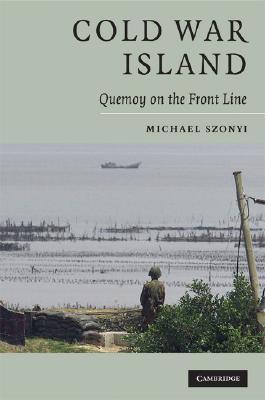
Cold War Island: Quemoy on the Front Line
During the height of the Cold War in the 1950s the small island of Quemoy in the Taiwan Strait was the front line in the military standoff between Chiang Kai-shek's Republic of China and Mao Zedong's People's Republic. Local society and culture were dramatically transformed. Michael Szonyi uses oral history, official documents, and dissident writings to convey the history of the island during this period. In so doing, he sheds light on the social and cultural impact of the Cold War on those who lived through it, as well as on the relationship between China, the United States and the USSR at this critical moment. By analysing the effects of Quemoy's distinctive geopolitical situation on the economy, gender and the family, and citizenship and religion, the book provides a new perspective on the social history of Cold War relations, showing how geopolitics can affect individual lives and communities.
- GenresHistoryNonfiction
328 pages, Paperback
First published August 11, 2008
Ratings & Reviews
Friends & Following
Create a free account to discover what your friends think of this book!
Community Reviews
Displaying 1 - 7 of 7 reviews
March 2, 2020
I really enjoyed this book, so much to the point where I want to read more about Taiwan during the Cold War.
Szonyi's argument is presented like it is a big deviation from normal historiography in the introduction, but I think the approach to each of his argument is a bit of an expected formula, at times; He'll lay out the situation for you, demonstrate why it is important to understand a key event, and how the locals responded to an event/interacted with officials or the State (usually including some way that they got around proscribed laws/conventions). What made it really stand out in my mind was the examples presented and the manner in which Szonyi drew a clear connection between PRC policy/political atmosphere, and at times global as well, and ROC policy/political atmosphere. It was really an entertaining read and I feel like I got a lot from it. I understand why Jinmen may be thought of as a very important historic area because of its geopolitical role in the Cold War(, especially after reading the part on page 233 that covers how Taiwan might have also fallen to the PRC if Jinmen's resistance at Guningtou had failed.)
Szonyi's argument is presented like it is a big deviation from normal historiography in the introduction, but I think the approach to each of his argument is a bit of an expected formula, at times; He'll lay out the situation for you, demonstrate why it is important to understand a key event, and how the locals responded to an event/interacted with officials or the State (usually including some way that they got around proscribed laws/conventions). What made it really stand out in my mind was the examples presented and the manner in which Szonyi drew a clear connection between PRC policy/political atmosphere, and at times global as well, and ROC policy/political atmosphere. It was really an entertaining read and I feel like I got a lot from it. I understand why Jinmen may be thought of as a very important historic area because of its geopolitical role in the Cold War(, especially after reading the part on page 233 that covers how Taiwan might have also fallen to the PRC if Jinmen's resistance at Guningtou had failed.)

December 11, 2025
I read this for a final paper for school. I was able to finish it in two days, so it wasn't a difficult read. The outline and supporting details are presented in a very matter-of-fact, easy-to-follow way. The book did feel like a history book, but that's not a bad thing per se. I learned a lot. I think it's great that this book was published; I knew nothing about it beforehand. It makes me want to visit Jinmen aka Quemoy. 3.5/5 rounded up to four for Goodreads.

June 16, 2020
The comment of the two sides being mirror images is very insightful. The author also does a great job showing the ever-shifting geopolitical relations during the "Cold War"period and the changing positions of Jinmen in that context. The chapter on ghosts and temples is gold.

December 26, 2022
人二三炮击之后,金门面对的实际军事威胁已基本不存在,但蒋当局决意将金门打造成大陆对台湾以及自由世界与日俱增的威胁的象征,以合理化其戒严统治,随着大量驻军的到来和战地政务体制的建立,金门民众进入一种长达数十年的军事化生活。躲炮击单躲双不躲,民兵地道战,抓老鼠,种高粱,阿兵哥生意兴隆,小女子军中乐园为国献身……自由世界向大陆妥协、炮击结束、岛内政党轮替,金门最终失去了象征意义和作用,被世界和台湾双重边缘化。给民众留下的的只是一个军事塑造的低度现代化的社会,以及苦难与英雄交织的历史记忆。

February 4, 2019
Unique look at geopolitics of Cold War through a social history approach focused on the island of Jinmen
January 1, 2024
宋怡明从军事化、现代性、地缘政治化和集体记忆四个维度,分析冷战时期金门的社会变迁及民众与国家的互动。书中批评当权者借军事上的紧急状况(即使此种状况已经缓和),全方位介入普通百姓的生活,削弱人民的自由。这种状况不光发生在金门,在两蒋时期的台湾、毛泽东治下的大陆以及世界上很多地区,都是普遍现象。恰如作者所说,金门和岛上人民的经验“是种象征且寓意深长”。

February 7, 2018
A good scholarly review of the forces affecting change on the island of Kinmen in the Taiwan Strait.
Displaying 1 - 7 of 7 reviews