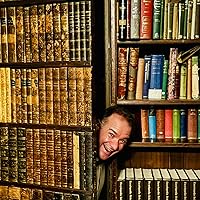
Donald McRae was born near Johannesburg in South Africa in 1961 and has been based in London since 1984.
He is the award-winning author of six non-fiction books which have featured legendary trial lawyers, heart surgeons and sporting icons. He is the only two-time winner of the UK’s prestigious William Hill Sports Book of the Year – an award won in the past by Nick Hornby’s Fever Pitch and Laura Hillenbrand’s Sea Biscuit. As a journalist he has won the UK’s Sports Feature Writer of The Year – and was runner up in the 2008 UK Sports Writer of the Year – for his work in the Guardian.
Donald lived under apartheid for the first twenty-three years of his life. The impact of that experience has shaped much of his non-fiction writing. At the age of twenty-one he took up a full-time post as a teacher of English literature in Soweto. He worked in the black township for eighteen months until, in August 1984, he was forced to leave the country. He is currently writing a memoir based on these experiences.
When it stuck to the legal stuff it was brilliant but a point taken off for two reasons. One, the stuff about Mary Field Parton :boring and at a loss to why it was in the book to this extent. It detracted from the book and really lead nowhere. It wasn't convincing either. Two, not enough about his upbringing, early life and the influences which made him what he was in later life- this would have been fascinating.
I first became interested in Clarence Darrow after seeing the film 'Inherit the Wind', and I recall discovering a book on Darrow by Irving Stone. This biography, which appeared in 2009, is much more informed than Stone's book, for I believe that whilst Stone got a lot of help from Darrow's family, he had to give an undertaking that he would not write about certain aspects of Darrow's life. Donald McRae did not have to face such inhibitions and limitations, and this is an enjoyable study of a very human guy.
Part of me wanted to give this book a 5 star review and another part hated it! The sections about Darrow's trials, particularly his wonderful, captivating speeches are thoroughly engrossing. The obsession with his relationship with Mary Field feels overplayed and distracting.
I'd like also to have read more about Darrow's early career but overall it's a great read. And a must read if you are a fan of great debate and oratory.