A beautiful lost classic of nature writing which sits alongside Watership Down and War Horse .This is the story of Wulfgar, the dark-furred fox of Dartmoor, and of his nemesis, Scoble the trapper, in the seasons leading up to the pitiless winter of 1946. As breathtaking in its descriptions of the natural world as it is perceptive in its portrayal of damaged humanity, it is both a portrait of place and a gripping story of survival.Uniquely straddling the worlds of animals and men, Brian Carter's A Black Fox Running is a lyrical, unforgiving and unforgettable.
he finished it before i did, but i am reviewing it first - ka-ZAAAM!
this is a book i bought for greg for christmas. i wasn't sure which cover was better, and i wanted to read it, too, so i bought TWO copies,and then we read it together because we are the best of friends, except our friendship will not end as sad as theirs. and i am not going to turn into this when i grow up:
knock wood.
so, this book is like a fox-version of Watership Down. it takes you through the trials and tribulations of a bunch of foxes, primarily the large black fox wulfgar, and some assorted other animals as they try to stay alive through the harsh winters and the cruelty of a man and his very mean dog.
this is the best part of the whole book:
Another creature had heard the badger and was fleeing down the slope as fast as his short legs would carry him. He was a hedgehog named Earthborn, who during the cold spell had dozed in a pile of dry leaves against a field wall. Now he scuttled across the woodland path and almost collided with Wulfgar. Immediately the muscles along his sides and back contracted and he curled into a ball. Wulfgar strode around him stiff-legged, brush twitching, and gingerly touched the spines with the pad of a forefoot. The ball of prickles tightened and the fox cocked his leg and doused the hedgehog. Snuffling and sneezing Earthborn uncurled and the life was crunched out of him.
OH MY GOD!!
seriously, fox?? that is your mode of attack??? you PEE ON IT?? AND THEN YOU EAT IT???
oh, fox, you are super-gross.
but that is basically what this book is about - something is always eating something else.
The night was prickled with faint squeaks and screams, many of which ended abruptly.
when phrased like that, it is so chilling. it is like a horror movie.
and that's nature and all, but i still think that if you know someone's name, you really shouldn't be eating them. it's just unmannerly.
but most of these animals have very bad manners - they will just address each other by name and then try to eat them. and foxes are always hungry. nothing fills their appetites.
but they are not the worst. the worst?? stoats.
stoats are assholes. i knew this already from having read Each Day a Small Victory, but this seriously reinforced it. do we have stoats in america?? i hope not, because they are some ill-tempered creatures, boy...
leave that dumb rabbit alone! (this book taught me that rabbits are really dumb)
but it doesn't matter how big of assholes they are because poor foxes get blamed for everything!
that mean dog i mentioned earlier (who is batshit crazy, and his POV chapters are the absolute best things in the whole book besides the pee-scene) gets into all kinds of mischief, and the foxes get blamed for it!! unfair!!
and the owner of the dog gets it into his head that wulfgar is a demon, because he is always crossing paths with him under unfortunate circumstances and he is easily recognizable because he is black (why's it always gotta be a black fox, huh??*) and he embarks on a sort of crusade to kill wulfgar.
will he or won't he???
i'm not saying. but i will say that this was a completely enjoyable book, if a little dry at times with its descriptions of nature. it is a little bit too much pastoral overload.
but all in all a great book, although not as good as Watership Down, and it goes without saying, not nearly as good as Tailchaser's Song.
i will leave you with a bit of animal philosophy:
"...Men come, we run, otters run, rabbits run - every animal runs."
There was no more to be said.
indeed.
*this will tie into something unfortunate in the book that i think greg is going to talk about.
oh, but also, there is a character in the book who is this little boy who is super-attuned to nature, kind of like sam in The Trumpet of the Swan and everyone just calls him "stray," but at the end
New & Improved Review with over 10% more pictures of Foxes! Wow!!! (because so many of the pictures had turned into dead links)
This is a book in the tradition of Watership Down, but about Foxes and not rabbits. Well there are rabbits in the book, but they aren't nearly as interesting as the ones from Watership Down and they are pretty much just dinner here. And if we are to believe this book, rabbits are really just dumb meals waiting for foxes, stoats and other meat-eating critters to chomp down on.
The hero of this story is a black fox named Wulfgar.
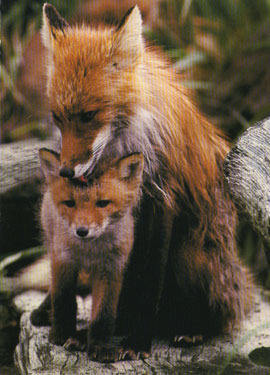
This is maybe what he looked like as a pup, but by the time the story takes place he's sort of the badass alpha male (yet sensitive) of the foxes who reside around these particular moors in England.
All isn't too great for him though because there is murderous hunting dog, The Lurcher, who is owned by an equally deranged trapper who would like to kill the poor fox.
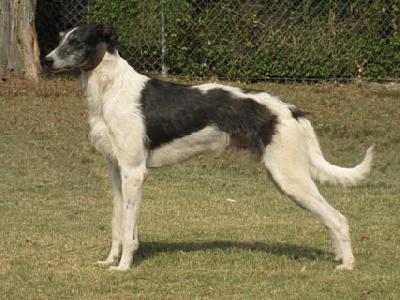
This is maybe what the dog looks like,
but if you type in lurcher breed in google you get all kinds of pictures of dogs, many of which don't look like they would be from the same breed at all.
The Lurcher quite possibly steals the show when the book focuses on him as a main character. He likes to kill things, and all of his thoughts are crazy, must kill everything to make the voices in my head and the stars up above happy variety. Good stuff.
The book takes place in the same general world that Each Day a Small Victory takes place in, and the situation is just as dire for the animals in both books, but this one focuses more on a spiritual and heroic quest rather than the brutal day to day living and need to get food. But lots of things do get eaten. It's what these animals do.
I wasn't going to mention this, and detract from the book, but Karen mentioned that I would mention it so here I go. There is an unfortunate description given in the book when describing an apparently very fetching Vixen. The brown color around her eyes is given the description of being "nigger brown". This book was written in 1982, so you can't even argue away, well it was a different time when people said things like, nigger brown, gook yellow, injun' red and honky white. Actually, I'm not sure that was a term people used anymore than my other (possibly?) made up racially offensive crayola colors.
I liked this book quite a bit and there isn't anything else questionable like that one phrase, although one could argue from the usage of it that there is a Vaterland, uber alles, blood and soil, crypto-fascist thing going on here, just like our friends Adorno and Horkheimer enjoyed pointing out was in the proto-existential pastoral novels of Knut Hamsun.
Karen pointed out something that I just didn't notice in the book. One of the decent humans is a small boy, who we learn at the end of the book has the same first name as the author. The book, while written in 1982, takes place in the late 1940's, making it not just a meta-fiction trick but rather a re-imagining of what the author saw as a boy and mythologizing it. I had forgotten the author's name when reading the book and I didn't think anything of the little boy's name, but .
But all this talk of racially offensive terms, The Frankfurt School, Fascism and some arm-chair psychoanalysis isn't what this book should be about. It's about foxes!!!!
So I'll give you all some more pictures of foxes because they are much nicer to look at than these words that I write.
I had never heard of this book before, and prior to reading it I wouldn't have said I was a great fan of nature writing in particular. I'm not sure why though, because I am a big fan of the likes of Richard Adams and Animal Farm. I just never put these together with nature writing but, of course, they are. This book, in my opinion, sits up there with these great classics and I don't understand why it hasn't been acknowledged as such.
The story follows a black fox named Wulfgar, his daily life over a period of a year, and his bitter rivalry with a local trapper and his crazed lurcher dog. A lot happens during the course of the year in the lives of the humans and the animals around the area of Dartmoor, where the book is based. The book shows both sides of the story, and follows a few different characters as well as Wulfgar - both humans and other animals.
I really liked all of the characters, or enjoyed very strongly disliking them in the case of the trapper, Scoble. But as much as I had strong distaste for him and his actions, there was also a profoundly sad aspect to his character and I felt great pity for him, and his dog as well.
I loved the fox and animal characters, and especially the whole religion the fox clan had. The author was very descriptive about the beliefs of the foxes and their prophecies, which made them seem quite mystical and deeply mysterious creatures. And then there was another, more animalistic side to the creatures, hunting and travelling the tors and interacting with each other and other animals. It was very interesting how all the animals have very real lives of their own, and even their own rituals and ways of speaking, and the author brings them to life so well. Even the names given to the animals were beautiful and somehow very fitting.
The writing is so descriptive and just amazingly flowing. I really felt like I could picture the scenery of Dartmoor, both the human aspects of the farms and village and also the ponds and forests of the countryside. It was very evident that the author had spent time there and loved the place so much that he was able to infuse this feeling into the book. I liked the fact that he put himself into the book; the character of a small boy who spent his days roaming the countryside and watching the animals. This was actually true to the author's childhood and I found this to be a lovely touch.
The nature writing of the book is idyllic and calming, but there is also great sadness and tense excitement in the pages, particularly centered around Scoble and his pure, obsessive hatred of the foxes. The combination is heart-wrenching in places, probably more so to me because I have strong feelings about the beauty of nature and the ugliness of human interference and animal cruelty. There are important lessons hidden in the pages for those who wish to find them.
I would defy anyone to read this book and not feel an urge to then go wandering into the woods to find their own adventure.
Wulfgar, the dark-furred fox roamed far and wide over the wilds of Dartmoor. He spoke with other foxes, conversed with otters by the rivers and exchanged greetings with the badgers at dusk. He was happy with his lot, had managed to escape the relentless pursuit of the hunt, and had now found the love of his life, Teg. But life was not going to be easy for the pair. The man trying to catch him was Scoble, an ex-veteran from the war with a drink problem. His streak of cruelness and with the assistance of his dog, Jacko, they had it in for the foxes in particular, as well as wildlife in general with their traps, gins and snares.
The talking animals makes this feel like a children's book, but the scenes within are not. The is as much about death as it is about living life and is as full of the tangled emotions that go to make this up. Carter's lyrical writing has an intensity to it, you feel the wind ruffle the fur, understand the smells of the night as they track their prey and share the euphoria of being alive racing across the Tors. The writing is firmly grounded in the granite bedrock of Dartmoor and he brings the natural world alive to the reader. This re-published edition has a stunning cover, with a beautiful introduction by Melissa Harrison on how it inspired her to become a writer. 3.5 stars
Animal-narrated stories (ie Watership Down, Frost Hares, Memoirs of a Polar Bear, etc) are not everyone’s cuppa, but if they are yours, I cannot recommend A Black Fox Running highly enough. I was spellbound, and I don’t throw that word around a lot. Describing nature in my own writing gives me hives, and as a reader I often skim or skip long stretches of descriptive scenery. Brian Carter does it beautifully, effortlessly, seamlessly for the entire book and I read every leaf, every blade of grass. You can see, smell, hear and taste everything. Gorgeous writing, and a story I was surprisingly invested in. I absolutely loved it.
I wish everybody would read this book. It is so quietly perfect. A celebration of nature and all that is brutal and beautiful about it. A story that is not constrained, it runs along like Wulfgar the black fox keeps running along. I could tell you about the plot- There is love, quiet menace, fights, retribution, wisdom, peril, suffering and celebration but there is so much more to this book. It is deeply philosophical: There is no clear cut good versus evil. Even the character of the trapper Scoble, who is so well carved by Brian Carter- down to the wart on his face that he always touches when lost in thought- so awful- maybe inherently just of bad character- but also carved out by the trauma of war.
The names are beautiful. this book is full of scent and sound. It dashes around Dartmoor, momentarily leaves you with Stoats, Robins, Otters, mice- gives you glimpses of life then keeps moving on. Every single character in this book human or animal is rendered fully and with compassion. There is a lack of sentiment that makes it all the more beautiful.
Wulfgar leads the way and he is enigmatic and probably like somebody we all have met-but this book is brimming with the lives of others too and you will feel every single sentence.
When I reached the last paragraph- an unexpected flood of emotion hit me. Sad to let go, glad to have been on the journey and also changed- Not many books can do this. It's like a children's book in the sense that you will read it in the way you read as a child- completely immersed, completely there and left with something that will absolutely stay forever.
Dartmoor 1940 - This story shows you the world through the eyes of a fox - Wulfgar. We learn his story as he talks with the other animals. It captures the fraught relationship between nature animal and man. The landscape and countryside are described in such detail. It's intense and very moving, full of emotion. A book I would recommend.
I was rather disappointed with this book. I had been told it was a classic and a masterpiece of nature writing, but honestly it did not much appeal to me (and I am a great lover of animal stories).
It is the story of a black fox named Wulfgar, his life in the area of Dartmoor and his ongoing feud with the local trapper, Scoble. Wulfgar is not especially likeable, being very arrogant and rather callous at times. His human nemesis, whilst unpleasant, is a more sympathetic character – he is suffering from P.T.S.D., having been a soldier during the First World War, and despite his obsessive hatred of wild animals like Wulfgar one is able to feel some empathy for him.
Not much actually happens in the story. The book could have been a third the length and still contained all the important events. The majority of the text is along the lines of "Wulfgar went here, and then there, and then somewhere else." It is as if the author wishes to show off his great knowledge of Dartmoor by naming as many places as he can. This quickly becomes tiresome and repetitive. There are numerous punctuation errors, a few spelling errors, and various factual errors – the author seems to know little about foxes and how they behave.
If you want a good story about foxes, read Garry Kilworth's 'Hunter's Moon' instead. If you want a more classically-styled piece of nature fiction, read Henry Williamson's 'Tarka the Otter'.
I found this quite hard to get into but once I found the flow I was hoooooked! I love the tension between fox and man and how well Carter explores the conflicted relationship between them. It’s quite sad to see how foxes suffer at the hands of man simply because of an outdated view and tradition. I really loved this. Just thought it was a little too long for what it was!
A beautiful stunning story between man and animal showing the emotion between the two. I've given this 5 star 🌟 purely because I know a lot of the places mentioned in this book and can appreciate the mesmerising desolation of Dartmoor in all four of the seasons. Very philosophical story telling in the way the author deals with life, death and war mixing both the animal and human side within them. A definitie read for those who love nature as well as the cruelness which goes with it.
A Black Fox Running is much more than it first seems. A talking animal story about foxes, man and nature which possesses real compassion, thoughtful contemplation and real soul. The awe-inspiring lyrical prose has you constantly re-reading lines, as it is illuminating, crisp, never forced and breath taking in parts. Every page is sprinkled with dazzling gems. Our hero, Wulfgar takes a sip from a moonlit pool:
“The water broke from the biggest flood pool in a silver lip and tinkled across the night.”
The narrative voice is never sentimental, brandishing a carefully weighted detachment throughout the narrative. We are meant to come to our decisions regarding which characters deserve our empathy and which are morally dubious – a task which left me surprised as I found myself empathising with villains and questioning the actions of the heroes at times. Carter knows life is not that clear cut or easily classified. This is probably the essence of A Black Fox Running. It is a philosophical and questioning text which explores major ideas and reacts against sentimental animal-based fiction. Carter examines themes such as;
Man does not consider himself an animal – but man and animals and nature are all part of the same ‘whole’.
Animals are not portrayed as angelic or morally right but as just animals.
Man is not savage or the completely morally redundant “Death Creatures”, but complex and contradictory.
At the centre of the book is the spiritual core of the foxes that demonstrates itself as the afterlife or ‘Star Place’ and ‘Tod’ the great fox prophet and promise of eternal life. For me, this was the weakest area in the book however, this in itself, lead to the more interesting philosophical moments of the fox’s existential musings on What is death? What is my purpose? Are we alone in making our own decisions? Carter draws strong parallels with man’s own existential angst, thus narrowing the divide between the fox world and man’s world and reinforcing the holistic view of nature and shared experience. And if there is one thing this book does superbly is narrow that divide. Whether you are fox or man we are all just trying to find our way through the dark, just living is an achievement, as Wulfgar says:
“To live is to run. Always running-away from death, into death. Perhaps Man kills us to kill a memory. We are ghosts of Man the animal and he can’t live with the knowledge.”
Let’s not forget that this is also a great story, well plotted and exciting. Our hero, Wulgar is not a God but is flawed as man himself and we are taken on an adventure that covers Friendship, Love, Grief, Revenge and Hope.
Although the absurd anthropomorphisms make suspension of disbelief a real challenge, this novel ultimately succeeds as a richly sensual evocation of the natural world, interpenetrated with a story of one man's shell-shocked hatred for animals: though I can't quite share Melissa Harrison's appreciation for a book that is clearly inferior to Adams' "Watership Down" or Williamson's "Tarka," she is to be commended for helping to bring this lost minor classic back into print.
I was so excited to find this one when checking out another book that is on my TBR for this year, Tarka the Otter, and was happy to find it already available at my library!
This was a surprisingly moving story, following Wulfgar, a black fox, through a year or two of his adult life in the English countryside in the inter-war period. Each animal species in this book is written with such a distinctive voice and personality, and you can tell it was written by someone who simply adored this landscape as a kid and spent hours observing it. The foxes have a surprisingly deep belief system and understanding of the cyclic nature of life and death, and this book definitely did not shy away from the violence experienced in nature and at the hands of nature's greatest enemy, mankind.
In addition to the perspectives from the various animals inhabiting Wulfgar's world, you also follow their main adversary, the trapper Scoble, and his dog who has been driven mad by violence and bloodlust- symbolizing Scoble's own untreated PTSD from WWI. Through his character, we can see the damage done by untreated mental health crises and unchecked violence.
All told this was a really lovely book, if a bit unstructured. However, the aspect that makes it feel unstructured is that the author writes about many things happening simultaneously among the animals, which I loved overall because it really drives home this feeling of each animal and person's place as just a speck in this intricately woven tapestry of life.
I’m surprised to see so much praise for this book. It’s not very well written – extremely repetitive and boring, with various grammatical mistakes. The author is obviously very passionate about Dartmoor, where the story is set, but he gets carried away with pages and pages of descriptions of various places that go on and on and ON, while you keep waiting for something to actually happen.
The main character, Wulfgar the fox, is just not very nice. He’s selfish and prideful, and seems to care more about Stargrief, another male fox – who would be seen as a rival in real life – than he does about his mate and cubs. This is just one of several factual errors. The villains are a cruel, wildlife-hating old man and his mindlessly vicious lurcher, both of whom want nothing more than to kill wild animals and are thoroughly unpleasant. And the author really did not need to mention faeces so often.
The edition I read has a foreword that states the author named the fox deity, Tod, after the German word for death. Personally I think it’s obvious the author meant “tod” as in the old English word for fox – he clearly likes using old-fashioned terms for animals, since we also get “brock” for badger and “fitch” for stoat (although fitch actually means a polecat). Perhaps the foreword should have been written by someone with a bit more knowledge of foxes (though I could say the same about the whole book!).
it was a slog for me to get through. but I really enjoyed the imagery and connections between each animal in the book. so many words that are regional that I didn't understand.( I'm glad I read it on an e reader)
"though I may die the grass will grow the sun will shine the stream will flow"
This was fine, great for animal fiction, but I'm still waiting for animal fiction that can be judged as good by the same standards as any novel instead of only shining among its peers.
My mother-in-law regards fox excrement as "the worst thing you can possible step in". She would have hated this book as Wulfgar, Stargrief, Teg and the other foxes of the Great Tor are described dropping, squirting and otherwise leaving their "scats" all over Dartmoor creating havoc for the moaning classes of which she is a paid up member (Exmoor branch).
Scoble the main human character of this book would disagree, he has PTSD from the First War and has probably stepped in worse.
The conflict between the two protagonists makes for an entertaining book with the biggest character the landscape of Dartmoor beautifully described by the author.
Written with so much empathy for wild creatures, A Black Fox Running is a book about a fox hunted by an old man with an inclination for killing and who also happens to suffer from PTSD acquired from WWII.
Do not be deceived by its blurb. It’a not a book for children. The author, though he narrated it subtly, did not shy away from writing the goriness of survival. AND FOR THAT I TRULY LOVE THE BOOK. Rooks kill the weakest among their commune. Foxes duel against each other to win a vixen’s love. Owls grabbed fitches with their talons and twist the life out of them. Kingfishers and herons, beautiful and colorful as they are, stand no chance against winter.
I have a feeling that Brian Carter is a fan of Richard Adams. But I would dare to argue, Carter did it better than Adams. The way he described Dartmoor, it’s obvious he loves the place. Every paragraph contains an ode or two to the environment he loves so much. The whole book is a paean to the moor, the clouds and birds that hover over it, the animals that seek refuge in it, the flowers and grass that grow in it, the monolith that stands there even long before the author learned his alphabet, to the sunlight and moonlight that caress its lands.
This is my first xenofiction and certainly will not be the last.
My project for 2018 is to read all the books I've been given over the past couple of years and haven't got round to yet. Its curiously different to reading books that you have chosen yourself.
A Black Fox Running is a book I would never have chosen myself, and yet I find plenty of connections to it. The leading (human) character has marked similarities to my paternal grandfather. He was a difficult man, permanently scared by his experiencing in the first world war. He wasn't fond of foxes: one of the ones he'd shot was stuffed above the mantle piece of his front room parlour (my brother still owns it). The book is full of scenes of rural life familiar from anecdotes my father told of his childhood, not least cider fueled days bringing the harvest home.
Why might I have never chosen to read it? Most of the characters are talking animals, which I don't really think of as my thing. In the course of the book you get used to it, although I never quite reconciled myself to the crypto Norse/Saxon religion the foxes profess. It is not that it is a children's book or a sentimental one. The foxes who are the central characters cut a swathe through the local wildlife. A clear love of the Dartmoor countryside breathes on every page. It is a riot of the senses. Its not just a setting for the story, it is a world you inhabit through touch, smell and sound as much as sight.
The book is a clear extension of the tradition of romantic appreciation of nature, especially the work of John Clare. To enjoy it you will have to overcome your sense of the ridiculous, but, ha, is it any more ridiculous to read about talking animals than to pretend that the metropolitan lives of the characters of most modern fiction are all that interesting.
This story reminded me of my favourite book from childhood, The Animals of Farthing Wood. It follows Wulfgar, a black fox running wild through Dartmoor, as he struggles to evade his nemesis, Scoble the trapper, and his lurcher, Jacko.
Similar to The Animals of Farthing Wood, the animals in this tale suffer as a result of their interactions with humans. However, this is more nuanced than a simple tale of good and evil, with Scoble the trapper coming across as a pitiable character, haunted by ghosts from the war and consumed by his hatred for foxes. His lurcher, Jacko (whose narrative is one of the most captivating), is evidently brain damaged and kills wildly in unhinged frenzies, desperate to appease the stars.
Meanwhile the foxes are portrayed as not merely physical animals but also spiritual beings grappling with "human" issues such as love, grief, life, death and meaning on their journey to the Star Place, giving the book a strange, almost mystical feeling.
The descriptions of the moors and woodlands are beautifully interwoven with the spiritual musings of the foxes, bringing the countryside to life and conveying a landscape of real character. It's hard to read this book without developing the wanderlust of the foxes and wanting to be outside somewhere.
This book is a classic. In my Opinion it explores the destructiveness of man and its war with nature as well as the anger and destructiveness we cause to ourselves. However, we also explore the appreciation and care we can have for nature. It explores the process of mourning and rebirth into a new life and moving on. It approaches the topic of religion and order, the brotherhood of the foxes. This book isn't an easy read, it requires time and concentration and even for ll my time reading it I don't think I have fully grasped the complete message of this book.
The descriptions used and the connected picture Carter has painted between the human and animal world makes sure you the reader don't consider them separate worlds, but they are intertwined and reliant on one another. And not once like in other animal centred books does Carter make the animals too human like in their behaviours and speech, you never forget that they are still animals with animal tendencies and rituals, and I love that.
Overall the only downside to this book is that it is slow and it does require quite a bit of concentration, and sometimes the text switches between perspectives too quickly or too often, but this can be solved by reading it slowly and really taking it in.
(English review below) Prima di tutto devo ringraziare il canale youtube Cardinal West: senza di lui non avrei mai scoperto questo libro e tante altre gemme nascoste della Xenofiction e spero che continui il suo lavoro di divulgazione libraria.
Venendo poi al libro in questione, è un'opera molto più particolare rispetto a "Hunter's moon" di Gary Killworth, con cui però mostra diverse similarità: anche in questo caso c'è una volpe, il nostro protagonista Wulfgar, alle prese con un grande lutto e un nemico che ha un malsano culto della caccia, c'è una volpe simil-religiosa, Stargrief, con forti richiami al culto druidico ma tutto è trattato da una prospettiva molto più decentrata. Pur seguendo le vicende di Wulfgar e del suo clan di volpi, infatti, la narrazione si sposta frequentemente dagli animali agli umani e dalle volpi ad altri animali del bosco. E lo fa con grande naturalezza all'interno dei vari capitoli, come a voler sottolineare il fatto che pur essendo ogni creatura il centro del suo stesso universo tutte sono in realtà parte di un quadro, un ecosistema, molto più ampio in cui tutto è interconnesso.
Per questo motivo, forse è un libro più difficile da leggere e mancano purtroppo quei momenti che in Hunter's moon mi facevano scoppiare il cuore di emozione. Qui è tutto più soffuso, ma narrato con una prosa lirica e ipnotica, che ti culla tra le brughiere e i tor di Dartmoor facendoti sentire gli odori, i colori e il passare delle stagioni.
Molto interessante è anche la riflessione esistenzialista fatta in questo libro: la vita è correre. Correre sempre, via dalla morte, verso la morte. Noi siamo tutti ombre che sfarfallano per un breve momento nella brughiera, ma quello sfarfallio è bellissimo. Il libro tratta la caducità della vita da una prospettiva laica, pur citando ogni tanto una sorta di cosmogonia delle volpi, che hanno un loro personale aldilà. La morte però arriva per tutti e da quel momento non esiste ritorno, per quanto l'uomo (o la volpe) possa illudersi di essere la specie eletta e cerchi costantemente di affermare il proprio dominio sul mondo. Alla fine nessuno di noi è niente in confronto al quadro più grande e allo scorrere del tempo. L'unica salvezza è godersi il mondo del presente e conservarlo il più possibile per chi verrà dopo di noi. In questa storia, gli umani che hanno il lieto fine sono coloro come Brian (un bambino che vive praticamente selvatico tra le brughiere) e il pittore naturalista Richard, che trovano conforto nella contemplazione disinteressata della natura senza il desiderio di dominarla e possederla.
Vorrei che ci fossero più libri così.
***
First of, I have to thank the youtube channel Cardinal West: without him I would never have discovered this book and many other hidden gems of Xenofiction and I hope he continues his work.
Coming then to the book, it is a much more particular work than "Hunter's moon" by Gary Killworth, with which however it shows several similarities: also in this case there is a fox, our protagonist Wulfgar, struggling with a great mourning and an enemy who has an unhealthy cult of hunting, there is a religious-like fox, Stargrief, with strong references to the druidic religion but everything is portrayted from a much more decentralized perspective. While following the events of Wulfgar and his clan of foxes, in fact, the narrative frequently shifts from animals to humans and from foxes to other forest animals. And it does so with great naturalness within the various chapters, as if to underline the fact that although each creature is the center of its own universe, they are all actually part of a much larger picture, an ecosystem in which everything is interconnected .
For this reason, perhaps it is a more difficult book to read and unfortunately those moments that made my heart burst with emotion in Hunter's Moon are missing. Here everything is more suffused, but narrated with a lyrical and hypnotic prose, which lulls you among the moors and tors of Dartmoor, making you feel the smells, the colors and the passing of the seasons.
The existentialist reflection made in this book is also very interesting: life is running. Always running, away from death, into death. We are all shadows flickering for a brief moment on the moor, but that flickering is beautiful. The book deals with the transience of life from a secular perspective, while occasionally citing a sort of cosmogony of foxes, who have their own personal afterlife. However, death comes for everyone and from that moment there is no return, though man (or the fox) may delude himself into thinking he is the chosen species and constantly tries to assert his dominion over the world. In the end, none of us are anything compared to the bigger picture and the flowing of time. The only salvation is to enjoy the world of the present and preserve it as much as possible for those who will come after us. In this story, the humans who have the happy ending are those like Brian (a child who lives practically wild among the moors) and the naturalist painter Richard, who find comfort in the disinterested contemplation of nature without the desire to dominate and possess it.
Any avid reader of animal xenofiction will be familiar with the refrain, “This novel is just Watership Down with X species,” and while this comparison is fairer in some instances than others—Fire Bringer follows the beats of Adam’s novel far closer than Hunter’s Moon or Callanish, for example—Carter’s nearly forgotten masterpiece may very well be the only work of mythic xenofiction to truly venture beyond the creative territory demarcated by Watership Down. Blending the radically inventive societal worldbuilding of its predecessor with the brutal, unflinching realism of Daniel Mannix’s The Fox and the Hound and the mystically infused existentialism of Olaf Stapledon’s Sirius, Carter transcribes every line of his vulpine tale of adventure and survival in prose as magnificent and lyrical as that of J.A. Baker’s The Peregrine:
“O foxes! O my blood brothers and sisters! Under the tree the shade was cold, the crisp tinge of autumn was on his nose. To live is to run. Always running—away from death, into death. Perhaps man kills us to kill a memory. We are ghosts of Man the animal and he can’t live with the knowledge.”
Set in the rural hinterlands of an England still recovering from the devastation of the Second World War, A Black Fox Running follows a year in the life of the titular fox, Wulfgar, as well as a number of others of his kind living around Dartmoor, dwelling within the domain of a haunted and vengeful human trapper. On its surface, at least initially, Carter’s narrative follows the familiar beats of the classic English “fox in foxhunting country” tale, and yet from the first few pages, readers will be struck by the bold new path the author carves into the uncharted frontier of animal literature.
Unlike in the majority of novels, understandable as the anthropocentric literary status quo may be, in A Black Fox Running humans are not awarded center stage—nor, as in most animal fiction, are we depicted as alien beings set apart from the rest of the natural world, serving only as mysterious, malevolent antagonists or making brief displays of immense power for good or ill. But neither does Carter reserve a central place for the beasts of his story. Though the primary narrative of A Black Fox Running focuses on the rivalry between Wulfgar and Leonard Scoble, a foul-tempered, war-traumatized, misanthropic trapper, the author takes a transcendental approach to the novel’s focalization: a passage featuring a fox loping down to a stream to drink may pause to take in the distorted starscape rippling on the water’s surface, sweep away to follow an owl flying overhead as it dives for a vole, linger with a pair of nearby humans who hear the rodent’s dying scream while chatting after a hard day’s work, and then circle back to the vulpine protagonist without breaking a stride.
In crafting such a radically creative and yet undeniably authentic portrayal of the world he so loved as a child, Carter serves to immortalize that vanished past in a way which echoes far beyond it, and by placing non-human characters on the same level of cosmological importance as our own species, speaks to far more than a simple memoir could ever hope to. In a strange way, it almost seems poetic that Wulfgar’s story itself was very nearly lost to time. Capturing the magic of xenofiction at the peak of its power, alternatively adventurous and vulnerable, intimate and heart-wrenching, and imbued with a profound understanding of both humanity and nature at their most beautiful, terrible, and mundane, this nearly forgotten masterpiece deserves a place on the shelf of any lover of animal literature. [10/10]
A Black Fox Running is not the type of book I would normally pick up for myself, so I’m glad that this was bought for me as it’s a really beautiful book in so many ways.
Kind of a more grown up Watership Down but for foxes, Wulfgar is the titular black wolf whose trials and tribulations we follow. Set on Dartmoor and bringing in the voices of the other animals as well as the humans who inhabit the moor, it’s a great example of fantastic nature writing. Carter brings just the right amount of anthopomorphism to his tale while still having nature remain red in tooth and claw – this is a world where everyone eats or is eaten, which also ups the stakes for the reader as we follow Wulfgar and the Hill Tor Clan as they try to evade the Hunt (although this is thought of as The Good Death by the foxes) or the much more horrific attentions of the trapper Scoble and his mad lurcher Jacko (theirs is The Bad Death, with cubs and vixens mauled in their setts or wire traps and poisons laid waiting to ensnare them). Here’s where the Watershed Down comparison is even more apt, as said work is legendary in my family for the spectacular emotional breakdown it caused when they sat little me down to watch the film for the first time. There are certain points within A Black Fox Running where grown up me didn’t fare much better.
I grew up on the edge of Dartmoor so reading about a land so familiar to me in the hands of such a good nature writer was a real treat, and while I’m completely unspiritual myself I also rather enjoyed the foxes philosophy and the character of their bardic elder Stargrief. But my real favourites were the posturing wideboy ferrets who’d I’d be more than happy to read a book on themselves.
I may have to dip my toe into this genre a little more often in future.
I love books written from an animal perspective, but they have to be reasonably realistic for me to enjoy them. I have read plenty of good examples over time and also some really bad ones. This one falls firmly in the first category.
'There were few things lovelier than the snowy hills set in the soft glow of the universe'
The writing is excellent, exquisite in places, and I soon felt myself pulled into the story of Wulfgar, the black fox of Dartmoor. We read much of the story from his perspective, but we do change perspective every now and then to other foxes and a few humans. The main human character is a cruel trapper called Leonard Scoble, who is haunted by his experiences as a soldier.
I loved how the author managed to give himself a small role to play in this novel. It warmed my heart.
The book does not shy away to show the cruel side of nature, and the hunting nature of the fox. It also deals with humans hunting foxes and other animals in a variety of ways. It does not antropomorphise too much, which is a pet peeve of mine in books in this genre. It sometimes meanders a tad too much, which stops it short of being a perfect read, but overall this was such a wonderful reading experience that I can safely say that I will cherish this book forever. I can definitely see myself reading it again in the future.
My edition also has lovely little illustrations that add to the charm of the story.
If you like Watership Down, I am absolutely positive you will love this just as much, if not more.




 come to my blog!